Last Updated: May 30, 2026 | By the E3 Aviation Editorial Team
The Cirrus SR22 isn’t just another four-seat piston single. It’s been the best-selling piston aircraft on the planet for more than two decades. It has also changed what GA pilots expect from a personal airplane.
Whole-airframe parachute, glass-panel-from-day-one, side stick, composite airframe, and now autoland on the G7+. No other piston single has reset the bar this many times in one airframe family.
This Cirrus SR22 complete pilot guide covers what every owner and prospective buyer needs to know. Specs, variants, CAPS, the engine story, ownership cost, insurance, transition training, and pre-buy gotchas.
The Short Version: Why the Cirrus SR22 Dominates the GA Piston Market
The Cirrus SR22 first flew in November 2000 and went into production in 2001. It replaced the SR20 at the top of the Cirrus lineup. Bigger engine, more useful load, and the same CAPS parachute that made the brand famous.
Two decades later, the Cirrus SR22 is still the standard against which other high-performance piston singles get measured. Cirrus delivered more SR-series aircraft in 2024 than any other piston single manufacturer, by a wide margin.
Pilots buy the Cirrus SR22 for three reasons that compound. Speed at altitude. A real safety net in CAPS. An avionics suite that started ahead of the legacy fleet and never let the lead slip.
Cirrus SR22 Specs at a Glance
The current SR22 G7 sits on a wet-wing composite airframe. Fixed tricycle gear, single piston engine, three-blade composite Hartzell prop. Here’s the headline data for the normally aspirated SR22 G7 and the turbocharged SR22T G7.
| Spec | SR22 G7 (NA) | SR22T G7 (Turbo) |
|---|---|---|
| Engine | Continental IO-550-N | Continental TSIO-550-K |
| Horsepower | 310 hp | 315 hp |
| Max cruise | 183 KTAS | 213 KTAS |
| Service ceiling | 17,500 ft | 25,000 ft |
| Max gross weight | 3,600 lb | 3,600 lb |
| Useful load (typical) | 1,250 lb | 1,238 lb |
| Fuel capacity (usable) | 92 gal | 92 gal |
| Fuel burn (75% cruise) | ~16.5 GPH | ~18 GPH |
| Max range | ~1,021 NM | ~1,021 NM |
| Seats | 5 | 5 |
That fifth seat, added at G5, is a small jumpseat. Don’t plan to fly a 200-pound adult back there. It works for a kid or a flight bag. The earlier four-seat SR22 owners will recognize the trade-off.
Every Cirrus SR22 Generation Explained (G1 Through G7+)
Cirrus rolled out seven distinct generations of the SR22 over 24 years. They skipped G4 entirely because the new Chinese ownership considered four an unlucky number. Here’s what changed at each step.
G1 (2001 to 2003): The Original SR22
Aluminum spar, 81-gallon fuel, Avidyne Entegra glass with an Sandel HSI, and CAPS standard from day one. The Cirrus SR22 G1 made buyers ask why anyone was still flying a Bonanza with steam gauges.
G2 (2004 to 2006): Interior and CAPS Refinement
Same engine, same wing. Refined interior, air-conditioning option, and an upgraded CAPS rocket with a higher deployment speed. G2 is where the bird really started selling at scale.
G3 (2007 to 2012): Bigger Wing, More Fuel, Garmin Perspective
Carbon fiber wing spar, taller gear, 92-gallon fuel (up from 81). Later airframes moved to the Garmin-based Cirrus Perspective glass deck. Most experts call the G3 the value sweet spot in the used market.
G5 (2013 to 2016): 200 More Pounds of Useful Load
Cirrus raised gross weight to 3,600 lb on the SR22 G5 and added a fifth seat. Tubeless tires, USB ports, ADS-B In and Out, Flight Stream wireless, and an AoA indicator all showed up here.
G6 (2017 to 2023): Perspective Plus and LED Lighting
Faster avionics processor, Perspective Plus flight deck, Spectra LED wingtip lighting, and a long list of small refinements. The G6 is the most common late-model used Cirrus SR22 on the market today.
G7 (2024): Touch-First Cockpit and Stick Shaker
The G7 brought the biggest cockpit redesign in SR-series history. Cirrus Perspective Touch Plus. 35% larger touchscreens, 3D taxi guidance, side-yoke stick shaker, flap airspeed protection, auto fuel selection, pushbutton start.
G7+ (2025): Safe Return Autoland Comes to the Piston Single
The Cirrus SR22 G7+ is the first FAA-certified autonomous landing system in a piston aircraft. A single button on the headliner, and the airplane finds the nearest suitable airport, talks to ATC, and lands itself. That kind of capability used to be Vision Jet territory.
SR22 vs SR22T: When the Turbo Earns Its Keep
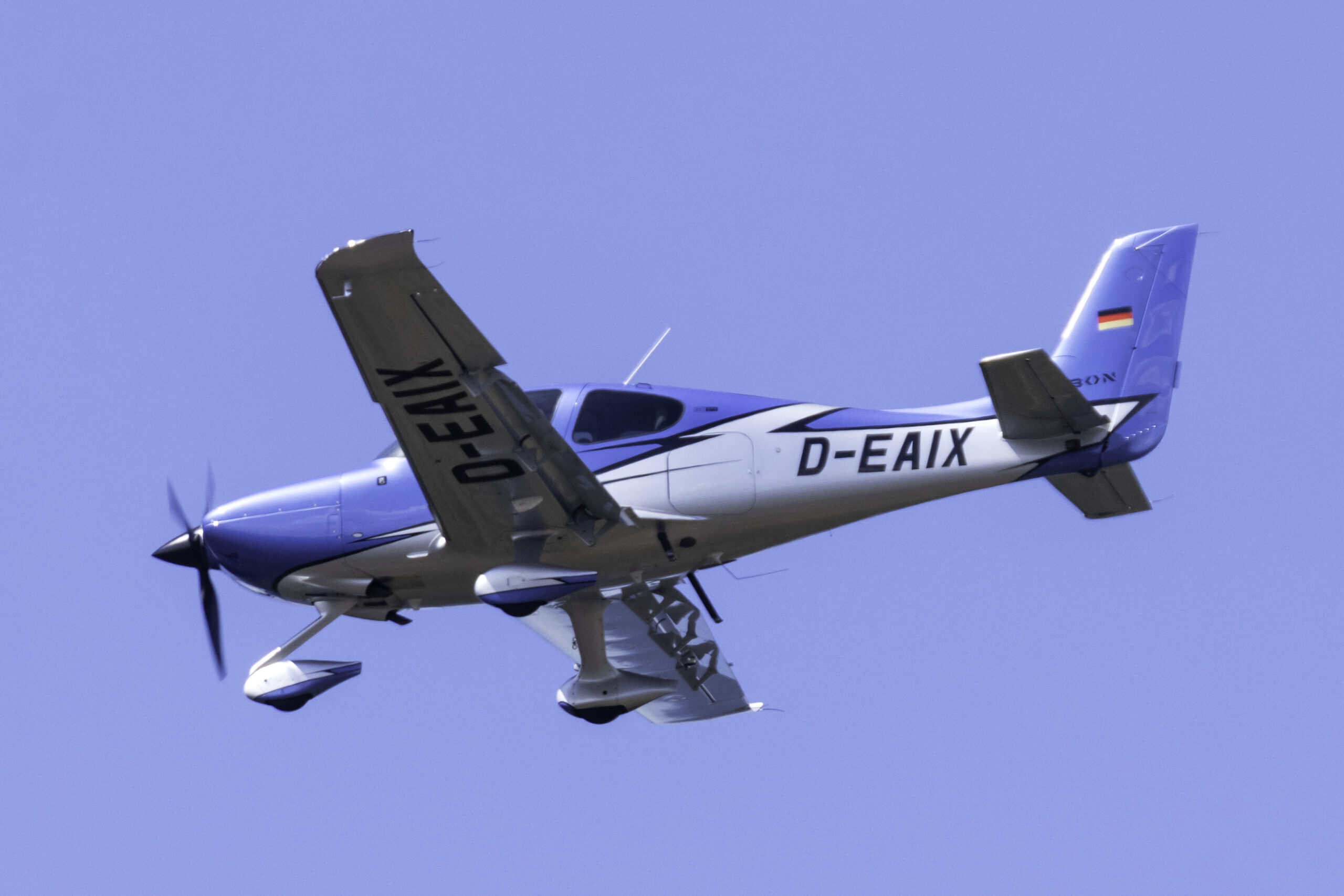
The choice between the normally aspirated Cirrus SR22 and the turbocharged SR22T comes down to where you fly. Below 10,000 feet the NA airplane is the same speed for less fuel and less complication.
Above 10,000 the SR22T pulls away. At 17,500 feet the NA is gasping. The turbo is still showing 200 KTAS on 17 GPH lean of peak. Add a TKS ice-protection package, and the SR22T turns into a credible weather-running single.
We’ll be straight with you. If you fly mostly VFR east of the Rockies under 10,000 feet, you don’t need the turbo. If you fly IFR, cross the mountains, or live at a 5,000-foot field, the SR22T earns its premium.
CAPS: The Whole-Airframe Parachute That Built the Brand
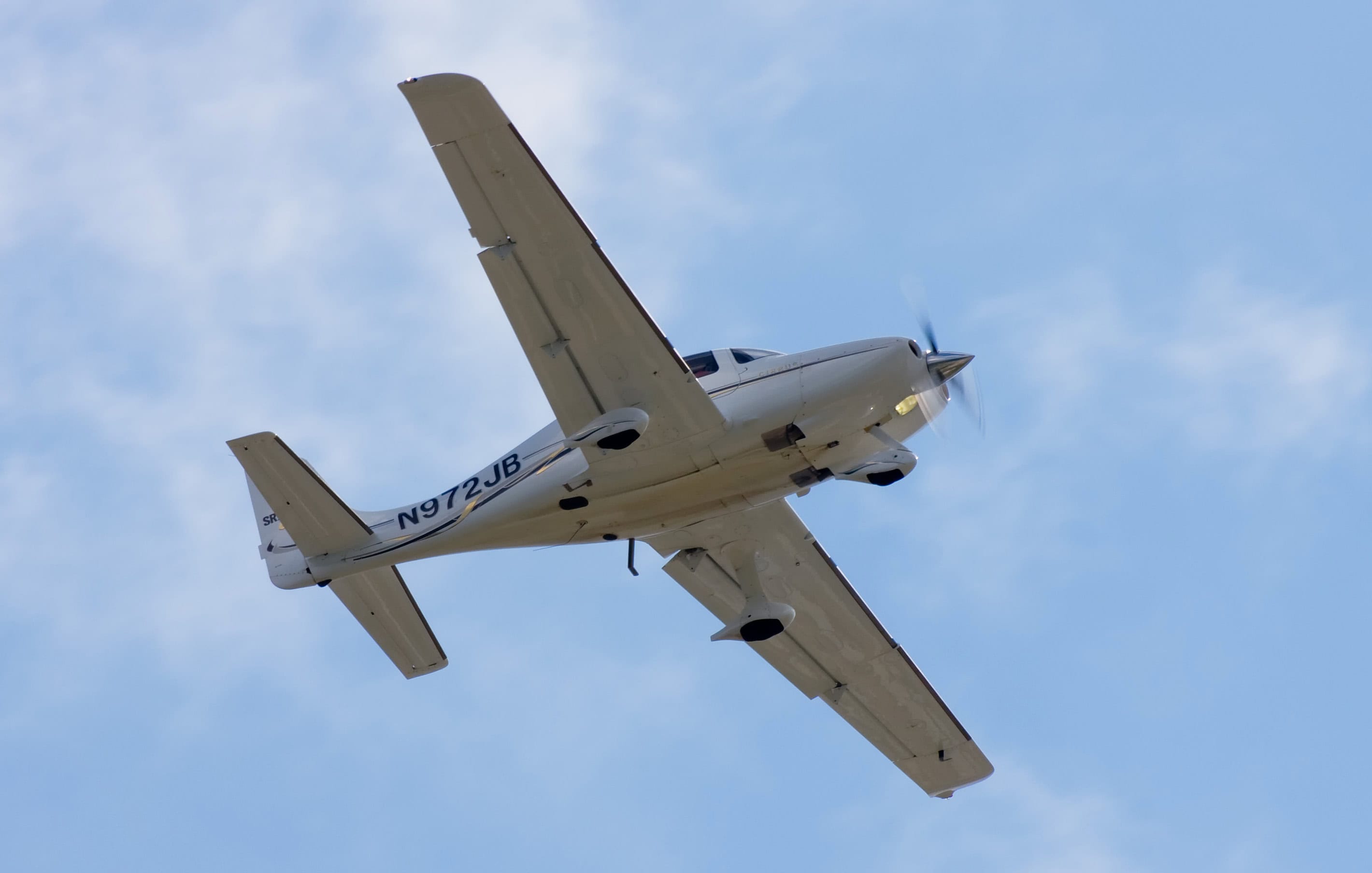
The Cirrus Airframe Parachute System is the single feature that defines the airplane. CAPS pulls the entire airplane down under a rocket-deployed canopy at descent rates around 1,700 feet per minute.
As of May 8, 2026, CAPS has 148 documented saves and 297 total survivors. Across the SR20, SR22, and Vision Jet fleet combined. Real-world numbers, not marketing copy.
The system has limits worth knowing. Maximum demonstrated deployment speed is 140 KIAS in the early SR22s and 185 KIAS in later airframes. Minimum recommended altitude is around 500 feet AGL straight and level, higher in unusual attitudes.
CAPS needs a 10-year repack. Plan on roughly $14,000 to $18,000 for the parachute and rocket motor swap at a Cirrus service center. That cycle hits every used Cirrus SR22 eventually, and pre-buys catch it.
The Engine Story: IO-550-N and TSIO-550-K
Both engines come from Continental. The Cirrus SR22 runs the IO-550-N, a 310-hp six-cylinder normally aspirated mill. The SR22T runs the TSIO-550-K, the turbocharged 315-hp version with intercoolers and a Whittman-Robertson airbox.
TBO on both is 2,000 hours under Continental’s published schedule. Real-world TBO depends on operator habits more than the spec sheet.
Honestly, this is where we’d push back on the marketing. The IO-550 is durable. But the cylinders have a reputation for not making TBO in either NA or turbo form. Top overhauls in the 800 to 1,400 hour band are common across the fleet.
The 2003 to 2007 Continental IO-550-N batch had documented metallurgy issues. Some cylinders failed before 1,000 hours. If you’re shopping a Cirrus SR22 from that build window, borescope every cylinder. Then pull the maintenance log for any cylinder replacement history.
Cirrus SR22 Ownership Cost in 2026
The Cirrus SR22 is not a cheap airplane to own. Fixed costs run about $25,000 to $35,000 per year before you start the engine. That’s before any loan payment.
| Cost item | Annual (typical) |
|---|---|
| Insurance (qualified pilot) | $4,000 to $9,000 |
| Annual inspection | $3,500 to $6,500 |
| Hangar | $4,800 to $12,000 |
| Database subscriptions | $2,500 |
| CAPS repack (amortized) | $1,600 per year |
| Engine reserve | $8,000 to $12,000 |
Direct hourly cost at 100 hours per year lands in the $320 to $380 zone. That’s a financed SR22, fuel included. Fuel alone is about $107 per hour at $6.50 per gallon and 16.5 GPH at 75% cruise.
Lean-of-peak operation pulls fuel burn down to 12.5 to 15 GPH at 65% power. That saves $20 to $30 per hour. One of the easiest cost wins on a Cirrus SR22.
Used Cirrus SR22 Pricing by Generation in 2026
The used SR22 market in 2026 runs from $175,000 to $1.4 million. Tired G1 at the bottom, low-time G7+ at the top. Here’s the working snapshot.
| Generation | Years | Typical price range |
|---|---|---|
| G1 | 2001 to 2003 | $175,000 to $250,000 |
| G2 | 2004 to 2006 | $220,000 to $350,000 |
| G3 | 2007 to 2012 | $300,000 to $500,000 |
| G5 | 2013 to 2016 | $500,000 to $700,000 |
| G6 | 2017 to 2023 | $650,000 to $925,000 |
| G7 (new) | 2024 onward | $1.05M to $1.4M+ |
Here’s what most buyers get wrong about the used Cirrus SR22 market. Generation matters less than logbook quality. A G3 with full Cirrus service center history beats a G5 with mystery gaps every day of the week.
Avionics upgrades drive surprising premium too. A G3 with a Perspective Plus retrofit and a fresh top overhaul prices closer to a baseline G5.
Insurance for the Cirrus SR22
Insurance is the most variable line in Cirrus SR22 ownership cost. A qualified pilot with the right hours, ratings, and Cirrus training gets a very different number. Low-time private pilots stepping up pay more.
| Pilot profile | Hull $850,000 SR22 G6 |
|---|---|
| Private, under 200 hrs, no IFR, no Cirrus time | $12,000 to $18,000 |
| Private, 300+ hrs, no IFR, CSIP transition done | $8,000 to $11,000 |
| Instrument, 500+ hrs, 100+ in type | $5,000 to $8,000 |
| Instrument, 1,000+ hrs, 250+ in type, no claims | $3,500 to $5,500 |
An instrument rating drops your Cirrus SR22 premium more than any other single move you can make. Underwriters built this airplane’s risk model around IFR-rated pilots. The way it was designed to be flown.
Transition Training: Why CSIP Matters
The Cirrus Standardized Instructor Pilot program is not optional in practice. Almost every Cirrus SR22 insurance quote either requires CSIP transition training or prices the premium assuming you’ll do it.
Plan on three to five days of dedicated training. Ground school covers CAPS deployment criteria, system flows, lean-of-peak operation, and Cirrus stabilized approach standards.
Flight portion covers stalls, slow flight, simulated emergencies, instrument approaches (if IR-rated), and the Cirrus-specific energy management pattern. Most CSIP courses run 12 to 18 flight hours.
Here’s what most pilots get wrong. The Cirrus SR22 doesn’t fly itself. The side stick, the slick wing, and the high wing loading punish sloppy pilots. Skip the real transition program and you’ll be half a step behind the airplane for 50 hours.
CAPS Decision-Making: When to Pull the Handle
The CAPS decision is the hardest part of being a Cirrus pilot. The brand has worked hardest to teach this one. The default training position is now this: when in doubt, pull.
Pull scenarios include engine failure over hostile terrain, structural damage, mid-air, loss of control, and pilot incapacitation. Also IMC LOC recovery below maneuvering minimums. Read the POH and the COPA CAPS guide cover to cover before flying one.
The cultural shift took 15 years. Early Cirrus SR22 fatal accident rate was worse than the GA average. Pilots kept trying to land off-field with CAPS available. After the “pull early, pull often” training pivot, the SR22 dropped to half the fleet fatal rate.
Pre-Buy Checklist for the Cirrus SR22
If you’re shopping a used Cirrus SR22, here’s the short list that must clear at pre-buy. Skip any one and you’re rolling the dice.
- Use a Cirrus Factory Authorized Service Center for the pre-buy
- Borescope every cylinder, especially on 2003 to 2007 IO-550 builds
- Pull all cylinder compression numbers and trend across the last three annuals
- Verify CAPS repack history and document next due date
- Check for nose gear shimmy damper service history and current condition
- Verify all factory service bulletins have been complied with
- Inspect door latches and door fit (early model issue)
- Confirm Avidyne or Garmin Perspective system version and any pending SBs
- Look at the wing root and tail attach areas for hangar rash and crack indications
- Review insurance loss history through a Cirrus-experienced broker
A proper Cirrus SR22 pre-buy costs $3,000 to $5,000 and takes two to three days. The cheap pre-buy is the most expensive line item you’ll ever skip on this airplane.
Five Cirrus SR22 Mistakes Owners Make
We see the same patterns over and over from pilots stepping into the airplane. None of these are fatal on their own, but they add up to insurance claims and accelerated maintenance.
- Skipping CSIP after the first year. CSIP recurrent every two years keeps the premium down and the skill sharp.
- Running rich-of-peak by default. ROP burns more fuel and runs cylinders hotter. LOP is in the POH for a reason.
- Treating the side stick like a yoke. Light fingertip pressure flies the airplane. Death grips overcontrol it.
- Ignoring stabilized approach criteria. Cirrus published numbers (90 KIAS, 500 fpm, on speed by 500 ft AGL) exist for a reason. The wing doesn’t forgive hot-and-high approaches.
- Forgetting CAPS exists. Train the pull decision until it’s automatic. Hesitating in an emergency is the failure mode the brand keeps documenting.
Our Take on the Cirrus SR22 in 2026
The Cirrus SR22 is the most capable piston single you can buy today, period. The G7+ with Safe Return autoland resets the safety floor of personal aviation again. Just like the original G1 did with CAPS.
For the $300,000 to $500,000 buyer, a clean G3 with upgraded avionics is the value play. Mid-time engine, full logs. For the $700,000 to $1M buyer, a low-time G6 SR22T with TKS is the used-market value champion.
For the new buyer with seven figures and a real mission, the G7+ is the airplane. Nothing else in the piston market touches it for safety, capability, or owner experience.
If you’re flying one, you already know. If you’re shopping for one, do the pre-buy right and finish CSIP before the first hour solo. Join the Cirrus Owners and Pilots Association before you close. That’s the playbook.
Frequently Asked Questions About the Cirrus SR22
Is the Cirrus SR22 hard to fly?
Not hard, but unforgiving of sloppy energy management. The wing is slick, the side stick is sensitive, and the approach numbers are tighter than a Cessna 172. Most pilots need 15 to 25 hours of CSIP-led transition before they feel ahead of the airplane.
How much does a new Cirrus SR22 cost in 2026?
A new SR22 G7 starts around $1.05M base. The SR22T G7+ tops $1.4M loaded with Safe Return autoland, TKS de-ice, and the Premium package. Used pricing runs $175,000 for early G1s to over $900,000 for late-model G6s.
How safe is the Cirrus SR22?
With CAPS-aware training, the Cirrus SR22 fatal accident rate runs about half the comparable high-performance piston single fleet. The parachute system has 148 documented saves and 297 survivors as of May 2026. The training discipline matters as much as the hardware.
Further Reading on E3
- Cessna 172 Complete Pilot Guide
- Piper Cherokee Complete Pilot Guide
- Beechcraft Bonanza Complete Pilot Guide
- Mooney M20 Complete Pilot Guide
- Structural Icing in Piston Singles
- ForeFlight Complete Guide
- IFR Currency Requirements
- Density Altitude Complete Guide
- Aircraft Weight and Balance
- Stall Recognition and Recovery
- Become an E3 Aviation Association Member