Last Updated: July 8, 2026
Flying to AirVenture 2026 is the biggest single-week test most general aviation pilots take all year. Wittman Regional Airport (KOSH) turns into the busiest airport on the planet from July 20 through July 26, the FAA NOTAM procedures rewrite what you thought you knew about pattern work, and the weather window over Wisconsin can hand you a summer thunderstorm line at exactly the wrong moment. If you’re on the fence about the trip, we’ll be straight with you: it’s absolutely worth it — and it’s a lot smoother when you’ve done the homework before you push the throttle up.
This guide is written for the piston-single owner or renter who’s flying themselves in, not the airline captain jumpseating a warbird. We’ll walk through the 2026 NOTAM changes, the Fisk VFR arrival step by step, weather and density-altitude planning for late July, what to pack, camping vs off-field options, and the mistakes that get pilots turned around at Ripon. Consider this your pre-flight briefing for the whole week.
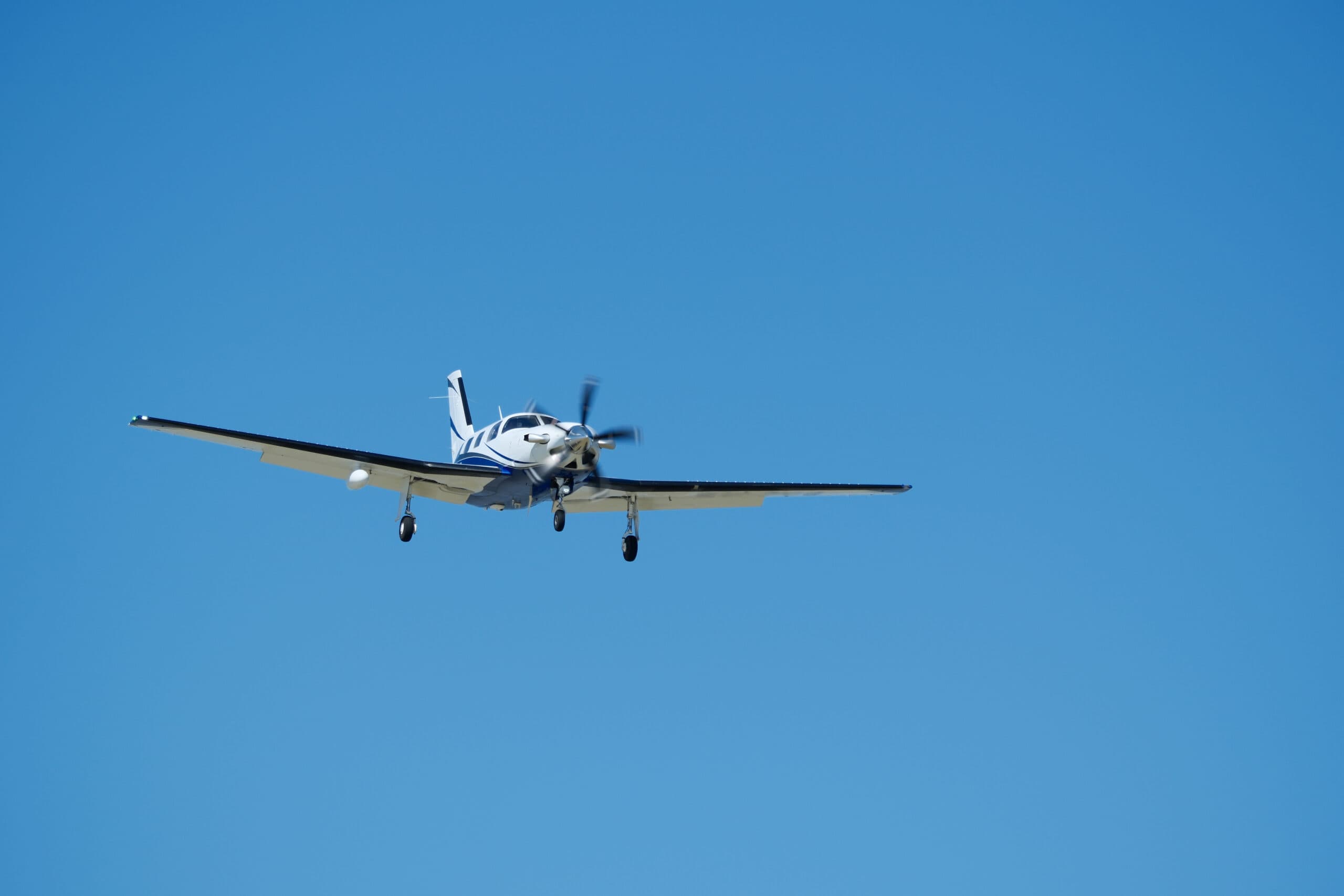
Flying to AirVenture 2026: Dates and the NOTAM Window
EAA AirVenture Oshkosh 2026 runs Monday, July 20 through Sunday, July 26. That’s the show week. The FAA’s arrival and departure procedures — the Oshkosh NOTAM — go into effect at noon CDT on Thursday, July 16 and stay active through noon CDT on Monday, July 27. If you’re flying to AirVenture 2026 inside that window, the NOTAM procedures apply to you whether you like them or not. The regular Class D operation at KOSH is suspended, and the show’s temporary tower controllers run the field.
The 2026 NOTAM was released in May, and every pilot flying in should download the current PDF from EAA’s flying-to-Oshkosh page and read it front to back. We mean read it. Not skim it. The document is dense but written in plain English, and every year we see pilots at Ripon holding a printout of last year’s version. Verify the top of your copy says 2026.
What’s New for 2026
The 2026 procedures keep the ATC-assignable transition points that were added to help manage congestion. Western transition fixes at Endeavor Bridge, Puckaway Lake, and Green Lake can be activated by air traffic control when arrival volume warrants. When those are in use, ATC will announce it on the Fisk arrival ATIS, so listen well before you reach Ripon. The base VFR procedure — the railroad tracks from Ripon to Fisk — hasn’t changed, but the western options give controllers more sequencing room during peak periods.
The Fisk VFR Arrival, Step by Step
The Fisk VFR arrival is the classic way in when you’re flying to AirVenture 2026 as a piston single or light twin. It’s the procedure the majority of GA pilots flying to AirVenture 2026 will actually use. Here’s the sequence in the order you’ll actually fly it, with the numbers you need to hit.
Step 1 — Ripon. Set up southwest of Oshkosh and enter over the town of Ripon, Wisconsin. If you’re at 1,800 feet MSL, you’re flying the standard arrival at 90 knots indicated. If you can’t slow down that far — some retracts and turboprops can’t — hold 2,300 feet MSL at 135 knots. Do not mix altitudes and speeds.
Step 2 — Follow the railroad tracks. From Ripon, pick up the railroad tracks that run northeast and follow them toward Fisk. This is dead reckoning at its most basic. Keep the tracks under your left wing, don’t overtake the airplane in front of you, and don’t fly formation with anyone. The rule is single-file with roughly a half-mile of spacing.
Step 3 — Monitor Fisk Approach. The Fisk frequency is published in the NOTAM. You listen. You do not check in. Fisk controllers won’t take your call sign — they’ll identify your aircraft by type and color and give you a runway assignment.
Step 4 — Rock your wings. When the controller calls your aircraft — “high-wing white and blue Cessna, rock your wings” — you rock. That’s your acknowledgment. Then you get your runway and, if applicable, a color-coded dot to land on.
Step 5 — Land where told. AirVenture uses spot landings — colored dots on the runway. If you’re assigned the pink dot on Runway 27, that’s where your mains touch. Not before, not after. The controllers are separating you visually, and drift means somebody behind you gets waved off.

Alternate Arrivals for Warbirds, IFR, and Special Categories
Not everyone flying to AirVenture 2026 can, or should, use the Fisk arrival. The 2026 NOTAM specifies alternate procedures for several categories, and you need to know which one you fall into before you file.
Warbirds and vintage aircraft have their own arrival gates and often stage from Fond du Lac (KFLD) or Appleton (KATW). If you’re delivering a warbird for the show, the arrival brief is different, and Warbirds of America publishes coordination guidance in the weeks leading up to the event.
Homebuilt and experimental aircraft use the standard Fisk arrival unless assigned an alternate. If you’re arriving with an ultralight or light-sport, expect to be sequenced differently and possibly directed to a satellite field.
Seaplanes land at the seaplane base on Lake Winnebago. That has its own frequency, ATIS, and traffic pattern. If you’re flying a floatplane in, that’s an entirely different briefing — start with the seaplane base information in the NOTAM.
IFR arrivals are accepted at KOSH during show week, but expect long holds, direct routes canceled at the ATC’s discretion, and a possible pop-up cancellation to complete the Fisk visual. Filing IFR does not exempt you from the NOTAM — the airport is still under show-week procedures.
Weather Planning When Flying to AirVenture 2026
The single biggest reason pilots get bent up on the way to AirVenture 2026 isn’t the arrival — it’s the weather they push through to make the arrival window. Late July in the upper Midwest means afternoon thunderstorms, occasional MVFR mornings from lake-effect fog, and hot-day density altitudes that hurt your climb even at Wisconsin’s mostly-flat terrain.
Build a weather plan that starts three days before your departure. Watch the surface analysis, watch the SPC convective outlook, and watch for the frontal position. If a warm front is stalled across Iowa or Illinois the day you launch, you’ll fly through it. Read our thunderstorm avoidance guide and our piece on reading AIRMETs and SIGMETs before you build the go/no-go decision. The PIREP field guide is worth a look too — the reports along your route the morning of departure tell you what the forecast missed.
Density Altitude at KOSH
Wittman sits at 807 feet MSL. That’s low. But on a 92-degree day with a dew point in the mid-70s, your density altitude climbs past 2,800 feet, and your normally-aspirated single loses noticeable performance both on takeoff and on the climb-out. If you’re going home Sunday afternoon in the heat, run your hot-day takeoff numbers before you launch and figure out where your safe abort point is on Runway 18/36. Weight and balance matters here too. Two adults, camping gear, and full fuel is a real load in a 172.
Ceilings and the ATIS Game
The Fisk arrival requires VFR conditions. If the ceilings drop under the NOTAM minimums, the arrival closes. Refresh the Fisk ATIS every 15 minutes as you approach — the ATIS is your gate. Our field guide on ATIS, AWOS, and ASOS covers what each source actually gives you, and it’s worth a re-read the night before you leave.
What to Pack When Flying to AirVenture 2026
You have limited baggage space in most piston singles, and you’ve already used up part of it on tie-down and camping gear. Here’s the packing list we’ve built after multiple trips to Oshkosh — nothing exotic, everything earned.
- Printed NOTAM (current year). Yes, printed. Screens fail, iPads overheat on the ramp, and you’ll want to hand it to your left-seat partner during the arrival.
- Sectional charts (paper). Green Bay and Chicago. Backup for the tablet.
- Tie-down kit. Three long ropes, three screw-in earth anchors, and a mallet. Bring your own — the aircraft parking area is grass and you’re on your own once you park.
- Ear protection for the ramp. Not your headset — foam plugs. The show ramp is loud.
- Sun protection. Hat, sunscreen, sunglasses. Wisconsin summer sun on a wide-open ramp is punishing.
- Refillable water bottles. Free water stations are scattered across the grounds.
- Cash. Vendors take cards, but the pancake breakfast folks appreciate small bills.
- A raincoat or poncho. Afternoon thunderstorm activity is common, and you don’t want your only jacket to be your flight jacket.
- Cockpit cover and pitot cover. A week in the Wisconsin sun bakes an unprotected panel. Rain is likely too.
- Battery bank + tablet charger. Your EFB is your NOTAM copy on arrival. Keep it charged.
Camping at Wittman vs Off-Field Options
There are three basic lodging strategies when you’re flying to AirVenture 2026, and the right one depends on how much sleep you actually need to get.

Camp Scholler and the North 40 / South 40. The North and South 40 are grass parking areas at Wittman where you camp with your airplane. This is the classic AirVenture experience: tent staked next to the wing, pancake breakfast a short walk away, no rental car needed. It’s also loud, hot, and light — the sun is up at 5:30, and a Cub is running up somewhere by 6. If you sleep hard and love the culture, this is where you want to be. Our airplane camping bedroll piece covers gear that actually works.
Hotel or rental in Oshkosh, Neenah, or Appleton. Book six months out and you’ll pay what feels like extortion for a Holiday Inn. But you’ll get air conditioning, a shower with pressure, and a bed. If you want to actually see the airshow and still function on Day 5, this is worth the money. Uber and Lyft coverage is decent during show week; a rental car is not really needed unless you want to explore the region.
Fly out daily from an alternate airport. Some pilots based within 200 miles fly in each morning and out each evening. That works if you’re within easy range and you’re not concerned about weather delaying your return. It doesn’t work for people flying in from more than an hour or two away — you’ll spend more time transiting the airspace than at the show.
Common Mistakes That Get Pilots Turned Around
We’ve watched pilots get shooed off the Fisk arrival for reasons that were completely avoidable. Here’s the short list.
Not reading the NOTAM. This is the top reason pilots flying to AirVenture 2026 get sent home before Ripon. They show up at the wrong altitude, at the wrong speed, on the wrong frequency, and Fisk sends them away. The NOTAM changes each year. Read the current one.
Talking on Fisk frequency. Fisk is a listen-only frequency. Pilots who key up and ask for their runway assignment get told to hush. Watch for the wing-rock call directed at your aircraft type and color, rock, and stay off the mic.
Mixing altitude and speed. 1,800 MSL at 90 knots or 2,300 MSL at 135 knots. Not 1,800 at 110. Not 2,000 at 100. The exact combination is what keeps the arrival predictable for controllers and pilots behind you.
Not committing to the spot landing. When you’re assigned the pink dot on Runway 27, you land on the pink dot. Floating and adding power because you don’t like the setup is dangerous — someone is behind you. If you don’t like it, go around early and take the sequencing hit.
Pushing weather. The get-there-itis on Sunday of arrival week is real. Every year pilots launch into weather they wouldn’t touch on a normal day because AirVenture only happens once a year. Every year, some of them don’t make it. The show will still be there tomorrow. Fly the smart trip.
Once you’re on the ground, remember that Wittman during show week is a busy uncontrolled ramp environment. Taxi awareness matters. Our guide on runway incursion prevention is worth a reread — the same fundamentals apply on a crowded grass ramp with volunteers marshaling from every direction.
Departure: The Other Half of the Trip
Everyone talks about the arrival, and half of the pilots we know who are flying to AirVenture 2026 underplan the departure. AirVenture ends Sunday, and Sunday afternoon at Wittman is a mass exodus. Runway options are dictated by wind, and departure sequencing is controlled by the tower crew. Fuel your airplane before you break camp — the line at the self-serve gets long. File a flight plan or at least call for flight following so you’re not squawking VFR unassigned into a huge outbound flow. If Sunday weather is bad, plan to overnight and depart Monday. Trying to punch out through a line of storms with everyone else who missed the earlier weather window is exactly how bad Sunday-evening headlines get written.
Frequently Asked Questions
Do I need a special endorsement for flying to AirVenture 2026?
No. There’s no endorsement or waiver required. You need to be current, legal, and current on the 2026 NOTAM. The NOTAM procedures are not written like a checkride, and any current private pilot with a fresh flight review can fly them safely — but only after reading the whole document.
Can I use ADS-B and flight following on the Fisk arrival?
You’re ADS-B Out equipped, which is fine and required. But you’re not on flight following once you enter the Fisk arrival — the NOTAM specifies you cancel and monitor Fisk. Traffic separation is visual, single-file, and controller-directed. That’s the whole point of the procedure.
What happens if the weather closes the VFR arrival?
If the ceilings drop below NOTAM minimums, the Fisk VFR arrival is closed and IFR-only. You either hold, divert to Appleton or Fond du Lac, or wait for the weather to lift. This is why you plan for a divert airport with fuel and a hotel — it’s not a rare event during show week.
Is flying to AirVenture 2026 realistic for a low-time private pilot?
Yes, with preparation. Fly with a CFI or an experienced OSH veteran the first year if you can. The arrival is not technically difficult, but the pressure of a single-file conga line at busy airspeeds, plus a wing-rock acknowledgment, plus a spot landing on a color-coded dot, is a lot for a first-timer. Prep well and you’ll be fine.
Related Articles
- Thunderstorm Avoidance: The Complete GA Pilot Guide 2026
- Reading PIREPs: The 2026 GA Pilot Field Guide
- Reading AIRMETs and SIGMETs
- Density Altitude and Hot-Day Takeoff Planning
- ATIS vs AWOS vs ASOS: The 2026 GA Pilot Field Guide
- The Airplane Camping Bedroll Kit
- Runway Incursion Prevention: 2026 GA Pilot Safety Guide
Density Altitude and Hot-Day Takeoff Planning: A GA Pilot Guide

Airborne Weather Radar for GA Piston Owners: The 2026 Field Guide
ATIS vs AWOS vs ASOS: The 2026 GA Pilot Field Guide
Lightning Detection for GA Pilots: The 2026 Stormscope Guide