Last Updated: May 12, 2026 | By E3 Aviation Editorial Team
Every piston-engine GA pilot eventually stares at a logbook entry that reads something like “Cyl #3: 58/80.” That single fraction starts arguments at every annual. It also drives a lot of unnecessary cylinder pulls. The aircraft cylinder compression test is one of the most misunderstood numbers in general aviation, and the standards around it have quietly shifted in the last few years. If you own a piston single, fly a club airplane, or just want to read your engine logs without flinching, this is the playbook.
What an Aircraft Cylinder Compression Test Actually Measures
An aircraft cylinder compression test measures how well a cylinder seals at top dead center. The mechanic injects 80 psi of regulated air into the spark plug hole. A pressure gauge on the other side of a calibrated orifice shows what the cylinder holds. The closer that second number stays to 80, the better the seal. The bigger the gap, the more air is escaping past rings, valves, or the head gasket.
That’s the whole concept. The test does not measure horsepower. It does not measure compression ratio. It does not even predict how much longer the cylinder will last. It measures one thing: leakage at one moment under one set of conditions. Treat it that way.
The Two Standards That Matter: AC 43.13-1B vs Continental SB03-3
Two reference documents drive almost every aircraft cylinder compression test argument in a hangar. FAA Advisory Circular 43.13-1B sets the general expectation: a cylinder reading less than 60/80 on a hot engine, after corrective procedures, must come off for inspection. That is the classic 60/80 number every old-school A&P quotes.
Continental issued Service Bulletin SB03-3 to replace that flat number with something smarter. SB03-3 introduced the master orifice concept and the mandatory borescope. It also set new acceptance criteria that depend on the test gauge, the day’s atmospheric conditions, and the visual condition of the combustion chamber. Lycoming Service Instruction 1191A takes a similar view: cylinders should test within 5 psi of each other and stay above 70/80, with anything below 65/80 triggering a re-test trend watch rather than an immediate pull.
For a Continental owner, SB03-3 is the controlling document. For a Lycoming owner, SI 1191A is the controlling document. The 60/80 rule from AC 43.13-1B is the floor when a manufacturer hasn’t said otherwise. That distinction matters. Knowing which document covers your engine prevents the wrong cylinder from getting yanked off the airplane.
The Master Orifice: Why a Single Number Stopped Being the Whole Story
Continental’s SB03-3 changed the aircraft cylinder compression test conversation by requiring shops to calibrate their test gauges against a master orifice. The master orifice (TCM p/n 646953A) represents the maximum allowable leakage Continental defines as “still airworthy.” Each shop’s gauge gets benchmarked against that orifice on the day of the test. The resulting reading becomes the go/no-go threshold for that gauge in that humidity, that temperature, and that altitude.
That number changes day to day. It also changes shop to shop. A 58/80 reading at one facility might be entirely airworthy. The same 58/80 at another facility might fail. The acceptable cylinder pressure leakage limit reading must be recorded in the logbook alongside each cylinder result. If you don’t see that calibration number written in your logs, ask why.
Per AC 43.13-1B, the orifice itself has specific dimensions: 0.040-inch diameter for cylinders under 5.00-inch bore, and 0.060-inch diameter for cylinders 5.00 inches and over. Both are 0.250 inch long with a 60-degree approach angle. Your A&P should use a tester that meets those specs and gets calibrated regularly. Cheap or out-of-cal testers produce false readings that have grounded perfectly good cylinders for years.
Inside the Test: How Your A&P Actually Runs an Aircraft Cylinder Compression Test
The procedure looks simple from the hangar floor. The reality is sequence-sensitive and easy to get wrong. Here’s the basic flow your A&P should follow on every cylinder:
- Run the engine to operating temperature (this matters more than people think).
- Shut down and pull the top spark plug from each cylinder.
- Rotate the prop to bring the test cylinder to top dead center on the compression stroke.
- Hold the prop firmly (this is the dangerous step — the prop wants to kick).
- Connect the calibrated tester through the spark plug hole.
- Apply regulated 80 psi and read the leakage value.
- Listen and feel for where the air is escaping (exhaust, intake, oil filler, opposite plug hole).
- Record the reading and the calibration value in the logbook.
The Hot Engine vs Cold Engine Argument
This one starts fights at every annual. The right answer is hot. A cylinder tested cold will almost always read lower than the same cylinder tested at operating temperature. The piston rings haven’t expanded. The cylinder bore hasn’t expanded. Oil hasn’t worked into the ring lands. A 55/80 cold reading can come up to 74/80 once the engine reaches 180-degree CHT.
If your shop tests cold, you’ll see lower numbers across the board. Some of those will look “borderline.” None of them are diagnostic until the engine has been flown or run hard enough to fully heat the top end. Continental’s protocol is specific: when a cylinder flunks, fly the airplane for at least 45 minutes, then re-test. Only a second failure after a real flight makes the cylinder unairworthy.
Why the Borescope Now Outranks the Aircraft Cylinder Compression Test
Here’s where the modern world of GA cylinder maintenance has moved. The borescope, not the aircraft cylinder compression test, is now the gold standard for assessing whether a cylinder is airworthy. Continental’s SB03-3 made borescope inspection mandatory at every annual and 100-hour. Most experienced A&Ps will tell you they trust what they see through the lens far more than what they read on the gauge.
The math is simple. A compression test is an indirect measurement of one moment in one set of conditions. A borescope shows the actual valves, actual cylinder walls, and actual piston crown in living color. Cracked exhaust valves, scored cylinder walls, oil pooling on the piston crown, detonation pitting, hot spots — none of that shows up on a 78/80 reading, but all of it shows up immediately on a borescope image.
What Your Mechanic Sees on the Screen
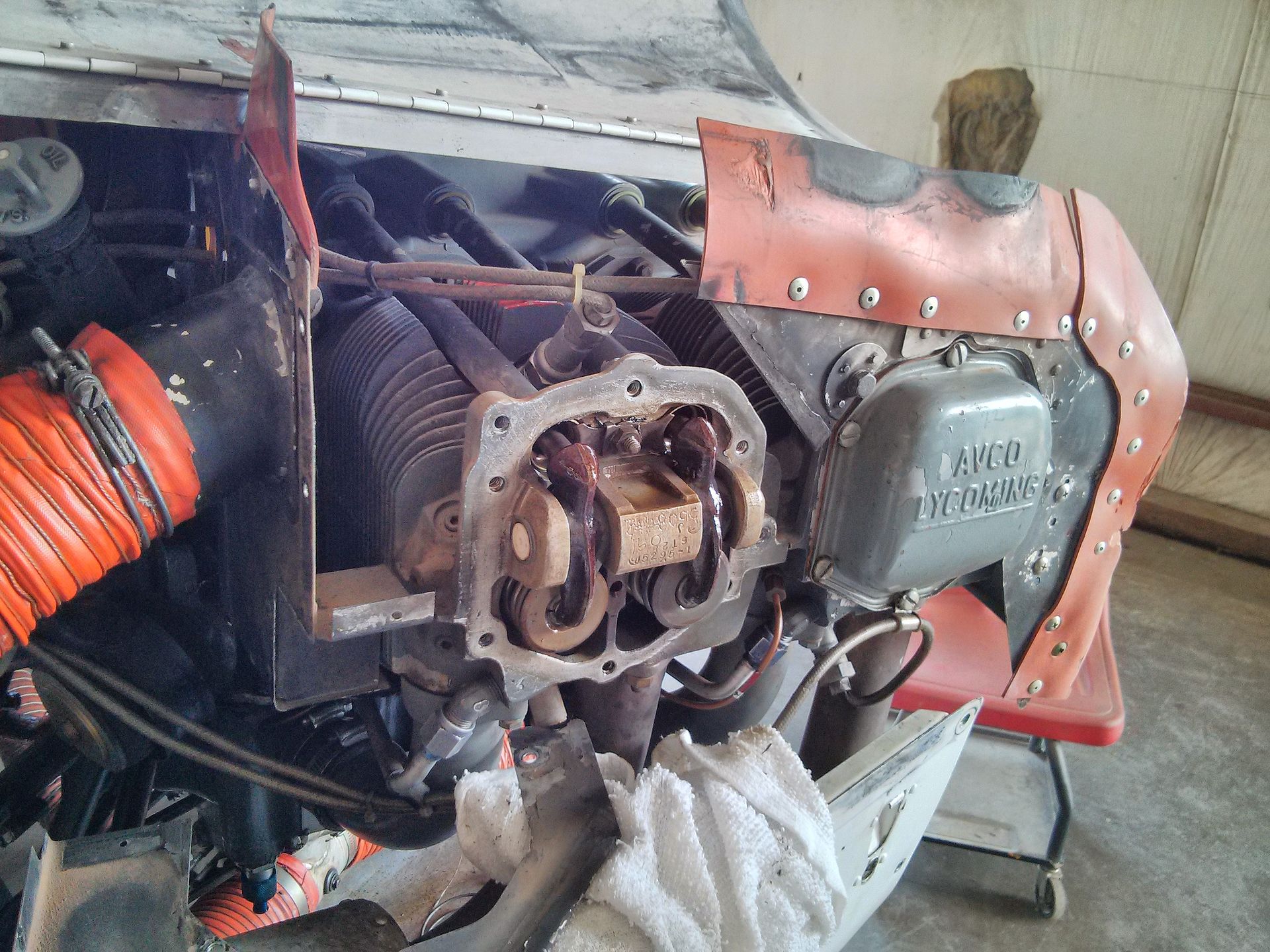
A modern articulating borescope goes in through the top spark plug hole and rotates 360 degrees. The mechanic checks several specific things on the screen. Green or brown deposits on the exhaust valve face point to incomplete combustion. Uniform color across the valve seat is good news. A discolored arc on the seat suggests a leak path. The cylinder walls should be smooth, with no scoring or galling. The piston crown should be free of metallic shavings. The spark plug bushings should show no cracking around the threads.
Our take: if you’re working with a shop that doesn’t borescope every cylinder at every annual, find a different shop. The borescope reveals problems your compression tester will miss until they ground the airplane. Aviation Pros has a strong piece on borescope technique that’s worth bookmarking.
What Each Reading Tells You About Where the Air Is Going
A great aircraft cylinder compression test isn’t just a number. It’s a number plus a sound. The location of the air escape tells you what’s actually wrong. Once your A&P pressurizes the cylinder, the sound and feel of the leak narrows the diagnosis fast.
| Where You Hear It | What’s Leaking | What It Means |
|---|---|---|
| Exhaust pipe / tailpipe | Exhaust valve | Burned or unseated exhaust valve. Borescope it now. This is the most common bad finding. |
| Carburetor or induction | Intake valve | Stuck or leaking intake valve. Less common but serious. |
| Oil filler / breather | Past the rings | Worn rings or worn cylinder walls. Run a fly-and-retest before pulling. |
| Adjacent spark plug hole | Head gasket | Cracked head or blown gasket. Cylinder must come off. |
| Bubbles in radiator-style overflow | Cooling jacket (rare) | Crack between combustion chamber and cooling passage. Pull the cylinder. |
Hissing at the Exhaust, Bubbles in the Oil Filler
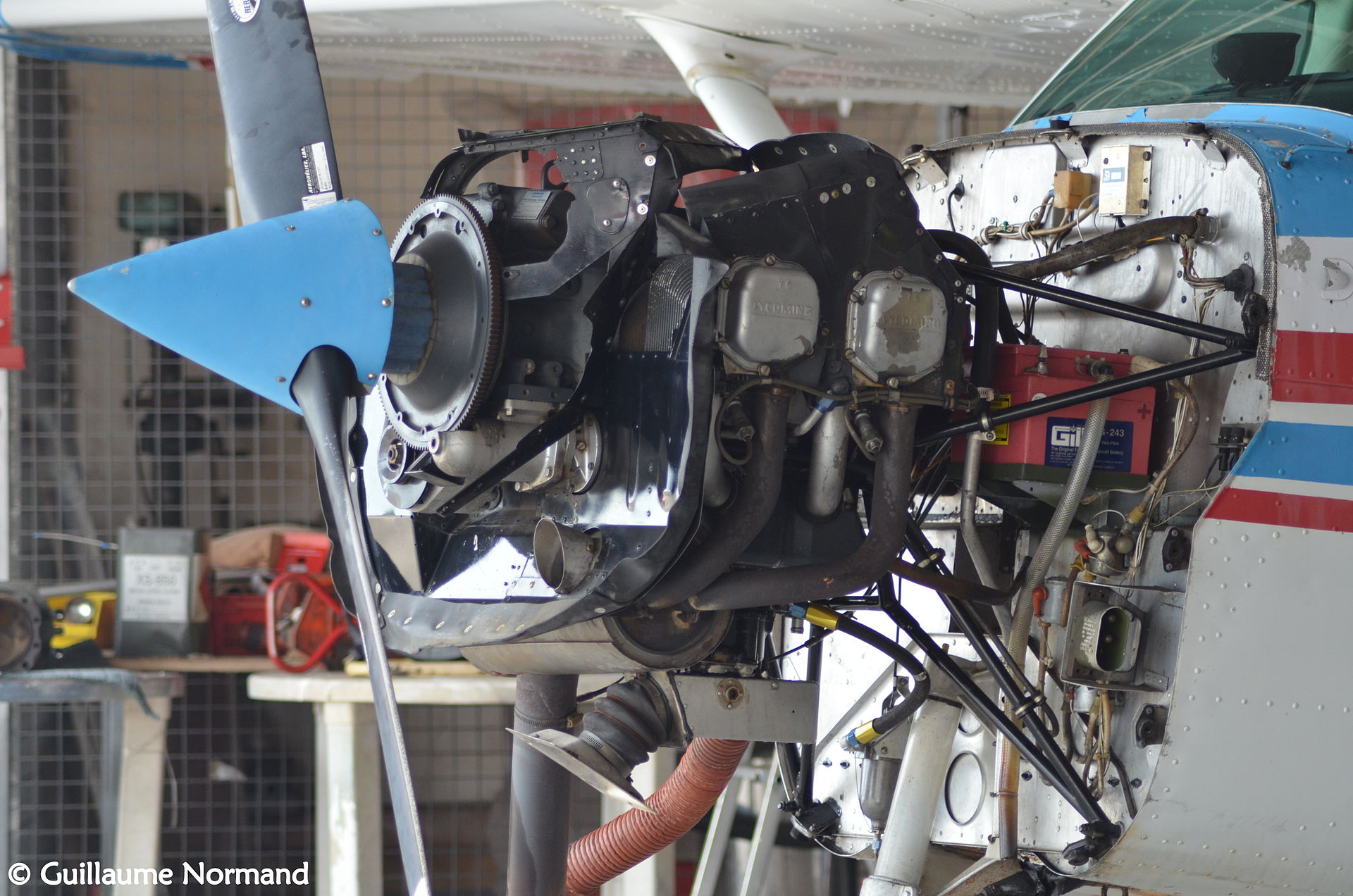
The two most common findings on a piston single are hissing at the exhaust (burned exhaust valve) and air pushing out the oil filler tube (worn rings). Both deserve very different responses. Burned exhaust valves usually require pulling the cylinder for repair. Worn rings can sometimes recover after a flight that re-seats them, especially on engines that have been flown gently or sat for long stretches.
This is the moment when an experienced A&P earns their fee. A shop that treats every borderline reading as “pull the cylinder” will run up your bill and may yank a serviceable cylinder. A shop that fly-tests borderline cylinders per the Continental protocol gives the engine a fair second chance. The right call is rarely automatic.
The Cost Conversation: What Compression Testing Adds to Your Annual
The aircraft cylinder compression test itself is part of every annual inspection. The labor for the test is bundled into the inspection fee. What costs money is what happens after the test. A simple Cessna 172 annual at most shops runs $1,500 to $2,200 for the inspection labor alone, and that price already includes the compression check. Our 2026 annual inspection cost guide walks through the full picture if you’re budgeting.
The real cost shows up when a cylinder fails. A typical breakdown for a four-cylinder Lycoming or Continental:
- Cylinder removal labor: $400 to $700 per cylinder
- New cylinder assembly (Continental Gold or Lycoming overhauled): $2,200 to $3,800 per cylinder
- Reinstall labor: $300 to $500 per cylinder
- New gaskets, hoses, and ancillary parts: $150 to $400 per cylinder
- Total per cylinder, parts and labor: $3,100 to $5,400
Numbers that high are exactly why the borescope and the master orifice matter so much. A wrong call to pull a cylinder costs a four-figure bill and a week of downtime. Knowing how to read the test prevents both.
Here’s a useful budget rule. If your engine is approaching TBO and showing borderline aircraft cylinder compression test results across multiple cylinders, plan for a top overhaul rather than chasing one cylinder at a time. A top covers all jugs at once and usually runs $9,000 to $14,000 on a four-cylinder GA engine. Doing it that way is cheaper per cylinder and avoids three more avoidable downtimes over the next two years.
Here’s what most pilots get wrong on the cost side. They focus on the dollar number for the cylinder and skip the opportunity cost of a grounded airplane. Two weeks waiting for parts during a compression-driven cylinder pull can wipe out a planned cross-country, an instructor checkride, or a fly-in trip you’ve been planning for months. Build that into the conversation when you weigh “fly and re-test” against “pull it now.”
Owner-Operator Playbook: Talking About Aircraft Cylinder Compression Test Results
You don’t need a wrench in your hand to participate in this conversation. You need vocabulary, a logbook history, and the willingness to ask for the calibration number. Here’s the script that works for any aircraft cylinder compression test debrief.
Start with the trend. Pull your last three or four annual entries and look at the cylinder readings together. A cylinder that has been 74/80, 72/80, 70/80 is showing a trend. A cylinder that jumped from 76/80 to 58/80 in a single year deserves a borescope before any decision. Trend matters more than any single number.
Ask for the calibration value. If your A&P uses a master orifice (Continental requires it), the orifice reading should be in the logbook. Acceptable readings are anything above that calibration number. If it isn’t recorded, ask the shop to add it. Per Continental SB03-3, this is required documentation, not optional.
Ask for the borescope photos. Most shops with modern equipment will email you JPEGs of every cylinder. If your shop doesn’t, ask. The photos give you a permanent record of the engine’s condition over time. They also let a second opinion review a borderline cylinder without flying the airplane somewhere.
When “Borderline” Becomes “Pull the Cylinder”
We’ll be straight with you: most cylinders pulled for “low compression” are pulled too early. Continental’s protocol is specific. The cylinder must fail twice, with at least 45 minutes of real flight time in between, AND show a problem on the borescope, before it should come off. A single low reading on a cold engine, with no borescope evidence, is not a reason to spend $4,000.
That said, there are immediate-pull conditions. Visible exhaust valve burn-through on the borescope, metallic debris on the piston crown, cracking around the cylinder head, or air leaking into an adjacent spark plug hole (head gasket failure) all justify removing the cylinder right away. Trust the borescope, not just the gauge. Get the documentation. Get the photos. Then make the call together.
The Bottom Line on Aircraft Cylinder Compression Test Standards in 2026
The aircraft cylinder compression test is a snapshot, not a verdict. The number alone isn’t enough. The number plus a borescope inspection, a calibrated master orifice value, a hot-engine test, and a logbook trend gives you the full picture. That is the modern standard. Shops that still treat 60/80 as a hard cliff are working off a 2003 mindset in a 2026 maintenance world.
Knowing how the test works gives you a real conversation with your mechanic instead of a stack of bills. Our owner-pilot preventive maintenance guide covers what you can legally do under FAR Part 43 if you want to be more involved. Owner-operators who participate in their annuals catch more problems and pay less. Owner-assisted annuals are the next step if you want to learn the airframe alongside your A&P.
Two more reads worth your time: Kitplanes’ Maintenance Matters compression testing piece and Cessna Owner’s compression checks article. Both reinforce the same modern message: trend, borescope, calibration, then act.
Frequently Asked Questions About the Aircraft Cylinder Compression Test
What’s the lowest acceptable reading on an aircraft cylinder compression test?
For a Continental engine, the answer comes from the master orifice calibration done that day under SB03-3. Anything above that calibration number is airworthy. For a Lycoming engine, SI 1191A wants 70/80 or better, with re-tests for anything below 65/80. For everything else, AC 43.13-1B’s 60/80 floor applies. The 60/80 number should never be used as the sole acceptance threshold on a Continental.
How often does an aircraft cylinder compression test get done?
Every annual inspection and every 100-hour inspection. Both are required by FAR Part 43 Appendix D. Some owners and shops also run a quick compression check before a long cross-country, after an engine has sat unflown for several months, or as part of a pre-buy inspection. The test is fast and cheap once the cowling is off.
Can a borescope replace the aircraft cylinder compression test entirely?
Not legally. Both AC 43.13-1B and the engine manufacturers require the differential pressure test as part of the inspection. The borescope supplements it; it doesn’t replace it. In practice, most experienced A&Ps weigh the borescope findings more heavily than the gauge reading, but the gauge reading still has to be recorded in the logbook for the inspection to be complete.
Want more like this? E3 Aviation Association is built by pilots, for pilots. We publish daily content for active GA pilots and aircraft owners — no fluff, no recycled press releases, no airline-pilot detours. Join the community at e3aviationassociation.com.