Last Updated: May 25, 2026 | By The E3 Aviation Editorial Team
Some airplanes earn a reputation. This one earned a dynasty. It first flew on December 22, 1945. The design brought returning World War II aviators back to civilian cockpits. It then stayed in continuous production for nearly eight decades. That’s the longest unbroken run of any aircraft in aviation history. On Memorial Day, that history is worth remembering. The airplane was literally built for the pilots who came home.
The catch? The Beechcraft Bonanza isn’t really one airplane. It’s three distinct families across eight decades. The variant chart is famously confusing. A tired V-tail and a turbocharged G36 can carry the same logo with a $300,000 price difference between them. Most buyers walk into the Beechcraft Bonanza market without a clear picture of what they’re actually shopping for.
This guide fixes that. We’ll walk every major variant from the 1947 Model 35 to the 2025 final-production G36. We’ll lay out real performance numbers. We’ll cover the airworthiness directives that matter. We’ll talk honest 2026 ownership costs. And we’ll tell you what a Bonanza-savvy mechanic looks for in a pre-buy. By the end, you’ll know which Beechcraft Bonanza fits your mission and your wallet.
A Quick History: From 1947 to the 2025 Production Halt
Walter Beech wanted a fast, all-metal, retractable-gear single-engine airplane that returning military pilots could afford and would actually enjoy flying. The prototype Bonanza flew on December 22, 1945. Production started in 1947 at $7,975 — a serious price for a postwar civilian airplane, but the performance justified it.
That first Model 35 cruised at 175 mph on 165 horsepower. Nothing else in the same class came close. The V-tail set it apart visually. The all-metal monocoque fuselage signaled the end of the fabric-and-tubing era for high-end singles.
Production held steady through the 1950s and 1960s. Beech added the conventional-tail Model 33 Debonair in 1960 as a lower-cost option. In 1968, the airframe stretched into the six-seat Model 36. The V-tail Model 35 ran until 1982. The Model 33 ran until 1995. The Model 36 kept going.
In November 2025, Textron Aviation announced the end of new Beechcraft Bonanza production. The last G36 will roll off the line once current orders are fulfilled. Textron delivered just five Bonanzas in all of 2024 and four in the first half of 2025. The cost of a new factory-built piston single had finally pushed buyers entirely into the used market. Parts and engineering support continue, and Textron has reassured the American Bonanza Society on that point.
What this means for buyers in 2026: every Bonanza you can realistically buy is a used airplane. The new-airplane market is closed. The good news: 60,000-plus Beechcraft Bonanzas were built. The type club is the strongest in general aviation. Parts and instructor support are excellent.
The Bonanza Family Tree: Model 35, 33, and 36
Here’s where most buyers get confused. The Beechcraft Bonanza name covers three structurally distinct families. Knowing which one you’re looking at is the first step in any serious shopping trip.
Model 35 — The V-Tail (1947 to 1982)
The original. Two ruddervators replace the conventional vertical stabilizer and elevator, giving the airplane its iconic silhouette. Variants run from the 1947 Model 35 through the V35B. Engines grew from the Continental E-185 (165 hp) up to the IO-520-B (285 hp) in the late V35Bs. Four seats. Roughly 10,400 V-tails were built before production ended in 1982.
Model 33 — The Debonair and Straight-Tail Bonanza (1960 to 1995)
Beech introduced the Model 33 in 1960 as a stripped-down, lower-cost Bonanza with a conventional tail. It was originally branded the Debonair to keep the V-tail’s premium positioning intact, then renamed simply “Bonanza” in 1968. By the F33A, it carried the same engines and equipment as the V35B. The only real difference was a tail that didn’t shake people up. Production wound down in 1995.
Model 36 — The Stretched Six-Seater (1968 to 2025)
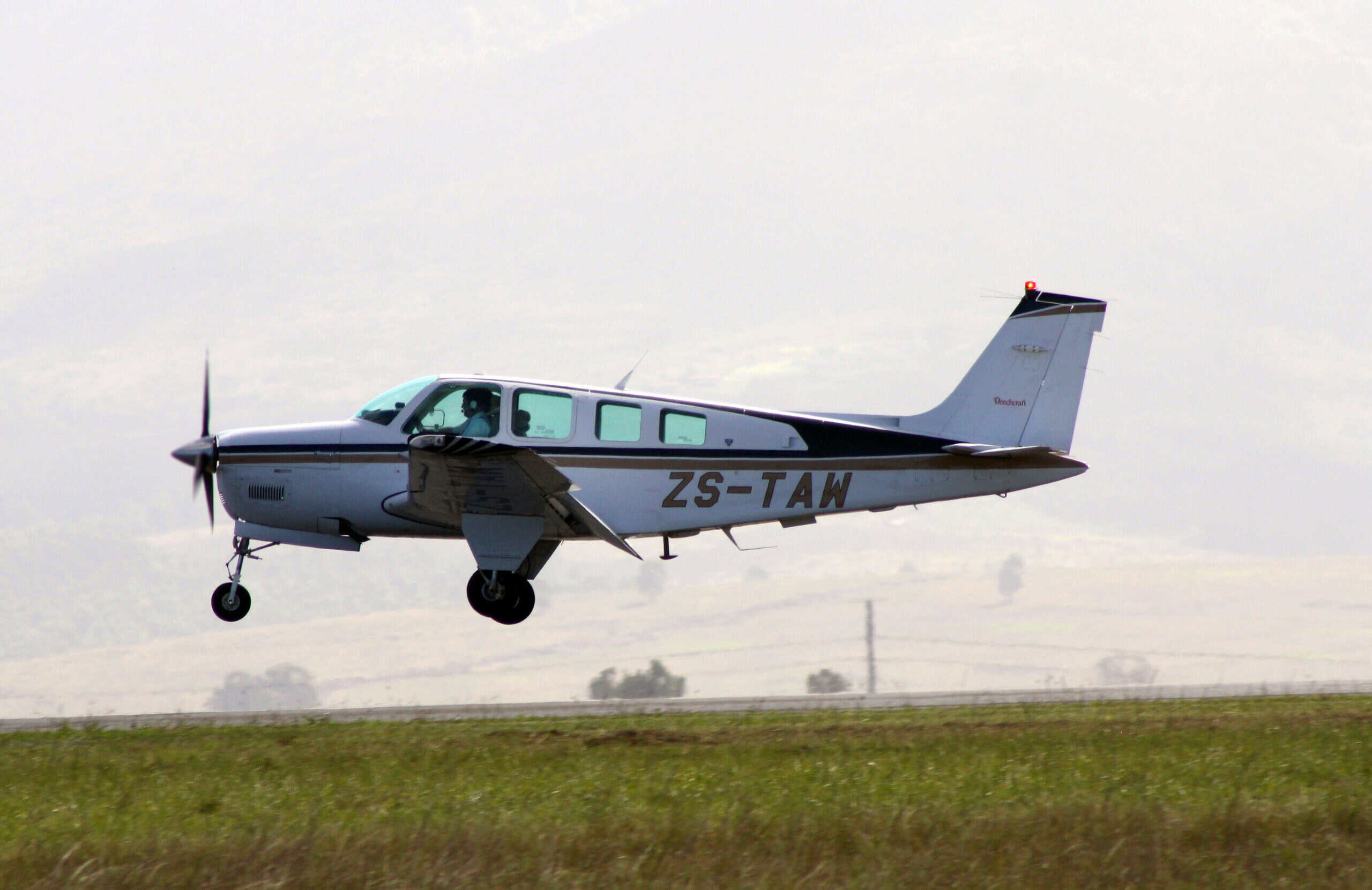
The Model 36 added 10 inches to the fuselage. It swapped in club seating. It also put a passenger entry door on the right side of the cabin. The A36 ran from 1970 through 2005 with the 285 hp IO-520-BB and later the 300 hp IO-550-B. The G36 replaced it in 2006 with the Garmin G1000 integrated avionics suite. The G36 stayed in production until the 2025 shutdown. The Model 36 family is the one most buyers in 2026 are actually shopping for.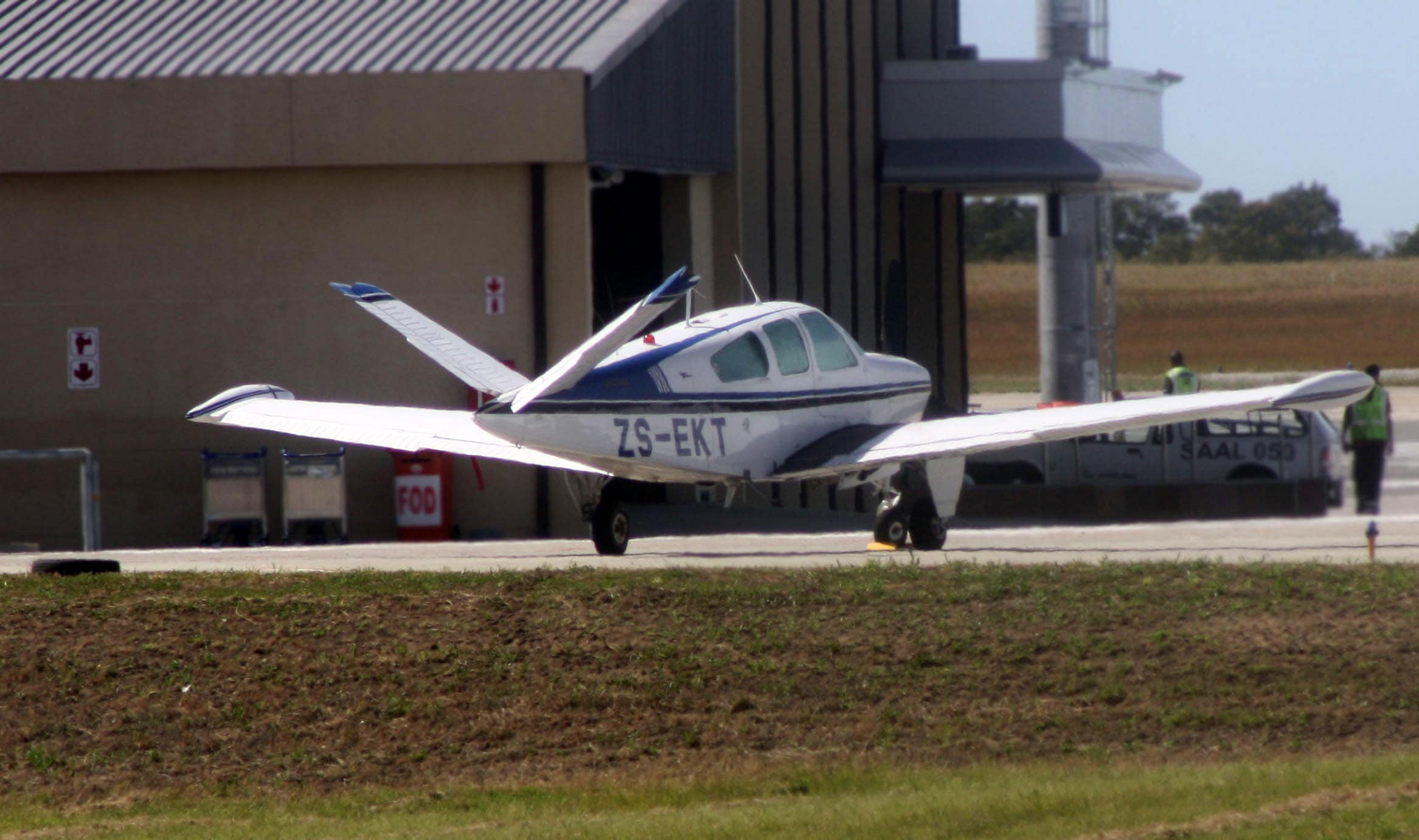
V-Tail vs Conventional Tail: Which Beechcraft Bonanza Should You Buy?
This question has been argued in hangars for fifty years. We’ll be straight with you: most modern buyers should choose the conventional tail. Not because the V-tail is dangerous. Properly inspected and properly flown V-tails have been safe for decades. The practical headaches just stack up.
The V-tail has a well-known yaw-pitch coupling. Pilots transitioning from a straight-tail airplane sometimes describe it as a “wobble” in turbulence. It’s manageable with currency and training, but it’s a real handling characteristic, not a myth.
The bigger issue is the cuff-and-spar inspection regime. AD 94-20-04 mandates repetitive 100-hour inspections of the ruddervator attach areas and the rear bulkheads where the leading-edge cuffs attach. This is non-negotiable. A V-tail Beechcraft Bonanza without clean cuff inspection history is a problem airplane.
The Model 33 and Model 36 conventional tails are exempt from the cuff AD. They share most of the rest of the airframe maintenance picture. The empennage is simpler. The handling is more conventional. Resale value tends to hold up better.
Buy a V-tail Bonanza if you want the iconic look and the V35B price-per-feature ratio. You also need to commit to BPPP training and the 100-hour AD discipline. A Beech-experienced shop nearby is the third requirement. Otherwise, look at the A36 or a clean F33A.
Performance and Specs Across the Beechcraft Bonanza Line
Here’s a clean comparison of the variants you’re most likely to find on the market in 2026.
| Variant | Engine | HP | Cruise | Useful Load | Fuel Cap | Range |
|---|---|---|---|---|---|---|
| V35B (1970-82) | Continental IO-520-BA | 285 | 172 kt | 1,275 lb | 74 gal | ~700 nm |
| F33A (1970-95) | Continental IO-520-BB | 285 | 172 kt | 1,213 lb | 74 gal | ~700 nm |
| A36 (1984-2005) | Continental IO-550-B | 300 | 177 kt | 1,403 lb | 74 gal | ~750 nm |
| G36 (2006-25) | Continental IO-550-B | 300 | 176 kt | 1,090 lb | 74 gal | ~740 nm |
| A36 w/ TAT Turbo | Continental TIO-550-N1B | 310 | 200+ kt | ~1,290 lb | 74-102 gal | 900+ nm |
Note the G36’s lower useful load. The full Garmin G1000 NXi panel, leather interior, and air-conditioning options on later G36s eat into the payload. That’s the trade-off for the glass cockpit. A 1990s A36 with steam gauges and Aspen retrofits will out-haul a brand-new G36 every time.
At 75% power, a normally-aspirated 300 hp Beechcraft Bonanza burns about 15.2 gph. At 65% economy cruise, it drops to 13.2 gph. At 55% for long-range, 11.5 gph. These are the IO-550-B numbers most A36 and G36 owners actually plan around. The TAT turbo-normalized airplanes typically run 14 to 16 gph at altitude for materially better true airspeed.
The Beechcraft Bonanza ADs Every Buyer Must Know
Buying any Beechcraft Bonanza means buying an airplane with a long AD list. Here are the ones that move the needle on resale value and on safety. Verify all of these in the logs before you write a check.
AD 94-20-04 (V-tails only): The ruddervator and spar cuff inspection. Repetitive 100-hour visual inspection of bulkheads and skin at fuselage stations 256.9 and 272 for damage. The leading-edge cuff modification was a one-time install. The 100-hour repetitive cuff-attach bulkhead inspection continues for the life of the airplane. No clean history, no deal.
Wing spar carry-through inspection: Early Bonanza models used a magnesium carry-through structure. Subsequent ADs require detailed inspection on certain serial numbers. A Bonanza-experienced IA will know which airframes are affected.
Continental crankshaft ADs: Various Continental IO-520 and IO-550 crankshaft ADs have hit Bonanza engines over the years. Verify the engine logs show compliance with every applicable serial-number-specific Continental AD.
Fuel cell ADs: Several ADs target Bonanza fuel cell inspection and replacement on specific serial-number ranges. Bladder replacement is expensive. A Bonanza on original 50-year-old bladders is a near-future big bill.
Cabin door latch and seat track ADs: The Model 36 has had ADs covering both. The seat track AD in particular has been linked to in-flight seat slides. Confirm compliance.
The American Bonanza Society maintains current AD lists for each variant on their members site. If you’re shopping seriously, joining ABS pre-purchase pays for itself in one conversation with a shop.
Turbo-Normalizing: When the Tornado Alley STC Earns Its Money
Tornado Alley Turbo (TAT) sells the most popular Beechcraft Bonanza performance modification on the market. Their Whirlwind turbo-normalizing STC installs on most S35 and later V-tails, the G33, and every Model 36. It’s not a turbocharger in the boost-above-sea-level sense. It’s a turbo-normalizer — it holds sea-level manifold pressure up to roughly 20,000 feet, then drops off above that.
The performance payoff is real. A turbo-normalized A36 will hold around 200 knots true airspeed in the high teens. Sea-level horsepower at 20,000 feet changes the mission. You climb to oxygen altitude and stay there. The fuel burn drops slightly while groundspeed jumps well past the normally-aspirated airplane.
The cost is real too. A TAT install on a clean A36 runs around $90,000 to $110,000 depending on options. That includes the GAMIjector tuned fuel-injection upgrade most owners buy with it. Resale value typically captures most of the install cost on the back end. That only holds if the airplane is otherwise clean.
Honestly, this is where we’d push back on the assumption that every Bonanza buyer needs a turbo. If you fly short trips in the lowlands, the turbo is heavy weight you pay to carry around. If you cross the Rockies, fly long IFR legs, or do regular over-water trips, the TAT system earns its money. Safety margin and trip time both swing in your favor.
What a Beechcraft Bonanza Really Costs to Own in 2026
Acquisition cost is just the entry fee. Real ownership cost is the number that determines whether a Beechcraft Bonanza fits your life. Here’s a realistic 2026 picture for an A36 flown 150 hours a year.
| Cost Category | Annual Estimate |
|---|---|
| Hangar (varies widely by region) | $3,600 – $9,600 |
| Insurance (instrument-rated, current) | $2,500 – $4,500 |
| Annual inspection (Bonanza-experienced shop) | $3,500 – $6,000 |
| Database and chart subscriptions | $500 – $1,200 |
| Fuel (150 hours, 14 gph avg, $7/gal) | $14,700 |
| Oil and routine maintenance | $1,500 – $3,000 |
| Engine reserve (toward 1,700 TBO) | $8,000 – $12,000 |
| Avionics/airframe reserve | $3,000 – $5,000 |
| Estimated annual total | $37,300 – $56,000 |
Used market pricing in May 2026 puts a typical V35B around $230,000. The range runs from $130,000 to $395,000 depending on engine time and avionics. A pre-owned A36 averages closer to $360,000. G36 pricing on the used market starts around $500,000 and climbs to $900,000 for late-model glass airplanes. Insurance premium quotes for a low-time pilot moving into any Bonanza tend to come in higher. Expect $5,000 to $8,000 in the first year unless you bring real retract complex time.
The Pre-Buy Inspection That Saves Owners From Heartbreak
Never skip the pre-buy. Use a shop that works on Bonanzas every week. A general piston-single shop that handles one a year is not the right pick. The American Bonanza Society maintains a list of recommended service centers. Use it.
Here’s what a real Beechcraft Bonanza pre-buy covers:
- Full AD search against the airframe serial, engine serial, and propeller serial. Every applicable AD logged as complied with. Each entry should reference the specific AD number and date.
- Cylinder compression and borescope on every cylinder. Continental IO-520 and IO-550 engines often hide top-end wear. Acceptable static compression numbers can mask real damage.
- Landing gear retraction test on jacks. The Bonanza gear is hydraulic and complex. A worn motor or sticky relay hides until the airplane goes on jacks.
- Fuel cell pressure check if the airplane has bladder cells. Original 50-year-old bladders will fail at the worst time.
- V-tail cuff inspection logs (if applicable) showing continuous compliance with AD 94-20-04.
- Wing spar inspection logs on applicable serial numbers.
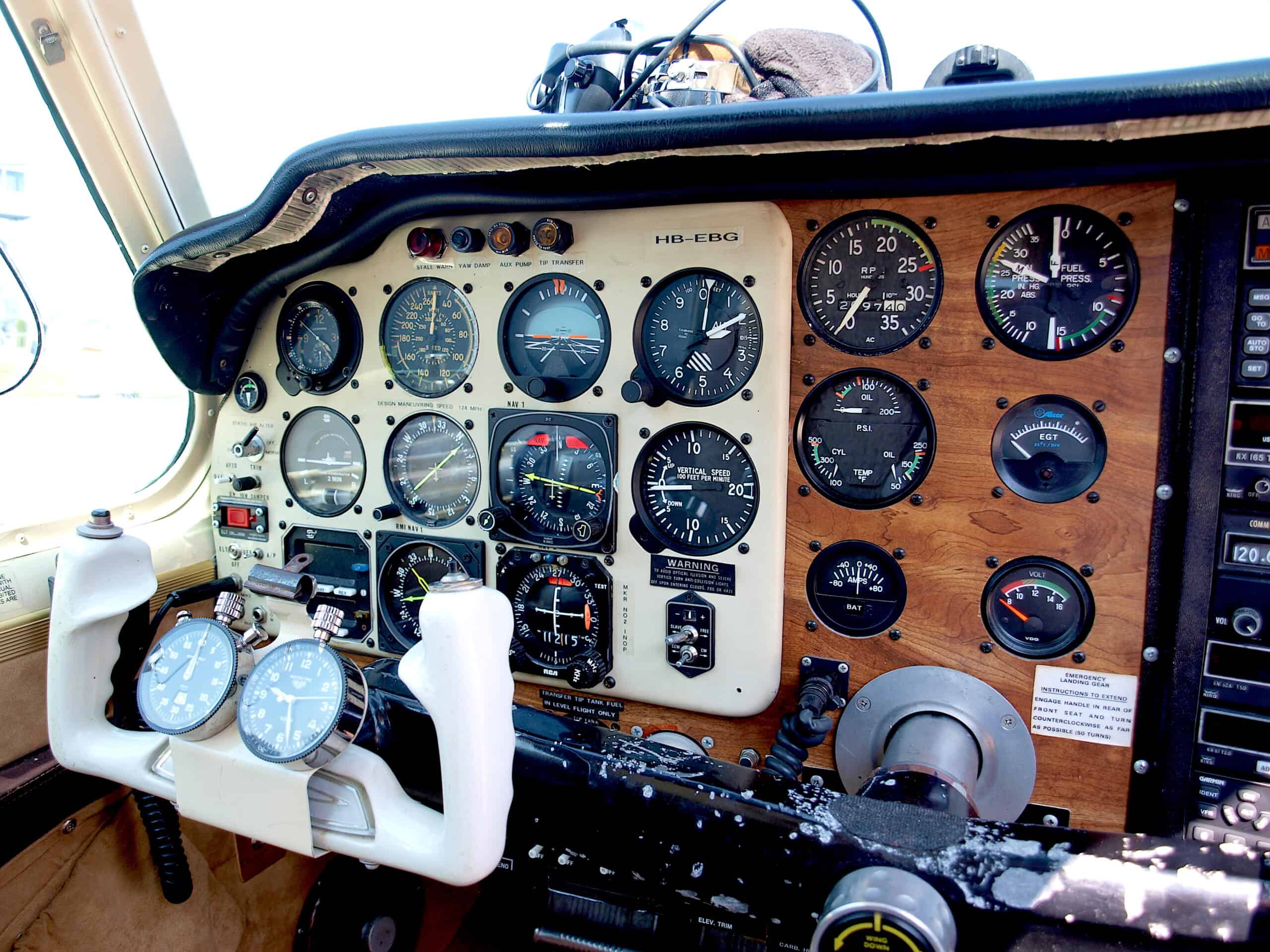
- Emergency gear extension placard verification. One recent inspection caught a placard that said “150 turns.” The correct value is 50. Things like this hide in plain sight.
- Avionics test end-to-end. Cover autopilot servos, radios, transponder, and ADS-B Out compliance.
Expect a thorough Bonanza pre-buy to run $3,000 to $5,000. That’s the cheapest insurance money you’ll ever spend on the airplane.
Bonanza-Specific Training Matters More Than You Think
The Beechcraft Bonanza isn’t a hard airplane to fly. It is, however, a fast airplane with a complex fuel system. The retractable gear bites unprepared pilots. The V-tail variant demands extra respect. Type-specific training pays back the cost on the first leg.
The American Bonanza Society’s Beechcraft Pilot Proficiency Program (BPPP) has been the industry-standard type-specific training since 1983. The program offers two main paths. The first is the BPPP Initial Beechcraft Systems, Procedures and Techniques course. The second is the BPPP Recurrent Pilot Skills Enhancement course. ABS recently launched the BEST program. The full name is Beechcraft Essential Systems and Techniques. It’s a free online training resource for members.
Insurance underwriters know BPPP. Many discount the premium for proof of recent completion. Several require it after a Bonanza claim. The course also counts toward the FAA WINGS program. Successful completion can earn a flight review or IPC endorsement.
Here’s what most pilots get wrong. They assume 500 hours in a Cessna 172 lets them transition cold into a 300 hp retract. The Bonanza fuel system alone deserves a dedicated session. The aux pump, the engine-driven pump, and the priming logic don’t behave the way Cessna pilots expect. Get the type-specific training.
Common Beechcraft Bonanza Pilot Mistakes
Even experienced Beechcraft Bonanza pilots fall into a handful of repeat patterns. Here are the five we see most.
1. Aux pump misuse on the ground. The aux pump with the engine-driven pump healthy and the mixture full rich floods the engine. Pilots transitioning from Pipers and Cessnas get this wrong constantly. The aux pump is for engine-driven pump failure. It’s not for routine taxi.
2. Skipping the emergency gear placard check. The Bonanza has a manual gear extension procedure. It has saved many pilots when the electric motor or hydraulic system failed. The placard tells you exactly how many crank turns it takes. Verify yours is correct on every annual.
3. Letting weight and balance creep. The A36’s club seating tempts owners to load four adults in the back. CG can move aft of the envelope fast. Run the numbers every loaded flight, not just on long trips.
4. Cylinder over-cooling on descent. The big-bore Continental engines crack cylinders when shock-cooled. Plan descents at 500 fpm or less. Hold cruise power until the airplane is in the pattern. The Bonanza wants to go down fast — manage the cylinders, not the airspeed.
5. Ignoring the V-tail flutter speed. The V35 and V35B have a published maneuvering speed. That speed drops with weight. Pilots who treat Va as a single number fly turbulence at the wrong speed for their actual loading. Use the chart, not the placard from a different model.
Frequently Asked Beechcraft Bonanza Questions
Is the V-tail Beechcraft Bonanza safe to fly?
Yes, when properly inspected. Compliance with AD 94-20-04 is the line between airworthy and not. That means the cuff modification plus the repetitive 100-hour bulkhead inspections. A clean V-tail with current cuffs and a competent pilot is statistically comparable to a conventional-tail Bonanza. That holds for in-flight structural events. The accidents that built the airplane’s reputation in the 1970s and 1980s have not been repeated at scale. The AD took effect and the numbers changed.
Which Beechcraft Bonanza variant is best for a first-time owner?
For most first-time Bonanza owners, the A36 is the sweet spot. Six seats. A forgiving conventional tail. The well-proven 300 hp IO-550-B engine. Parts and instructor availability everywhere. A deep used market that gives you real choice. An F33A is the next-best alternative. Pick that if you don’t need six seats and want a lighter, faster airplane.
How long will the G36 hold its value now that production has ended?
Used G36 values held steady through the 2025 production announcement. They have continued to appreciate modestly through early 2026. The G1000 NXi airplanes will likely follow the pattern of other end-of-production GA aircraft. Expect a brief soft period. Then long-term appreciation as buyers chase modern-cockpit airframes no one can buy new anymore. Parts and engineering support from Textron remain available.
Our Take: Why the Beechcraft Bonanza Still Earns Its Spot
Eight decades of continuous production isn’t an accident. The Bonanza got the formula right in 1947: fast, comfortable, all-metal, retractable, six-cylinder. Then it refined that formula for 78 years without losing the original character. WWII pilots came home to that airplane. A 2026 buyer can step into the same lineage. The lineage is recognizable from the first takeoff.
If you’re shopping for a serious traveling single, the Beechcraft Bonanza belongs on your list. Look for real range, real payload, and a parts and training ecosystem that won’t disappear. Bring patience for the AD search, money for a real pre-buy, and a commitment to BPPP-level training. The airplane will reward all three.
Want to talk Bonanza ownership with pilots who actually fly them? Join the E3 Aviation Association community. Our member roster includes Bonanza owners across every variant from V35B to G36. The conversations move faster than any forum.
Further Reading on E3 Aviation
- Cessna 172: The Complete Owner and Pilot Guide — the contrast piece for buyers weighing a four-seat trainer.
- Piper Cherokee: The Complete Owner and Pilot Guide — the cross-shop for buyers looking at a Hershey-bar wing alternative.
- Aircraft Weight and Balance: The GA Pilot’s Guide — type-specific CG discipline starts with the universal principles here.
- Aircraft V-Speeds: Every GA Pilot’s Quick Reference — Va, Vno, Vne, and the speeds that matter in a fast retract.
- Aircraft Cylinder Compression Test: The GA Owner-Operator Guide — applies directly to the Continental IO-550.
- IFR Currency Requirements: The Complete 2026 GA Guide — most serious owners fly IFR. Stay current.
- How to File a VFR Flight Plan: A GA Pilot 2026 Guide — the cross-country foundation for Bonanza trips.
- Density Altitude: The Complete GA Pilot Guide for 2026 — high-DA performance planning for big-bore retracts.
- ForeFlight Complete Guide for GA Pilots — the EFB most modern Bonanza pilots run.
External Authority References
- American Bonanza Society — the type club. Membership is the single best investment any prospective Bonanza owner can make.
- ABS Beechcraft Pilot Proficiency Program (BPPP) — type-specific training since 1983.
- Federal Register: AD 94-20-04 — the V-tail ruddervator and cuff AD in full text.
- Tornado Alley Turbo — the turbo-normalizing STC most often installed on the airplane.