Last Updated: May 17, 2026 | By E3 Aviation Editorial Team
Loss of control in flight kills more general aviation pilots than any other accident category. Most of those crashes start with a stall the pilot never saw coming — or saw, and answered with the wrong control input. Mastering stall recognition and recovery isn’t a checkride box to tick. It’s the single highest-leverage piece of airmanship you can carry into every flight, on every type, for the rest of your career.
This guide is the version we wish we’d had when we were learning, and the one we still review when a flight review comes around. We’ll keep it pilot-to-pilot, with real numbers, real recovery technique, and the failure modes that show up in NTSB reports year after year.
Why Stall Recognition and Recovery Matters More Than Any Other Skill
The NTSB and FAA have been consistent for over a decade: loss of control in flight (LOC-I) is the leading cause of fatal general aviation accidents. In some recent years it’s accounted for roughly a third of all fatal GA crashes. Most LOC-I events trace back to an aerodynamic stall — usually in the pattern, on a base-to-final turn, or in a high-workload climb-out.
That’s the part most pilots already know. Here’s the part most pilots underestimate: the airplane didn’t fail. The wing kept doing exactly what physics told it to do. The pilot misread the cue, misapplied the controls, or both. So the fix isn’t a technology fix. It’s a recognition-and-response fix. That’s what stall recognition and recovery training builds.
We’ll be straight with you: if you fly two or three days a month and your last spin awareness session was in primary training, your stall instincts have decayed. They decay fast. The goal of this guide is to refresh the mental model before the wing does it for you.
What an Aerodynamic Stall Actually Is
A stall is a function of angle of attack, not airspeed. That single sentence is the most important one in stall recognition and recovery, and the one most general aviation pilots half-remember.
Angle of attack (AOA) is the angle between the wing’s chord line and the relative wind. Every airfoil has a critical angle. On a Cessna 172 or Piper Cherokee, it sits around 15 to 18 degrees. Past that angle, airflow separates from the upper surface and lift collapses. You can exceed critical AOA at any airspeed, any attitude, and any power setting. The wing doesn’t care what the airspeed indicator says.
This is why you can stall a 172 at 90 knots in a steep turn. And it’s why you can fly it nose-high at 45 knots all day without stalling, as long as you stay below the critical angle. Stall recognition and recovery starts with internalizing one rule: you fly the wing’s AOA. The airspeed indicator is just an indirect read on it.
Stall Speeds Are a Snapshot, Not a Law
Your POH publishes stall speeds because the FAA requires it. But those numbers come with assumptions baked in. Here’s a typical Cessna 172S sheet:
| V-Speed | Cessna 172S Value (KIAS) | Configuration |
|---|---|---|
| VS0 | 40 | Full flaps, max gross, power idle, wings level |
| VS1 | 48 | Clean, max gross, power idle, wings level |
| VA (maneuvering) | 99 (varies by weight) | Max gross |
| VFE (max flap) | 85 (10 deg) / 110 (full) | Flap extension envelope |
Now load the airplane heavier (you can’t), and the numbers go up. Pull G in a steep turn at 60 degrees of bank? Effective stall speed goes up by roughly 41 percent. Add a load of ice on the wings? It goes up further, and the warning cues get muddier. The POH number assumes wings level, idle power, max gross, smooth air. Reality has none of those guarantees.
Recognizing a Stall Before It Bites
Every stall sends signals before lift collapses. Real stall recognition and recovery starts with reading those signals in your hands and seat. The pilots who stay out of NTSB reports learn the cues with the airframe. They don’t wait for the airspeed indicator. Here’s the recognition stack, in the order it usually shows up:
The Cues You Should Feel Before You See
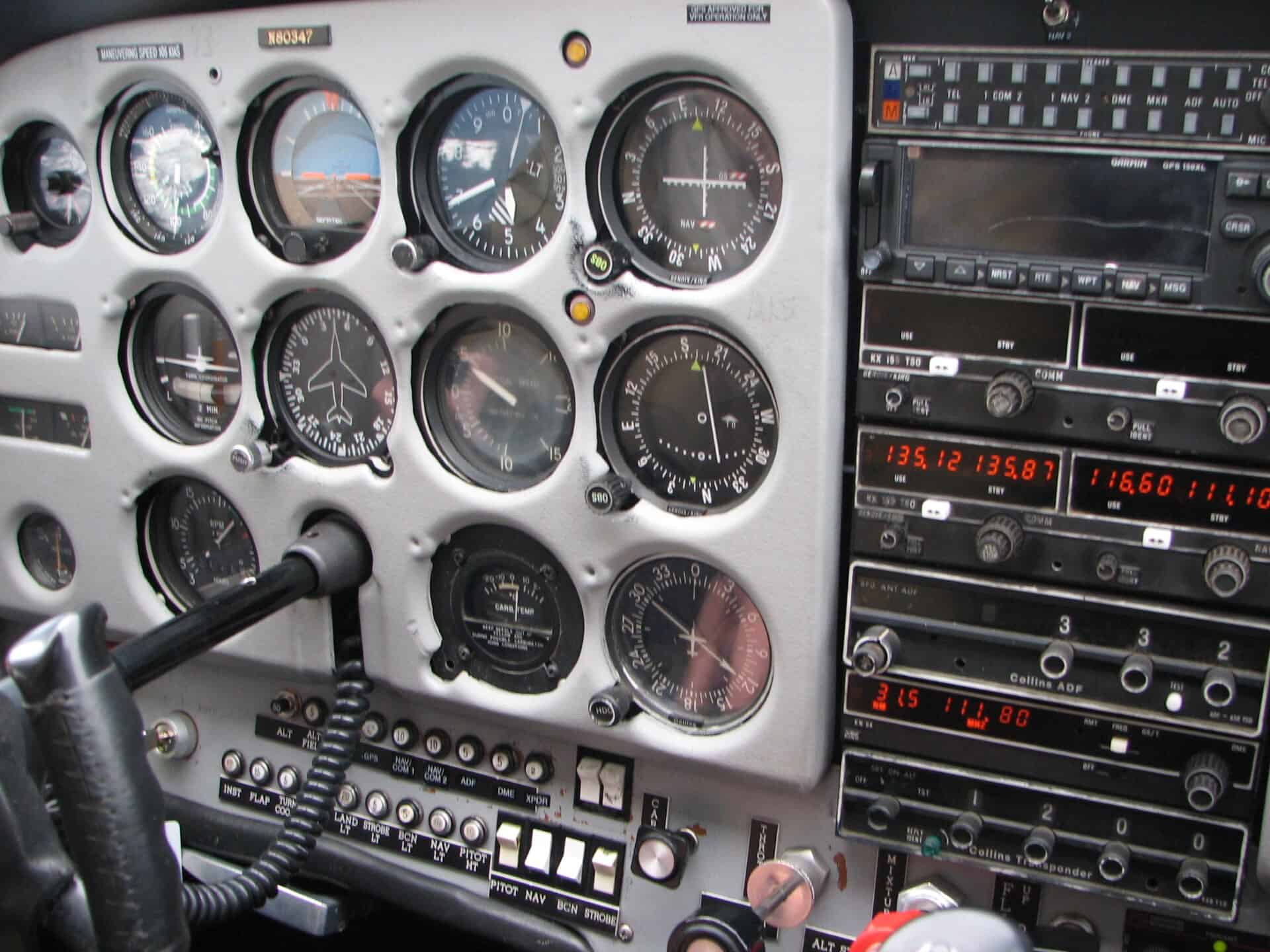
The control yoke gets sloppy. Aileron response gets mushy. The seat-of-the-pants tells you the airplane has gone soft — like driving on a road where the tires lose grip. Pitch authority decays. You’re moving more elevator for less response. The airframe vibrates faintly in some types, and pre-stall buffet shows up clearly in others (Cessna singles tend to give you a generous airframe shake; some Pipers are quieter).
Then comes the stall warning horn or AOA indicator alert. In most light singles the horn cuts in at roughly 5 to 10 knots above the actual aerodynamic stall — not at the stall itself. Treat it as a “you’re committed to recover now” cue, not a “you have time” cue.
The Cues You Can See
Pitch attitude high relative to the horizon. Airspeed decaying. Vertical speed indicator unwinding. In a turn, the inside wing dropping despite aileron correction. If you’re staring at the panel and the nose attitude is unusual for what you’re doing, trust the picture.
Our take: most of the GA stall accidents we read about share one detail — the pilot was looking outside or task-saturated, not scanning. Recognition only works if you’ve trained yourself to feel the cues with the airplane, not look for them on a gauge.
The FAA Stall Recovery Procedure: Reduce AOA First
The current FAA guidance on stall recognition and recovery is built into Advisory Circular 120-109A and the Airplane Flying Handbook (FAA-H-8083-3C). It changed in the mid-2010s after years of training where instructors had over-emphasized “minimize altitude loss.” That phrase — minimize altitude loss — got pilots killed because it pushed them to add power before unloading the wing.
The current sequence is unambiguous and applies to nearly every single-engine GA airplane:
- Reduce angle of attack first. Pitch the nose down by relaxing back pressure or actively pushing forward. The wing must unstall before anything else matters.
- Roll wings level. Use coordinated aileron and rudder to get to wings level. Don’t worry about altitude yet.
- Add full power smoothly. Power restores climb capability but doesn’t unstall a wing on its own. Apply it after AOA is reduced and the airplane is flying again.
- Verify flap and gear configuration. Retract flaps incrementally if extended; raise gear if applicable for a go-around profile. Don’t dump flaps in one motion.
- Establish a positive climb at VY. Trim off pressure. Re-aviate, then re-navigate.
Notice the order. Most pilots who botch a stall recovery have the steps backward — they jam in power while still holding back-pressure, which pitches the nose up further and deepens the stall. In a power-on stall, full throttle plus elevated AOA is the spin entry recipe. Unload first. Always.
Power-Off Stalls vs. Power-On Stalls — Different Animals
A power-off stall mimics a botched landing approach. Nose attitude is shallower, altitude loss in recovery is small, and the recovery is straightforward: pitch down, level the wings, add power, retract flaps incrementally, climb out.
A power-on stall mimics a takeoff or go-around mishandled. Nose is high, torque and P-factor are pulling the airplane left, and the wing’s about to drop in a yaw-induced break. The recovery is the same sequence, but the inputs are sharper: aggressive forward pressure to unload, immediate rudder to stop yaw, then wings level, then power management. Most stall-spin fatalities live in this scenario. Don’t let it surprise you.
Accelerated Stalls: The Base-to-Final Killer
The accelerated stall is where stall recognition and recovery training pays the rent. Load factor exceeds 1 G in any maneuver besides straight-and-level cruise. The airplane stalls at a higher airspeed because effective stall speed scales with the square root of load factor. At 60 degrees of bank in level flight, you’re pulling 2 Gs and stall speed is up 41 percent.
Here’s why this matters: the base-to-final turn is the classic GA killer. The pilot overshoots the centerline, banks harder to correct, adds rudder to tighten the turn (the cardinal sin), and the inside wing stalls because it’s at a lower airspeed and a higher AOA than the outside wing. The airplane snaps inverted toward the ground. There isn’t enough altitude to recover.
The Skid Is What Kills
A coordinated turn doesn’t stall asymmetrically. A skidding turn does. When you cross-control with bottom rudder to tighten the turn, you induce yaw, the inside wing slows, the outside wing speeds up, and the AOA difference between them grows. That’s the spin entry condition pilots train to avoid — and the one base-to-final fatalities keep finding.
Here’s what most pilots get wrong: they think the answer is to never bank steeply in the pattern. Wrong answer. The answer is to never use rudder to fix a poorly planned turn. If you overshoot final, go around. A stable approach is the only approach that ends in a landing.
Spin Entry and Spin Recovery for GA Airplanes
A spin is what happens when stall recognition and recovery breaks down and yaw is present. One wing stays stalled, the other partially flies, and the airplane rotates around its vertical axis. The nose drops. In a developed spin, you’re descending at 1,500 to 3,000 feet per minute with the windshield mostly full of ground.
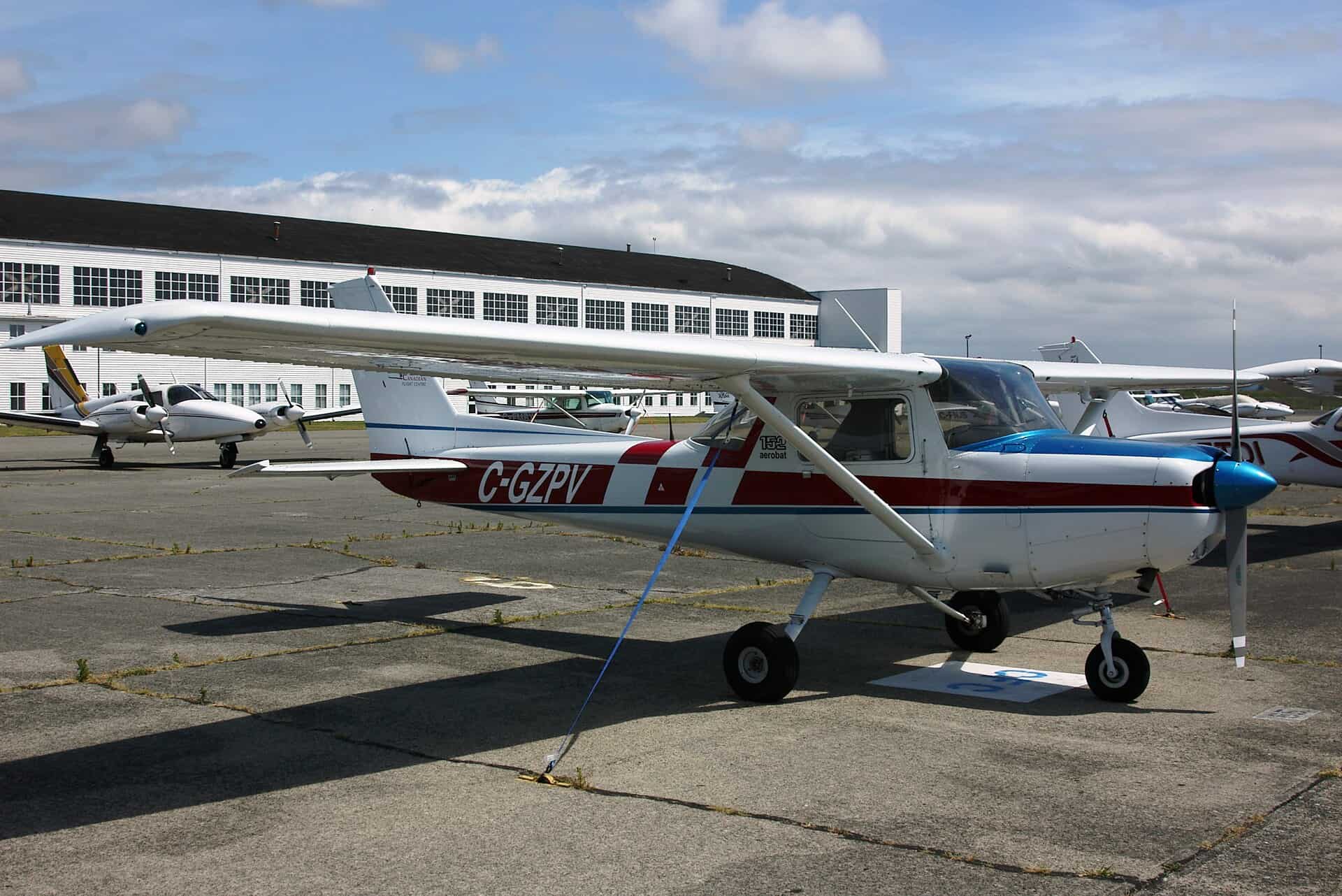
Most certificated GA airplanes (Cessna 172, Piper Cherokee 180, Cherokee Warrior) are placarded against intentional spins. They’re not prohibited because they can’t recover — they’re restricted because the manufacturer doesn’t certify spin training in them at typical weight and CG conditions. The Cessna 152, 152 Aerobat, Piper Tomahawk, Citabria, Decathlon, and most aerobatic types are spin-certified and used for spin training.
The PARE Recovery Procedure
Most light GA airplanes recover using the PARE procedure, developed by aerobatic instructor Rich Stowell in 1990. It standardized what NASA and FAA spin testing in the 1970s and 1980s had already established:
- P – Power to idle. Removes asymmetric thrust effects and prevents the spin from accelerating.
- A – Ailerons neutral. Aileron input in a spin can aggravate the rotation. Hands off.
- R – Rudder full opposite to the spin direction. Identify rotation direction from the turn coordinator’s ball or the visual cue, then apply full opposite rudder until rotation stops.
- E – Elevator briskly forward through neutral. Breaks the stall. Hold until rotation stops, then neutralize controls and recover from the dive.
If the manufacturer publishes a spin recovery procedure specific to your airplane, that procedure wins. Always. PARE is the generic technique; type-specific procedures take precedence.
Spin Training Isn’t a Stall Training Substitute
Spin training in a 152 Aerobat or Citabria is a transformative experience for any pilot — we recommend it. But spin recovery is the last line of defense, not the first. If you’re using your spin recovery skills, you’ve already failed at recognition and stall recovery. Train the recognition. Train the unload. Don’t let the spin become necessary.
The Mental Model: How Sharp Pilots Stay Out of Stalls
Effective stall recognition and recovery is a habit, not a procedure. The pilots we know who fly a lot — combat veterans, ag operators, mountain instructors, working CFIs — share one. They monitor angle of attack subconsciously through the cues we listed. Control feel. Attitude. Airspeed trend. Pitch authority. They never get surprised by a stall because they never let the airplane drift toward critical AOA without noticing.
Here’s the framework we teach:
- Know your numbers. Memorize VSO and VS1 for the airplane you fly. Know that any maneuver above 1 G increases effective stall speed. Add a 20-percent buffer in the pattern as a rule of thumb.
- Feel the airplane. When the controls go soft, the airplane is telling you something. Don’t ignore it because the airspeed indicator hasn’t reached a magic number.
- Always coordinate. No cross-controlled turns in the pattern. Ball centered. If you need rudder to fix something, you need to fix something else first.
- Stabilize the approach. The base-to-final fatal accident lives in unstabilized approaches. If you’re not stable by 500 feet AGL, go around.
- Practice in real airplanes. Twice a year, find altitude and do a series of clean stalls, full-flap stalls, and power-on stalls with a CFI. Recognition decays without practice. Recovery technique decays faster.
What Most Pilots Get Wrong About Stall Training
The old approach to stall recognition and recovery focused on “minimize altitude loss.” That phrase got pilots killed. It baked in a back-pressure-first reflex. The FAA spent the better part of a decade trying to unwind it. AC 120-109A and the updated Airplane Flying Handbook now prioritize AOA reduction over altitude preservation. If your last stall training was before 2017 and your instinct in a stall is to hold the nose up and add power, your training is out of date.
Honestly, this is where we’d push back on a lot of older training material: the airplane doesn’t care about your altitude. It cares about its AOA. Unload, then recover energy, then recover altitude. Out of order, you compound the problem.
Frequently Asked Questions About Stall Recognition and Recovery
Can a stall happen at cruise airspeed?
Yes. A stall is a function of angle of attack, not airspeed. In a steep turn, an abrupt pitch-up, or under heavy G-loading, the wing can reach critical AOA at any indicated airspeed — including cruise. The classic example is a sudden pull-up to avoid traffic at cruise speed; the wing exceeds critical AOA and stalls despite the airspeed indicator showing 110 knots.
Why does the FAA say to reduce angle of attack before adding power?
Because the wing must be flying before power has anywhere to go. Adding full power with the wing still stalled often pitches the nose up further (especially in high-thrust singles), deepens the stall, and induces a wing drop. Reducing AOA first unstalls the wing; then power restores climb capability. The current procedure in AC 120-109A and FAA-H-8083-3C reflects this order explicitly.
How often should I practice stalls after I get my certificate?
Plan on a stall practice session with a CFI at least every six months — pair it with your flight review or instrument proficiency check. Practice all three: power-off, power-on, and clean configuration. Include a few approach-to-stall events in a turn so your accelerated stall recognition stays current. Recognition is a perishable skill, and the cost of refreshing it is a one-hour flight.
The E3 Take on Stall Training
The ambassador roster at E3 Aviation Association is full of pilots who’ve been at the edge of the envelope and brought airplanes back. F-16 combat pilots. World-class aerobatic competitors. Backcountry instructors who land on 800-foot strips at altitude. Every one of them treats stall recognition and recovery as a craft they refresh deliberately — not a checkride box they checked once.
Your stall instincts are the cheapest insurance policy you’ll ever buy. Two hours with a CFI in the practice area every six months. A spin awareness course in a 152 Aerobat or Citabria once in your career. A habit of treating control feel as your primary AOA indicator. That’s the cost. The alternative shows up in NTSB reports.
If you want more pilot-to-pilot training content, ambassador insights, and the kind of community that pushes you to fly better — not just more — join E3 Aviation Association. Built by pilots, for pilots.
Further Reading on E3 Aviation
- Aircraft V-Speeds: Every GA Pilot’s Quick Reference — Includes VS0, VS1, VA, and how load factor changes stall speed.
- Cessna 172: The Complete Owner and Pilot Guide for 2026 — Stall behavior, performance numbers, and the airplane most pilots learn stalls in.
- Density Altitude: The Complete GA Pilot Guide for 2026 — Why your stall margin shrinks at altitude and how to plan for it.
- Aircraft Weight and Balance: The Complete GA Pilot’s Guide — CG location and stall recovery go together. Aft-CG airplanes stall and spin differently than forward-CG ones.
- Mastering the Edge: Why Stall, Spin, and Upset Training Is Essential for Pilots — The case for going beyond the checkride minimum.