

Last Updated: May 4, 2026 | By E3 Aviation Editorial Team
You passed your instrument checkride. You flew approaches in actual IMC. You logged the hours and got the rating. But here’s the question most rated pilots can’t answer cleanly: are you actually legal to fly IFR right now?
IFR currency requirements trip up more instrument-rated pilots than any other FAR. Not because the rule is complicated — it isn’t. It’s because pilots misread one word, skip one step, or assume something counts that doesn’t.
This article breaks down FAR 61.57(c) exactly as written. No guessing. No “I think it means.” Just the regulation, what it covers, and how to stay legal year-round.
The IFR Currency Rule Most Pilots Misread
FAR 61.57(c) is the rule governing IFR currency requirements for instrument-rated pilots. It’s short. But pilots consistently misread it — and that misreading has real consequences.
Here’s what the regulation actually says. To act as PIC under IFR or in weather conditions less than VFR minimums, you must have logged within the preceding 6 calendar months:
- 6 instrument approaches
- Holding procedures and tasks
- Intercepting and tracking courses through the use of navigational electronic systems
Three requirements. All three. Not just the approaches.
That last part — holding and course tracking — is what most pilots forget. They log their 6 approaches and assume they’re current. They’re not, unless they’ve also logged the holding and nav tracking components.
Now let’s talk about “6 calendar months.” This does not mean 180 days. It means calendar months — as in, from the last day of whatever month you last logged currency, forward through 6 complete months.
Here’s an example. You complete your last approach on March 15. Your currency doesn’t expire on September 12 (180 days later). It expires at the end of September — the last day of the 6th calendar month after March. That gives you until September 30.
It sounds like a small difference. But it can mean two extra weeks of legal IFR flight. Know it.
These rules apply whether you’re flying in actual IMC or in VMC on an IFR flight plan. If you’re acting as PIC on an IFR flight plan, you need to be current — full stop.
Exactly What Counts Toward IFR Currency — and What Doesn’t
This is where a lot of confusion lives. Let’s go through each component clearly.
The 6 approaches — what actually counts
The approaches must be instrument approaches. That means approaches flown solely by reference to instruments. You can log them in actual IMC, under the hood with a safety pilot, in an AATD, in an FTD, or in a full flight simulator (FFS).
The approaches must be completed — not just started. You need to fly to minimums or to the missed approach point. Touch-and-gos from a visual don’t count. A practice approach flown VFR under a VFR flight plan doesn’t count unless you’re under the hood.
One more thing: the approach type matters. You don’t get to log six GPS approaches and call it a day if your flights regularly involve ILS approaches. Currency is legal. Proficiency is something else — and we’ll get to that.
Holding procedures — don’t skip this one
The regulation says “holding procedures and tasks.” That’s plural. A single hold counts, but you need to actually fly the hold — entry, standard turns, timing, fix crossing. You can’t just note “holding” in your logbook without actually performing the task.
Like the approaches, holding can be logged in actual IMC, simulated IMC (under the hood), or in an approved simulator or training device.
Intercepting and tracking courses
This one is the most frequently skipped component of the discussion. FAR 61.57(c) specifically calls out “intercepting and tracking courses through the use of navigational electronic systems.”
In practice, flying any instrument approach covers this. An ILS intercept covers it. A GPS course intercept covers it. If you’re flying actual approaches, you’re almost certainly satisfying this requirement automatically.
But if someone is trying to game the system and log holds without approaches — or log approaches in an environment that doesn’t involve course interception — they could technically be non-current.
Common misconceptions that cost pilots their instrument currency
Here’s what most pilots get wrong: they count practice approaches flown visually, without instruments, without a hood, and without a safety pilot endorsement. Those don’t count. Period.
A few other things that do not count:
- VFR practice approaches without instrument reference
- Flying an approach as a safety pilot (the pilot flying gets the credit, not you)
- PC-based flight simulators not approved as AATDs or FTDs
- Circling approaches that aren’t flown to minimums by instruments
And one that surprises people: flying as a safety pilot does not build your own currency. You’re helping someone else build theirs. If you want credit, you need to be the one wearing the foggles or flying in actual IMC, with someone else acting as your safety pilot.
The Grace Period Nobody Talks About

Most pilots know about the 6-month window. Fewer know what happens in months 7 through 12.
FAR 61.57(c)(2) gives you an additional 6-month window after your currency lapses. During this period, you still can’t act as PIC on an IFR flight plan or in IMC. But you’re not completely grounded either.
You can still act as PIC in VMC. You can fly VFR. You can carry passengers. You’re just not legal to fly instruments in command.
Think of it as a grace window to rebuild your standing. You can use this time to fly approaches under the hood with a safety pilot, log sim time, or schedule a session with an instrument instructor — without needing a full Instrument Proficiency Check (IPC) first.
But once that second 6-month window closes — 12 total months since you were last current — the grace period is gone. At that point, no amount of solo practice under the hood gets you back. You need an IPC.
What an IPC actually involves
An IPC is not a checkride. It’s a proficiency check administered by an authorized instructor (CFII). The instructor uses the Instrument ACS (Airman Certification Standards) as a reference, but they have discretion on what areas to cover based on your demonstrated skills.
A full IPC can be done in a single session. It typically covers en-route procedures, approaches, holds, partial panel work, and unusual attitude recovery. A good CFII will tailor it to your weak areas.
After a successful IPC, your 6-month currency clock resets — just as if you’d flown the approaches yourself.
We’ll be straight with you: if you’ve been out of the left seat for 8 months or more, an IPC with a sharp CFII is probably the right move even during the grace window. Currency is legal. An IPC gets you proficient. Those aren’t the same thing.
The Cheapest Way to Build IFR Currency in 2026

Aircraft time is expensive. But the FAA doesn’t need you to build instrument currency in the aircraft. That’s where smart pilots save real money.
Simulator time — the underused currency hack
The FAA allows instrument currency to be logged in three categories of approved training devices:
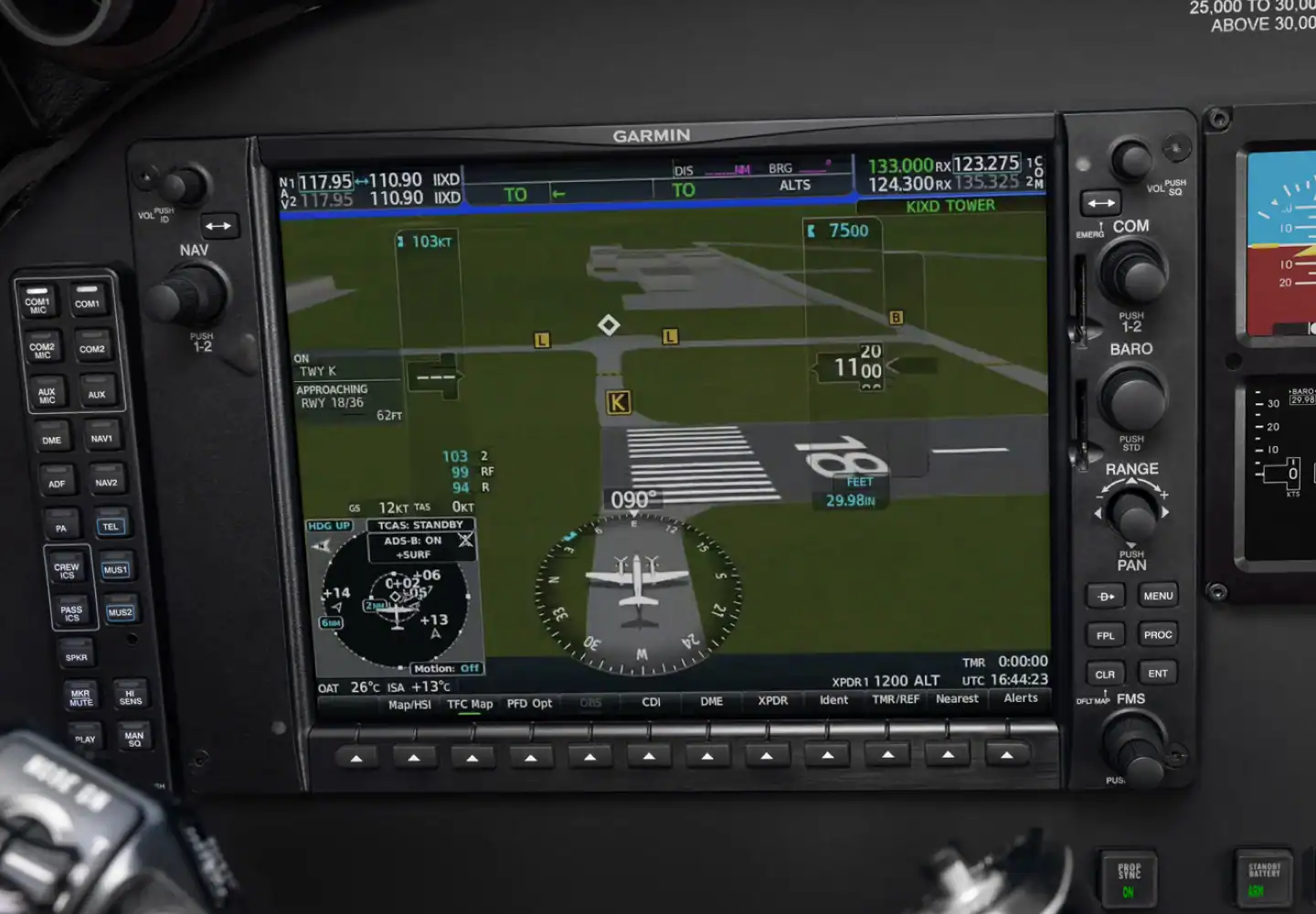
AATD (Aviation Training Device, Advanced): The most accessible option for GA pilots. Think Redbird, Frasca, and similar fixed-base simulators at flight schools. An AATD can cover all 6 approaches, holding, and course tracking required under 61.57(c). No aircraft needed. No weather concerns. Pause, reset, repeat.
FTD (Flight Training Device): More sophisticated than an AATD. FTDs are classified by level (Level 4 through 7). They’re less common than AATDs but still widely available at larger flight schools and FSDO-approved facilities.
FFS (Full Flight Simulator): Full-motion sims used by airlines and advanced training centers. These count for everything and more — but they’re typically not where GA pilots build routine currency.
The key rule: the device must be approved by the FAA. A desktop simulator running X-Plane on your home computer — no matter how realistic — does not count. Your logbook entries need to reference the specific device, its FAA approval number, and the location.
Cost comparison: aircraft vs. sim
Let’s be direct about the numbers. A Cessna 172 rents for $150–$200/hour at most FBOs in 2026. Six instrument approaches, plus holds, plus a safety pilot — you’re looking at 1.5 to 2 hours minimum. That’s $225–$400 just for the aircraft.
An AATD session typically runs $50–$120/hour. You can knock out your entire instrument currency exercise in a single 90-minute session for under $150. No safety pilot needed. No weather dependency. No fuel surcharges.
If you want to use a safety pilot in the actual aircraft, that’s also a solid option — especially if you’re building real aircraft time. But for pure currency maintenance, the AATD wins on cost every time.
Actual IMC — the best and worst option
Flying in actual IMC counts toward currency. Obviously. And there’s an argument to be made that real IMC keeps your skills sharper than any simulator.
But it’s also the least controllable option. You can’t schedule IMC. You can’t pause it. You can’t reset the approach if you mess up the intercept. For currency-only purposes, actual IMC is not the most efficient path.
That said, if you’re flying regularly and happen to be in IMC, log your approaches. Every one counts.
Logging IFR Currency Correctly in Your Logbook

Currency means nothing if you can’t prove it. And in an FAA enforcement situation, your logbook is your only defense.
What your logbook entries need to show
For each instrument currency flight, your logbook should capture:
- Date of the flight
- Aircraft make, model, and registration (or sim device name and approval number)
- Type and number of approaches flown (e.g., “2 ILS RWY 28, 1 RNAV GPS RWY 10”)
- Whether the approaches were in actual IMC or simulated (under hood)
- Holding procedures performed
- Total instrument time logged
- Safety pilot name and certificate number (if applicable)
The FAA doesn’t mandate a specific logbook format. But in an enforcement situation, vague entries like “3 approaches, IMC” are harder to defend than specific entries that name the approach type, airport, and conditions.
Simulated vs. actual instrument time — log them separately
FAR 61.51(g) governs the logging of instrument time. It distinguishes between actual instrument time (in real IMC, no outside visual reference) and simulated instrument time (under the hood in VMC, or in an approved sim).
Both count toward your 61.57(c) requirement. But they’re separate log columns. Don’t combine them. An FAA inspector who sees a mix-up in your instrument time logging will look harder at everything else.
If you used a safety pilot, log their name. They were acting as required crew. Their name in your logbook establishes that the simulated instrument time was conducted legally — with someone watching for traffic while you were under the hood.
The 6-month lookback — how to verify your own status
Here’s a fast self-check. Open your logbook to today’s date. Count back 6 calendar months (not 180 days). Find every instrument approach, hold, and course intercept you logged in that window.
If you have at least 6 approaches, at least one hold entry, and course tracking documented — you’re current. If you don’t, you’re not legal for IFR PIC. Simple as that.
Run this check before every IFR flight. Not once a year. Before every flight.
How Currency Differs from Proficiency (and Why It Matters)
Currency is a legal standard. Proficiency is a safety standard. They’re not the same thing. And this distinction matters enormously in real-world instrument flying.
You can be 100% legal under FAR 61.57(c) and still be genuinely dangerous in actual IMC. Being current says you flew 6 approaches in the last 6 months. It doesn’t say how well you flew them. It doesn’t say you can handle an electrical failure in hard IMC at night. It doesn’t say you’re sharp on partial panel or comfortable shooting a circling approach to minimums in rain.
This is why the instrument rating training standards are more demanding than the currency standards. During training, you’re held to ACS performance standards on every maneuver. Currency maintenance has no performance standard — just a minimum activity threshold.
Our take: if you haven’t flown actual IMC in over 90 days, seriously consider a CFII-accompanied flight or a full sim session before launching into real weather. Being legal and being ready aren’t the same thing. Staying current across all your certificates is the mark of a pilot who lasts a career.
A good pre-flight habit is also reading the weather you’re about to fly through. If you haven’t looked at a METAR or TAF in a while, our guide on weather briefing fundamentals is a quick refresh before any instrument flight.
The NTSB accident database is full of instrument-rated pilots who were technically current. They flew when they shouldn’t have. They got into conditions their skills couldn’t handle. Currency didn’t protect them.
Proficiency does.
Frequently Asked Questions About IFR Currency Requirements
Can a safety pilot log instrument approaches to build their own IFR currency?
No. When you act as safety pilot, the pilot under the hood is the one logging approaches and satisfying the rule. You’re acting as required crew — watching for traffic and maintaining visual separation. You’re not flying instruments. You can’t log the approaches. If you want to build your own instrument currency under 61.57(c), you need to be the one wearing the foggles or flying in actual IMC, with someone else acting as your safety pilot.
Does an instrument approach in a foreign country count toward FAR 61.57(c) currency?
Yes, with conditions. FAR 61.57(c) doesn’t restrict where the approaches are flown geographically. Approaches conducted in foreign countries count, provided they were flown legally, under instrument conditions (actual or simulated), and properly documented in your logbook. The approach type, airport identifier, date, and conditions all need to be logged. If you flew approaches in Canada or Mexico under your U.S. certificate, those count. International airline approaches under a foreign ATP certificate are a different question — get specific guidance from the FAA or a qualified aviation attorney if that’s your situation.
Do I need to be in an airplane to satisfy IFR currency requirements, or can I use a sim for all of it?
You can satisfy all three components of FAR 61.57(c) — the 6 approaches, holding, and course tracking — entirely in an FAA-approved AATD, FTD, or full flight simulator. No aircraft required. The device must be FAA-approved (not a desktop PC simulator), and you must log the device name, FAA approval number, and location in your logbook. Check FAR 61.57(c)(3) for the current sim-specific rules, and confirm the device’s approval status with the facility before logging the time.
Related Articles
Sources
- FAR 61.57 — Recent Flight Experience: Pilot in Command (eCFR)
- FAA Instrument Procedures Handbook (FAA-H-8083-16)
- FAA Instrument Rating Airman Certification Standards (ACS)
- FAA Advisory Circular 61-136B — FAA Approval of Aviation Training Devices
Stay current on FAA regulations and pilot requirements at the E3 Aviation Association aviation articles page. For video training on IFR proficiency, subscribe to the E3 Aviation YouTube channel.



 requires 6 approaches, holding, and course tracking every 6 calendar months. Here's how to stay legal and ready.)