

Last Updated: May 29, 2026 | By the E3 Aviation Editorial Team
Most non-FIKI piston-single pilots think structural icing is something that happens to airline crews and corporate jets. It isn’t. The fatal icing accidents in general aviation almost always start the same way. A forecast that looked manageable. A cloud layer that wasn’t supposed to be wet. A pilot who waited two minutes too long to ask for a different altitude.
Structural icing in a piston single is a performance problem first. It’s a control problem second. It’s a survival problem about ninety seconds after the first two. You don’t get a warning light. You get a slow, quiet handful of trouble. A couple of knots of airspeed gone. A wing that won’t quite stay where you put it. An instinct to pull back on the yoke that is exactly the wrong move.
This guide is the field manual we wish every non-FIKI piston pilot had read before their first winter cross-country. We’ll cover what structural icing actually is. We’ll show why your aircraft is more vulnerable than the POH suggests. We’ll explain how to read AIRMET Zulu without lying to yourself about it. We’ll define what the FIKI badge really buys. And we’ll walk through the only four escape moves that consistently work. No fluff. No scare stories. Just what a high-time GA pilot would tell you over coffee before a marginal icing day.
What Structural Icing Actually Is
Structural icing is what happens when an airplane flies through visible moisture below freezing. The moisture is still liquid. It hasn’t crystallized yet. Supercooled water droplets stay liquid below zero Celsius because there’s nothing for them to freeze onto. Your wing’s leading edge is the trigger. The droplets hit the metal, lose their supercooled state, and freeze on contact.
The leading edge of every lift-producing surface is the target. Wings, horizontal stabilizer, vertical fin, prop blades, antennas, pitot tube, fuel vents, and windscreen all collect ice. Not evenly. The shape of the airfoil and the size of the droplets decide what builds where. That detail matters more than most pilots realize.
The FAA breaks structural icing into three main shapes in AC 91-74B Pilot Guide: Flight in Icing Conditions. Rime ice is the milky, opaque buildup that forms at colder temperatures from small droplets. It freezes on contact and traps air. Clear ice is the smooth, glassy, denser kind. It forms from bigger droplets at warmer subfreezing temperatures. The droplet flows back over the wing before freezing. That changes the airfoil shape. Mixed ice is what you actually see most of the time. Rime and clear together. Building fast. In shapes the engineers never tested against.
Here’s the part the textbooks gloss over. The structural icing a pilot accumulates in three minutes can change how the wing behaves. Every angle of attack you’ve ever practiced now responds differently. Stall speed climbs. The stall warning horn lies. The break is asymmetric. None of that is in the placards.
Why Piston Singles Are More Vulnerable Than You Think
Most certificated piston singles were tested under FAR Part 23. The Part 25 Appendix C icing envelope only applied when the manufacturer sought flight-into-known-icing approval. Most chose not to. The airframe was never required to demonstrate it could handle even light structural icing. Moderate or severe was never on the test card.
The aerodynamic problem is worse than the certification problem. A piston single’s wing is small and slow. It operates at a higher angle of attack at cruise than a faster airplane. Higher angle of attack means more of the wing’s surface area is exposed to the droplet stream. Add ice and you raise stall speed at exactly the moment you’ve lost climb performance. The math is brutal.
The propeller is the other half of the story. Prop blade icing reduces thrust on every revolution. Tip ice causes vibration that pilots often misread as a balance issue or a bad mag. On a normally aspirated piston single at altitude, the engine is already power-limited. Losing 15 percent of thrust to prop ice is bad enough. Drag climbing 20 percent from wing and tail ice closes the budget. The numbers don’t add up.
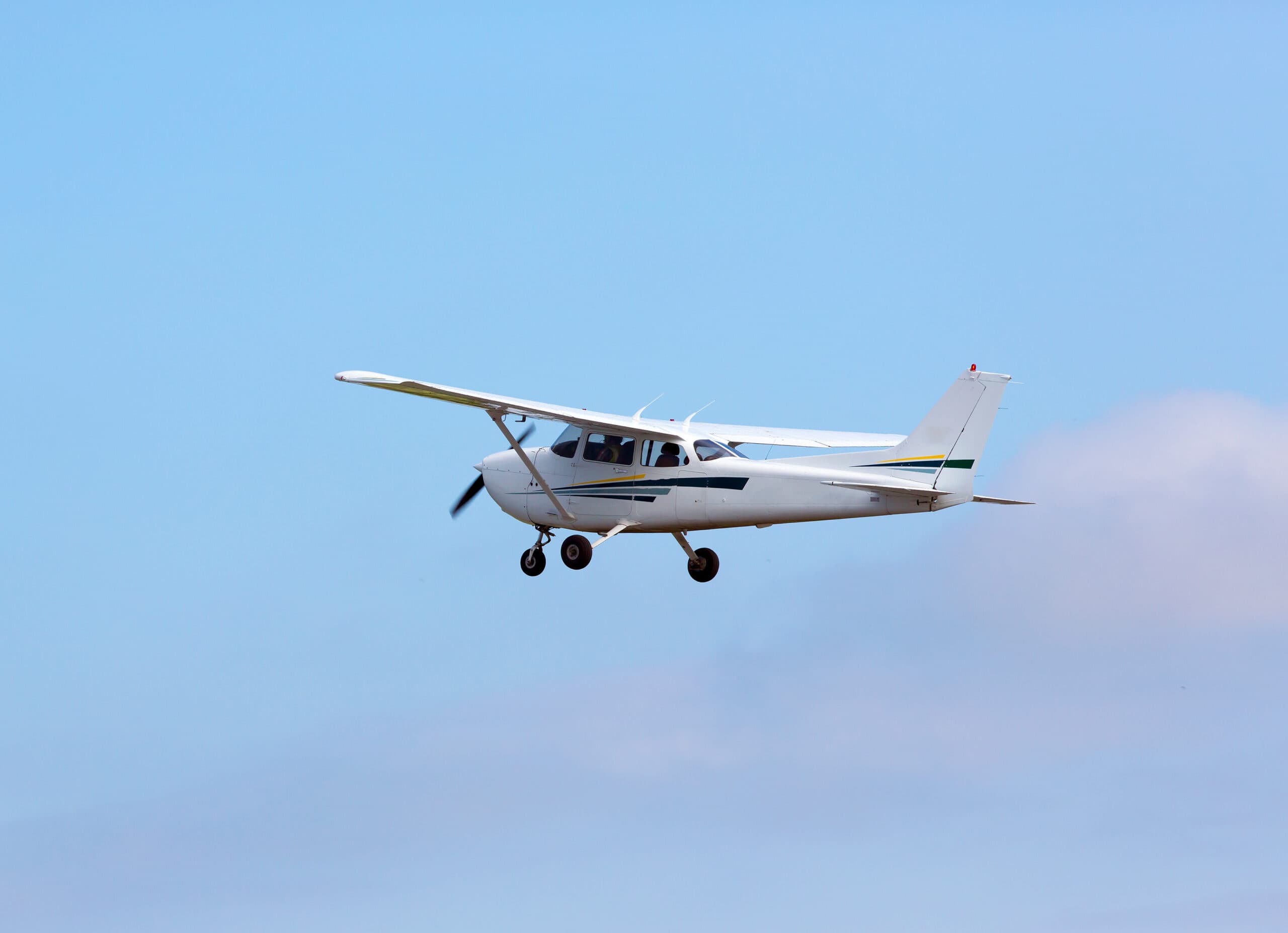
We’ll be straight with you. If you fly a Cessna 172, a Cherokee 140, or an Archer, your structural icing budget is essentially zero. The same goes for an unprotected Mooney M20J or Bonanza. Not “trace is fine.” Zero.
The Four Intensity Levels
The AIM defines four intensities of structural icing — trace, light, moderate, and severe. The definitions matter because they’re how ATC, PIREPs, and Convective SIGMETs talk about icing. Misreading them gets pilots killed every year.
Trace
Trace structural icing is ice that becomes perceptible. The rate is slightly greater than what sublimates off. Deicing equipment is not used unless encountered for more than an hour. Trace sounds harmless. In a non-FIKI piston single, trace is your cue to do something. It’s not a green light.
Light
Light structural icing means the rate may create a problem if the flight continues for more than an hour. Occasional use of deicing equipment removes or prevents accumulation. There’s no deicing equipment in your 172. Light ice in cloud for forty minutes will end your flight. We’ve seen it.
Moderate
Moderate structural icing means the rate is such that even short encounters become potentially hazardous. Deicing or anti-icing equipment, or flight diversion, is necessary. The AIM says “diversion.” Read that word. In a non-FIKI single, moderate icing is a 911 call wrapped in a polite ATC request.
Severe
Severe structural icing means the rate is such that deicing or anti-icing equipment fails to reduce or control the hazard. Immediate diversion is necessary. FIKI aircraft are not approved for severe icing — nobody is. Severe icing kills boots, kills TKS panels, kills FIKI airplanes. There is no airframe approved to operate inside it.
SLD Is the One That Will Kill You
Supercooled Large Drops — SLD — are liquid droplets larger than 0.05 mm at temperatures below zero Celsius. That’s freezing drizzle and freezing rain in cloud. The Part 25 Appendix C icing envelope that FIKI airplanes are certificated against doesn’t cover SLD. Read that sentence twice. A fully FIKI-approved Cirrus, Bonanza, or Mooney is not certificated to operate in SLD.
SLD does something other structural icing doesn’t. The big droplets flow back behind the protected leading edge before they freeze. Boots, TKS panels, and heated leading edges only protect the front of the airfoil. SLD freezes aft of the protection, on unprotected metal. The ridge destroys lift in a way no checklist anticipates.
The recognition cues for SLD encounter are specific. Water droplets visible on side windows or wing struts. Ice accreting on areas behind the normally protected surfaces. Unusually rapid accumulation. Ice on the aft side of the propeller spinner. If you see any of those, you are in SLD. The escape plan starts now.
The 2002 FAA Safety Alert on SLD made the same point. SLD recognition is the single highest-payoff thing a non-FIKI piston pilot can practice. Most pilots never look at the side windows for the droplet signature. Look every two minutes when you’re near freezing in visible moisture.
How to Read AIRMET Zulu and Icing SIGMETs
AIRMET Zulu is the icing AIRMET. NASA’s icing branch describes AIRMET Zulu as the forecast for moderate icing and for freezing levels. It’s the baseline document for structural icing across the National Airspace System.
The threshold matters: AIRMET Zulu covers moderate or greater icing across an area of at least 3,000 square miles. SIGMETs cover severe icing. So if there’s no AIRMET Zulu out, you are not in moderate-or-greater forecast icing across the planning area. If there is one and your route goes through it, you’ve now got a real decision to make.
Honestly, this is where we’d push back on a lot of pilots. AIRMET Zulu is not a “be careful” advisory. It’s a forecast that moderate or greater icing is expected to affect at least 3,000 square miles of airspace. In a non-FIKI piston single, an AIRMET Zulu on your route at your altitude is a no-go. The only exception is an honest escape plan. That means VFR-on-top, an above-the-freezing-layer cruise, or a below-the-freezing-layer alternate within reach.
The Current Icing Product (CIP) and Forecast Icing Product (FIP) on aviationweather.gov are the next layer of detail. CIP and FIP show severity, probability, and SLD potential by altitude in 1,000-foot slices. Read the SLD layer. Read it every time. If it’s red, find another day.
What FIKI Actually Means (and What It Doesn’t)
FIKI — Flight Into Known Icing — is the FAA certification that gives an airframe structural icing launch authority. It means the manufacturer demonstrated the airframe inside the Part 25 Appendix C icing envelope. The installed ice-protection equipment was part of the test. FIKI is a permission, not an immunity.
FIKI airplanes typically have heated pitot and heated stall warning. They have hot props or electrothermal props. They have heated windscreen panels. They have pneumatic boots or TKS weeping panels on all critical airfoils. They have an alternate static source. They have a windshield viewing port. They have an ice detection system or required ice-light. None of that protects against SLD. None of that protects against severe icing.
The practical difference for a piston single owner is the legal launch authority. A FIKI Cirrus SR22T with full TKS can launch into known trace, light, and moderate icing. A FIKI Mooney or Bonanza with TKS gets the same authority. The non-FIKI version of the same airframe can’t legally launch into known light or moderate icing. Either way, severe icing and SLD are off-limits.
Inadvertent ice protection — the non-FIKI TKS install — is a different animal. It’s there to get you out of ice you encountered, not to let you launch into ice you forecasted. The legal and practical distinction is the entire point. Pilots who fly inadvertent TKS like it’s FIKI end up in NTSB icing accident summaries. That’s the pattern.
Pre-Flight: Three Questions Before You Launch
The pre-flight icing decision in a non-FIKI piston single comes down to three questions. Answer them honestly and write the answers down on the flight plan. If you can’t answer all three, scrub.
First: where is the freezing level along my route, in 1,000-foot slices? Not just at the departure airport. Along the whole route. If the freezing level dips below your cruise altitude in cloud, you have an icing exposure point. Anywhere along the route counts.
Second: where is my escape altitude? If structural icing finds me at cruise, can I climb 3,000 feet? Will that put me above the cloud layer and the freezing isotherm? Or can I descend 3,000 feet and reach an above-freezing layer with terrain clearance? If the answer to both is no, you don’t have an escape plan. You have a hope.
Third: where is my no-ice alternate? Not the alternate filed for the destination. The alternate is above freezing at the surface. It has VFR or filed-IFR access from your route. It’s within fuel reach. If the no-ice alternate is more than 30 minutes off-route, the icing exposure is too long.
Here’s what most pilots get wrong. They file the alternate that satisfies the IFR alternate rule. They assume that satisfies icing planning too. It doesn’t. The alternate rule asks about ceiling and visibility. The icing alternate asks about temperature and the altitude of the freezing level.
In-Flight Recognition Cues
The cockpit cues for structural icing come faster than the visual ones. Watch for these in order. They tell you what’s happening before you see ice on the wing.
Airspeed bleeding off at constant power and pitch is the first cue. Two or three knots. Then four or five. If you’re not watching the airspeed every 60 seconds in visible moisture near freezing, you’ll miss it. Set a habit.
The autopilot trimming up to hold altitude is the second cue. Your trim wheel runs nose-up because the airfoil’s lift is degrading. This is the cue that pilots miss most. Watch the trim indication on every glass-panel autopilot. Watch the trim wheel itself on a 172 or Cherokee.
Pitot heat warning, alternate static source needed, ice-detector annunciator on a FIKI airplane — all hard cues. Don’t wait for them. By the time the ice detector reports, you’ve been collecting for a while.
Visual cues last. Leading-edge accumulation visible from the cockpit. Ice on the wiper hub or strut. Droplets on the side window — that’s SLD. Ice on the OAT probe. Each of these tells you the encounter is real and the clock has been running.
The Escape Plan: Climb, Descend, Turn, Land
The structural icing escape decision is one of four moves. Pick fast. The NWS aircraft icing guide puts it bluntly: “Quickly tell ATC you are in ice and want out. Ask for a higher or lower altitude or a 180-degree turn.”
Climb works when there’s an above-freezing layer aloft you can reach, or when the cloud tops are within climb performance. Below about minus 15 Celsius, supercooled liquid water is much rarer — most droplets glaciate. Climbing into colder air can stop accumulation. Climbing exposes you to the worst case. If you can’t outclimb the layer, you’ve burned altitude and energy. Ice keeps building.
Descend works when there’s a warmer-than-freezing layer below you that has terrain clearance. Often this is the fastest escape. Below the freezing isotherm, ice melts off. Below the cloud base, accumulation stops. Descent is the default escape for most non-FIKI piston pilots over flat terrain.
180-degree turn works when you flew into the icing region from clear air. The cleanest exit is often back the way you came. Turn early. Don’t try to push through. PilotWorkshops’ icing escape analysis reinforces the same: climb or descend 3,000 feet, or turn around, before the encounter compounds.
Land works when the nearest VFR-conditions airport is closer than the escape altitude. If you’re in ice over flat terrain near a 10,000-foot runway with clear skies at the surface, land. Don’t shop for a better field with ice on the wing.
One rule on all four: declare. ATC can give you priority handling when you tell them you’re picking up structural icing. They cannot read your mind. Use the word “ice” and they will move other airplanes for you.
Five Common Icing Mistakes
Five mistakes show up in icing accident reports across the last decade. Read them, mark them, never make them.
One: launching with AIRMET Zulu on the route and a vague “I’ll just stay out of the clouds” plan. An AIRMET Zulu is a 3,000-square-mile moderate-or-greater icing forecast. Avoiding visible moisture across an area that size in a piston single is not a plan. It’s a hope.
Two: treating trace structural icing as a non-event. In a non-FIKI airplane, trace is the message: leave the icing region now. Not in five minutes. Now.
Three: pulling the nose up when airspeed bleeds off. Iced wings stall at higher airspeeds, and tail ice can produce an asymmetric stall the wing-stall warning doesn’t catch. Add power. Lower the nose. Get out.
Four: assuming the OAT gauge tells the whole story. OAT measures static temperature at the probe. Surface temperature on the wing can be different by 2 or 3 degrees depending on airspeed and configuration. Treat near-freezing as freezing.
Five: continuing toward a destination airport that’s reporting freezing rain or freezing drizzle. Freezing rain at the surface means SLD aloft. SLD aloft means no certificated airframe is approved to be there. The destination has to change.
Our Take on Icing Discipline for Non-FIKI Pilots
Here’s our take. The pilots who keep flying piston singles into their seventies treat structural icing decisions like fuel decisions. There’s no debate. There’s a number. The number is hit or it isn’t, and the airplane doesn’t move into the airspace until the number works.
Build the same discipline for ice. Set personal minimums that are stricter than the regs. Below the freezing level in visible moisture is a no-go in a non-FIKI single, full stop. Above the cloud layer with a clear descent corridor to an above-freezing alternate is a go. Anywhere in between is a hard look at the AIRMET Zulu, the CIP, and the SLD probability layer. Then a no-go more often than not.
That’s not paranoia. That’s how E3 Aviation’s most experienced pilots talk about ice. Bush captains. Boeing 777 captains. F-16 alumni. Off-camera, the same discipline. We’d rather you scrub a flight and join the conversation on the E3 community than push into ice and disappear.
FAQ
Can I legally fly into known icing in a non-FIKI piston single?
No. FAR 91.527 covers large and turbine aircraft. The FAA’s position on Part 91 piston singles is the same in spirit. A non-FIKI airframe should not be launched into forecast known icing. The 91.13 careless-and-reckless authority backs it up. An AIRMET Zulu along the route at your altitude in a non-FIKI airplane is a no-go for forecast structural icing. Inadvertent encounter is treated differently — that’s why escape plans matter.
Does pitot heat protect against structural icing?
No. Pitot heat protects the pitot tube and the airspeed system. It does nothing for wings, tail, prop, or windscreen. Structural icing builds on the airfoil regardless of pitot heat status. Pitot heat is required equipment but it is not ice protection in the structural sense.
What’s the difference between FIKI and “ice protection equipment installed”?
FIKI means the airframe is approved for flight in known icing. The Part 23 approval references Part 25 Appendix C. Ice protection equipment installed without FIKI approval is sometimes called inadvertent TKS. It’s legal only as a means of escape from unforecast icing. The badge on the airframe matters. Look at the type certificate data sheet and the POH limitations section.
Further Reading
For more weather coverage, see our Thunderstorm Avoidance Guide. Pair it with the Density Altitude Guide. For EFB icing layer setup, see the ForeFlight Complete Guide. For the regulatory companion, see IFR Currency Requirements and IFR Alternate Airport Requirements. For aerodynamic recovery: Stall Recognition and Recovery, V-Speeds Every GA Pilot Must Know, and Holding Pattern Entry.
External Authority References
- FAA AC 91-74B Pilot Guide: Flight in Icing Conditions
- FAA AIM 7-1-20 Aircraft Icing
- Aviation Weather Center — AIRMET Zulu, CIP, FIP, SLD products
- NASA Glenn In-Flight Icing — Check the Weather
Join the E3 Aviation community — built by pilots, for pilots. Become a member today.



