Last Updated: June 2, 2026 | By E3 Aviation Association Editorial Team
The brief starts at 0500. Six F-16s. Rain on the canopy. Twelve minutes of sequence flown so many times the pilots can recite it backwards. That was Michelle Curran’s Tuesday for two seasons as the Thunderbirds’ lead solo. Hot ramp. Cold coffee. Five sorties a week. The first thing she’d tell a general aviation pilot is simple. She flew an F-16 at 150 feet inverted. The same discipline borrows straight into your 172.
That’s what makes Michelle Curran such a useful voice for GA. The fighter-pilot resume gets the attention. The transferable habits are what matter once you’re flying your own airplane.
This piece walks the lessons she keeps coming back to in her speaking, her books, and her E3 work. We’ll show how to lift them straight into your cockpit.
Who Is Michelle “MACE” Curran
Michelle Curran is a USAF combat veteran and a retired F-16 fighter pilot. She’s one of only a handful of women ever to fly with the Air Force Thunderbirds. She joined the team in 2019 and served as the opposing solo that first season. She flew as lead solo in 2020 and 2021. That made her the second woman in Thunderbird history to hold that slot. Her callsign is MACE.
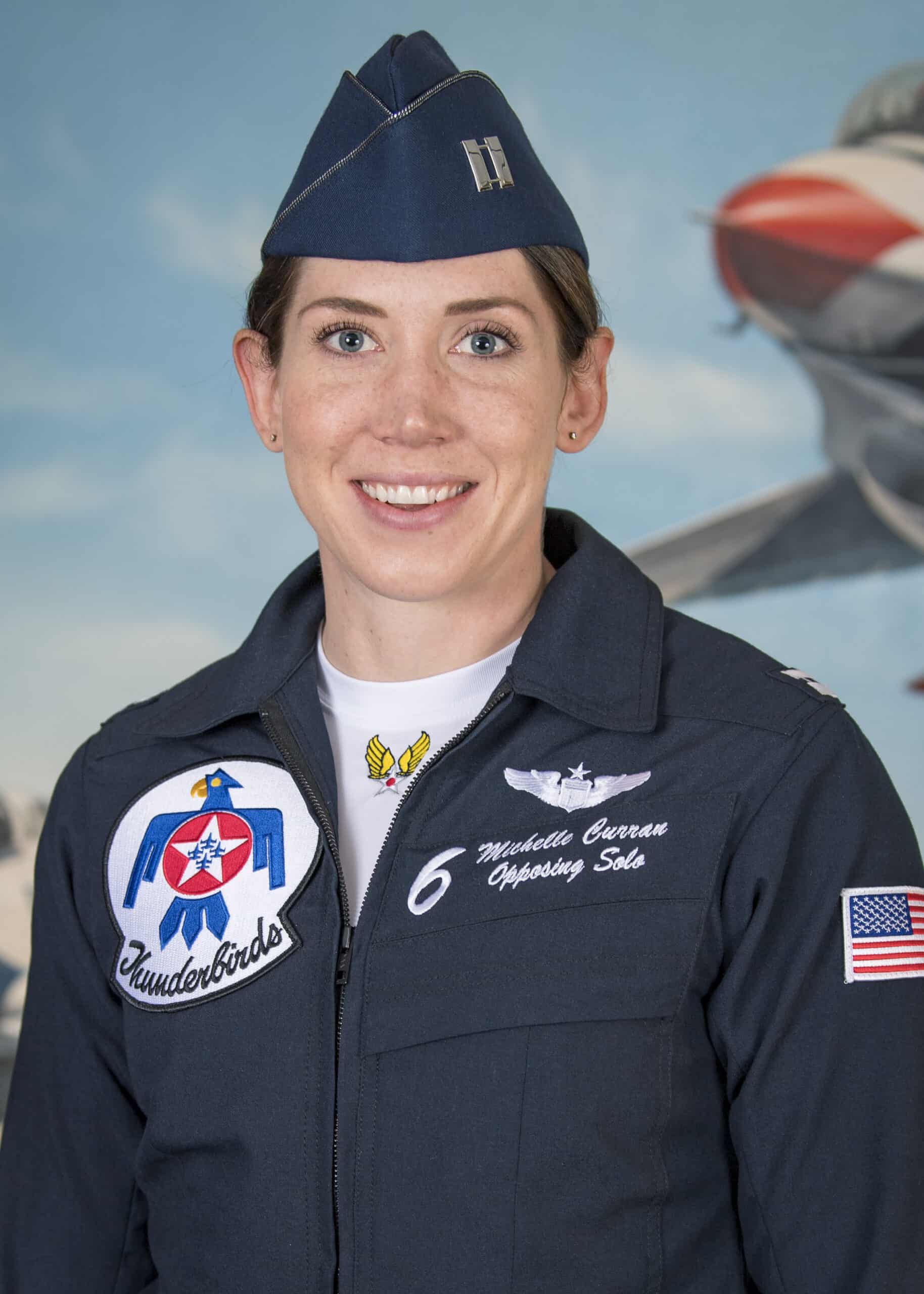
Before the demo team, she flew F-16s for the better part of a decade. She logged more than 1,500 hours in the Viper. About 163 of those were combat hours over Afghanistan in support of Operation Freedom’s Sentinel. She left the Air Force in late 2021. Then she launched Upside Down Dreams, a speaking and coaching brand built around mindset, fear, and high-stakes decision-making.
She has since written a bestselling children’s book. She also published a 2025 leadership book, The Flipside: How to Invert Your Perspective and Turn Fear Into Your Superpower. It landed in the top 20 of the USA Today bestseller list. She’s keynoted for Microsoft, Boeing, SpaceX, John Deere, PwC, and the NBAA Schedulers & Dispatchers Conference.
None of that resume matters if you can’t translate it. So let’s translate it.
The Brief Is Where the Flight Is Won
Thunderbird shows aren’t won in the air. They’re won at the table. Every Thunderbird sortie gets a formal brief. It covers weather, NOTAMs, fuel, sequence, contingencies, and the specific cues each pilot will call. Nothing is improvised. Nothing is assumed. The brief is sacred.
Most GA pilots don’t brief. They glance at ForeFlight, kick the tires, and go. That’s the gap Michelle Curran points at when she talks about how military discipline transfers to civilian flying.
Here’s the borrow. Before the engine starts, you talk through five things â out loud, even if you’re solo. Weather and the weather you’d expect to find at the alternate. Fuel by leg with a reserve number you’ve actually written down. The exact runway and taxi route at both ends. One specific thing you’ll abort for. And the passenger brief if you’re carrying anyone.
To put numbers on it: a Thunderbird brief can run 90 minutes for a 12-minute show. The team covers weather. They cover the show sequence call by call. They cover abort and divert criteria, every hand signal, and the debrief plan. None of that is wasted. The 12 minutes in the air look effortless because the 90 on the ground were not.
You don’t need 90 minutes. Five honest ones beats the 30 seconds most GA pilots give a $200,000 airplane on a hot day. That’s the gap Michelle Curran closes when she teaches this in workshops.
If that feels formal, good. It’s supposed to. The brief turns “I think it’ll be fine” into something honest. It becomes “I know what I’m looking at and what I’ll do if it changes.” That’s the entire game.
Want a deeper walkthrough of the planning side? See our guides on ForeFlight for GA pilots and how to file a VFR flight plan.
Chair Fly Your Sequence Before You Start the Engine
Thunderbird pilots chair fly. So do their Blue Angels counterparts. So does every fighter pilot training a new event. You sit in a chair â actually sit â close your eyes, and run the entire sortie at real time. Stick inputs. Radio calls. Switch flips. Where your eyes go. What you’d say if the wingman drifted high.
It looks silly. It works. Michelle Curran has talked publicly about chair flying. It separates the people who learn the sequence from the people who own it.
GA application is direct. The short-field landing you’re about to attempt? Chair fly it. The IFR approach into an unfamiliar field? Chair fly it. The first 500 feet of a high-density-altitude takeoff? Chair fly it. Run the airspeed, the deck angle, the abort point. Out loud.
This isn’t visualization for confidence. It’s rehearsal for execution. By the time you start the engine, you’ve already flown the hard part once. The cost is five minutes. The payoff is showing up to the hard part with a script.
It’s the same discipline behind our piece on density altitude for GA pilots. High-DA mountain takeoffs reward exactly this kind of mental run-through.
Debrief Without Ego or Don’t Debrief at All
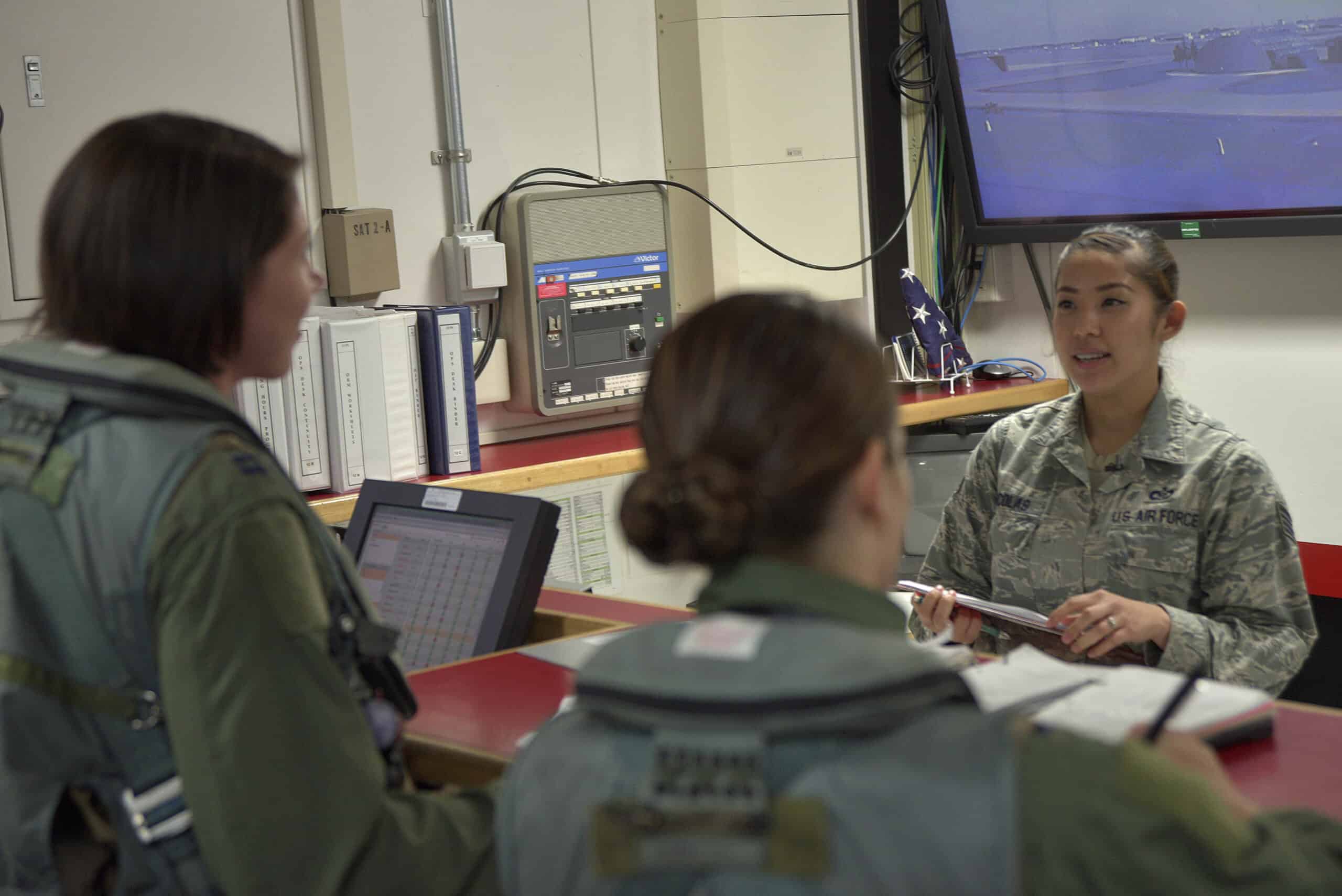
The Thunderbird debrief is famous. Tape review. Frame by frame. “No rank in the debrief.” Translation: the airman with the GoPro can correct the lead solo. Nobody dies of feedback. People die of avoiding it.
Most GA pilots skip the debrief entirely. They tie down, sign the logbook, and head to the FBO for a coffee. Michelle Curran’s push-back on that is sharp. If you don’t debrief, you don’t learn. You only fly the same flight again with the same mistakes baked in.
Here’s what a useful GA debrief looks like. Two questions, written down within 15 minutes of shutdown. What did I do well? What would I do differently? Five sentences total. Five honest sentences.
If you flew with someone, ask the same two questions of them. If you flew solo, pull the ForeFlight track replay and look at the pattern altitude. Look at the centerline. Look at where you started the turn from base to final. You’ll see something you didn’t notice in the cockpit.
The pilots who get sharper year over year are the ones who do this. The pilots who plateau are the ones who don’t. Currency keeps you legal. Debriefing keeps you good. Our stall recognition and recovery piece is a good example. A real debrief surfaces bleeds you missed, configuration changes you delayed, and callouts you skipped.
Smart Risk Is Not Reckless Risk
One of the lines Michelle Curran repeats in her keynote work is that fighter pilots don’t take reckless risks. They take calculated risks. The whole job is making the next decision when the data is incomplete and the consequences are real.
Curran’s 163 combat hours over Afghanistan were a daily lesson in calculated risk. Weather built. Threat conditions changed. Fuel burned. The team flew the mission anyway because the decision tree was preloaded and rehearsed.
GA flies the same problem at lower speeds. Weather is unfinished. Fuel is finite. The airplane is rated for less than the day will demand if you push it. Calculated risk in that environment is simple. Write down personal minimums before you leave the hangar. Don’t negotiate with yourself once you’re airborne.
A practical version of the framework looks like this. Set a ceiling and a visibility floor for the day. Set a crosswind component number you won’t cross. Pick a fuel reserve in time, not gallons. Decide what icing or convective forecast triggers a no-go. Write all of it on a card. Carry the card.
The card removes the negotiation. Here’s what most pilots get wrong. They make the rules on the ground and break them in the airplane. The ground rules feel abstract once you can see the runway. The card makes the rules concrete. That’s the calculated part. For the weather side, see our pieces on thunderstorm avoidance and structural icing in piston singles. Both walk the no-go triggers most GA pilots underweight.
Proficiency Beats Currency Every Time
The FAA’s currency rule is a floor. Six approaches and a hold in six months keeps you legal to file IFR. Michelle Curran would be the first to point at the gap. The Air Force doesn’t measure pilots by “legal to fly.” It measures them by “ready to fly the mission today.”
That standard scales down. Ask the question after every flight. Am I ready to do this again? In worse weather? With a loved one in the right seat? If the honest answer is no, you owe yourself another sortie or another sim hour before the next real one.
Proficiency lives between “haven’t busted regs” and “I am sharp.” It shows in how cleanly you fly a missed. It shows up in how fast you recognize a stall. It shows up in how quickly you configure for the gust front you didn’t see coming. None of that shows up on a currency check.
The cleanest way to build it is a routine. Two flights a month with a CFI or safety pilot working on something specific. Not just “tooling around.” Plus a chair-fly of one new procedure each week. That’s how a former Thunderbird stays sharp away from the team. It also happens to be how a 200-hour private pilot becomes a 1,000-hour pilot you’d trust your kids with. Our guide on IFR currency requirements draws the line between the legal floor and the actual standard.
Your Inner Critic Is a Voice, Not a Verdict
“Your inner critic is just a voice, not a verdict.” That’s Michelle Curran’s own line. It runs across her keynote work and her books. It lands harder for pilots than for any other audience she speaks to.
Why? Because every pilot has the same voice in their head. The one that says you’re not sharp enough for this approach. The one that says the controller is going to laugh at the read-back. The one that says you should hand the airplane to your CFI. That voice never goes away. It just gets quieter when you act in spite of it.
The fighter-pilot version of this is brutal. You strap into an F-16 and the inner critic says I might not pull this off today. You go anyway, because the work is to fly the next moment well â not to silence the voice. The GA version is the same. The voice in the run-up area isn’t a verdict on whether you’re a real pilot. It’s just a voice. The verdict is what your hands do once you release the brakes.
We’ll be straight with you. If you’ve ever turned around halfway to the runway because that voice got loud, you’re not weak. You’re alive. The work is making the decision before the run-up, not in it. The card we mentioned in the smart-risk section is how you do that.
How E3 Members Can Tap Into Michelle’s Work
Three on-ramps. First, her books. Upside Down Dreams is a children’s book. It works as a tabletop primer on facing fear. Useful for any pilot family with young kids in the right seat. The Flipside, her 2025 release, is the adult version of the same idea. It pulls heavily from her Thunderbird and combat experience. It is the closest thing to a keynote in book form.
Second, her speaking and workshops. Michelle Curran keynotes corporate audiences and aviation events â including NBAA’s Schedulers & Dispatchers Conference, where she headlined SDC2023. If your flying club, type club, or company has a budget for a mindset-and-cockpit speaker, she’s lived both sides.
Third, the E3 community itself. The ambassador roster is part of the reason the E3 membership exists. Members get content, hangar talks, and event access. Former Thunderbirds, Blue Angels, aerobatic champions, and bush pilots show up there. Not as polished brand assets. As pilots who’ll answer your question about a crosswind landing or a busted checkride. Join the E3 community here if that’s the room you’ve been looking for.
Our Take on Borrowing From the Best
The trap GA pilots fall into is treating fighter-pilot stories as entertainment. They’re not. They’re a transferable toolkit. The brief, the chair fly, the debrief, the calculated risk, the proficiency standard, the inner-critic frame. Every one scales down to a Cessna 172 on a hot Saturday.
Honestly, this is where we’d push back on most ambassador content in aviation media. Too often it’s a highlight reel. Michelle Curran is more useful than that because she teaches the habits underneath the highlight reel. The team won the Tuesday brief before they ever rolled for the Saturday show. Your weekend flight is no different. Brief it like it matters. Chair fly it. Debrief it. Set the card. Act in spite of the voice.
That’s the borrow. Come fly with us in the E3 community. Share what you’re learning. Ask what you don’t know. Keep getting sharper. e3aviationassociation.com.
Frequently Asked Questions
What aircraft did Michelle Curran fly in the Air Force?
She flew the F-16 Fighting Falcon for the bulk of her Air Force career. She logged more than 1,500 hours in the Viper. That includes 163 combat hours over Afghanistan in Operation Freedom’s Sentinel. She flew the F-16 as a line fighter pilot before joining the Thunderbirds, where the team also flies the F-16C.
What does “lead solo” mean on the Thunderbirds?
The Thunderbirds fly a six-jet team. It’s built around a four-ship diamond and two solo pilots: the lead solo and the opposing solo. The solos fly the high-speed passes, the inverted-to-inverted joins, and the dirty rolls between diamond formations. Lead solo flies the outer-left position and runs the solo brief. Michelle Curran held that role in 2020 and 2021.
How can a GA pilot apply Michelle Curran’s habits without a fighter background?
The whole point is that you don’t need the fighter background. Brief every flight out loud against five items â weather, fuel, runway, abort criteria, passenger brief. Chair fly any phase you haven’t done in 60 days. Debrief every flight in five sentences. Set personal minimums on a card. Act in spite of the inner critic. None of that requires an F-16. All of it makes you a sharper Cessna 172, Piper Cherokee, or Cirrus SR22 pilot.
Further Reading
- Cessna 172: The Complete Owner and Pilot Guide for 2026
- ForeFlight Complete Guide for GA Pilots
- IFR Currency Requirements: The Complete 2026 GA Guide
- Stall Recognition and Recovery: A GA Pilot’s 2026 Guide
- Holding Pattern Entry: Direct, Teardrop, Parallel
- Thunderstorm Avoidance: The Complete GA Pilot Guide