Last Updated: May 26, 2026 | By E3 Aviation Editorial Team
The bill arrives faster than most owners expect. A piston single’s constant-speed prop hits its six-year calendar limit before the hour meter does. Suddenly you’re staring at a $4,000-to-$7,000 invoice for an aircraft propeller overhaul. It’s a part you haven’t thought about since pre-buy. Then the shop calls. Hub corrosion. A blade an eighth of an inch under minimum width. A bushing that needs replacing. The number creeps up.
This is the part of ownership nobody warns you about at the discovery flight. The engine gets all the attention. The avionics get all the budget. The prop quietly racks up hours. It ingests bugs and rain and pebbles. And it sits in the same hangar humidity. That humidity turns aluminum into Swiss cheese on the inside. You can’t see it.
Here’s what you actually need to know about an aircraft propeller overhaul in 2026. The TBO rules. The cost ranges. What a shop does to your prop when it shows up in the box. What gets you off the hook for an overhaul and what doesn’t. And the field repairs you can legally make yourself between visits.
What an Aircraft Propeller Overhaul Actually Is
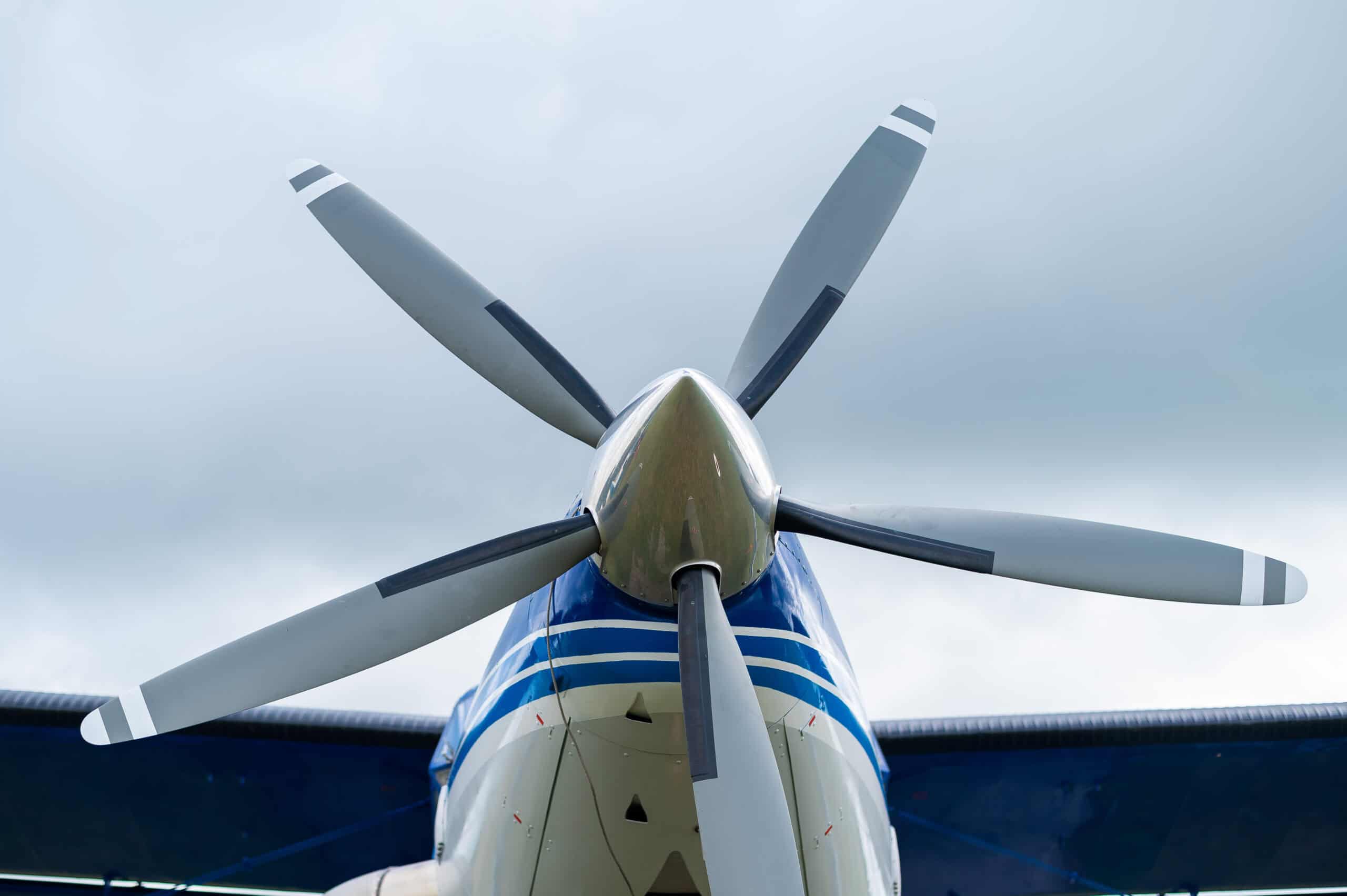
An aircraft propeller overhaul is a complete teardown, inspection, and rebuild of the propeller assembly back to manufacturer-approved limits. The shop pulls the prop off your engine and ships it to a certified repair station. The prop comes back restored to a known-good condition. You get a fresh logbook entry and a yellow tag.
The work is not a quick service. A constant-speed prop is a precision rotating assembly. It has a hub, blades, blade clamps, pitch-change mechanisms, bearings, seals, counterweights, and pitch stops. Every one of those parts has a wear limit, a corrosion limit, and a dimensional minimum. The overhaul checks every one of them.
The FAA describes the work in Advisory Circular AC 20-37E, which covers aircraft propeller maintenance. The repair station follows the propeller manufacturer’s overhaul manual to the letter. That manual is what gives the work legal standing. It also makes “I’ll just have a buddy clean it up” a non-starter for any certified airplane.
The TBO Rule: Hours, Calendar Time, and Whichever Comes First
Time between overhaul (TBO) for a propeller has two numbers, and the one that arrives first wins. That’s the trap.
For most piston-single constant-speed props, the hour-based TBO sits between 1,500 and 2,400 hours. The calendar limit is shorter than most owners realize. Hartzell sets six calendar years on most aluminum hub assemblies, and certain hard-alloy blade models require teardown every three. McCauley publishes its limits in Service Bulletin SB137 with similar ranges by model.
The clock starts when the propeller is first installed and run. Pulling the prop and putting it in a box doesn’t pause the calendar. Storage doesn’t pause it. A salvaged prop on the shelf for ten years can’t just be hung on an engine. The calendar limit is already cooked.
Why does the calendar limit even exist for a part that isn’t being used? Two words: internal corrosion. Moisture finds its way into hubs, blade roots, pitch-change cavities, and bushings. Aluminum exposed to humid air pits and weakens from the inside. No visual inspection during an annual will catch it. That’s why an aircraft propeller overhaul opens the assembly and looks at metal nobody else gets to see.
One detail that matters for Part 91 owners: TBO is a manufacturer recommendation, not a regulatory requirement for non-commercial operations. You’re not technically grounded the day calendar limit hits. But your insurance underwriter, your A&P, and your next pre-buy buyer will all care. A chip can let go in flight. The wrong time to find out the prop sat 14 years past calendar limit.
Hartzell vs McCauley: Why the TBO Numbers Differ
The two big names in piston-single props are Hartzell and McCauley. The TBO numbers aren’t identical, and the reasons are baked into the hardware.
Hartzell publishes its propeller overhaul limits in Service Letter HC-SL-61. The letter is updated regularly and groups limits by propeller series. Aluminum hubs typically get six calendar years. Compact hub series often sit at 2,000 hours. Hard-alloy blade models can require a 36-month interval. The most reliable answer for any Hartzell prop is the current revision of HC-SL-61 with your prop model number. Never guess from forum posts.
McCauley’s limits sit in SB137. The same logic applies: hours or calendar, whichever comes first, with the start date being the original installation date. McCauley governors and accumulators carry their own 60-month TBOs separate from the prop itself.
The takeaway: if you own a constant-speed airplane, find your data plate. Write down the prop model and serial number. Look up the exact published limit. Don’t accept “about six years, probably 2,000 hours” from anyone, including a friendly hangar neighbor.
The Step-by-Step Overhaul Process
Here’s what actually happens when your prop arrives at a certified repair station. Knowing the process matters. It’s what justifies the invoice. It also tells you whether the shop you picked is doing the job to the manual or cutting corners.
Disassembly and Stripping
The technician pulls every external part. De-ice boots. Spinner mount. Governor. Anti-ice slip rings. Then the prop assembly itself comes apart. Blades come out of the hub. Pitch-change mechanisms are stripped. Every fastener, every shim, every bushing is removed. Old paint is chemically stripped off the blades. The aluminum gets etched with a caustic solution. That exposes the underlying metal for inspection.
Non-Destructive Testing
This is the heart of an aircraft propeller overhaul. The shop runs three checks. Dye penetrant inspection finds surface cracks too small for the eye to see. Fluorescent dye gets pulled into a crack and lights up under UV. Magnetic particle inspection looks for cracks in ferrous parts like steel hub bores and bolts. Eddy current inspection finds subsurface flaws in aluminum hubs and blade roots. Corrosion or fatigue cracks can grow invisibly in those areas. Every blade gets dimensional measurement at multiple stations along its length. A blade that’s been ground down past minimum thickness from years of leading-edge nick repair gets scrapped. It doesn’t get reused.
Reassembly and Yellow Tag
Parts that pass go back together. New seals. New gaskets. New bushings where required. Fresh paint. For Hartzell, an anti-corrosion treatment is applied in the hub bore. The prop is statically balanced. The repair station completes the logbook entry. It shows work performed, parts replaced, and any applicable AD compliance. The yellow tag goes on, and the prop is ready to bolt back on your engine.

The Prop Strike Inspection That Catches Owners Off Guard
If you’ve ever taxied your nosewheel into a soft spot and felt the engine shake before it quit, listen up. You may already be facing the most expensive maintenance event in piston ownership. A prop strike isn’t just a prop problem — it’s an engine problem.
The FAA and both engine manufacturers define a prop strike clearly. It’s any incident that causes engine RPM to slow even a single revolution suddenly. You don’t need a bent blade. You don’t need visible damage. The sudden stoppage transmits massive torsional shock through the crankshaft. Through the gear train. Through the counterweights. Cracks can form invisibly inside the engine and propagate later in flight. That’s the failure mode that kills pilots.
Lycoming’s mandatory service bulletin SB533 and Continental’s SB96-11B both require a complete engine teardown after a prop strike. The crankshaft, the counterweights, the rear case gears, and the accessory drives all come apart. Every component gets measured. That’s not a $1,500 prop overhaul. That’s a $20,000-to-$50,000 engine teardown on top of the aircraft propeller overhaul.
Honestly, this is where we’d push back on the casual hangar wisdom that “it was just a tap.” Some owners try to dodge the teardown. They claim the engine kept running. The Lycoming definition doesn’t care if the engine kept running. If the prop took a sudden hit, the inspection is mandatory. Your insurance company will support you here. But your A&P has to sign the logbook either way.
Field Repairs Owners Can Do (and What’s Off Limits)
Not every nick sends you to a repair station. Part 43 Appendix A lists preventive maintenance an owner-pilot can legally perform. Minor cosmetic work on a propeller is allowed within tight limits. Knowing the line saves money and keeps you legal.
The Quarter-Inch Rule and the Eighth-Inch Rule
A nick or cut on the leading edge of a metal propeller is typically field-repairable. The depth limit is 1/4 inch. A scratch or gouge on the face of the blade is field-repairable. The depth limit there is 1/8 inch. Either way, the repair has to be smoothed and faired out. The standard rule is that repair length equals ten times the depth. A nick 1/8 inch deep gets blended over 1-1/4 inches of blade.
What an owner cannot do, ever, on a certified propeller: bend a blade to straighten it. Weld anything. Drill or relocate a hole. Repair a crack of any size. Or touch a composite blade. Composite blades are a different world. Every repair, no matter how small, goes back to the manufacturer or a certified shop.
We’ll be straight with you. The most common owner mistake on aircraft propeller overhaul economics is letting nicks accumulate. A prop with 20 small nicks has lost real metal. Each one was ground and filed over the years. At overhaul, the blades might measure under minimum dimension. Scrapped. New blades are the most expensive single component in an overhaul. Catch the nick. Blend it small. Move on. Don’t keep grinding the same blade down trip after trip.

What an Aircraft Propeller Overhaul Actually Costs in 2026
Owners hate cost-range articles. The number always lands higher than the range promised. Here are the honest 2026 numbers for piston-single aircraft propeller overhaul.
- Fixed-pitch aluminum prop (Cessna 172, Cherokee 140): $1,200 to $2,500 for a base overhaul. Add $400 to $800 for a hub if corrosion is found.
- Constant-speed two-blade (Cessna 182, Cherokee Six, Bonanza V35): $3,000 to $5,500 base. New blades push it to $6,500-plus.
- Constant-speed three-blade composite (Cirrus SR22, Bonanza G36, Mooney Acclaim): $4,500 to $8,500. Composite blades that fail inspection mean new blades at $2,500 to $5,000 each.
- Hartzell hub replacement (if needed): $1,500 to $3,000 added to base overhaul cost.
- Governor overhaul (separate 60-month TBO): $1,000 to $1,400.
- Shipping (both ways, insured): $200 to $500.
- R&R labor (your A&P pulling and installing the prop): $400 to $800.
Total for a typical Cessna 182 constant-speed prop overhaul with a governor: budget $5,500 to $7,500 all-in. That’s assuming no surprises and no new blades. Plan for $1,000 to $2,000 of cushion above that. The surprises arrive almost every time.
Overhaul vs IRAN: When to Pick Each
IRAN stands for “inspect and repair as necessary.” It sits between an annual inspection and a full overhaul. The shop pulls the prop and opens it up. Runs the same inspection battery. Replaces only what fails. Reassembles. The hour and calendar clocks don’t reset.
IRAN makes sense in two scenarios. First, when the prop is well short of TBO and an event triggered the visit. Say, a small prop strike that didn’t require engine teardown. You want eyes on the assembly. Second, when calendar time is approaching but the airplane has flown almost no hours. You want to extend the inspection cycle without a full overhaul.
IRAN cost is typically 50 to 70 percent of full aircraft propeller overhaul cost. The catch: if inspection finds enough wear or corrosion, the shop quietly converts the work to a full overhaul mid-job. You’re paying the full price anyway plus the IRAN inspection labor.
Here’s what most owners get wrong. They pick IRAN to save money on a prop that’s at or near TBO. Then end up paying the overhaul rate anyway because too many parts fail inspection. If the calendar limit is six months out, just commit to the full overhaul. The math almost always favors the proper job.
How to Stretch Your Propeller Toward TBO
Hours and calendar will bring the prop to an aircraft propeller overhaul on their own schedule. What you do as an owner matters here. The prop either arrives at TBO in repairable condition or as a scrap blade set. Three habits separate the props that overhaul cleanly from the ones that get parted out.
First, keep the leading edges painted and polished. Bare aluminum corrodes the day the topcoat opens up. A small touch-up after each cleaning is worth more than a full repaint after corrosion is visible. AC 20-37E Section 7 covers the surface treatment owners can legally perform on a metal prop. Read it once and keep the relevant pages in your hangar binder.
Second, never power-wash the prop. The pressure forces water past the hub seals and into cavities you can’t drain. That internal moisture is where corrosion grows for years before an overhaul catches it. Soap, water, soft cloth, dry it after.
Third, address nicks the day they happen. A prop with a 1/16-inch fresh nick is a 15-minute file-and-polish job that costs nothing. The same nick ignored for 12 months gets a stress riser. The riser grows into a crack. The crack scraps a blade. Carry a file, a piece of crocus cloth, and a small bottle of zinc chromate primer. Keep them in your hangar tool kit.
Common Owner Mistakes on Aircraft Propeller Overhaul
Five mistakes show up repeatedly in shop intake logs. Avoiding all five is the difference between an aircraft propeller overhaul that lands in budget and one that doubles.
- Ignoring the calendar. Hour meter tells one story. Calendar tells another. The calendar limit hits first on most owner-flown light singles. Check your prop’s installation date. Not just the hours since overhaul.
- Hangar humidity. A salt-air ramp tie-down is bad. A hangar with a dirt floor and no dehumidifier is sometimes worse. Internal corrosion is the silent overhaul-doubler.
- Grinding the same blade flat. Each nick repair removes a sliver of metal. By the fourth or fifth year, a heavily nicked blade can be measurably under minimum dimension. Replacement blades are the single biggest line-item surprise at overhaul.
- Skipping the governor. Governors have their own 60-month TBO. Owners who overhaul the prop and skip the governor pay twice. They send the airplane back a year later when the governor starts hunting. Bundle them.
- Choosing a cheap shop. Three certified repair stations exist for every metro area. The cheapest quote is sometimes the shop that does work to the bare minimum. Borderline parts get a pass. The reputable shops have published turnaround times. Certified yellow tags. References. Get two quotes. But don’t shop on price alone.
Documentation You Need Before You Ship the Prop
Most owners forget half of this. Gather it in advance. The shop will ask, and a phone-tag delay can add a week to your aircraft propeller overhaul downtime.
Pull the propeller logbook and aircraft logbook entries. They should show installation date, hours since new, hours since last overhaul, and any prop strike events. Note any service bulletin or AD compliance the shop should be aware of. Document any in-service issues. Vibration. Sluggish pitch response. Oil weeping from the hub. Ice shedding pattern. Anything that might point to a specific component before the shop has to find it by feel.
Take photos of the prop before it ships. Blade leading edges, faces, hub, spinner backing plate, and any cracked paint. Insurance claims and shop disputes both get easier when the before-state is documented.
Frequently Asked Questions
How long does an aircraft propeller overhaul take?
Most certified repair stations turn an overhaul around in two to four weeks once the prop arrives. Add a week each direction for shipping. Plan for six weeks of downtime. Confirm the shop’s current backlog before you ship. Busy season runs spring through early fall, and turnaround can stretch to eight weeks.
Can I keep flying past the calendar TBO if my prop looks fine?
For a Part 91 operation, TBO is a manufacturer recommendation. It’s not a regulatory limit, so you’re not automatically grounded. That said, your insurance carrier may add coverage exclusions for an over-TBO prop. Your A&P may decline to sign off the annual without an inspection. Resale value drops fast on an over-calendar prop. Internal corrosion is the real reason for the calendar limit. That risk doesn’t care what your hour meter shows.
Does a propeller overhaul reset both the hour and calendar TBO clocks?
Yes. A complete aircraft propeller overhaul performed by a certified repair station resets both clocks. Proper logbook entries and yellow tag. Both the hour-based TBO and calendar TBO go to zero. An IRAN inspection does not. The clocks keep running on the original installation date.
Our Take on Aircraft Propeller Overhaul
The propeller is the only part of your airplane converting horsepower into useful work. When it fails, the airplane becomes a glider with bad numbers. Yet owners spend more time worrying about the avionics stack. The spinning forged-aluminum part five feet in front of their face gets less attention.
The honest truth on aircraft propeller overhaul: the work is expensive. The calendar moves faster than the tach. The corrosion you can’t see is the thing that scraps blades. Owners who win on prop cost are the ones who maintain the surface religiously. They address nicks the day they happen. They bundle the governor with the overhaul. Owners who lose treat the prop as a black box. Then the shop calls with the surprise.
If you fly an airplane and you haven’t read your prop’s data plate this year, do it now. Right after you close this tab. Find your prop model. Look up your TBO. Write down the installation date. Put a calendar reminder six months before the limit hits. That single act of awareness saves more dollars per minute than almost anything else you can do as an owner.
Want pilot-to-pilot reality on the rest of ownership? The costs, the gotchas, the partner shops, the discount network — that’s what E3 Aviation Association membership is built for. Built by pilots, for pilots.
Further Reading on E3
- Cessna 172 Complete Owner and Pilot Guide
- Aircraft Cylinder Compression Test: Owner-Operator Guide
- Aircraft Spark Plug Maintenance
- Aircraft Engine Oil Change Guide
- Aircraft Engine Baffle Seal Maintenance
- Annual Inspection: The Owner-Operator Survival Guide
- Aircraft Pre-Buy Inspection Checklist
- Lean of Peak vs Rich of Peak
- Aircraft V-Speeds Quick Reference
- Join E3 Aviation Association