Last Updated: May 15, 2026 | By E3 Aviation Editorial Team
It’s a 92-degree afternoon at a 5,800-foot field. The runway looks long. The book numbers say you’ll be off in 1,400 feet with 800 to spare. Twenty minutes later you’re still on the ground at midfield, the trees at the departure end have started to look serious, and the airplane just doesn’t feel like it wants to fly. That’s density altitude doing what it does on a hot summer day. And every summer, it ends careers and lives.
If you fly anywhere west of the Mississippi between May and September — or anywhere with terrain — DA is the single variable most likely to kill you. Not weather. Not mechanical failure. Performance loss you didn’t plan for. This is the deep-dive guide we wish every pilot had read before their first summer mountain flight.
What Density Altitude Actually Is
Density altitude is pressure altitude corrected for non-standard temperature. In plain English: it’s the altitude your airplane thinks it’s at, regardless of what the altimeter reads.
The standard atmosphere uses three reference numbers — 29.92 inches of mercury, 15°C at sea level, and a 2°C-per-1,000-feet lapse rate. When the air gets hotter, less dense, or more humid than that, your airplane performs as though it’s flying at a higher altitude. The wing makes less lift. The prop bites less air. The engine breathes less oxygen. That’s the entire mechanism.
Here’s the part most pilots underestimate: this isn’t an edge case for mountain pilots. A 95°F day at sea level puts you near 2,000 feet DA. The same temperature at a 3,000-foot field puts you at 5,500. That’s a real airplane operating well above what any standard performance chart will tell you without doing the math.
We’ll be straight with you: if you fly a normally aspirated piston single, you should be running this number before every takeoff between roughly May 1 and October 1 — not just on the mountain days. The places pilots get caught off-guard are flatland summer departures, not the obvious 8,000-foot strips where everyone’s already paying attention.
How to Calculate Density Altitude (Three Ways That Work)
Knowing the DA number is half the battle. The other half is having a reliable way to get it that doesn’t require an internet connection on the ramp.
The Field Rule of Thumb
Memorize this and you’ll be 95% of the way there: add 120 feet for every degree Celsius above standard. Standard at sea level is 15°C; subtract 2°C per 1,000 feet of pressure altitude to get standard for any field elevation.
Example: pressure altitude 5,000 feet, standard temp at that altitude is 5°C. Outside air temp 25°C. That’s 20°C above standard. Multiply by 120, add to pressure altitude: 5,000 + 2,400 = 7,400 feet. The airplane will fly accordingly.
The E6B or Electronic Flight Computer
The mechanical E6B has a window that takes pressure altitude and outside air temp as inputs and gives you the corrected number directly. Every flight computer app — ForeFlight, Garmin Pilot, CX-3 — does the same calculation in under a second. If you’re already in the cockpit with one of these, use it. The rule of thumb is for back-of-the-napkin sanity checks.
The Performance Chart Approach
Many POH performance charts let you enter the DA value directly instead of separate pressure altitude and temperature inputs. The Cessna 172S, for example, publishes takeoff and climb tables indexed by pressure altitude and temperature — which is just a long way of saying density altitude. If your airplane’s manual works this way, you’re already factoring it in whether you label it that way or not.
One catch: pressure altitude on the ramp is not field elevation. Set 29.92 in the altimeter window briefly to read it, or use the rule: pressure altitude = field elevation + (29.92 – current altimeter setting) × 1,000. A field at 4,000 feet with an altimeter setting of 30.12 has a pressure altitude of 3,800 feet, not 4,000.
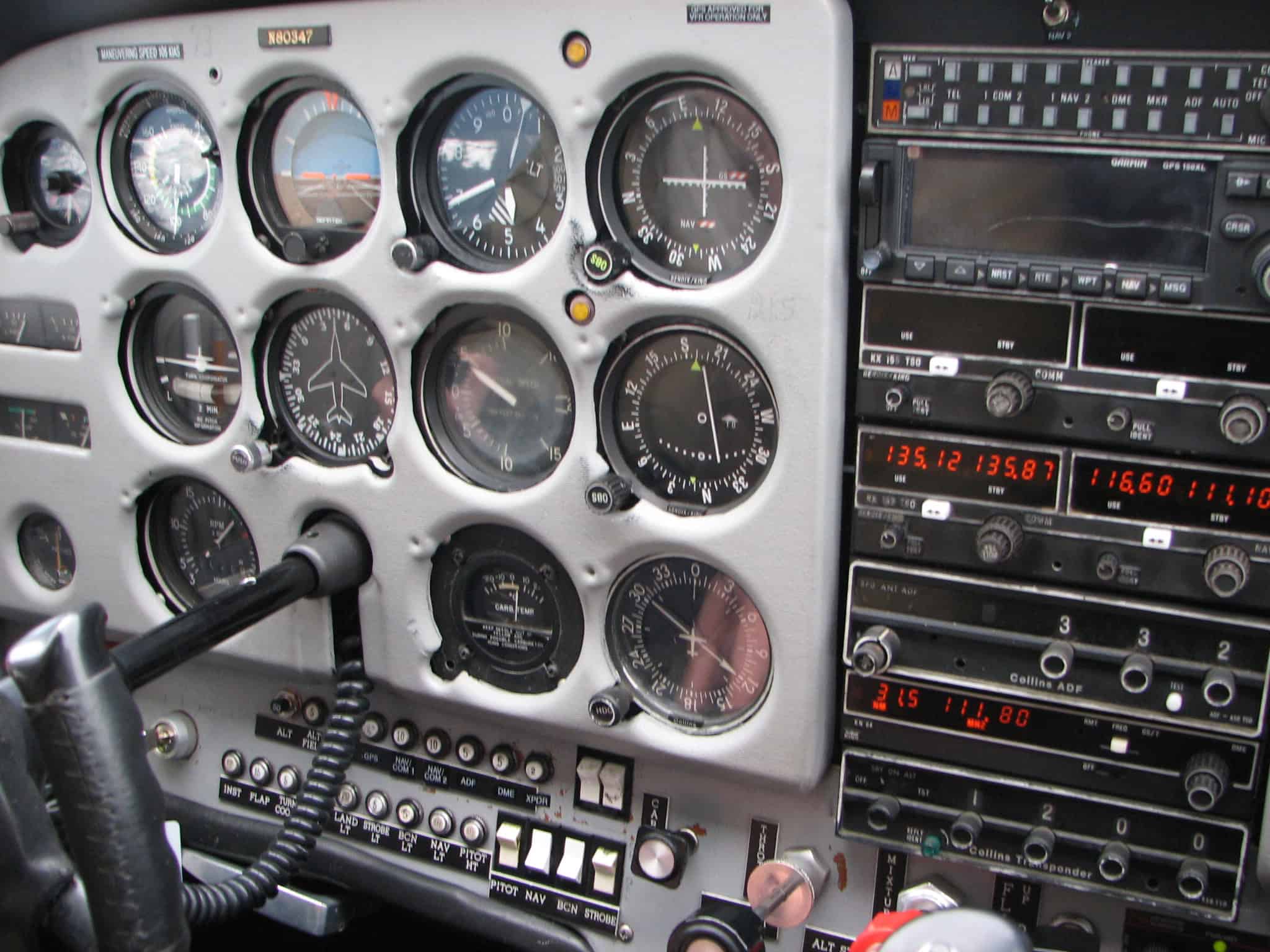
The Performance Numbers — What Density Altitude Really Costs You
Numbers in the abstract don’t change behavior. Numbers attached to specific airplanes do. The performance penalties below are what density altitude actually costs typical normally aspirated GA pistons. Turbocharged engines, fuel-injected versus carbureted, fixed-pitch versus constant-speed — all matter at the margins. The trend lines are the same.
Takeoff Distance: The Real Penalty
A useful benchmark: takeoff distance roughly doubles by the time you reach 8,000 feet compared to a sea-level standard day. That’s not a maybe. That’s a published Cessna 172S number — 945 feet ground roll at sea level / 15°C versus 1,810 feet at 8,000 feet DA. And ground roll isn’t the whole story. Total distance over a 50-foot obstacle grows even faster.
Add a tailwind component, soft turf, an upslope, or any combination of those, and the numbers compound. The runway you thought was generous can turn into a hard “should not have started this” call before you reach rotation speed.
Climb Rate: Where Pilots Die
Most takeoff accidents at high DA aren’t actually about getting off the ground. They’re about what happens 30 seconds later, when terrain rises faster than the airplane climbs.
A 172S that climbs 700 feet per minute at sea level is closer to 250 feet per minute at 9,000 feet. Add a 30-knot headwind that becomes a tailwind on the downwind side of a ridge, and that climb number can go negative. Pilots who survive high-DA mountain departures understand exactly where their climb rate goes from “acceptable” to “trapped.”
True Airspeed vs Indicated: Why It Matters in Cruise Too
In cruise at 10,000 feet DA, your indicated airspeed of 110 knots is closer to 130 knots true. That sounds like a gift — and it is, for cross-country planning. But it’s also why high-DA approaches can sneak up on pilots: the airplane is moving over the ground faster than the airspeed indicator suggests, the approach feels stable, and then short-final goes wrong because the actual energy state never matched what the eyeballs were reading.
The Four Density Altitude Scenarios That Kill Pilots
NTSB pulls the same patterns out of summer GA accident data every year. Each of these is the same story with a different cover photo.
Scenario 1 — Hot summer afternoon at a flatland field. Pilot loads four people and full fuel into a 172, departs in 100-degree heat, doesn’t clear powerlines at the departure end. The runway was 3,500 feet. The density altitude was 4,800. The numbers were always going to be tight; the pilot never ran them.
Scenario 2 — High-elevation strip on a normal day. Pilot bases at a 7,500-foot field, used to it in winter, attempts the same takeoff in July. DA is 10,400. The airplane staggers off, but the climb rate is half of what it was in February and the terrain ahead doesn’t care.
Scenario 3 — Mountain canyon with afternoon downdrafts. Pilot crosses a ridge late afternoon. DA is 11,000, airplane is climbing at 200 feet per minute on a good day, and the lee-side downdraft is at 400 feet per minute down. There is no available power to fight that math.
Scenario 4 — Backcountry strip during a personal first. Pilot lands fine in the cool morning, has lunch, attempts departure in 90-degree afternoon heat. The strip that was long enough at 8 AM isn’t long enough at 2 PM. The airplane didn’t change; the air did.
Our take: every one of these accidents is preventable with a 60-second DA check and a willingness to delay or cancel. The performance numbers don’t lie. The ego does.
How to Plan Around High Density Altitude
The pre-flight planning piece is where density altitude stops being theoretical and becomes operational. Three things every pilot should build into their summer routine.
Run the actual numbers, not the book optimistic ones. POH takeoff and climb performance is for a new airplane flown by a test pilot. Add 50% to ground roll and subtract 20% from climb rate for a working assumption. If the math still works with that buffer, you have margin. If it doesn’t, you don’t have a takeoff — you have a hope.
Time your operations. DA varies wildly across a single day at the same field. A 7,000-foot strip might be at 8,500 at 7 AM and 11,800 at 3 PM. Backcountry pilots and mountain pilots fly the early morning and shoulder evening hours for exactly this reason. The middle of the day is where the math turns against you.
Lighten the airplane before you lighten the wallet. The penalty scales with weight. Every pound off matters more at 9,000 DA than at sea level. That means full fuel isn’t always the right answer. It might mean leaving a passenger or 200 pounds of camping gear, fueling for the leg plus reserve instead of topping the tanks, or flying to a lower-elevation field to load up.
The Tools Every Pilot Should Use
Tools matter because DA calculations on the ramp need to be fast, accurate, and habit-forming.
ForeFlight’s airport detail page displays the current DA value on the airport summary screen. Tap the airport, tap “Weather,” and it’s right there alongside METAR. Garmin Pilot does the same. If you fly with either app, that number should be part of your before-engine-start scan in summer months.
The Koch chart is a one-page graphic that converts pressure altitude and temperature into a takeoff distance multiplier and a climb rate percentage. Original DOT-AAS publication, free, printable, doesn’t need batteries. Worth taping to your kneeboard or laminating in your flight bag.
A calculator app on the phone for fields without internet. Multiple free options exist. Search “density altitude calculator” in your app store, pick one with a clean interface, and use it every time you fly to a strip you haven’t been to in this season.
A ramp thermometer if you fly to fields without AWOS. Cheap, accurate, lives in the airplane. Without one, you’re estimating temperature off your phone’s nearest-city reading, which can be 10 degrees wrong on a sunny ramp surface.
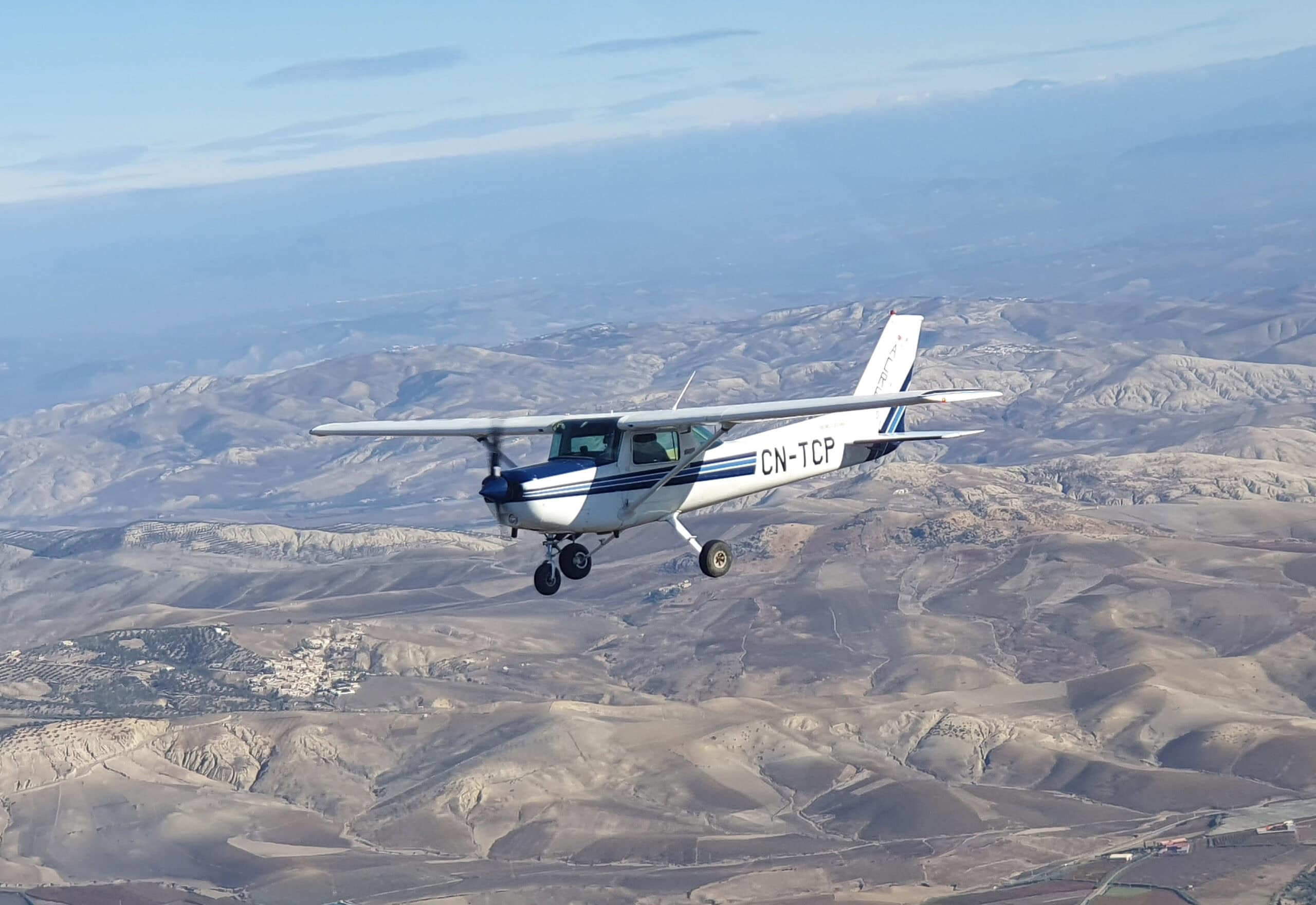
Mountain Operations — The Density Altitude Math That Actually Matters
Backcountry and mountain operations are where this planning stops being a “should do” and becomes the whole game. Pilots who fly the Idaho strips, Colorado high country, or any 6,000-plus-foot elevation field on a regular basis develop intuition for high DA conditions — but that intuition is built on math, not magic.
Three numbers any mountain pilot should know cold for their specific airplane:
1. Maximum density altitude for takeoff at gross weight. For most normally aspirated 4-place piston singles, this is between 9,000 and 11,000 feet DA. Above that number, you’re not departing at gross — you’re departing lighter or you’re not departing today. Find the number in your POH and write it on the panel.
2. Climb rate at expected cruise altitude. A 172 that climbs at 700 feet per minute at sea level might do 350 at 5,000, 200 at 9,000, and effectively zero by 12,000. If your route has a 10,500-foot ridge, you’d better know that at 11,500 your airplane has approximately nothing left in the climb tank.
3. The “no-go” line on the runway. Pick a point — a taxiway, a windsock, a tree — where if you haven’t reached rotation speed by that point, you abort. This isn’t optional at high DA. It’s how you survive the day when the calculated numbers underestimate the real numbers.
Here’s what most pilots get wrong: they treat takeoff power as a single variable. At a high-DA mountain field, takeoff power varies dramatically with leaning technique. A carbureted engine at full rich at 8,000 feet is making maybe 75% of its rated power. The same engine leaned for peak EGT on the takeoff roll is closer to 90%. That difference is climb-rate-relevant and ridge-clearance-relevant. Know your airplane’s specific lean-for-takeoff procedure — and if your POH doesn’t cover it, talk to a mountain CFI who flies your make and model.
The Pilot’s Mental Model for High DA Days
None of this lives in the airplane. It lives in your head. The pilots who handle high density altitude well share a small set of mental habits.
They run the numbers every time, not just on the obvious days. The atmosphere doesn’t care that you got away with it last summer. It cares about today’s pressure altitude, today’s temperature, today’s weight, today’s runway.
They use the DA reading as a go/no-go variable, not a “let’s see how it goes” variable. If the math says marginal, the answer is wait, lighten, or pick a different field. Not “I’ll keep an eye on it during the takeoff roll.”
They respect the climb gradient, not just the takeoff distance. Getting off the runway is one problem. Clearing the terrain ahead is the second, harder problem. Both have to be solved before the brake release, not after.
They build personal minimums that account for DA the same way they build them for crosswinds and ceilings. “My personal limit is 9,000 DA in this airplane at gross weight” is the kind of rule that keeps pilots alive in their second decade of flying.
Frequently Asked Questions
Does density altitude affect turbocharged airplanes the same way?
Less, but not zero. A turbocharged engine maintains rated power up to its critical altitude — typically 12,000 to 20,000 feet depending on the system. But the airframe still suffers full performance penalties: less lift, less prop efficiency, longer takeoff roll, lower climb rate above critical altitude. Turbocharging buys you sea-level horsepower at altitude. It doesn’t buy you sea-level aerodynamics.
How do I know my POH numbers are accurate for my airplane?
The honest answer is you don’t, exactly. POH takeoff and climb numbers are produced with a new airplane, a test pilot, fresh paint, smooth tires, and ideal technique. Real-world numbers run 10-30% worse in most cases. Add a safety factor of 50% to ground roll and reduce climb rate estimates by 20% as a starting point. If your airplane is 20 years old with worn cylinders, add more. Pilots who fly mountain operations regularly often build their own performance database from real takeoff data they record over a season.
What’s the difference between density altitude and pressure altitude?
Pressure altitude is what your altimeter would read if you set it to 29.92 inches of mercury — it accounts for atmospheric pressure variations but assumes a standard temperature profile. The DA reading corrects pressure altitude for the actual temperature, which is the variable that matters for airplane performance. On a standard day, both numbers are equal. On any other day — meaning every day — they differ, sometimes by thousands of feet.
What This Means for Your Flying
Density altitude is the most consequential weather variable in general aviation and the least respected. The pilots who get caught aren’t reckless. They’re under-prepared. They didn’t run the numbers, didn’t time their operations, didn’t lighten the airplane, didn’t have a hard no-go line. None of those takes more than 60 seconds. All of them get skipped under summer heat and personal schedule pressure.
If you fly anywhere with elevation or seasonal heat, this is part of every preflight from now until the first frost. It’s not a mountain-pilot topic — it’s a GA-pilot topic. The pilots who fly long careers are the ones who treat it with the same discipline they bring to weight and balance or fuel planning. It’s just another number that has to add up before the airplane moves.
E3 Aviation Association exists for pilots who want to keep getting better at this work — sharper, smarter, longer-lived in the airplane. If you want a community built around real proficiency rather than just hours, see what’s at E3 Aviation Association.
Further Reading on E3 Aviation
- Idaho Backcountry Airstrips: A GA Pilot’s 2026 Guide to the State’s Best Mountain Strips — the high-DA strips this article was built around.
- Cessna 172: The Complete Owner and Pilot Guide for 2026 — DA performance numbers for the most-flown GA airplane.
- Backcountry Flying Techniques for Adventurous Pilots — applied DA awareness in real mountain ops.
- VFR Weather Minimums: What Every Pilot Must Know — DA’s sibling pre-flight variable.
- Backcountry Aviation: A Guide to Getting Started — where DA awareness begins for new mountain pilots.
- E3 Aviation Association — built by pilots, for pilots.
External Authority Resources
- FAA P-8740-02 — Density Altitude — the foundational FAA safety pamphlet, free PDF.
- National Weather Service — Heat and Aviation Safety — current-conditions DA reference.
- Flying Magazine — Mountain Flying Coverage — operational DA reporting.
- Plane & Pilot — High-Altitude Operations — pilot-perspective mountain flying coverage.