Last Updated: May 13, 2026 | By E3 Aviation Editorial Team
The cessna 172 vs cessna 182 debate is the most common buying decision in general aviation. Both are high-wing Cessna singles. Both seat four. Both have been in production for over six decades. Yet they sit in very different worlds when it comes to mission, money, and what they do well.
If you’re staring at two Trade-a-Plane listings and trying to figure out which one fits your flying, this guide will save you hours of forum-thread reading. We’ll walk through the specs, the numbers that matter, and the honest trade-offs nobody mentions in the brochure.
Cessna 172 vs Cessna 182: The 30-Second Answer
The Skyhawk is the world’s most popular trainer. It’s forgiving, cheap to run, and easy to insure. The Skylane is a serious cross-country airplane that hauls people, bags, and full fuel without doing weight-and-balance gymnastics every flight. The first one is a learning tool that grows with you. The second is a mission machine.
Watch the E3 Aviation intro for the broader context on how we cover ownership decisions like this one:
Here’s the short version. Buy a 172 if you’re training, building time, flying short hops with two people, or just want the cheapest path into ownership. Buy a 182 if you regularly carry four adults, fly cross-country with bags, or operate out of higher-elevation airports. Same answer if you need to climb through weather. Most owners eventually wish they’d gone one size up. The flip side is true too. Plenty of 182 owners burn 13 gallons an hour flying trips a 172 would handle just fine.
Side-by-Side Specs: Cessna 172 vs Cessna 182
Numbers settle most arguments. Here’s how the two current production airplanes — the 172S Skyhawk and the 182T Skylane — stack up on paper.
| Specification | Cessna 172S Skyhawk | Cessna 182T Skylane |
|---|---|---|
| Engine | Lycoming IO-360-L2A (180 hp) | Lycoming IO-540-AB1A5 (230 hp) |
| Cruise (75% power) | 124 KTAS | 145 KTAS |
| Fuel burn (75% power) | 8.5 to 9.7 gph | 12 to 13 gph |
| Usable fuel | 53 gallons | 84 gallons |
| Range (max fuel, no reserve) | ~640 nm | ~930 nm |
| Useful load | ~880 to 895 lbs | ~1,100 lbs |
| Max gross weight | 2,550 lbs | 3,100 lbs |
| Rate of climb (sea level) | ~730 fpm | ~924 fpm |
| Service ceiling | 14,000 ft | 18,000 ft |
| Stall speed (flaps down) | 48 KIAS | 49 KIAS |
| Typical new price | ~$430,000 | ~$680,000 |
The numbers tell most of the story. The 182 gives you about 20 extra knots, 220 extra pounds of useful load, and 290 extra miles of range. You pay for that in fuel burn, acquisition cost, and operating expense. The cruise speed gap looks small on a one-hour flight. It gets meaningful at four hours.
Our take: people overweight cruise speed and underweight useful load in this comparison. Going faster saves minutes. Hauling more weight changes what trips are actually possible.
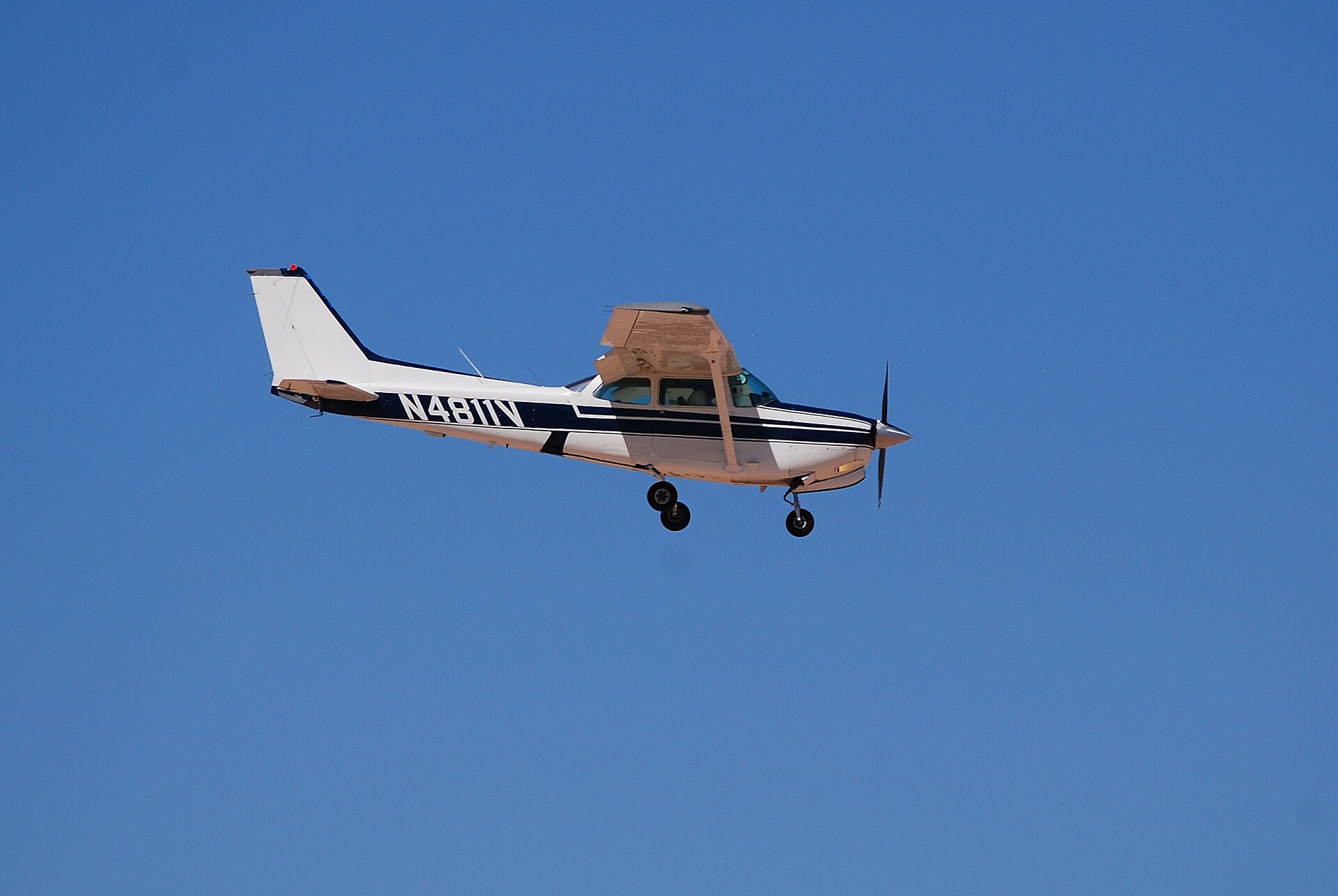
Where the Cessna 172 Wins
The Skyhawk dominates one category — total cost of ownership for a two-place mission. If you fly mostly with one passenger, the 172 is the right answer. Same answer if you almost never need full fuel plus four bodies, or if keeping the airplane affordable enough to actually use is your top priority. That’s the cessna 172 vs cessna 182 question for most first-time buyers. Read our complete Cessna 172 owner and pilot guide for the full breakdown on variants and ownership specifics.
The Money Side Nobody Wants to Admit
A typical 172 owner budgets $180 to $220 per hour all-in. That covers fuel, oil, reserves for engine and prop overhaul, hangar, insurance, and annual inspection cost spread across 100 hours of flying. The same all-in number for a 182 lands between $200 and $375 per hour. Over 100 hours, that’s a $5,000 to $15,000 swing.
Used acquisition runs $46,000 for a rough 1970s straight-tail up to $675,000 for a late-model G1000 Skyhawk SP. The sweet spot for first-time owners is the 1980s 172N and 172P market — typically $70,000 to $110,000 for an airworthy example with decent avionics. Our used Cessna 172 price guide covers the year-by-year breakdown in detail.
Insurance is the other quiet 172 advantage. A Skyhawk with a $100,000 hull value and $1 million in smooth liability typically falls between $1,100 and $1,600 annually. That’s based on a private owner with a clean record and reasonable hours. The same hull value on a 182 lands $300 to $800 higher because of the bigger engine and a slightly higher claim history.
Training, Resale, and What That Means in Year Five
The 172 is the standard CFI airplane. That makes finding a qualified instructor for your transition or recurrent training easier than for any other GA single. It also means every A&P knows the airframe cold. Parts are everywhere. Service difficulty reports are well-documented.
Resale is where the 172 really shines. Skyhawks hold value through every market cycle. The buyer pool is enormous — flight schools, time-builders, partnerships, individual owners. When you sell, you’ll find a buyer in weeks, not months. That liquidity is worth something on day one.
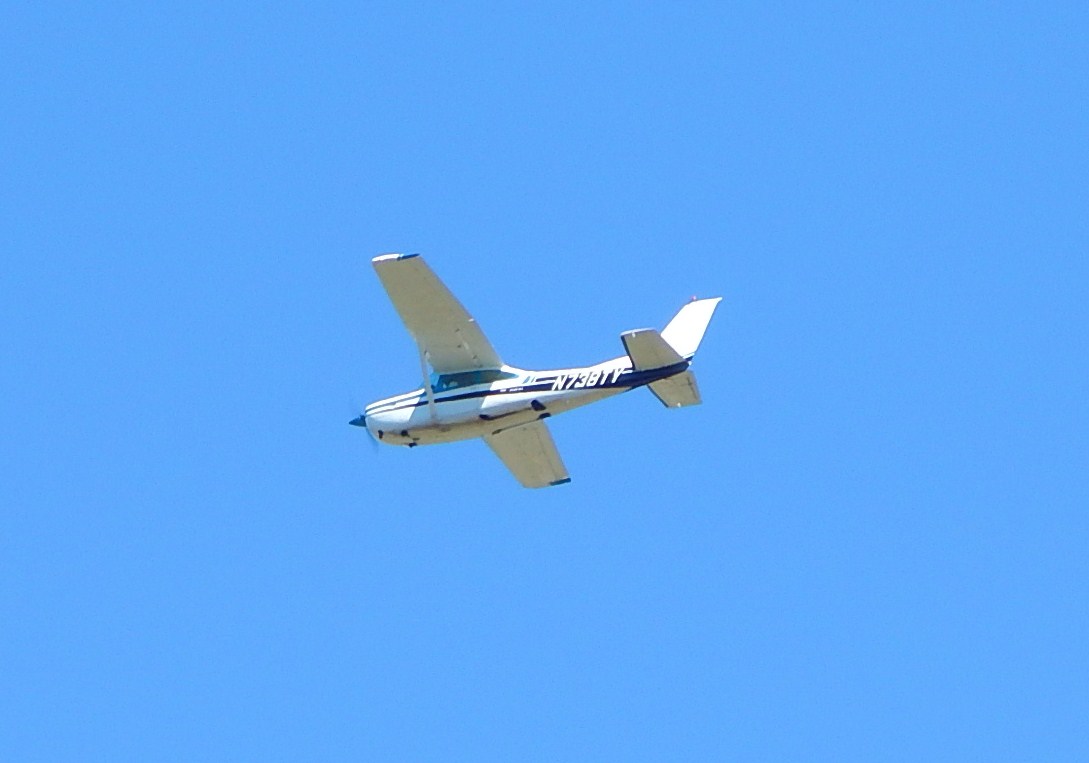
Where the Cessna 182 Wins
The Skylane wins on capability. Every mission the 172 can do, the 182 can do better — faster, heavier, higher, farther. The question is whether you actually need that capability, and whether you’ll fly enough hours to justify the operating-cost gap.
The Useful Load Equation Most Pilots Get Wrong
Here’s what most pilots get wrong about the cessna 172 vs cessna 182 question. The Skyhawk’s brochure says four seats. The reality is more like “two seats and either bags or full fuel — pick one.” A 172S with 880 pounds of useful load and 53 gallons of fuel onboard has roughly 562 pounds left for people, baggage, and gear. Two FAA standard 200-pound adults plus a 50-pound dog leaves you 112 pounds for bags. Four standard adults? You’re 238 pounds over.
The 182’s 1,100 pounds of useful load with full 84 gallons of fuel still leaves you 596 pounds — close to what a 172 has with half tanks. That’s why the 182 gets called a four-place airplane and the 172 gets called a “two-plus-two” by people who’ve actually loaded both. The Cessna Owner Organization’s 182 specs reference documents the year-by-year useful load variation across the production run.
Climbing, Hauling, and Operating Higher
The 182’s 230 horsepower IO-540 gives it real cross-country teeth. It climbs at 924 feet per minute at sea level versus 730 fpm for the 172. That difference grows at altitude. Out of a 6,000-foot airport on a hot day, the 172 starts feeling like a tired tractor. The 182 keeps climbing. For pilots who fly out of mountain airports — Colorado, Utah, Idaho, the high desert — that climb performance isn’t a luxury. It’s the difference between a normal departure and an aborted takeoff.
The 182’s 18,000-foot service ceiling also opens up the entire Western half of the country in ways the 172’s 14,000-foot ceiling does not. You can fly over weather instead of through it. You can route above MEAs on IFR cross-countries. You can use real winds aloft to your advantage on long legs.
Mission Fit: Which Airplane for Which Pilot
The honest framing for the cessna 172 vs cessna 182 decision is mission first, then budget, then everything else. Spec sheets don’t fly airplanes — pilots do, and they fly specific trips.
| Mission Profile | Better Fit |
|---|---|
| Time-building for an instrument rating | 172 |
| Solo or one-passenger hops under 300 nm | 172 |
| First-time owner on a tight budget | 172 |
| Family of four with bags | 182 |
| Regular 400+ nm cross-countries | 182 |
| High-density-altitude home airport | 182 |
| Frequent IFR over the Rockies or Sierras | 182 |
| Partnership with three or more owners | 172 (cheaper to run when shared) |
| Light backcountry and grass strips | Either (172 lighter, 182 more capable) |
We’ll be straight with you: most pilots shopping the cessna 172 vs cessna 182 question have a 172-shaped mission and a 182-shaped fantasy. That’s fine — fantasies sell airplanes — but it usually leaves an owner burning premium fuel for missions a Skyhawk would handle on half the dollars. If you can name three specific trips per year you genuinely can’t do in a 172, that’s a real 182 mission. If you can’t, you probably want the 172.
Year-by-Year Considerations in the Cessna 172 vs Cessna 182 Used Market
Both airplanes have long production runs with meaningful differences across the years. Buying without knowing these distinctions is how owners end up with avionics surprises and corrosion bills they didn’t plan for.
For the 172, the cleanest used-market value sits in the 1980s 172N and 172P range. Both have the H2AD or O-320-D2J engine, decent avionics retrofits, and they predate the 1986 production gap. The 172R (1996-2010) brought fuel injection and a 160-hp upgrade. The 172S (1998-current) added 20 more horsepower and is the version flight schools fly today.
For the 182, the sweet spot used market is the 1976-1986 182P and 182Q. Both run the Continental O-470 (230 hp), have proven airframes, and trade in the $130,000 to $200,000 range for solid examples. The 182R, S, and T introduced the Lycoming IO-540 and modern avionics. A clean 182T with G1000 NXi runs $300,000 to $500,000 depending on hours and equipment. Turbo Skylane (T182T) models add another $25,000 to $50,000.
Both airframes have known service issues worth budgeting for. The 172 watches for spar corrosion (per FAA SAIB CE-21-15 and follow-ups) and exhaust manifold cracks. The 182 watches for crankcase cracks on the Lycoming IO-540, induction system corrosion, and the rear seatbelt attach-point reinforcement on older airframes. A proper annual inspection on either airplane catches these. A skipped one buys you a surprise during a pre-buy. The Wikipedia entry for the Cessna 182 Skylane tracks the model history with FAA Type Certificate references for anyone digging deeper.
Operating Cost Reality Check: Cessna 172 vs Cessna 182
Forum posts will tell you a 182 costs “a little more” than a 172. The numbers say otherwise. Over a 100-hour flying year, here’s what the gap actually looks like.
| Cost Category | 172 (typical) | 182 (typical) |
|---|---|---|
| Fuel (100 hrs, $6/gal 100LL) | $5,400 | $7,500 |
| Oil and consumables | $400 | $650 |
| Annual inspection | $1,800 | $2,800 |
| Unscheduled maintenance | $1,500 | $2,500 |
| Engine reserve | $2,500 | $3,800 |
| Insurance | $1,400 | $2,200 |
| Hangar / tiedown | $3,600 | $3,600 |
| Database / chart subs | $500 | $500 |
| Total annual (100 hrs) | ~$17,100 | ~$23,550 |
That’s a $6,450 annual gap, or roughly $65 per flight hour. Over a 10-year ownership cycle, the 182 will cost you about $64,500 more to operate than a 172 doing the same hours. That doesn’t include the higher acquisition cost or the bigger engine overhaul reserve later in the engine’s life. Aviation Consumer’s Turbo Skylane operating review documents the operating-cost math on the turbo variant if that’s on your shortlist.
None of that makes the 182 a bad airplane. It makes it a different airplane. The cost reality is part of the mission decision.
Pre-Buy Inspection: What to Look For on Either Airplane
Whichever side of the cessna 172 vs cessna 182 debate you land on, the pre-buy inspection is the most important purchase you’ll make. A real pre-buy by an A&P who’s never seen the airplane before — not the seller’s mechanic — catches problems that turn into $15,000 surprises after closing.
On a 172, focus on six things. Engine compression first — no cylinder under 70/80. Oil consumption above one quart per five hours is a flag. Confirm spar inspection compliance per current ADs. Check fuel tank sealant condition. Ask about any history of hard landings. Pull every logbook and cross-check against the FAA registration database.
On a 182, the priority list is similar but the engine and gear stories are different. Compression on the IO-540 should be evenly distributed across cylinders. Crankcase inspection for cracks is critical — Lycoming has known case-cracking history on this engine. Check the nose gear bungee condition (a 182 with worn bungees lands hard on the nose every time). Verify the rear seat attachment-point reinforcement is complete on pre-1985 airframes.
For both airplanes, get the engine history straight. Time since major overhaul (SMOH) is one number. Whether the overhaul was done by a name-brand shop (Lycoming factory, Penn Yan, Western Skyways, Zephyr) matters more than the hours since. Field overhauls by an unknown shop deserve serious skepticism.
Cessna 172 vs Cessna 182: What the Right Answer Sounds Like
If you’ve read this far and you’re still unsure, ask yourself three questions. First: what’s your honest annual flying budget? Not your dream budget. Your real one. Second: name three trips per year you genuinely cannot do in a 172. If you can’t name them, the 172 wins. Third: who’s flying with you most of the time? A spouse and one kid is a 172 mission. Two adults plus two teenagers plus camping gear is a 182 mission.
Our take: most owners would be better served buying the cheaper airplane and flying it more hours than buying the bigger airplane and flying it fewer. Flying makes you a better pilot. Hangaring a 182 because the fuel bill is brutal makes you a worse one. If the 172 lets you fly twice as often as the 182 would, that’s the real winner — full stop.
For pilots committed to the bigger mission, the 182 delivers in a way nothing else in the Cessna line does. It carries what it says it carries. It climbs out of high-DA airports. It cruises 20 knots faster on the same family of avionics. The capability is real. So is the bill.
Frequently Asked Questions: Cessna 172 vs Cessna 182
Is a Cessna 182 harder to fly than a Cessna 172?
Not really. The 182 has the same control layout, the same wing, the same flap system, and similar handling. The main differences are heavier control forces, a more powerful engine that requires more attention to leaning and CHT management, and a heavier nose that’s less forgiving on landing if you flare too early or late. Most CFIs can transition a current 172 pilot to a 182 in 5 to 10 hours of dual.
How much more does it cost to insure a Cessna 182 vs a Cessna 172?
Plan on $300 to $1,000 more per year for the 182 at comparable hull values. A typical 172 owner with a clean record pays $1,100 to $1,600 annually for $100,000 hull and $1 million liability. A 182 at $250,000 hull plus the same liability typically runs $1,900 to $3,000. The bigger engine, higher hull value, and slightly worse claim history all push 182 premiums up.
Which is better for a brand-new private pilot getting into ownership?
The Cessna 172. Lower acquisition cost, lower operating cost, easier insurance underwriting, and a forgiving airframe that punishes mistakes less. Buy a clean 1980s 172N or 172P in the $80,000 to $110,000 range. Fly it 100 hours per year. After two or three years, you’ll know exactly whether your real mission calls for a 182 or not — and you’ll lose almost nothing on resale if it does.
Ready to Make a Smarter Buy?
The cessna 172 vs cessna 182 decision is one of the highest-leverage choices in your flying life. Get it right and you fly more, spend less, and learn faster. Get it wrong and you watch your airplane sit while the fuel bill stares back at you.
E3 Aviation Association exists to give pilots straight answers on questions like this — from aircraft ownership to training to gear to flying adventures. Membership unlocks discounts with our partners, ambassador-led education, and a community of pilots who’ve been through the decisions you’re facing now. Built by pilots, for pilots. Join E3 Aviation Association today and get the resources you need to fly smarter.