Last Updated: July 1, 2026 | E3 Aviation Editorial Team
You’re 60 miles from home. The tablet says the NEXRAD cell is still 25 miles north of course. Everything looks fine. Then you glance at the panel. The Stormscope has painted six fresh strikes off the right wing in the last 90 seconds. That’s lightning detection doing its job. It’s telling you where a storm is firing right now. Not where it was firing when ground radar took its last sweep.
This is the sensor gap that keeps killing pilots. They trust datalink weather as tactical guidance. That’s why lightning detection still earns panel space in 2026.
We’ll walk you through how spherics-based lightning detection works. Where Stormscope and Strikefinder differ. Why datalink alone isn’t enough. And how to build a real-time convective picture from both sources. If you’ve wondered whether a used WX-500 is worth the install cost, this is the guide.
What Lightning Detection Actually Measures
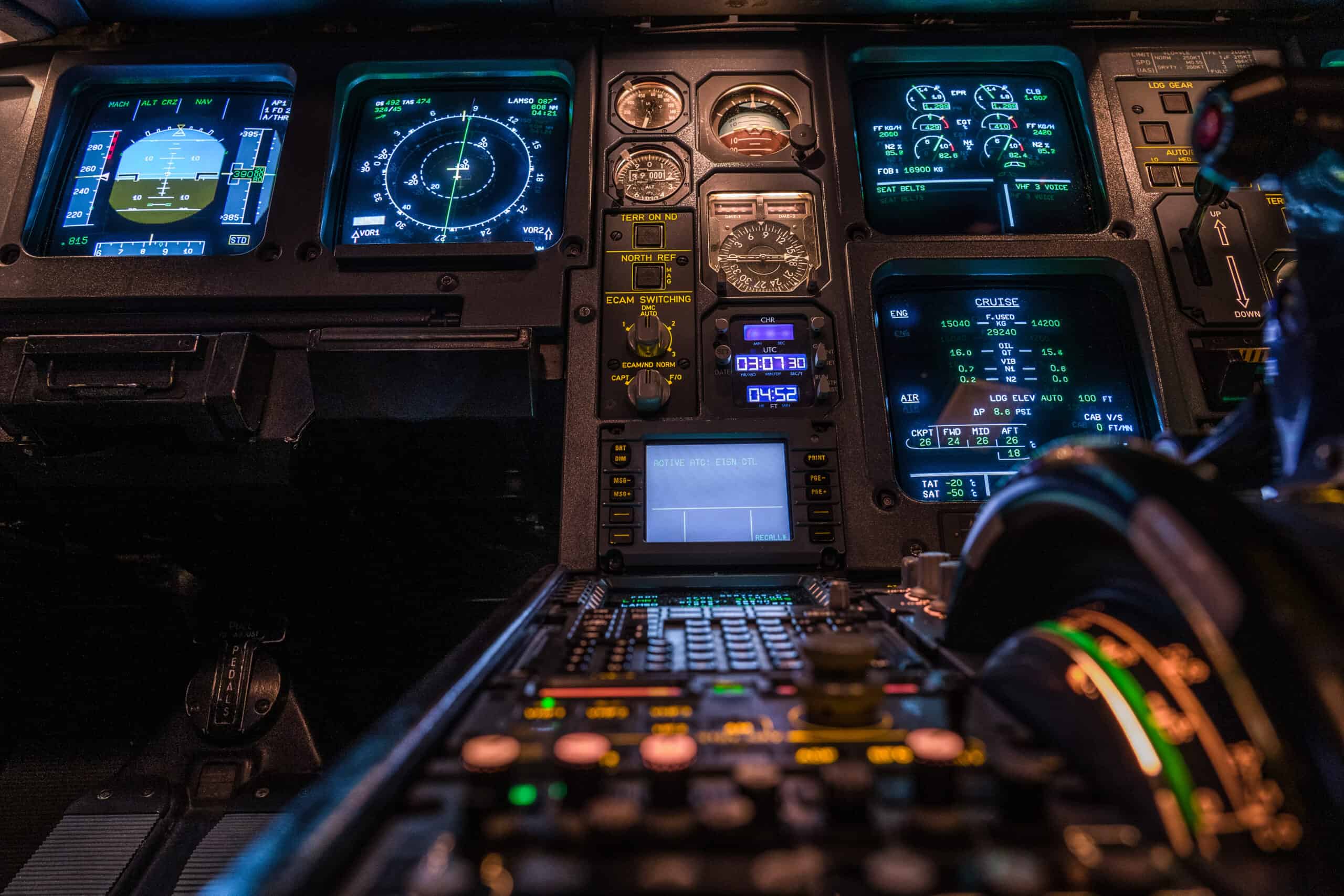
Lightning detection in general aviation isn’t radar. Radar bounces a signal off precipitation and reads the return. Spherics-based lightning detection is different. It’s a receive-only system. It picks up the electromagnetic energy discharges throw off. Then it plots each strike by bearing and range around your aircraft symbol.
Think of it like a giant ADF. But tuned to lightning instead of an NDB station. The sensor sees the vertical electromagnetic pulse of a discharge. It calculates the direction it came from. It estimates the range based on signal strength. Then it draws a dot or plus symbol on your display. No transmitter. No antenna sweep. Just a passive receiver.
That matters for two reasons. First, lightning detection is instantaneous. There’s no processing delay. No ground uplink. No satellite refresh cycle. If a cell fires a strike, the sensor sees it inside a second. Second, spherics don’t lie about intensity. A cell throwing dozens of strikes per minute is severe. That’s true whether the radar has caught up or not.
The tradeoff is range accuracy. Signal strength varies with strike intensity. So the sensor’s range estimate can be off on any single dot. Bearing is reliable to within a few degrees. Range on a specific strike can be wrong by 30 to 40 percent. That’s why experienced users read the cluster, not the pixel.
Stormscope WX-500: How It Works and What It Costs
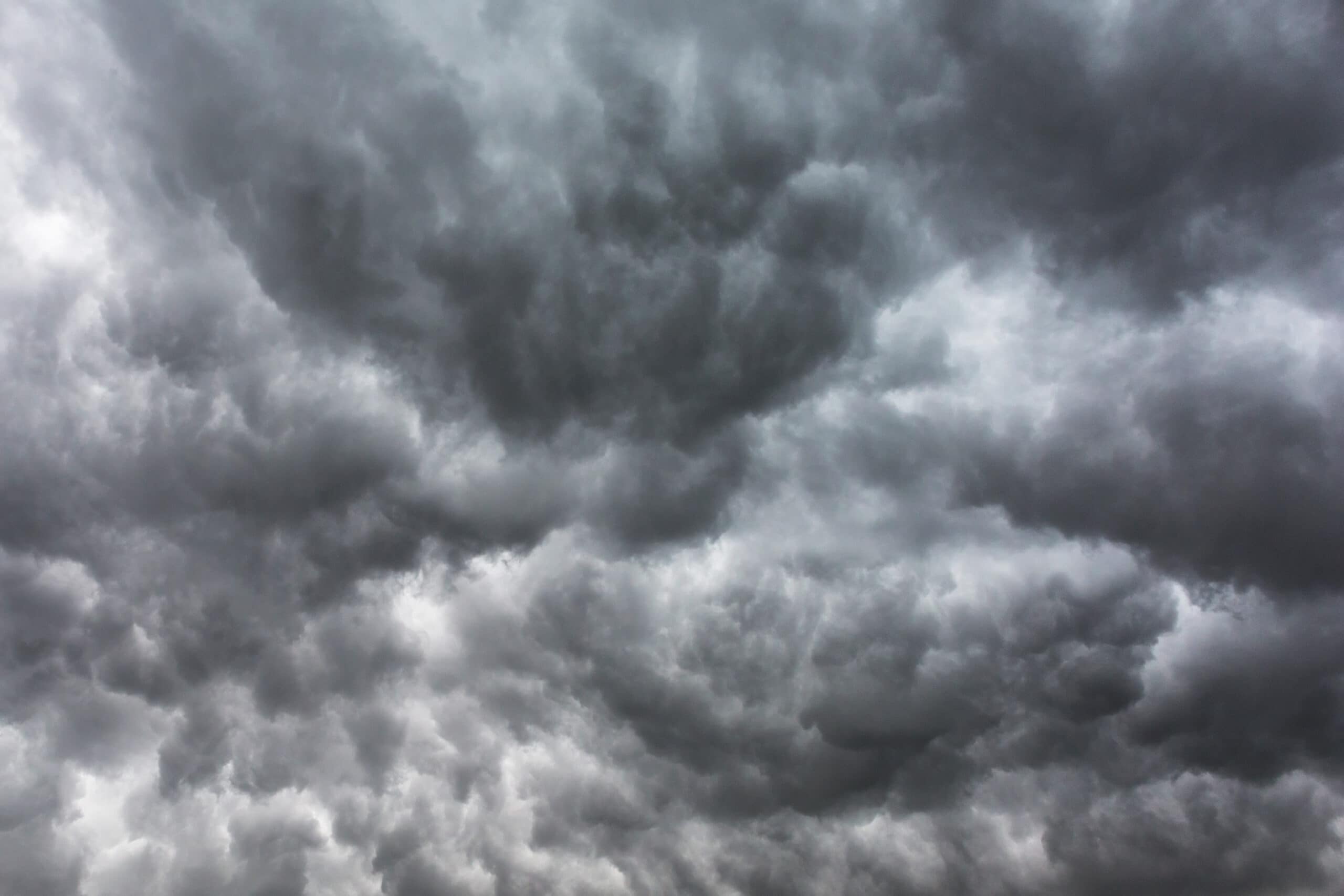
The L3Harris WX-500 is the mainstream lightning detection option. It’s a “black box” processor with no dedicated display. Instead it feeds strike data into an MFD or navigator you already have. Compatible displays include the Garmin GTN 650 and GTN 750. Also the GNS 430W and 530W, the Avidyne MX-20 and IFD series, plus several Bendix/King legacy units. If your panel has a Garmin GTN, strikes overlay onto the map page with your route.
The WX-500 uses “Cell mode.” That groups clustered discharges into tighter plus symbols. It also has “Strike mode” for individual events. Cell mode is where most pilots leave it. Raw sferics can look messier than the actual weather. The unit also displays a discharge rate. That’s a running count of strikes per minute. It’s a useful severity signal.
Twenty strikes a minute in a small cluster tells you something. One strike every ten seconds across a 40-mile arc tells you something else.
The used WX-500 pulls in the $8,000 to $12,000 range. Antenna install runs a few thousand more. A WX-SM Skinmapper is required to verify antenna location. The antenna has to be mounted where the airframe doesn’t shadow the signal. Total installed cost lands between $12,000 and $18,000 on a piston single. That’s real money. But it’s less than half what a Bendix RDR-2000 radar retrofit costs. And it doesn’t need a nose radome.
Strikefinder: The Independent Alternative
Insight Avionics builds the Strikefinder. Historically the SF-2000 series. Today the current-production digital Strike Finder. It’s the last self-contained lightning detection display still in production. That matters if your aircraft doesn’t have a compatible MFD for a WX-500 overlay.
The Strikefinder uses broadband digital sampling. Earlier Stormscope generations relied on analog filtering. Insight argues broadband delivers cleaner noise rejection. Also more reliable strike classification. That’s especially true in electrically noisy older airframes. Whether the difference is decisive is a hangar argument that goes on forever. Both units pick up cells at 200 nautical miles. Both plot in real time. Neither one is perfect on close-in range calls.
One Strikefinder feature is genuinely useful: Time Travel. Push the button. The display replays the last hour of strike history compressed to about a minute. You get a visual replay of how cells have moved and grown. That’s easier to interpret than remembering what the display looked like 20 minutes ago.
Why FIS-B Lightning Isn’t the Same Thing
ADS-B In lightning is a different beast from panel-mounted lightning detection. Pilots who conflate the two put themselves in danger. FIS-B lightning is a data product uplinked from the ground network. It has the same latency problems as FIS-B NEXRAD.
Here’s the actual latency math. The FAA says FIS-B NEXRAD can display data up to 20 minutes older than the age indicator. Not 2 to 5 minutes. Up to 20 minutes. Lightning data goes through the same chain.
A cell can grow at 3,000 feet per minute vertically. It can drift at 25 knots. In that cell, 20 minutes is the difference between “the storm is over there” and “the storm is on top of you.”
The FAA’s guidance is clear. FIS-B is for strategic and near-term planning. Not tactical maneuvering. Use it to decide whether to launch. Whether to divert to plan B. Whether to hold at your current altitude. Do not use it to thread a 15-mile gap between two cells at 8,000 feet. Onboard spherics don’t have this problem. When a strike hits the display, that discharge just happened. Sub-second latency, every time.
Reading the Cluster: The Skill That Actually Matters
Owning a lightning detection unit is one thing. Reading it well is another. Here’s the framework we teach pilots.
Cluster geometry first, dots second. Say the display shows 15 strikes in a 20-mile cluster off your right wing at 40 miles. That’s a severe cell. Don’t argue with it. Say the display shows 3 strikes across a 60-mile arc. That’s atmospheric noise or a decaying cell. Probably not a threat unless the pattern tightens.
Discharge rate is your severity signal. Say the WX-500 shows 15+ strikes per minute in one sector. Or the Strikefinder is painting new dots every few seconds. Treat that cell as a hard no-go for penetration. Rate matters more than absolute count.
Compare against your datalink weather. This is where the two sensors combine into something better than either alone. Datalink NEXRAD shows precipitation intensity at 5- to 15-minute-old resolution. Spherics show real-time electrical activity. When both agree, you have high-confidence severe convection. When they disagree, trust the more conservative picture. Get more information before committing.
Watch the trend, not the snapshot. A cluster tightening with a growing rate is a cell intensifying. A cluster spreading out with a falling rate is dissipating. The Strikefinder’s Time Travel replay makes this obvious. On a Stormscope, you build the trend picture in your head. That’s why we tell pilots to note discharge rate every 60 seconds when convection is in play.
The 20-Mile Standoff Rule Applied to Sferics
AIM 7-1-27 tells pilots to avoid any severe thunderstorm by at least 20 nautical miles. That’s especially true under the anvil. The rule was written for airborne radar and visual observation. Spherics adds a wrinkle. The range estimate on a single strike is imprecise. So the 20-mile buffer applies to the edge of the cluster. Not the innermost dot.
Practical translation. Say the cluster’s outer strikes are painted at 30 miles on your right. The standoff is met. Say the outer strikes are at 20 miles. You’re at the buffer edge. Any inward growth violates the rule. If any strike inside the cluster is inside 20 miles, deviate now. That’s the airline turbulence-avoidance discipline. The buffer protects against the range-accuracy problem spherics has.
Between-cell spacing matters too. AIM 7-1-27 recommends 40 miles between cells to fly the gap. Say your sferics shows two clusters less than 40 miles apart. That gap isn’t safe. Go around, not through. Pilots who shoot gaps with lightning detection end up in NTSB reports.
Where Sferics Beats Radar, and Where Radar Wins
Airborne radar and lightning detection are complementary, not competing. Understanding what each does well is the difference between a professional workflow and a fumbling one.
Sferics wins at real-time cell identification. Say a cell just fired its first strike. The panel sees it before the radar catches the precipitation return. Sferics wins at severity classification. Discharge rate is a cleaner intensity signal than reflectivity for building cells. Sferics wins at 360-degree coverage. The sensor sees strikes in every direction at once. Not just where the antenna points.
Radar wins at precipitation mapping. Sferics can’t see the anvil. Can’t see the rain shaft. Can’t see microburst virga. Radar wins at hail identification via reflectivity gradients and tops. Radar tells you the altitude of the precipitation core. Sferics has no vertical resolution. Radar wins at close-in tactical picture. That’s especially true inside 40 miles.
Here’s the honest answer for piston single owners without radar. A Stormscope or Strikefinder plus a datalink NEXRAD tablet is the best picture you can build. Short of spending $60,000 on a full radar retrofit. And for many pilots, it’s the right combination. Even airline pilots with $200,000 radar use sferics-derived lightning data as a cross-check.
The Retrofit Decision: Is It Worth Installing in 2026?
Here’s what most owners get wrong about the retrofit math. They compare the WX-500 install cost against a tablet subscription. They conclude the tablet is enough. That comparison is wrong. The two systems don’t do the same job.
The right comparison is different. How much convective flying do you actually do? What’s the alternative on a scrubbed trip? Say you fly 50 hours a year with no convective flying. You don’t need lightning detection. Buy the tablet subscription. Stay home when storms are forecast.
Now say you fly 200 hours a year across the Southeast, Midwest, or Front Range summer. You’re routinely in convective weather. A panel-mounted spherics unit pays for itself. The first time it keeps you out of an embedded cell that datalink missed, it’s earned back.
The used WX-500 market is where most owners land in 2026. Pre-owned units run $4,000 to $7,000. Install is $3,000 to $6,000. Total is typically $8,000 to $13,000. That’s comparable to a good transponder upgrade. If you have a Garmin GTN in the panel, the install is straightforward.
New Strikefinder retrofits run $4,500 to $6,000 including install. That’s the cheapest new lightning detection option. Say your panel doesn’t have a compatible MFD for a WX-500 overlay. The Strikefinder is the better move. It doesn’t need one.
Common Mistakes We See Pilots Make
Trusting datalink NEXRAD tactically. This is the number-one killer. FIS-B and satellite NEXRAD are strategic tools. Threading cells inside 20 miles with either one is gambling with 15+ minutes of latency. Panel spherics or airborne radar is your only real-time convective picture.
Ignoring discharge rate. Pilots see the cluster and plan a deviation. But they don’t check if the cluster is growing. A rising strike count means the cell is intensifying. The deviation angle you calculated 30 seconds ago is already wrong. Rate first. Geometry second.
Flying through a “gap” the sensor shows as clean. Spherics range accuracy at close-in ranges is poor. Two clusters may show a 20-mile gap at 30 miles out. They may actually be 12 miles apart. Airborne radar can measure the gap accurately. Sferics can’t. Don’t shoot gaps you can’t measure.
Skipping the antenna install quality check. The WX-500 antenna has to be mounted where the airframe doesn’t attenuate the signal. A sloppy install produces false bearings and spurious strikes. Also gaps in coverage on one side of the aircraft. The Skinmapper verification isn’t optional. Insist on it during install.
Assuming the sensor sees anvil hazards. Spherics detects electrical discharges. Those happen in the convective core. The anvil, the hail shaft downwind, and the outflow boundary don’t discharge. They don’t paint on the display. Cross-check with radar or visual.
Building a Real-Time Convective Picture: The Workflow
Here’s how a disciplined convective avoidance scan works. This assumes you have both panel spherics and tablet datalink.
Pre-flight. Check convective SIGMETs, CAPE values, and the Convective Outlook. Say any of those signals suggest strong convection along your route. Plan a diversion before you launch. Not after you’re 80 miles into the cell field.
En route baseline. Every 5 minutes, glance at datalink NEXRAD. Note cell locations and shapes. Note where the precipitation gradients are. This is your strategic picture.
En route tactical. Every 60 seconds when convection is in play, scan the sferics display. Check cluster geometry, discharge rate, and bearing. Compare against the NEXRAD baseline. Say the sferics shows discharges that aren’t on the radar. Or a cluster’s rate is rising fast. That cell is either building or the datalink is stale. Deviate around it with a 20-mile buffer.
Decision points. At every waypoint, ask two questions. Is the cell to my right still there? Is it intensifying or dissipating? Answer with the sferics rate trend. Cross-check against the radar shape. If either sensor says intensifying, extend the deviation. If both say dissipating, tighten it up.
Abort criteria. Any single strike inside 20 miles of your track. The cluster ahead has grown its strike count 50 percent in five minutes. You cannot maintain 40 miles of clean air between clusters. Any of those. Divert. Not adjust. Divert. That decision made 40 miles out is easy. Made 15 miles out, it’s a mayday.
Frequently Asked Questions
Is lightning detection still worth installing in 2026?
Yes, if you fly meaningful cross-country hours in convective weather. Panel spherics is the only real-time cell-identification source in a piston single without radar. FIS-B and satellite NEXRAD are strategic tools with 5- to 20-minute latency. Say your flying puts you in convective decisions more than a few times a year. Lightning detection pays for itself.
Can I just use the lightning layer on my iPad instead?
No. The lightning layer on ForeFlight and Garmin Pilot is delivered via FIS-B or subscription satellite. It has the same latency as datalink NEXRAD. Up to 20 minutes stale. It’s fine for strategic go/no-go. It’s not safe for tactical avoidance inside cells.
How is lightning detection different from a Stormscope?
Stormscope is a brand name. Both the L3Harris WX-500 Stormscope and the Insight Strikefinder use spherics. That’s the electromagnetic energy from discharges. All modern GA lightning detection is spherics-based. Stormscope and Strikefinder are the two main products. The technology is the same.
Our Take
We’ll be straight with you. Datalink weather has made pilots complacent about tactical convective avoidance. The 5-minute NEXRAD picture looks clean and modern. Pilots forget the data behind it is up to 20 minutes stale. That mindset gets pilots killed every summer. The NTSB dockets are full of accidents where the tablet said one thing and the weather said another.
Lightning detection is the fix. It’s not glamorous. It’s not new. It’s not perfect. But it’s real-time. It’s directly correlated with cell severity. And it fills the sensor gap between what your tablet knows and what’s happening around your aircraft.
Say you have room in the panel and a mission that puts you in summer convective weather. Install the box. Say your panel already has a WX-500 that hasn’t been updated in a decade. Learn to read it well. It’s telling you something your iPad can’t.
Read Next
- Thunderstorm Avoidance: The Complete GA Pilot Guide 2026
- Reading PIREPs: The 2026 GA Pilot Field Guide
- ForeFlight: The Complete Guide for GA Pilots
- Structural Icing in Piston Singles: 2026 GA Pilot Guide
- Fog Formation and Forecasting for GA Pilots
- Garmin G3X Touch Retrofit: 2026 Cost-Benefit Analysis
- VFR Flight Following: The GA Pilot’s 2026 Guide
- Weather Decision Making for GA Pilots
- Thunderstorm Hazards for GA Pilots
- Weather Aviation: How GA Pilots Read the Sky
External Authority References
- FAA Aeronautical Information Manual (AIM) 7-1-27 — Thunderstorm Flying
- FAA ADS-B In Pilot Applications
- NTSB Safety Alert SA-011 — Thunderstorm Encounters
- Insight Avionics Strikefinder Documentation
- FAA-P-8740-12 — Thunderstorms: Don’t Flirt, Skirt ‘Em
Join E3 Aviation Association
E3 Aviation Association is the pilot community for owners who take convective avoidance seriously. Members get member-priced training resources. Plus workshop reports on avionics installs. And the honest editorial voice you’ve read in this guide. Join us and fly smarter.