Last Updated: May 9, 2026 | By E3 Aviation Editorial Team
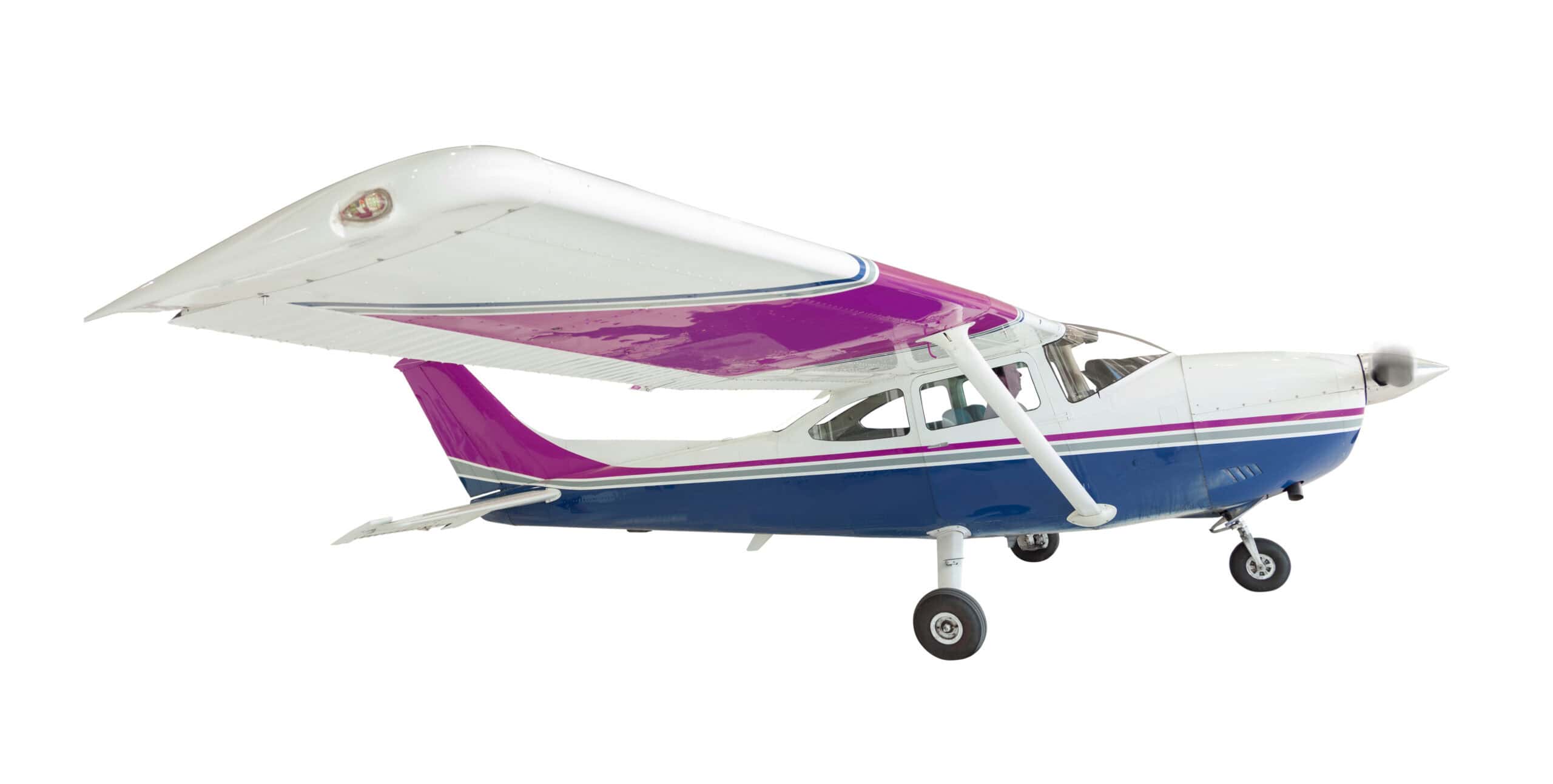
The Cessna 172 is the most produced aircraft in history. More than 44,000 of them have rolled off the line since 1956. If you learned to fly in the United States, there’s a real chance you did it in one. And if you’re shopping for a first airplane, the 172 keeps showing up on every short list for good reasons that haven’t changed in seventy years.
This guide covers the Cessna 172 from end to end. We’ll walk through every major variant, the engines that power them, real specs and performance numbers, what it actually costs to own one in 2026, and what to look for if you’re getting ready to buy. Pilot to pilot, no fluff.
Why the Cessna 172 Is the Most Popular GA Aircraft Ever Built
The Cessna 172 became the standard because it does the basics extraordinarily well. It’s stable. It’s forgiving. The high-wing design gives you visibility on the ground and shade in the cockpit. And the airframe is so well understood that almost any A&P in the country can work on one without consulting the factory.
That last point matters more than new pilots think. Parts availability, mechanic familiarity, and a deep service knowledge base all reduce the cost and friction of ownership. A weird Continental crank issue on a rare experimental might mean weeks of downtime. The same problem on a 172 gets solved on a Tuesday.
The Cessna 172 also defines the entry point of the GA training fleet. Flight schools buy them by the dozen. Insurance companies underwrite them at the lowest rates in the four-seat market. The FAA has tested more checkride applicants in this airframe than any other aircraft in the certification system. That ecosystem makes the 172 self-perpetuating – pilots learn in them, then they buy them, then they teach in them.
We’ll be straight with you: the Cessna 172 isn’t fast and it isn’t sexy. But it’s the airplane that most reliably matches what most GA pilots actually do – local flights, $200 hamburgers, occasional cross-countries with one or two passengers and bags. For that mission, almost nothing beats it.
Cessna 172 Variants: A Complete Breakdown by Model Year
The Cessna 172 has gone through more than a dozen distinct variants since production started in 1956. Most of them share a common DNA, but the differences in engine, weight, avionics, and equipment matter when you’re flying or buying. Here’s the rundown that pilots actually need.
The Early Birds: 172, 172A through 172H (1956-1968)
The original Cessna 172 looked a lot like a 170 with a tricycle gear. Same Continental O-300 145-horsepower engine, same fabric-covered control surfaces on early models. Cessna iterated quickly. The 172A added a swept tail in 1960. The B model brought a redesigned cowling. The D introduced the omnivision rear window in 1963.
By the time the H model arrived in 1967, the 172 had grown a wider cabin and a more refined interior. These early Continental-powered 172s are still flying everywhere. They’re cheap to buy, simple to maintain, and a perfect first airplane if you understand what you’re getting – older avionics, mid-time engines, and patient cruise speeds.
The Skyhawk Era: 172I through 172M (1968-1976)
The Skyhawk name technically goes back to a 172 trim package introduced in the late 1950s. By the early 1970s, “172” and “Skyhawk” were essentially synonymous. The major change in this run was the switch from the Continental O-300 to the Lycoming O-320 starting with the 172I in 1968. Power jumped from 145 to 150 horsepower, then 160 in later models.
This generation also introduced the rear window expansion known as the Omni-Vision design. Pilots either love it or feel exposed by it. Most love it. The cockpit visibility on a 172 with the wraparound rear window is genuinely better than almost any other four-seat piston single.
The Penn Yan, Rebuilt, and Restored: 172N and 172P (1977-1986)
The 172N and 172P are the workhorses of the modern GA training fleet. The N model came with a Lycoming O-320-H2AD that famously had camshaft issues. Many have since been replaced or modified. The P model corrected most of that and brought a longer cabin, improved avionics options, and the durable 160-horsepower O-320-D2J that remains a favorite among fleet operators.
If you’re shopping used, a well-maintained 172P is one of the best values in GA. Production ended in 1986 when Cessna paused all single-engine production. Many 172Ps now have 8,000 to 12,000 hours on the airframe – which sounds high until you realize the airframe is approved for unlimited hours with proper inspection.
The Restart and Modernization: 172R and 172S (1996-Present)
Cessna restarted single-engine production in 1996 with the 172R. The R model brought a fuel-injected Lycoming IO-360-L2A producing 160 horsepower. Cleaner aerodynamics and improved interior. In 1998, the 172S Skyhawk SP arrived with the IO-360 cranked up to 180 horsepower. That’s the airplane most newly minted private pilots are learning in today.
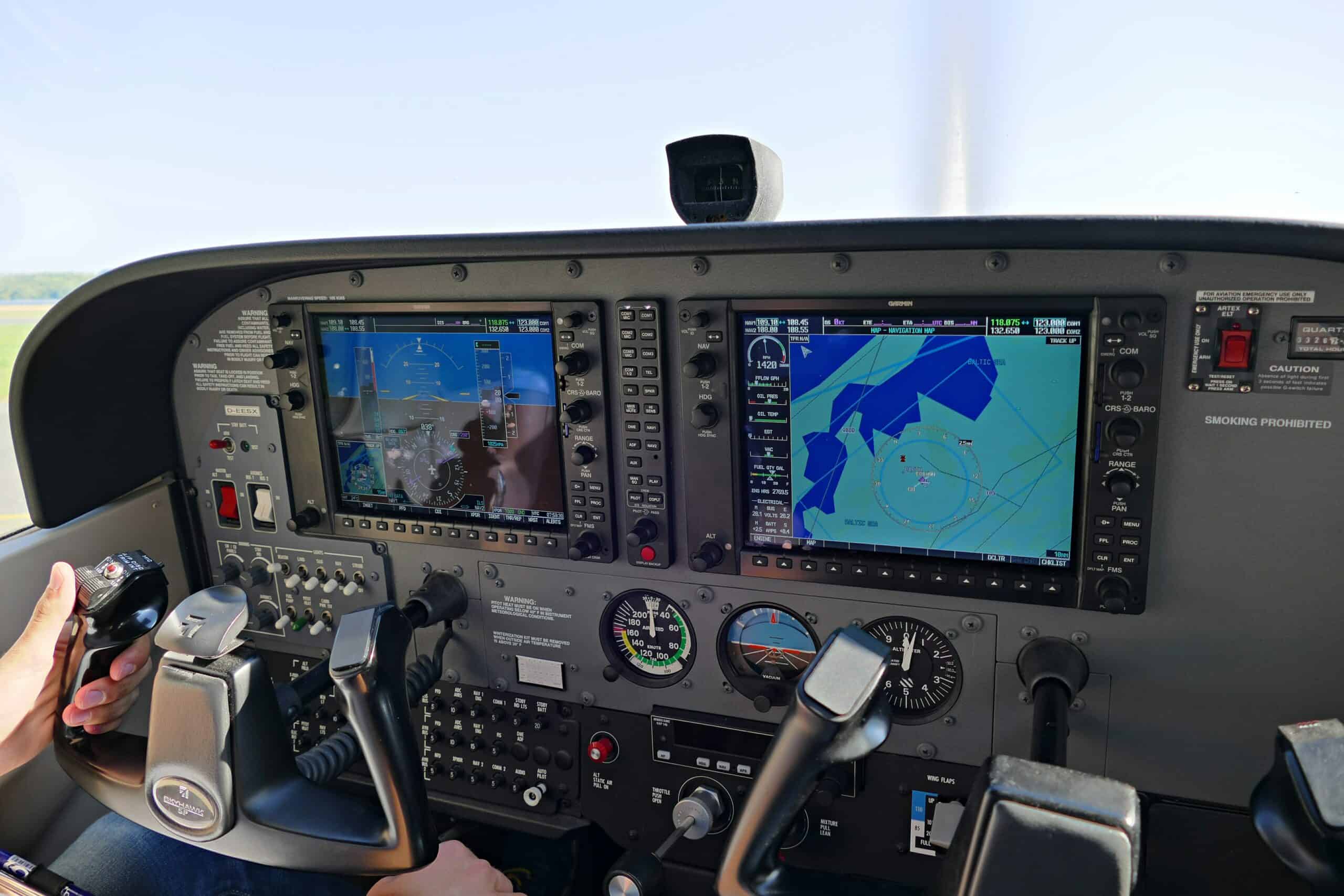
The modern 172S is a different machine from a 1970s 172N in nearly every way that matters operationally. Garmin G1000 NXi glass cockpits are now standard. Useful load is up. Fuel injection eliminates carb ice as a concern. But the basic flight characteristics – the gentle stall, the predictable handling, the docile slow-flight behavior – are exactly the same as the 1956 original.
The Oddball: 172RG Cutlass (1980-1984)
For five model years, Cessna built a retractable-gear version of the 172 called the Cutlass RG. It used a 180-horsepower Lycoming O-360 with a constant-speed prop. Cruise climbed to about 140 knots. The Cutlass was a popular complex-aircraft trainer for commercial students until production ended in 1984.
If you’re hunting for a complex endorsement aircraft today, a clean 172RG is one option. But fewer than 1,200 were built and parts availability for the retract gear system is increasingly tight. Most CFIs now use Piper Arrows or Mooneys for the complex training requirement.
Cessna 172 Specifications and Performance
The exact numbers vary by year and engine. Here’s a representative snapshot covering the most common 172 variants flying today, so you can compare them at a glance.
| Specification | 172N (1977-80) | 172P (1981-86) | 172R (1996-) | 172S (1998-) |
|---|---|---|---|---|
| Engine | Lycoming O-320-H2AD | Lycoming O-320-D2J | Lycoming IO-360-L2A | Lycoming IO-360-L2A |
| Horsepower | 160 hp | 160 hp | 160 hp | 180 hp |
| Max Gross Weight | 2,300 lbs | 2,400 lbs | 2,450 lbs | 2,550 lbs |
| Useful Load (typical) | ~870 lbs | ~860 lbs | ~810 lbs | ~870 lbs |
| Fuel Capacity | 40 gal usable | 40 gal usable | 53 gal usable | 53 gal usable |
| Cruise Speed (75% power) | ~120 kts | ~122 kts | ~122 kts | ~124 kts |
| Range (no reserve) | ~440 NM | ~440 NM | ~640 NM | ~640 NM |
| Stall Speed (Vso) | 33 KIAS | 33 KIAS | 33 KIAS | 33 KIAS |
| Service Ceiling | 13,100 ft | 13,100 ft | 13,500 ft | 14,000 ft |
| Rate of Climb (SL) | 700 fpm | 700 fpm | 720 fpm | 730 fpm |
Two things stand out from that table. First, the stall speed has barely moved across seven decades. The wing design is that good. Second, the useful load is the dominant variable that decides whether a 172 fits your mission. A 1980 172N at 870 pounds of useful load isn’t loading four FAA-standard adults plus full fuel. Run the numbers carefully before you fall in love.
Cessna 172 Engines: From the Continental O-300 to the IO-360
Three engine families have powered the 172 across its production run. Each has its quirks, its expected TBO, and its real-world reliability story. Knowing the differences helps you read maintenance logs intelligently and budget realistically.
The original Continental O-300 is a 145-horsepower six-cylinder engine that powered every 172 from 1956 through 1968. It’s smooth and reliable but expensive to overhaul because it’s a six-cylinder design in a market that mostly buys four-cylinder parts. TBO is 1,800 hours. Many of these engines are still flying past TBO with good maintenance, but plan for a full overhaul cost north of $35,000 in 2026.
The Lycoming O-320 family arrived in 1968 and dominated 172 production through 1986. Multiple variants exist: the O-320-E2D in early models, the troubled O-320-H2AD in the 172N (the one with the camshaft and tappet issues), and the proven O-320-D2J in the 172P. TBO is 2,000 hours for most variants. This is the engine pilots most often inherit when they buy a used 172.
The Lycoming IO-360 series powers every 172 built since 1996. Fuel-injected, more reliable than the carbureted predecessors, and rated at either 160 (172R) or 180 (172S) horsepower. TBO is 2,000 hours. Overhaul costs have climbed steadily – budget $45,000 to $55,000 in 2026 for a factory remanufactured exchange.
Engine choice should drive your buying decision more than most pilots realize. A mid-time IO-360 with clean compressions and oil analysis history is worth thousands more than a fresh-overhaul O-320-H2AD with no cylinder borescope. Engines aren’t interchangeable in value just because they push the same airframe.
What CHTs and Oil Consumption Are Telling You
For any 172 you’re seriously considering, request the last two years of oil analysis reports. Iron, aluminum, and chromium trends matter more than any single number. Spike in iron usually means cam or lifter wear. Aluminum trending up points to piston or case issues. A flat boring report is exactly what you want to see.
Pay attention to baffle seal condition during pre-buy. Degraded seals push CHTs up and force the engine to work harder than it should. Healthy baffles are a quick, cheap fix – but they tell you something about how the previous owner managed the airplane. Our take: how an owner treats baffle seals is a tell for how they treat everything else.
What It Actually Costs to Own a Cessna 172 in 2026
Ownership costs land in three buckets: fixed costs you pay even if you don’t fly, hourly operating costs, and irregular major events like overhauls and avionics upgrades. Here’s what realistic GA owner-operators are spending in 2026.
Annual fixed costs for a typical 172 owner come to roughly $8,000 to $14,000 per year. Tiedown or hangar runs $1,200 to $6,000 depending on geography. Insurance for a private pilot with a few hundred hours and reasonable hull value is $1,500 to $3,000. The annual inspection runs $1,500 to $3,500 at most shops, more if discrepancies turn up. Add database subscriptions, registration, and a basic reserve for unscheduled maintenance.
Hourly operating costs typically run $90 to $130 per hour wet. That covers fuel at 8 to 9 gallons per hour, oil consumption, and a per-hour engine reserve of $20 to $30 to fund the next overhaul. Owners who skip the engine reserve fund are setting themselves up for a $40,000-plus surprise around hour 1,800 to 2,000.
Major events are where ownership planning matters most. Engine overhaul: $35,000 to $55,000 depending on engine. Avionics modernization: $15,000 to $40,000 for a Garmin G3X panel transformation. Repaint and interior refurbishment: $20,000 to $35,000 done well. None of these are surprises if you bought the airplane with eyes open.
For more on what to expect during the yearly inspection cycle, our guide to the GA annual inspection process walks through what shops actually look for and where most surprise costs come from.
Common Cessna 172 Issues Every Buyer and Owner Should Know
The 172 is reliable. It isn’t bulletproof. After 70 years of fleet operation, certain failure points are well documented. Knowing them protects you whether you’re flying a rental or buying your own.
Seat track AD compliance. Older 172s are subject to AD 2011-10-09 covering seat track wear. Worn seat tracks have caused multiple in-flight seat slip incidents. The fix is straightforward but it’s a recurring inspection that needs to be current. Verify it during pre-buy and at every annual.
The O-320-H2AD camshaft issue. Specific to 172N models built between 1977 and 1980. Camshaft and lifter wear often required premature top overhauls. Many engines have already been addressed, but log review is essential. If the documented overhaul history is thin, walk away or budget for a top.
Exhaust system corrosion. The 172’s exhaust system is an inspection point at every annual. Cracks in the muffler can introduce carbon monoxide into the cabin via the heater system. CO detector required, no exceptions, in any 172 with an old exhaust system.
Carburetor ice on carbureted models. Every pre-1996 172 is carburetor-equipped. Carb ice is real, especially in the temperature and humidity ranges most GA flying happens in. Use carb heat per the POH – descents and reduced-power operations are the danger zones.
Nose gear shimmy and damper failure. The 172 nose gear damper deteriorates with age. Shimmy on landing rollout is the early warning. Replacement is relatively cheap, but a neglected shimmy can cause structural damage to the nose gear strut and firewall.
Cessna 172 vs. the Alternatives: Where the 172 Wins and Where It Doesn’t
Pilots shopping for a first airplane usually compare the 172 against three alternatives: the Cessna 150/152, the Piper Cherokee/Warrior, and the Cessna 182. Each comparison reveals something different about what the 172 actually is.
Versus the Cessna 150/152. The 150 is cheaper to buy and operate. It’s also a two-seat airplane with limited useful load. If you’ll never carry more than one passenger and rarely fly more than an hour from home, the 150 is a fine choice. For everything else, the 172 is the better tool. The cost difference shrinks fast once you factor in operations.
Versus the Piper Cherokee/Warrior. Both are excellent four-seat trainers. The Cherokee handles a little firmer in the controls. The 172 has better visibility in pattern work due to the high-wing design. Cherokees fly slightly faster on similar horsepower. Both have huge support communities. Either is a sound choice – the 172 has the larger fleet and slightly easier resale.
Versus the Cessna 182. The 182 is a more capable airplane in every dimension that matters for serious cross-country flying. It’s faster, hauls more, climbs better, and handles weather more confidently. It also costs roughly 50% more to buy and roughly 30% more to operate. If your mission is real travel with full seats, the 182 earns its premium. If your mission is local flying and the occasional weekend trip, the 172 is enough airplane.
What to Know Before Buying a Used Cessna 172
Buying right is more important than buying cheap. Here’s the buyer’s checklist that separates pilots who get into a flying airplane from pilots who get into a project.
Get a thorough pre-buy inspection from an A&P who isn’t connected to the seller. Budget $1,500 to $2,500 for it. The pre-buy should include compression checks on every cylinder, borescope of the cylinders, oil sample analysis, full logbook review going back to last major event, AD compliance verification, and a careful look at the airframe for corrosion – particularly in the firewall, wing roots, and tail cone.
Verify the airframe time and engine time independently. Logbook entries can drift. Tach time and Hobbs time should be cross-checked. Mid-time engines (around 1,000 hours since major) are usually the sweet spot – the original break-in is well past, but plenty of useful life remains.
Avionics matter more in 2026 than they used to. ADS-B Out is required for nearly all GA airspace. WAAS GPS is required for LPV approaches. A 172 with an old radio stack and no ADS-B will need $8,000 to $25,000 in upgrades to be useful for IFR cross-country flying. Factor that into the purchase price calculation.
Check insurance before you buy, not after. Talk to a broker like Avemco or BWI Aviation Insurance early. New pilots in higher-performance variants (the 180-hp 172S) sometimes get quoted significantly more than they expect. The quote can shape which variant makes sense for you.
Finally, fly the airplane before you sign anything. Pay for an hour of dual with a CFI familiar with 172s. The way an airplane handles tells you things logbooks won’t – engine roughness, control friction, gear shimmy, autopilot integration. Trust your hands more than the seller’s spreadsheet.
Frequently Asked Questions About the Cessna 172
What’s the most reliable Cessna 172 model year to buy?
The 172P from 1981 to 1986 has the strongest reputation for reliability and parts availability among older 172s. It uses the proven Lycoming O-320-D2J engine that avoided the H2AD camshaft issues, has a slightly higher useful load than earlier models, and benefits from later-production refinements. For modern aircraft, the 172S Skyhawk SP from 1998 onward is the durable workhorse choice.
Can a Cessna 172 carry four adults and full fuel?
Almost no Cessna 172 can carry four FAA-standard adults plus full fuel within gross weight limits. The typical 172 useful load runs 800 to 870 pounds, which has to cover passengers, baggage, and fuel. Four 170-pound adults plus 53 gallons of fuel weighs about 998 pounds. Plan for either reduced fuel or smaller passengers – and always run the weight and balance numbers before flight.
Is a Cessna 172 a good first airplane to buy?
Yes, for most GA pilots. The 172 has the lowest insurance rates in the four-seat market, the deepest mechanic familiarity nationwide, and the most predictable maintenance cost profile. It rewards new owners with a gentle learning curve. The main reason to skip it is mission fit – if you regularly need to carry four adults with bags or cruise at 150 knots, look at a Cessna 182 or a Piper Saratoga.
The Cessna 172 Bottom Line
The Cessna 172 has earned its reputation across seven decades of continuous fleet operation. It’s the airplane most GA pilots learn in, the airplane most insurance companies prefer to underwrite, and the airplane most A&Ps know inside and out. For new owners, that ecosystem reduces risk in ways that don’t show up on a spec sheet.
Pick your variant based on mission. A clean 172P fits the budget-conscious owner who flies locally. A 172S with G1000 fits the IFR cross-country pilot who wants a modern panel. A 172N can be a great first-airplane bargain if the engine logs check out. The right 172 is out there. The wrong one is out there too. The pre-buy inspection is the difference.
Whether you’re flying rentals, buying your first airplane, or upgrading to something newer, the E3 Aviation Association exists to help GA pilots fly better, smarter, and more often. Join us at e3aviationassociation.com for member discounts on aviation products, exclusive content from our ambassador roster of world-class pilots, and a community built by pilots, for pilots.