Last Updated: June 15, 2026 | By The E3 Aviation Editorial Team
The Cessna 206 Stationair is the airplane that quietly does the work nobody else wants. It hauls families on grass strips. It ferries skydivers up to 14,000 feet. It lands on floats in Alaska. It pulls plumbing pipe out of bush camps. It’s the closest thing GA has to a flying pickup truck, and that’s exactly why owner-pilots keep buying them.
This is the complete 2026 guide. We’ll walk through the variants and the real numbers behind the brochure. You’ll see what it costs to fly one, where it shines, and where it punishes pilots who skip the homework.
Why the Cessna 206 Stationair Still Matters in 2026
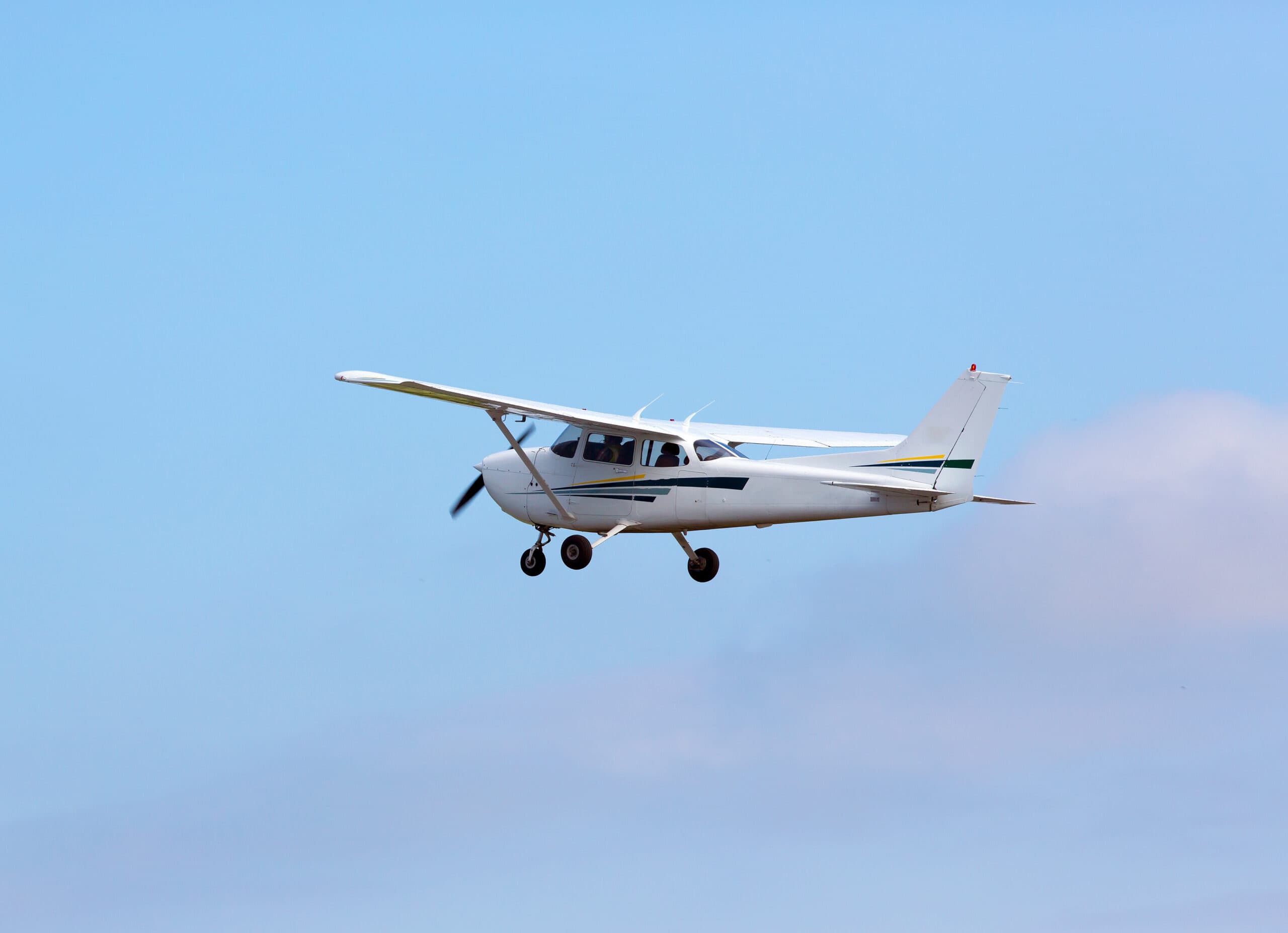
The Cessna 206 Stationair occupies a niche no other piston single fills cleanly. Most six-place singles either fly fast and carry little, or carry plenty and crawl through the sky. The 206 picks the middle path. It cruises around 145 to 160 knots. It takes off short, lands shorter, and walks out of a strip with full fuel and four adults on board.
Pilots call it the SUV of general aviation. The label is fair. Few aircraft in this segment can match its blend of payload, dirt-strip capability, and family hauling.
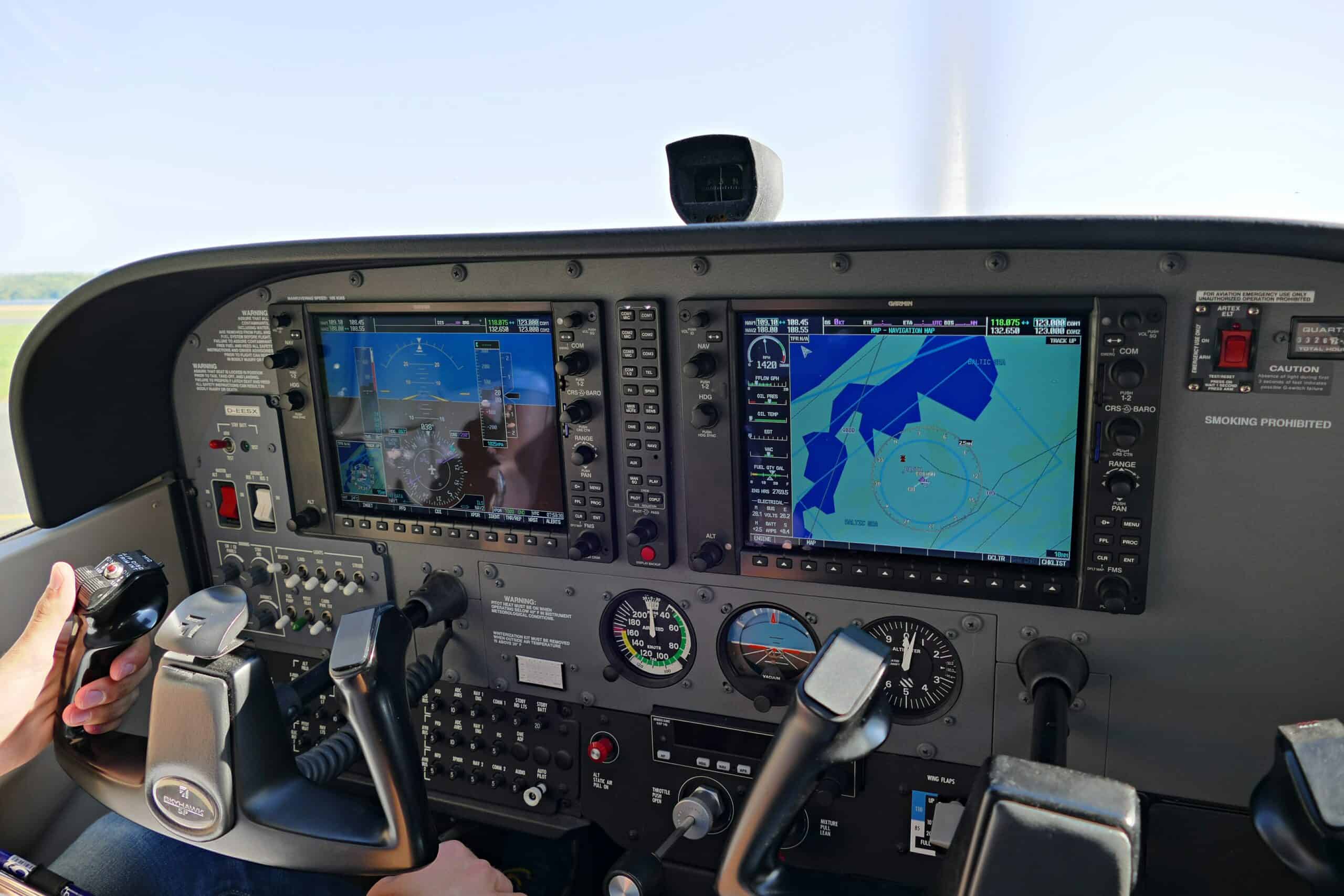
Textron Aviation still builds two versions today out of Independence, Kansas. The normally aspirated 206H and the turbocharged T206H Turbo Stationair HD. Both ship with the Garmin G1000 NXi glass panel and factory air conditioning options. The clamshell cargo door swallows everything from canoes to coolers.
We’ll be straight with you: the 206 is not the airplane you buy if you want speed or sex appeal. It’s the airplane you buy when the mission requires hauling people and stuff into places other airplanes can’t reach.
The Cessna 206 Stationair Variant Map: U206, P206, TU206, 206H, T206H
The Cessna 206 Stationair family has more variants than most pilots realize. Five decades of production means buying a used one without a cheat sheet can get expensive fast. Here’s the short version of every model you’ll see on the market.
U206 Super Skywagon (1964 to 1985). The original utility version. Continental IO-520-A or F variants from 285 to 300 horsepower, depending on the year. Single pilot door on the left, big double clamshell cargo door on the right. This is the bush-flying classic. If you see a 206 on floats in Alaska, it’s almost always one of these.
P206 Super Skylane (1965 to 1970). The “passenger” version. Conventional doors on both sides, no clamshell. Cessna built 647 of them before pulling the plug. Today, the P206 is the rarer variant. It tends to attract pilots who want the 206 mission without the cargo-door tradeoff.
TU206 Turbo Super Skywagon (1965 to 1986). The U206 with a Continental TSIO-520 turbocharger bolted on. This is the variant that opened up Rocky Mountain bush flying and high-altitude utility work.
206H Stationair (1998 to present). The modern relaunch. After a 12-year production hiatus, Cessna brought the 206 back in 1998 with a Lycoming IO-540-AC1A5 at 300 horsepower. New wing structure, modern cabin, and eventually the G1000 NXi panel. This is the airplane Textron sells new today as the Stationair HD.
T206H Turbo Stationair (1998 to present). The turbocharged 206H. Lycoming TIO-540-AJ1A delivering 310 horsepower, with a 27,000-foot service ceiling. This is the airplane you want if your missions involve mountain passes or hot-and-high departures.
One quick rule of thumb. Any 206 with a Continental engine on the nose is a legacy variant. Any 206 with a Lycoming is the modern H model. The engines are different enough that an owner moving from one to the other has to relearn the basics. Fuel management, leaning technique, and overhaul timing all change.
Cessna 206 Stationair Specs and Performance That Actually Matter
Brochure numbers and real numbers are not the same. Here’s what the Cessna 206 Stationair really does day-to-day.
The normally aspirated 206H burns about 13 to 16 gallons per hour at typical cruise power settings. Pull the mixture back to lean-of-peak and you’ll hold around 13 gph at 60 to 65 percent power. Push to 75 percent and you’ll see 16 gph or more. Pilots flying the airplane regularly land somewhere in the middle. Plan on roughly 14 gph for trip planning and you’ll be close.
The turbocharged T206H pushes that up. Plan on 17 to 19 gph at high cruise power in the teens or low flight levels. The tradeoff is real climb performance at altitude and the ability to top a lot of weather most pistons can’t.
Real-world cruise. The 206H trues out at roughly 145 to 155 knots in the low altitudes most pilots use. The T206H gets you 155 to 161 knots when you’re up where the turbo earns its keep. Neither airplane is winning races. Both are getting you home with the dog, the gear, and the kids.
Takeoff and landing. Ground roll runs roughly 900 feet at sea level and gross weight, with about 1,700 feet to clear 50 feet. Real pilots flying real strips do better than the book with good technique. The 206 has a forgiving wing and big flaps. It is shockingly comfortable on rough surfaces compared to faster retractable singles.
Useful load. The 206H carries roughly 1,500 to 1,580 pounds of useful load depending on the panel and options. Some recent factory builds land near 1,460 pounds with full air conditioning. The T206H sits around 1,440 pounds because the turbo adds weight. Pop the airplane on amphibious floats and useful load drops to roughly 900 pounds. Floats are a payload tax.
The point. A stripped-down 206H with two adults up front and 80 gallons of fuel can still carry four adults in the back. Few singles can say that honestly.
The Engine Story: Lycoming IO-540 vs Continental IO-520 vs TIO-540
The engine matters more on a Cessna 206 Stationair than on most singles. The mission usually involves heavy weight and dirt strips. Pilots picking between variants need to understand what’s on the firewall.
The modern 206H uses the Lycoming IO-540-AC1A5, a 300-horsepower naturally aspirated six-cylinder. It’s a stout, well-understood engine with TBO of 2,000 hours. Field experience has been generally positive when the airplane is flown regularly and leaned properly. Lean-of-peak operations are well documented in the type community. Plenty of 540 data exists for engine-monitor analysis services to draw from.
The turbocharged T206H runs the Lycoming TIO-540-AJ1A, also a six-cylinder, also TBO 2,000 hours when conditions are met. The turbo demands more discipline. Cool-down before shutdown is not optional. Cylinder temps need watching during long climbs. Pilots who treat the TIO-540 like a IO-540 will see early cylinder removal and a hotter overhaul bill.
Older variants ran the Continental IO-520 family. That’s the legacy engine in U206 and P206 airframes. The IO-520 is a known quantity with a strong type community behind it. It has a deserved reputation for being hard on cylinders if it’s flown lazily. The TSIO-520 in the older Turbo Super Skywagons adds the same heat-management demands as the modern TIO-540. The difference is just the engine family.
Our take: the IO-540 in the modern 206H is the easiest of the three to live with. The IO-520 in a well-maintained legacy 206 is fine if you understand it. The turbos on either family demand pilot discipline you can’t buy your way out of.
What a Cessna 206 Stationair Costs to Buy in 2026
Cessna 206 Stationair acquisition cost spans a wider range than almost any single-engine piston on the market. The 206 has been built for 60 years. The price spread reflects that.
Used legacy U206 (1964 to 1985). Strong examples land in the $150,000 to $275,000 range. Engine time, panel, paint, and recent shop history drive the spread. A 206 with mid-time engine, fresh paint, and a modern Garmin GTN-series panel can push higher. A neglected one with run-out cylinders and old radios is closer to the bottom.
Used 206H (1998 to 2015). Most listings live between $300,000 and $550,000 in 2026. Engine time and avionics drive the spread. A 206H with a low-time engine and the Garmin G1000 panel will be near the top of that range. A high-time airframe with steam gauges and original interior will be at the bottom.
Late-model used T206H (2015 to 2023). Plan on $550,000 to $850,000. The turbocharged variants always command a premium because the mission profile is wider.
Factory new T206H Turbo Stationair HD (2026). Current new aircraft are listing in the $725,000 to $1.25 million range depending on options. Most new deliveries land somewhere around $900,000 to $1.05 million well-equipped. Textron has not published an open MSRP for 2026, so the actual quote depends on configuration and dealer.
Our shopping take. A 2008 to 2012 206H with a mid-time engine and good logs is the value buy in 2026. A factory new T206H is the right answer if your mission demands altitude. You also need to keep the airplane long enough to amortize the premium.
What It Really Costs to Own a Cessna 206 Stationair
Cessna 206 Stationair acquisition is the down payment. Owning the airplane is the rest of the relationship.
Industry operating cost models for the 206H land near $675 per hour. That assumes 200 hours of annual utilization with fuel at $7 per gallon. The T206H lands closer to $715 per hour at the same utilization. Push down to 100 hours per year and per-hour cost rises sharply because fixed costs spread across fewer hours.
Here’s the rough breakdown owner-pilots actually see at 150 to 200 hours per year:
Annual fixed costs. Hangar runs $300 to $900 per month depending on the field. Insurance for an experienced owner with reasonable hours sits around $3,000 to $5,500 per year for the 206H. The T206H usually runs higher. Annual inspection runs $2,500 to $4,500 if nothing breaks, well above that if something does. Database subscriptions for the G1000 NXi add another $1,000 to $1,200 per year.
Variable costs. Fuel is the biggest line item. At $7 per gallon and 14 gph for the 206H, you’ll see $98 per hour just in fuel. The T206H closer to $130 per hour at 18 gph. Add roughly $30 to $50 per hour for engine reserve, $15 to $25 for prop reserve, and another $25 to $40 for general maintenance reserve.
Want a deep dive on the math behind running a piston single? Our complete guide to GA aircraft ownership cost walks through the full model. It also flags where pilots routinely underestimate the numbers.
Where the Cessna 206 Stationair Shines (And Where It Doesn’t)
Every aircraft has missions it’s built for and missions it just survives. The Cessna 206 Stationair is no different than any other in that sense. The 206 is no different.
Where the 206 absolutely earns its keep
Family hauling. The airplane has real six-seat capability. Not the kind where the back row is for kids only and you have to leave fuel behind. Real six-seat capability for adults if useful load supports it.
Backcountry and bush operations. Big tires, fat wing, generous flaps, slow stall speed, and a forgiving sight picture on rough strips. The 206 is the workhorse of the Idaho backcountry for a reason. Want a deeper look at the kind of strips it lives on? Our backcountry flying techniques guide covers the skill set the airplane demands.
Hauling cargo and gear. The U206 and the modern H model both have the clamshell cargo door. You can load a 4×8 sheet of plywood, a canoe, hunting gear, or a kayak into the back. Few other singles can pull that off without major prep.
Skydiving and jump operations. The airplane is purpose-built for the role. Big door. Fast climb when light. Easy descent profile. Enough useful load to carry four jumpers plus pilot to altitude.
Float operations. The 206 was Cessna’s purpose-engineered floatplane platform for years. Amphibious or straight floats both work. The airplane handles the weight gracefully if you respect the new useful load.
Where the 206 frustrates its owners
Speed. If your mission is 400 nm trips with a tailwind in three hours, the 206 is the wrong airplane. A Bonanza will smoke it. A Saratoga will too. A Cirrus SR22 will leave it well behind.
Single-pilot IFR in heavy weather. The 206 will do it, but the workload is real, and the cabin gets loud. The airplane works, but the experience is not what you’d get in a Bonanza A36 or an SR22 G6.
Useful load on amphibs. We mentioned it above. Floats turn the 206 from a six-place hauler into a four-place hauler. Going in eyes-open matters.
Want a side-by-side look at how the modern Cessna piston line compares? Our Cessna 172 vs 182 buying guide is the starting point. The 206 sits one rung above the 182. More useful load, more horsepower, and more cabin.
Cessna 206 Stationair Safety Profile and Common Accident Patterns
NTSB data on the Cessna 206 Stationair family points to a handful of recurring themes. Pilots considering the type need to understand them before buying.
Fuel management. Fuel-related accidents — exhaustion and contamination — show up repeatedly in 206 reports. The NTSB has noted that an overwhelming majority of fuel mismanagement events cite pilot causes. Planning, equipment use, and experience all show up as causal factors. The 206 has a generous fuel system. But it also tempts pilots into long legs because of how much it can carry. Long legs with poor fuel planning is how 206 pilots end up in trees.
Loss of control on approach and landing. The 206 stalls at 54 KIAS clean. Slow it down on a soft-field approach. Get behind the power curve at low altitude. The recovery margin gets thin. Pilots transitioning from a 172 or 182 sometimes underestimate how much more inertia the 206 carries. Stabilized approach discipline is not optional in this airplane.
Overweight and aft-CG operations. The 206 is so generous with useful load that pilots talk themselves into bad loading. The plan looks fine at the fuel-and-passengers level. But baggage shifts can put the CG behind the aft limit. Weight and balance on the 206 is a real preflight discipline, not a check-the-box exercise. Our complete weight and balance guide is the place to start if you’ve been treating it casually.
Backcountry and density altitude. The 206 is a Rocky Mountain workhorse, and Rocky Mountain operations punish density altitude mistakes. Our density altitude complete guide covers the calculation and the operational rules that keep pilots out of accident reports.
Honestly, this is where we’d push back on the “the 206 is a forgiving airplane” cliche. The airplane is forgiving in the way a heavy tool is forgiving. It does what you ask, but it punishes inattention with consequences proportional to its size. Treat it accordingly.
Buying a Used Cessna 206 Stationair: The 2026 Pre-Buy Checklist
If you’re shopping a used Cessna 206 Stationair, here’s the short version of what a thorough pre-buy inspection should cover. A pre-buy on a 206 should always be done by a shop that knows the type, not just any A&P.
Start with the engine. Compression check on every cylinder. Oil analysis history. Cam and lifter inspection on Continentals where wear is endemic in low-utilization airframes. On turbocharged variants, the turbo itself needs scrutiny. Bearing condition, oil scavenge, and exhaust system integrity all matter. Propeller condition and time since overhaul matter on a 206 because the airplane runs a heavy three-blade.
Move to the airframe. Look for corrosion in the carry-through spar area, hidden under the headliner. Examine the firewall for cracks or pulled rivets. Those are common on heavily-loaded airframes that have spent time on rough strips. Float-equipped airplanes need extra scrutiny on the float attach fittings and the lower fuselage.
Avionics. The G1000 NXi has been generally reliable, but database compatibility and any deferred software updates need to be confirmed. If the airplane has a legacy panel, factor a Garmin GTN upgrade into your post-purchase budget. G1000 NXi retrofit details walks through the path for older 206 airframes.
Logbooks. Missing logs on a 206 are a deal-killer, full stop. The airframe has too long a service life and too much potential for hidden damage history. Incomplete records are not worth the gamble.
Insurance. Get a binder before you commit. The 206 is more expensive to insure than a 172 or 182, and the turbo model is more expensive than the normally aspirated. Our GA aircraft insurance guide covers what underwriters actually look at.
How the Cessna 206 Stationair Compares to Its Closest Competition
The Cessna 206 Stationair sits in a competitive segment with a few legitimate alternatives. None of them do exactly what the 206 does, but each has its own argument.
Cessna 210 Centurion. Retractable gear, faster cruise, lower useful load when fuel is full. The 210 is the airplane you buy if you want to go places quickly and don’t need the cargo door. Our Cessna 210 Centurion buyer guide covers the comparison in detail.
Beechcraft Bonanza A36. Faster, more comfortable, slightly less useful load, no cargo door. The A36 is the executive transport play. Our Bonanza buyer guide walks through where the A36 wins and loses.
Piper Saratoga. Six-seat low-wing, retractable on some variants. Comparable useful load. Different cabin feel. Different mission orientation. Saratoga owners tend to fly more cross-country. 206 owners tend to fly more utility.
Cirrus SR22. Faster, modern panel, parachute. Smaller cabin and far less utility capability. Our Cirrus SR22 complete guide covers why pilots pick the SR22 over the alternatives.
None of these airplanes is the 206. The 206 wins on the dirt strip with five people and gear. The others win on the long cross-country at altitude.
Our Take on the Cessna 206 Stationair in 2026
The Cessna 206 Stationair is the right airplane for a specific mission and the wrong airplane for everything else.
If your typical flight involves rough strips, full cabins, real cargo, or float ops, the 206 stands alone. Nothing else in the piston single market matches it. It is the airplane that lets you take the whole family camping at a 2,400-foot strip. The strip might be deep in the Frank Church Wilderness. It lets you bring four canoes back. It is the airplane that lets Alaska Part 135 operators reach villages no other piston can serve economically.
If your typical flight is a 400 nm executive trip with two adults, the 206 is wrong. It’s slow, expensive, and inefficient for that role. Buy a Bonanza or an SR22.
Here’s what most readers get wrong about the 206. They buy it for the dream of utility and then end up flying it like a slow cross-country airplane. The mission has to actually justify the airframe. If it doesn’t, the operating cost looks unforgivable and the airplane gets sold inside 18 months.
Pilots who buy the 206 with eyes open about what it is and isn’t get an airplane that holds value. It holds its own on any strip you can reach with it. It keeps doing what it does for decades. That’s the case for the airplane in 2026, and we don’t expect it to change.
Frequently Asked Questions About the Cessna 206 Stationair
How much useful load does a Cessna 206 Stationair actually have?
A modern 206H typically carries 1,500 to 1,580 pounds of useful load. The panel and factory options drive the spread. The turbocharged T206H sits closer to 1,440 pounds. The turbo and intercooler add the weight. Amphibious floats drop useful load by roughly 500 to 600 pounds. Older U206 airframes sometimes carry slightly more than the modern versions. The basic empty weight on the legacy airframes was lighter.
What’s the difference between a Cessna 206 and a 206H?
The “206” by itself usually refers to the legacy U206 or P206 family built from 1964 through 1986. Those airframes ran Continental IO-520 engines. The 206H is the modern relaunch that began in 1998 with a Lycoming IO-540 engine. It also brought a redesigned cabin and a modern certification basis. Same airframe lineage, same mission. But the engine, panel, and detail design are different enough. Treat them as separate airplanes for training and maintenance planning.
Is the Cessna 206 Stationair a good first owner-pilot airplane?
For most pilots stepping up from a 172, the 206 is a big jump in weight, power, and complexity. It can be the right first owner-pilot airplane if the mission demands the utility. The pilot also has to commit to thorough type-specific transition training. Insurance underwriters will usually require 10 to 25 hours of dual in type before solo coverage. Pilots without a real utility mission almost always end up regretting the operating cost. A 182 would have served them better.
Further Reading on E3 Aviation
For more on flying and owning piston singles in 2026, here are the related guides our members read most often:
- Cessna 172: The Complete Owner and Pilot Guide for 2026
- Cessna 172 vs Cessna 182: The Honest Owner’s Buying Guide
- Cessna 210 Centurion: Specs, Performance and 2026 Buyer Guide
- Cirrus SR22 Complete Pilot Guide: Specs, CAPS, Cost
- Beechcraft Bonanza Complete Owner and Pilot Guide
- Piper Cherokee: The Complete Owner and Pilot Guide
- Backcountry Flying Techniques: Pilot Training Guide
- Density Altitude: The Complete GA Pilot Guide for 2026
External Authority References
- Textron Aviation – Cessna Turbo Stationair HD
- Cessna 206 – production history and variants
- FAA Airplane Flying Handbook
- NTSB Safety Alert 67 – Flying on Empty (fuel management)
- FAA Pilot’s Handbook of Aeronautical Knowledge (PHAK)
Join the E3 Aviation Association
If you fly a Cessna 206 Stationair, are shopping for one, or just love the airplane, you belong with us. The 206 quietly does the work nobody else wants. E3 Aviation Association is the community of pilots, owners, and dreamers building the next era of general aviation together. Join at e3aviationassociation.com and fly with people who get it.