Last Updated: May 23, 2026 | By E3 Aviation Editorial Team
More pilots earned a private certificate in a Piper Cherokee than in any low-wing trainer ever built. The PA-28 family has been in continuous production since 1961. That’s older than most of the people flying them today.
Trained in a Warrior? Learned IFR in an Archer? Eyeing a 180 as your first airplane? You’ve already met the Cherokee. Most pilots don’t know how wide this family runs. The variant you pick matters more than the price.
This is the full guide. Variants, specs, fuel burn, real ownership numbers. The wing spar ADs every buyer must know. And what to actually look at before you write a check.
What the Piper Cherokee Actually Is
The Piper Cherokee is the PA-28 family of four-seat single-engine pistons. Piper Aircraft builds them in Vero Beach. Production started in 1961. It’s still going.
John Thorp and Fred Weick designed the original Cherokee as a cheaper, simpler replacement for the high-wing Piper Tri-Pacer. The brief was clear. Build it cheap, build it forgiving, build it strong.
What came out was an all-metal monoplane with fixed tricycle gear and a stabilator. The Hershey-bar wing made it forgiving to land. Over 32,000 PA-28s have rolled off the line since.
The family splits into two real airframes. The four-seat Cherokee with all its variants is the PA-28. The bigger six-seat Cherokee Six is the PA-32. It shares parts and the name, but it’s a different airplane.
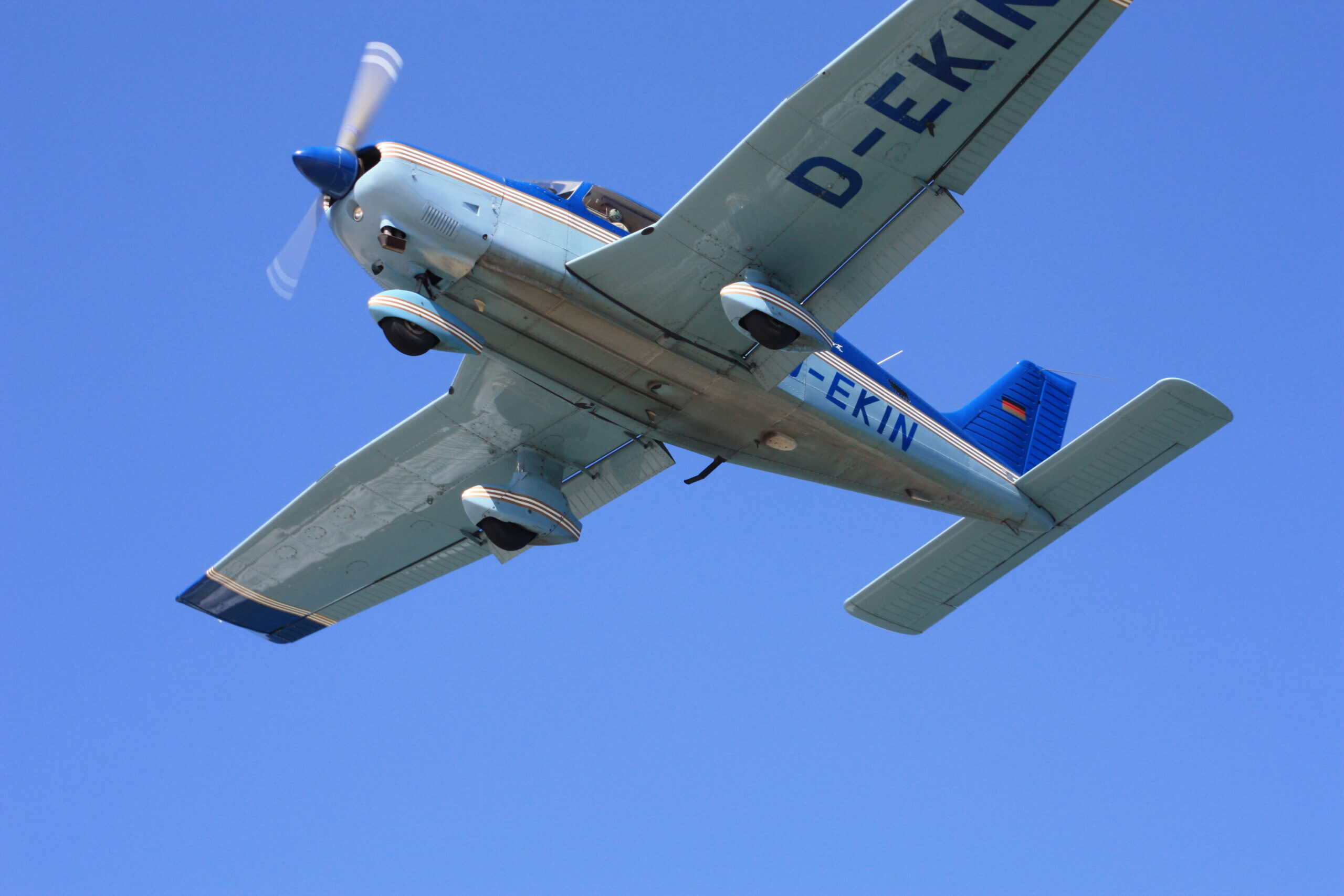
The Cherokee Family Tree at a Glance
This is where buyers get confused. A 1971 Cherokee 140 and a 2024 Archer LX share a name and a basic platform. Almost everything else is different. Here’s how the Piper Cherokee lineup breaks down.
Cherokee 140 (PA-28-140)
Built from 1964 to 1977. Originally a two-seat trainer with a 150 hp Lycoming O-320, later sold as a four-place “Cruiser.” Hershey-bar wing. Useful load tight, climb modest, but cheap to buy and dirt simple to fly.
Cruise sits around 108 KTAS. Fuel burn is roughly 8 gph at 65% power. Today these run $40,000 to $75,000 depending on engine time, paint, and panel.
Cherokee 180 (PA-28-180)
The original four-place workhorse. Built from 1962 to 1975. 180 hp Lycoming O-360-A4A swinging a fixed-pitch prop. Hershey-bar wing. Gross weight 2,450 lb. Useful load near 1,066 lb on early examples.
It cruises around 124 KTAS on 9.5 gph. Forty-eight gallons usable gives you a real-world 4-hour fuel reserve at long-range power. This is the variant that gave the family its honest-airplane reputation.
Warrior (PA-28-151 and PA-28-161)
Piper redesigned the wing in 1973 and called the new airplane the Warrior. Same fuselage. Same engine class. New semi-tapered wing with more honest stall behavior and better cruise drag.
The PA-28-151 ran 150 hp. The PA-28-161 Warrior II and Warrior III bumped to 160 hp with the Lycoming O-320-D3G. Cruise sits at 126 KTAS at 75% power. Useful load lands near 972 lb. Fuel burn runs about 8 to 9 gph.
Archer (PA-28-181)
The 180 hp version of the Warrior. Same semi-tapered wing, same handling. More power means better takeoff numbers, faster cruise, and a higher useful load.
An Archer III at 2,550 lb gross gives you near 870 lb of useful load with full tanks. Cruise is 128 to 130 KTAS at 75%. Range runs roughly 650 nm. New Archers still roll off the Vero Beach line. Used Archers run $90,000 to $180,000.
Dakota (PA-28-236)
The Dakota took the Archer airframe and dropped in a six-cylinder Lycoming O-540-J3A5D at 235 hp. Fixed gear. Semi-tapered wing. Gross weight 3,000 lb.
You get real four-place plus baggage capability, 140 KTAS cruise, and a climb rate that doesn’t quit at altitude. Production was short. Dakotas are rare today and prized.
Arrow (PA-28R Series)
The Arrow is the retractable-gear, constant-speed-prop version of the Cherokee. Built for complex-training and traveling pilots. Several flavors exist.
The PA-28R-180 came first in 1967 with a 180 hp IO-360. The PA-28R-200 jumped to 200 hp. The Arrow III added the semi-tapered wing. The Arrow IV famously moved to a T-tail in 1979. Most pilots will tell you it wasn’t the upgrade Piper hoped for.
Cherokee Six (PA-32, Bonus Note)
A different airplane. Same family name. The Cherokee Six is the six-seat PA-32 with a stretched fuselage, a six-cylinder engine, and twin baggage areas. We mention it because the name confuses buyers. If you’re shopping a PA-28, the Cherokee Six is not on your list.
Specs and Performance Numbers That Matter
Marketing brochures and old POHs make a Piper Cherokee sound faster than it really is at gross. Here are the real-world numbers most owners report.
Cruise, Climb, and Range
A Cherokee 180 at 75% power burns about 9.5 gph and trues to 124 KTAS. An Archer 181 at the same setting trues to 128 to 130 KTAS on the same burn. A Warrior 161 runs slower at 126 KTAS but stretches range on 7 to 8 gph at long-range cruise.
Climb at sea level on a standard day is 700 to 750 fpm in a Cherokee 180. The Archer III makes 667 fpm. The Warrior II makes 644 fpm. None of these airplanes are mountain rockets. They’re cross-country trucks with honest specs.
V-Speeds Cheat Sheet
PA-28-161 Warrior III at 2,440 lb gross:
- Vs0 49 KIAS / Vs1 57 KIAS
- Vx 63 KIAS / Vy 79 KIAS
- Va 111 KIAS / Vfe 103 KIAS
- Vno 126 KIAS / Vne 160 KIAS
- Best glide 73 KIAS
PA-28-140 reference numbers:
- Vx 70 / Vy 80 / Va 110 / Vfe 98
- Vs0 47 / Vs1 55 / Vno 120 / Vne 147
Always go to your POH. Always check that mod-affected speeds match your STCs. Want a refresher? Our aircraft V-speeds guide walks each one in plain English.
Takeoff and Landing Distance
A Cherokee 180 needs about 720 ft ground roll on a standard sea-level day. Total over a 50 ft obstacle is around 1,620 ft. The Archer trims that. The Warrior runs slightly longer because of its lower power. Density altitude eats those numbers fast. Our density altitude guide shows the math.
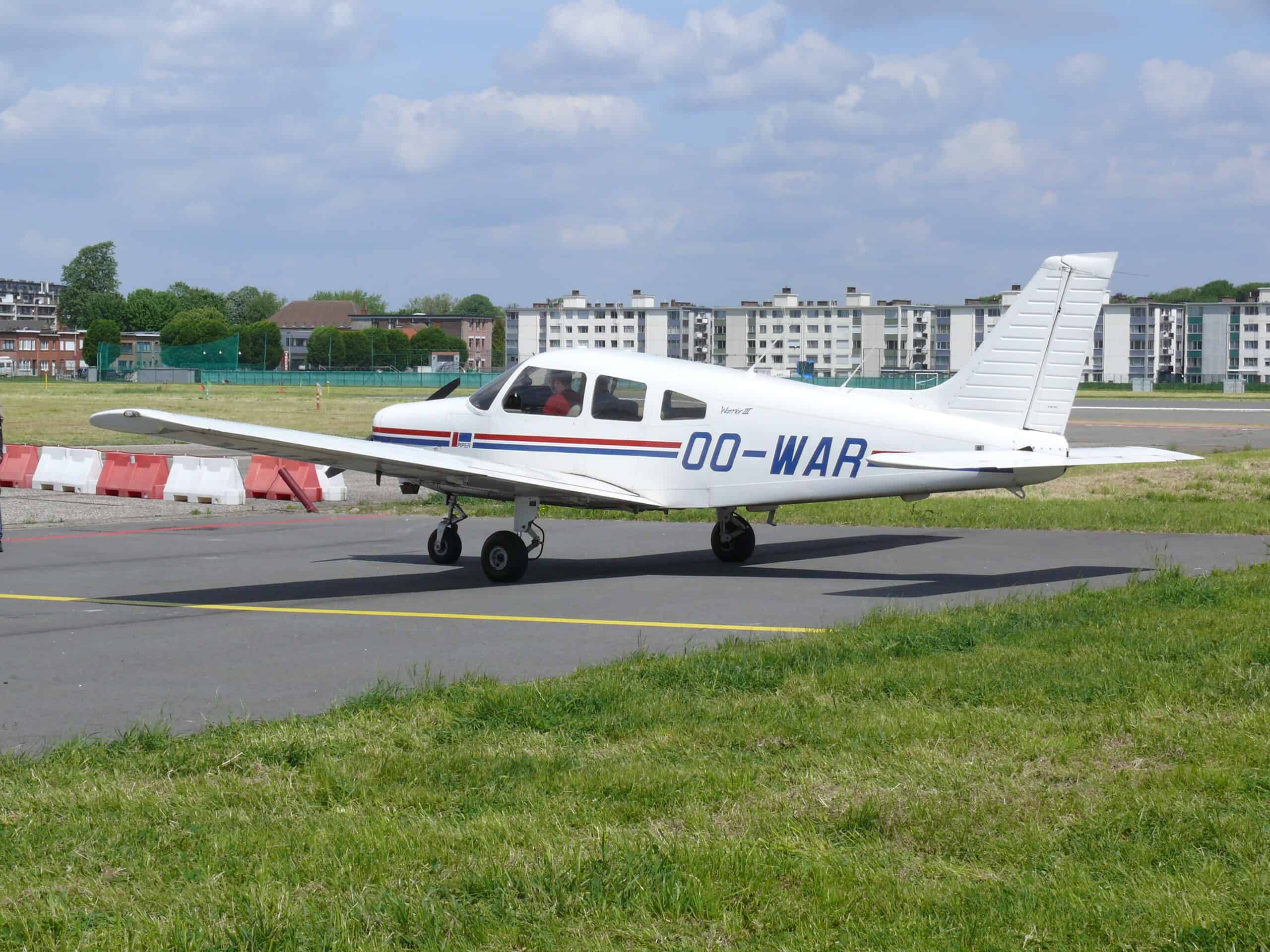
The Hershey Bar Wing vs the Tapered Wing
This is the single most important Piper Cherokee airframe distinction you’ll hear about at the airport. It matters for how the airplane flies.
The original Cherokee 140 and Cherokee 180 wear the constant-chord “Hershey-bar” wing. Same airfoil root to tip. It builds lift uniformly. It also stalls a little mushy and roll rate isn’t sparkling.
Starting with the Warrior in 1973, Piper went to a semi-tapered wing with washout. The taper drops the chord toward the tip. The washout twists the tip’s angle of incidence down a touch. Both tricks make the root stall first.
You feel it in two places. In slow flight, the tapered-wing airplanes keep aileron authority longer. They stall more honestly too. In the flare, the Hershey-bar wing quits flying the moment you cut power. The tapered wing floats a beat longer and rewards a smooth touchdown.
Neither wing is wrong. Owners who learned on a Hershey bar swear by the predictability. Owners who learned on a Warrior or Archer swear by the smoother handling. Pick the one you’re comfortable in and don’t let the airport argument talk you out of either.
How Much It Costs to Buy a Piper Cherokee in 2026
Used-market data from Controller, Trade-A-Plane, and Aero Trader as of May 2026 shows a wide Piper Cherokee spread. Here’s what the money buys.
A pre-1977 Cherokee 140 with a mid-time engine, decent paint, and a basic VFR panel runs $40,000 to $75,000. A clean Cherokee 180 with mid-time engine and a Garmin GTN 650 sits in the $90,000 to $130,000 band.
A Warrior II or III in similar condition runs $85,000 to $130,000. An Archer II or III with low-time engine and modern avionics is $120,000 to $200,000. A late-model Archer LX or DLX with full glass can clear $250,000.
An Arrow IV with mid-time engine sits $90,000 to $140,000. A Dakota, if you find one, runs $140,000 to $220,000. A new factory Archer DLX out of Vero Beach? About $475,000 with a Garmin G1000 NXi panel.
Comparing the Cherokee against the most-shopped GA single? Our Cessna 172 complete pilot guide covers the head-to-head most buyers eventually make.
What It Costs to Own and Fly a Piper Cherokee
Acquisition price is one number. Annual carrying cost is the one that bites every Piper Cherokee owner.
A typical Cherokee 180 owner flying 100 hours a year spends $16,000 to $20,000 all-in. That breaks down to roughly $5,200 in fixed costs. Add $108 per hour in variable costs. Then set aside a reserve for the next engine overhaul.
Fixed costs break down like this:
- Insurance: $1,500 to $2,500 for a low-time non-commercial pilot
- Hangar or tie-down: $1,800 to $7,200
- Annual inspection: $1,100 to $1,800 at a Piper-friendly shop
- IFR pitot-static check: every 24 months
Variable costs are fuel ($60 to $70 per hour at 9.5 gph and $6 to $7 100LL), oil, and consumables. Most owners also set aside $15 to $20 per hour for engine overhaul reserve.
Fly fewer than 75 hours a year and the hourly number gets ugly. Fixed costs don’t change. Fly more than 150 and you’ll wear out the engine faster than the calendar will. Cherokee economics work best in the 100 to 150 hour band.
The Engine, Maintenance, and the Wing Spar AD You Need to Know About
The Piper Cherokee runs Lycoming engines, and that’s good news for owners. Parts and overhauls are routine. Mechanics know these motors cold. Two things to pay attention to.
O-320 and O-360 Reliability
The 140-hp O-320-E2A in the early 140s. The 150-hp O-320-D3G in the Warrior II. The 160-hp O-320-D3G in the Warrior III. The 180-hp O-360-A4A in the Cherokee 180 and Archer. All parallel-valve four-cylinder Lycomings. TBO is 2,000 hours on most variants.
Real-world reliability is excellent if you don’t lean too aggressively. Fly often enough to keep the cylinders dry. Stay on top of oil changes. Our engine oil change guide covers the 25/50-hour rhythm most Cherokee owners follow.
Top overhauls usually run $10,000 to $18,000 per cylinder. A factory remanufactured O-360 is $40,000 to $55,000 installed in 2026 dollars. A Lycoming compression-test issue often signals exhaust valve guide wear before it becomes a real problem. Our cylinder compression test guide walks the diagnostic.
The Wing Spar ADs Every Buyer Must Know
This is the single biggest item on a Cherokee pre-purchase. Two FAA airworthiness directives apply.
AD 2020-24-05 requires inspection of left and right main wing spars for corrosion. It applies to PA-28-140, -150, -160, -180, -235, PA-32-260, and PA-32-300 airplanes. It came out after corroded spars were found in places hard to reach during a normal annual.
AD 2020-26-16 targets fatigue cracking after a 2018 Embry-Riddle Arrow lost a wing in flight. The AD requires owners to calculate “factored service hours” using a defined formula. If the threshold is hit, lower main wing spar bolt holes must be inspected. Aircraft used hard in training rack up factored hours faster.
A proposed 2024 NPRM goes further. It would impose new life limits on cold-bent spars across more than 21,000 PA-28 and PA-32 airframes. Recurring inspections would be added. Watch this one. The final rule is expected in late 2026 or early 2027.
Honestly, this is where we’d push back on anyone telling you not to worry. Buy a Piper Cherokee that ran as a trainer for 30 years without confirming the spar status. You may be buying a calendar bomb.
What to Look For in a Pre-Purchase Inspection
Budget $1,500 to $2,500 for a real pre-buy on the airplane. Hire a Piper-experienced A&P. Skip the broker’s recommendation. You want adversarial eyes on the airframe.
Top of any Piper Cherokee pre-buy checklist is wing spar AD status. Pull the logs. Confirm compliance with AD 2020-24-05 and AD 2020-26-16. Confirm the factored-service-hours calculation. If those entries aren’t in the logs, walk.
Next is engine. Compression numbers above 70/80 on all four cylinders is the target. Pull an oil filter cut. Borescope every cylinder. Pull the lower spark plugs and read them. Our spark plug maintenance guide shows you what each tip color is telling you.
Look at the cabin floor under the carpet. Cherokees are famous for water ingress around the windshield and the door seal. Wet floors mean a corroded belly. Look at the rudder cables where they enter the empennage. Look at the gear leg attach points on a fixed-gear bird and the gear actuator on an Arrow.
Verify the annual is current and confirm what’s on the squawk list. A fresh annual usually adds $2,000 to $4,000 to value. An annual coming due usually subtracts $4,000 to $8,000. Negotiate accordingly. Our annual inspection guide covers the full owner-operator playbook.
Who Should Buy a Piper Cherokee?
We’ll be straight with you. The Piper Cherokee is the right airplane for a specific kind of pilot. It’s a frustrating airplane for a different kind.
Buy a Cherokee if you fly 100 to 150 hours a year. Buy it if you fly mostly two-up with bags, or four people on shorter legs. Buy it if you want a stable IFR platform that won’t surprise you. Buy it if you value parts availability, A&P familiarity, and a deep aftermarket of STCs and avionics paths.
Skip the Cherokee if you need to haul four adults plus full fuel out of a high-density-altitude strip. Skip it if you need turbo performance to top weather. Skip it if you live in the backcountry and need bush capability. None of those are Cherokee missions.
For a flight school operator, the Warrior and Archer are the gold standard. Predictable handling, simple systems, easy on students, easy on mechanics. For a first-time owner, the Cherokee 180 hits the sweet spot of capability and cost.
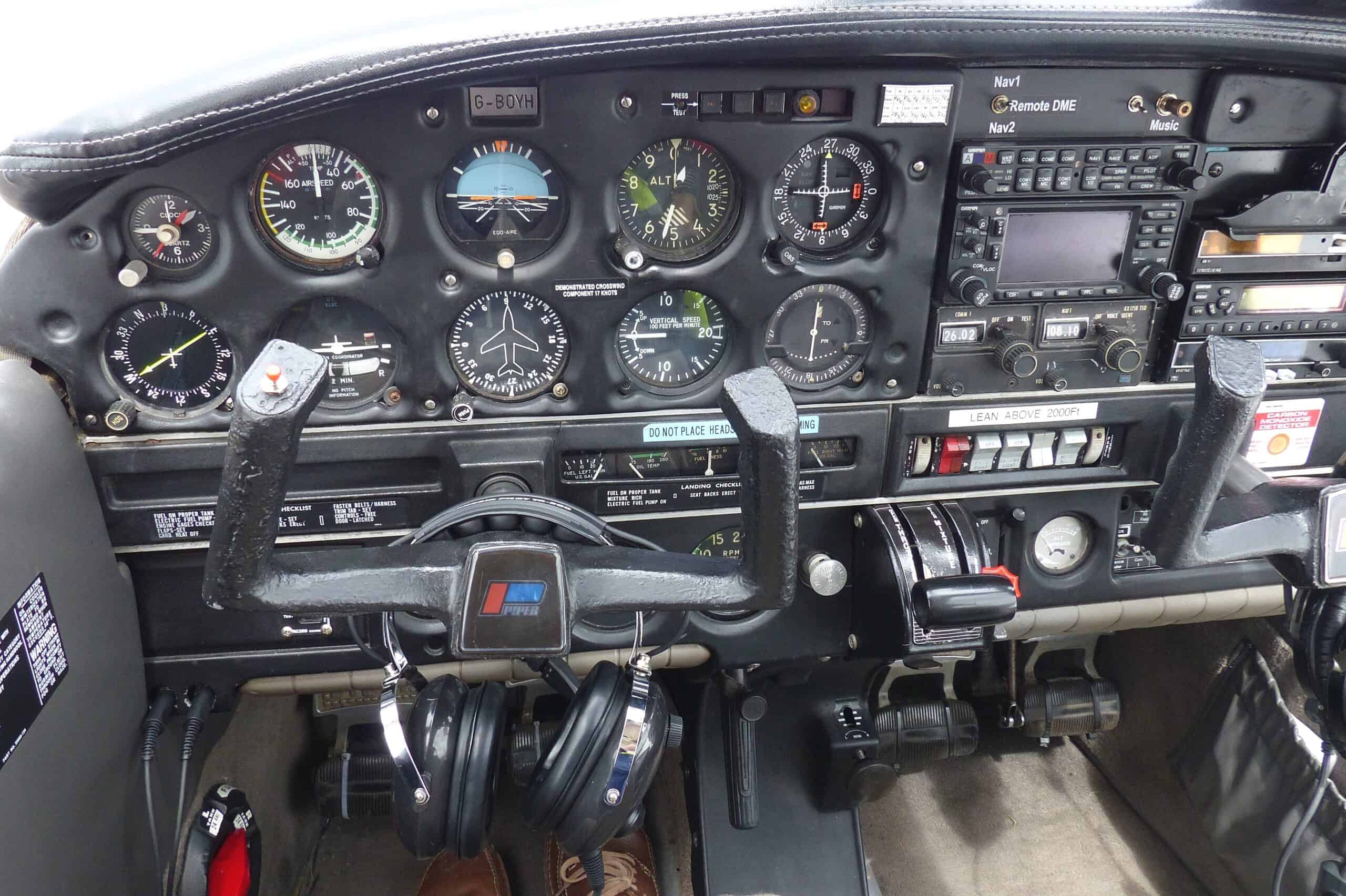
Avionics and Modernization Paths
One reason the Piper Cherokee stays viable in 2026 is the avionics aftermarket. Almost every modern panel upgrade has a Cherokee STC.
A typical modernization path looks like this. Start with an ADS-B Out solution (Garmin GTX 345 or uAvionix tailBeacon). Add a Garmin G5 attitude indicator and an HSI. Replace the panel-mount navigator with a GTN 650 or 750. Add a JPI EDM 700 or 900 engine monitor.
Full glass is now realistic. The Garmin G3X Touch in a Cherokee panel costs $25,000 to $40,000 installed. A new factory Archer rolls out with G1000 NXi from Vero Beach. For flight planning across all of these panels, our ForeFlight complete guide is the pilot-side companion.
FAQ
Is a Piper Cherokee a good first aircraft to own?
Yes, for most pilots. The Cherokee 180 and Archer hit the sweet spot of useful load, fuel burn, parts availability, and insurance cost. Buy one with current wing spar AD compliance, a mid-time Lycoming, and a basic IFR panel. Plan on $16,000 to $20,000 a year for 100 hours flown.
What’s the difference between a Cherokee, a Warrior, and an Archer?
All three are PA-28 four-place singles. The Cherokee (140 and 180) wears the original Hershey-bar wing. The Warrior (151 and 161) is the redesigned semi-tapered wing version with 150 to 160 hp. The Archer (181) is the same tapered-wing airframe with 180 hp. Handling improves slightly with the tapered wing. Engine output drives cruise speed.
Does the wing spar AD ground my Piper Cherokee?
Not on its own. AD 2020-24-05 requires a corrosion inspection that’s straightforward on most aircraft. AD 2020-26-16 requires a factored-hours calculation and conditional spar bolt hole inspection. Most Cherokees fly through both. Heavily used trainers may need spar work, which is expensive. Confirm compliance status before any purchase.
Our Take on the Piper Cherokee
The Piper Cherokee earned its reputation honestly. It’s not the fastest single. It’s not the prettiest. It won’t haul four adults to a Colorado backcountry strip in July.
What it is is an airplane built to fly for fifty years. It has trained tens of thousands of pilots. It rewards an owner who flies regularly and maintains it well. The aftermarket keeps these airframes current. The Lycoming engines keep running. The PA-28 community is one of the largest in GA. You’ll never lack for advice, parts, or a mechanic.
If a Cherokee fits your mission, buy one with eyes open on the spar ADs. Fly it 100 to 150 hours a year. Keep ahead of the calendar maintenance. You’ll have a partner for the next decade. That’s a long way from “trainer airplane.” Our community is full of Cherokee owners and pilots. Join E3 Aviation Association and trade notes with people who fly these every week.
Further Reading
Companion guides for your Piper Cherokee research:
- Cessna 172 Complete Pilot Guide — the high-wing benchmark every Cherokee buyer compares against
- Cessna 172 vs Cessna 182 — for buyers who want a step up in payload
- Aircraft Cylinder Compression Test Guide — the diagnostic every Lycoming owner runs
- Aircraft Spark Plug Maintenance — the 100-hour service that quietly extends engine life