The airplane camping bedroll is the piece of gear most pilots get wrong on their first backcountry trip. You bring the wrong sleeping bag, a half-inch foam pad, and a pillow you stole from the guest room. Then you spend the night shivering on the floor of a Cessna 182 with your knees against the rudder pedals. Eventually morning comes, you fly home, and you tell yourself camping out of the airplane is overrated. It is not. The gear was wrong.
Last Updated: June 11, 2026 | By: The E3 Aviation Editorial Team
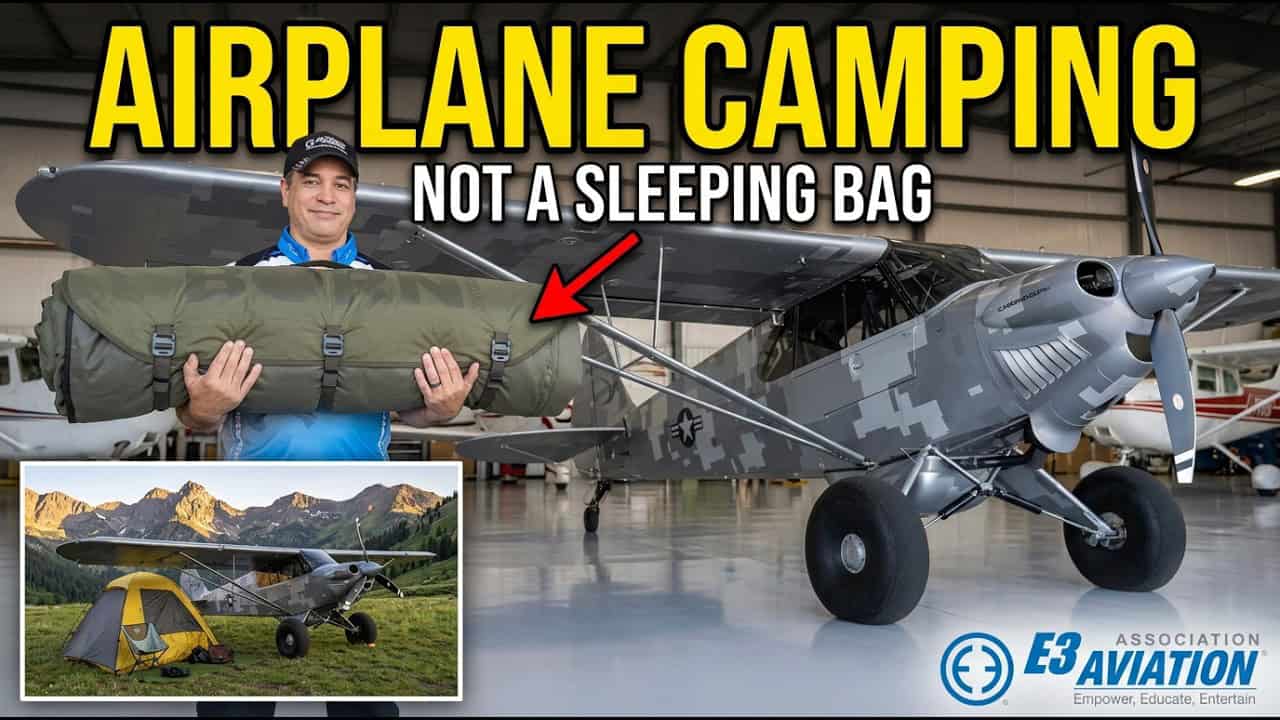
This guide walks through what a bedroll has to do, why traditional sleeping bags fall short, and why the Born Outdoor system in the video below changed our thinking on this category. We’ll name the trade-offs. Name the prices. Show where the system pays off and where it doesn’t.
Why an Airplane Camping Bedroll Beats a Traditional Sleeping Bag
Most pilots default to a sleeping bag — that’s what they grew up with on Boy Scout trips and weekend backpacking. However, a sleeping bag is the wrong tool for airplane camping. Specifically, sleeping bags are built for ground sleeping on rough terrain. Narrow, mummy-shaped, and reliant on the user owning a separate pad. For airplane camping, the math is different.
Notably, three things matter on an airplane camping trip:
- Pack volume that fits behind a Cessna 182 baggage door without sacrificing fuel or weight margin.
- Temperature range that handles a 30-degree night in the Idaho backcountry. Plus a 65-degree night on a dirt strip in Texas. Without packing two complete kits.
- Comfort that lets you sleep deeply enough to fly competently the next morning. Which is the entire reason you went camping by airplane in the first place.
Therefore, the bedroll exists as a category. The traditional sleeping bag fails on at least two of those three. For example, a mummy bag rated for 20°F is hot at 65°F and useless without a pad. A summer bag is cold at 30°F. Two bags double the volume and weight. Conversely, a real bedroll integrates the pad, bottom layer, and top layer into one rollable system. And it lets you add or shed layers without packing a second bag.
The Cargo-Weight Math Behind the Choice
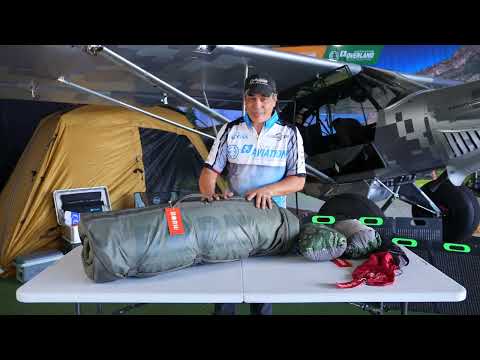
Consider a typical Cessna 182 loaded for a backcountry weekend. After two adults, full fuel, and 80 pounds of cooler and tent, you have roughly 100 pounds of useful payload left. That covers sleep systems, clothing, and consumables. Two traditional sleeping-bag-plus-pad kits run 15 to 20 pounds and take up most of a baggage compartment. In contrast, two Born Outdoor bedrolls run roughly the same weight but pack tighter. They replace four items (two bags + two pads) with two integrated rolls. As a result, the volume savings is the part that actually matters in a 182.
What a Real Airplane Camping Bedroll Has to Solve
Above all, the bedroll has to solve four problems at once. First, comfort that does not collapse after midnight. Second, temperature range across the season without swapping kits. Third, pack volume that does not steal cargo from the airplane. Fourth, fast setup and breakdown on the airstrip. Backcountry mornings are short and the wind is usually picking up by 9 a.m.
Watch: Why We Threw Out the Sleeping Bag for an Airplane Camping Bedroll
The video below walks through the exact setup we now use. This is the Born Outdoor bedroll system paired with a Therm-a-Rest R7 sleeping pad. The same combination that replaced a decade of sleeping bags in our trip kit.
Visit bornoutdoor.com to see the full Badger system and configuration options.
Inside the Born Outdoor Airplane Camping Bedroll System
The Born Outdoor Badger is a Boulder, Colorado–made bedroll designed around a modern interpretation of the Australian “swag.” Importantly, that history matters. The Aussie swag was built to handle bush conditions out of a vehicle. The closest non-aviation analog to airplane camping. The Born Outdoor system updates that design with modern fabrics. Integration with self-inflating pads. And a packable shell that actually fits a GA airplane.
Specifically, here is what the system includes — and what each piece does.
The Shell: 600-Denier Waterproof Bottom, 210-Denier Stretch Top
The Badger shell is the $400 core of the system. Its bottom is 100% recycled 600-denier ripstop polyester oxford with a waterproof coating. That layer takes the abuse of a dirt strip, a damp tent floor, or a hangar concrete. The top is 210-denier nylon oxford with a bit of stretch and breathability. It zips open across the long axis. Notably, the sides are reinforced with closed-cell foam. The shell stays erect rather than collapsing inward like a sleeping bag would. Additionally, head-end pockets hold a phone or a flashlight. Elastic corner straps secure the mattress so it does not slide overnight.
The Pad: Therm-a-Rest Integration
The Badger ships configured around the Therm-a-Rest MondoKing 3D. That mattress is 4.25 inches thick, 30 inches wide, with an 8.0 R-value. In our setup, we pair the Born Outdoor shell with a Therm-a-Rest R7 instead. That pad is thinner with a 4.7 R-value. It packs smaller for airplane cargo. As a result, the R7 trades some R-value for pack volume. For three-season airplane camping below 8,000 feet, the R7 is the right call. For winter camping out of a 182 at altitude, step up to the MondoKing or a comparable pad with higher R-value.
The Sheets and Quilt
The system supports flannel or percale sheets and either a synthetic or 600-fill down quilt. Specifically, the flannel-plus-down combination is the sweet spot. Breathable enough for warm nights. Layered for cold ones. The full system with flannel sheets and synthetic quilt runs about $780. Adding the down quilt bumps it about $40. The protective footprint that lives between the shell and a dirt strip runs another $65.
What the Airplane Camping Bedroll Looks Like on an Actual Trip
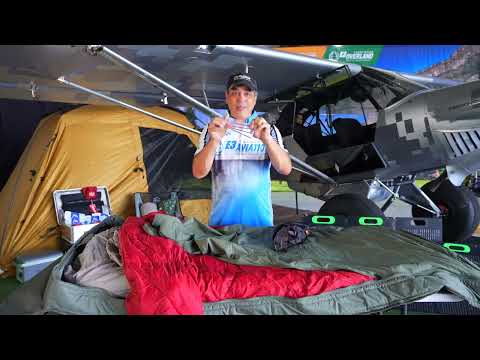
The first time the bedroll delivers, it is obvious. You wake up at 6 a.m. on the ground at a dirt strip. You are warm. Your back does not hurt. And you can actually fly the airplane home without spending the day fighting fatigue. That is the point of the whole exercise.
Setup at the Airstrip
The Born Outdoor shell comes pre-rolled with the sheets and mattress packed inside. Unrolling takes about 60 seconds. The Therm-a-Rest opens its valve and self-inflates while you set the tent. Two or three breaths through the valve right before close-up firms up the pad nicely. The sheets attach to the mattress via snap loops at the foot. They stay put when you sleep. Total setup time from rolled gear to ready bed: under five minutes.
Breakdown at Sunrise
Pack-up is the inverse and faster. Roll, compress with G-hook straps, slide into the bag, walk it to the airplane. Notably, no separate stuff sack. No pad inflation valve to wrestle with cold fingers. No second sheet of foam to lose to the wind. As a result, the system shaves 15 minutes off a typical breakdown. On a backcountry strip with a 9 a.m. wind picking up, that is the difference between an easy departure and a stressful one.
Pack Volume in the Airplane
For instance, a fully assembled Badger with the R7 pad rolls to roughly duffel-bag size. About 30 inches long and 14 inches in diameter. Two of them fit cleanly in the back of a Cessna 182 or a Maule M-7. That leaves the actual baggage compartment for tents, cooking gear, and food. In contrast, the older two-bag-plus-two-pad setup forced us to load the back seat with sleep gear. Then bury everything else underneath. That is a small thing until you have to pull the bottom item at 11 p.m. in the rain.
Where the Airplane Camping Bedroll Pays Off — and Where It Does Not
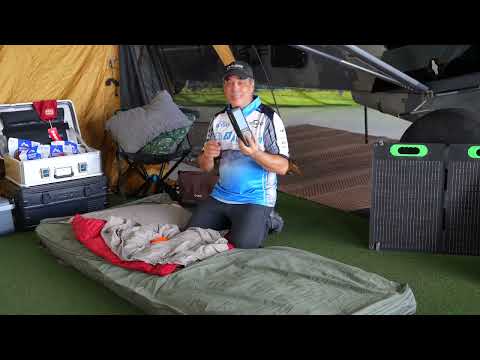
Honestly, the Born Outdoor system isn’t for everyone. The right buyer flies more than 5 nights per year. And doesn’t want to keep buying new sleeping bags as temperature ranges shift.
The Pilots Who Should Buy It
Above all, this system pays off for backcountry-curious owner-pilots who fly 4–10 camping trips per year and want a single sleep kit that handles spring, summer, and fall in the West. Additionally, it pays off for any pilot who’s already spent $400 on bad sleeping bags. And is tired of the upgrade treadmill. For example, an owner flying a Cessna 172, Piper Cherokee, or a 182 into Idaho or Utah backcountry strips four times a season will recover the cost in two seasons compared with replacing single-use sleeping bags.
The Pilots Who Should Not
However, the system is overkill for pilots who camp once a year. The gear sits in a garage the rest of the time. In that case, a good $200 sleeping bag and a $100 pad will do the job. Notably, the system is also overkill for warm-climate-only flyers who never see below 50°F overnight. The 4-season capability is wasted. Furthermore, if your typical trip is a single overnight at a paved strip with motel access nearby, skip this system. Save the money for fuel and a better hotel.
What the Total Cost Looks Like Realistically
Generally, plan on roughly $850 for a full single-person Badger setup. That covers flannel-plus-down configuration and the protective footprint. Plus another $185 for the portage duffel if you want it. As a result, a two-person kit lands near $1,700 before the duffels. That is real money. It is also less money than two seasons of buying-and-returning sleeping bags trying to find one that handles both 30°F and 65°F. The system pays off through avoided re-buys, not through being inherently cheap.
Operational Notes: Loading the Airplane Camping Bedroll
A few practical notes from our kits. First, the Badger rolls down to roughly a duffel-sized package, which loads cleanly into a 182 baggage compartment. Specifically, the door cutout on most 182s is the constraint. The Badger fits. But it pays to roll it slightly tighter on the second compression to clear the door frame on the way in.
Second, weight matters. Notably, a full Badger with the R7 pad is roughly 12–14 pounds. That puts you at about 28 pounds of sleep gear before tent, cooking, food, water, and clothing. For example, on a typical backcountry weekend, that is about 30% of your usable payload after fuel and crew. Same as a two-bag-and-pad setup, but with significantly better sleep quality. Run the weight and balance before every trip and budget the bedroll line item against fuel, not against discretionary cargo.
Third, the Therm-a-Rest valve does not like cold-soaked nights followed by morning re-inflation in freezing fog. Specifically, open the valve before breakfast. The pad needs time to fully expand before you try to roll it. Otherwise, you fight a half-inflated pad while the wind picks up. We learned that one in Idaho.
How the Airplane Camping Bedroll Fits the Broader Backcountry Setup
The bedroll is one piece of a larger backcountry kit. Specifically, the other pieces all interact with sleep gear in ways that matter. The tent. The cooking system. The navigation. And the airplane itself. For instance, if your tent has a tall enough vestibule to roll out the Badger inside, setup is faster in the rain. Conversely, a small backpacking tent built for ground bivouac may not fit the Badger at all. Pick a different sleep system there.
Beyond that, the airframe choice matters. Importantly, a STOL-equipped backcountry airplane like a Maule M-7, a Super Cub, or a CubCrafters Carbon Cub accepts a full Badger kit easily. A stock Cessna 172 works for one or two adults plus the Badger. A Piper Cherokee 140 gets tight at the second sleep kit. Plan accordingly — and if you are still in the buying phase, factor backcountry sleep cargo into the first-airplane decision.
Specifically, before any backcountry trip, run a thorough preflight including oil change cadence, fuel state, and a full VFR flight plan. Notably, the bedroll is a comfort gain on the ground; the preflight discipline is the safety gain that gets you home.
Frequently Asked Questions About the Airplane Camping Bedroll
What is the difference between an airplane camping bedroll and a sleeping bag?
A sleeping bag is a single insulated tube built around the user. An airplane camping bedroll is a system that integrates the pad, the bottom layer, and the top layer into one rollable kit with sheet and quilt that can be added or shed by temperature. For airplane camping, the bedroll wins on temperature flexibility, pack volume, and morning setup time. The sleeping bag wins on weight and price for single-temperature use.
Will the Born Outdoor Badger fit in a Cessna 182?
Yes. A rolled Badger is roughly 30 inches long by 14 inches in diameter. It loads cleanly through a standard 182 baggage door. Two Badgers fit comfortably. The rest of the baggage compartment stays open for tent, cooking gear, and food. For tighter airframes like a Cherokee 140 or Citabria, plan for one Badger plus a smaller second sleep kit.
What pad R-value does an airplane camping bedroll need for backcountry use?
For three-season airplane camping below 8,000 feet, an R-value of 4.5 or higher is sufficient. The Therm-a-Rest R7 at 4.7 works. For winter or high-altitude backcountry above 9,000 feet — or below 20°F overnight — step up to a pad with an R-value of 6 or higher. The Therm-a-Rest MondoKing 3D at 8.0 is the conservative choice for shoulder season at altitude.
Is the airplane camping bedroll worth $850 for a single setup?
Honestly, only if you fly more than 5 nights per year. At that volume, the system pays back the cost in two seasons. Avoided sleeping-bag re-buys. Better sleep that lets you fly the next morning. For pilots who camp once a year, a $300 bag-plus-pad combination is the right call. The Born Outdoor system is built for repeat use. It earns its keep on the fifth trip — not the first.
Where can I see the airplane camping bedroll setup in action?
Watch the E3 Aviation video embedded above. The video walks through the unboxing. The layered configuration. The Therm-a-Rest R7 pad pairing. And the actual pack-up sequence we use on backcountry trips. For more E3 Aviation video content built for owner-pilots, visit the E3 Aviation YouTube channel.
Staying on top of gear that actually works in the airplane is a high-return investment for any backcountry pilot. For more GA ownership, maintenance, and backcountry content, visit the E3 Aviation Association Aviation Articles hub. Check out the E3 Aviation YouTube channel for video content built for pilots and owner-operators.
Related Articles

E3 Aviation Editorial Team
The E3 Aviation Association editorial team is made up of licensed pilots, aviation educators, and industry professionals dedicated to advancing general aviation safety, community, and education. Learn more about E3 Aviation.