Last Updated: May 4, 2026 | By E3 Aviation Editorial Team
General aviation just crossed a line that most pilots never thought they’d see in their flying careers. The Cirrus SR G7+ — the 2026 version of the most popular single-engine piston aircraft ever sold — is now the first piston-powered airplane in the world with an FAA-approved autonomous emergency landing system. Press one button in the passenger cabin, and the airplane flies itself to the nearest suitable airport, talks to ATC, communicates with passengers, avoids terrain and weather, and lands. Without the pilot touching anything.
If you haven’t fully processed what that means yet, you’re not alone. The aviation community has been debating this since Garmin introduced Safe Return on turboprops years ago. Now it’s in a piston single. And that changes the conversation for every GA pilot flying today — whether you own a Cirrus or not.
What Is the Cirrus SR G7+?
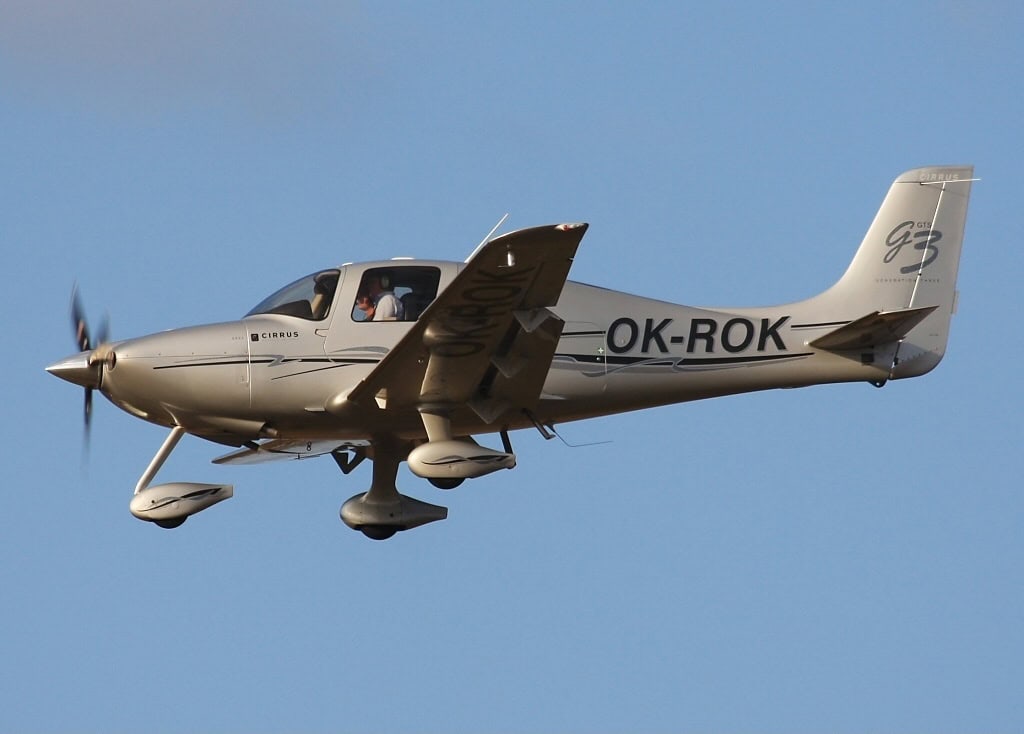
The Cirrus SR G7+ is the 2026 model year update to Cirrus Aircraft’s flagship SR20, SR22, and SR22T line. If you’ve been around GA for any length of time, you know this aircraft. In fact, the SR22 is the best-selling single-engine piston airplane in the world. It’s the airplane that normalized the parachute — the Cirrus Airframe Parachute System — in personal aviation. It made carbon fiber construction standard. And now the G7+ is the airplane making autonomous emergency landing technology standard equipment in a piston single.
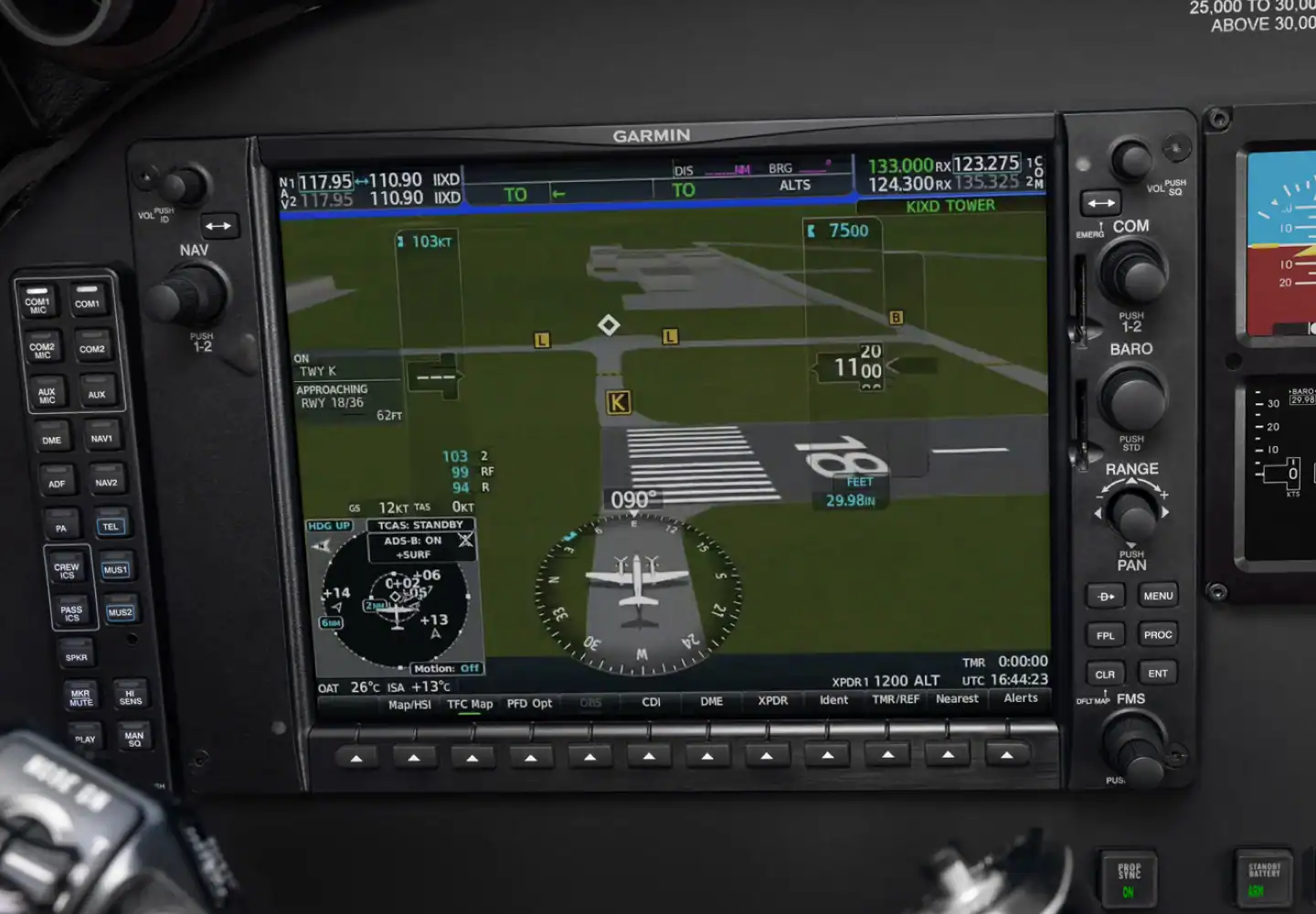
The “G7+” designation reflects a generational avionics update built on Garmin’s Perspective Touch+ flight deck. The headline feature is unambiguous: Safe Return Emergency Autoland, jointly developed by Cirrus and Garmin, received FAA approval as standard equipment on the 2026 SR Series. Every SR20, SR22, and SR22T rolling off the Duluth production line this year includes it.
What Else Comes Standard on the 2026 SR Series
Safe Return gets the attention, but the Cirrus SR G7+ delivers a full avionics upgrade. Runway Occupancy Awareness (ROA) alerts pilots to traffic on the runway ahead — an increasingly critical feature at busy GA airports. The GDL 60 datalink provides automatic database updates over Wi-Fi and feeds advanced weather and traffic data. Smart pitot heat adds automatic detection and activation before icing conditions develop. Cirrus Global Connect now supports Starlink integration, giving pilots global weather and communication capability in the cockpit.
These are meaningful improvements. But they’re incremental on what Cirrus has been doing well for years. Safe Return is something fundamentally different — a system that can save your life and your passengers’ lives even if you cannot fly the airplane.
Safe Return Emergency Autoland — How It Actually Works
Safe Return is not an autopilot. It is not a stability augmentation system. And it is not a system that only a pilot can activate — that’s the entire point. On the Cirrus SR G7+, Safe Return can be engaged by anyone in the aircraft with a touch of a clearly labeled button on the Perspective Touch+ display. The system is designed for one scenario: the pilot cannot fly the airplane.
That means medical incapacitation — sudden-onset hypoxia, a seizure, a cardiac event. It also means the pilot who’s conscious but so disoriented or impaired they cannot safely operate the aircraft. These are not theoretical scenarios — they happen in GA. NTSB records include a long list of fatal accidents where probable cause was identified as pilot incapacitation, with no surviving occupants and no distress calls. Safe Return addresses that failure mode directly.
Step by Step: What Happens When Safe Return Activates
When the system activates, the sequence is fully automated. It first identifies the most suitable airport within range based on weather, runway length, traffic, and terrain — not simply the closest airport, but the best option given actual conditions. Next, it contacts Air Traffic Control autonomously via data link, declares the emergency, identifies the aircraft, and notifies ATC that an autonomous approach is in progress. Controllers can see the aircraft and respond. This is not a silent, uncoordinated emergency.
The system also generates voice announcements in the cabin, telling passengers what is happening. Throughout the flight, it continuously evaluates terrain, obstacles, airspace, and weather, adjusting the flight path in real time. On approach, the system executes a precision GPS approach to the identified runway, manages power, flap configuration, and airspeed, and lands the aircraft. After touchdown, it applies brakes, brings the plane to a stop, and shuts down the engine.
We’ll be straight with you: this is not science fiction. The Cirrus SR G7+ is a production airplane you can order from a dealer today, and it will do all of this.
FAA Certification — What It Took to Approve This
The FAA’s certification of Safe Return on the 2026 SR Series is not a minor regulatory footnote. Garmin and Cirrus had to demonstrate that the system performs reliably enough to be trusted with passenger lives in an emergency — without a qualified pilot at the controls. That required years of flight test data, software validation, and regulatory engagement.
Safe Return’s Track Record Before the Piston Application
Safe Return did not debut on the G7+. Garmin first certified the technology on the Piper M600/SLS turboprop in 2020 — the first FAA-approved autonomous emergency landing system on any GA aircraft. It subsequently appeared on the Daher TBM 940 and Cessna Citation M2 Gen2, accumulating real-world operational experience in the turbine fleet. By the time Cirrus applied for certification, Garmin had operational data across thousands of flight hours in service aircraft.
That track record mattered. The Cirrus SR G7+ certification was not a leap of faith — it was the logical extension of a proven technology into a new platform. The piston application required additional validation given engine management differences, lower cruise altitudes, and different approach dynamics, but the core system architecture and performance record were already established.
What the Cirrus SR G7+ Means for GA Pilots Who Don’t Fly Cirrus
Here is the question that matters most for the broader GA community. If you fly a Cessna 172, a Piper Cherokee, a Mooney, a Beechcraft Bonanza — aircraft without Safe Return — what does this mean for you? The honest answer is: more than most pilots have thought through.
First, the certification of Safe Return on a piston aircraft fundamentally changes the conversation about pilot incapacitation in GA. For decades, the answer to “what happens if the pilot becomes incapacitated?” was essentially “the people in the aircraft die.” Now there is a certified exception to that rule. That will drive regulatory and insurance pressure across the fleet. Expect to see more about incapacitation mitigation in future FAA rulemaking as this technology matures and proliferates.
Second, the Cirrus SR G7+ represents a clear direction for how avionics manufacturers are positioning the next generation of GA aircraft. Autopilots were once optional. Glass cockpits were once exotic. Autonomous emergency landing will follow the same trajectory — first on high-end aircraft, then progressively through the fleet as certification costs drop and demand builds.
The Pilot Community Debate: Is Safe Return Good for GA?
Safe Return has generated real disagreement among GA pilots, and the debate deserves serious engagement rather than dismissal.
One argument against centers on automation complacency. The concern is that pilots who know their aircraft can land itself will allow instrument proficiency to erode, situational awareness to slip, and personal minimums to drift. This is not a hypothetical critique — automation complacency is well-documented in airline operations, where crews with highly automated aircraft have shown degraded manual flying skills. The question is whether that effect applies in piston GA where pilots fly far less frequently.
A second concern involves liability and legal ambiguity. If Safe Return activates and the aircraft lands at an uncontrolled field with an obstacle on the runway, who is responsible? Garmin? Cirrus? The incapacitated pilot? These questions have not been fully adjudicated, and they create uncertainty for pilots, instructors, and insurance underwriters.
The argument in favor is straightforward: incapacitated pilot scenarios currently have one outcome. Safe Return changes that outcome. Garmin and Cirrus are not arguing the system makes pilots unnecessary or replaces training. Instead, they are arguing that in the specific scenario where a trained pilot cannot fly, it offers a survival option that did not previously exist.
Our take at E3 Aviation: the debate about automation complacency is legitimate. But opposing the availability of emergency survival technology because pilots might train less rigorously is an argument about training culture, not about the technology. Fix the training culture. Use the technology. Both are available to you simultaneously.
Can Existing Cirrus Owners Upgrade?
This is one of the most common questions circulating in Cirrus owner forums since the announcement, and the answer is nuanced. Garmin announced a Perspective+ upgrade path for existing SR Series G3 and G5 aircraft — delivering significant avionics improvements including integrated fuel monitoring, connectivity enhancements, and software updates. However, Safe Return certification on the Cirrus SR G7+ is tied to the 2026 production aircraft and its specific integration, not a retrofit-ready module for earlier airframes.
As of May 2026, Cirrus has not announced a certified retrofit path for Safe Return on earlier SR Series aircraft. The integration required involves not just the avionics display but the autopilot servo architecture, engine management interface, and landing gear and flap control integration — a retrofit is a significantly more complex certification challenge than a panel upgrade. For G3 and G5 owners, the Garmin Perspective+ upgrade is real and meaningful. For Safe Return on an existing Cirrus, the current answer is: not yet available as a retrofit.
What Safe Return Means for Insurance and Aircraft Value
The financial implications of this technology are still working through the insurance market, but early signals from underwriters are positive. Life-saving technology that reduces the probability of fatal outcomes in a specific accident category — pilot incapacitation — is the kind of improvement insurers notice. Several aviation insurance underwriters have indicated that aircraft equipped with CAPS parachute systems already receive favorable treatment in hull and liability underwriting. In turn, Safe Return is likely to earn similar recognition as actuarial data develops.
For buyers considering the 2026 G7+ versus an earlier SR Series model, Safe Return is one line item in a complex purchase calculus. The SR22T G7+ lists at a significant premium over late-model used SR22 G3 and G5 aircraft. Whether that premium is justified depends heavily on individual mission profiles and how much weight a buyer places on incapacitation protection specifically. Pilots who fly solo frequently — particularly those who fly long cross-countries at night or in IMC without a second qualified pilot aboard — represent exactly the use case Safe Return was designed to serve.
On the resale side, the conventional wisdom in GA is that avionics upgrades rarely return their cost at sale. Safe Return may prove different. It is not a navigation system that becomes obsolete in five years. It is a safety certification that represents a baseline capability improvement on the airframe. As the technology becomes more widely discussed and understood in the pilot community, demand for G7+ aircraft specifically may hold a premium over comparable G5 or G3 models with the Perspective+ retrofit but without Safe Return.
What ATC Needs to Know — and What Pilots Should Understand
One aspect of Safe Return that gets less attention than the in-cockpit experience is how it interfaces with the air traffic control system. When Safe Return activates, ATC receives an automated data link transmission identifying the aircraft, the emergency, and the autonomous approach in progress. Controllers in the relevant facility will see the aircraft’s position and understand what is happening — this is not a blind event.
For GA pilots sharing airspace with a Safe Return-equipped aircraft in an emergency, the practical impact is limited. Specifically, the aircraft will be squawking 7700 (emergency transponder code) and receiving priority handling from ATC. Other traffic will be cleared from the approach path to the landing airport. The same priority and separation that applies to any declared emergency applies here. The difference is that no one on the frequency can speak for the aircraft — ATC will be managing the situation based on data link communication and radar track, not voice.
For pilots who operate at smaller uncontrolled airports — the kind that Safe Return might select as a landing destination in an emergency — understanding this scenario is useful. An aircraft entering the pattern at a non-towered field under Safe Return would be broadcasting standard CTAF traffic advisories via the onboard communications system. Garmin has confirmed the system handles CTAF position calls during the approach sequence. If you see an aircraft on final with no response to your radio calls, Safe Return is one possible explanation worth considering before you react.
Frequently Asked Questions About Safe Return Autoland
Can a passenger with no flying experience activate Safe Return on the Cirrus SR G7+?
Yes — that is by design. The activation control is clearly marked on the Perspective Touch+ display and requires only a touch to initiate. The aircraft then handles all flying, approach, and landing tasks autonomously. No aviation knowledge is required. No ATC radio calls are required. The system handles all of it.
Does Safe Return mean pilots no longer need instrument ratings for IFR flight?
No. Safe Return is an emergency system for pilot incapacitation scenarios — not a substitute for pilot training, ratings, or currency. Regulations governing instrument flight, pilot certification, and aircraft operation are unchanged. The system is an emergency last resort, not a replacement for a qualified pilot in command.
When will Safe Return technology appear on other piston aircraft?
No other piston manufacturer has announced Safe Return certification as of May 2026. Garmin holds the technology and has certified it only where it has worked directly with airframe manufacturers on deep avionics integration. Widespread adoption across the piston fleet is likely a multi-year process — but the G7+ proves it is achievable in this category. Watch for future announcements.
Related Articles
Sources
- Cirrus Brings Safe Return Autoland to the SR G7+ Piston — AVweb
- Cirrus Announces SR Series G7+ Featuring Safe Return Emergency Autoland — Cirrus Aircraft
- Cirrus SR Series G7+ Unveiled with Safe Return Emergency Autoland — Garmin Newsroom
- Cirrus Unveils 2026 SR Series G7+ With Advanced Avionics — Flying Magazine
- Cirrus SR Series G7+ Becomes First Piston With Safe Home Autoland — Aviation Week
- Cirrus SR-series Pistons Get Safe Return Emergency Autoland — Aviation Consumer
- Cirrus G3 Owners Gain Integrated Fuel Monitoring via Garmin Perspective+ Upgrade — General Aviation News
Stay current on the latest GA technology and avionics news at the E3 Aviation Association aviation articles page. For video breakdowns of cockpit technology and avionics training, subscribe to the E3 Aviation YouTube channel.