Last updated: July 13, 2026
The best portable ADS-B In receiver isn’t always the newest one, and it isn’t always the one your buddy in the pattern is using. It’s the one that puts free traffic and weather onto whatever tablet you actually fly with, in whatever airplane you actually rent or own. That’s the frame we’ll use for this shootout: a real GA pilot, a real cockpit, and a real budget between about $400 and $850.
We’ll compare the four receivers a GA pilot is actually shopping in 2026 — Sentry Mini, Sentry, Sentry Plus, and the new Appareo Stratus 4 — plus one honorable mention (the discontinued but still widely used Scout). We’ll skip the Stratus 3, because Appareo has taken it off the shelf. If you’re stuck choosing between iOS-only ForeFlight lock-in and the open GDL-90 protocol that Garmin Pilot, FlyQ, and iFly GPS all speak, this piece is written for you.
What the Best ADS-B In Receiver Actually Needs to Do
Before we rank hardware, let’s agree on what a portable ADS-B In receiver is supposed to deliver in a GA cockpit. Strip away the marketing and you’re paying for four things.
First, dual-band ADS-B In. That means the receiver hears both 978 MHz UAT traffic (mostly under 18,000 feet, which is exactly where we live) and 1090 MHz Extended Squitter traffic (airline and heavier GA). Single-band receivers miss half the picture, and the traffic they miss is often the traffic that matters — the Cessna or Cirrus turning downwind two miles ahead of you. If a receiver isn’t dual-band, keep scrolling.
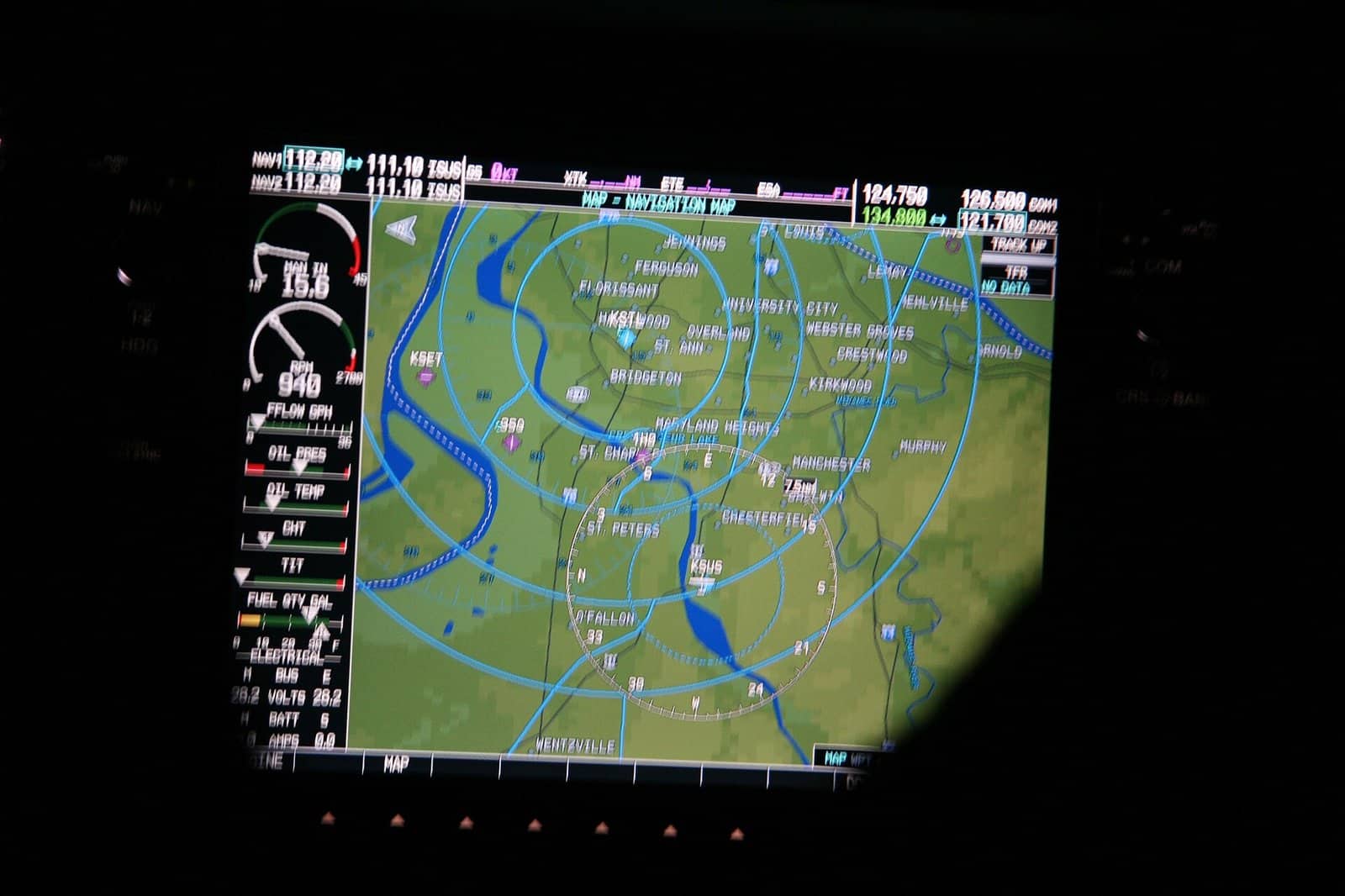
Second, FIS-B weather. The FAA broadcasts a free stack of weather products over 978 MHz — AIRMETs and SIGMETs, METARs, TAFs, NEXRAD, winds and temps aloft, TFRs, and PIREPs — and any portable ADS-B In receiver can pull them down as long as you’re inside a ground station’s service volume. That’s usually about 1,000 feet AGL over most of the country. FIS-B is advisory, but for planning it’s the best free deal in aviation.
Third, a self-contained WAAS GPS. Some receivers piggyback on the tablet’s GPS. That works right up until the iPad’s built-in GPS drifts, drops, or refuses to acquire under the greenhouse. A hardware GPS in the receiver is a night-and-day upgrade for reliability.
Fourth, backup AHRS. When the vacuum packs it in or the alternator quits, an ADS-B In receiver with built-in attitude sensing drives ForeFlight or Garmin Pilot’s synthetic vision — a real, usable backup attitude reference. Not every receiver has AHRS. The ones that don’t are cheaper for a reason.
The Best ADS-B In Receiver Contenders in 2026
Here’s the shortlist we’ll cover. Everything else on the market is either a variant of these or a science project.
- ForeFlight Sentry Mini — about $399. Dual-band ADS-B In, GPS. No AHRS, no CO detector, iOS only, ForeFlight only.
- ForeFlight Sentry — about $599. Dual-band ADS-B In, GPS, AHRS, CO detector, 12-hour battery.
- ForeFlight Sentry Plus — about $799. Everything in Sentry, plus an OLED status screen, G-meter, flight data recorder, 18-hour battery, and a FLARM option for European ops.
- Appareo Stratus 4 — about $849. Dual-band ADS-B In, GPS, AHRS, sunlight-readable touchscreen, Apple Find My, user-replaceable battery. Open GDL-90 protocol works with ForeFlight, Garmin Pilot, FlyQ, WingX, FltPlan Go, Stratus Insight, and iFly on both iOS and Android.
- Honorable mention: ForeFlight Scout — discontinued but still on many pilot’s yokes. Single 978/1090 dual-band, no GPS, no AHRS. ForeFlight will keep supporting existing units, but new pilots should look up-stack.
Notice what’s missing: the Stratus 3. Appareo pulled it and Sportys stopped stocking it once the Stratus 4 shipped in early 2026. If you see one used at a hangar swap-meet for cheap, it still works — but don’t buy a new one.
Sentry Mini: The Best ADS-B In Receiver for the Renter Pilot
The Sentry Mini is the little suction-cup puck that ForeFlight built to replace Scout. It’s the cheapest way to get real, dual-band ADS-B In into your iPad, and it fits in the same pocket as a spare handheld radio (see our 2026 handheld radio guide if that’s on your shopping list too).
At about 3.2 ounces and $399, Sentry Mini gets you dual-band traffic, FIS-B weather, and a self-contained multi-constellation GPS. It runs on external power — a USB-C cable to a cigarette-lighter adapter or the iPad’s own charger works fine — because there’s no internal battery to babysit. That’s actually a positive for renter pilots. You bolt it to the windshield with the included cup, plug it in, and forget about charge cycles.
What you give up: no AHRS backup attitude, no carbon monoxide sensor, and iOS-only compatibility. If your entire flying life is inside ForeFlight on an iPad, that’s fine. If you fly a Cirrus and love Garmin Pilot on Android, Sentry Mini won’t talk to you at all. That’s the trade.
The Sentry Mini is our pick if you rent everything you fly, want the best portable ADS-B In receiver you can hide in a flight bag, and don’t need attitude backup because you’re always in a certified panel with real gyros or a G1000.
Sentry: The Best ADS-B In Receiver for the ForeFlight Loyalist Who Owns an Airplane
Step up to the flagship Sentry ($599) and you get four things Sentry Mini doesn’t have: built-in AHRS for synthetic vision backup attitude, a carbon monoxide detector with alerting, a 12-hour internal battery so you can leave it on the yoke without cables, and Wi-Fi that talks to more than one iPad at a time (so the CFI can watch synthetic vision on hers while the student flies).
The AHRS is the killer feature for owners. If your vacuum system fails on top of an IFR layer, or your alternator quits and the primary flight display browns out, the Sentry drives ForeFlight’s synthetic vision page with a real, useful attitude reference. Advisory only, not certified for IFR — but plenty for keeping the shiny side up while you get to VMC.
The CO detector is the second reason we like it. Every year a GA pilot gets bit by an exhaust leak they didn’t know about. Silent, colorless, and it kills. A Sentry mounted on the yoke gives you an audible and visual alert before the exhaust becomes an event.
Sentry is our pick for the ForeFlight-loyal owner-pilot who wants the best portable ADS-B In receiver value in the lineup. You’re paying $200 more than Mini and getting a battery, AHRS, and a CO detector for it. That’s a good deal.
Sentry Plus: The Best ADS-B In Receiver for the Data-Nerd Pilot
Sentry Plus ($799) is what happens when ForeFlight and uAvionix decide to overbuild the flagship. You keep every feature of Sentry — dual-band, GPS, AHRS, CO, 12-hour battery becomes 18-hour battery — and add four things Sentry doesn’t have.
An OLED status screen on the top of the unit shows GPS accuracy, ADS-B reception, CO status, and battery percentage at a glance. Handy in the pattern when you don’t want to bury your head in the tablet.
A built-in G-meter that logs to ForeFlight’s Track Logs page. If you fly aerobatics, if you fly upset training, or if you just want to know how hard that mountain-wave downdraft actually hit, it’s there. Peak G, sustained G, and a trend line.
A flight data recorder that saves position, altitude, G, and AHRS-derived attitude for up to 16 flights, then auto-imports the logs into ForeFlight when you’re on the ramp. This is a real debrief tool. Playback in ForeFlight is genuinely useful.
A dedicated FLARM receiver for European operations. If you fly gliders or share the sky with them in the Alps, this is the only portable in the shootout that hears them. Requires a separate FLARM license.
Sentry Plus is our pick for the pilot who wants the best portable ADS-B In receiver, period, on the ForeFlight side of the aisle. It’s overkill for an occasional weekend Cessna 172 flight. It’s exactly right for the aerobatic pilot, the mission-flying owner, and the debrief-heavy training environment.
Appareo Stratus 4: The Best ADS-B In Receiver for Pilots Who Refuse App Lock-In
Here’s where the shootout gets interesting. The Sentry line is beautifully made, but every model works only inside ForeFlight, and only on iOS. The Appareo Stratus 4 does the opposite — it uses the open GDL-90 protocol and works with ForeFlight, Garmin Pilot, FlyQ, WingX, FltPlan Go, Stratus Insight, iFly GPS, and any other app that speaks the protocol. iOS or Android. Your call.
For that flexibility you pay $849 (about $50 more than Sentry Plus) and you get: dual-band ADS-B In, WAAS GPS, AHRS, a sunlight-readable color touchscreen (bigger and more informative than Sentry Plus’s OLED), a G-meter, Apple Find My integration (so you can find it when you leave it in the FBO courtesy car), and a user-replaceable battery you can swap in the FBO parking lot with no tools.
The touchscreen is the biggest ergonomic win. GPS satellite count, ADS-B reception, battery percentage, altitude, and G-load are all glanceable without unlocking the tablet. If you fly with the tablet in a kneeboard rather than on the yoke, that on-device display matters.
The tool-free swappable battery is the second big win. Sentry’s battery is internal and non-user-serviceable. Stratus 4’s slides out like an AA. Long cross-country with an overnight? Swap a fresh pack in and keep flying.
Stratus 4 is our pick for the pilot who wants the best portable ADS-B In receiver that isn’t married to one app or one operating system. If you’re a Garmin Pilot user, an Android user, or a pilot who wants the option to switch apps later without buying new hardware, this is your receiver.
Best ADS-B In Receiver Side-by-Side: The Numbers That Actually Matter
Here’s the shootout in one screen, ranked by street price.
- Sentry Mini — $399, 3.2 oz, no battery, dual-band ADS-B In, GPS, no AHRS, no CO, iOS/ForeFlight only.
- Sentry — $599, ~4 oz, 12-hr battery, dual-band, GPS, AHRS, CO detector, iOS/ForeFlight only.
- Sentry Plus — $799, ~5 oz, 18-hr battery, dual-band, GPS, AHRS, CO detector, OLED screen, G-meter, FDR, FLARM option, iOS/ForeFlight only.
- Stratus 4 — $849, ~7 oz, ~8-hr swappable battery, dual-band, GPS, AHRS, touchscreen, G-meter, Apple Find My, GDL-90 open protocol (ForeFlight + Garmin Pilot + FlyQ + WingX + FltPlan Go + Stratus Insight + iFly on iOS and Android).
Notice how narrow the technical spread is at the core. All four hear the same dual-band traffic, all four pull the same FIS-B weather from the same FAA ground stations, all four give you a real WAAS GPS on the tablet. The differences are ergonomics, ecosystem, and features stacked on top.
The Best ADS-B In Receiver Decision Tree
Here’s how we’d walk a friend through the buy in about ninety seconds.
Do you use ForeFlight and only ForeFlight? Skip Stratus 4. It doesn’t buy you anything you’ll use.
Do you ever use Garmin Pilot, FlyQ, or an Android tablet? Skip the Sentry line. Buy Stratus 4.
Are you a renter with no interest in AHRS or CO alerting? Buy Sentry Mini.
Are you an owner who wants attitude backup and CO detection but doesn’t need a G-meter or flight data recorder? Buy Sentry.
Are you flying aerobatics, upset training, mission profiles, or heavy debrief? Buy Sentry Plus.
Do you want the best portable ADS-B In receiver on the market with zero app lock-in? Buy Stratus 4.
What About the Scout and Older Stratus Units?

If you already own a Scout, keep flying it. ForeFlight has committed to firmware support and it still puts dual-band traffic on your iPad. The only thing missing is GPS and AHRS. Pair it with the iPad’s internal GPS and you’re covered for VFR situational awareness. Would we buy a new Scout today? No — it’s out of production, and the used market has cheaper Sentry Minis on it that do more.
Stratus 1S, 2, 2S, and 3 all still function as ADS-B In receivers, and any of them will drive ForeFlight and Stratus Insight. The Stratus 3 has AHRS and a real internal GPS, and used units are floating around the classifieds under $400. That’s not a bad deal if you don’t need the touchscreen and swappable battery. Just know that Appareo’s active development focus is on Stratus 4, so firmware updates will taper off.
Where the Best ADS-B In Receiver Fits in the Bigger Avionics Picture
None of these receivers replace ADS-B Out. If your airplane flies inside the 91.225 rule airspace (Class B, Class C, above Class C to 10,000 MSL, above 10,000 MSL in the 48 states with some floor exceptions), you need certified ADS-B Out. Portable ADS-B In is not a substitute — it’s the tablet-facing complement.
Portable ADS-B In also doesn’t replace a permanent panel-mount solution. If you’re serious about a full retrofit, look at Garmin’s G3X Touch and the GTN 750Xi Nav/Com, which give you certified GPS, integrated ADS-B, and a full glass panel. That’s a $20,000+ project, though. The best portable ADS-B In receiver is often the right first move for pilots who aren’t ready to write that check yet.
And portable ADS-B In doesn’t replace weather judgment. FIS-B is delayed by roughly 5-10 minutes for NEXRAD imagery and is explicitly labeled advisory. It’s a strategic tool, not a tactical one. If you use it to thread convective weather at close range, you’re using it wrong. Pair it with lightning detection, real airborne weather radar if you have it, and old-fashioned eyeballs out the window.
Setup and Placement: Getting the Most Out of Any Portable ADS-B In Receiver
Two placement rules cover 90 percent of setup problems. First, the antenna needs line-of-sight to the sky. That means the unit lives on the glareshield, the windshield with a suction cup, or the top of the yoke — not in a side pocket, not under a seat, not buried in the flight bag. GA airplanes have metal cabin structures. If you can’t see sky from where the receiver is sitting, neither can the ADS-B ground stations.
Second, keep the receiver at least a few inches from the tablet’s cellular radio. iPad Wi-Fi and Bluetooth play nicely with a stack of GA electronics, but a hot-and-heavy LTE modem sitting on top of a Sentry can cause dropped connections. Small gap solves it.
Beyond placement, three quick wins.
Turn on ForeFlight’s Traffic Alerts. By default they’re muted. Under Settings, enable audible traffic alerts and pick a callout distance you can actually react to. Two nautical miles is a reasonable starting point.
Calibrate the AHRS on the ground. Set the receiver flat on the glareshield, let ForeFlight or Stratus Insight or Garmin Pilot walk you through the calibration, and don’t skip it. An uncalibrated AHRS gives you a synthetic vision page that’s tilted 4 degrees at cruise. Not helpful.
Use the flight data recorder. On Sentry Plus and Stratus 4, the FDR is automatic. On Sentry and Sentry Mini, ForeFlight’s Track Log is your equivalent. Debrief every flight. You’ll learn more from replaying a 40-minute pattern-work session than you will from another hour of Hobbs time.
Our Take on the Best ADS-B In Receiver in 2026
If we were buying one receiver today, with no strings, for our own airplane, we’d buy the Stratus 4. Not because Sentry Plus is a bad product — it isn’t — but because the open GDL-90 protocol is worth $50 to us. We use ForeFlight most days and Garmin Pilot occasionally, and we don’t want to be one app-preference change away from a paperweight.
If we lived exclusively inside ForeFlight and cared about the built-in G-meter and OLED status screen, we’d buy Sentry Plus and never look back.
If we were renting a Cessna 172 for weekend $100 hamburgers and wanted the best portable ADS-B In receiver deal on the market, we’d buy Sentry Mini and put the $450 difference toward a real headset upgrade.
The real answer, honestly, is that all four of these receivers are so much better than what GA had ten years ago that you almost can’t buy wrong. Pick the ecosystem, pick the price, and go fly.
Frequently Asked Questions
Do I need an ADS-B In receiver if my airplane already has ADS-B Out?
ADS-B Out satisfies the FAA airspace requirement, but it doesn’t put traffic or weather on your tablet. ADS-B In is what gives you TIS-B traffic and free FIS-B weather in ForeFlight or Garmin Pilot. If your panel-mount avionics already display traffic and weather from a certified WAAS/ADS-B In receiver, you may not need a portable. If you fly a rental with basic ADS-B Out and no panel-mount ADS-B In, a portable is one of the best safety investments $400 can buy.
Which portable ADS-B In receiver works with Garmin Pilot?
Only the Appareo Stratus line (currently Stratus 4, plus older 3, 2S, 2, and 1S units) works with Garmin Pilot. The entire ForeFlight Sentry line — Mini, Sentry, and Sentry Plus — works exclusively with ForeFlight on iOS. If Garmin Pilot or Android compatibility matters to you, Stratus 4 is the only new-in-2026 option.
Is Stratus 3 still worth buying used?
Stratus 3 is discontinued but functional. Used units in good condition sell for $300 to $500 and still deliver dual-band ADS-B In, GPS, AHRS, and battery power. The main downsides are no touchscreen, no user-replaceable battery, and slowing firmware support from Appareo now that Stratus 4 is out. If you find one under $350 and you’re on ForeFlight, it’s still a solid budget pick.
External References
- ForeFlight Support — How do the Sentry Mini, Sentry, and Sentry Plus compare?
- Appareo — Stratus 4 product page
- FAA — ADS-B In Pilot Applications
- AOPA — What You Need To Know About ADS-B
- iPad Pilot News — Sentry ADS-B Receivers for ForeFlight, comparing all three models (April 2026)
Related Articles
- ForeFlight Complete Guide for GA Pilots (2026)
- Garmin G3X Touch Retrofit: A 2026 Cost/Benefit Analysis
- Best Handheld Aviation Radios in 2026
- Lightning Detection for GA Pilots: The 2026 Stormscope Guide
- Airborne Weather Radar for GA Piston Owners: The 2026 Field Guide
- VFR Flight Following: A GA Pilot’s 2026 Guide
- ADS-B Privacy: What the ALERT Act Means for GA Pilots