Last Updated: July 17, 2026 | By The E3 Aviation Editorial Team
General Jimmy Doolittle called him “the greatest stick-and-rudder man who ever lived.” Chuck Yeager said the same thing, using slightly different words, for 60 years. Bob Hoover is the airshow performer every serious GA pilot has watched. Probably 20 times. Because his airplane wasn’t a purpose-built aerobatic rocket. It was a twin-engine business hauler. That gap — between what the airplane was designed to do and what he made it do — is where the lesson lives.
This piece is a working GA pilot’s guide to Bob Hoover energy management. What he actually did with the Shrike Commander. Why it matters to a pilot in a 172, a Cherokee, or an SR22 on a Saturday. And the specific habits from his life worth stealing.
Who Bob Hoover Was, in Two Paragraphs
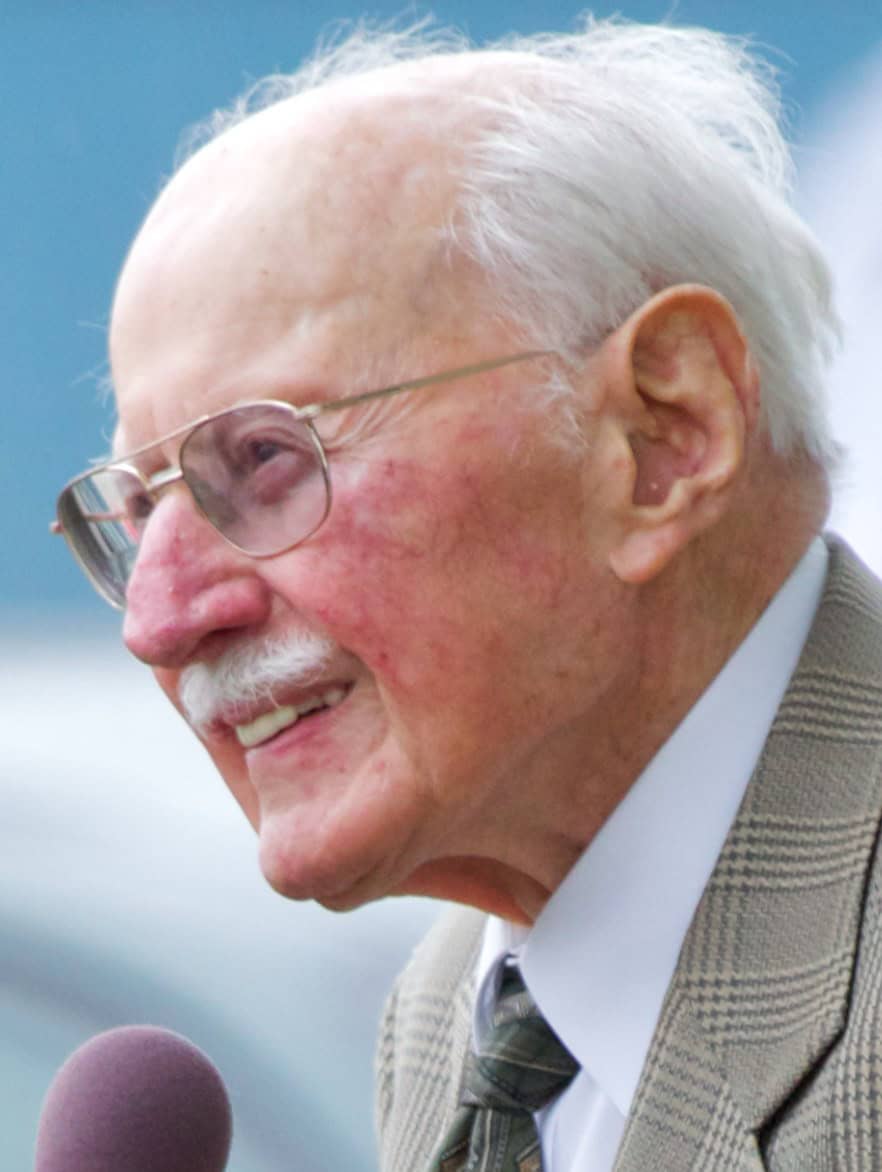
Robert Anderson “Bob” Hoover was born January 24, 1922, in Nashville. He started flying at Berry Field in 1937. During WWII he flew Spitfires in Europe. He was shot down off the French coast in 1944. He spent more than a year as a German POW at Stalag Luft I. He escaped and flew a stolen Fw 190 to Allied territory. Then he came home, went into test flying, and joined North American Aviation. He flew chase for Chuck Yeager’s Bell X-1 supersonic run in 1947.
From the early 1960s to his retirement in 1999 he built a second career as an airshow legend. First in the P-51 Mustang “Ole Yeller.” Then in the Aero Commander Shrike 500S — the most recognized business airplane in the world. He died October 25, 2016, at age 94. In the preface to Forever Flying, Yeager called him “the best pilot I’ve ever seen.” Nobody in aviation ever argued the point.
The Signature Routine — What Was Actually Happening
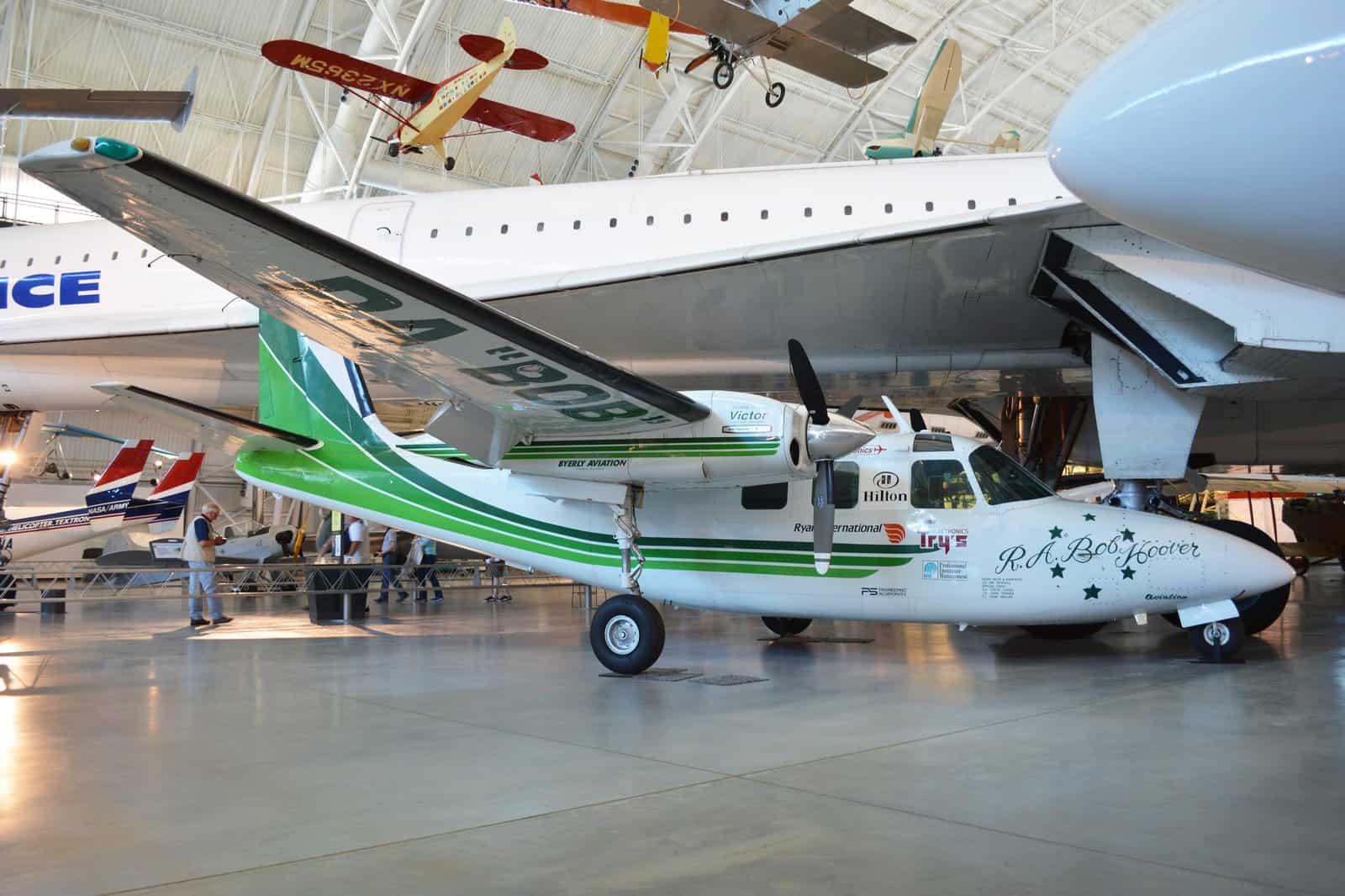
Hoover’s headline act ran from 1979 through 2000. It was an eight-minute display in the Shrike Commander with both engines shut down. He’d climb to altitude with props feathered. Then he’d fly a loop, an eight-point roll, a wingover, a figure eight, and a dead-stick landing. He’d roll out on the runway and coast to the airshow announcer’s stand. Then he’d step out, tip his straw hat, and take questions.
That’s the story most people know. What it hides is the arithmetic. A Shrike Commander at gross has a glide ratio around 10:1 with props feathered. Every maneuver in that eight-minute sequence trades altitude for airspeed and back again. Fixed energy budget. Zero option to add power. Miss the numbers by 200 feet or 10 knots and the last maneuver doesn’t complete. Miss by more and the airplane lands short. Miss by more than that and somebody dies in front of thousands of spectators.
Our take: the tea-pouring stunt is the crowd-pleaser. The routine is the masterclass. Everything a GA pilot should learn from Hoover is packed into those eight minutes, and none of it requires an aerobatic rating.
Why Bob Hoover Energy Management Is a Real GA Skill, Not an Airshow Trick
Bob Hoover energy management is the discipline of always knowing where your airplane sits. That means the trade space between altitude, airspeed, and drag configuration. It means always having a plan for the next 30 seconds that doesn’t need the engine running. That’s the airshow definition. The GA definition is the same, minus the audience.
Every GA piston flight has at least one moment where energy state matters more than checklists. A base-to-final turn getting slow. A pattern departure into rising terrain. A mid-cruise power reduction over unfamiliar country. A go-around begun 40 feet AGL. Hoover’s habit was to run the arithmetic constantly. He knew, at any second, what the airplane would do next if the engines quit. Most GA pilots think about that once — on the pre-takeoff brief — and forget it until the alternator light comes on.
The AOPA Air Safety Institute’s Nall Report has consistently shown one thing. Loss of control in flight is the single biggest killer of GA pilots. Loss of control is, at its root, a failure of energy management. The airplane got somewhere in the envelope the pilot didn’t intend. The pilot wasn’t tracking the trade space. Hoover’s routine is the extreme case study in never letting that happen.
The Iced-Tea Trick, Explained the Way Every Pilot Should Understand It
The iced-tea maneuver is Hoover’s most-shared bit. Both engines running. Cruise altitude. Set a glass on top of the instrument panel. Pick up a pitcher. Roll the airplane through a complete barrel roll with the other hand while pouring tea. No spilling. It looks like magic. It’s actually a physics lesson.
A properly flown barrel roll maintains positive G throughout the maneuver. Load factor never drops below 1 G. That means the tea and glass are held down against the panel the whole way around. The force stays pointed the same direction relative to the airplane. From the tea’s perspective, nothing weird is happening. Only the outside world is rotating. That’s the whole trick.
Why This Matters on Every Flight, Not Just at Airshows
The barrel-roll physics lesson is the same as the base-to-final physics lesson. A coordinated turn at 20 to 30 degrees of bank keeps the airplane loaded. It keeps the wing flying. It keeps the stall behavior predictable. An uncoordinated turn or a skid loads the airplane asymmetrically. That puts you where the wing quits before you’re ready. Hoover’s stunt looks like showmanship. What it’s actually showing is that the airplane behaves as advertised when you fly it as advertised. That lesson is worth a thousand hours if you get it early. Our coverage of stall recognition and recovery works the same idea from the other angle — what happens when the wing quits.
Hoover’s Most Quoted Advice, and Why Every GA Pilot Should Tape It to the Panel
Hoover’s enduring line to fellow pilots was simple. “If you’re ever faced with a forced landing, fly the airplane as far into the crash as possible.” It’s counter-intuitive on first read. That’s why it works. Most pilots freeze at the sight of an inevitable off-airport arrival. Hoover’s advice is to keep flying. Keep working the controls. Aim for the least-bad piece of ground. Trade energy for cushion until the airplane stops moving.
The physics behind the line is simple. Impact energy is roughly proportional to velocity squared. Slowing from 80 knots to 50 knots at touchdown cuts impact energy by more than half. That only happens if the pilot keeps flying the airplane. His related lesson: carry a little altitude, and never let the airspeed get away on final. That’s the discipline in the FAA’s Airplane Flying Handbook chapter on emergency landings. Our engine failure emergency landing procedures piece drills the first 30 seconds in GA-specific detail.
What the Dead-Stick Routine Should Teach You About Chair-Flying
Hoover didn’t invent the routine on the fly. He rehearsed it mentally on the ground. Every second was choreographed to a specific altitude and airspeed. Then he flew it, tweaked it, and flew it again. His autobiography describes hours in a hotel room the night before an airshow. Walking the sequence one move at a time. That’s chair-flying. It works.
Very few GA pilots do this. Most treat pattern work like something you show up and improvise. But the pilots who nail crosswinds, short fields, and odd approaches almost always chair-fly first. Sit in the chair. Close your eyes. Run the throttle in your head. Feel the sight picture. Say the callouts out loud. You’ll catch a step you forgot on the ground, not at 200 feet AGL.
A Simple Chair-Flying Drill Worth 20 Minutes This Weekend
Pick your next planned flight. Sit somewhere quiet. Walk through it out loud, in real time. Run-up. Taxi. Takeoff brief. Initial climb. First turn. Cruise clearance change. Descent brief. Approach configuration. Base turn. Final. Landing. Rollout. You’ll notice at least one step you were fuzzy on. That’s where the accidents live. It’s the same drill Hoover ran the night before every airshow. It’s the same drill in our recent Trent Palmer risk management piece.
The FAA Medical Fight — and What It Told Us About Aging in a Pilot’s Seat
In the early 1990s the FAA revoked Hoover’s medical certificate. Two agency inspectors had watched his AirVenture routine and concluded he was cognitively impaired. Hoover was 70, sharp, and had just flown a flawless display. He fought it. He got second opinions from independent aviation medical examiners. He got the medical back in October 1995. He then returned to the airshow circuit for four more years before retiring on his own terms.
The story matters. It’s the cleanest public example we have of how the FAA medical process can go sideways for older pilots. And what it looks like when a pilot pushes back. The AOPA legal team and Congressional oversight both got involved. The FAA eventually issued reforms that made age-based medical revocations harder to sustain. GA pilots flying past 65 or 70 owe some of that regulatory space to the Hoover fight.
We’ll be straight with you: the medical revocation was also a warning shot. Every GA pilot ages. Not everyone ages the same way. The right response isn’t to hide the deterioration. It’s to test yourself honestly. Fly with a CFI once a year. Know when it’s time to step down to something more forgiving. Hoover didn’t quit at 70 because 70 was too old. He kept going because he’d tested himself and was still sharp. That’s the standard, not the age.
What Reno Air Races Taught Him About Sportsmanship — and What It Should Teach Us About Community
For decades Hoover was the official starter of the Unlimited Class races at Reno. Race planes joined up on his yellow P-51’s wing. His radio call — “Gentlemen, you have a race” — is one of the most-quoted lines in American aviation. He’d pull straight up while the racers dove for the first turn. Then he’d orbit overhead the whole race in case anybody needed help. Multiple pilots owe their lives to Hoover talking them down after a mid-race engine failure.
The GA lesson is a community lesson. The Reno racers were competitors on the clock. Hoover was the calm voice above them who existed to help everybody get home. Every GA field has some version of that role. The CFI who takes 15 minutes to debrief. The mechanic who calls about a suspect cylinder. The ambassador who mentors newer pilots. The Michelle Curran Thunderbird piece hits the same thread — precision performers who understand that community keeps the runway open.
The Modern GA Practice — Where the Discipline Still Lives
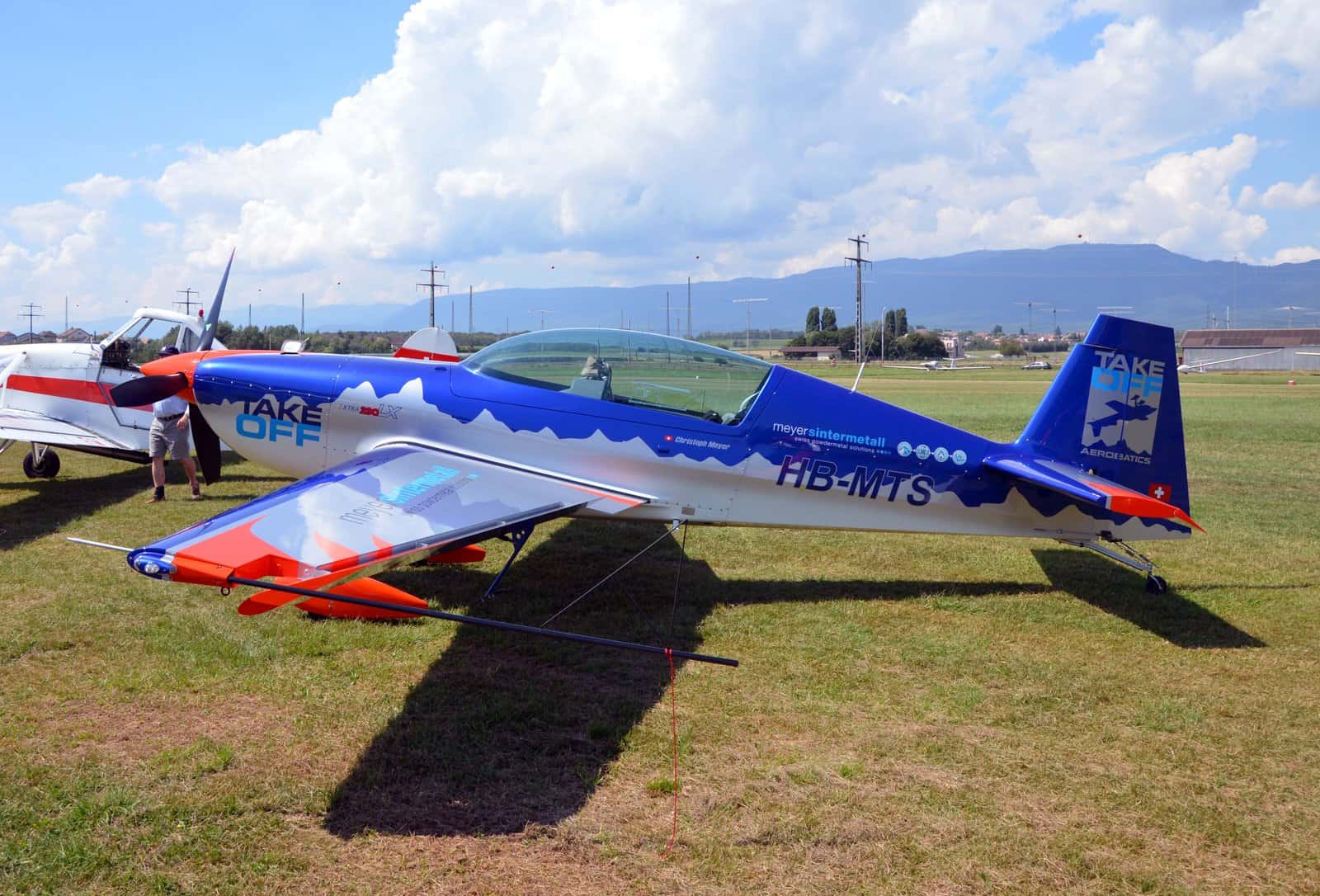
You can’t buy Hoover’s exact routine anymore. The airplane’s in the Smithsonian. But the discipline lives in modern GA aerobatic culture. Extra 300. Gamebird GB1. Pitts S-2. Amateur pilots use them to sharpen the same energy-management skill in a less-consequential format. Ten hours of Extra 300 aerobatic training with a good instructor teaches more about coordinated flight than 100 hours of straight-and-level cross-country. Ask any current airshow performer.
You don’t have to own an aerobatic single. You can rent one. Or take an emergency-maneuvers course in whatever you already fly. What you can’t do is pretend the discipline shows up on its own. Hoover’s whole point was that stick-and-rudder proficiency is perishable. Ignore it and you’re the pilot who mishandles the base-to-final turn on a hot day at a short strip. Our preventing aircraft stalls guide and the aircraft V-speeds quick reference work the same muscle from different angles.
Six Hoover Habits Every GA Pilot Should Steal This Year
Take one, two, or all six. None of them require an aerobatic rating.
1. Know your energy state. On every flight, every 60 seconds, ask yourself: if the engine quit right now, where’s my landing spot? If you can’t answer inside three seconds, you’re not tracking the trade space.
2. Chair-fly the flight. Twenty minutes before every real flight, walk through the sequence out loud. You will find at least one step you weren’t sure of.
3. Fly through the crash. If you ever have a forced landing, your job is not to accept the arrival. Your job is to fly the airplane to the least-bad piece of ground and slow it as much as you can before touchdown. Impact energy is velocity squared.
4. Coordinate the turn. The barrel roll works because it’s coordinated. The base-to-final turn works for the same reason. Ball centered, rudder in the right place, wings loaded — every time.
5. Own your currency honestly. If you flew four hours in the last six months, you’re not proficient — you’re legal. Fly with a CFI before flying the family. Our loss of directional control on landing piece has the specific drill.
6. Be the calm voice on the radio. Every pilot on your field is somebody’s Hoover-in-training. Be the ambassador who takes the extra call, the mentor who reviews the flight plan, the guy who keeps everyone’s runway open.
Frequently Asked Questions
Was Bob Hoover the greatest pilot ever?
Jimmy Doolittle and Chuck Yeager both said he was the greatest stick-and-rudder pilot who ever lived. Neither of them was known for exaggeration. Whether “greatest ever” is a defensible ranking depends on how you measure. What’s not debatable is that Hoover set the modern airshow safety standard. He also taught two generations of GA pilots what energy management looks like done right.
Can a GA pilot actually practice Bob Hoover energy management, or is it airshow-only?
Yes — and you don’t need an aerobatic rating. Basic energy-state awareness is teachable in any single-engine trainer. Know your best-glide. Know your nearest suitable field. Run the “what if the engine quits” question every 60 seconds. Bob Hoover energy management as a discipline scales down cleanly to a 172 or a Cherokee. What doesn’t scale is the tea-pouring — leave that to Hoover.
What airplane did Bob Hoover fly for his signature routine?
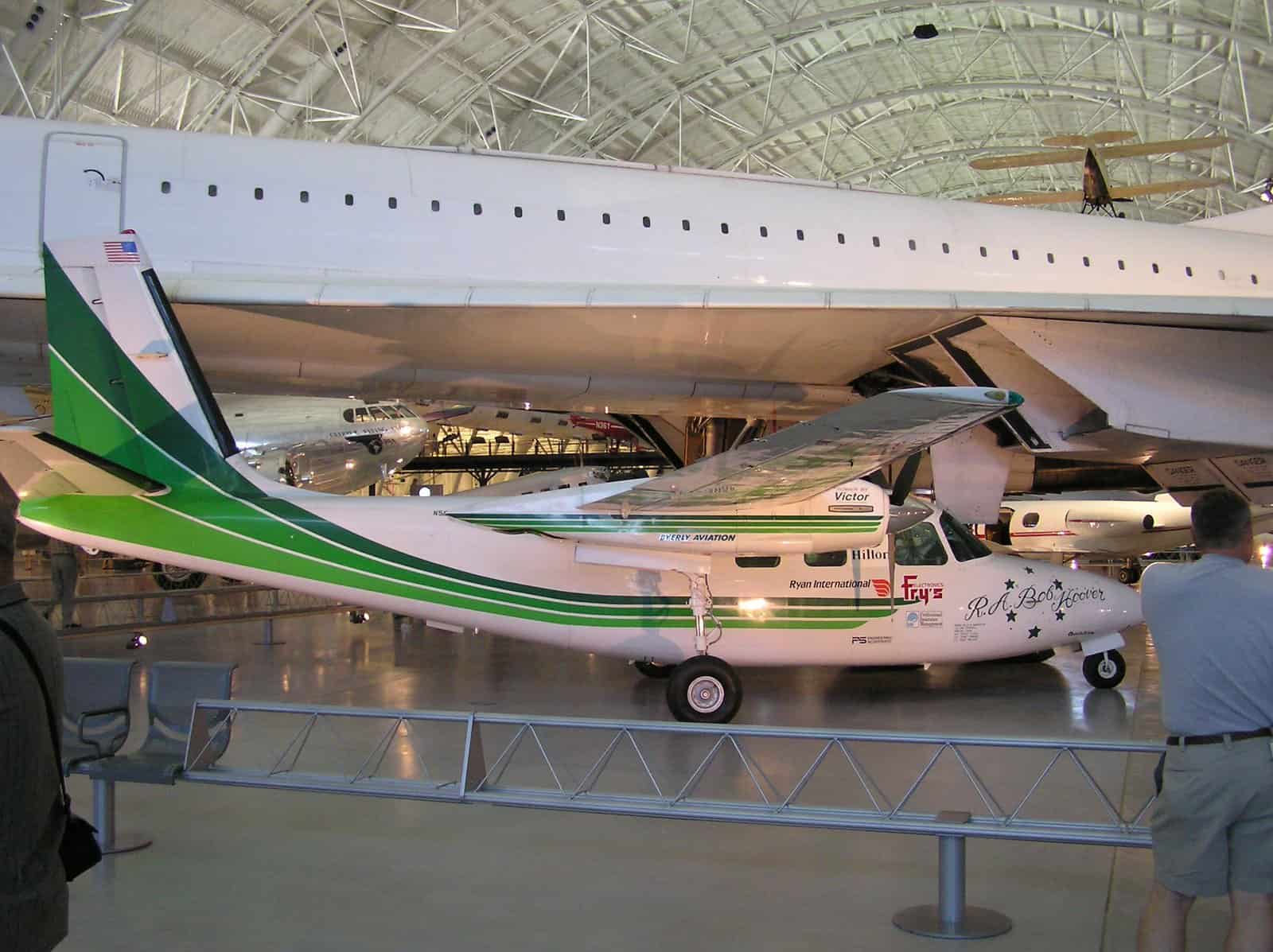
The Aero Commander Shrike 500S, registration N500RA. It’s a twin-engine piston business airplane built in 1972. He bought it in 1979 and flew it until his last airshow in 2000. It’s on permanent display at the Smithsonian’s Steven F. Udvar-Hazy Center. He also flew a P-51 Mustang, “Ole Yeller,” at airshows for many years before adding the Shrike.
Our Take
The reason Bob Hoover energy management still matters in 2026 isn’t nostalgia. It’s the discipline. His flying in a 1972 twin-piston business airplane maps directly onto every GA cockpit. A 172 at Bozeman. A Cherokee at a grass strip. An SR22 into an unfamiliar Class D. The gear changed. The physics didn’t. That discipline keeps GA pilots off the loss-of-control accident page. Steal the six habits above and you’re already flying better than most of the certificates on your ramp.
External References
- Smithsonian National Air and Space Museum — Shrike Commander 500S, R.A. “Bob” Hoover
- Smithsonian NASM — Remembering Robert A. “Bob” Hoover
- NBAA — Remembering Bob Hoover
- FAA Airplane Flying Handbook (FAA-H-8083-3C) — Emergency Approaches and Landings
- National Aviation Hall of Fame — Robert “Bob” Hoover
Related Articles
- Rob Holland’s Aerobatic Legacy: A Pilot’s Career Journey
- Rob Holland: A Tribute to America’s Greatest Aerobatic Pilot
- Trent Palmer Risk Management: What GA Pilots Should Copy
- What a Former Thunderbird Wants Every GA Pilot to Know
- Stall Recognition and Recovery: A GA Pilot’s 2026 Guide
- Engine Failure: First 30 Seconds Emergency Procedure
- Preventing Aircraft Stalls
- Aircraft V-Speeds: Every GA Pilot’s Quick Reference
- Loss of Directional Control on Landing: A GA Pilot’s 2026 Guide
- Why the Blue Angels Don’t Wear G-Suits: The Real Reason