VFR flight following is the most useful free service in general aviation. Most pilots either don’t ask for it or don’t get the most out of it. This guide fixes both problems. We’ll cover what flight following actually is under the hood. Then why it sometimes gets denied. Then the exact phraseology that gets you in fast. Plus the small habits that make controllers want to keep you on their scope.
We’ll be straight with you. If you fly cross-country and you’re not on with someone, you’re leaving safety on the table. The rest of this article shows how to use the service the way experienced pilots do.
What VFR Flight Following Actually Is
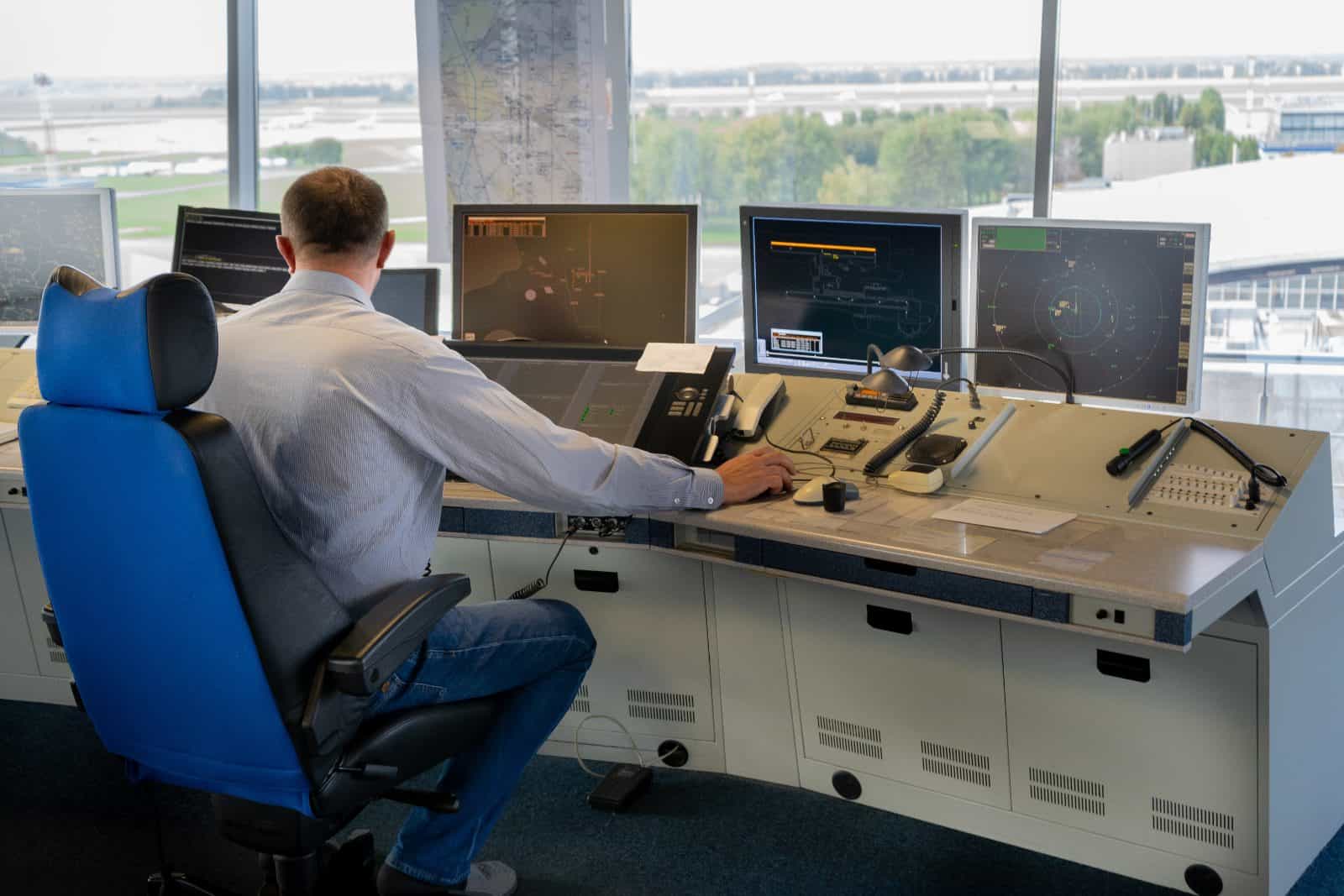
VFR flight following is the informal name for what the FAA calls Radar Traffic Information Service, defined in AIM 4-1-15. It’s an ATC service. A radar controller assigns you a discrete squawk, tracks your aircraft, and calls out traffic that may be a factor.
That’s it. No clearance. No IFR-style separation. No shortcut through airspace. You’re still flying VFR. You’re still in command. The controller is doing one thing for you: giving you another set of eyes.
VFR flight following is not the same thing as filing a VFR flight plan. A VFR flight plan is a search-and-rescue tool filed with Flight Service. Flight following is a radar service from ATC. Pilots conflate them all the time. They serve different purposes. They can both be used on the same trip. We cover the flight plan piece in detail in our VFR flight plan filing guide.
What it doesn’t get you
Here’s what most readers get wrong. Flight following does not relieve you of see-and-avoid responsibility. The controller may miss a target. The radar may not paint it. The other aircraft may not have a transponder. You’re still the pilot in command, and the airplane in front of you is still your problem.
Flight following also doesn’t guarantee help in busy airspace. The service is provided on a workload-permitting basis. We’ll come back to that.
Why You Should Use VFR Flight Following
The benefit list is short and obvious. It’s still the most underrated tool in the GA cockpit. The service gives you traffic calls. Terrain awareness via Minimum Vectoring Altitude alerts. Faster help if anything goes wrong. And an established line of communication if weather forces a diversion.
Traffic calls are the headline benefit. A controller with a working radar display sees targets you won’t. They’ll call out a 12 o’clock, opposite direction, same altitude. You’ll look up, find it, and miss it by a mile instead of by a wingspan. Without flight following, that same traffic is silent until your eyes find it. Sometimes your eyes don’t.
The second benefit is harder to quantify and possibly more important. When you’re already talking to a controller, an emergency becomes a conversation. Not a cold call. You don’t lose two minutes finding a frequency. Or identifying yourself. Or explaining your situation. You key the mic and say “engine running rough, need vectors to the nearest airport.” The controller is already moving.
The honest version
Our take: in 2026, with airspace this busy, flying VFR without it on any 30-NM-plus trip is a habit worth breaking. The downside is one extra radio in the cockpit. The upside is everything above.
Equipment You Need for VFR Flight Following
The equipment list is short. You need a serviceable two-way radio and a transponder. For most ATC environments today, you also need ADS-B Out. It’s required under FAR 91.225 in the same airspace as Mode C. Without ADS-B Out, you won’t get the service inside the Mode C veil. Or above 10,000 MSL. Or in Class B or C airspace.
If you’re flying a panel-equipped Cessna 172 or any modern GA aircraft, you almost certainly have everything you need. The bigger question is whether you know the gear well enough to keep up. Flight following gets dropped more for a pilot who can’t keep up with frequency changes than for any other reason.
| Item | Required? | Notes |
|---|---|---|
| Two-way VHF radio | Yes | Functioning, with current frequencies |
| Mode C transponder | Yes for most airspace | Required above 10,000 MSL and inside Mode C veil |
| ADS-B Out | Yes in rule airspace | FAR 91.225 rule airspace |
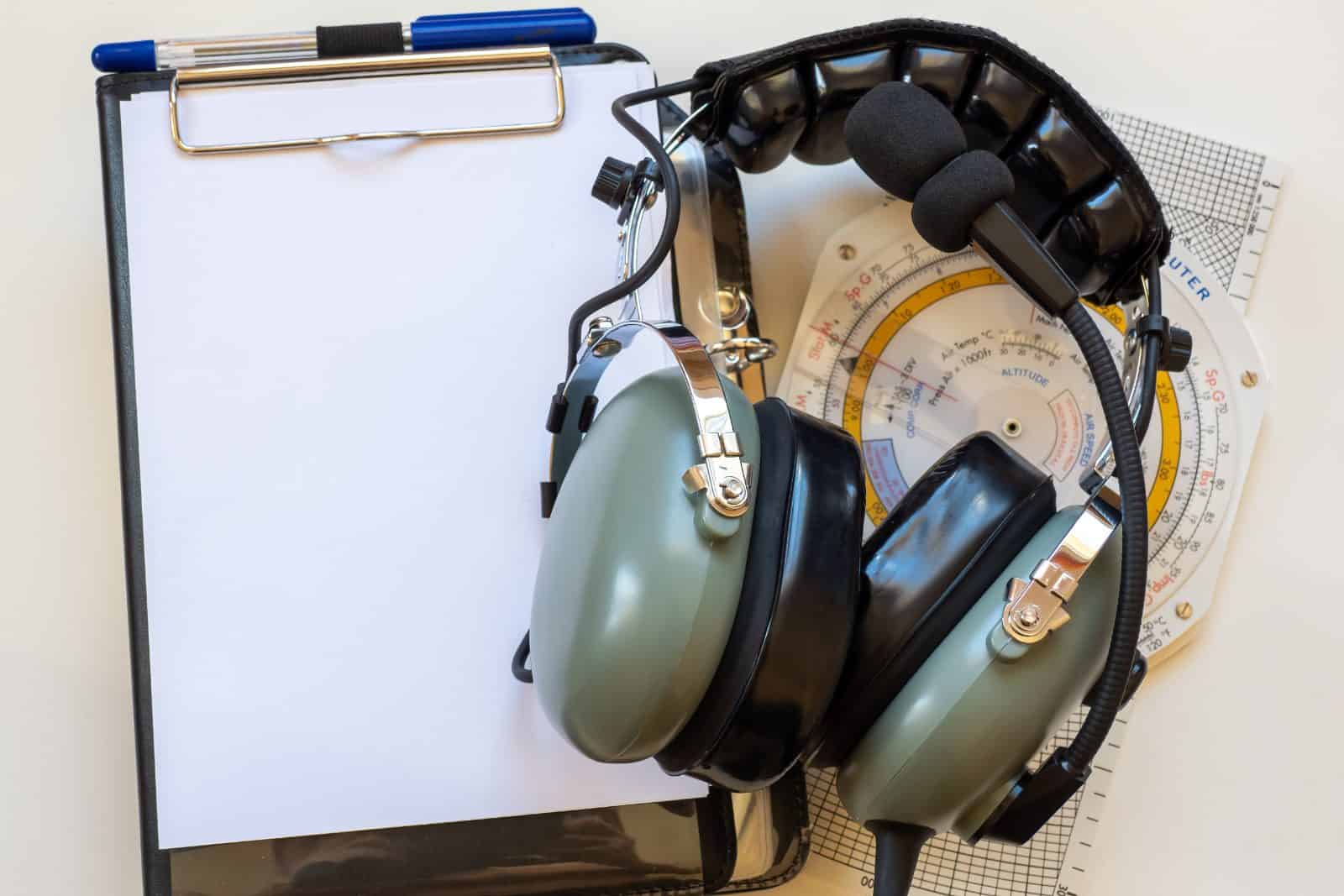
| Headset | Strongly recommended | You’ll miss calls without one |
| Pen and kneeboard | Yes | Write down squawk codes and frequencies |
How to Find the Right VFR Flight Following Frequency
This is where new pilots usually freeze up. VFR flight following is offered by approach control facilities (TRACONs), Air Route Traffic Control Centers (ARTCCs), and some towers with radar. Picking the right facility to call is half the battle.
Inside or close to a Class B or Class C, call the TRACON. It’s usually labeled “Approach” or “Departure.” Out in the en route environment between busy airspaces, call the ARTCC. It’s labeled “Center.” If you can’t tell which one owns your slice of sky, call either. They’ll hand you off without complaint.
The frequency lookup that actually works
The fastest way in 2026 is ForeFlight. Tap the nearest airport. Open the Info tab. Scroll to Other Frequencies. Center, Approach, and Departure are all there. Our ForeFlight complete guide covers what the app does and doesn’t do well.
If you don’t have ForeFlight, look at the chart supplement for the nearest airport. Every entry lists the appropriate approach or center frequency. On a sectional, you’ll only see frequencies for towered airports and select TRACON sectors. Center frequencies don’t appear on a VFR sectional at all. That trips up student pilots constantly. A working trick: download the IFR low chart in ForeFlight even if you fly VFR. Center frequencies appear directly on the IFR chart with bold facility names. Our sectional chart reading guide walks through every chart symbol in detail.
If you’re already in the air with no idea who owns your altitude, key up 121.5 and ask. Guard is monitored everywhere. The controller will redirect you in 15 seconds. This is what guard is for.
How to Make the Initial VFR Flight Following Call
Most denials and slow handoffs trace back to a sloppy initial call. The recipe is short. Facility, callsign, position, altitude, request. In that order. Don’t pre-explain. Don’t apologize. Don’t give your tail number twice.
Here’s a clean version. You’re a Cessna Skyhawk northeast of Mineral Wells, Texas, level at 3,500, and you want flight following to Denton:
“Fort Worth Center, Skyhawk Three-Four-Five Bravo Tango, four miles northeast of Mineral Wells, three thousand five hundred, request flight following to Denton, Delta Tango November.”
Notice what’s in there. Facility first so they know you’re talking to them. Aircraft type so they can plan separation expectations. Position relative to a fix the controller can find quickly. Current altitude. Destination by both name and identifier so there’s no confusion. That’s the call.
What you’ll hear back
If the controller can take you, the response will be a squawk code and a request for ident. Set the code. Push ident. The controller will come back with “radar contact.” You’re in the system. From that point on, report level-offs, altitude changes, and any deviation from your stated route.
If the controller is too busy, you’ll hear “unable flight following, try center.” Or simply “stand by.” Stand by means wait. Don’t repeat the request for at least a minute. Unable means call someone else.
VFR Flight Following Phraseology Worth Memorizing
Once you’re on with a controller, a few stock phrases cover almost every situation. None of these need to be perfect. Controllers care more about clarity than format.
| Situation | What to say |
|---|---|
| Climbing or descending | “Skyhawk 345BT, leaving three thousand five hundred for five thousand five hundred.” |
| Changing route | “Skyhawk 345BT, deviating fifteen degrees right for weather.” |
| Frequency change | “Skyhawk 345BT, request frequency change for AWOS, then back.” |
| Traffic in sight | “Skyhawk 345BT, traffic in sight.” |
| Looking but no joy | “Skyhawk 345BT, negative contact, three thousand five hundred.” |
| Need to land short | “Skyhawk 345BT, request the airport at our twelve o’clock, three miles.” |
| Canceling service | “Skyhawk 345BT, cancel flight following, going to advisory.” |
The single most useful habit: when ATC calls traffic, respond fast. Say “looking” if you haven’t seen it yet. Say “traffic in sight” the moment your eyes find it. A controller who knows you’ve got the traffic is one who can move on to other work.
Why VFR Flight Following Gets Denied or Terminated
Flight following is workload permitting. That’s not a polite phrase. It’s the rule. The controller’s first job is separating IFR traffic. Everything VFR is gravy. When the sector saturates, the gravy goes first.
Here’s where most denials come from, in order:
- Sector overload. Friday afternoon, busy approach, six airliners on the arrival. The controller can’t take another voice.
- Wrong facility for the altitude. You called Center at 2,500 in the LA Basin. Approach owns that altitude. They’ll redirect you.
- Equipment doesn’t meet the airspace. No ADS-B Out inside Mode C veil. The controller can paint you on primary radar but can’t legally provide the service.
- Sloppy initial call. The controller missed your callsign or destination and now has to ask twice. If they’re busy, they won’t.
Termination mid-flight follows similar logic. You’ll hear “radar services terminated, squawk one-two-zero-zero, frequency change approved.” That’s the FAA standard. It means the controller’s plate is full. Not that you did anything wrong. Acknowledge, squawk 1200, change frequency. Don’t argue. If you’re in Class B or C and the controller is required to provide service, the call won’t come.
What to do when service ends
Switch to the next logical facility and try again. If you’re handed back to Center because Approach got busy, that’s normal. If everyone refuses, monitor the destination’s CTAF or tower frequency and stay VFR. You haven’t lost anything you had before takeoff. You’ve just gone back to being a VFR pilot alone in the sky. Stay heads-up.
VFR Flight Following Around TFRs and Special Use Airspace
Flight following is the cheapest TFR insurance in aviation. When a controller has you on radar, they will tell you before you bust a TFR. Without flight following, the only thing between you and a possible certificate suspension is your preflight briefing and your sectional. We cover the broader topic of how to avoid TFR violations in a dedicated article. Flight following is the layer of last resort.
The same principle applies to MOAs, restricted areas, and prohibited areas. A controller talking to you will route you around active special use airspace as a matter of course. They may not. They’re not required to. But in practice, they almost always do.
For airspace fundamentals, see our Class B, C, D, and E airspace breakdown. Flight following layers on top of all of that.
How VFR Flight Following Fits the Bigger Cross-Country Picture
Flight following is one piece of a complete cross-country flow. The full picture looks like this. Plan the route. File a VFR flight plan with Flight Service. Brief weather. Preflight. Depart. Get flight following from the first available facility. Activate the flight plan. Stay on with ATC the whole way. Cancel the flight plan and flight following on landing.
Each piece does something the others don’t. Flight following is the live-radar layer. The flight plan is the search-and-rescue layer. The weather brief is the no-go layer. Skipping any one of them works until it doesn’t. We walk through the full cross-country flow in our VFR cross-country planning guide.
The cross-country call sequence
On a typical 200 NM VFR cross-country, you’ll talk to four or five facilities. Departure handles you for the first 20 miles. They hand you to Center. Center keeps you for the long en route segment. Center hands you back to Approach near your destination. Approach hands you to Tower or terminates service for an uncontrolled field. The whole flow happens without you doing anything but reading back frequencies. That’s the system working as designed.
Common VFR Flight Following Mistakes That Get You Dropped
A few habits will get a controller to drop you faster than anything else. Avoid these and you’ll stay on the scope.
- Stepping on transmissions. Wait two full seconds after any transmission ends before keying up. If you cut someone off, the controller has to repeat themselves. And they remember.
- Not reporting altitude changes. If you climb 500 feet without saying anything, the readout flips. The conflict alert may fire. They’re now wondering what you’re doing.
- Long-winded calls. “Center, Skyhawk 345BT, we’re just over Mineral Wells, we’re going to climb up to five thousand five hundred if that’s okay with you and we’d like to deviate a little bit to the right for some clouds.” Way too much. “345BT requests block 3,500 to 5,500, deviation right of course for clouds.” Done.
- Not setting the right frequency on standby. If you fumble for ten seconds finding the next frequency, that’s ten seconds the controller wonders if you got lost.
- Forgetting the squawk code change. When a new facility takes you, they’ll usually assign a new code. Set it before you respond.
None of this is graded. Controllers don’t write you up for being green. But they do mentally tier the pilots they work with. Being in the top tier means they’ll keep you longer. They’ll give you more direct routings. They’ll help you when help is hard to come by.
FAQ — VFR Flight Following
Is VFR flight following required for cross-country flights?
No. Flight following is always optional. There is no regulation that requires you to request it for any VFR flight, regardless of distance. That said, the practical case for using it on any cross-country over 30 NM is strong. Traffic calls, faster emergency response, and TFR avoidance all stack up quickly. The reason it’s not required is the same reason it’s so valuable. ATC provides it on a workload-permitting basis. The FAA can’t mandate a service it can’t guarantee.
What’s the difference between VFR flight following and a VFR flight plan?
A VFR flight plan is filed with Flight Service before departure as a search-and-rescue tool. If you don’t close it within 30 minutes of your ETA, Flight Service will start looking for you. Flight following is a live radar service from ATC during the flight. It includes traffic calls, safety alerts, and a working frequency for emergencies. They do different jobs. You can use both on the same flight. Most experienced cross-country pilots do.
Can a controller force me to land or change altitude on VFR flight following?
No. You’re still VFR and still pilot in command. The controller can suggest, request, or advise. But they cannot direct you the way they direct an IFR aircraft. If a controller says “advise able to maintain 4,500 or below,” that’s a request. Not a clearance. You can decline. The exception is Class B airspace. ATC clearance is required there. Controllers have authority to assign altitudes and headings as part of that clearance.
Use VFR Flight Following on Every Cross-Country From Now On
The case for flight following hasn’t changed in 30 years. It won’t change in the next 30. A second set of eyes on traffic. A faster path to help. A working radio relationship with ATC the second something goes sideways. Free.
If you’ve been flying without it because it felt complicated, the fix is simple. Use it on your next flight. The first call is the hardest. By the third flight, it’s automatic. Practice on a clear VFR day from a familiar airport. The controllers will help you build the rhythm.
If you want more direct, no-fluff guidance from pilots who actually fly, consider joining E3 Aviation Association. Membership is built around real pilot-to-pilot value. Gear discounts. Content. A community that takes airmanship seriously. Become an E3 Aviation Association member here.
Read Next
- VFR Cross-Country Planning: The Complete GA Pilot Guide
- How to File a VFR Flight Plan: A GA Pilot 2026 Guide
- ForeFlight Complete Guide for GA Pilots
- How to Read a Sectional Chart
- Avoiding TFR Violations
- Emergency Squawk Codes: 7700, 7600, 7500
- Holding Pattern Entry Procedures
- Class B, C, D, and E Airspace Explained