Every time you preflight and plan a route, you’re navigating a system of airspace classifications that determines what equipment you need, what clearances you need, and what rules apply to your flight. Class B airspace is the most restrictive and the most misunderstood for GA pilots. Get it wrong and you’re looking at a pilot deviation, certificate action, or worse. Get it right and you can fly efficiently through some of the busiest airspace in the country without a problem.
This guide breaks down Class B, C, D, and E airspace — the four classes you’ll encounter on virtually every cross-country flight. You’ll know exactly what’s required to enter each one, how to identify them on a sectional chart, and what weather minimums apply. We’ll also cover Class A and G briefly since they complete the picture.
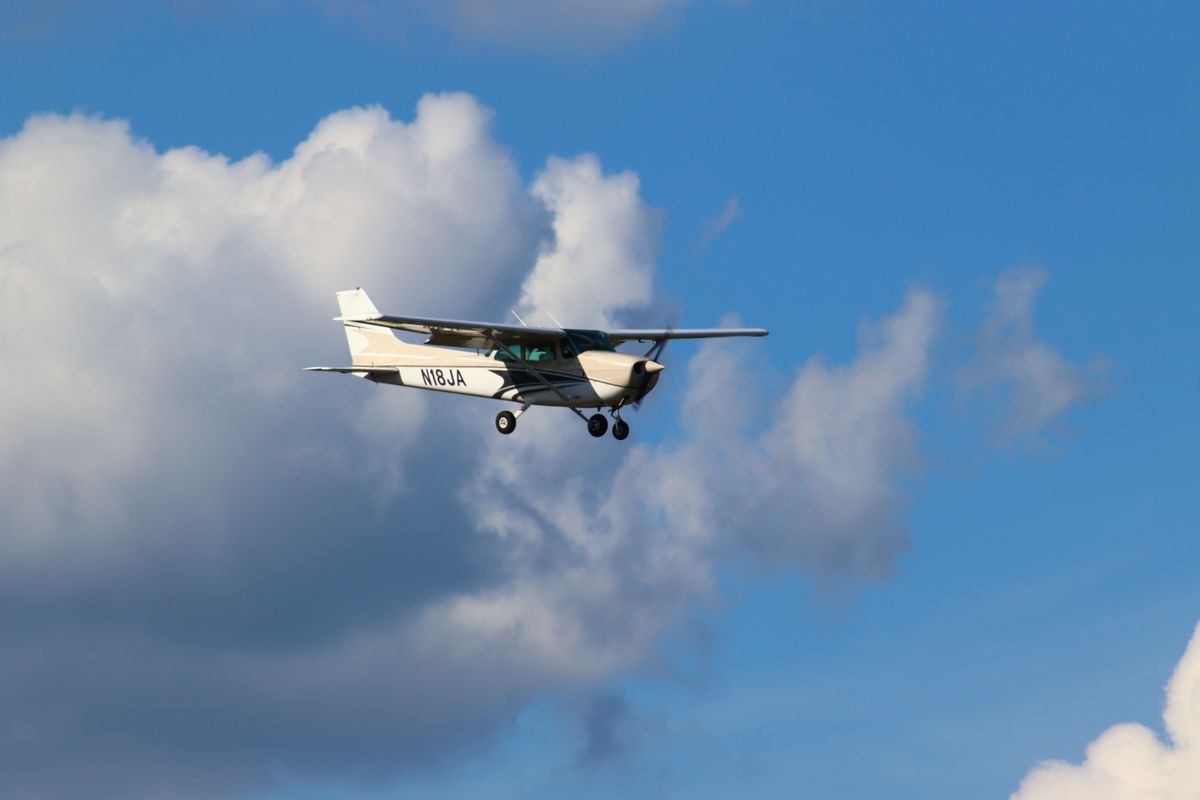
Why Airspace Classification Matters for Every GA Pilot
The U.S. National Airspace System is divided into classes — A, B, C, D, E, and G — based on how much air traffic activity exists and how much separation service ATC provides. Higher traffic volume around an airport means more restrictive airspace surrounding it.
For GA pilots, airspace classification matters in three specific ways. First, equipment requirements change depending on which airspace you’re flying through. Second, ATC communication requirements vary — some airspace requires an explicit clearance, some requires only contact, and some requires nothing at all. Third, VFR weather minimums are not the same across all classes. Knowing these differences cold is not optional. It’s basic airmanship.
Class A Airspace: IFR Only Above 18,000 Feet
Class A airspace exists from 18,000 feet MSL up to and including FL600. All operations are conducted under IFR — no VFR flights. You need an instrument rating, an ATC IFR clearance, and appropriate IFR equipment. For most GA pilots flying piston singles or twins below 18,000 feet, Class A is a non-factor. If you’re flying a turboprop or high-performance aircraft on high-altitude cross-countries, you’ll need to be instrument current and filed IFR before entering.
Class B Airspace: Busiest Airports in the Country
Class B airspace surrounds the nation’s busiest airports — Atlanta (KATL), Los Angeles (KLAX), Chicago O’Hare (KORD), Dallas-Fort Worth (KDFW). The FAA designates Class B based on IFR operations volume and passenger enplanements. There are currently 37 Class B airports in the U.S.
Class B Airspace Structure and Dimensions

Class B airspace is individually tailored for each airport — no two look exactly alike. The structure typically extends from the surface up to 10,000 feet MSL and consists of a core area directly over the primary airport surrounded by multiple layers, or shelves, that step outward and upward. Pilots and controllers describe it as an upside-down wedding cake.
The core starts at the surface. As you move outward from the airport, each shelf has a higher floor altitude to accommodate arriving and departing traffic still climbing or descending. On a sectional chart, Class B airspace is depicted with solid blue lines. Numbers inside each ring show the ceiling (top) and floor (bottom) in hundreds of feet MSL. “100/SFC” means 10,000-foot ceiling down to the surface. “100/40” means 10,000-foot ceiling with a 4,000-foot floor.
Class B Airspace Entry Requirements
To operate in Class B airspace, you need:
- ATC clearance — An explicit “cleared into Class Bravo” from ATC before entering. “Squawk 4521” or “radar contact” is not a clearance. If ATC doesn’t say “cleared into the Bravo,” you’re not cleared.
- Two-way radio — Active contact with ATC maintained throughout your time in the Bravo.
- Mode C transponder — Altitude reporting required. Also required within 30 nm of the Class B primary airport (the Mode C veil), even outside the Bravo itself.
- Pilot certification — Private pilot certificate or higher. Student pilots need a specific logbook endorsement for certain Class B airports. See 14 CFR 91.131.
- ADS-B Out — Required inside Class B and within the Mode C veil.
Request your Class B clearance well before reaching the boundary. Give ATC at least 5–10 nm of lead time — busy facilities aren’t always able to accommodate last-minute requests.
Class B VFR Weather Minimums
VFR minimums in Class B airspace: 3 statute miles visibility and clear of clouds. No specific cloud clearance distance is required because ATC is actively providing traffic separation. You simply need to see and avoid terrain and other aircraft.
Class C Airspace: Radar Contact Required

Class C airspace surrounds airports with moderate IFR operations — typically those with regular commercial jet service and an operational radar facility. Think Nashville (KBNA), Portland (KPDX), or Albuquerque (KABQ).
Class C Airspace Structure
Class C has a standard two-layer structure. The inner circle has a 5 nm radius extending from the surface to 4,000 feet AGL above the primary airport. The outer shelf has a 10 nm radius extending from 1,200 feet AGL to 4,000 feet AGL. An outer area extends to 20 nm where ATC provides radar services on a workload-permitting basis, though it’s not part of Class C for regulatory purposes. On a sectional chart, Class C airspace appears as solid magenta circles.
Class C Airspace Entry Requirements
Class C doesn’t require an explicit clearance, but does require two-way communication before entry. ATC must acknowledge your specific callsign. “N12345, standby” counts as contact. “Aircraft calling, standby” does not. Your tail number must be acknowledged before crossing the boundary.
Equipment: two-way radio, Mode C transponder, ADS-B Out. VFR minimums in Class C: 3 statute miles visibility, 1,000 feet above, 500 feet below, 2,000 feet horizontal from clouds.
Class D Airspace: The Tower-Controlled Airport
Class D airspace exists around airports with an operational control tower but without radar infrastructure. It’s the most common controlled airspace GA pilots encounter — every towered municipal or regional field when the tower is open.
Class D typically extends from the surface to 2,500 feet AGL (charted in MSL) with a 4–5 nm radius. On a sectional chart, it’s shown with a dashed blue circle. Class D only exists when the control tower is operational. Check the Airport/Facility Directory for tower hours. When the tower closes, Class D goes away and the airspace reverts to Class E or G.
Entry requirement: two-way radio contact with the tower before entering — same callsign acknowledgment rule as Class C. ADS-B Out applies in many Class D airports. VFR minimums: 3 statute miles visibility, 1,000 feet above, 500 feet below, 2,000 feet horizontal from clouds.
Class E Airspace: The Workhorse of the NAS

Class E is controlled airspace that doesn’t fit Classes A, B, C, or D. It covers the bulk of airspace on a typical cross-country — low-altitude airways, transition areas around non-towered airports with instrument approaches, and most airspace between 1,200 feet AGL and 18,000 feet MSL across the country.
Where Class E Airspace Begins
Class E has multiple floor altitudes depending on location:
- 1,200 feet AGL — The default floor over most of the contiguous U.S. Above 1,200 feet AGL and below 18,000 feet MSL, you’re almost certainly in Class E unless otherwise charted.
- 700 feet AGL — Around non-towered airports with published instrument approaches. Shown on sectional charts as a fuzzy/shaded magenta circle. Brings Class E lower to protect IFR aircraft on approach.
- Surface — Near some non-towered airports and along certain airways. Shown by dashed magenta lines on a sectional chart.
Class E Entry Requirements and Weather Minimums
No ATC communication or equipment is required to enter Class E under VFR (ADS-B Out is required above 10,000 feet MSL and above 3,000 feet MSL in Class E within 12 nm of the coast).
VFR minimums in Class E split by altitude: Below 10,000 feet MSL — 3 statute miles visibility, 1,000 feet above, 500 feet below, 2,000 feet horizontal from clouds. At or above 10,000 feet MSL — 5 statute miles visibility, 1,000 feet above, 1,000 feet below, 1 statute mile horizontal from clouds.
Class G Airspace: Uncontrolled but Not Unregulated
Class G is everything not designated Class A through E — typically below 1,200 feet AGL in rural areas. No ATC separation. No communication requirements. No equipment requirements beyond what the aircraft and flight already demand. VFR minimums drop significantly during the day: 1 statute mile visibility and clear of clouds below 1,200 feet AGL. At night they jump to 3 statute miles with standard cloud clearances. Legal at the daytime minimums — but not much margin.
VFR Weather Minimums by Airspace Class
This table is worth memorizing. It shows up on written tests and matters on actual flights when you’re making a go/no-go call in marginal conditions.
| Airspace | Flight Visibility | Distance from Clouds |
|---|---|---|
| Class A | N/A (IFR only) | N/A |
| Class B | 3 statute miles | Clear of clouds |
| Class C | 3 statute miles | 1,000 above / 500 below / 2,000 horizontal |
| Class D | 3 statute miles | 1,000 above / 500 below / 2,000 horizontal |
| Class E (below 10,000 ft) | 3 statute miles | 1,000 above / 500 below / 2,000 horizontal |
| Class E (at/above 10,000 ft) | 5 statute miles | 1,000 above / 1,000 below / 1 mile horizontal |
| Class G (day, <1,200 ft AGL) | 1 statute mile | Clear of clouds |
| Class G (night, <1,200 ft AGL) | 3 statute miles | 1,000 above / 500 below / 2,000 horizontal |
How to Read Class B Airspace on a Sectional Chart
Knowing what you’re looking at before you get near any class of controlled airspace will keep you out of a deviation report. Key sectional chart identifiers:
- Solid blue rings — Class B airspace boundaries. Ceiling/floor labeled in hundreds of feet MSL.
- Solid magenta circles — Class C boundaries.
- Dashed blue circles — Class D boundaries around towered airports.
- Fuzzy/shaded magenta circles — Class E surface extension at 700 feet AGL around non-towered airports with instrument approaches.
- Dashed magenta lines — Class E surface areas.
When routing near Class B airspace, use the Terminal Area Chart (TAC) for that airport. TACs print at larger scale specifically to show Class B shelf altitudes, VFR corridors, and transition routes that don’t show clearly on a sectional.
Equipment Requirements by Airspace Class

Before departure, confirm your equipment meets the requirements for every airspace class on your route:
- Class A: IFR equipment, instrument-rated pilot, ATC IFR clearance
- Class B: Two-way radio, Mode C transponder, ADS-B Out, explicit ATC clearance, private pilot certificate minimum
- Class C: Two-way radio, Mode C transponder, ADS-B Out, two-way contact established before entry
- Class D: Two-way radio, two-way contact established before entry
- Class E: No specific VFR requirements (ADS-B Out above 10,000 ft MSL)
- Class G: No requirements beyond aircraft airworthiness
A non-functional transponder doesn’t automatically ground you — ATC may grant a deviation for a ferry flight. But you cannot operate in Class B, C, or most Class D airspace without a working transponder and two-way radio.
Special Use Airspace: MOAs, Restricted, and Prohibited Areas
Beyond the standard airspace classes, certain areas carry additional restrictions shown on sectional charts:
- Prohibited Areas (P-xxx): No flight. The White House, certain nuclear facilities, and key government sites fall here.
- Restricted Areas (R-xxx): Hazardous activities — artillery, missiles, aerial gunnery. VFR flight requires ATC permission or confirmation the area is cold. Always check NOTAMs.
- Military Operations Areas (MOAs): Active military training. VFR flight is legal, but a hot MOA puts you with fast-movers pulling hard turns. ATC can tell you if a MOA is active. Never enter an active MOA in IMC.
- Temporary Flight Restrictions (TFRs): Presidential movements, airshows, stadium events, wildfires. Check NOTAMs before every flight. A TFR deviation is a career-level mistake.
Practical Tips for Flying Through Controlled Airspace
Use your EFB before you’re airborne. ForeFlight and Garmin Pilot overlay all airspace classes with altitude filters. If your route clips a Class B shelf, you’ll see it on the ground during planning — not when you’re already there.
Know the difference between “cleared” and “contact.” In Class B airspace, you ask for entry: “Atlanta Approach, Cessna 172 N12345, 20 miles south, request Bravo clearance.” Wait for explicit clearance. In Class C and D, establish contact — your callsign must be acknowledged before crossing the boundary.
Know the satellite airports inside Class B. Many Class B areas contain smaller fields underneath the Bravo. Some have VFR corridors or specific transition routes. Some require a Class B clearance to reach. Check the A/FD and TAC for satellite airports on your route.
Brief the airspace, not just the weather. Know every airspace class you’ll touch, its floor and ceiling at your cruise altitude, and what happens if you deviate. Five minutes of sectional review before departure saves a lot of explaining to the FSDO later.
Fly with Confidence. Know Your Airspace.
E3 Aviation Association is built for pilots who take their flying seriously — whether you’re a student working toward your private certificate, a VFR pilot expanding into IFR, or an owner-operator flying cross-country every week. E3 gives you the community, training content, and resources to fly better and fly safer.