In general aviation, altering the propeller and wings is one of the fastest ways to unlock more performance from a modestly powered engine. Yet most pilots never dig into what’s actually possible — and that gap shows up exactly when it matters most. GA aircraft takeoff performance isn’t just a number in your POH. It’s the difference between a comfortable climb and a white-knuckle departure on a warm afternoon.
Last Updated: May 3, 2026 | By: The E3 Aviation Editorial Team
The windsock at my home airfield, once a trusted guide, has become a deceiving companion. It led me astray last week. It convinced me to depart with a light tailwind on a warm day — passenger on board, bags loaded. Disaster was far off, but the takeoff was uncomfortable enough to stick. My 1953 Cessna 170, running 145 horsepower with worn 26-inch Alaskan Bushwheels at 10 psi, doesn’t spare feelings when margins tighten.
Despite prevailing winds and a full weather briefing endorsing Runway 13, the windsock suggested the opposite. I chose Runway 31. The result was a slow, labored climb — a reminder of exactly how thin GA aircraft takeoff performance margins can get in real conditions, even on familiar aircraft from familiar fields.

Why GA Aircraft Takeoff Performance Gets Pilots Into Trouble
Most pilots know their book numbers. However, knowing numbers and understanding the variables that shift those numbers are two entirely different skills. GA aircraft takeoff performance degrades faster than most pilots expect — and the factors compound quickly when conditions aren’t ideal.
Consider what stacks on a summer afternoon: full fuel, a passenger, baggage, a soft runway surface, a slight tailwind, 92°F temperatures at a field sitting 2,500 feet MSL. Each factor alone looks minor. Together, they can double your takeoff roll. That’s not an exaggeration — density altitude math bears it out clearly.
Additionally, pilots tend to calibrate their expectations to best-case conditions. Consequently, they’re surprised when the airplane performs differently on a challenging day. Understanding what actually drives takeoff performance gives you control over your margins before you ever release the brakes. For a deeper look at GA safety and decision-making, see our guide on runway incursion prevention for GA pilots.
The Propeller’s Role in Your Takeoff Numbers
The propeller is your aircraft’s interface with the air. For many GA pilots flying fixed-pitch airplanes, the prop is an afterthought — something that spins and makes thrust. In reality, it’s one of the most tunable performance levers available, and it directly shapes GA aircraft takeoff performance during the critical first seconds of the ground roll.
Specifically, pitch and diameter both determine how efficiently the engine converts rotational energy into thrust in the low-speed, high-drag environment of the takeoff roll. Get this wrong and the engine produces less usable power exactly when you need it most. Prop selection alone has been shown to change ground roll by 10–20% on popular GA types.
Fixed-Pitch vs. Constant-Speed — Which One Actually Wins Off the Ground?
For aircraft equipped with a fixed-pitch prop, cruise-pitch propellers hurt takeoff. They’re optimized for efficient cruise RPM, which means the engine can’t reach peak power during the ground roll. Consequently, acceleration is slower and liftoff requires more runway.
A climb-pitch prop changes the equation. It loads the engine to red-line earlier in the roll, delivering more thrust when you need it most. The trade-off is slightly reduced cruise efficiency — but for backcountry operations, short strips, or high-density-altitude airports, the departure gain easily outweighs the cruise penalty.
Constant-speed propellers solve the problem differently. They allow the engine to maintain peak RPM throughout the takeoff roll by continuously varying blade pitch. As a result, you get optimal power from brake release through liftoff and into the initial climb. For pilots who regularly fly demanding airports, upgrading to a constant-speed system can meaningfully change what’s achievable.
Your Worn Prop Is Quietly Costing You Distance
Here’s what most GA pilots miss: a worn propeller erodes performance silently. Leading edge nicks, gravel erosion, and asymmetrical wear all reduce the prop’s effective airfoil efficiency. The airplane still flies. However, it flies harder than it should — and the difference shows most clearly on the takeoff roll.
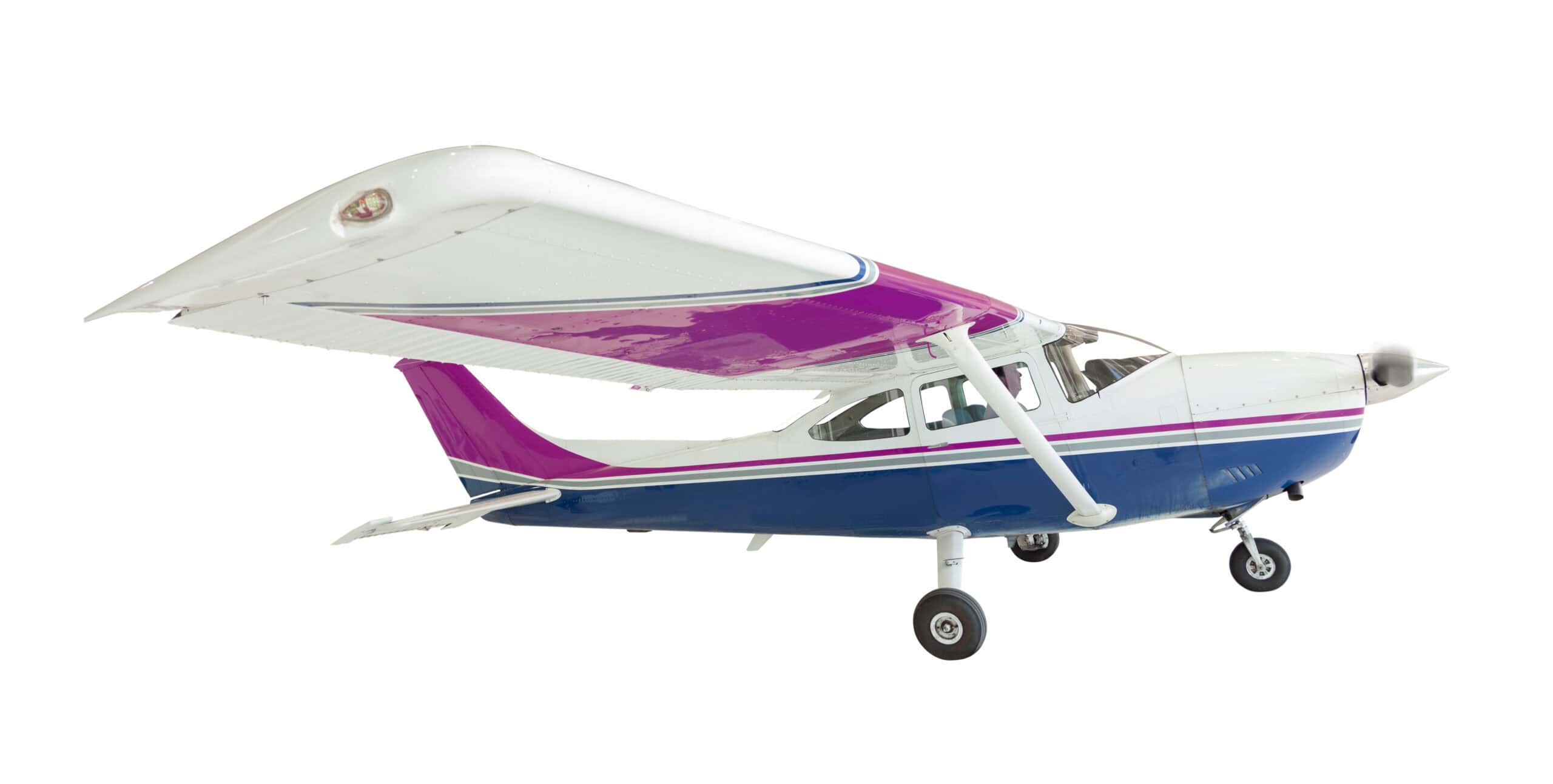
For operators flying vintage aircraft off backcountry strips with gravel — like my Cessna 170 — propeller condition deserves regular attention. A fresh prop, properly pitched for the engine and expected operating conditions, returns performance that a tired prop slowly masks over hundreds of hours.
Furthermore, ground-adjustable propellers offer a useful middle path for pilots who want some pitch flexibility without a constant-speed system. These allow blade angle changes on the ground during annual inspection or between seasonal operations — useful for pilots who fly very different mission profiles through the year. Checking your prop is also a core step in any thorough annual inspection on a GA aircraft.
Wing Modifications That Change Your Real-World Numbers
The propeller handles thrust. The wing handles lift. For GA aircraft takeoff performance, getting airborne sooner means getting the wing to generate useful lift at lower speeds. Several modification categories target this problem directly.
Notably, not all modifications deliver equal results. Some are proven and well-documented. Others are marketing more than engineering. Here’s an honest look at what actually moves the needle on GA aircraft takeoff performance.
Do STOL Kits Actually Work? Here’s the Honest Answer
We’ll be straight with you: STOL kits work — but the results depend heavily on the aircraft and the specific kit. For proven platforms like the Piper PA-18 Super Cub, Cessna 180, and Cessna 170, STOL modifications can meaningfully reduce liftoff speed and shorten the ground roll.
Typical STOL kit components include drooped leading edge cuffs, extended flap travel, and modified aileron geometry. Together, they increase the wing’s maximum lift coefficient. As a result, the aircraft reaches usable lift at lower indicated airspeed — translating directly to a shorter takeoff roll and earlier climbout.
However, the numbers matter less than the conditions. STOL kits earn their value on short or soft grass strips, at high-density-altitude airports, or with heavy loads. If you primarily fly paved runways at sea-level airports with standard loads, the practical gain is marginal. For backcountry and bush operations, they’re often the right investment — as our backcountry flying guide explores in detail.
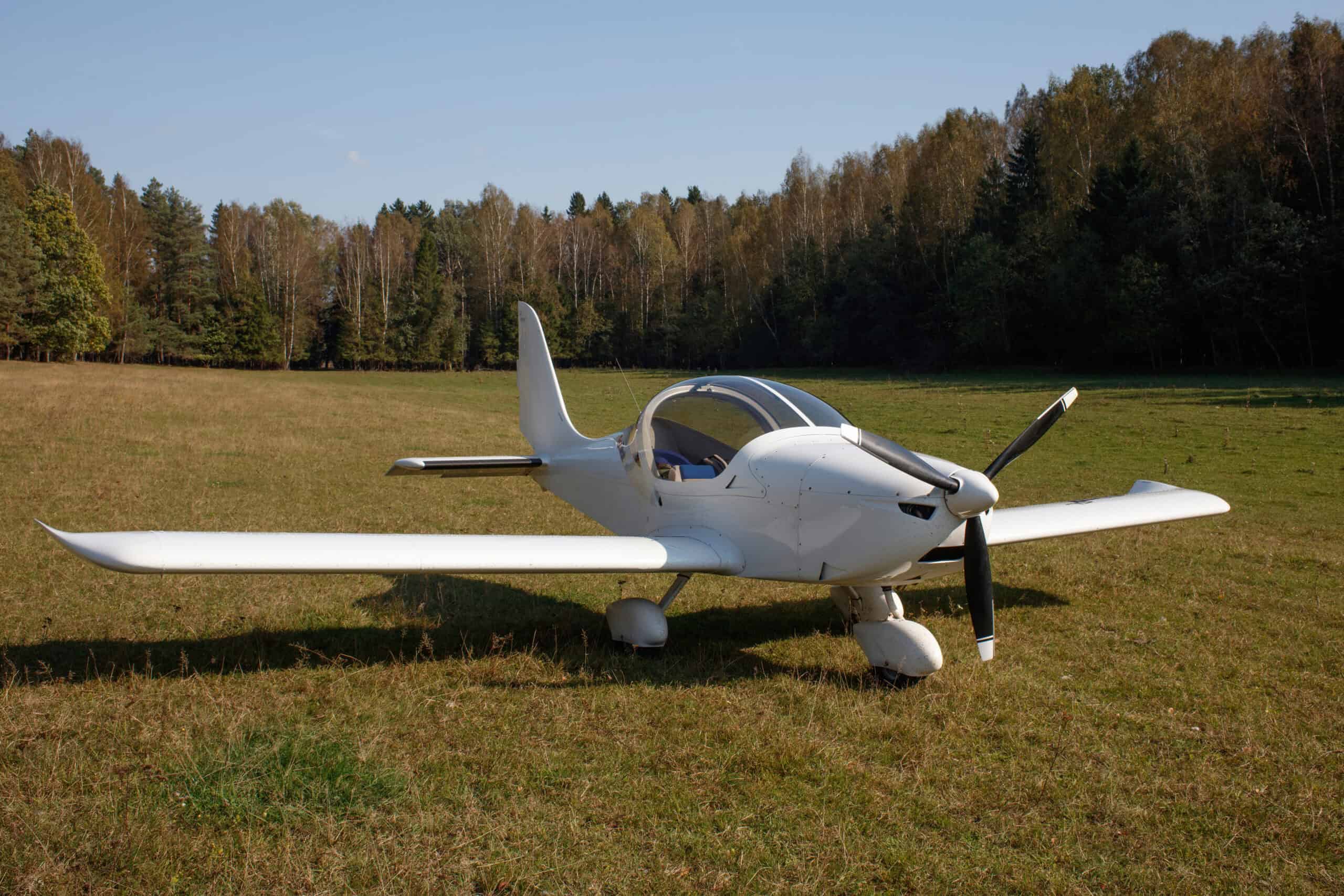
Vortex Generators — Small Tabs, Real Results
Vortex generators are rows of small metal tabs mounted on the upper wing surface ahead of the flap and aileron. Their job is to energize the boundary layer — the thin air flowing along the wing surface — to delay flow separation at higher angles of attack.
For GA aircraft takeoff performance, vortex generators deliver two concrete benefits. First, they lower stall speed, which translates to a lower safe liftoff speed. Second, they improve aileron effectiveness at slow speeds — which matters significantly on uneven or crosswind departures where directional control is critical close to the ground.
STC’d VG kits from Micro AeroDynamics offer documented stall speed reductions typically in the 5–8 knot range for popular GA types. Five knots sounds modest. However, for an aircraft already operating near its margins, that reduction changes the practical operating envelope in a meaningful way — and the installation is relatively straightforward compared to a full STOL kit.
Density Altitude: The Silent Threat to GA Aircraft Takeoff Performance
No factor degrades GA aircraft takeoff performance faster than density altitude. It penalizes both engine output and aerodynamic lift simultaneously — a double hit that compounds with every hundred feet of elevation and every degree of temperature above standard.
At sea level on a standard day (59°F, 29.92” Hg), your normally aspirated engine makes rated horsepower and the wing works exactly as the POH says. However, add 3,000 feet of elevation and 30°F above standard temperature, and the engine makes roughly 70–75% of sea-level power. The air is thinner, so the wing needs more speed to generate the same lift.
The result: your takeoff roll increases — sometimes dramatically. The FAA’s Pilot’s Handbook of Aeronautical Knowledge notes that a 10°C temperature increase above standard can raise takeoff distance by 10% or more. That stacks directly on top of altitude effects that are already significant for piston-powered aircraft.
Hot Days Hit Your Margins Harder Than You Think
Our take: density altitude is the most underestimated hazard in GA operations. Pilots respect hard obstacles and visible weather. However, warm temperature on a summer afternoon is invisible — and invisible hazards are the ones that cause accidents.
NTSB data shows density altitude contributes to a disproportionate share of takeoff accidents in high-elevation western states. Many of these accidents involve experienced pilots on familiar aircraft. The margin simply wasn’t there, and the pilot didn’t account for conditions precisely enough.
Always compute density altitude before departure. Use current altimeter setting and temperature against your airport elevation. Cross-check against your POH charts — and remember that those charts assume a well-maintained aircraft in good condition, which your airplane may or may not be at the moment of departure.

Weight, Balance, and the Math Your POH Can’t Do For You
POH performance charts are generated at maximum gross weight and a specific center of gravity. Real-world conditions diverge from both — and the difference matters directly for GA aircraft takeoff performance planning.
Weight is the most direct lever. A practical rule of thumb: for every 10% increase in gross weight, takeoff distance increases by roughly 20%. If you’re 15% below gross on a challenging day, you’re gaining meaningful margin. If you’re at or near gross, you need to account for it explicitly rather than assuming book numbers apply to your actual situation.
Forward CG generally helps takeoff by reducing nose-heaviness on rotation. Aft CG allows rotation at lower speed but demands careful handling during the roll and early climb. For tailwheel aircraft, CG management during the ground roll is a constant consideration — particularly on soft or rough surfaces where directional control requires active attention throughout the roll.
Furthermore, tire pressure matters more than most pilots realize. Alaskan Bushwheels at 10 psi carry substantially more rolling resistance than standard tires at proper inflation. For soft-field operations, that’s the design trade-off — better flotation at the expense of ground roll efficiency. Knowing this keeps expectations calibrated and helps pilots avoid comparing their aircraft’s performance to POH numbers derived from hard-surface testing.
A Practical Framework for Better GA Aircraft Takeoff Performance
Improving takeoff performance doesn’t require a major overhaul. Most pilots can achieve meaningful gains through better preflight analysis, targeted maintenance attention, and modifications matched to their actual operating environment.
Step 1: Know your actual margins. Pull out your POH and work the performance charts for your typical conditions — not standard day, sea level, no wind. Use real numbers from your local airport, your typical load, and the likely temperature range for each season. If you haven’t done this exercise recently, the results may surprise you.
Step 2: Assess your propeller. When did it last come off for inspection? Is the leading edge showing erosion or nicks? For aircraft flying off gravel or rough surfaces, an annual prop inspection isn’t excessive. A prop shop evaluates blade condition and pitch calibration in the same visit.
Step 3: Evaluate modifications for your actual mission. If you fly paved runways at sea-level airports with modest loads, STOL kits and VGs are low priority. However, if your mission includes backcountry strips, high-elevation airports, or consistently heavy loads, these modifications pay for themselves in genuine safety margin over time.
Step 4: Build density altitude into every preflight. Make it a habit — not a step you take only on obviously hot days. Mild summer days at moderate elevations can produce density altitudes that surprise unprepared pilots. Computing it takes two minutes and can change a departure decision.
Step 5: Fly with cushion, not minimum margin. GA aircraft takeoff performance is about more than getting airborne. It’s about getting airborne with enough margin left to handle what comes next — a turbulent climbout, an obstacle, an aborted departure, or engine roughness at low altitude. Build margin in deliberately.
For more resources on GA operations, training, and aircraft performance, explore the full library at E3 Aviation’s article section and visit E3 Aviation Association for membership and training resources. Subscribe to the E3 Aviation channel at @E3AviationAssociation on YouTube for video content on GA operations and aircraft performance.
Frequently Asked Questions
How much does density altitude actually affect GA aircraft takeoff performance?
The effect is significant. At a density altitude of 5,000 feet, a normally aspirated engine produces roughly 85% of sea-level power. Combined with reduced air density affecting aerodynamic lift, takeoff ground roll can increase by 25–40% compared to sea-level standard conditions. Always compute density altitude using actual temperature and altimeter setting before departing any airport above 2,000 feet MSL or on warm days above standard temperature.
Is a constant-speed propeller worth upgrading to for better takeoff performance?
For most pilots flying demanding conditions — high-elevation airports, short strips, heavy loads, or backcountry operations — yes. A constant-speed prop allows the engine to maintain peak RPM through the entire takeoff roll, maximizing thrust from brake release through initial climb. The performance gain is real and measurable in the conditions where fixed-pitch cruise props are most compromised. For pilots primarily flying sea-level paved airports with standard loads, the cost-benefit case is less clear-cut.
What’s the most cost-effective first modification for short-field GA takeoff performance?
Vortex generators are usually the best starting point. STC’d VG kits from Micro AeroDynamics offer documented stall speed reductions of 5–8 knots with minimal installation complexity and no meaningful cruise performance penalty. For pilots wanting more, a climb-optimized fixed-pitch prop is the next logical step, followed by STOL kit modifications if the mission profile justifies the investment.