The annual inspection general aviation owners depend on to keep their aircraft legal and airworthy has never been harder to schedule. Across the country, reputable shops now book six, nine, even twelve months in advance. The A&P mechanic shortage that aviation insiders warned about for years has arrived in full force — and owner-operators are bearing the brunt of it. If you own a Cessna 172, a Piper Cherokee, a Beechcraft Bonanza, or any certificated light aircraft, this is your ground-level guide to navigating the 2026 maintenance landscape without losing your mind or your airworthiness certificate.
This is not a routine slow stretch in the business cycle. According to Savvy Aviation founder Mike Busch — whose April 2026 AOPA column described the situation as “a multifaceted crisis” — personal aviation faces a systemic failure of the infrastructure that keeps the fleet flying. Every personal aviation maintenance shop tries desperately to hire additional A&Ps. Nearly all of them fail. Qualified candidates simply aren’t available in sufficient numbers, and the mechanics who are available increasingly leave for better-paying airline and corporate aviation jobs.
Understanding the system gives you real options. The annual inspection process has specific rules — rules that protect you as an owner, rules that permit legal participation, and rules that define exactly what an IA must do versus what you can handle yourself. Knowing those rules is how smart GA owner-operators cut costs, stay airworthy, and avoid getting stuck waiting months for a shop that has no room for them.
The A&P Mechanic Shortage Is Reshaping Everything
Before diving into solutions, you need to understand what you’re up against. The shortage of qualified mechanics in personal aviation has reached approximately 24,000 unfilled positions across North America. That number will grow to nearly 40,000 by 2028 if current trends continue. In personal aviation, the impact hits owner-operators hardest of all.
Annual Inspection Wait Times Now Run 6 to 12 Months at Most Shops
The shops with strong reputations — the ones known for thorough, honest work on certificated aircraft — are booked furthest in advance. In many parts of the country, owners can’t get an appointment at a preferred shop for six months. Some report waiting a full year. Many pilots move their aircraft across state lines just to access a competent IA with an open slot.
This situation creates serious airworthiness risk. An aircraft past its annual due date cannot fly legally under Part 91. Meanwhile, the rush to find any available IA — rather than the right one — drives owners into shops that may lack experience with their specific aircraft type. A mismatched shop that doesn’t know your airframe well can cost far more in time and money than waiting for a better fit.
The business model of most personal aviation maintenance shops makes the shortage worse. Most shops run as small, owner-operated businesses built around skilled technicians who received little business training. These shops bill time-and-materials — a structure that rewards doing more work rather than finishing faster. Shops that could theoretically serve more aircraft each year often don’t, because the incentives don’t push in that direction.
Why Experienced Mechanics Keep Leaving GA
Mid-career A&Ps leave personal aviation at an accelerating rate. Airlines actively recruit them, offering substantially higher wages, comprehensive health benefits, predictable schedules, and signing bonuses that GA shops can’t match. An experienced A&P working on certificated GA aircraft routinely earns less than an automotive technician at a dealership. That pay gap drives people out faster than training programs can replace them.
27% of currently active mechanics are over age 64. Retirement will remove a large portion of the existing workforce within the next decade. The pipeline of new mechanics entering GA — rather than flowing directly to airlines or corporate aviation — remains dangerously thin. The shortage will worsen before it improves, and every GA owner-operator needs to plan strategically rather than reactively.
What the Annual Inspection General Aviation Law Actually Requires
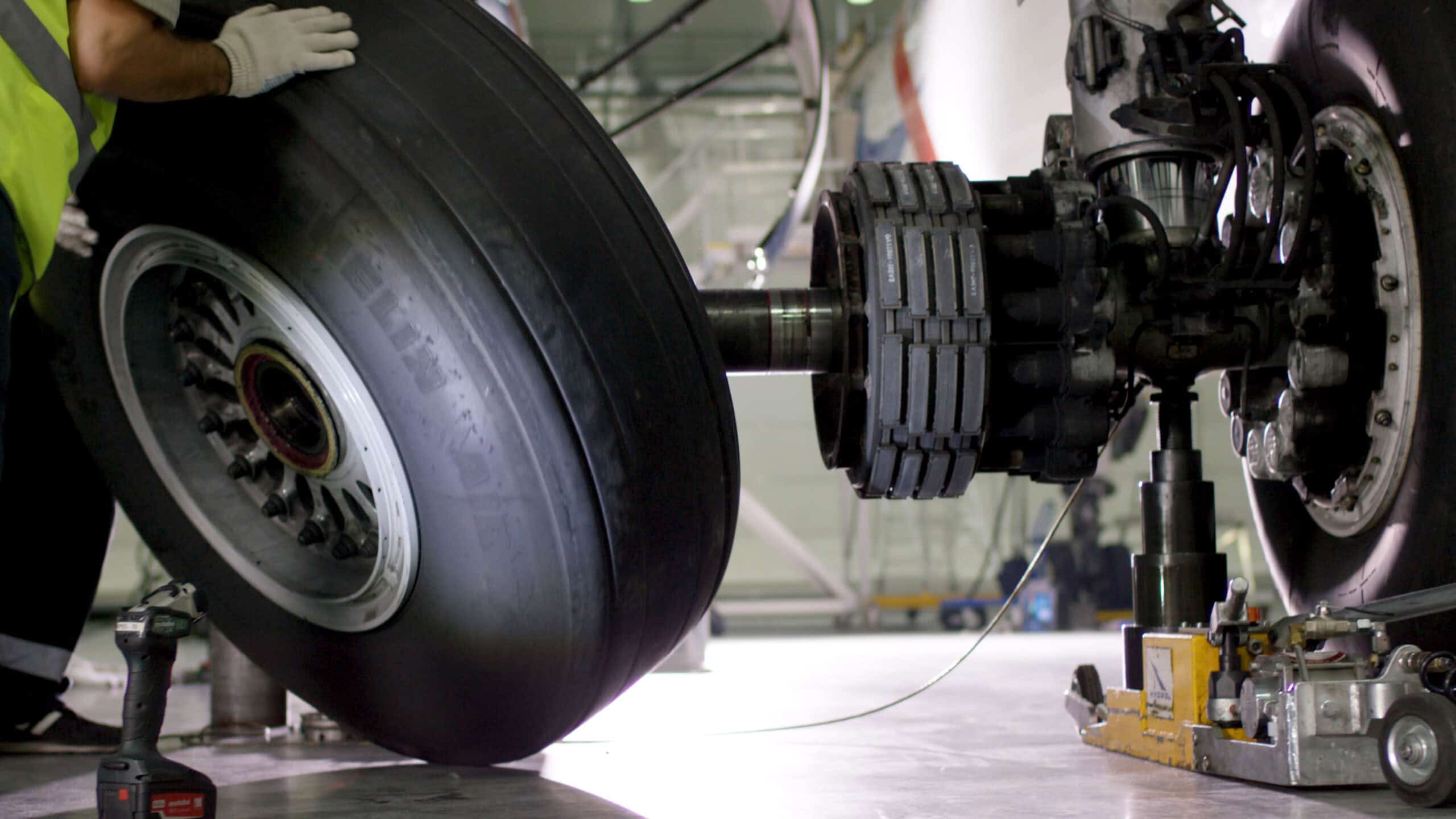
The legal foundation of the annual inspection general aviation owners must comply with is 14 CFR 91.409. The regulation requires that every aircraft operated under Part 91 receive an annual inspection within the preceding 12 calendar months. “Calendar months” means the last day of the same calendar month — so an aircraft inspected on April 3 has an annual due date of April 30 of the following year, not exactly 12 months to the day.
FAR 91.409: The IA Signs Off — But Doesn’t Have to Do Every Repair
Under FAR 91.409(a), only a certified mechanic holding an Inspection Authorization (IA) can approve an aircraft for return to service following an annual inspection. The IA signs the maintenance logbook and takes legal responsibility for the airworthiness determination. The regulation does not require the IA to perform the repairs. It requires only that the IA perform the inspection and approve the return to service.
This distinction matters enormously in the current environment. If your IA discovers discrepancies during the annual — items requiring repair before the aircraft returns to service — that IA can issue a signed discrepancy list and stop there. Then, any licensed A&P (not just an IA) can perform the actual repairs. The IA signs the logbook once repairs are complete and the aircraft meets airworthy standards.
Many GA owners don’t know this, and some shops won’t volunteer the information. Understanding it gives you leverage. You can take your aircraft to a respected IA for the annual inspection itself, receive a discrepancy list, and then choose a different A&P — perhaps one with lower labor rates or more experience with your specific airframe — to perform the actual repairs.
Similarly, if you disagree with a repair estimate from the inspecting shop, you have the right to seek a second opinion before authorizing work. The IA cannot withhold a discrepancy list simply because you want repairs done elsewhere. Your aircraft, your logbooks, your decision about who does the work.
Annual Inspection General Aviation Costs: What to Budget in 2026
The cost of an annual inspection general aviation owners pay in 2026 breaks into two distinct buckets: the inspection labor itself and the cost of any repairs or parts required. Shop labor rates for GA maintenance now typically run between $95 and $145 per hour, depending on geographic region and shop reputation. Understanding both cost drivers helps owners budget accurately and avoid sticker shock when the invoice arrives.
Labor Hours by Aircraft Type
The inspection involves a standard number of labor hours based on aircraft complexity. A Cessna 150 or 152 typically runs 14 to 15 hours of inspection labor. A Cessna 172 or similar fixed-gear four-seat aircraft runs approximately 16 to 18 hours. Complex aircraft with retractable gear, constant-speed propellers, or turbocharging add significant time — often reaching 22 to 28 hours for a well-equipped single-engine plane.
At $110 per hour — a conservative mid-range rate for most of the country — a Cessna 172 annual inspection runs $1,760 to $1,980 in labor alone, before any repairs, parts, oil, filters, or AD compliance work. Owner-assisted annuals, covered in the next section, can cut that labor figure by 30% to 50% at shops that welcome owner participation. That alone can save several hundred dollars on a basic aircraft.
The Real Cost Driver: Discrepancies Found During the Inspection
The inspection fee represents only one part of the total bill. In practice, discrepancies discovered during the annual frequently cost more than the inspection itself. A brake line replacement, a magneto timing issue, a worn exhaust gasket, or an out-of-tolerance control cable can each add hundreds of dollars to the total. Major items — a cylinder with low compression, a cracked exhaust manifold, or an expired transponder calibration — can push a routine annual deep into four-figure territory quickly.
Smart owners maintain a dedicated maintenance reserve — typically $1,500 to $3,000 per year for a simple single-engine aircraft, higher for complex airframes — specifically for annual discrepancy repairs. Building that reserve over 12 months prevents the annual from becoming a financial emergency. Tracking known squawks throughout the year gives the IA a head start and can reduce total inspection time.
We’ll be straight with you: if you’re not carrying a maintenance reserve, you’re not planning — you’re hoping. The annual will always find something. The question is whether you’re prepared to handle it without grounding your aircraft for weeks while you figure out the money.
Owner-Assisted Annuals: The Smartest Move You Can Make Right Now
In a year when mechanics are scarce and shops are overwhelmed, the owner-assisted annual inspection may be the single most powerful tool available to the GA owner-operator. It reduces your labor bill, shortens the aircraft’s time in the shop, deepens your knowledge of the machine you fly, and makes the relationship between you and your mechanic genuinely collaborative rather than adversarial.
What FAR 43 Actually Allows Owners to Do
Under FAR 43.3(d), a person working under the direct supervision of a certificated mechanic or repairman may perform maintenance tasks on an aircraft. Separately, under FAR 43.3(g), a certificated pilot may perform preventive maintenance on any aircraft they own or operate that isn’t used for hire. Together, these regulations open substantial ground for legally participating in the work done on your own airplane.
During an owner-assisted annual, the IA directs all the work. You perform labor-intensive tasks that don’t require certification: removing and reinstalling inspection panels and cowlings, draining engine oil and removing the oil filter, taking out spark plugs for inspection, cleaning the airframe inside and out, and many similar jobs. The IA performs and signs off on the actual inspection items and any repairs requiring certified mechanic authority.
The time savings from owner assistance are significant. A Cessna 172 annual that takes 16 to 18 hours of straight shop labor may take only 8 to 10 IA hours when the owner actively participates. At $110 per hour, that translates to $660 to $880 in direct savings — before accounting for repair discrepancies where the same labor-sharing approach can apply.
How to Find a Shop That Welcomes Owner Participation
Not all shops allow owner-assisted annuals. Some actively discourage them, citing liability concerns or scheduling complexity. Identify your preferred IA before you need one urgently, and ask directly about their policy on owner participation in the first conversation. Shops that embrace it typically require owners to commit to showing up every day the aircraft is in the shop, follow all IA instructions without resistance, and avoid rushing the work.
The relationship benefits extend well beyond cost savings. Knowing where every access panel is, how your oil system works, what normal compression numbers feel like on your engine, and what your landing gear looks like when clean versus contaminated — all of that knowledge makes you a sharper, more capable pilot-owner. Mechanics who work regularly with engaged owners consistently report that those pilots catch issues earlier and bring aircraft in better maintained year after year.
Preventive Maintenance Between Annuals: What You Can Do Legally
The FAA permits certificated pilots to perform a defined list of preventive maintenance tasks on aircraft they own or operate, without mechanic supervision, under FAR 43 Appendix A(c). This list covers more ground than most pilots realize — and using it between annual inspections reduces both wear and cost.
FAR 43 Appendix A(c): Your Legal Toolkit as a Pilot-Owner
The preventive maintenance list includes: removing and reinstalling landing gear tires, servicing landing gear wheel bearings, adding oil and air to landing gear shock struts, replacing landing light and position light bulbs and lenses, making small non-structural repairs to fairings and cowlings, replacing safety belts, lubricating items that don’t require disassembly, and replacing defective safety wire or cotter pins. The full list runs to 31 specific task categories — all available to pilots holding at least a private certificate, on aircraft they own or operate.
The cost savings from regular preventive maintenance compound meaningfully over an ownership cycle. An oil change between annuals extends engine life and reduces deferred maintenance found at the next inspection. Keeping the airframe clean and lubricated between scheduled inspections reduces the time an IA spends cleaning and accessing components — which directly lowers the inspection bill.
Logging Preventive Maintenance Correctly
Every preventive maintenance task requires a proper logbook entry. The entry must include the date, the aircraft total time in service at the time of the work, a description of the work performed and the parts or materials used, and your signature with your pilot certificate number and type. You may only approve the aircraft for return to service on items you yourself performed — each task requires its own entry and sign-off under your authority.
Incomplete or missing logbook entries create problems at every subsequent annual inspection general aviation mechanics perform on that aircraft. An IA reviewing logbooks with gaps or undocumented modifications treats those items as unknowns — which requires additional inspection steps and time. Keep every logbook entry clean, complete, and made immediately after the work finishes.
Avoiding the Annual Inspection Trap
The “annual inspection trap” — a term Savvy Aviation founder Mike Busch has written about extensively — refers to the tendency of time-and-materials billing to generate unnecessary repair recommendations. Because mechanics earn money from labor time, the system structurally rewards doing more work. Because many owners feel intimidated in a maintenance environment, they often approve repairs without questioning whether the work is genuinely required for airworthiness or merely described as advisable.
Understanding On-Condition vs. Calendar-Based Maintenance
Most modern aircraft maintenance philosophy distinguishes between two approaches: calendar-based or time-based maintenance (replacing components at fixed intervals regardless of condition) and on-condition maintenance (replacing components when inspection reveals deterioration to a specified limit). For GA aircraft, the FAA endorses on-condition maintenance for most systems. “It’s been five years” is not by itself a reason to replace a fuel hose if visual inspection shows it in serviceable condition with no cracking, stiffness, or chafing.
Manufacturers issue recommended maintenance at specific intervals, but “recommended” carries different legal weight in GA than “required.” Items that manufacturers recommend but the FAA has not mandated as an Airworthiness Directive (AD) generally aren’t mandatory. Knowing the difference between a required AD, a manufacturer service bulletin, and an optional recommended service item is essential knowledge for any GA owner-operator who wants to control maintenance costs without compromising safety.
Three Questions to Ask Before Approving Any Repair
When your IA recommends a repair during the annual inspection general aviation process, our advice: ask these three questions before approving any work: Is this repair required for airworthiness under a specific AD or regulatory requirement? If not required, is the condition actually outside the serviceable limits stated in the maintenance manual? What are the safety consequences of deferring this repair and monitoring the condition at the next oil change or 50-hour check?
You have the right to consult a second IA before approving expensive discretionary work. A shop that pressures you to approve repairs immediately, or refuses to give you time to seek a second opinion, warrants serious scrutiny. Savvy Aviation offers maintenance consultation services specifically for GA owner-operators who want expert backup when evaluating shop recommendations. Even without a formal consulting service, consistently asking those three questions filters out many unnecessary repair estimates before they appear on your invoice.
Our take: the annual inspection is the moment shops have the most leverage over owners — your aircraft is already there, already apart, and you want it done. That’s exactly when you need to slow down and ask the right questions. Understand the difference between airworthy and recommended. Push back on anything that isn’t backed by an AD or a serviceable limit. The owners who do this consistently spend less and know their aircraft better than the ones who just sign the invoice.
Frequently Asked Questions About Annual Inspections for GA Owner-Operators
How far in advance should I schedule my annual inspection general aviation shop?
In the current environment, 6 to 12 months ahead of your due date is the target for booking a reputable shop with IA mechanics experienced on your aircraft type. Schedule before your current annual expires — not the week it does. If you’re inside 90 days of your annual due date without a confirmed shop appointment, start calling immediately and expand your geographic search. Ferry permits allow moving an overdue aircraft to a maintenance facility, but they require advance FSDO coordination and carry limitations.
Can I fly to a maintenance shop if my annual has already expired?
Generally, no. An aircraft with an expired annual inspection is not legally airworthy under Part 91. You can apply to your local FSDO for a special flight permit — commonly called a ferry permit — that allows a single ferry flight to a maintenance facility. The permit comes with specific limitations and requires demonstrating that the flight can safely complete. Contact your FSDO early, don’t assume a quick turnaround, and don’t fly the aircraft under any other circumstances while the annual remains expired.
Does my logbook need to show every AD complied with?
Yes. A current AD compliance record is a required component of every annual inspection general aviation aircraft must pass. Your IA must research all applicable ADs covering your airframe, engine, propeller, and installed appliances, confirm compliance status for each, and document the results in the maintenance records. Any AD with a recurring compliance requirement — an inspection interval, a time-in-service limit, or a calendar interval — must show the most recent compliance date and the next due date. Gaps in the AD record create problems at every subsequent inspection and during aircraft resale.
Every GA owner-operator who understands the rules, plans ahead, and builds a solid relationship with a trusted IA before the annual is due will outperform pilots who wait until the last minute and take whoever has an opening. E3 Aviation Association exists to give you the knowledge that keeps you flying safely, legally, and affordably. Explore more resources on the E3 Aviation articles page, and subscribe to our YouTube channel for in-depth video content on the GA ownership topics that