Owning an airplane changes everything. The moment I signed the papers on my 1992 Commander 114B, a wave of realization hit me. I had just joined one of aviation’s most welcoming communities. The warm reception from fellow pilots, loan officers, and airport regulars has been overwhelming. From the moment word spread through the hangar, the camaraderie has been unlike anything I expected. As a result, what started as a personal achievement quickly became a shared celebration.
If you’re a GA pilot considering aircraft ownership, or simply curious about the Commander 114B as your next airplane, this i. Y honest story — the triumphs, the community, and everything I’ve learned along the way. In fact, for a deeper look at the financial side, check out the E3 Aviation Aircraft Co-Ownership Guide for guidance on ownership models that fit different budgets.
Why I Chose the Commander 114B
As a result, choosing an airplane is one of the most personal decisions a pilot makes. For me, the Commander 114B stood out for its combination of comfort, performance, and character. Its reputation for exceptional handling and a roomy, well-appointed cabin sealed the deal.
The 114B is powered by a 260-horsepower Lycoming IO-540-T4B5 fuel-injected flat-six engine, driving a three-blade constant-speed McCauley propeller. Indeed, in practical terms, that means strong climb performance at 1,070 feet per minute and a cruise speed of around 160 knots at 75% power. The aircraft has a range of up to 705 nautical miles at 65% power. More than enough for comfortable cross-country trips without constantly watching the fuel gauge.
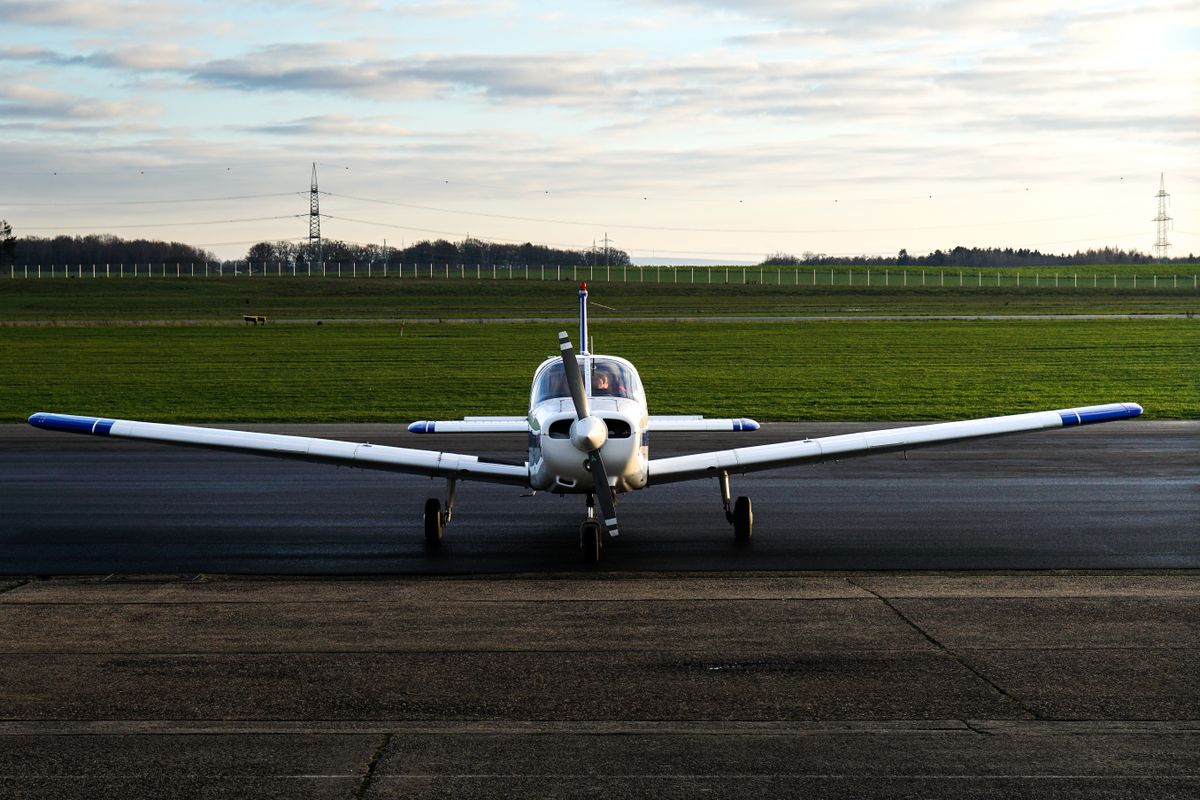
The Commander’s cruciform tail and high-dihedral wing configuration give it predictable, confidence-inspiring handling. consequently, it quickly earned a reputation among GA pilots as one of the most honest-flying singles ever produced. The retractable tricycle gear, spacious four-seat cabin, and high-quality interior finish — often compared to a luxury car — make it feel less like a workhorse and more like a personal aircraft that was built to be enjoyed.
My specific aircraft, a 1992 model registered as Seven Mike Alpha, carries all of those traits with a few well-earned character marks. Its red wing tips and polished spinner make it stand out on any ramp.
The Moment I Saw It and Knew I Was Buying It
Similarly, the experience of opening my hangar door to reveal the Commander 114B for the first time as its owner was surreal. Fortunately, before the buy, I flew rentals and club aircraft. Certainly, those experiences built my skills. But nothing prepared me for the feeling of walking up to an airplane that was mine.
Every pre-flight inspection now carries a different weight. Instead of checking someone else’s airplane, I’m checking mine. Ultimately, that sense of responsibility transforms the entire flying experience. You notice things differently. You care about every squawk, every oil change, every logbook entry in a way that club flying simply cannot replicate.
That said, initially, the administrative side of ownership felt daunting — coordinating the pre-buy inspection, navigating the financing process. For example, and sorting out hangar arrangements. However, the aviation community made every step easier. In other words, loan officers familiar with aircraft financing helped structure a payment that worked. And my A&P mechanic treated the airplane with the same care I do.
The Hangar Community: Aviation’s Best-Kept Secret
Clearly, as news of my Commander 114B ownership spread through the hangar, something unexpected happened. Fellow pilots began stopping by, introducing themselves, and sharing stories of their own aircraft. Generally, the camaraderie extended naturally to my regular group at the flying club hangar, where congratulations, handshakes. Of course, and valuable advice flowed freely.
Accordingly, before I owned an airplane, I thought I was already part of the aviation community. In fact, I was — but as an aircraft owner, the sense of belonging took on an entirely different dimension. Other owners bring an extra layer of shared experience. They understand the satisfaction of a smooth annual inspection. They know the pride of a clean preflight. They’ve all had the same surreal moment of opening that hangar door.
Overall, equally important, the airport community extended practical help. Experienced owners shared maintenance contacts, offered tips on the best avgas suppliers. And pointed me toward the Commander Owners Group (COG) — an invaluable resource for anyone flying a 114 series aircraft. Overall, the advice I’ve received from that community alone has been worth every dollar of membership.
Besides the practical benefits, there’s something deeper at work. Generally speaking, GA airports are living communities. Above all, they are places where shared passion creates genuine connection across all walks of life. As an aircraft owner, you’re now a full member of that ecosystem in a way that occasional renters simply aren’t.
Flying the Commander 114B: Performance That Earns Your Trust
Performance-wise, the Commander 114B consistently delivers what it promises. First, the Lycoming IO-540 starts reliably, warms up quickly, and runs with the kind of authority that inspires confidence on every departure. then, climb performance is brisk — 1,070 fpm gets you to cruise altitude without the labored struggle of underpowered singles.
In cruise, 160 knots at 75% power is honest and repeatable. The aircraft’s fuel system is straightforward and pilot-friendly, which eliminates the management complexity found on some higher-performance singles. The handling at all phases of flight remains predictable and forgiving. Qualities that matter as much at the end of a long day as they do in smooth morning air.
On approach and landing, the 54-knot stall speed gives you plenty of margin. consequently, stabilized approaches are easy to achieve. And the aircraft rewards smooth technique. The service ceiling of 16,800 feet provides flexibility for navigating mountain terrain or avoiding weather on cross-country routes.
Overall, the 114B rewards pilots who take their craft seriously. It’s not a beginner’s airplane — but it’s also not an intimidating one. Instead, it’s the kind of aircraft that keeps raising your standards as a pilot because it’s capable of so much more when flown precisely.

We’ll be straight with you: parts availability for the Commander 114B requires patience and a good relationship with the owners group. It’s not impossible, but it’s not a Cessna 172 parts situation either. If you’re buying one, budget lead time into every annual and build the squawk list before your IA shows up — not during.
The Real Numbers: Commander 114B Ownership Costs Per Year
Honest conversations about aircraft ownership costs are rare, so let’s have one. For a Commander 114B, total operating costs run about $95 per hour — a figure that includes fuel, hangar rent, mai. And ce reserves, and insurance. Fuel accounts for roughly $25 per hour, hangar runs around $10 per hour. And the remainder covers maintenance and reserves.
Annual inspections on a well-maintained 114B typically run around $5,000 per year when combined with oil changes and routine servicing. However, deferred maintenance on a poorly-kept example can push that number significantly higher. A thorough pre-buy inspection by a Commander-experienced A&P is absolutely essential before signing the paperwork.
Parts availability is generally not a problem. In fact, about 98% of the mechanical components on the 114B are shared with earlier Commander 114 models. Which keeps the parts supply deep and costs manageable. Active aftermarket support from the Commander Owners Group helps owners track down anything unusual.
In fact, for a more complete breakdown of the financial side of ownership, the E3 Aviation GA Aircraft Insurance Guide is an excellent starting point for understanding what insurance will add to your monthly cost. Meanwhile, if you’re still in the comparison phase, the Cessna 172 vs. Piper Cherokee guide provides useful context for where the Commander sits in the broader GA ownership landscape.
Maintenance Reality and Why the Commander Owners Group Is Worth Its Weight
As a result, maintaining a Commander 114B well requires attention to a few specific areas. First and most importantly, proper rigging is critical to achieving the aircraft’s advertised performance. The Commander Owners Group has found many mis-rigged examples in the fleet. consequently, if any flight surface has been removed or any operating cable replaced since the last check, a full rigging inspection is strongly recommended.
Beyond rigging, the Lycoming IO-540-T4B5 is a proven powerplant with a strong reliability record. Nevertheless, like any fuel-injected flat-six, it responds well to consistent care — regular oil changes, careful leaning technique. And attention to cylinder health. Generally, owners who fly regularly and maintain consistently see the lowest long-term costs.
The Commander Owners Group is an indispensable resource. Their technical forums, parts connections. And network of experienced A&P mechanics make the maintenance journey far smoother than going it alone. Their knowledge base covers virtually every service bulletin, airworthiness directive, and common squawk specific to this airframe.
Ultimately, owning a Commander 114B is a long-term relationship with a well-engineered airplane. Fortunately, the COG community means you’re never navigating that journey alone.
Tips for Pilots Considering a Commander 114B
If the Commander 114B is on your shortlist, here’s the practical advice I wish someone had given me before I bought mine.
First, join the Commander Owners Group before you make an offer. Their pre-buy checklist and community knowledge will save you from buying a poorly-maintained example. Second, insist on a pre-buy inspection by a mechanic who has direct experience with the Commander 114 series. General A&Ps who haven’t worked on this airframe may miss type-specific issues.
Third, fly it before you buy it — ideally on a longer cross-country rather than just a local pattern flight. You want to evaluate cruise performance, fuel burn, and cockpit ergonomics on a real-world mission. Pay attention to how the aircraft transitions between phases of flight and how it handles with different loading configurations.
Fourth, budget honestly. Include not just the buy price and loan payment, but hangar rent, insurance, fuel reserves, and annual maintenance in your monthly numbers. consequently, pilots who plan their ownership finances carefully tend to enjoy the experience far more than those who underestimate the ongoing costs. Indeed, for additional guidance, the E3 Aviation guide to your first aircraft buy covers the buying process thoroughly from start to finish.
Finally, embrace the community. Some of the most valuable assets in aircraft ownership aren’t mechanical. They’re the experienced pilots and owners around you at the airport. Above all, let them help you. The aviation community exists to support each other, and the Commander ownership community exemplifies that spirit better than most.

Our take: The Commander 114B is one of those aircraft that GA pilots either know intimately or haven’t thought about since the late 1990s. It has a devoted owner community precisely because it rewards pilots who fly it correctly — comfortable cruise, honest handling, and enough performance to cover real cross-country miles without feeling cramped doing it.
Frequently Asked Questions About the Commander 114B
What engine does the Commander 114B use?
The Commander 114B is powered by a Lycoming IO-540-T4B5 fuel-injected flat-six engine producing 260 horsepower. It drives a three-blade constant-speed McCauley propeller and is known for strong, reliable performance throughout its TBO interval.
How fast does the Commander 114B cruise?
Similarly, at 75% power, the Commander 114B cruises at about 160 knots. Fortunately, at 65% power, cruise speed drops to around 155 knots with a range of up to 705 nautical miles. Making it a capable cross-country airplane for GA pilots.
Is the Commander 114B a good airplane for GA pilots?
Clearly, yes — particularly for experienced GA pilots looking for a step up from trainers or basic four-seaters. The Commander 114B offers excellent handling characteristics, a reliable engine, a comfortable cabin, and strong cross-country capability. Generally, it is best suited to pilots with 250 or more hours who want a high-quality personal airplane.
Written by the E3 Aviation Team. For more aviation education and pilot resources, visit E3 Aviation Articles or join the E3 Aviation Association today.