Three Backcountry Aircraft, One Decision: Which Taildragger Earns Your Hangar Space?
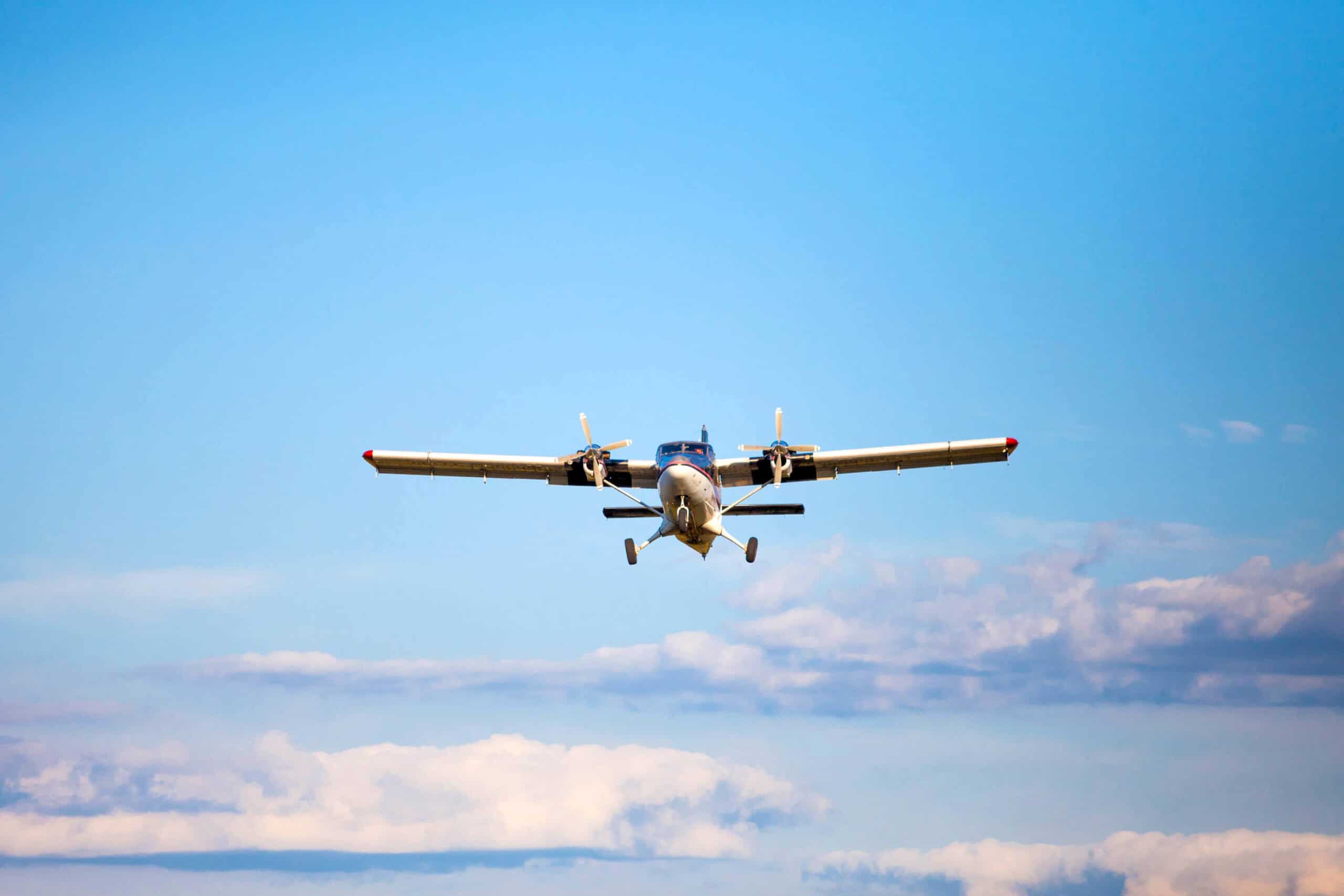
Every backcountry aircraft comparison in 2026 leads to the same three names. The CubCrafters Carbon Cub. The CubCrafters XCub. The Aviat Husky. These carbon cub vs xcub vs husky debates fill aviation forums daily. Pilots argue about short-field numbers. They debate durability. They compare useful loads. However, most comparisons miss the point. The right husky bush plane or Cub variant depends entirely on how you fly. This guide breaks down every meaningful difference so you can choose with confidence.
The E3 Aviation Association team has spent hundreds of hours in these aircraft. We have talked to dozens of owners. We have studied the specs, the real-world performance data, and the maintenance records. Additionally, we have flown alongside pilots who operate all three in demanding backcountry environments. This backcountry aircraft comparison delivers the honest answers you need.
Quick Specs: The Backcountry Aircraft Comparison at a Glance

Before diving into details, here are the raw numbers. These figures come from manufacturer data and owner reports. Keep in mind that tire size, altitude, and payload all affect real-world performance.
| Spec | Carbon Cub FX-3 | XCub (CC393i) | Husky A-1C-200 |
|---|---|---|---|
| Engine | CC363i, 186 HP | CC393i, 215 HP | Lycoming IO-360, 200 HP |
| Cruise Speed | 135 mph | 145 mph | 143 mph |
| Useful Load | ~750 lbs | ~1,084 lbs | ~930 lbs |
| Gross Weight | 2,000 lbs | 2,300 lbs | 2,250 lbs |
| Fuel Capacity | 34 gal | 49 gal | 50 gal |
| Range | ~500 mi | 800–1,000 mi | ~828 mi |
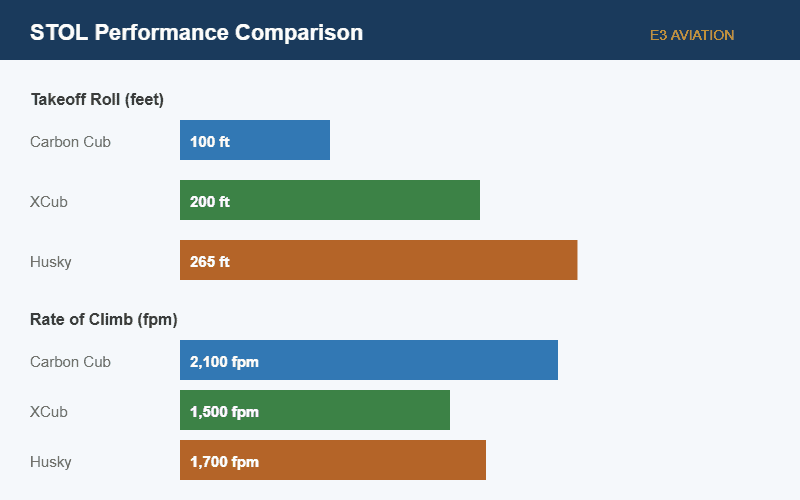
| Takeoff Roll | <100 ft | ~200 ft | ~265 ft |
| Rate of Climb | ~2,100 fpm | ~1,500 fpm | ~1,700 fpm |
| Certification | Experimental | Type Cert (VFR) | Type Cert (IFR) |
| New Price (approx.) | $295K–$430K | $420K–$500K+ | $560K+ |
These numbers tell part of the story. However, the real differences show up in how each aircraft handles specific missions. Let us break down each one individually.
The Carbon Cub FX-3: STOL Performance King
Why Pilots Choose the Carbon Cub
The Carbon Cub dominates short-field performance. No other production aircraft in this class gets airborne faster. A sub-100-foot takeoff roll means you can access strips that make other pilots turn around. Moreover, the landing roll sits at roughly 155 feet. That combination opens up terrain most fixed-wing pilots never touch.
CubCrafters achieves this through extreme weight savings. The carbon fiber construction shaves over 300 pounds compared to a traditional Super Cub frame. As a result, the fuel-injected CC363i engine and its 186 horsepower have less mass to move. The constant-speed composite propeller completes the package. Together, these systems produce a climb rate exceeding 2,100 feet per minute.
The Builder-Assist Advantage
The FX-3 carries an experimental certificate. You build it yourself at the CubCrafters factory in about seven working days. This is not a kit you struggle with in your garage for years. Instead, factory technicians guide every step. You walk away with a completed aircraft and the legal status of builder.
That experimental status delivers real benefits. First, the purchase price drops significantly below type-certificated options. Second, you gain the freedom to perform your own maintenance. For experienced owners, this means lower annual costs and faster turnaround on inspections. Additionally, the carbon cub vs xcub price gap widens further when you factor in ongoing maintenance savings.
Where the Carbon Cub Falls Short
Cross-country capability is the trade-off. With just 34 gallons of fuel, range tops out around 500 miles. The useful load of approximately 750 pounds limits what you can carry. For a solo pilot with camping gear, this works fine. For two people with full fuel and equipment, weight management becomes critical.
Furthermore, the experimental certificate restricts commercial use. Some insurance companies charge higher premiums for experimental aircraft. Financing options narrow compared to type-certificated alternatives. If you plan to use this aircraft for instruction or hire, the Carbon Cub does not qualify. For more on Carbon Cub modifications and accessories, check our detailed guide.
The CubCrafters XCub: The Do-Everything Machine
Power and Payload That Change the Game
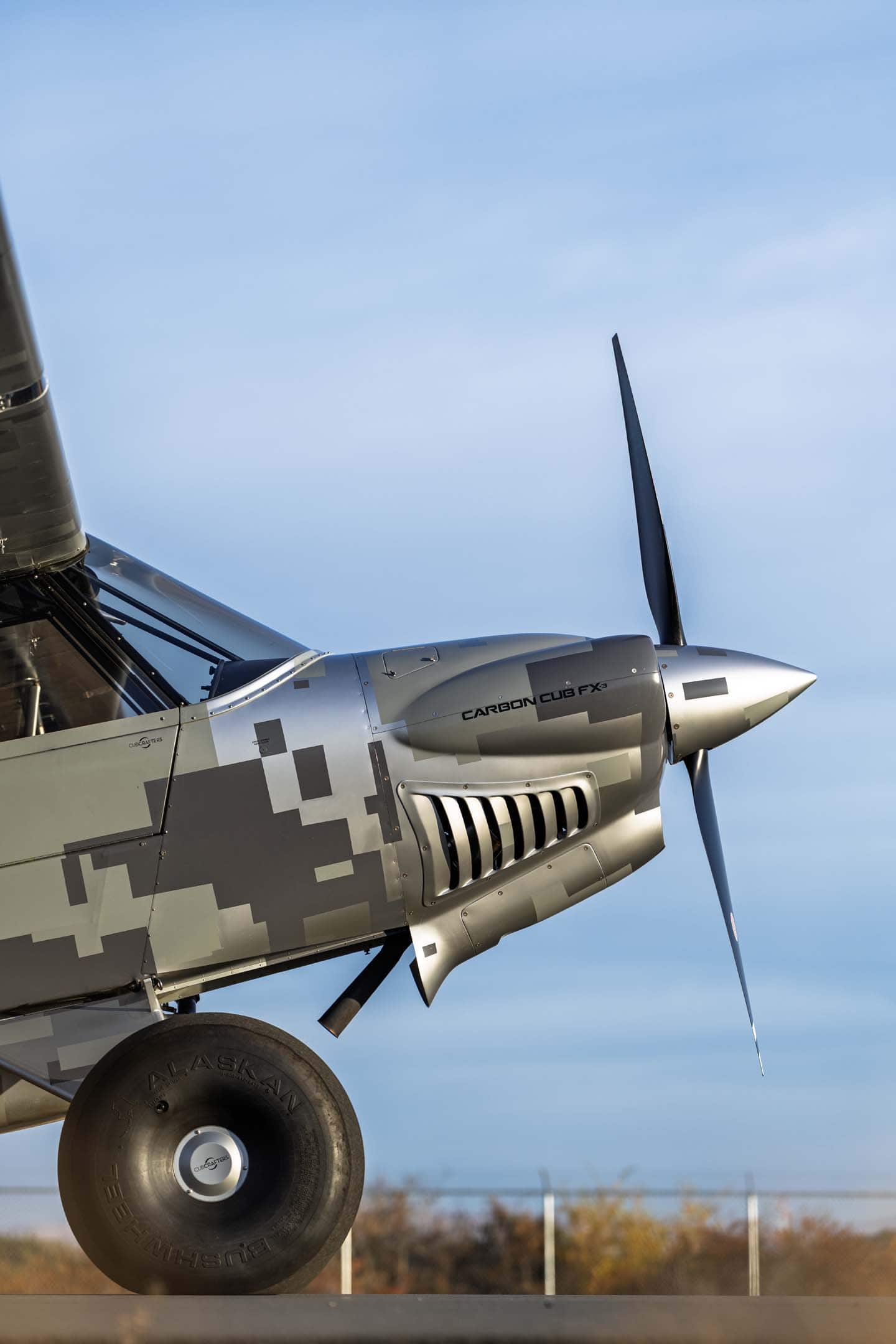
The XCub redefines what a Cub-type aircraft can do. The CC393i engine produces 215 horsepower from a modified Lycoming IO-360 platform. CubCrafters developed this powerplant exclusively for the XCub. It uses fuel injection, lightweight magnesium components, and dual electronic ignition. Meanwhile, it only adds 10 pounds over comparable 180-horsepower engines.
That power drives a three-bladed Hartzell Pathfinder composite propeller. The result is 19% more horsepower for only 8% more fuel burn. Consequently, the carbon cub vs xcub debate often comes down to this engine advantage. The XCub cruises at 145 mph and delivers a useful load of nearly 1,084 pounds. No other aircraft in this class matches that combination.
Range and Versatility
With 49 gallons of fuel, the XCub pushes past 800 miles at economy cruise. Throttle back to 120 mph and you can stretch range beyond 1,000 miles. For pilots who fly both backcountry strips and longer cross-country missions, this versatility matters enormously.
The useful load tells an even bigger story. At nearly 1,100 pounds, you can carry two people, full fuel, camping gear, fishing equipment, and supplies. This is the difference between a day trip and a genuine backcountry adventure. The XCub turns weekend getaways into week-long expeditions.
Type Certificate Benefits
Unlike the Carbon Cub, the XCub carries a type certificate. This simplifies financing through traditional aviation lenders. Insurance premiums typically run lower. Resale value holds stronger because buyers face fewer restrictions. However, the type certificate also limits owner modifications. You cannot tinker freely like you can with an experimental aircraft.
One notable limitation deserves mention. The XCub certifies for VFR operations only. If you need instrument capability, you must look elsewhere in this backcountry aircraft comparison. For pilots who fly exclusively in good weather and remote terrain, this rarely matters. For those in the Pacific Northwest or other weather-heavy regions, it could be a dealbreaker.
The Aviat Husky A-1C: Built Tougher Than the Rest
Decades of Proven Ruggedness
The Husky earns its reputation through sheer durability. Aviat builds these aircraft to absorb punishment that would ground the competition. The steel tube fuselage handles rough, unimproved strips day after day. Bush operators and glider tow pilots choose the husky bush plane specifically because it survives hard use.
Pilots who fly demanding backcountry commercially trust the Husky above all else. The landing gear takes abuse that other aircraft simply cannot handle. Moreover, the airframe maintains structural integrity through thousands of hours of rough-field operations. This durability translates directly into lower long-term maintenance costs for hard-working aircraft.
IFR Capability: The Husky’s Secret Weapon
Neither the Carbon Cub nor the XCub offers instrument certification. The Husky does. This single feature separates the husky bush plane from its CubCrafters rivals in a meaningful way. If weather turns on you mid-flight, IFR capability provides a critical safety margin.
For pilots based in the Pacific Northwest, Alaska, or anywhere with unpredictable weather, this matters enormously. Additionally, IFR certification expands your operating envelope. You can file instrument flight plans. You can depart in marginal VFR conditions legally. You can shoot approaches into mountain airports when conditions deteriorate. No other aircraft in this comparison offers that flexibility.
The Best Back Seat in the Business
Pilots who carry passengers or instruct from the rear consistently praise the Husky. The back seat offers genuine comfort and visibility. For flight instructors who spend hours in the rear, this comfort adds up quickly. As a result, many tailwheel training programs standardize on the Husky for exactly this reason.
The A-1C-200 runs a fuel-injected Lycoming IO-360 at 200 horsepower. It cruises at 143 mph with a 50-gallon fuel capacity. Range reaches approximately 828 miles. Short-field performance delivers a 265-foot takeoff ground roll and a 398-foot landing roll. These numbers work for the vast majority of backcountry flying operations.
The Price Premium
New Huskys start around $560,000. That makes the Husky the most expensive option by a significant margin. Some of that premium reflects IFR certification costs. Some reflects decades of proven reliability and strong brand recognition. The used market offers better value, with A-1C models ranging from $290,000 to $410,000 depending on year and equipment.
Performance Head-to-Head: Where It Really Matters
Short-Field Performance in This Backcountry Aircraft Comparison
The Carbon Cub wins this category decisively. A sub-100-foot takeoff versus 200 feet for the XCub and 265 for the Husky creates a real operational gap. When you face a 600-foot strip with trees on both ends, that difference determines whether you attempt the landing or fly past.
Idaho’s backcountry strips illustrate this perfectly. Many iconic strips measure 800 feet or less. The Carbon Cub handles these with enormous margin. The XCub manages them with careful technique. The Husky requires more careful planning and lighter loads. For the most technical strips in Alaska and the mountain West, the Carbon Cub provides access the others cannot match.

Cross-Country Capability
The XCub dominates long-distance missions. Highest cruise speed. Biggest useful load. Range approaching 1,000 miles. The carbon cub vs xcub gap widens dramatically on cross-country flights. Meanwhile, the Husky runs a close second with similar range plus IFR capability for weather flexibility.
The Carbon Cub’s 34-gallon tanks require more fuel stops. Consequently, a trip from Montana to Arizona takes noticeably longer. For pilots who use their backcountry aircraft for both remote strips and distance travel, the XCub offers the best balance.
Durability Under Hard Use
The Husky takes this category without debate. Commercial operators who land on rough, unimproved surfaces daily choose the Husky for its structural toughness. The Carbon Cub’s lightweight construction handles normal backcountry operations well. However, it cannot absorb the same level of repeated abuse. The XCub falls between the two, well-built but lacking the Husky’s legendary tolerance for punishment.
If you fly primarily on maintained grass strips and occasional backcountry adventures, all three hold up fine. If you plan daily operations on river bars, gravel strips, and rough mountain terrain, the husky bush plane provides the most durable platform.
Handling and Pilot Experience
The Carbon Cub feels lightest on the controls. Pilots describe it as the most “cub-like” of the three. It responds immediately to inputs and rewards precise technique. For experienced tailwheel pilots, this responsiveness makes short-field work intuitive.
The XCub feels more modern and planted. It inspires confidence in crosswinds and gusty conditions. New tailwheel pilots often feel more comfortable in the XCub for this reason. The Husky offers a heavier, more stable feel. Many instructors prefer its predictability during training scenarios. To learn more about backcountry flying fundamentals, explore our comprehensive guide.
Ownership Costs: What You Will Actually Spend
Purchase Price Breakdown
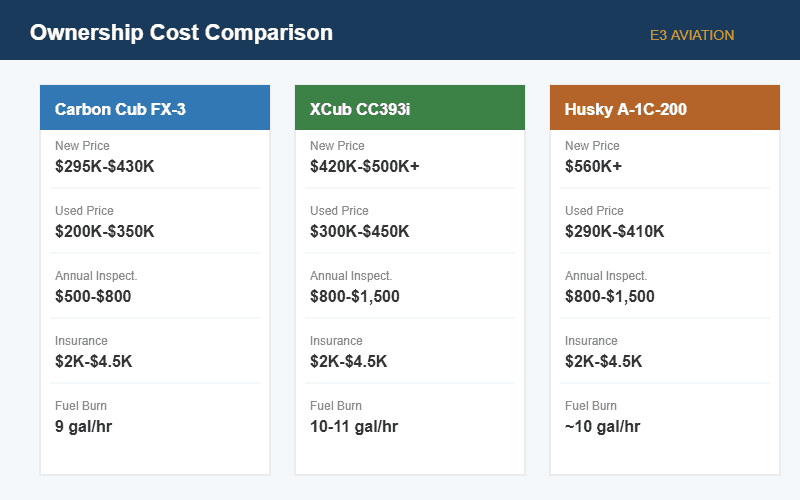
New Carbon Cub FX-3 models range from $295,000 to $430,000. New XCubs with the CC393i engine start at $420,000 and climb past $500,000 with options. New Huskys begin around $560,000. The used market compresses these gaps somewhat. Used Carbon Cubs trade between $200,000 and $350,000. Used XCubs range from $300,000 to $450,000. Used Huskys fall between $290,000 and $410,000.
Annual Operating Costs
Annual inspections cost less for the Carbon Cub. As an experimental aircraft, a condition inspection runs $500 to $800. The XCub and Husky require traditional annuals at $800 to $1,500. Insurance typically runs $2,000 to $4,500 annually across all three, with the Carbon Cub sometimes commanding higher premiums due to experimental status.
Fuel burn varies modestly. The Carbon Cub sips about 9 gallons per hour. The XCub drinks 10 to 11. The Husky burns roughly 10. All-in hourly operating costs (fuel, oil, maintenance reserves, insurance) land between $75 and $120 per hour depending on the model and annual utilization. For context, flying 100 hours per year puts total annual operating costs between $7,500 and $12,000 before hangar rent.
One cost advantage deserves emphasis. Carbon Cub owners can perform their own condition inspections and maintenance. This saves significantly over time. The type-certificated XCub and Husky require an A&P mechanic for all maintenance work. To learn more, join the E3 Aviation community where owners share real cost data.
Which Backcountry Aircraft Should You Buy?
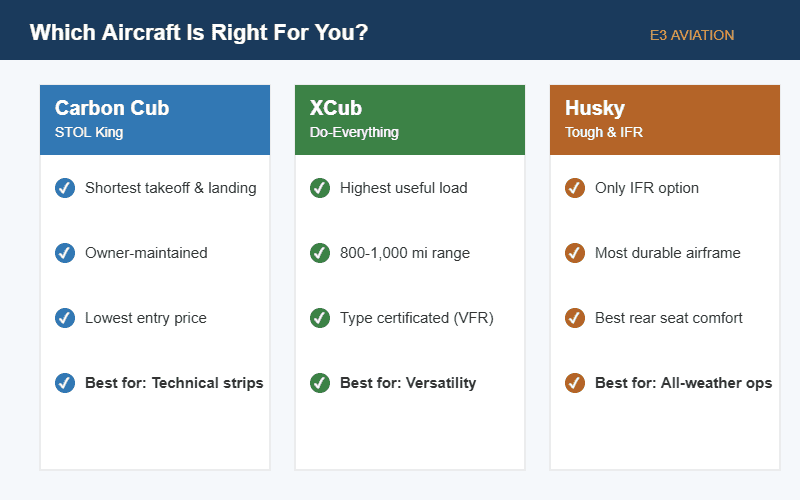
Choose the Carbon Cub FX-3 If…
You prioritize STOL performance above everything else. You want access to the shortest, most technical strips. You feel comfortable with experimental certification. You enjoy the freedom of owner-performed maintenance. You fly mostly local and regional backcountry missions. You want the lowest new-aircraft entry price in this backcountry aircraft comparison.
Choose the XCub If…
You want one aircraft that handles every mission well. You need serious payload capacity for gear and passengers. You fly both backcountry strips and long cross-country trips. You value the financing and insurance advantages of a type certificate. The carbon cub vs xcub decision favors the XCub when versatility ranks highest on your list.
Choose the Husky If…
You need IFR capability for weather flexibility. Structural durability ranks as your top priority. You instruct from the back seat or carry passengers regularly. You fly in regions with unpredictable weather. You value the husky bush plane’s decades-long reliability track record. The Husky costs more upfront but delivers unmatched toughness and certification flexibility.
What Experienced Owners Actually Say
Carbon Cub Owner Feedback
Carbon Cub owners consistently praise the STOL numbers. They report real-world takeoff rolls matching or beating published specs. Many highlight the climb rate as the aircraft’s most thrilling characteristic. Several owners note the builder-assist program exceeded their expectations. The seven-day build process felt professional and well-organized.
Common concerns include limited range on longer trips. Some owners wish for a larger fuel tank option. Others mention that insurance shopping requires extra effort with experimental status. Nevertheless, satisfaction levels among Carbon Cub owners rank extremely high across aviation forums.
XCub Owner Feedback
XCub owners love the versatility. They describe it as the aircraft that eliminated compromise. Several owners upgraded from earlier Cub models specifically for the CC393i engine and its 215 horsepower. The useful load surprises pilots who previously flew lighter taildraggers.
The most common critique involves the VFR-only limitation. Owners in the Pacific Northwest and mountain states express particular frustration. Additionally, some owners note the higher acquisition cost compared to the Carbon Cub. However, most say the type certificate advantages justify the premium.
Husky Owner Feedback
Husky owners defend their aircraft with passion. They emphasize durability above all other qualities. Commercial operators describe years of hard backcountry use without structural issues. Flight instructors praise the rear seat comfort and the predictable handling characteristics.
Price represents the primary complaint. New Huskys cost significantly more than either CubCrafters option. Some owners also note that the aircraft feels heavier on the controls compared to the Cub lineage. Despite these points, Husky owners rarely switch to other platforms. The loyalty factor runs deep in the Husky community.
The SkyShare Connection: Finding Your Next Strip
Choosing your backcountry aircraft solves only half the equation. Finding great places to fly solves the other half. E3 SkyShare helps pilots discover hidden backcountry strips, fly-in camping spots, grass runways, and unique landing destinations across the country. Thousands of verified locations, shared by real pilots, await your exploration.
Whether you fly a Carbon Cub into 400-foot mountain strips or cruise your XCub to distant fly-in diners, SkyShare puts new adventures on your map. To discover more about building an aviation career, click: https://e3aviationassociation.com/e3-aviation-association-pilot-manifesto/
Frequently Asked Questions
Question: Which aircraft offers the best STOL performance in this backcountry aircraft comparison?
Answer:
The Carbon Cub FX-3 delivers the best short takeoff and landing performance. It achieves takeoff rolls under 100 feet and landing rolls around 155 feet. This backcountry aircraft comparison shows the Carbon Cub accessing strips roughly half the length that the XCub and Husky require. For pilots who prioritize getting into the shortest strips, the Carbon Cub stands alone.
Question: How does the carbon cub vs xcub useful load comparison affect real-world flying?
Answer:
The difference is substantial. The XCub carries approximately 1,084 pounds of useful load compared to about 750 pounds for the Carbon Cub. In practice, the XCub handles two people with full fuel and extensive camping gear easily. The Carbon Cub requires more careful weight management for the same mission. This carbon cub vs xcub gap grows with longer trips requiring more fuel and supplies.
Question: Which husky bush plane model should I consider for backcountry flying?
Answer:
The Aviat Husky A-1C-200 represents the best choice for serious backcountry work. Its 200-horsepower fuel-injected engine provides strong performance at altitude. The A-1C-180 saves money but sacrifices climb performance in mountain environments. For demanding backcountry operations, experienced pilots recommend the 200-horsepower husky bush plane without hesitation.
The Bottom Line
All three aircraft deliver extraordinary backcountry experiences. The Carbon Cub specializes in accessing terrain no other production aircraft can reach. The XCub balances backcountry capability with cross-country versatility better than anything else flying. The Husky provides unmatched durability and the only IFR option in the group.
Demo flights will teach you more in 30 minutes than any article can. Get seat time in all three before committing. Talk to owners at fly-ins and airshows. Ask about real maintenance costs and real performance numbers. Then pick the one that fits your flying life.
For more aviation resources and insights, be sure to visit: https://e3aviationassociation.com/aviation-articles/
To discover more about E3 Aviation visit: https://e3aviationassociation.com/
External Resources:
- CubCrafters XCub Official Specs
- CubCrafters Carbon Cub Official Page
- Aviat Husky Official Specifications
- Backcountry Pilot Destination Database
- FAA BasicMed Information
Written by the E3 Aviation Team, a group of experienced pilots, aviation writers, and industry professionals dedicated to promoting safety, education, and passion in general aviation.