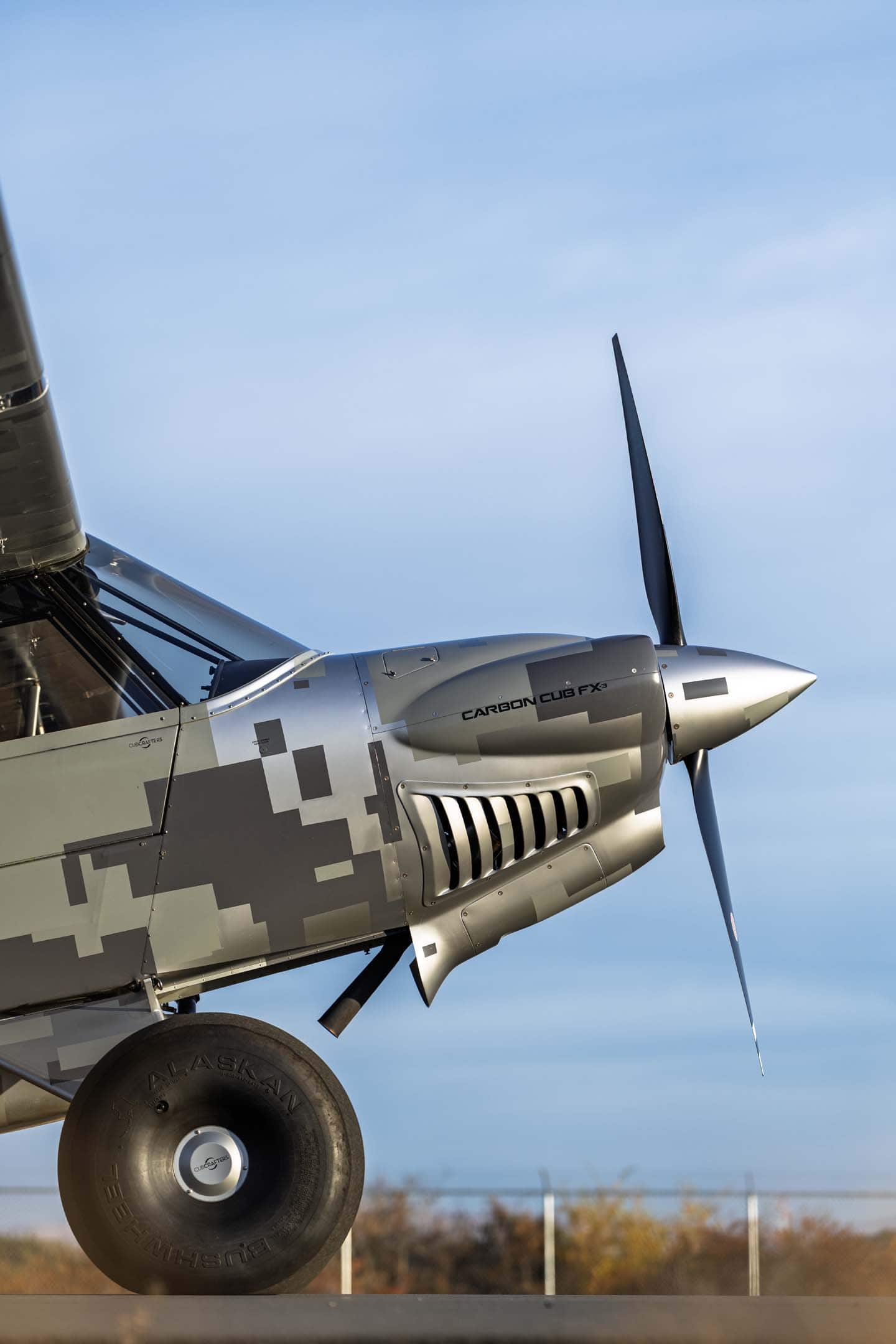
Modifications and Accessories for Enhanced Backcountry Performance in Carbon Cubs draw pilots seeking to maximize reach, toughness, and safety in challenging remote environments. Carbon Cub upgrades such as larger tundra tires, long-range fuel tanks, and backcountry Carbon Cub mods like refined suspensions or vortex generators transform the aircraft’s already impressive STOL capabilities, enabling longer trips, rougher terrain access, and greater confidence for owners and bush pilots alike.
Why Owners Pursue Carbon Cub Upgrades
The Carbon Cub’s lightweight design, powerful engine options, and nimble handling make it a backcountry favorite right out of the factory. Yet many pilots add Modifications and Accessories for Enhanced Backcountry Performance in Carbon Cubs to address specific needs—like carrying more gear for multi-day camping, tackling softer surfaces, or improving low-speed control. These changes often maintain the plane’s efficiency while opening new destinations. However, each mod brings trade-offs in weight, cost, drag, or maintenance, so thoughtful selection based on your typical flying keeps performance sharp. https://cubcrafters.com/
Additionally, staying current with FAA guidelines ensures legality and safety. For example, major changes usually require field approvals or STCs, and recalculating weight-and-balance after installation prevents surprises in handling or climb. Therefore, starting with CubCrafters’ factory options or trusted aftermarket parts helps avoid compatibility issues.
Long-Range Fuel Tanks: Extending Your Reach
Long-range tanks (often 44 gallons total, 40 usable) top the list for pilots wanting fewer stops on cross-country backcountry runs. Pros include 50%+ range boosts for reaching distant lakes or camps, plus multi-fuel compatibility on newer models. Costs run around $4,800 installed. Cons: added empty weight (about 24 lbs plus fuel) reduces useful load, potentially affecting climb if overloaded. Pairing with lightweight avionics mitigates this, making it ideal for extended adventures without frequent refueling.
Extended Baggage Doors and Storage Solutions
Extended baggage doors provide full-width access and extra volume for tents, coolers, or tools—perfect for camping integration. Priced near $2,500, they ease loading without drag penalties. Pros: balanced weight distribution when combined with tanks, enhanced utility for multi-day trips. Cons: minor weight addition and ensuring secure tie-downs to avoid shifts in turbulence. This mod shines for gear-heavy missions while preserving cabin comfort.
Safety-Focused Enhancements
In remote areas, safety mods offer critical backups when things go wrong.
BRS Emergency Parachute Systems
BRS whole-aircraft parachutes (31-40 lbs installed) provide emergency descent capability for structural issues or loss of control. Costs $12,000-$16,000 plus periodic repacks. Pros: life-saving potential in high-risk terrain, helps balance CG on nose-heavy builds. Cons: weight penalty slightly reduces climb (minimal when balanced), plus added volume in baggage. Many owners view the peace of mind as worth it for mountain or off-airport flying.
LED Lighting Packages with Strobes
Full LED upgrades, including strobes and wig-wag functions, enhance visibility at dawn/dusk or in low light. Around $3,500-$5,000 for comprehensive sets. Pros: lower power draw, longer life, better collision avoidance in busy backcountry zones. Cons: upfront cost, though minimal performance impact. This low-effort mod significantly improves “see and be seen” safety.
Gear and Tire Upgrades for Tough Terrain
Landing gear changes unlock strips that stock setups can’t handle reliably.
Larger Tundra Tires (Alaskan Bushwheels)
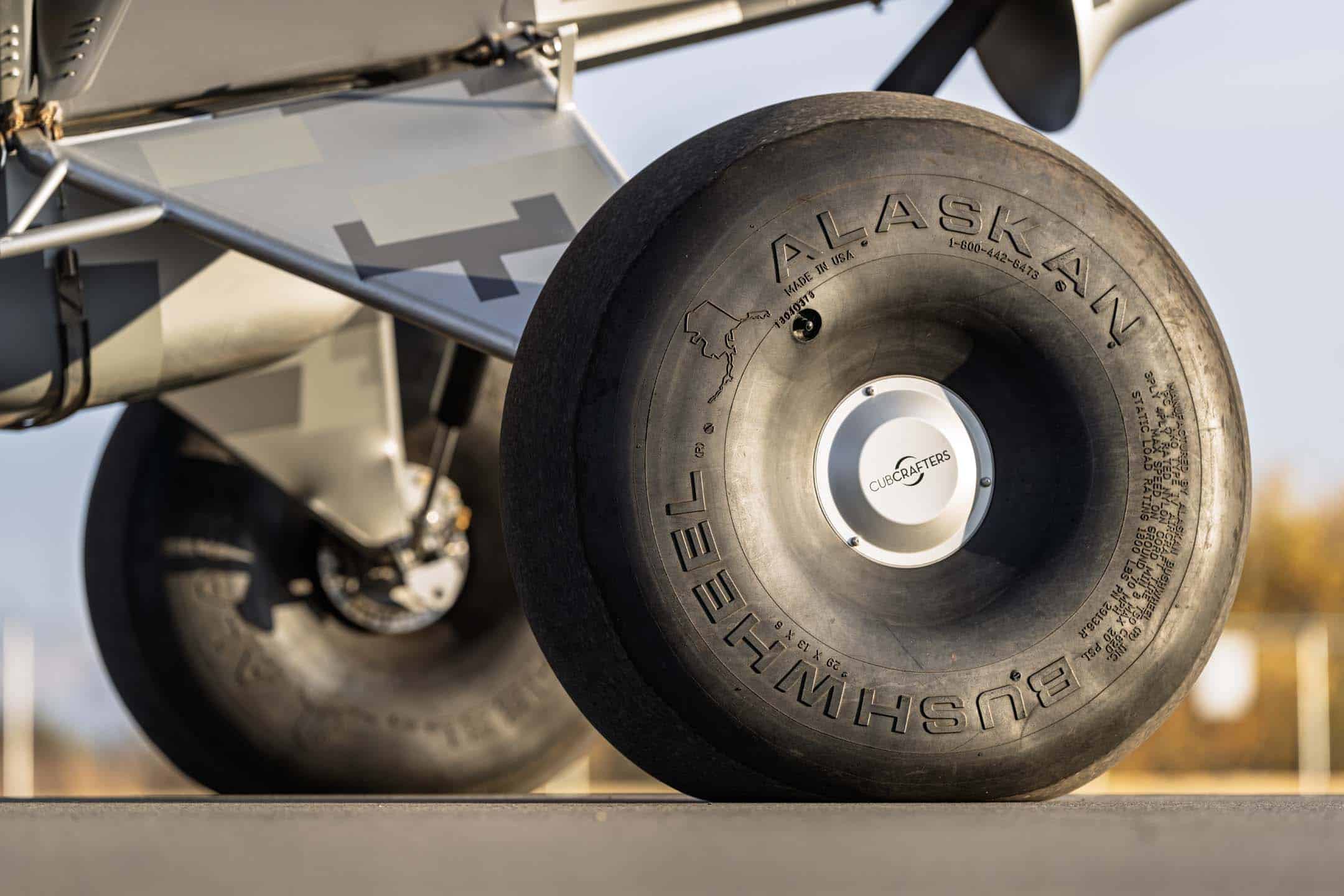
Sizes from 26″ to 35″ offer massive flotation and prop clearance. Pros: superior shock absorption, reduced prop strikes on rocks/gravel, access to soft tundra/sand. 35″ tires excel for safety margins in rough spots. Cons: added weight/drag lowers cruise speed (5-10 mph), higher fuel burn, reduced braking on hard surfaces, and higher costs ($3,800+). Often paired with extended gear for proper angles.
Refined Suspension Systems
Systems like Shock Monster, Acme Aero Black-Ops, or Pro Series soften impacts. Pros: smoother rides, less airframe stress, better control on rollout. Costs $4,500+. Cons: added weight, installation complexity. Combining with large tires creates an all-terrain powerhouse for demanding bush ops.
Performance and Efficiency Tweaks
Power and airflow mods fine-tune handling and output.
Engine and Propeller Options
Hartzell Trailblazer/Pathfinder props or higher-HP engines shorten takeoffs and boost climb (10-20% gains). Pros: better STOL, erosion resistance in rough props. Cons: cost, potential weight additions. Ensure model compatibility for optimal results.
Vortex Generators (VGs)
VGs improve low-speed control and lower stall speeds by 4-5 mph. Pros: enhanced slow-flight confidence, better aileron response. Cons: minor drag, installation cost (~$1,680). Great for short-field precision without major penalties.
Adjustable Cowl Flaps and Maintenance Aids
Adjustable cowl flaps optimize engine temps across conditions. Spin-on oil filters simplify maintenance. Pros: better cooling/efficiency, easier servicing. Cons: added complexity/cost. These small upgrades yield big reliability gains in remote areas.
Cost, Legality, and Practical Tips
Modifications and Accessories for Enhanced Backcountry Performance in Carbon Cubs vary widely: lighting under $5,000, full tire/suspension packages over $10,000. Factor ongoing costs like repacks or tire wear. Legally, pursue FAA field approvals/STCs; consult A&P mechanics for installations. Always update weight-and-balance post-mod to maintain safe margins. Professional work preserves warranties and ensures reliability.
Pilot Experiences and Lessons Learned
Owners often report transformative results: 35″ tires opening new LZs despite cruise hits, BRS adding confidence for family flights, VGs sharpening short-field work. These real-world insights highlight balancing upgrades to match your flying style—prioritizing utility without overcomplicating the aircraft.
To learn more join the E3 Aviation community at: https://e3aviationassociation.com/. To discover more about building an aviation career click : https://e3aviationassociation.com/e3-aviation-association-pilot-manifesto/.
FAQ
Question: What are the top Modifications and Accessories for Enhanced Backcountry Performance in Carbon Cubs?
Answer: Key options include long-range fuel tanks for range extension, extended baggage for gear, BRS parachutes for safety, LED lighting for visibility, large Alaskan Bushwheels (26″-35″) for terrain handling, refined suspensions for ride quality, vortex generators for low-speed control, and prop/engine upgrades for STOL gains. These Carbon Cub upgrades boost utility and capability, though each involves weight or cost trade-offs best evaluated against your missions.
Question: What are the pros and cons of large tundra tires on a Carbon Cub?
Answer: Pros include superior flotation on soft surfaces, better prop clearance, and reduced damage risk from rough terrain—ideal for backcountry Carbon Cub mods. Cons involve added weight/drag reducing cruise speed and braking power, plus higher costs and fuel burn. Many pilots find the access gains outweigh drawbacks for frequent off-airport use.
Question: Is adding a BRS parachute a good idea for backcountry flying?
Answer: The BRS offers emergency protection in remote areas, with pros like CG balancing and life-saving potential. Weighing 31-40 lbs, cons include slight climb reduction and cost ($12,000+). For high-risk operations, many consider it essential Modifications and Accessories for Enhanced Backcountry Performance in Carbon Cubs.
Question: How do vortex generators benefit Carbon Cub performance?
Answer: VGs lower stall speeds and improve control at slow speeds, aiding short-field ops with minimal drag penalty. Pros: enhanced confidence in challenging strips. Cons: installation cost and slight added weight. They’re a cost-effective way to sharpen backcountry handling in Carbon Cub upgrades.
Question: Should I add long-range tanks and what should I watch for?
Answer: They significantly extend range for remote trips, but added weight impacts useful load and climb. Pros: fewer fuel stops, multi-fuel flexibility. Cons: recalculate weight-and-balance carefully. Professional installation ensures safe, legal integration for backcountry Carbon Cub mods.
Written by E3 Aviation Team, an experienced group of aviation writers with deep knowledge in general aviation, backcountry flying, and aircraft modifications.
For more aviation resources and insights, be sure to visit: https://e3aviationassociation.com/articles/.
To discover more about E3 Aviation visit: https://e3aviationassociation.com/
CubCrafters Carbon Cub Configuration Options
BRS Parachute FAQ for Carbon Cubs
Alaskan Bushwheels Official Site
Hartzell Propeller Backcountry Options
FAA Regulations and Policies