AT-6 Twin Takes Flight: Could This Be General Aviation’s Most Affordable Multi-Engine Trainer?
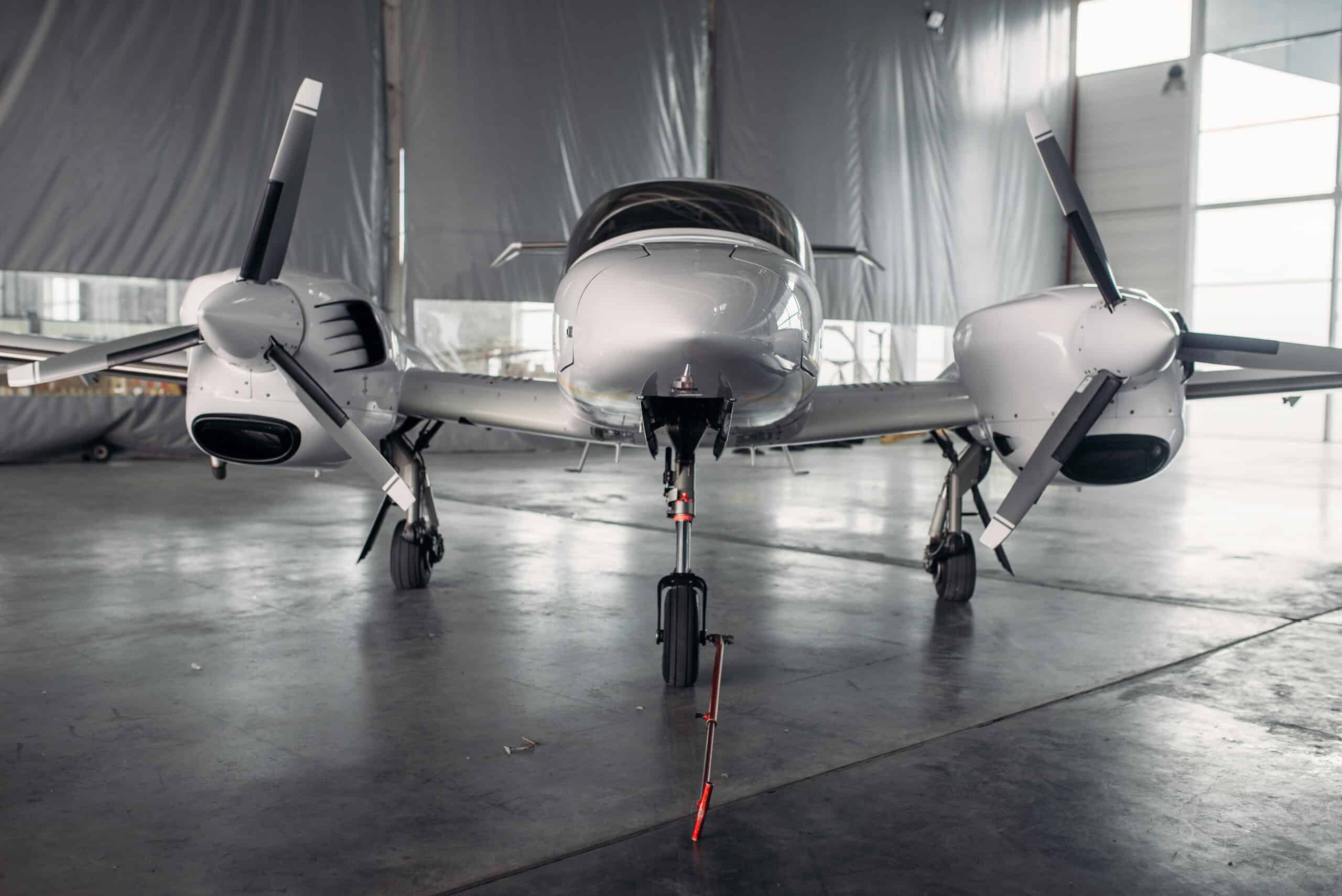
Something remarkable just happened in Poland — and every general aviation pilot in America should pay close attention. The AT-6 Twin multi-engine trainer has officially begun flight testing at Mielec Airport. This could become a watershed moment for affordable pilot training. At E3 Aviation Association, we believe this aircraft is one of the most significant GA training developments in years.
Multi-engine training has long been expensive and out of reach for many student pilots. The AT-6 Twin PSE — designed by Polish aeronautical engineer Tomasz Antoniewski — could change that. Thanks to the FAA’s new MOSAIC regulations, this aircraft may enter the U.S. market as a Light Sport Aircraft. That means lower operating costs and broader pilot eligibility. It also creates a training pipeline that takes students from their first flight all the way to an ATP certificate.
Meet the AT-6 Twin: A Bold New Design From Poland
Flight testing officially began in early March 2026 at Mielec Airport in southern Poland. The AT-6 Twin PSE is the latest creation from Tomasz Antoniewski, whose aviation career stretches back to the early 1990s. Antoniewski designed the AT-1 as his thesis project at the Warsaw University of Technology. He then founded Aero AT in 1994, the company behind the AT-3 — a certified Very Light Aircraft popular with European flight schools.
The AT-4, the next evolution in Antoniewski’s aircraft family, debuted in the United States in 2007 as the Gobosh G-700S. That aircraft served as an American LSA version of the AT-4 and gave U.S. pilots their first taste of this design lineage. After departing Aero AT, Antoniewski founded AT-P Aviation. His goal: develop a next-generation family of trainers bringing pilots from zero experience to an Airline Transport Pilot certificate.
Antoniewski’s “Zero to ATP” family now comprises two aircraft. The AT-5 is a single-engine, four-seat trainer. It features retractable landing gear, a constant-speed propeller, and a Ballistic Recovery System (BRS) parachute. It is designed for training up to the commercial pilot license. The AT-6 Twin picks up where the AT-5 leaves off — targeting IFR training and multi-engine certification within a familiar design family. Together, these two aircraft form a complete training pathway unlike anything currently available to GA pilots.
The Three-Surface Aircraft Design: What Makes the AT-6 Twin Unique
The AT-6 Twin features an unconventional “Three-Surface Aircraft” (TSA) configuration. Most aircraft use either a conventional tail-aft layout or a canard design. The AT-6 Twin combines both. It features a canard at the front of the fuselage, with flaps that deploy in sync with the main wing flaps.
This three-surface setup maximizes stability across a wide center-of-gravity range. The aircraft handles predictably across the entire flight envelope. That predictability is critical for multi-engine training scenarios. The design also gives the AT-6 Twin excellent slow-speed handling — a key safety attribute when students are learning engine-out procedures.
Equally important is the Ballistic Recovery System (BRS) parachute. The AT-6 Twin is believed to be the first twin-engine aircraft in the world to include one. BRS parachutes have saved dozens of lives in single-engine aircraft like the Cirrus SR22. Adding this technology to a multi-engine trainer provides a significant safety net for students and instructors. It also signals that Antoniewski designed this aircraft with real training environments in mind — where mistakes are part of learning.
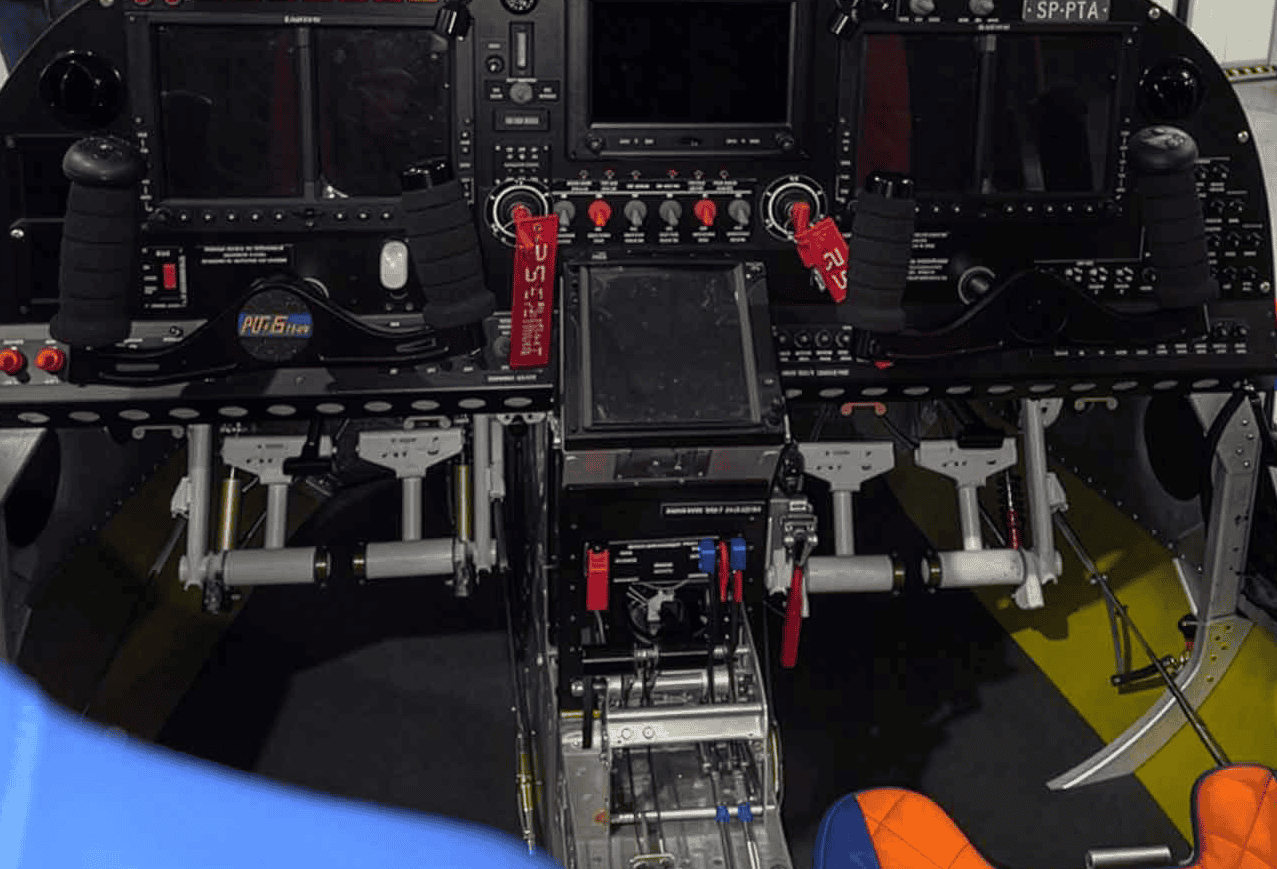
The airframe is all-metal construction — a contrast to the composite-heavy designs common in modern light aircraft. Two Rotax 916 engines power it, each producing 160 horsepower via MT Propellers. The cockpit features Garmin avionics for U.S. pilot familiarity. Three Polish research institutions contributed to the project: the Warsaw University of Technology, the Military University of Technology, and the Łukasiewicz Research Network Institute of Aviation. Their involvement brings serious academic rigor to this GA design.
MOSAIC Changes Everything: Why This Twin Could Transform Pilot Training
To understand the AT-6 Twin’s significance, you need to understand MOSAIC. The FAA’s Modernization of Special Airworthiness Certification rule took effect in July 2025. It completely rewrote the rulebook for Light Sport Aircraft and Sport Pilot certificates. MOSAIC removed the old weight limits that had constrained LSA design for years. It also eliminated the requirement for single reciprocating engines. Multi-engine aircraft can now qualify for the LSA category.
Multi-Engine Aircraft Can Now Qualify as LSA
Under MOSAIC, the AT-6 Twin could become one of very few multi-engine aircraft available as a U.S. LSA. Flight schools could operate it at lower cost than traditional multi-engine trainers. Sport pilots — with an additional endorsement — could fly more advanced aircraft under expanded MOSAIC privileges. To dig deeper into MOSAIC, read our comprehensive guide: The MOSAIC Phase 2 Countdown: Everything GA Pilots Need to Know Before July 24, 2026.
MOSAIC now allows four-seat aircraft under the LSA umbrella. This directly benefits the AT-6 Twin. Two instructors and students could fly together. An instructor could even bring a passenger on training flights. In short, MOSAIC doesn’t just open the door for the AT-6 Twin — it rolls out the red carpet. The 59-knot MOSAIC stall speed requirement also aligns with the AT-6 Twin’s specs, further supporting its LSA classification.
Older multi-engine trainers like the Piper Seminole date back decades. They operate under Part 23 certification. The AT-6 Twin is purpose-built for the MOSAIC era. It could set a new benchmark for modern, affordable multi-engine training in the U.S. For those exploring other exciting new aircraft entering the market, our article on New Kit Planes and What They Mean for GA Pilots provides excellent context.
Performance Specs That Make GA Pilots Take Notice
The AT-6 Twin’s performance specs are impressive for this category. Antoniewski targeted figures for real training operations — not just impressive spec sheet numbers. Here is what pilots can expect from the production-intent configuration currently in flight testing.
Cruise speed is targeted at 160 knots, competitive with many four-seat single-engine aircraft. Students won’t feel a step-down in performance when transitioning from single-engine trainers. The stall speed of 59 knots meets the MOSAIC threshold and keeps takeoff and landing speeds manageable.
The service ceiling of 18,000 feet provides meaningful IFR training capability. Students can practice real high-altitude cruise segments, not just low-level pattern work. With a range of 935 nautical miles, the aircraft supports cross-country training flights that mirror real-world missions.
The Rotax 916 engines are well-supported in the LSA and experimental aviation market. Maintenance access and parts availability should be easier than with older certified engines. MT Propellers are widely used on European certified aircraft and known for reliability and aerodynamic efficiency. Overall, the AT-6 Twin’s performance profile points to an aircraft that handles serious IFR training without intimidating student pilots.
The Man Behind the Machine: Tomasz Antoniewski’s Aviation Legacy
Understanding the AT-6 Twin requires understanding its creator. Tomasz Antoniewski is not a newcomer to aviation design. His aircraft have been flying in Europe and the United States for over two decades. His track record shows this is not just an ambitious concept. It is the culmination of a career spent iterating and improving.
Antoniewski designed the AT-1 as an academic thesis at the Warsaw University of Technology. That foundation of academic rigor has never left his design philosophy. He founded Aero AT in 1994 and developed the AT-3. This Very Light Aircraft found its way into European flight schools. In 2007, the AT-4 became the Gobosh G-700S for the U.S. market. This gave American pilots access to his work as an FAA-certified LSA.
From Gobosh G-700S to the Zero-to-ATP Vision
After departing Aero AT, Antoniewski founded AT-P Aviation. Work on the AT-6 Twin began in 2012 — reflecting how methodical his development process truly is. In 2022, the Polish Agency for Enterprise Development (PARP) provided grant funding. This helped take the design into production.
Three Polish research institutions collaborated on the AT-6 Twin: the Warsaw University of Technology, the Military University of Technology, and the Łukasiewicz Research Network Institute of Aviation. Their involvement means the aircraft has been rigorously analyzed. This level of institutional backing gives the AT-6 Twin a credibility that many startup aircraft designs lack. Pilots and flight schools can take comfort in this — it is a thoroughly researched and funded aviation program, not a garage project.
Antoniewski’s “Zero to ATP” family reflects a deep understanding of the training market. Student pilots benefit from design continuity across their training aircraft. Transitioning from the AT-5 to the AT-6 Twin means learning new systems — but not an entirely new handling philosophy. This mirrors how airline training pipelines work, where consistency and repeatability reduce training time and improve safety outcomes.
What This Means for the Pilot Shortage and Training Costs
The aviation industry faces a serious and growing pilot shortage. Global projections estimate a shortfall of 80,000 qualified pilots by 2032. The regional airline sector is already feeling this shortage. It is offering signing bonuses and tuition reimbursement to attract new aviators. Against this backdrop, the AT-6 Twin multi-engine trainer arrives at a critical moment.
Multi-engine training in the United States typically costs between $3,000 and $7,000 for a 7-to-15-hour program. Most students train in a Piper PA-44 Seminole. Dual instruction rates run about $579 per hour, covering aircraft, fuel, and instruction. The Seminole is a 1970s design that, while reliable, carries the overhead of an older certified aircraft. An LSA-classified AT-6 Twin would likely operate at meaningfully lower hourly costs.
How Affordability Could Reshape the Training Pipeline
When multi-engine time is expensive, fewer pilots accumulate the experience needed for commercial and airline careers. If the AT-6 Twin brings twin-engine time within reach of more students, it could ease the pipeline bottleneck where the industry needs it most. For context on how training costs are reshaping GA, see our analysis: Aircraft Ownership Costs: Navigating the Financial Skies.
The AT-6 Twin’s BRS parachute addresses a key barrier to multi-engine training: the perception of risk. Student pilots and their families are often cautious about engine-out training scenarios. Knowing a whole-aircraft parachute is available provides peace of mind that traditional twin trainers cannot offer. This safety feature could encourage more students to pursue multi-engine ratings — widening the training pipeline further.
The “Zero to ATP” design philosophy of the AT-5 and AT-6 Twin family could also reduce total training time. Students who train through a familiar aircraft family spend less time adapting to new handling. They focus more time on skill development. Flight schools that adopt the AT-P Aviation family could see improved training outcomes alongside lower operating costs.
When Can U.S. Pilots Expect to See the AT-6 Twin?
The timeline for the AT-6 Twin’s U.S. arrival is becoming clearer. The current flight testing program at Mielec Airport is slated for completion in November 2026. If all goes according to plan, Antoniewski intends to exhibit both the AT-5 and AT-6 Twin at SUN ‘n FUN and AirVenture 2027.
“If we achieve the parameters and performance required for the LSA category in our flight tests, we’ll exhibit at SUN ‘n FUN and Oshkosh next year, hoping for quite good sales,” Antoniewski stated. Those two venues are the right place to introduce a new aircraft to the American GA community. If it performs as designed, the AT-6 Twin should generate significant buzz at both shows.
Important Milestones Before U.S. Entry
There are important caveats to keep in mind. First, the aircraft must complete its full flight testing schedule through November 2026. Second, Antoniewski must achieve the performance parameters for MOSAIC LSA classification — particularly the 59-knot stall speed. Third, FAA acceptance under MOSAIC regulations will require its own regulatory process. While 2027 is the target, U.S. availability could realistically extend into 2028.
Antoniewski has navigated the FAA before. The Gobosh G-700S proved he can bring a Polish-designed aircraft to the U.S. market. The MOSAIC framework is designed to streamline this process for modern aircraft. The regulatory pathway for the AT-6 Twin is more favorable than under the old LSA rules. Solid technical design, strong institutional backing, and MOSAIC support give this aircraft a legitimate shot at its 2027 U.S. debut.
In the meantime, the E3 Aviation community will be watching closely. We encourage you to stay current on MOSAIC. Understanding the new rules will help you appreciate why this aircraft matters. Pilots who track the MOSAIC transition will be well-positioned for new aircraft entering the market under these regulations.
The Bigger Picture: A New Era for Multi-Engine General Aviation
The AT-6 Twin multi-engine trainer does not exist in a vacuum. It is part of a broader wave of innovation reshaping general aviation. MOSAIC has unlocked design space for manufacturers in ways the old LSA rules never allowed. A new generation of aircraft is entering the market — more capable, more advanced, and more affordable.
Other manufacturers are already designing MOSAIC-compliant multi-engine and retractable-gear aircraft. Modern Rotax engines, Garmin avionics, and BRS systems now make it possible to build highly capable aircraft at prices unimaginable a decade ago. The next few years should bring more competition in the training market — benefiting pilots and flight schools alike.
The pilot shortage gives flight schools strong commercial incentive to invest in capable, cost-effective training aircraft. Schools offering complete pathways — private through multi-engine and IFR — with modern aircraft at competitive rates will have a clear advantage. The AT-5 and AT-6 Twin’s integrated design means a school could standardize its entire curriculum on one manufacturer’s platform. This is precisely what airline programs have done for years with great success.
Ultimately, the story of the AT-6 Twin is about more than one aircraft. It is about what becomes possible when innovative design, supportive regulation, and genuine market need converge. Tomasz Antoniewski has been building toward this moment for over three decades. Now, with MOSAIC in place and flight testing underway, this vision is closer to reality than ever.
Frequently Asked Questions: AT-6 Twin Multi-Engine Trainer
What is the AT-6 Twin PSE?
The AT-6 Twin PSE is a new four-seat, twin-engine training aircraft designed by Polish aeronautical engineer Tomasz Antoniewski of AT-P Aviation. Flight testing began in early March 2026 at Mielec Airport in Poland. The aircraft is designed for IFR and multi-engine training, targeting MOSAIC LSA classification in the United States.
How does MOSAIC help the AT-6 Twin enter the U.S. market?
MOSAIC — the FAA’s Modernization of Special Airworthiness Certification rule — removes the old restrictions that prevented multi-engine aircraft from qualifying as Light Sport Aircraft. Under MOSAIC, if the AT-6 Twin meets the 59-knot stall speed and other performance parameters, it can enter the U.S. market as an LSA. This means lower operating costs, broader pilot access, and a streamlined regulatory pathway.
What is a Three-Surface Aircraft (TSA) design?
A Three-Surface Aircraft combines both a conventional tail-aft layout and a canard layout. The AT-6 Twin features a canard at the front of the fuselage with flaps that deploy in synchronization with the main wing flaps. This configuration maximizes stability across a wide center-of-gravity range, making the aircraft more predictable — particularly important for multi-engine training scenarios.
What are the AT-6 Twin’s key performance specifications?
The AT-6 Twin’s initial target specifications include a cruise speed of 160 knots, a stall speed of 59 knots (meeting MOSAIC requirements), a service ceiling of 18,000 feet, and a range of 935 nautical miles. The aircraft is powered by two Rotax 916 engines producing 160 horsepower each, with MT Propellers and Garmin avionics throughout the cockpit.
When will the AT-6 Twin be available in the United States?
Flight testing is scheduled for completion in November 2026. If successful, Antoniewski intends to exhibit both the AT-5 and AT-6 Twin at SUN ‘n FUN and AirVenture 2027. Regulatory approval for U.S. operations could extend the timeline into 2028 depending on MOSAIC classification progress and FAA acceptance procedures.
<!– =====================
Written by the E3 Aviation Team. Visit E3 Aviation Articles for more aviation news, training resources, and community updates. Join our community at E3 Aviation Association.