The Blue Angels don’t wear g-suits. That fact surprises most aviation fans the first time they hear it, and the explanation is more interesting than the simple “they don’t need them” answer most sources give. The U.S. Navy Flight Demonstration Squadron flies F/A-18 Super Hornets through high-G maneuvers in close formation, and the reason their cockpit attire differs from operational Navy fighter pilots reveals something specific about how the team operates and how aerobatic flying differs from combat flying. This guide covers the actual reason, what the pilots wear instead, how they handle high-G physiology without inflation suits, and the broader question of how aerobatic teams worldwide approach the same problem.
Last Updated: June 8, 2026 | By: The E3 Aviation Editorial Team
The Short Answer: Stick-Free G Tolerance
First, the technical reason the Blue Angels don’t wear g-suits comes down to an unusual stick-forward requirement of close formation aerobatics. Specifically, standard military g-suits inflate around the legs and abdomen during high-G maneuvers, which prevents blood pooling and helps pilots stay conscious. However, that inflation can cause the pilot’s body to involuntarily move — and when you’re flying eighteen inches from your wingman, any involuntary movement becomes a formation problem.
Critically, the Blue Angels formation tolerances are tighter than any combat operation. Specifically, the diamond formation flies with wingtip clearance measured in inches, not feet. A pilot whose g-suit unexpectedly inflates would jerk slightly on the stick, and that jerk would translate into a formation deviation that could put aircraft into contact. Honestly, the trade-off the team accepts is reduced G protection in exchange for absolute fine motor control on the stick.
What the Pilots Wear Instead
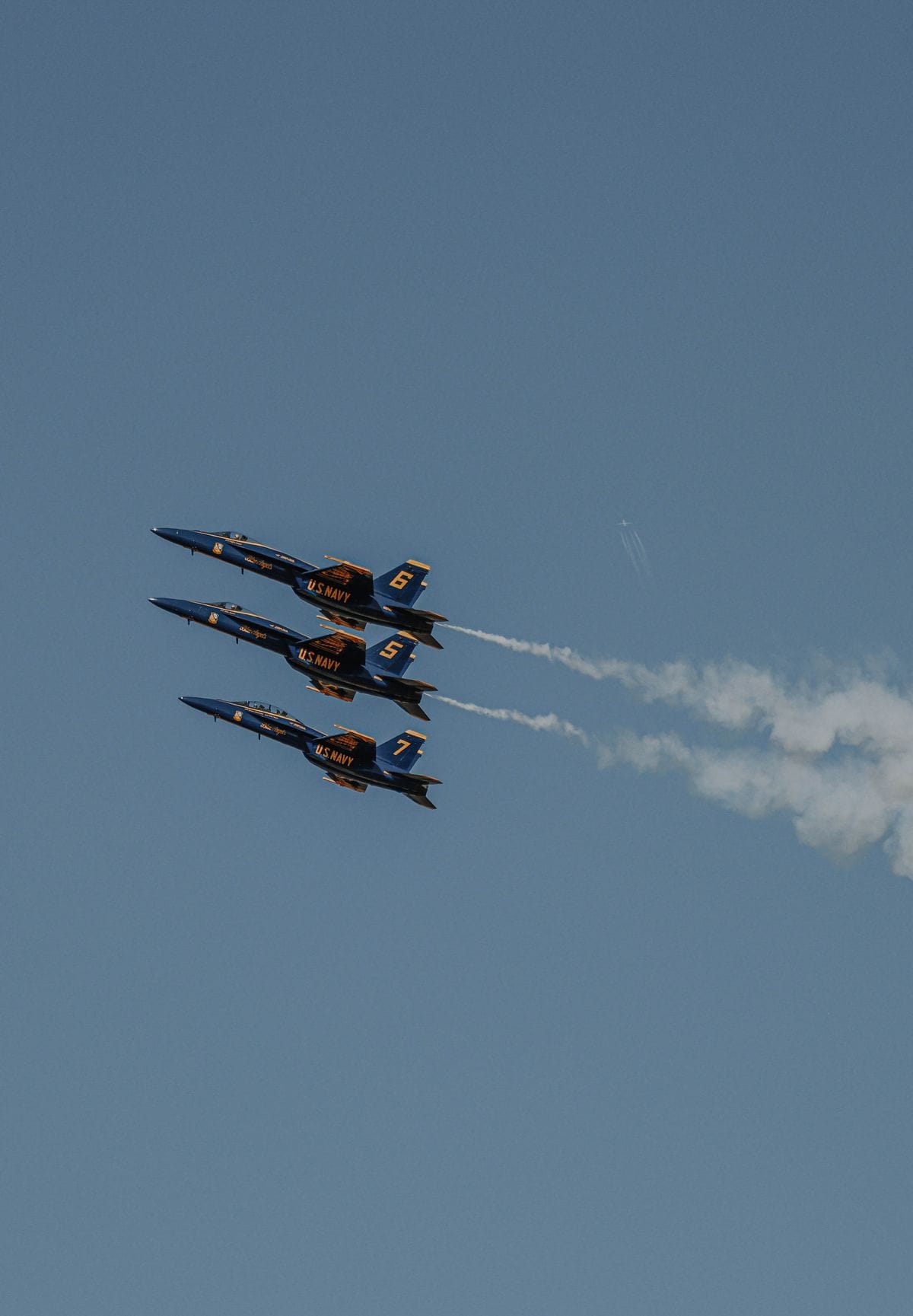
Furthermore, the cockpit attire for Blue Angels pilots differs from operational Navy aviators in specific ways. Specifically:
- Flight suits are the iconic blue-and-gold demonstration uniform, made from standard Nomex flame-resistant material like operational flight suits
- Standard torso harness connects the pilot to the ejection seat — same as operational F/A-18 pilots
- HGU-55/P helmet with custom blue paint scheme and gold visor — the actual helmet shell is standard issue
- No anti-G suit — the leg-and-torso inflation garment used in operational squadrons isn’t worn
- Standard oxygen mask connected to the aircraft’s oxygen system
- Stick padding — the team uses a custom stick configuration with a control-feel modification to support precise formation flying without g-suit assistance
Notably, the absence of the anti-G suit is the only meaningful difference from what an operational F/A-18 pilot wears on a tactical sortie. Everything else is essentially identical.
How They Handle High-G Without an Inflation Suit
For instance, the Blue Angels accept significant physiological challenges to maintain formation precision. Specifically, the demonstration profile pulls up to 7.5 positive Gs and pushes down to negative 3 Gs during routine maneuvers. Critically, sustaining those G loads without an inflation suit requires specific physical and training adaptations.
Anti-G Straining Maneuver
Practically, the primary technique is the anti-G straining maneuver — a coordinated tensing of leg, abdominal, and torso muscles combined with controlled breathing that keeps blood from pooling in the lower body. Specifically, pilots tense their lower body during the G pull, then exhale and inhale in rapid bursts that maintain blood pressure to the head.
Honestly, the physiological cost is real. The technique is exhausting, requires specific muscle conditioning, and limits how long pilots can sustain high-G flight compared to suited pilots. The Blue Angels demonstration profile is built around what the technique can deliver.
Physical Conditioning Requirements
Specifically, Blue Angels pilots undergo conditioning programs that build the specific muscle groups used in the anti-G straining maneuver. Critically, the conditioning is a year-round commitment — pilots can’t drop the routine and resume high-G operations without losing tolerance.
Demonstration Profile Limits
Furthermore, the team’s flight profile is specifically designed to stay within what unsuited pilots can sustain. Specifically, sustained G pulls are limited in duration, G transitions are managed to prevent G-LOC (G-induced loss of consciousness), and the show pace allows recovery between high-G sequences.
The Stick-Stir Question
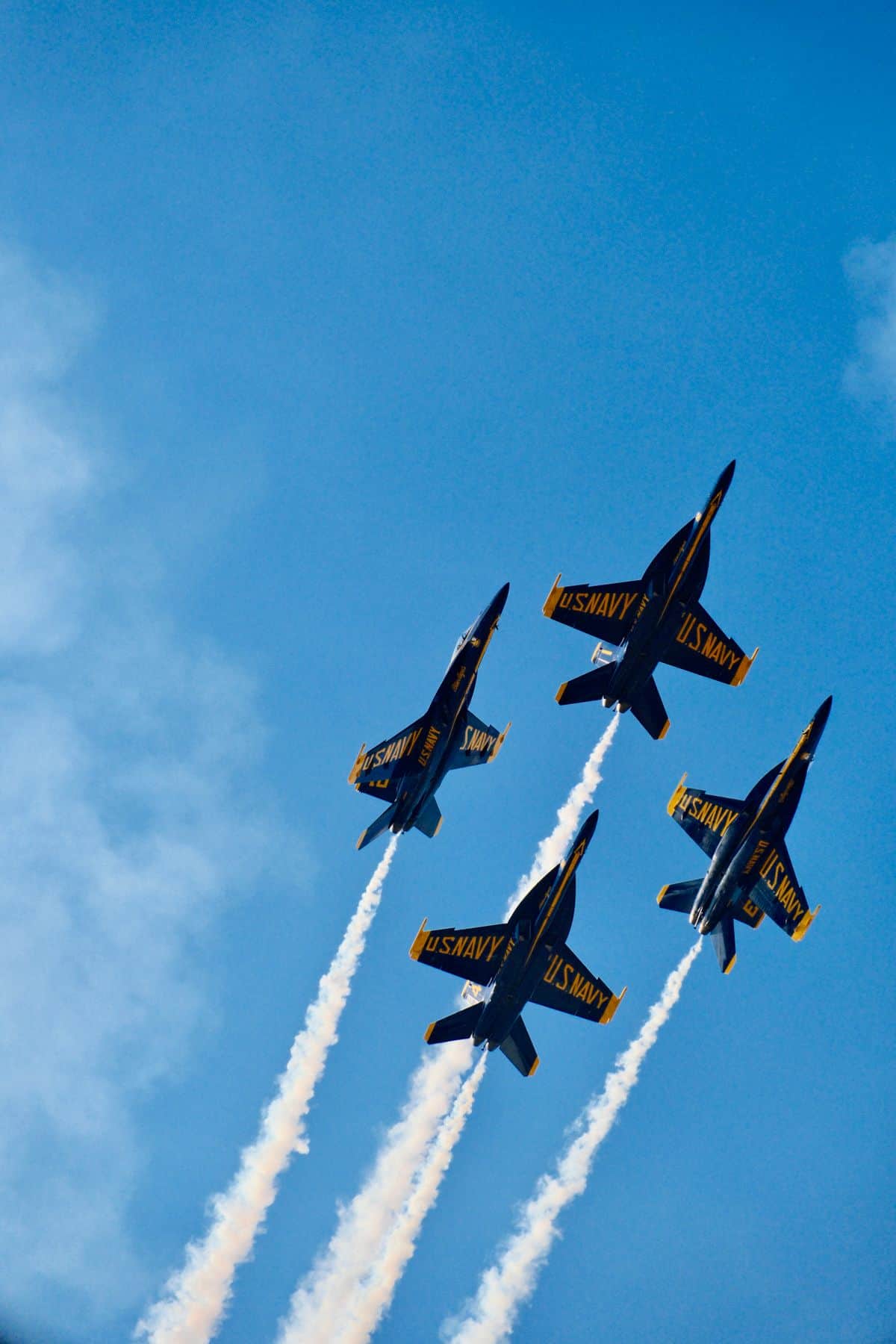
For comparison, the precision required in Blue Angels formation flying becomes clearer when you understand what controls movement looks like in close formation. Specifically, the lead pilot flies the maneuver, and the wingmen fly relative to the lead aircraft. Their control inputs are tiny — fractions of an inch on the stick — to maintain position.
Critically, a G-suit inflating mid-maneuver can move the pilot’s leg against the stick or briefly affect grip pressure. Operational pilots tolerate this because they aren’t flying inches from another aircraft. Blue Angels pilots can’t tolerate it. Honestly, this is the underlying reason — the team accepts the physiological cost to gain the formation precision their demonstration requires.
How Other Aerobatic Teams Handle the Same Problem
Notably, the U.S. Air Force Thunderbirds — flying F-16 Fighting Falcons — face the same trade-off and arrive at different solutions. Specifically, the Thunderbirds DO wear g-suits during demonstrations, but they fly a slightly looser formation than the Blue Angels and have modified the inflation profile of their suits.
Practically, the difference reflects the aircraft. The F/A-18 has stick-forces and control characteristics that the Blue Angels manage by removing g-suit interference. The F-16’s fly-by-wire control system and side-stick controller respond differently to inadvertent inputs, and the Thunderbirds team has determined the inflation suit is workable.
For comparison, the Canadian Forces Snowbirds (Tutor jet trainers) and various international demonstration teams take different approaches based on their aircraft. The choice isn’t standardized — each team optimizes for what their specific platform requires.
What This Means for Aviation Fans
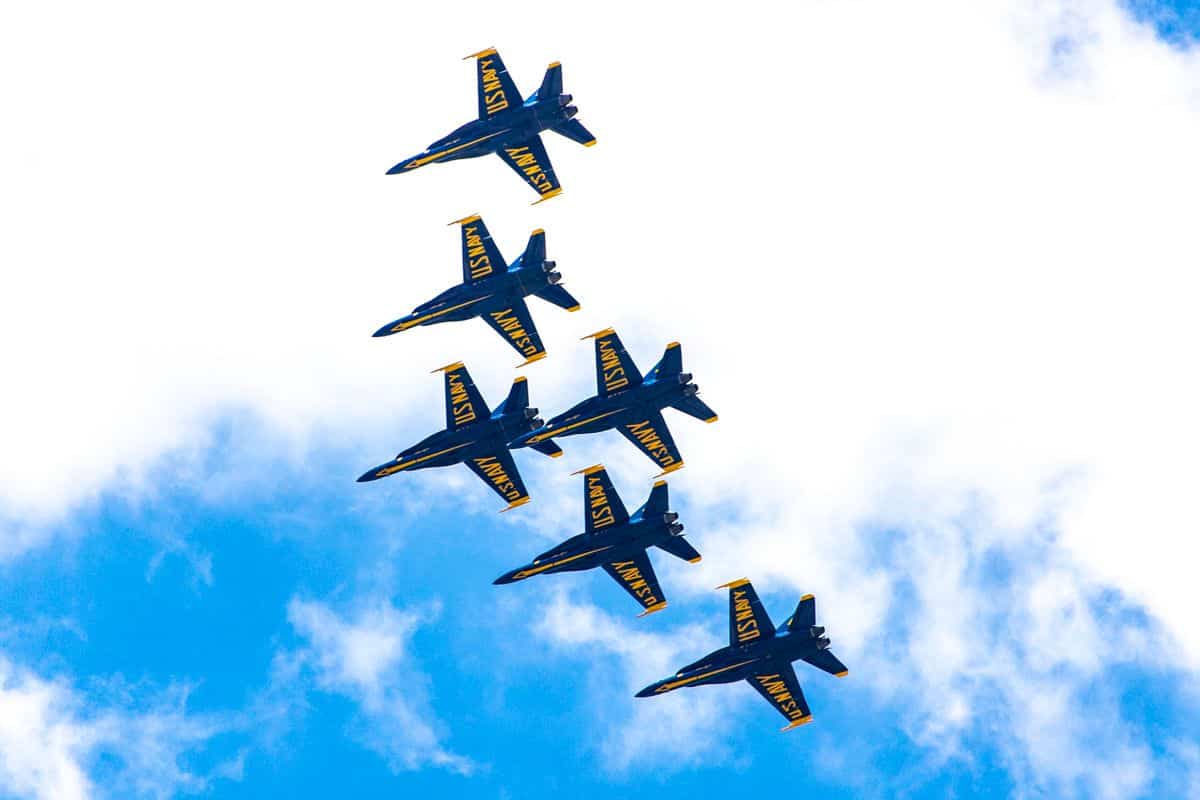
Above all, the Blue Angels’ no-g-suit choice reveals something specific about aerobatic flying versus combat flying. Specifically, the trade-offs aren’t about pilot capability — Blue Angels pilots come from operational Navy backgrounds where they used g-suits regularly. The choice reflects the demonstration mission’s specific requirements.
Practically, watching a Blue Angels show with this background changes the experience. Specifically, you’re watching pilots who’ve accepted physiological challenges to deliver formation precision that operational fighter pilots don’t attempt. We’ll be straight with you: the next time someone tells you the Blue Angels don’t need g-suits because they’re not pulling enough Gs, you can correct them — they’re pulling plenty of Gs, they’ve just chosen the harder way to handle them.
The Selection and Training Pipeline
For instance, the pilots who make it onto the Blue Angels team have specific backgrounds. Specifically, applicants typically have 1,250+ hours in tactical jets, carrier qualification, and operational squadron experience. Critically, the selection process emphasizes formation flying, instrument proficiency, and the temperament to manage the physiological demands of unsuited demonstration flying.
Honestly, the demonstration team isn’t a destination job — pilots typically serve two-year tours and return to operational squadrons. Specifically, that rotation keeps the team current with operational fleet practices and brings fresh perspectives into the demonstration schedule each year.
How the F/A-18 Super Hornet Supports the Mission
For instance, the F/A-18 Super Hornet — current Blue Angels aircraft since 2021 — has specific characteristics that suit the demonstration role. Specifically, the cockpit ergonomics, control feel, and visibility all support close formation flying. The aircraft’s stability characteristics let pilots maintain precise formation positions with less workload than legacy aircraft like the F/A-18 Hornet the team flew previously.
Notably, the transition to Super Hornets required reworking the demonstration profile for the new aircraft’s performance envelope. Specifically, the Super Hornet has different roll rates, different sustained-G capability, and different control response than the legacy Hornet, and the team’s choreography adapted accordingly.
What Other Demonstration Teams Wear
For comparison, here’s how different demonstration teams handle cockpit attire:
- USAF Thunderbirds: G-suits worn (F-16 Fighting Falcon)
- U.S. Navy Blue Angels: No g-suits (F/A-18 Super Hornet)
- Royal Canadian Air Force Snowbirds: No g-suits (CT-114 Tutor — lower-performance trainer)
- UK Royal Air Force Red Arrows: G-suits worn (Hawk T1)
- French Patrouille de France: G-suits worn (Alpha Jet)
- Italian Frecce Tricolori: G-suits worn (MB-339)
Notably, the Blue Angels and the Canadian Snowbirds are outliers among the world’s major demonstration teams in their no-g-suit choice. The Canadian team’s decision reflects their lower-performance trainer aircraft. The Blue Angels’ decision reflects their close-formation precision requirements with a high-performance fighter.
Frequently Asked Questions About the Blue Angels
Why don’t the Blue Angels wear g-suits?
The Blue Angels fly close formation maneuvers where wingmen position aircraft within inches of each other. Standard military g-suits inflate around the legs and abdomen during high-G pulls, which can cause involuntary stick movements that would compromise formation precision. The team accepts reduced G protection in exchange for the fine motor control needed for their formation tolerances.
How do Blue Angels pilots handle high-G without g-suits?
Blue Angels pilots use the anti-G straining maneuver — a coordinated muscle tensing and breathing technique that keeps blood from pooling in the lower body during high-G pulls. The technique requires specific physical conditioning, careful breathing control, and accepts that pilots can’t sustain G loads as long as suited pilots. The demonstration profile is built around what unsuited pilots can deliver.
What’s the difference between the Blue Angels and the Thunderbirds approach?
The Air Force Thunderbirds, flying F-16 Fighting Falcons, do wear g-suits during demonstrations. They fly a slightly looser formation than the Blue Angels and have determined the inflation suit is workable with their aircraft’s fly-by-wire side-stick controller. The Blue Angels, flying F/A-18 Super Hornets with conventional stick controls and tighter formation tolerances, made the opposite choice.
The Physiology Side: Why It Matters
For instance, the human body’s response to sustained positive Gs is well-understood. Specifically, gravity pulls blood toward the lower body, reducing the volume returning to the heart, and reducing blood pressure to the brain. At sustained 7+ Gs, a pilot without intervention loses peripheral vision within seconds, then central vision, then consciousness.
Critically, the anti-G straining maneuver doesn’t make the physiology disappear — it provides a tactical response that buys seconds and tolerances pilots can use to complete maneuvers. Practically, that’s why Blue Angels training emphasizes the technique relentlessly. It’s the difference between flying the demonstration and losing consciousness mid-pass.
What Happens If a Blue Angels Pilot Has a G-LOC Event
Notably, G-induced loss of consciousness (G-LOC) is a real risk for unsuited high-performance pilots. Specifically, the response procedures in the F/A-18 cockpit assume a brief G-LOC event might occur, with safety interlocks that prevent immediate catastrophic outcomes. Honestly, the team’s safety record reflects rigorous training and aircraft characteristics that mitigate the risk, but the risk isn’t zero.
Practically, this is part of why Blue Angels pilots come from operational tactical aviation backgrounds — they’ve already demonstrated the physiological tolerance and the discipline required for high-G flying without crew assistance.
What Civilian Aerobatic Pilots Can Learn
For instance, the Blue Angels’ approach offers lessons for civilian aerobatic pilots in lower-performance aircraft. Specifically, anti-G straining technique applies to Pitts, Extra, and similar civilian aerobatic platforms even though they’re not pulling fighter-class Gs. Aerobatic instructors often teach a simplified version of the AGSM that helps recreational aerobatic pilots tolerate higher G loads safely.
Honestly, the technique is more important for civilian pilots than most realize — many aerobatic accidents involve G-induced consciousness issues that the AGSM could have prevented or delayed. We’ll be straight with you: if you’re flying aerobatics in any capacity, the muscle conditioning and breathing technique are worth learning, even if you never approach Blue Angels G profiles.
The Show Sequencing Reveals the Constraint
Practically, watching a Blue Angels show with attention to sequencing reveals how the team works around the no-g-suit constraint. Specifically, high-G maneuvers are spaced with lower-G transitions and recovery sequences that let pilots breathe and reset. The choreography isn’t arbitrary — it’s designed around what unsuited pilots can sustain.
Critically, this also explains why the team rehearses extensively each year before the show season opens. Specifically, the physical conditioning required builds back during the spring training cycle, and the precise muscle memory for the AGSM during specific maneuver sequences develops through repetition. Honestly, you can’t just “decide to fly Blue Angels demonstrations” — the physical capability is built and maintained through structured training.
Why This Detail Matters
For aviation enthusiasts and student pilots watching the Blue Angels, the no-g-suit choice opens up understanding of aerobatic flying that simple “they don’t need them” answers miss. Specifically, it shows how aerobatic precision and combat utility involve different trade-offs, how aircraft selection drives operating procedures, and how elite military aviation continues to evolve based on what specific mission profiles actually require.
Practically, that’s the depth that distinguishes serious aviation enthusiasm from casual interest — wanting to understand why things work the way they do, not just what they look like from the show line.
The E3 Aviation Editorial Team writes for owner-pilots, student pilots, and the small aircraft community. We focus on practical, real-world content that respects your time and your training. Learn more about E3 Aviation.