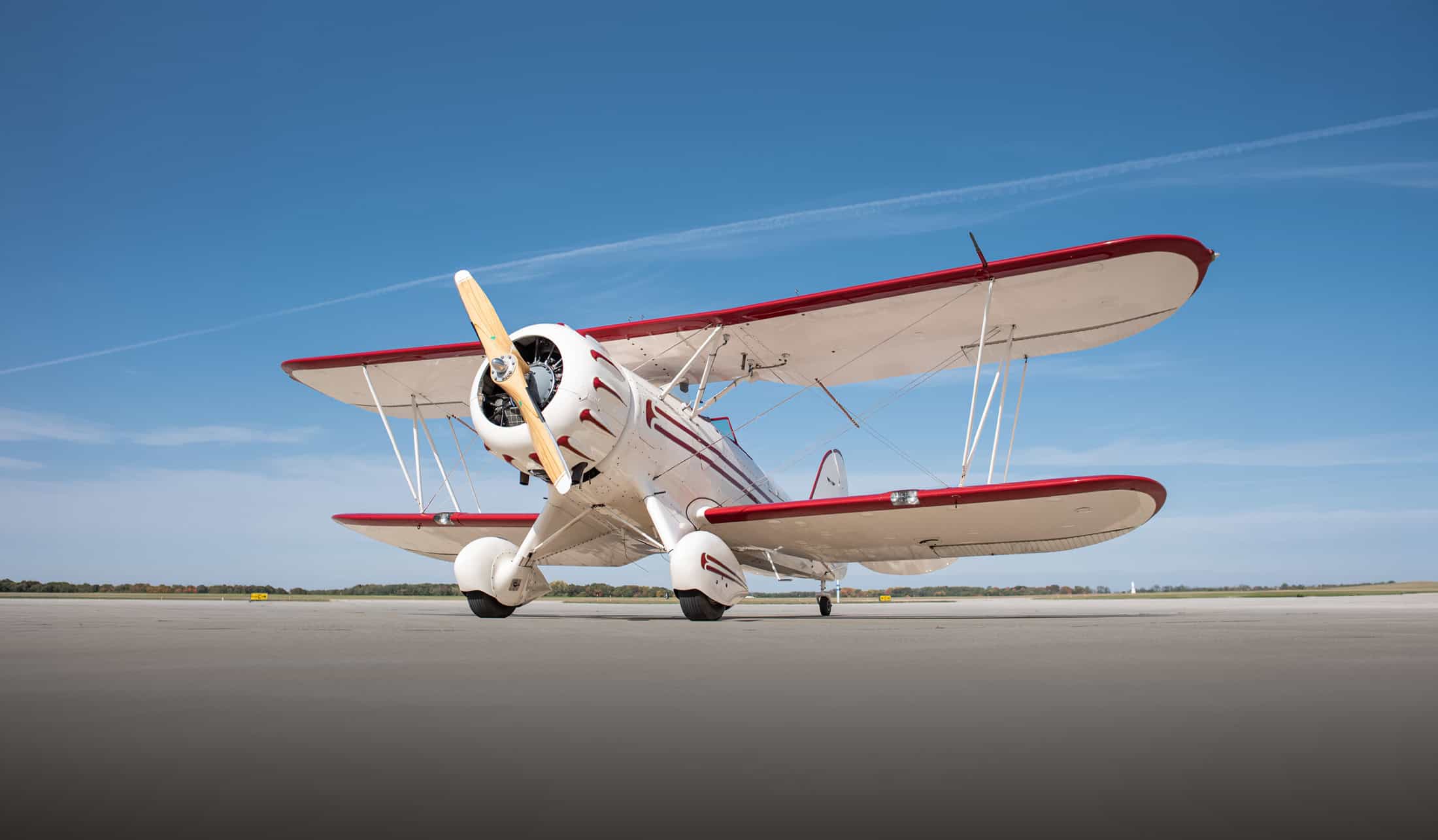
Rob Holland was the best aerobatic pilot in the United States. For ten consecutive years, he held the U.S. National Aerobatic Championship title — a record no other pilot has matched. He didn’t just fly his airplane. He made it an extension of his body, pushing the MXS-RH to maneuvers that redefined what general aviation audiences believed was physically possible.
Last Updated: May 7, 2026 | By: The E3 Aviation Editorial Team
When Rob Holland died on July 27, 2024, the aviation community lost more than a champion. It lost one of the most gifted ambassadors the sport has ever produced. He was 51 years old. His aerobatic career had spanned more than two decades, during which he performed at airshows across the country and inspired a generation of young pilots to pursue general aviation with the same passion he brought to every routine.
Who Was Rob Holland? The Pilot Behind the Legend
Rob Holland grew up with aviation in his blood. Based in Ellington, Connecticut, he built his competitive career through relentless practice and an almost obsessive commitment to precision. He flew in competition before most pilots his age had logged significant cross-country time. By the time he was competing nationally, his routines were already drawing attention for their technical difficulty and their grace.
He flew a custom aircraft — the MXS-RH, built to his specifications by MX Aircraft. The plane was engineered around Holland’s flying style: unlimited roll rates, extreme pitch authority, and the ability to sustain zero-G flight longer than virtually any other certified aerobatic aircraft on the market. Holland didn’t select a stock airplane. He collaborated in its development, pushing the manufacturer to build a machine worthy of the routines he had in mind.
His ten national championships were won in the Unlimited category — the highest and most demanding division of aerobatic competition. Unlimited requires pilots to demonstrate the full range of the sport: inside and outside loops, snaps, spins, hammerheads, knife-edge passes, and tailslides, all executed within a defined aerobatic box at altitudes that leave almost no margin for error.
Holland made it look effortless. That was the deception. What audiences saw as smooth, flowing choreography was the result of thousands of hours in the practice box, refining sequences down to fractions of a second. He was famously disciplined in preparation and uncompromising in his standards for himself.
What Made Rob Holland’s Flying Style Unique
Holland’s signature was precision combined with energy management that seemed to defy physics. Most aerobatic pilots excel at one or the other — either crisp, angular routines favored by Eastern European competitors, or the flowing, momentum-driven style more common in American competition. Holland did both simultaneously.
His knife-edge passes became legendary at airshows. He could hold the aircraft on its side — 90 degrees of bank — at low altitude, flying parallel to the crowd line for what felt like an impossible duration. The MXS-RH made it mechanically possible. Holland’s control inputs made it look inevitable.
Here’s what most pilots get wrong about aerobatic competition: they assume it’s primarily about bravery. It isn’t. The pilots who win consistently at the Unlimited level are the ones whose spatial reasoning, proprioception, and aircraft control have been trained to a level that converts what looks dangerous into something routine. Holland was the clearest example of this truth that American aviation has produced.
His airshow performances were designed to educate as much as entertain. He flew commentary-assisted routines at many events, explaining to audiences what they were watching and why each maneuver required specific technique. He believed the public deserved to understand what they were seeing — not just applaud it.
Rob Holland at Airshows: Two Decades of Inspiring the Public
Holland was a fixture at major U.S. airshows for more than twenty years. The Sun ‘n Fun Aerospace Expo in Lakeland, Florida. The Oshkosh AirVenture in Oshkosh, Wisconsin. The National Championship Air Races in Reno, Nevada. He performed at events across the country and consistently drew some of the largest crowds on the show line.
What separated his airshow routine from other performers wasn’t just maneuver difficulty. It was composition. Holland structured his routines with the precision of a film director — building tension, releasing it, building again. His sequences told a story. Audiences who knew nothing about aerobatics could follow the emotional arc even if they couldn’t name the maneuvers.
He was also known for accessibility after shows. Holland spent time talking with pilots and aviation enthusiasts, answering questions with patience and specificity. He understood that his visibility at airshows carried a responsibility to the broader GA community. Every conversation at a show line was, in some small way, an act of advocacy for general aviation.
His Impact on Youth Aviation and GA Outreach
Holland was deliberate about using his platform to bring young people into aviation. He spoke at schools and youth aviation programs throughout his career, always connecting the technical discipline of aerobatics to broader lessons about preparation, focus, and the value of pursuing difficult skills.
For student pilots watching him fly, the message was specific: what you’re seeing isn’t magic. It’s training. It’s repetition. It’s the result of thousands of decisions made correctly over years of practice. He made high-performance aerobatic flight feel achievable — not by minimizing the difficulty, but by showing that the path to mastery is real and walkable.
Our take: the aviation community doesn’t produce figures like Rob Holland often. Pilots who can perform at the absolute limit of human-machine capability and communicate that to a general audience in a way that inspires rather than intimidates — that combination is rare. Holland had it completely, and he used it generously.

The Accident and the Aviation Community’s Response
Rob Holland died on July 27, 2024, following an accident during aerobatic practice near his home airport in Ellington, Connecticut. He was preparing for the upcoming airshow season when the accident occurred. The NTSB opened a formal investigation, as is standard in any fatal general aviation accident involving a certificated pilot.
The aviation community’s response was immediate and widespread. Tributes came from fellow aerobatic competitors, airshow organizers, aircraft manufacturers, and tens of thousands of GA pilots who had watched him perform over the years. The International Aerobatic Club honored his career and his contributions to the sport in a formal statement shortly after the accident.
His fellow Unlimited competitors — pilots who had spent years trying to beat him in the aerobatic box — were among the most eloquent voices in tribute. They understood better than anyone what he had built over twenty years, and they mourned not just a colleague but the standard he had established for all of them.
What Rob Holland’s Legacy Means for Every GA Pilot
Holland’s legacy isn’t only about records. It’s about what his career demonstrated to the broader aviation community. Specifically, it showed that general aviation — the segment most pilots actually participate in — produces world-class practitioners. The aerobatics he flew were general aviation. The aircraft he flew was a GA aircraft. The airports he used were GA airports.
For pilots who sometimes feel GA occupies a position of diminished prestige relative to commercial or military aviation, Holland’s career was a standing argument against that perception. He operated entirely within the GA ecosystem and reached the absolute top of his discipline. That matters.
Additionally, his commitment to airshow outreach and youth programs had measurable impact on GA participation. Pilots who saw Holland fly as children, or attended a presentation he gave at a school or youth aviation camp, went on to pursue flight training. Some are now instructors themselves. The effect of his advocacy compounds in ways that can’t be fully measured.

E3 Aviation mourns Rob Holland’s passing. He was one of the clearest examples of what dedication, discipline, and love of flight can produce in a GA pilot’s career. His records stand. His influence continues in every pilot he inspired to pursue this sport and this community with more commitment than they might otherwise have brought.
Rob Holland’s Lasting Impact on General Aviation
Rob Holland’s influence extends beyond his competition record. He mentored young airshow performers, gave freely of his time at community events, and consistently used his platform to promote aviation to the next generation. Pilots who met him at regional fly-ins describe someone who never rushed past a conversation, who remembered names, and who treated every aspiring aviator as worthy of his full attention.
That legacy is as significant as any aerobatic sequence he flew. The aviation community doesn’t just miss the performance — it misses the person. In an era where aviation heroes can feel distant and inaccessible, Holland was neither. He showed up. He answered questions. He made the sky feel like something everyone could aspire to.
Frequently Asked Questions About Rob Holland
How many national aerobatic championships did Rob Holland win?
Rob Holland won ten consecutive U.S. National Aerobatic Championships in the Unlimited category. No other American pilot has matched that streak at the sport’s highest level.
What aircraft did Rob Holland fly in competition?
Holland flew the MXS-RH, a custom aerobatic aircraft built to his specifications by MX Aircraft. The plane was designed specifically around his flying style and requirements for Unlimited category competition.
When did Rob Holland die?
Rob Holland died on July 27, 2024, following an accident during aerobatic practice near Ellington, Connecticut. He was 51 years old at the time of his death.
Sources
What Airshow Performers Teach Every GA Pilot About Aircraft Control
Watching a professional airshow performer like Rob Holland execute precision aerobatics teaches something fundamental: complete aircraft control isn’t about muscle. It’s about understanding exactly what the aircraft will do in response to every input. That understanding is available to every GA pilot who invests in it, regardless of whether you ever fly an aerobatic sequence.
The Rudder Is Not Optional
One of the most consistent lessons from aerobatic training is that most GA pilots dramatically underuse the rudder. In normal training, rudder coordination is taught and then largely forgotten once the pilot is chasing coordination balls and flying in smooth air. Aerobatic training forces you back to precise rudder use because the consequences of poor coordination — crossed controls at low speed and high angle of attack — are immediately apparent. Consequently, pilots who complete aerobatic training routinely report that their coordination improved across all phases of flight, not just during maneuvers.
Energy Management as a Survival Skill
Airshow performers plan every maneuver around energy management — the relationship between altitude, airspeed, and the energy available for the next maneuver. For GA pilots, this translates directly to traffic pattern management, go-around execution, and emergency planning. A pilot who thinks in terms of energy — not just airspeed or altitude independently — makes better decisions during unusual situations. Additionally, energy awareness makes approach-to-land accidents less likely because pilots who understand energy can recognize when they’re high and fast before they’re committed to a bad landing situation.
Mental Rehearsal: The Professional’s Edge
Professional airshow performers mentally fly every sequence before they start the engine. They visualize each maneuver, the control inputs, the energy states, and the recovery. This mental rehearsal builds the neural pathways that make correct responses automatic during the actual maneuver. GA pilots can apply the same technique before complex approaches, instrument procedures, or any non-routine flight. Mental rehearsal before a challenging flight reduces workload, improves accuracy, and catches planning errors before they become in-flight problems.
The Airshow Aviation Community and General Aviation Growth
Airshow performers serve a purpose beyond entertainment. They are the most visible ambassadors for aviation in the United States. The pilot who watches an airshow, feels the sound of a radial engine, and decides to pursue a pilot certificate is a direct product of the visibility airshow aviation creates. Supporting airshow aviation — attending events, following performers like Rob Holland on social media, buying airshow merchandise — sustains a pipeline that brings new pilots into GA every year.
Furthermore, the airshow community has been a consistent voice for GA-friendly policy, reasonable certification standards for aerobatic aircraft, and the preservation of low-altitude waivers that allow airshow performers to operate within their extraordinary skill set. That policy engagement matters for every GA pilot, not just the aerobatic community.
How to See Airshow Performers Live: Planning Your Visit
If you haven’t attended a major airshow in person, put it on your calendar. The experience of watching a skilled aerobatic performer at close range — the sound, the precision, the sheer physicality of the aircraft — is something no video captures. Major US airshows schedule performances seasonally from spring through fall.
The International Council of Air Shows (ICAS) maintains a calendar of sanctioned airshows at icas.aero. Many airshows offer aviation community discounts for the general aviation community, the airshow community, and WINGS program participants — check the event website before purchasing tickets. Additionally, many airshows offer static display access before or after flying displays, giving you the opportunity to see aircraft up close, talk to pilots and mechanics, and explore aircraft you may be considering for your own fleet.
For pilots, airshows serve a dual purpose: inspiration and community. Being around other people who love aviation, seeing what’s possible at the highest levels of aircraft control, and connecting with the broader GA ecosystem makes the case for this community more powerfully than any article can. The airshow circuit is one of the best things GA aviation does, and it deserves your attendance and support.
E3 Aviation Editorial Team
The E3 Aviation Association editorial team is made up of licensed pilots, aviation educators, and industry professionals dedicated to advancing general aviation safety, community, and education. Learn more about E3 Aviation.