The private pilot checkride is the final gate between you and your certificate. It’s one test, one examiner, and one chance to demonstrate everything you’ve built over 40, 50, or 60 hours of training. Most failures aren’t caused by a lack of ability — they’re caused by poor preparation, weak knowledge of specific areas, or showing up before the fundamentals are solid. This guide breaks down exactly what the private pilot checkride requires, how the oral and flight test work, where most students fail, and how to show up ready to pass the first time.
What the Private Pilot Checkride Requires
The FAA evaluates private pilot applicants against the Private Pilot Airman Certification Standards (ACS). This document replaced the old Practical Test Standards (PTS) in 2016 and is the definitive guide to what the examiner will test. Specifically, the ACS defines the knowledge, risk management, and skill standards for every task — and it’s publicly available on the FAA website.
Before your checkride, you must have the following completed and documented:
- Aeronautical experience requirements met (40 hours minimum under Part 61, including 20 solo hours)
- Solo cross-country flight of at least 150 NM with full-stop landings at three airports
- Three hours of night flight training, including 10 takeoffs and landings
- Three hours of instrument flight training under the hood
- Three hours of flight prep with a CFI within 60 days of the checkride
- Passed the FAA Private Pilot written knowledge test (score valid for 24 months)
- CFI endorsement certifying you’re ready for the practical test
Your examiner will verify all of these before the oral exam begins. Arriving with an incomplete logbook or missing endorsement ends the checkride before it starts.
The Oral Exam: What to Expect and How to Prepare
The oral exam typically runs 1.5 to 2.5 hours. Your examiner will work through the ACS task areas, asking questions on regulations, aerodynamics, weather, navigation, aircraft systems, and airspace. The goal isn’t to stump you — it’s to verify that you can operate as a safe, knowledgeable pilot in command.
Regulations (FARs). Know Part 61 currency requirements, Part 91 operating rules, and the basic medical certificate requirements cold. Specifically, the examiner will often focus on aircraft airworthiness (AROW documents), currency requirements for day and night VFR, and passenger carriage rules.
Weather. Understand how to read a METAR, TAF, winds aloft forecast, and SIGMETs. Moreover, be prepared to make a go/no-go decision on a sample scenario the examiner presents — not just recite definitions, but reason through them out loud.
Aerodynamics. Stalls, spins, the four forces of flight, and the relationship between angle of attack and lift are all fair game. Additionally, understand load factor, maneuvering speed, and why Va changes with aircraft weight — this trips up many students.
Navigation and flight planning. Bring a completed cross-country flight plan to the checkride. Your examiner will typically ask you to plan a cross-country to a specified destination and walk through the navigation, fuel planning, weather check, and NOTAM review. Therefore, practice this until the process is automatic.
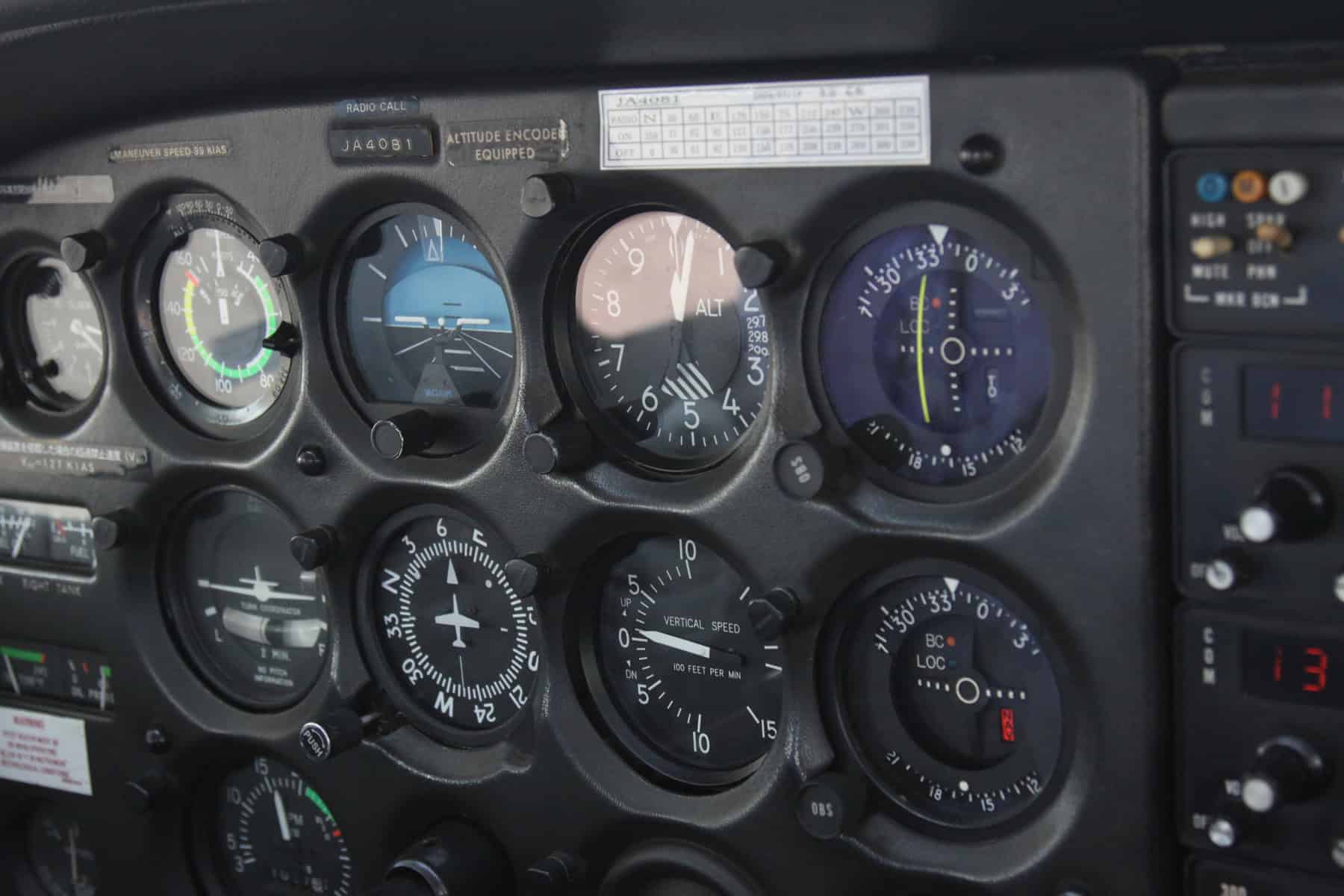
Aircraft systems. Know your aircraft’s POH cold — fuel system, electrical system, avionics, and emergency procedures. The examiner will ask about your specific aircraft, not a generic Cessna 172. Consequently, study the actual POH for the aircraft you’ll fly on the checkride.
| Oral Exam Topic | Key Areas to Know |
|---|---|
| Regulations | Part 61, Part 91, AROW, currency, medical |
| Weather | METAR, TAF, winds aloft, SIGMETs, go/no-go decisions |
| Aerodynamics | Stalls, load factor, Va, four forces, angle of attack |
| Navigation | VFR cross-country planning, pilotage, dead reckoning, GPS |
| Aircraft systems | POH, fuel, electrical, avionics, emergency procedures |
| Airspace | Class B, C, D, E, G requirements, TFRs, MOAs |
The Flight Test: What the Examiner Is Looking For
After the oral, you’ll fly a scenario-based flight test. The examiner will typically role-play as a passenger or fellow pilot while you act as pilot in command of a cross-country flight. Along the way, they’ll introduce scenarios that require you to demonstrate specific ACS tasks — not a formal checklist of maneuvers, but a realistic flight that incorporates everything.
Preflight inspection. The checkride starts the moment you approach the aircraft. Your examiner will observe your preflight — whether you’re methodical, whether you catch discrepancies, and whether you actually look at what you’re supposed to look at. Specifically, don’t rush the preflight to impress the examiner with speed. Thoroughness is the point.
Takeoff and departure. Demonstrate smooth control inputs, proper crosswind correction, and call-outs at appropriate altitudes. Additionally, communicate with ATC clearly and professionally if operating from a towered airport.
Flight maneuvers. Expect the examiner to call for steep turns, slow flight, stalls (power-on and power-off), emergency procedures, and ground reference maneuvers like turns around a point. The ACS specifies exact tolerances — for example, steep turns require ±100 feet altitude, ±10 knots, and returning within 10 degrees of your entry heading. Know these tolerances and practice to exceed them.
Navigation. Demonstrate pilotage and dead reckoning, and show that you can use GPS as a supplement — not a crutch. Furthermore, be prepared for a diversion scenario where the examiner changes your destination mid-flight and asks you to navigate to an alternate.
Landings. Expect at least a normal landing, a soft-field landing, and a short-field landing. As a result, practice all three to ACS standards before your checkride — not just until you can do them, but until you can do them consistently.
Private Pilot Checkride ACS Tolerances
| Maneuver | Altitude | Heading | Airspeed |
|---|---|---|---|
| Straight and level flight | ±200 feet | ±10° | ±10 knots |
| Steep turns | ±100 feet | Entry ±10° | ±10 knots |
| Slow flight | ±100 feet | ±10° | +10/-0 knots |
| Power-off stall | Recovery altitude | ±10° | — |
| Short-field landing | ±200 feet of target | — | — |
Where Most Students Fail the Private Pilot Checkride
Checkride failures cluster around predictable areas. Understanding where students commonly fail is one of the most efficient ways to prepare, because you can specifically target those areas in your final training sessions.
Weak oral exam knowledge. The most common reason for oral exam failures is inadequate study on FARs, weather interpretation, and airspace. Specifically, many students can pass the written test using question-and-answer memorization without truly understanding the material — and that breaks down under the examiner’s probing questions.
Poor cross-country planning. Arriving at the checkride without a fully-completed flight plan, missing weather briefs, or unable to explain your fuel calculations and alternates is an immediate red flag. Consequently, practice planning the same type of cross-country the examiner will assign until the process takes you 30 minutes or less.
Unstabilized approaches and landings. Inconsistent landings — especially short-field and soft-field techniques — account for a significant portion of flight test failures. Moreover, if you’re ballooning on flare, landing long, or skipping the soft-field nose-high technique, your CFI should not be endorsing you yet.
Fixating on the examiner. Many students fly differently when the examiner is in the seat. They rush, skip callouts, or forget to use checklists. As a result, practice flying with a passenger who gives you occasional questions or comments — it builds the muscle memory of dividing attention without losing aircraft control.
Poor ADM under pressure. Aeronautical decision making (ADM) is evaluated throughout the flight, not just in specific scenarios. The examiner will watch how you respond to unexpected situations, simulated emergencies, and judgment calls. Ultimately, the examiner is asking one question the entire checkride: would I let this person fly my family somewhere?
How to Prepare for the Private Pilot Checkride
Effective checkride preparation follows a clear structure. The closer you get to your checkride date, the more focused your preparation should become.
Study the ACS, not just the written test bank. The ACS tells you exactly what the examiner will test. Read through every task area, understand the knowledge requirements, and cross-reference them with your training. Additionally, use the FAA’s free ACS companion guides to fill in gaps.
Fly to ACS standards, not just instructor satisfaction. Your CFI’s approval isn’t the same as ACS compliance. In the final weeks before your checkride, specifically practice to the tolerances in the table above — not approximately, but exactly. Time yourself on maneuvers and debrief every flight against the ACS.
Do a mock checkride. Ask a different CFI — not your primary instructor — to conduct a full mock oral and flight test. A fresh examiner will find gaps your regular instructor has stopped seeing. Furthermore, the experience of being evaluated by someone unfamiliar removes the comfort factor and better simulates actual checkride conditions.
Brief and debrief every flight. In the final 10 hours before your checkride, brief every flight with specific ACS task objectives and debrief against those objectives after landing. As a result, you arrive at the checkride having already evaluated yourself against examiner-level standards dozens of times.
Know your aircraft cold. The night before your checkride, review the POH emergency procedures, performance charts, and systems descriptions. Specifically, know the V-speeds by memory — Vso, Vs1, Vx, Vy, Va, Vfe, Vno, Vne — and be able to calculate weight and balance and performance data for the examiner’s scenario.
E3 Aviation Association exists for pilots who take their training seriously. Whether you’re preparing for your private pilot checkride or building toward advanced certificates, we’re the community that understands what it takes.