You’ve earned your private pilot certificate. You can fly VFR, build hours, and enjoy general aviation on clear days. However, the moment clouds move in or visibility drops, you’re grounded — and that’s a hard ceiling to hit. The instrument rating removes that ceiling. It authorizes IFR flight, expands what you can do with an aircraft, and builds the foundational skills every serious GA pilot needs. This guide covers every instrument rating requirement you need to meet: the FAA minimums, the flight time breakdown, the written test, the checkride, and realistic cost estimates for both Part 61 and Part 141 training paths.
What Is an Instrument Rating?
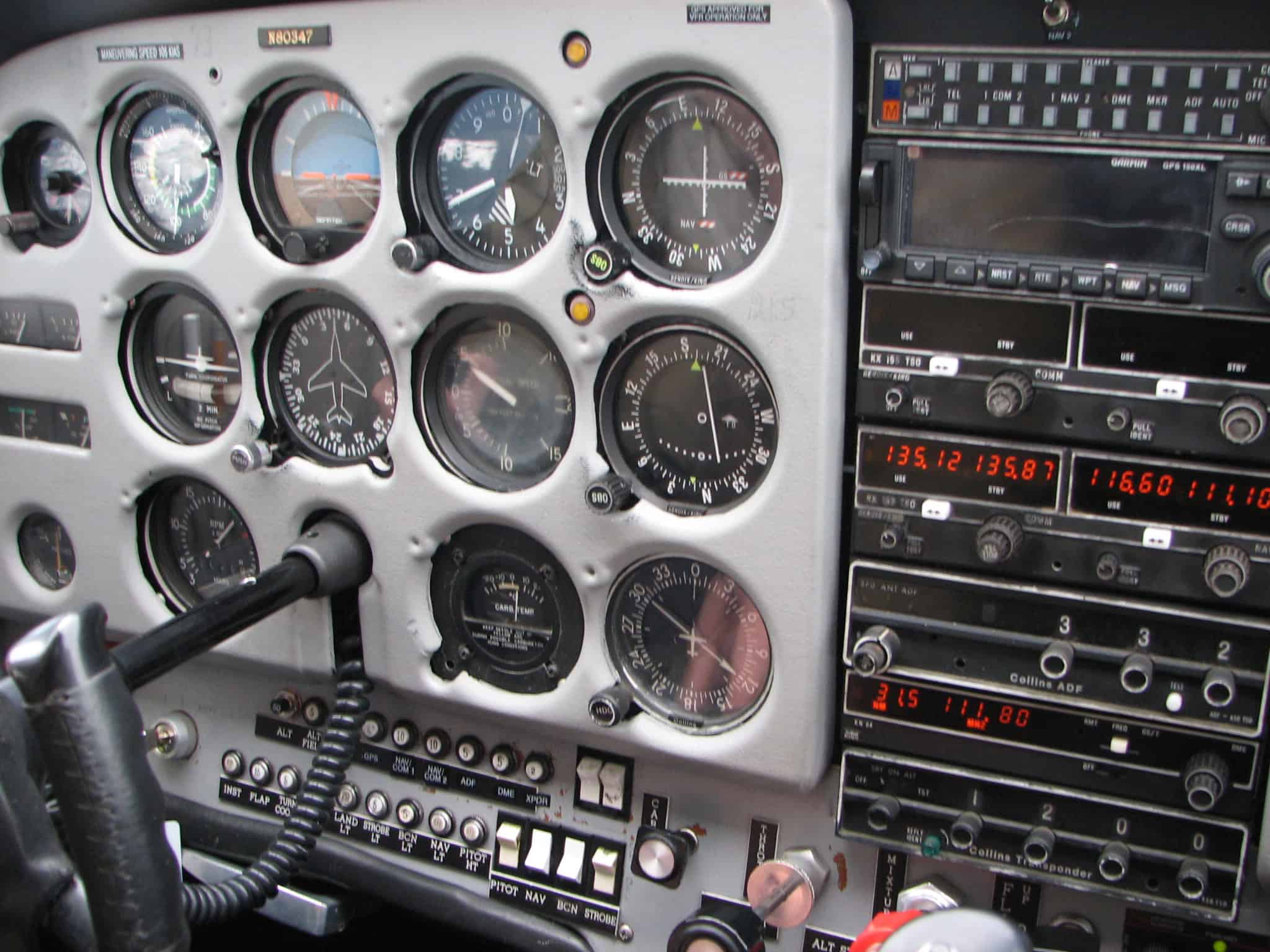
An instrument rating (IR) is an FAA certificate add-on that authorizes you to fly in IMC — instrument meteorological conditions — using aircraft instruments instead of outside visual references. Without it, you’re restricted to VFR flight and can’t legally enter clouds, fly on an IFR flight plan, or operate in the majority of the nation’s controlled airspace during low-visibility conditions.
The rating applies to a specific category and class of aircraft. Earning your instrument rating in a single-engine airplane qualifies you for IFR flight in single-engine airplanes only. Flying a multi-engine airplane under IFR requires a separate instrument rating for that category and class. Additionally, the instrument rating is a prerequisite for both a commercial pilot certificate and an ATP certificate — so it’s not an optional step if you’re serious about advancing in aviation.
Instrument Rating Requirements Under FAR Part 61
The FAA defines all instrument rating requirements in 14 CFR Part 61.65. To qualify, you must satisfy five core requirements before your checkride.
Hold a Private Pilot Certificate. You must already hold at least a private pilot certificate in the same aircraft category as the instrument rating you’re seeking. Specifically, a student pilot certificate is not sufficient.
English Proficiency. You must be able to read, speak, write, and understand English. Specifically, IFR operations require precise communication with ATC, and there are no exceptions to this requirement.
Aeronautical Experience. This is where most of the work happens. Part 61.65(d) specifies the minimum flight time requirements for the rating. The table below summarizes what the FAA requires under both Part 61 and Part 141.
| Requirement | Part 61 | Part 141 |
|---|---|---|
| Cross-country PIC flight time | 50 hours | 50 hours |
| Total instrument flight time | 40 hours | 35 hours |
| Instrument time with CFII | 15 hours minimum | Per approved syllabus |
| Instrument training within 2 months of checkride | 3 hours | Per approved syllabus |
| Cross-country IFR flight | 250+ NM, 3 approaches, 3 nav systems | Per approved syllabus |
Pass the Knowledge Test. Before your checkride, you must pass the FAA Instrument Rating – Airplane (IRA) written test with a score of 70% or higher. The test covers IFR regulations, weather, navigation, approach procedures, and instrument systems.
Pass the Practical Test. Finally, you must complete an instrument rating checkride with an FAA-designated pilot examiner (DPE), evaluated against the Instrument Rating Airman Certification Standards (ACS).
Breaking Down the 40 Hours of Instrument Time
The 40-hour instrument time requirement is one of the most misunderstood parts of the rating. Not all instrument time is created equal, and knowing what counts — and what doesn’t — can significantly affect how you plan your training and manage costs.
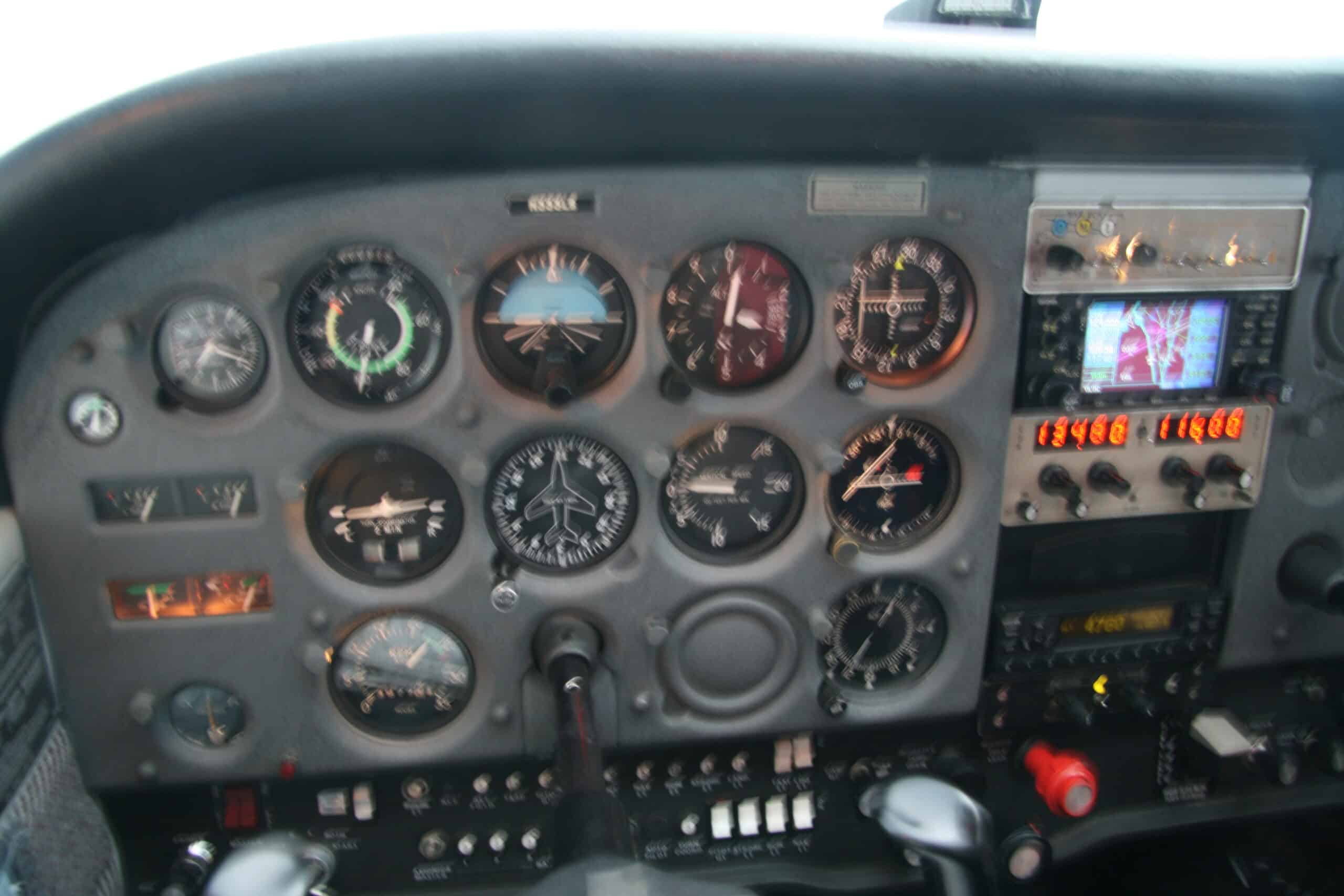
Actual IMC counts directly. Time spent flying inside clouds, in fog, or below VFR minimums while on an IFR flight plan qualifies in full. In practice, however, actual IMC is unpredictable — you can’t build a training syllabus around hoping for bad weather.
Simulated instrument conditions are the most common training method. Flying under foggles or a view-limiting device in a real aircraft counts toward your total. Your CFII acts as safety pilot while you fly the airplane solely by instruments.
FAA-approved simulators and ATDs count up to 20 of the required 40 hours under Part 61. Aviation Training Devices (ATDs) typically cost $75–$150 per hour versus $150–$300 per hour in a real aircraft. As a result, using the full 20-hour ATD allowance can save you $1,500–$3,000 compared to logging all 40 hours in a real airplane.
The 15-hour CFII requirement: Of your 40 hours, at least 15 must be with a certificated flight instructor who holds an instrument rating (CFII). These hours must cover specific maneuvers outlined in 14 CFR Part 61.65(c), including unusual attitude recovery, intercepting and tracking courses, and flying instrument approaches.
The 3-hour recency requirement: Within the 2 calendar months before your checkride, you must complete 3 hours of instrument flight training in the same aircraft category and class. This ensures your skills are sharp when you sit down with the examiner.
Part 61 vs Part 141 Instrument Rating Requirements
Both paths lead to the exact same FAA instrument rating. The difference lies in structure, oversight, and minimum flight time.
Part 61 gives you flexibility. You train at your own pace, work with any qualified CFII, and meet the minimums on your schedule. However, Part 61 requires 40 hours of instrument flight time — 5 more than the Part 141 minimum. For GA pilots training part-time at a local flight school, Part 61 is typically the more practical choice.
Part 141 requires enrollment at an FAA-approved pilot school with a structured, approved curriculum. Stage checks replace some of the informal progress reviews. In exchange for the added structure, the minimum drops to 35 hours of instrument flight time. Consequently, if you’re training full-time at an academy or structured program, Part 141 can reduce your total cost by several hundred dollars.
One important note: the 50-hour cross-country PIC requirement is identical under both paths. That clock starts ticking the day you earn your private certificate.
How Long Does It Take to Get an Instrument Rating?
The FAA minimums are floors, not finish lines. Most pilots complete the instrument rating in 60 to 100 total hours above their PPL time, depending on training frequency and individual progression rate.
A realistic time estimate for a typical Part 61 student looks like this:
- Instrument ground training: 20–30 hours
- Flight training with CFII: 30–50 hours
- Self-study for the knowledge test: 20–40 hours
- Total timeline: 9–18 months while working full-time
Training frequency is the single biggest variable. Pilots who fly twice a week progress significantly faster than those who fly twice a month. In addition, weather cancellations, aircraft availability, and scheduling gaps all add time to the process. Ultimately, if you can commit to consistent weekly flying, you’ll come in closer to the lower end of that range.
What to Expect in Instrument Rating Training
Instrument training is fundamentally different from private pilot training. Under the hood or inside actual IMC, you lose all natural reference to the horizon and the ground. As a result, everything depends on your instrument scan, your aircraft control inputs, and disciplined procedure execution — there’s no looking outside for help.
Ground school typically comes first. You’ll study IFR regulations, weather theory, approach plate reading, navigation systems, holding procedures, and ATC communication. Your CFII will use ground sessions to prepare you for both the written test and the oral exam on checkride day. Moreover, strong ground knowledge directly translates to better cockpit performance — the two are inseparable in IFR flying.
Flight training builds three core skill sets: basic attitude instrument flying (controlling the aircraft entirely by instruments), IFR navigation (using VORs, GPS, and airways), and approach procedures (flying ILS, RNAV, VOR, and localizer approaches to minimums).
The cross-country IFR flight is a specific requirement you must complete before your checkride. It must cover a total straight-line distance of more than 250 nautical miles, include an instrument approach at each airport, and use at least three different types of navigation and approaches. This flight is where everything comes together — planning, filing, flying, and executing real-world IFR from departure to destination.
The Written Test: What You Need to Know
You must pass the FAA Instrument Rating – Airplane (IRA) knowledge test before scheduling your checkride. It consists of 60 multiple-choice questions, and a score of 70% or higher is required to pass. Your result is valid for 24 calendar months — so don’t wait too long after passing to get to the checkride.

The test covers IFR regulations (FAR Parts 61, 91, 95, 97), weather theory and PIREP interpretation, instrument charts and approach procedures, navigation and GPS systems, aircraft systems and instrument errors, and aerodynamic concepts relevant to IMC flight. For test prep, most pilots use Sporty’s, Gleim, or Sheppard Air. Budget 20–40 hours of study to be genuinely well-prepared — not just to pass, but to understand the material you’ll apply in the cockpit and on the oral exam.
What to Expect on the Checkride
The instrument rating checkride has two parts: an oral exam and a flight test. Both are conducted by an FAA-designated pilot examiner, and the entire event typically runs 4–6 hours.
Oral exam: The examiner will probe your knowledge of IFR regulations, weather interpretation, chart reading, approach procedures, holding patterns, and aircraft systems. Typically, plan to spend 1.5–2.5 hours on the oral. Bring your logbook, current medical certificate, pilot certificate, knowledge test results, government-issued ID, and a completed IACRA application.
Flight test: You’ll fly a realistic IFR scenario — typically a cross-country with multiple approach types, at least one hold, and a diversion. The examiner evaluates you against ACS tolerance standards, which specify exact limits for altitude (±200 feet), heading (±10 degrees), and airspeed (±10 knots) on most tasks.
Common failure points include poorly executed holds, failure to brief approaches before flying them, unstabilized approaches, and loss of situational awareness during transitions between tasks. Therefore, fly with your CFII until you can consistently meet ACS tolerances before booking the examiner. One successful checkride is worth far more than two attempts.
Cost Breakdown: How Much Will It Run You?
Instrument rating costs vary by location, aircraft type, and training efficiency. The estimates below reflect realistic Part 61 figures for a typical GA student renting a Cessna 172 or Piper Archer.
| Cost Item | Estimated Range |
|---|---|
| CFII flight instruction | $3,000 – $6,000 |
| Aircraft rental (wet rate) | $4,000 – $9,000 |
| ATD/simulator time (up to 20 hrs) | $1,500 – $3,000 |
| Ground school / study materials | $200 – $500 |
| Knowledge test fee | $175 |
| Checkride fee (DPE) | $700 – $1,200 |
| Total Estimated Cost | $8,000 – $16,000 |
The most effective cost-control strategy is maximizing your ATD hours. Using all 20 allowable simulator hours reduces aircraft rental time significantly — and ATD time is purpose-built for practicing holds, approaches, and partial-panel flying anyway. Additionally, consistent training pace matters: scattered lessons with long gaps between them increase total hours and total cost.
Is the Instrument Rating Worth It?
For any GA pilot who flies cross-country, owns an aircraft, or plans to advance their certificate, the answer is yes. Beyond the regulatory authorization to file and fly IFR, the instrument rating makes you a fundamentally more precise and disciplined pilot. Your control inputs improve. The instrument scan sharpens. Checklist discipline and situational awareness become structured in a way that VFR flying simply never demands.
IFR capability also transforms the practical utility of your aircraft. Marginal VFR days become manageable. Weather that would have grounded a VFR-only pilot becomes a reroute or a hold. Meanwhile, long trips that required scheduling around perfect conditions become routine. For aircraft owners especially, the instrument rating pays back its cost in flexibility and capability over and over again.
E3 Aviation Association is built for pilots who take GA seriously — pilots building skills, flying purposefully, and connecting with a community that does the same. If the instrument rating is your next step, we’re here for the journey.
Join E3 Aviation Association and fly with pilots who’ve already made the jump.