The U-2 spy plane is one of the most remarkable aircraft ever built. It climbs to 70,000 feet, operates at the edge of space, and has been flying intelligence missions for nearly seven decades. If you’ve ever wondered what it’s like to actually fly the Dragon Lady — or why it still flies in the age of satellites — this is the full story.
Last Updated: May 7, 2026 | By: The E3 Aviation Editorial Team
A Cold War Secret That Still Flies
The U-2 spy plane was born in urgency. In the early 1950s, the United States had no reliable way to see inside Soviet territory. Existing aircraft were vulnerable to interception. The Air Force needed eyes at altitude — altitude so extreme that no fighter could follow and no missile could reach.
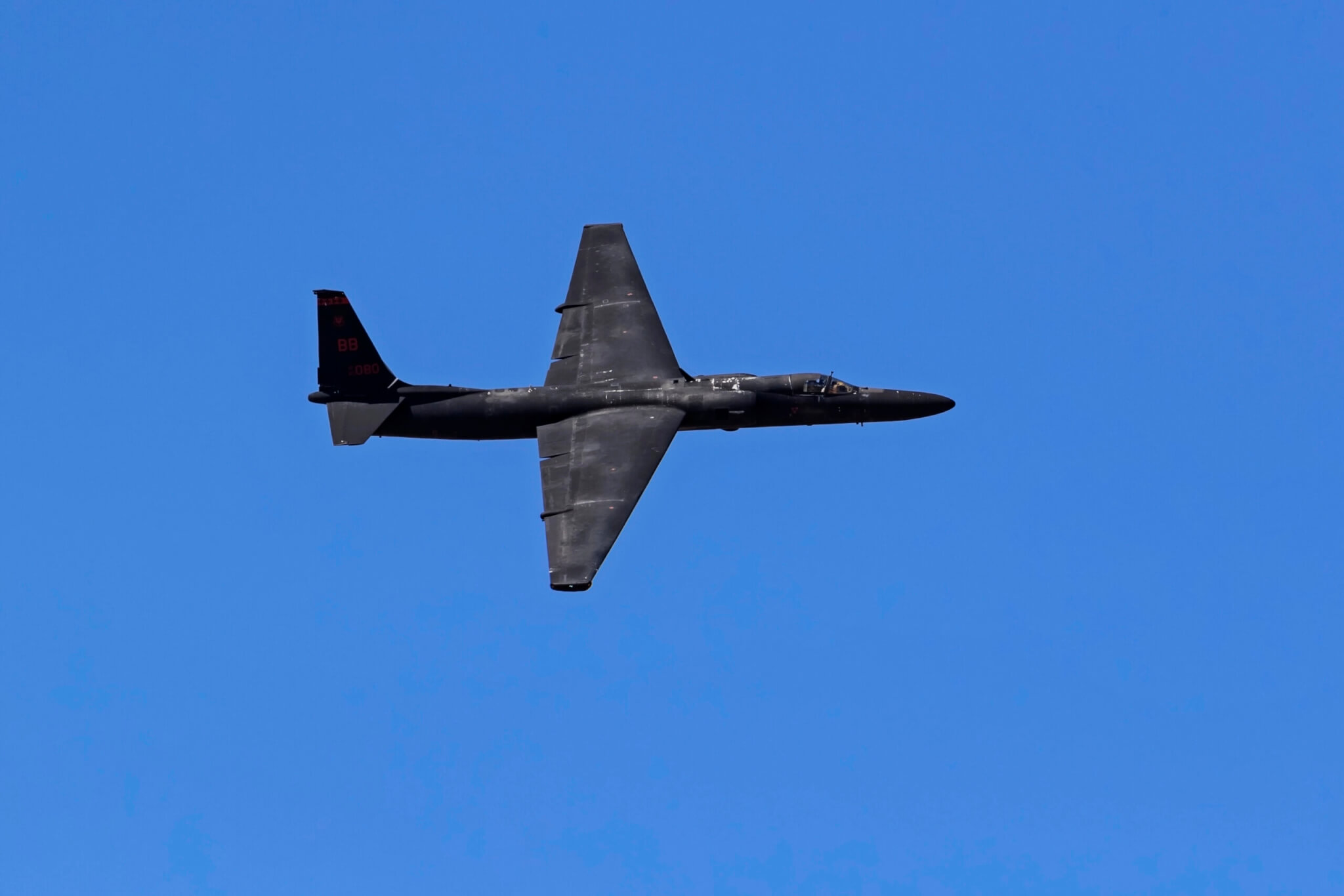
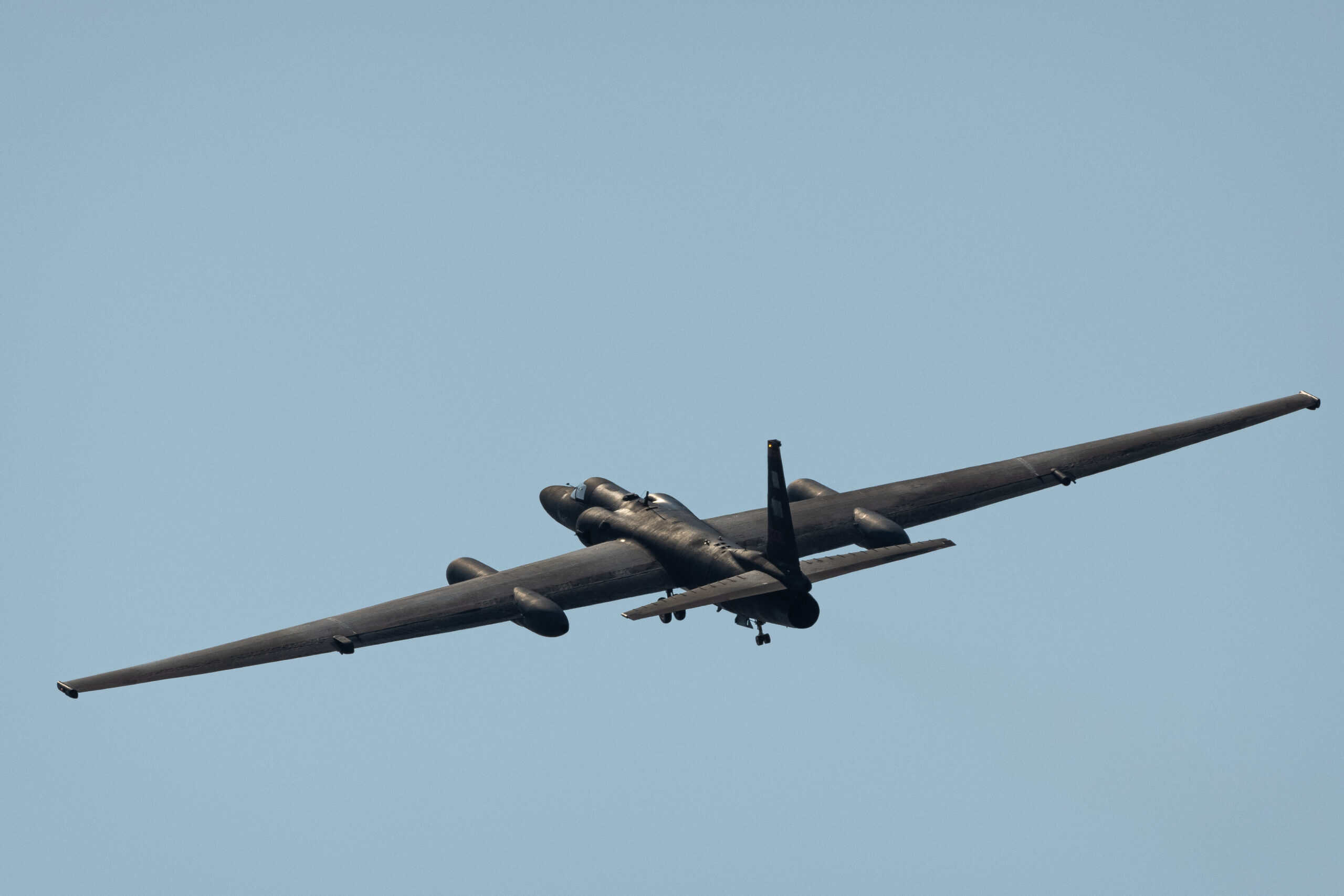
The solution came from Lockheed’s Skunk Works division. Working in secret at Area 51, engineers built a single-engine aircraft with a 105-foot wingspan designed to fly above 70,000 feet. The CIA, not the Air Force, first embraced the project. A civilian pilot overflying foreign territory was seen as less politically provocative than a military one.
President Eisenhower authorized the first overflights in 1956. The missions produced critical intelligence on Soviet nuclear programs. For several years, the U-2 flew essentially undetected — the Soviets could track it on radar but couldn’t reach it.
That changed on May 1, 1960. A surface-to-air missile brought down a U-2 over Soviet territory. Pilot Francis Gary Powers survived the crash — considered nearly impossible at that altitude — and was captured. The incident became one of the Cold War’s most dramatic episodes, later depicted in the film Bridge of Spies.
Why the CIA Flew It First — and What That Tells You About the U-2
Here’s something most people don’t know: the Air Force initially rejected the U-2’s design. Single-engine, unarmed, built for one mission only — they didn’t want it. The CIA saw the value immediately. That tension between operational utility and institutional skepticism has followed the U-2 its entire life. Even today, critics argue satellites and drones should replace it. They haven’t. There’s a reason this aircraft is still flying.
The Dragon Lady Is Brutal to Fly — Here’s Why
The U-2’s design is a study in trade-offs. Its 105-foot wingspan generates extraordinary lift at altitude but makes the aircraft nearly uncontrollable near the ground. Every pound shed gains another foot of ceiling. That efficiency comes at a cost: handling near the runway is genuinely dangerous.
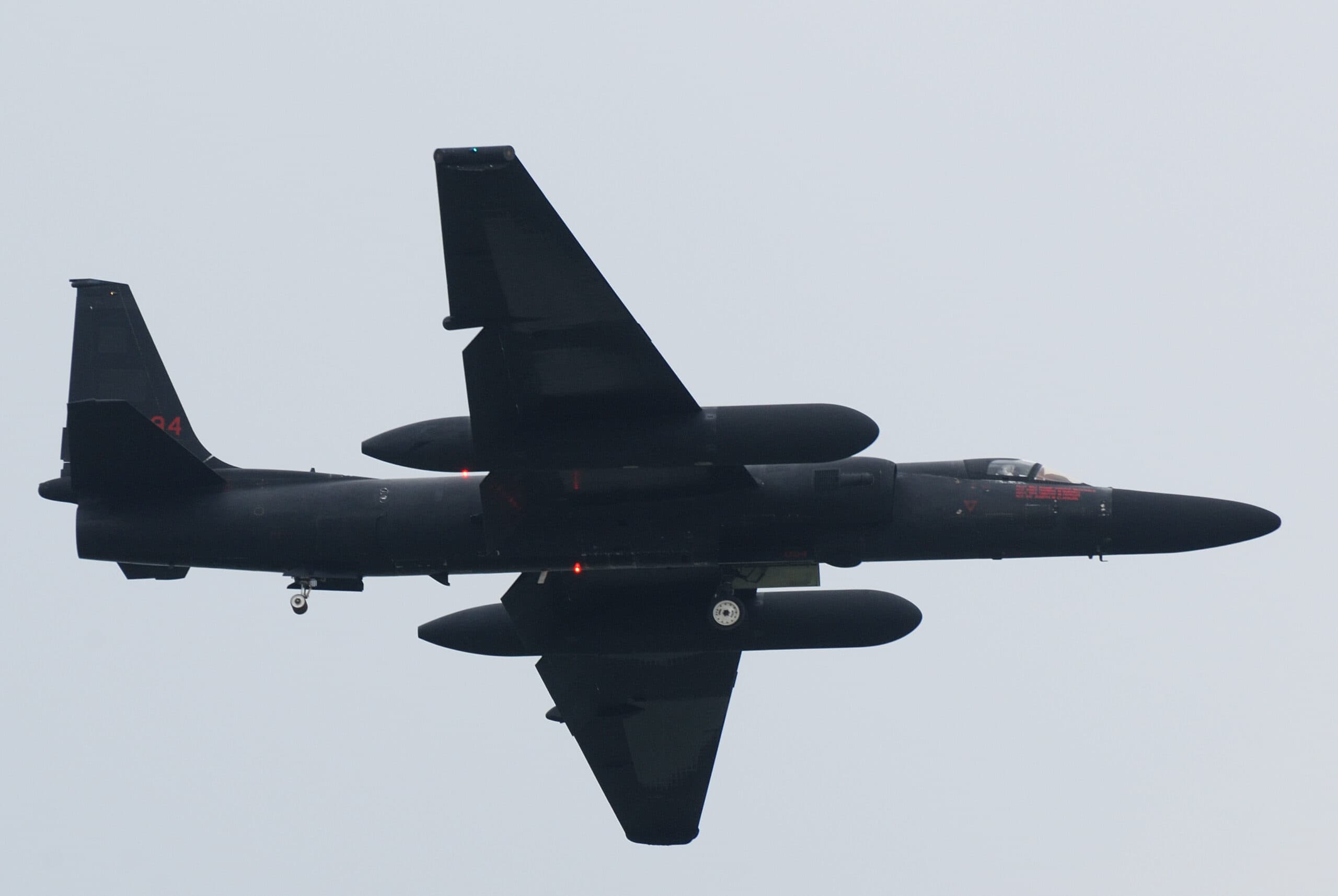
Takeoff feels like a rocket launch. The engine — shared with the B-2 bomber — delivers 17,000 pounds of thrust and the aircraft climbs steeply. Landing is harder. The U-2 uses bicycle landing gear: one wheel forward, one aft, nothing on the wingtips. On the ground, it’s a 105-foot teeter-totter.
The wings generate so much lift that pilots must stall the aircraft to force it onto the runway. A chase car — a specially modified sports car driven by another U-2 pilot — races alongside at up to 140 mph calling out altitude. Once stopped, ground crews attach “pogos” — stabilizing rods — under the wingtips to keep the plane upright. Without them, the wings rest on titanium skid plates.
What “Coffin Corner” Actually Feels Like at 70,000 Feet
At cruise altitude, the U-2 flies what pilots call “coffin corner.” The margin between stall speed and overspeed is razor-thin — sometimes just five to ten knots. Too slow and the aircraft drops. Too fast and the wings risk supersonic failure. It demands constant attention. Pilots describe low-altitude flying as wrestling a dragon, and high-altitude cruise as the dragon turning graceful — a lady. That’s where the nickname came from.
Our take: “Dragon Lady” might be the most accurate aircraft nickname in aviation history. It captures both the danger and the elegance in two words.
The Spacesuit: Your Only Armor at the Edge of Space
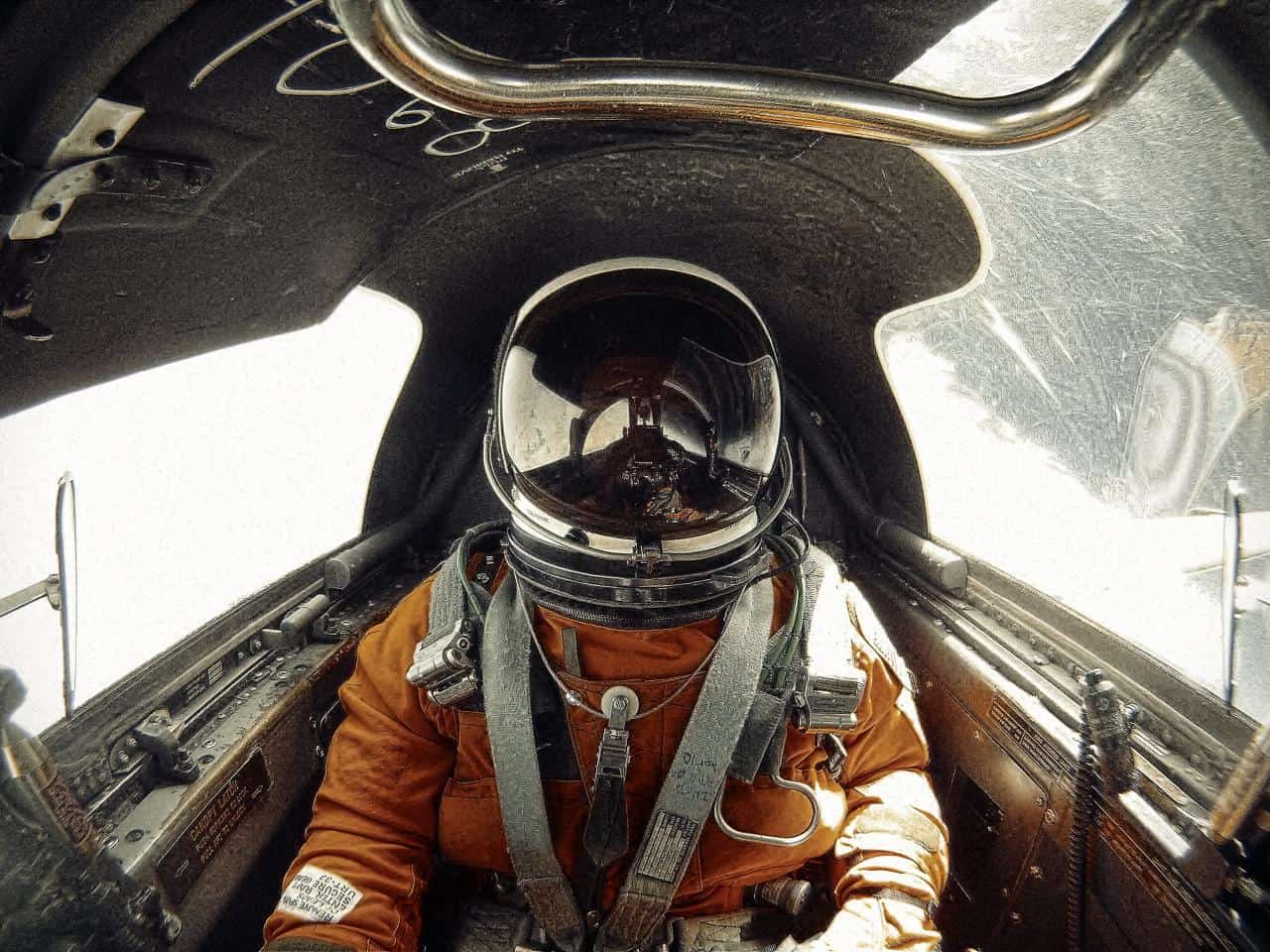
At 70,000 feet, the atmosphere is so thin that exposed human blood would boil. This threshold is called Armstrong’s Line, and it sits around 63,000 feet. The U-2 operates well above it. Without protection, a pilot has seconds to live.
The solution is a full-pressure spacesuit — a custom-fitted, self-contained environment. These suits were originally developed for NASA and worn by astronauts on the first Space Shuttle mission in 1981. Every breath inside one is deliberate and audible. The exhale meets slight resistance. Gloves make simple tasks — flipping switches, checking instruments — feel like working through concrete.
Before each flight, pilots undergo claustrophobia checks. They spend hours in a mock cockpit setup in the suit, confirming they can handle the isolation. Missions can run nearly 13 hours. That’s a long time to breathe through a helmet.
Why Eating Through a Straw Is the Weirdest Part of Flying the U-2
On long missions, U-2 pilots eat through a food port in the faceplate. Single-seat variants include an induction heater for meals like chicken tortilla soup or apple pie, squeezed through a straw. Pilots pass the time with books or puzzles, flexing their legs to avoid stiffness in the cramped cockpit.
Here’s what most pilots get wrong when they imagine flying a reconnaissance aircraft: they picture non-stop action. The reality is hours of methodical discipline at altitude, followed by a genuinely dangerous landing.
A View No Other Pilot Gets
The ascent in a U-2 spy plane is unlike anything else in aviation. Crossing 50,000 feet marks entry into the stratosphere. At 70,000 feet, the view changes completely. Below, the curve of the Earth is visible. Above, blue fades to black. Weather systems sit far beneath you. The entire atmosphere feels like a thin shell surrounding the planet.
The rear cockpit seat sits slightly higher than the pilot’s seat. A visitor riding along becomes, briefly, the highest human on Earth outside of the International Space Station. The cockpit’s updated digital displays have replaced the older periscope-based navigation systems. But the spacesuit limits movement, so every glance outside is a conscious, deliberate act.
Visibility can extend for hundreds of miles in every direction. On clear days, pilots see mountain ranges they’d never notice from commercial altitude. The silence, filtered through the suit, is total.
Why the U-2 Outlasted the Satellite Age
Satellites cover more ground, but they’re predictable. Adversaries know when they’ll pass overhead. A satellite’s orbit is fixed. The Lockheed’s U-2 is not.
The aircraft deploys globally on short notice, loiters over a target for hours, and can redirect mid-mission. Satellites can’t do that. Together, they’re complementary intelligence platforms — not competitors. The U-2 fills the gap between the satellite pass and the next one.
In 2023, a U-2 was dispatched to observe a Chinese high-altitude surveillance balloon drifting over U.S. territory. The U-2 was the only platform that could operate at the balloon’s altitude and provide real-time observation. It was exactly the kind of flexible, rapid response that no satellite can match.
For GA pilots, the U-2 offers a useful reminder. The fundamentals of flight — lift, drag, stall speed, energy management — don’t change at 70,000 feet. They just get more extreme. Understanding those fundamentals at altitude clarifies why they matter at 5,000 feet too.
For more on the U-2’s history and current operations, Flying Magazine has covered the Dragon Lady extensively. AVweb also has archived coverage of high-altitude aviation operations and the aircraft’s design evolution.
What U-2 Operations Reveal About High-Altitude Physiology for GA Pilots
The the reconnaissance plane operates in a physiological environment that is hostile to human survival without extraordinary preparation. At 70,000 feet, the atmospheric pressure is roughly equivalent to 100,000 feet above sea level in terms of oxygen availability. U-2 pilots wear full pressure suits — essentially individual spacesuits — and breathe 100% oxygen for at least one hour before each flight to pre-breathe out nitrogen and prevent decompression sickness. Understanding what U-2 spy plane operations reveal about human limits at altitude has practical value for any GA pilot flying above 10,000 feet.
The Oxygen Timeline Every High-Altitude Pilot Should Know
At 25,000 feet, Time of Useful Consciousness (TUC) without supplemental oxygen is about three to five minutes. At 35,000 feet, it drops to 30 to 60 seconds. The the Dragon Lady program flies where TUC is essentially zero — consciousness and motor function fail almost instantly without a pressure suit. For GA pilots, these numbers start mattering at much lower altitudes than most realize. FAA regulations require supplemental oxygen at 12,500 feet MSL for flights over 30 minutes and at 14,000 feet for all crew members at all times — but the physiological impairment begins before the legal threshold kicks in.
The lesson from U-2 operations: oxygen is not an emergency tool. It’s a performance tool. Pilots who use oxygen from 8,000 feet up — even when regulations don’t require it — fly with measurably better cognitive function, reaction time, and situational awareness. The the Dragon Lady program treats oxygen discipline as mission-critical. GA pilots flying mountain cross-countries should think the same way.
Spatial Disorientation at High Altitude
U-2 spy plane pilots train extensively for spatial disorientation because at 70,000 feet there is no visual horizon, no ground reference, and the vestibular system is completely unreliable. The aircraft’s bank angle can be off by 60 degrees and the pilot will feel perfectly level. This isn’t unique to stratospheric flight — it happens to GA pilots in IMC at 5,000 feet. The vestibular illusions are the same. Only the consequences and available reaction time differ.
The fix, at every altitude, is identical: trust your instruments. The artificial horizon doesn’t lie. Your inner ear does. U-2 pilots drill this in simulators until instrument trust becomes automatic. GA pilots who fly at night or in IFR conditions need the same discipline. The the high-altitude spyplane makes spatial disorientation a headline topic precisely because the altitude makes it unsurvivable — but the same physiology operates against you during any flight in reduced visual conditions.
Suit-Up Discipline as a Model for GA Preflight Rigor
A U-2 pilot’s preflight process takes several hours and involves multiple physiological checkpoints: medical screening, pressure suit fit and seal verification, pre-breathing protocol, cockpit pressurization check. Every step is verified by a support crew member before the pilot boards. This level of process rigor is impractical for GA operations — but the mindset is transferable.
We’ll be straight with you: most GA preflight accidents happen because pilots rush or abbreviate. The Lockheed’s U-2 program’s insistence on no-skip procedures isn’t bureaucratic — it’s the recognition that at the margins, the only thing between you and a fatal outcome is whether you did the checklist correctly. For GA pilots, the checklist represents the same thing. It’s not paperwork. It’s survival protocol condensed to a laminated card.
The U-2 Legacy: Reconnaissance Aircraft That Shaped Aviation History
The this aircraft’s intelligence record spans decades and includes some of the most consequential reconnaissance missions in American history. The 1962 Cuban Missile Crisis was confirmed by U-2 imagery — photographs taken at 70,000 feet showed Soviet ballistic missile sites being constructed in Cuba and gave Kennedy’s administration the evidence it needed to act. That single reconnaissance flight arguably prevented a nuclear exchange. The aircraft’s operational record is unmatched in the category of high-altitude, single-aircraft strategic reconnaissance.
Continuous Evolution: The TR-1 and ER-2 Variants
The U-2 spy plane has been continuously upgraded since its 1955 first flight. The TR-1 variant, introduced in the 1980s, featured structural improvements and enhanced sensor suites for battlefield surveillance in European theater operations. NASA operates the ER-2 (Earth Resources 2) variant for atmospheric research missions — the same basic airframe, repurposed for climate science and earth observation. The fact that a 1950s-era airframe continues to serve in 2026 across both military and scientific roles speaks to the fundamental soundness of Kelly Johnson’s original design.
Modern U-2 aircraft carry electro-optical cameras, SIGINT collection equipment, and datalink systems that would be unrecognizable to the original program engineers. The U-2 spy plane airframe has outlasted every purpose-built replacement program proposed for it, including the canceled Lockheed CL-400 and the SR-71’s brief attempt to assume its mission. Aviation incident data shows that aircraft reliability and pilot proficiency, not raw performance, determine mission success — a principle the U-2 program validates across every decade of operation.
Why the U-2 Still Flies When Satellites Could Do the Job
This is the question every defense analyst asks. Reconnaissance satellites are cheaper per image, don’t risk pilot lives, and provide coverage of any point on earth. So why does the the reconnaissance plane remain in service? The answer comes down to persistence and flexibility. A satellite passes over a target in minutes, on a fixed orbital schedule that adversaries can predict. A U-2 can loiter over a target area for hours, repositioning as the mission develops, with sensor payloads swapped between flights depending on what’s needed. It’s the difference between a photograph and a conversation. Mission discipline under pressure is what has kept the program relevant when the technology calculus would seem to make it obsolete.
Frequently Asked Questions About the U-2 Spy Plane
How high does the U-2 spy plane fly?
The U-2 operates above 70,000 feet — well into the stratosphere. At this altitude, atmospheric pressure drops below Armstrong’s Line, where human blood would boil without a pressurized suit. Pilots wear full-pressure spacesuits for every mission.
Is the U-2 still in service today?
Yes. The U-2 remains active with the United States Air Force. Its ability to loiter over targets for extended periods and deploy rapidly makes it complementary to satellite surveillance — not replaceable by it. A U-2 observed the Chinese high-altitude balloon incident in 2023.
Why is the U-2 called the Dragon Lady?
The nickname reflects the aircraft’s dual personality. At low altitude it’s extremely difficult to control — like wrestling a dragon. At its operational ceiling it handles smoothly and gracefully. The combination gave rise to the Dragon Lady name among pilots who flew it.
E3 Aviation Editorial Team
The E3 Aviation Association editorial team is made up of licensed pilots, aviation educators, and industry professionals dedicated to advancing general aviation safety, community, and education. Learn more about E3 Aviation.