The Boca Raton airplane crash on April 11, 2025 sent waves through the general aviation community. The accident, involving a single-engine aircraft on departure from Boca Raton Airport, drew immediate national attention and triggered the deeper questions every GA pilot should be asking: What conditions enabled this? What decisions led to it? What can pilots learn before the NTSB report is final?
This is a careful look at the operational lessons GA pilots can extract from the Boca Raton crash. The full NTSB probable cause determination will take 12–24 months. But the early visible factors — pilot experience, aircraft type, departure procedure, weather — already point to patterns that show up across the accident data. The lessons available now are too important to wait on.
What Happened at Boca Raton
The April 11, 2025 accident involved a single-engine aircraft departing Boca Raton Airport. Initial reporting indicated the aircraft experienced difficulty shortly after takeoff and impacted terrain near the airport boundary. There were fatalities. The aircraft was destroyed. The accident generated significant local media coverage and a formal NTSB investigation that’s still ongoing in 2026.
The early public information identified the aircraft type, the registration, and basic flight characteristics. The pilot’s experience level, the specific flight purpose, and the immediate cause of the impact will be addressed in the NTSB factual report and probable cause determination. As with most GA accidents, the early speculation has been wide-ranging, but the actual cause may be more mundane than the speculation suggests.
What pilots can engage with now isn’t the specific cause — that will come from the NTSB. What pilots can engage with is the operational discipline that prevents accidents in the conditions Boca Raton operates in: high-density airspace, mixed traffic, frequent training operations, and weather that can shift quickly off the Atlantic coast.
The Pre-Takeoff Decision Window
Most GA accidents have a decision point in the pre-takeoff window where the outcome could have been different. The pilot who notices something abnormal during run-up and decides to investigate, or the pilot who reads the weather one more time and decides to delay, doesn’t end up in the accident report.
The pre-takeoff window is the cheapest decision-making space in aviation. The cost of canceling a flight on the ground is hassle and inconvenience. The cost of continuing a flight that should have been canceled can be lives. The math favors caution at the cost of inconvenience, every time.
The pilots who are willing to scrub a takeoff when something is marginal — wind component near the demonstrated maximum, engine instruments slightly off-nominal, weather forecast trending unfavorable — are the pilots who don’t end up in NTSB reports. The scrub costs nothing meaningful. The continuation can cost everything.
The First Five Minutes After Takeoff
The accident data consistently identifies the first five minutes after takeoff as the highest-risk phase of GA flight. Engine failures, configuration errors, control input mistakes, and disorientation all concentrate in this window. The cognitive load is high (rapidly changing altitude, configuration changes, traffic awareness, ATC communication), and the margin for recovery is small.
The mitigations are well-known and underused. A complete and current takeoff briefing — what runway, what departure procedure, what the immediate plan is if the engine fails, what the abort criteria are — sets the cognitive framework before the workload spikes. Pilots who consistently brief their takeoffs handle abnormal situations dramatically better than pilots who don’t.
The departure procedure is another underused tool. Following a published departure or a self-defined departure plan ensures that the first turn, the first altitude, and the first navigation waypoint are set before the takeoff roll. Improvising the departure under load is a documented source of accident-chain initiations.
Engine Failure on Departure: The Decision Most Pilots Are Unprepared For
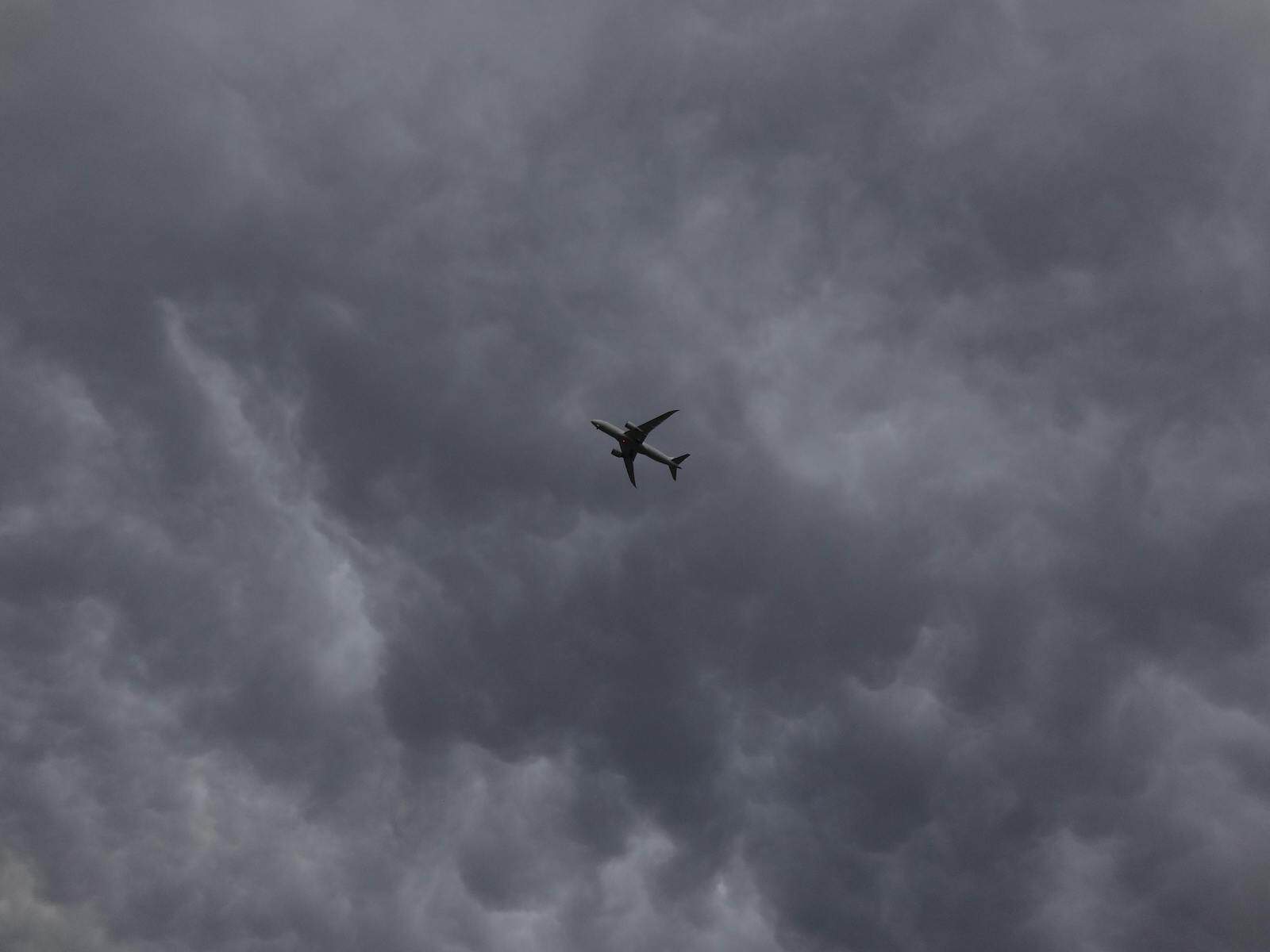
Engine failure on departure is statistically rare but operationally critical. Most pilots train it during initial certification and rarely practice it again. The result is that when it happens, the pilot’s response is often the response they trained 1,000 hours ago, not the response they trained yesterday.
The hard truth: there’s a window of altitude — typically below 500 feet AGL — where an engine failure on departure means landing straight ahead. Turning back to the runway from low altitude is the most common fatal decision in GA accident reports. Aircraft don’t fly well at slow speeds and steep angles, and the pilot’s instinct to “save” the airplane by returning to the runway is almost always wrong below 500 feet.
The discipline is practicing the procedure regularly. Every flight review should include a simulated engine failure at low altitude. Every recurrent training session should pressure-test the pilot’s decision threshold. The pilot who has practiced “land straight ahead” repeatedly is the pilot who does it when it matters.
Currency Versus Proficiency
Legally current pilots can be operationally rusty. The 90-day takeoff and landing currency rule, the 24-month flight review, and the basic operating minimums are floors, not ceilings. Pilots who fly the minimums and nothing more accumulate rust faster than they realize.
The specific skills that degrade fastest are emergency procedures, crosswind technique, soft-field and short-field operations, and abnormal-situation decision-making. The skills you don’t practice are the skills you don’t have when you need them. Most accident chains include a moment where the pilot’s response would have been correct if practiced recently and was incorrect because the practice had lapsed.
The mitigation isn’t complicated. Fly more often than minimums require. Rotate through different airports and conditions. Practice emergency procedures with a CFI annually, not every two years. Currency is a regulatory standard; proficiency is your responsibility.
The Role of ATC and Traffic Awareness
Boca Raton operates in a busy, mixed-traffic environment. High-volume terminal airspace adds variables that pilots in quieter airspace don’t face — radio congestion, traffic at unusual altitudes, rapid-fire ATC instructions, and the cognitive load of maintaining situational awareness while complying with controller direction.
The pilot’s job in busy airspace is to be predictable. Follow ATC instructions promptly, read back clearances accurately, maintain assigned headings and altitudes, and communicate concisely. Pilots who hesitate, who second-guess clearances, or who fly slightly off the assigned profile create work for controllers and risk for everyone else.
Traffic awareness via ADS-B has dramatically improved over the last decade. Most GA aircraft now have either Traffic Information Service (TIS) or ADS-B traffic display. Using that tool actively — scanning for nearby traffic, anticipating conflict points, asking ATC to confirm separation when traffic appears close — is the modern equivalent of the visual scan that previous generations of pilots relied on entirely.
The Florida Aviation Environment

The Boca Raton crash occurred in one of the busiest GA environments in the United States. South Florida airspace combines high-volume training operations, transient business aviation traffic, recreational flying, and proximity to multiple Class B and Class C airports. The operational density makes situational awareness, communication discipline, and decision-making margins more important than they are in lower-density environments.
For pilots operating in similar environments, the Boca Raton crash is a reminder that the variables compound. Busy airspace, marginal weather, time pressure, and proficiency drift all interact. The pilot who maintains discipline across all of these dimensions operates safely; the pilot who lets any single dimension slide creates conditions for the chain.
How the GA Community Responds to Accidents
The general aviation community’s response to high-profile accidents has matured significantly over the last two decades. The initial reaction is almost always to focus on the human story — the victims, the families, the immediate facts. The deeper conversation, which usually develops over months, focuses on the operational and systemic factors.
For pilots who actively want to learn from accidents, the resources have improved. The NTSB database is searchable, industry safety institutes publish detailed analyses of recurring accident types, and several podcasts and YouTube channels provide reasoned discussion of accident chains. The pilots who engage with this material consistently tend to fly more carefully — not because they’re frightened, but because they internalize the patterns.
The Boca Raton crash will eventually become a teaching case. The NTSB report, when published, will identify specific contributing factors. The GA community will discuss those factors, integrate the lessons into training materials, and use the case to make every subsequent flight slightly safer. That’s how the community honors the people who don’t come back from their flights — by becoming safer because of what happened.
What Pilots Can Do Today
While the Boca Raton investigation continues, every GA pilot can take specific actions today to reduce the variables that show up in accident chains. First, audit your personal minimums — are they written down, do they exceed regulatory minimums, do you hold them when conditions are marginal? Second, schedule recurrent training that includes emergency procedures, not just the regulatory flight review.
Third, brief every takeoff explicitly. Verbalize the runway, the departure plan, the engine-failure procedure, and the abort criteria. Pilots who consistently brief takeoffs handle abnormal situations measurably better. Fourth, read at least one NTSB report per month for accidents in aircraft you fly. The patterns become internalized over time.
Finally, be honest about currency vs. proficiency. Regulatory currency is the legal floor. Operational proficiency requires more — more frequent flying, more rotated practice through different conditions, more engagement with a CFI. The pilots who don’t show up in accident reports do these things consistently.
Why Aviation Safety Conversations Matter

Every fatal GA accident triggers community-wide conversation. Some of that conversation is well-intentioned but unhelpful — speculation without facts, blame-assignment before the NTSB investigation, and emotional responses that don’t translate into operational learning. The conversations that actually improve safety focus on specific decisions, specific procedures, and specific operational disciplines that pilots can replicate.
The Boca Raton crash will generate both kinds of conversation. The valuable threads will focus on what’s already knowable — proven safety techniques, decision-making frameworks, the operational disciplines that consistently appear in pilots who don’t end up in NTSB reports. The less valuable threads will speculate about specific causes that only the NTSB can confirm.
For pilots engaging with this material, the discipline is to focus on what’s actionable. The NTSB will eventually publish the factual report and probable cause determination. Until then, the operational lessons that already apply — pre-takeoff decision discipline, departure briefings, engine-failure procedures, currency vs. proficiency — are the most productive use of attention.
The community’s response to the Boca Raton crash will, over time, shape how the next pilot in similar circumstances thinks about their flight. That’s the gradual mechanism by which GA gets safer. Every published accident report, every operational lesson internalized by another pilot, every check or audit prompted by recognition of recurring patterns — these accumulate into the safety culture that defines whether GA continues to attract pilots and earns the public’s trust.
What the NTSB Process Will Eventually Reveal
The NTSB factual report and probable cause determination for the Boca Raton crash will eventually be available through the NTSB aviation accident database. The factual report will document the aircraft, the pilot, the weather, the maintenance history, and the operational details. The probable cause determination will identify the proximate cause and contributing factors.
For pilots, the NTSB reports are the most valuable training material available. Reading reports on accidents in aircraft you fly, in conditions you operate in, and at airports you visit is a powerful way to internalize the patterns that lead to accidents. The reports aren’t comfortable reading, but they’re the most direct way to learn from other pilots’ worst days.
The Boca Raton crash will become one of those reports. Pilots who read it carefully when it’s published — and apply the specific lessons to their own operations — are doing what the pilots in the accident no longer can. That’s how the GA community gets safer over time.
Frequently Asked Questions
When did the Boca Raton airplane crash happen?
The accident occurred on April 11, 2025, at Boca Raton Airport in Florida. It involved a single-engine aircraft and resulted in fatalities. The NTSB investigation is ongoing as of May 2026.
What can pilots learn from the Boca Raton crash before the NTSB report is finalized?
While the specific probable cause requires the NTSB investigation to conclude, pilots can engage now with the operational disciplines that prevent the most common GA accidents — pre-takeoff decision-making, departure briefings, engine-failure-on-departure procedures, currency vs. proficiency, and traffic awareness in busy airspace.
Why is the first five minutes after takeoff the highest-risk phase?
Engine failures, configuration errors, control input mistakes, and disorientation all concentrate in this window. The cognitive load is high during rapid altitude changes, configuration adjustments, traffic awareness, and ATC communication. The mitigations are pre-takeoff briefings, published or self-defined departure procedures, and regular emergency-procedure practice.
How can I find NTSB accident reports?
The NTSB aviation accident database is publicly available at ntsb.gov. Pilots can search by date, location, aircraft type, or other criteria. Reading reports on accidents in aircraft you fly, in similar conditions, is one of the most valuable training resources available.
Related Reading
The Other Guy Syndrome
Why pilots believe accidents happen to other people.
Owner-Pilot Weather Horror Stories
Real-world lessons from weather encounters that went bad.
Eliminating Variables: Reducing Flight Risk
How disciplined pilots remove variables from every flight.
Last Updated: May 14, 2026