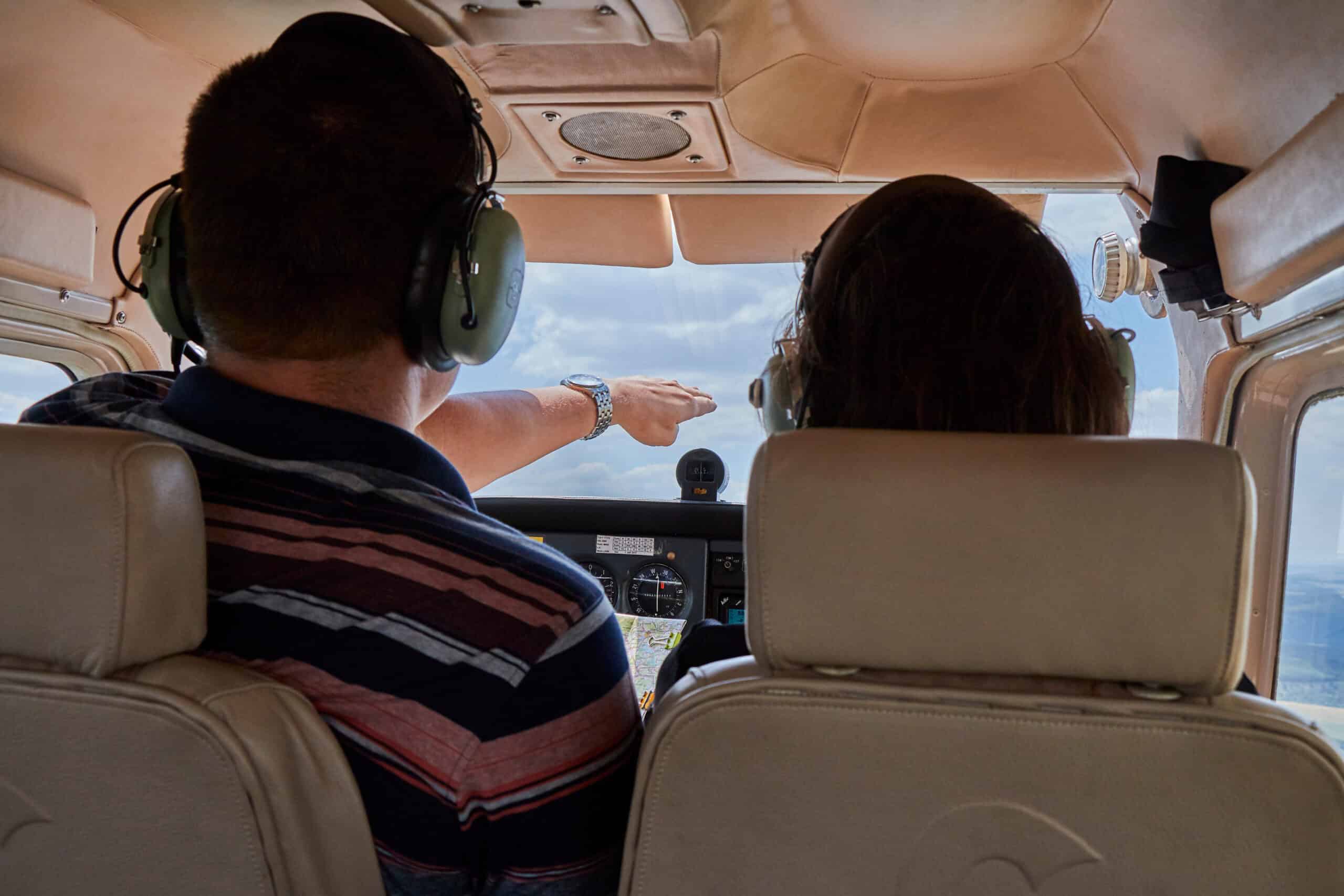
Human error is the leading cause of GA accidents — by a wide margin. Not mechanical failure. Not weather surprises. Not bad luck. The NTSB consistently attributes 75–80% of general aviation accidents to decisions made (or not made) by the pilot in command. That’s a sobering number, and it’s also an actionable one.
Last Updated: May 7, 2026 | By: The E3 Aviation Editorial Team
Understanding Human Error in General Aviation
When investigators call something “human error,” they don’t mean stupidity. They mean a deviation from what a trained pilot should have done, given the information available at the time. The distinction matters because understanding why errors happen is the first step to preventing them.
NTSB accident data consistently shows the same error categories at the top of the list. Continued VFR flight into IMC — a pilot who presses into deteriorating weather conditions despite warning signs — remains one of the most lethal mistakes in general aviation. Loss of control in flight (LOC-I) is the category that kills more GA pilots than any other single accident type. Fuel mismanagement, spatial disorientation, and improper runway operations round out the top five.
What unites these categories is that every one of them has a human decision at its root. Weather wasn’t the problem — the decision to fly into it was. The airplane didn’t cause LOC-I — the pilot’s failure to maintain airspeed in a critical phase of flight did. The engine didn’t run out of fuel — the fuel management decision made it happen.
The Most Common Types of Human Error That Kill GA Pilots
Loss of control in flight accounts for roughly 400 fatal accidents per year in U.S. general aviation. Many LOC-I accidents occur during the traffic pattern or base-to-final turn — exactly where pilots are heads-down, busy with checklist items, ATC calls, and passengers. Speed bleeds off unnoticed. The stall-spin scenario that follows kills pilots who would have passed any written test on stall awareness.
Continued VFR into IMC produces some of the most predictable accidents in the database. The pattern is consistent: a VFR pilot encounters marginal conditions, makes a series of small decisions to continue, and eventually enters instrument meteorological conditions without the training or currency to survive. Average time to loss of control after entering IMC: about 178 seconds, according to research cited by the FAA.
Fuel mismanagement covers a range of errors: failure to check fuel before flight, miscalculation of fuel burn, confusion over fuel selector position, and running a tank dry without switching. Many fuel exhaustion accidents are found to have occurred with fuel still in the airplane — it just wasn’t accessible because the selector was in the wrong position.
Mitigation Strategies: What Actually Reduces Human Error

The research on human error reduction in aviation is extensive, and the practical takeaways are clear. Three categories of intervention make the biggest difference: training design, cockpit discipline, and decision-making frameworks.
Scenario-based training (SBT) outperforms maneuver-based training for accident prevention. When pilots practice making decisions in realistic, ambiguous scenarios — not just executing clean maneuvers in perfect conditions — they build the decision-making muscle they actually need when things go wrong. Most flight training underinvests here. You’ll log hours demonstrating steep turns and chandelles, but how many hours have you spent practicing “go or no-go” decisions with real weather products and real time pressure?
Checklist discipline is underappreciated. Pilots who use checklists consistently — not from memory, from the actual written document — catch more pre-flight discrepancies, fewer fuel mismanagement errors, and fewer gear-up landings. The discipline isn’t about doubting your memory. It’s about removing the cognitive load of recalling procedures so your working memory is free for situational awareness.
How IMSAFE and PAVE Turn Decision-Making Into a Habit
Two structured frameworks have proven effective for GA pilots addressing the leading cause of GA accidents through better human error management. IMSAFE (Illness, Medication, Stress, Alcohol, Fatigue, Emotion) is a pre-flight personal health assessment. It takes 30 seconds to run through mentally and flags the personal risk factors that impair judgment — factors that are invisible to ATC and your passengers but fully known to you.
PAVE (Pilot, Aircraft, enVironment, External pressures) is a risk assessment framework for each flight. Walk through each element: What’s your personal currency and health status? What’s the aircraft’s condition? What does the weather and airspace look like? What external pressures — schedule, passenger expectations, sunk costs — might push you toward a bad decision? Naming the pressures makes them visible and resistible.
Our take: these frameworks only work if you actually use them. Keep a PAVE checklist card in your flight bag. Run IMSAFE during your walk to the airplane, not at home when you were already planning to fly anyway. The critical self-assessments happen when the stakes are real and the momentum to fly is already built up.
Training and Technology That Are Moving the Needle
Aviation safety has improved significantly over the past two decades despite a growing GA fleet. The accident rate per flight hour has dropped meaningfully. A combination of better training technology, improved aircraft systems, and more sophisticated safety data analysis has contributed.
Glass cockpits with synthetic vision have reduced controlled flight into terrain (CFIT) accidents. AHRS-based attitude indicators survive unusual attitude recoveries that would have defeated vacuum gyros. ADS-B has improved traffic awareness. These technologies don’t prevent human error — but they reduce the consequences of some errors and give pilots better information to avoid others.
The most significant development in training is the growth of scenario-based, airline-style crew resource management (CRM) training adapted for single-pilot operations. FAA Wings programs, free online aviation safety courses, and CFI-led scenario training all contribute. The data suggests pilots who complete structured safety training programs after their initial certificate have meaningfully lower accident rates than those who don’t.
The NTSB’s aviation accident database lets pilots review the actual accident record by category, aircraft type, and phase of flight. Spending an hour in that database is one of the most productive safety education activities available to a GA pilot. AVweb’s safety coverage breaks down accident trends in detail worth reading regularly.
The Five Human Error Patterns Behind Most GA Accidents
The NTSB doesn’t just tally accidents — it categorizes the human behaviors that caused them. Across general aviation, five patterns appear again and again in accident narratives. Recognizing them in your own flying is the first step toward breaking the cycle.
Continuing VFR Into IMC
This single error pattern — a VFR pilot pressing into instrument meteorological conditions — accounts for a disproportionate share of fatal GA accidents. The leading cause of GA accidents in this category isn’t ignorance. Most pilots know what IMC is. The problem is gradual deterioration: ceilings dropping, visibility narrowing, the pilot believing conditions will improve ahead. They rarely do.
The fix isn’t just weather knowledge. It’s a written personal minimum — a hard ceiling altitude, visibility floor, and go/no-go decision point set when you’re on the ground with a clear head, not in the cockpit second-guessing yourself at 1,200 feet with a mile-and-a-half visibility.

Loss of Control — Inflight
LOC-I (Loss of Control Inflight) has topped the NTSB’s fatal accident categories for years. It includes inadvertent stalls, spin entries, and maneuvering flight at low altitude. Notably, this is the leading cause of GA accidents in the approach and landing phase — not just cruise flight. Slow flight gone wrong on final approach, or a distracted base-to-final turn pulled too tight, can become fatal in seconds.
First, practice stall recognition and recovery at altitude with a CFI. Second, maintain published approach speeds — not “a few knots slow” because the runway looks short. Airspeed discipline is the single most effective habit against LOC-I.
Controlled Flight Into Terrain
CFIT means a fully functional aircraft flown into terrain, trees, or water by a pilot who didn’t know where the ground was. It happens in reduced visibility, at night, in mountainous terrain, and during descents below published minimums. Spatial disorientation plays a role — once you lose the visual horizon, your vestibular system lies to you convincingly.
The antidote is procedural: use published instrument approaches, brief MVA (minimum vectoring altitude), and never descend below MDA or DA without the required visual references. For VFR pilots flying unfamiliar terrain, “if in doubt, climb” is a rule that has saved lives.
Fuel Mismanagement
Running a GA aircraft engine to fuel exhaustion in 2026 is almost entirely preventable — and yet it still appears in NTSB reports every year. Fuel mismanagement takes several forms: taking off with insufficient fuel, incorrect fuel selection (wrong tank), and failure to monitor consumption against time en route. Each is a decision failure, not a knowledge failure. Every pilot knows aircraft need fuel. The error happens when get-there-itis or distraction shortcircuits the preflight process.
The practical fix: verify fuel quantity visually at every preflight, calculate required fuel plus 30-minute VFR or 45-minute IFR reserve before every flight, and set a fuel-check reminder in your cockpit at every hour of flight time.
Improper Aerodrome Operations
Ground collisions, runway incursions, and wrong-runway departures fall into this category. Busy Class D airports, unfamiliar towered airports, and nonstandard traffic patterns all increase the risk. The NTSB consistently notes that pilots who read back clearances incorrectly — or don’t read back at all — are overrepresented in runway incursion events.
Full readback of runway assignments and hold-short instructions is not optional. It’s a crosscheck that catches miscommunications before they become statistics.
Building the Mental Habits That Beat Human Error
The leading cause of GA accidents is human error — but human error is trainable. Unlike aircraft mechanical failures, which often occur without warning, the decision chains that lead to accidents have multiple intervention points. Here’s how to build the habits that break that chain.
The IMSAFE Checklist — Before Every Flight
IMSAFE (Illness, Medication, Stress, Alcohol, Fatigue, Emotion) is FAA-endorsed for a reason: the factors it checks are the exact human performance variables that degrade pilot judgment before a single switch is flipped. Run it honestly before every flight, not as a formality, but as a real self-assessment. Human error in GA accidents most often traces back to one or more of these six factors being in the red.
Fly With a Decision Framework
Structured decision-making models — the FAA’s 3P (Perceive, Process, Perform) or DECIDE — give you a cognitive anchor when situations develop faster than expected. They prevent fixation: the tendency to hyperfocus on one problem while missing the bigger picture. For GA pilots, simply asking “Is this situation normal? Is something changing?” at regular intervals during flight can catch deteriorating conditions before they become emergencies.
Build Personal Minimums and Stick to Them
Personal minimums are the guard rails between legal and safe. The FAA sets minimum requirements. Your personal minimums should exceed them, based on your actual currency, aircraft familiarity, and local weather patterns. A ceiling of 2,000 feet and 5 miles visibility sounds comfortable — but if you haven’t flown in three weeks, in unfamiliar terrain, with a passenger who’s nervous, those numbers may need to go up. Flight training habits formed early in your aviation career set the foundation for the decision-making you’ll rely on for thousands of hours afterward.
Review your personal minimums every six months. Raise them when you’re out of currency. Lower them — carefully — as you build demonstrated proficiency in specific conditions. Write them down. Tell your passengers about them. That commitment makes them real.
Importantly, recurrent training and self-assessment are the most reliable defenses against the human error patterns that produce GA accidents. Specifically, pilots who do quarterly self-evaluation against the published Airman Certification Standards catch their own developing weaknesses before those weaknesses produce incidents. Furthermore, scenario-based recurrent training with a CFI specifically targeting human factors topics is consistently shown to reduce accident rates over time.
Frequently Asked Questions About the Leading Cause of GA Accidents
What percentage of GA accidents are caused by human error?
NTSB data consistently shows that 75–80% of general aviation accidents involve human error as a primary cause or contributing factor. Mechanical failures account for roughly 15–20%. Weather-only causes are rare — most weather-related accidents also involve a human decision to fly in those conditions.
What is the most dangerous phase of GA flight?
The traffic pattern — specifically maneuvering, base-to-final turns, and the approach — accounts for the highest concentration of fatal accidents. Loss of control during these phases is responsible for a large share of fatal stall-spin accidents. The combination of low altitude, low airspeed, task saturation, and divided attention makes this phase disproportionately risky.
Does more flight experience prevent accidents?
Experience helps, but it’s not a guarantee. Some accident categories — particularly those involving continued VFR into IMC — actually affect instrument-rated and higher-time pilots at meaningful rates. Currency and recency matter more than total hours in many scenarios. A 500-hour pilot who flies regularly is statistically safer than a 2,000-hour pilot who rarely flies.
E3 Aviation Editorial Team
The E3 Aviation Association editorial team is made up of licensed pilots, aviation educators, and industry professionals dedicated to advancing general aviation safety, community, and education. Learn more about E3 Aviation.
Resources for GA Pilots Committed to Safer Flying
The leading cause of GA accidents — human error — requires both knowledge and practiced habits. The FAA publishes several free resources that directly address the human error patterns documented in GA accident records. The Aeronautical Decision Making (ADM) advisory circular (AC 60-22) covers the full range of decision-making frameworks in practical terms. The FAA Safety Team (FAASTeam) runs free online courses through the WINGS Pilot Proficiency Program that credit your logbook and focus specifically on the human factors behind accidents. Both are worth your time.
The NTSB’s Most Wanted List of Transportation Safety Improvements consistently highlights GA safety as a priority area — specifically loss of control inflight and controlled flight into terrain. Reviewing those recommendations gives you a clear picture of where the system thinks the risk is concentrated and what interventions have the strongest evidence base. That’s directly actionable information for any GA pilot who wants to fly smarter.
We’ll be straight with you: the statistics on human error as the leading cause of GA accidents haven’t moved dramatically in decades. The technology has improved. Weather forecasting is better. Aircraft are more capable and more reliable. But the accident rate tied to human decision-making remains stubbornly persistent because decision-making improvement requires deliberate effort — not just more capable tools. The pilots who beat the odds are the ones who treat their own judgment as the variable most worth improving. Aviation emergency preparedness and solid flight training habits are two of the most effective investments you can make in your own safety record.