Holding patterns in aviation are one of the most important IFR procedures every instrument pilot must master. A holding pattern is a racetrack-shaped flight path that keeps an aircraft in a defined area while waiting for ATC clearance to proceed. Holds are issued for traffic sequencing, weather delays, and approach management — and they can happen on any IFR flight. Understanding holding patterns thoroughly is not optional for instrument pilots. At E3 Aviation Association, we help pilots build real-world knowledge and proficiency. In this guide, we cover everything from basic holding pattern anatomy to entry procedures, timing, speeds, and common mistakes.
What Is a Holding Pattern in Aviation?
First, a holding pattern is a standardized, racetrack-shaped flight path used to keep an aircraft in a defined area. It consists of two straight legs connected by 180-degree turns — one inbound toward the fix, and one outbound away from it. The fix is the navigational point — a VOR, NDB, GPS waypoint, or intersection — around which the holding pattern is centered. Holding patterns give ATC a predictable, contained way to sequence multiple aircraft without conflict.
The FAA defines the standard holding pattern as using right-hand turns. Non-standard holds use left turns — and ATC will always specify “left turns” when a non-standard pattern is required. The standard inbound leg is one minute in duration at or below 14,000 feet MSL. Above 14,000 feet MSL, the inbound leg extends to one and a half minutes. As a result, timing and turn direction are two of the most important elements to confirm immediately when receiving a holding clearance.
Why ATC Issues Holding Clearances
Second, ATC issues holds for several common reasons. Traffic congestion at a destination airport is the most frequent cause. Weather — particularly instrument conditions at the destination — can require aircraft to hold while the weather clears or improves. Runway closures, equipment outages, and approach sequencing gaps all trigger holding instructions. Any IFR pilot can expect to receive a hold at some point in their flying career — and being caught unprepared in IMC is not the time to learn the procedure.
ATC may also issue a hold as part of a published procedure. Published holds appear on instrument approach plates, departure procedures, and en route charts. These published holds are part of the procedure design — not an unexpected event. As a result, briefing published holds during approach preparation is a standard IFR practice.
We’ll be straight with you: the holding pattern entry debate — teardrop vs. parallel vs. direct — gets way more airtime in ground school than it deserves in the real world. ATC is not grading your entry. What matters is that you’re on the correct side of the fix and your timing is close. Nail the fundamentals first.
The Anatomy of a Standard Holding Pattern
Third, every holding pattern has the same basic components. These are the fix, the inbound leg, the outbound leg, and the two 180-degree turns. Understanding each element is essential before you can fly a hold correctly.
The Fix: Your Anchor Point in the Sky
First, the fix is the point over which the holding pattern is centered. The fix can be a VOR, an NDB, a GPS waypoint, an intersection, or a DME fix. All entry procedures and timing begin at the fix. Knowing your fix — and ensuring you cross it before starting the outbound turn — is the foundation of every holding procedure.
The Inbound Leg
Second, the inbound leg is the portion of the pattern flown toward the fix. This leg is timed at one minute at or below 14,000 feet MSL, and one and a half minutes above. The inbound course is the published holding course — the direction you fly toward the fix. Wind correction is applied on the inbound leg to maintain the correct track over the ground. As a result, holding in a crosswind requires actively adjusting your heading to stay on course.
The Outbound Leg: Where Most Pilots Lose Time and Precision
Third, the outbound leg is flown away from the fix after completing the first 180-degree turn. The outbound leg is adjusted for wind to achieve the correct inbound leg timing. If the inbound leg is running long due to a headwind on inbound, the outbound leg is extended to compensate. Experienced IFR pilots adjust outbound timing continuously — rather than flying a fixed outbound time — to nail the inbound leg each lap.
The Turns
Fourth, holding pattern turns are flown at standard rate — 3 degrees per second — or at 25 degrees of bank, whichever requires less bank. At higher airspeeds, 25 degrees of bank is often used. The outbound turn begins immediately after crossing the fix on the first lap. The inbound turn begins at the completion of the outbound leg. As a result, each lap of the pattern consists of: cross fix, outbound turn, outbound leg, inbound turn, inbound leg, cross fix — and repeat.
The Three Holding Pattern Entry Procedures
The correct entry into a holding pattern depends on your aircraft heading when you arrive at the fix. The FAA defines three entry procedures: direct, parallel, and teardrop. Choosing the right entry keeps you within the protected airspace of the holding pattern. Getting the entry wrong can take you outside protected airspace — a serious safety issue in IMC.
Direct Entry: When the Geometry Lines Up Perfectly
First, the direct entry is used when your aircraft heading on arrival is within approximately 70 degrees of the outbound course on the holding side. You simply fly over the fix, turn directly to the outbound heading, fly the outbound leg, and then turn inbound. Direct entry is the simplest of the three procedures. As a result, most holds in benign wind conditions use a direct entry.
Parallel Entry
Second, the parallel entry is used when your aircraft heading on arrival puts you on the non-holding side. You cross the fix, turn to fly parallel to the inbound leg but in the outbound direction, fly for one minute, then turn to intercept the inbound course. The parallel entry keeps the aircraft within the protected airspace during the maneuvering. It requires precise timing and heading discipline to execute correctly.
Teardrop Entry
Third, the teardrop entry is used when arriving from the holding side but displaced from the outbound heading. You cross the fix and turn to a heading 30 degrees away from the outbound course — on the holding side. You fly outbound for one minute, then turn to intercept the inbound course. The teardrop produces the cleanest intercept of the inbound leg among the three entries. Many pilots prefer the teardrop because it sets up a natural, stabilized inbound. To link SA skills with IFR proficiency, read our guide on mastering situational awareness for pilots.
Holding Pattern Speed and Altitude Limits
The FAA publishes specific airspeed limits for holding patterns. At or below 6,000 feet MSL, the maximum holding airspeed is 200 KIAS. Between 6,001 and 14,000 feet MSL, the limit increases to 230 KIAS. Above 14,000 feet MSL, the limit is 265 KIAS. As a result, pilots must slow to the appropriate speed before entering a hold — particularly important for faster GA aircraft and turbine equipment.
Some published holds specify a maximum airspeed directly on the chart. These limits exist to keep all aircraft within the protected airspace of the pattern. Exceeding the published speed limit in a hold can take you outside protected airspace — especially in a crosswind. Slower airspeeds generally result in tighter, more manageable patterns. Erring on the side of slower airspeed is sound technique in most holding situations.
How to Fly a Holding Pattern Step by Step
Flying a hold well comes down to a consistent, repeatable process. Here is the standard flow every instrument pilot should internalize.
First, identify the fix and brief the hold before you reach it. Confirm the holding course, turn direction, timing, and your planned entry. Set up your navigation — tune and identify the VOR or confirm the GPS waypoint. Arriving at the fix prepared prevents the task saturation that causes mistakes.
Second, cross the fix and begin the entry. Note your exact fix crossing time. If you are using direct entry, turn immediately to the outbound heading. Reduce to holding airspeed if you have not already done so. As a result, you enter the outbound leg in a stabilized, controlled configuration.
Third, fly the outbound leg and adjust for wind. On the outbound heading, apply wind correction in the opposite direction of your inbound correction. Note your outbound start time and manage timing to achieve the correct inbound leg duration. If you are fighting a headwind on inbound, extend the outbound leg to compensate.
Fourth, begin the inbound turn at the correct point. Turn at standard rate through 180 degrees to intercept the inbound course. Roll out on the inbound heading with wind correction applied. Note your fix crossing time on inbound and adjust outbound timing accordingly on the next lap. As a result, each circuit of the pattern becomes more precise as you dial in the wind correction.
Common Mistakes in Holding Patterns
Several errors show up repeatedly when instrument pilots fly holdings. The most common mistake is failing to plan the entry before reaching the fix. Pilots arrive at the fix unsure of which entry to use and lose track of position. Improper wind correction leads to the pattern drifting — which can push the aircraft outside protected airspace. Many pilots forget to slow to holding airspeed before entering the pattern, resulting in a pattern that is too large to manage.
Incorrect timing is a persistent issue. Pilots often fail to adjust outbound leg timing based on actual inbound leg results. Flying the same fixed outbound time regardless of the wind produces consistently inaccurate inbound legs. The fix to this is simple: time the inbound leg every lap, and adjust outbound accordingly. Above all, holding is a skill that requires active management — not passive autopilot flying. For tips on communicating with ATC during a hold, read our guide on how to talk to ATC.
Tips for Mastering Holding Patterns
First, practice holds in VMC before you need them in IMC. Flying holding patterns under the hood or in a simulator is valuable — but there is no substitute for building the muscle memory in clear conditions first. Set up a hold over a local VOR or GPS fix and fly multiple laps, focusing on timing and wind correction. The procedure becomes automatic before you ever need to use it in the real IFR environment.
Second, brief every published hold on every approach you fly — even if you expect to fly the approach straight in. ATC can issue a hold with minimal notice in high-traffic or weather-affected conditions. Having the holding course, turn direction, and timing already briefed means you can read back the clearance and fly the procedure without scrambling. As a result, the extra 30 seconds of briefing time pays for itself many times over.
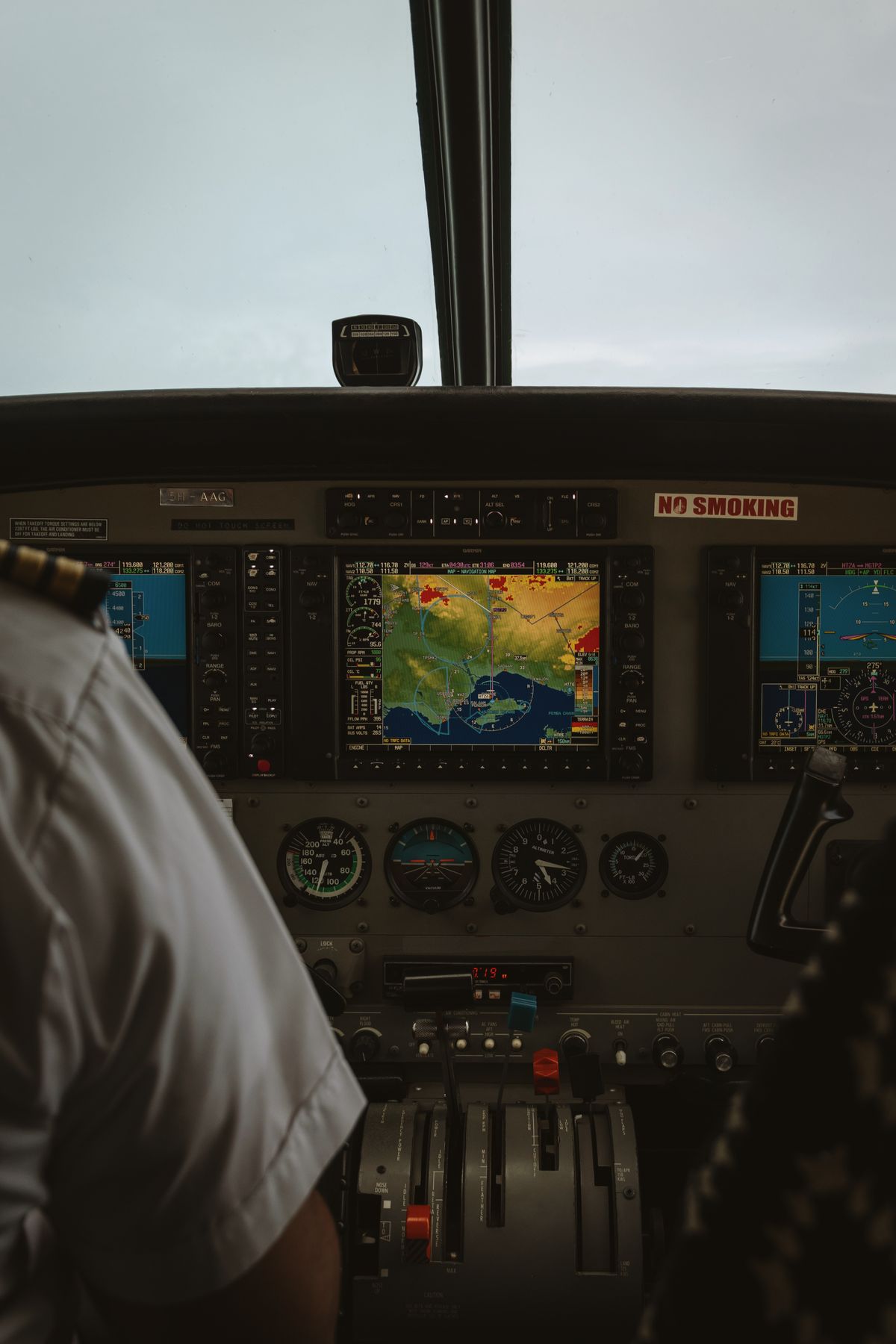
Third, use GPS holding mode when available. Modern IFR-certified GPS units like the Garmin GNS and GTN series have a built-in holding pattern function. Activating hold mode automatically sequences the GPS to track the holding pattern and displays it on the moving map. GPS holding reduces cockpit workload significantly and helps keep the pattern within bounds. Nevertheless, always understand the manual procedure — GPS systems fail, and holding without GPS is a required skill for every instrument-rated pilot.
Fourth, manage ATC communication professionally. When issued a hold, read back the complete clearance: fix, holding course, turn direction, and leg timing. Confirm your EFC — Expect Further Clearance — time. If your fuel situation or the hold duration creates a constraint, advise ATC immediately. As a result, ATC can adjust sequencing to prioritize you — but only if you communicate the issue proactively. For a deeper look at instrument training, read our guide on how to become a pilot and build your instrument skills.
Our take: Holding patterns are one of those IFR skills that students dread and rated pilots occasionally embarrass themselves on when they haven’t practiced in a while. The geometry isn’t hard — but the under-pressure mental math of picking the right entry while managing the aircraft and talking to ATC is where it falls apart. Practice them VFR before you need them IFR.
Frequently Asked Questions About Holding Patterns in Aviation
What are the three holding pattern entries?
The three entry procedures are direct, parallel, and teardrop. The correct entry depends on your aircraft heading relative to the holding course when you arrive at the fix. The FAA publishes guidance for determining which entry to use based on a 70-degree sector system around the fix. As a result, briefing the entry before reaching the fix is a standard instrument flying practice.
How long is the inbound leg of a holding pattern?
The standard inbound leg is one minute at or below 14,000 feet MSL, and one and a half minutes above 14,000 feet MSL. The outbound leg is adjusted to achieve the correct inbound timing based on wind conditions. Some published holds specify DME distances instead of timing. As a result, always check the hold specification on the chart before flying the procedure.
What is the maximum speed in a holding pattern?
The FAA specifies maximum holding airspeeds based on altitude. The limits are 200 KIAS at or below 6,000 feet MSL, 230 KIAS between 6,001 and 14,000 feet, and 265 KIAS above 14,000 feet. Some published holds specify a lower maximum speed on the chart. Pilots must slow to the applicable speed before entering the hold.
Sources:
FAA Aeronautical Information Manual (AIM) | FAA Regulations — 14 CFR Part 91 | AOPA Air Safety Institute
Written by the E3 Aviation Editorial Team | E3 Aviation Association — Empowering pilots with knowledge, community, and resources.