Additionally, Talking to ATC is one of the skills that separates pilots who fly confidently from those who avoid controlled airspace entirely. Furthermore, for many student pilots and newly certificated GA pilots, the radio feels like the hardest part of flying â not because it’s complicated, but because nobody taught them a system. At E3 Aviation Association, we hear this constantly. Specifically, this guide breaks down exactly how to talk to ATC in plain language. So you can fly into any airspace with confidence.
Why Talking to ATC Feels Hard â and Why It Gets Easy Fast
Notably, the radio intimidates new pilots for one reason: everyone on frequency sounds like they already know exactly what they’re doing. They’re fast, abbreviated, and confident. That fluency takes maybe 20 hours of actual practice to develop â but the underlying structure takes about 20 minutes to understand.
Moreover, aTC communication follows a rigid formula on purpose. In fact, controllers are managing multiple aircraft simultaneously, often in three dimensions, under time pressure. The standardized phraseology exists because it eliminates ambiguity. Every transmission has the same structure: who you’re calling, who you are, where you are, what you want. That’s it.
As a result, once you internalize that four-part structure, every initial call becomes predictable. “Oshkosh Ground, Cessna 12345, at the fuel pumps, ready to taxi, VFR to Green Bay with Information Delta.” Who you’re calling. Essentially, who you are. Indeed, where you are. What you want. Master that formula and the radio stops being scary.
How to Talk to ATC: 5 Phrases That Cover Almost Every Exchange
You don’t need to memorize hundreds of phrases to talk to ATC confidently. These five handle the vast majority of GA radio work:
- “Roger” â You received the message. No action required from you, and you’re not confirming compliance.
- “Wilco” â Will comply. Use this when ATC gives you an instruction you’re going to follow.
- “Unable” â You cannot comply with the instruction as given. This is a complete sentence. Say it clearly, then explain if needed.
- “Say again” â You missed the transmission. Never say “huh?” or “what?” â just “say again” or “say again all after [last word you heard].”
- “Standby” â ATC is telling you to wait without abandoning the frequency. Don’t respond further until they call you back.
Similarly, the one phrase most GA pilots avoid â and shouldn’t â is “unable.” Controllers would rather hear “unable” immediately than have you try to comply with something that doesn’t work for your aircraft or your situation. Saying unable is not a problem. Fortunately, it’s professionalism.
When ATC Contact Is Mandatory: Know Your Airspace Cold
Understanding when you need to talk to ATC â and which doesn’t â directly shapes how you plan every VFR flight.
- Class B (major airports like LAX, ORD, ATL): Requires an explicit ATC clearance to enter. “Cleared into the Bravo” must come from ATC before you cross the boundary â not just contact, an actual clearance.
- Class C (busy regional airports): Requires two-way radio contact before entering. ATC must acknowledge your callsign â if they say “aircraft calling standby,” you’ve made contact and can continue inbound.
- Class D (airports with operating control towers): Same as Class C â two-way contact established before entry. No explicit clearance needed, just acknowledged contact.
- Class E: No radio requirement for VFR. Most of the US airspace above 1,200 AGL is Class E.
- Class G (uncontrolled): No ATC contact required at all. Use CTAF for traffic advisories.
That said, a common mistake: assuming that reaching ATC on the radio means you have clearance to enter Class B. It doesn’t. You need to hear your callsign followed by “cleared into the Bravo” or equivalent language. “Standby” is not a clearance.
For more on navigating airspace as a GA pilot, see our guide on Understanding CTAF in Aviation.
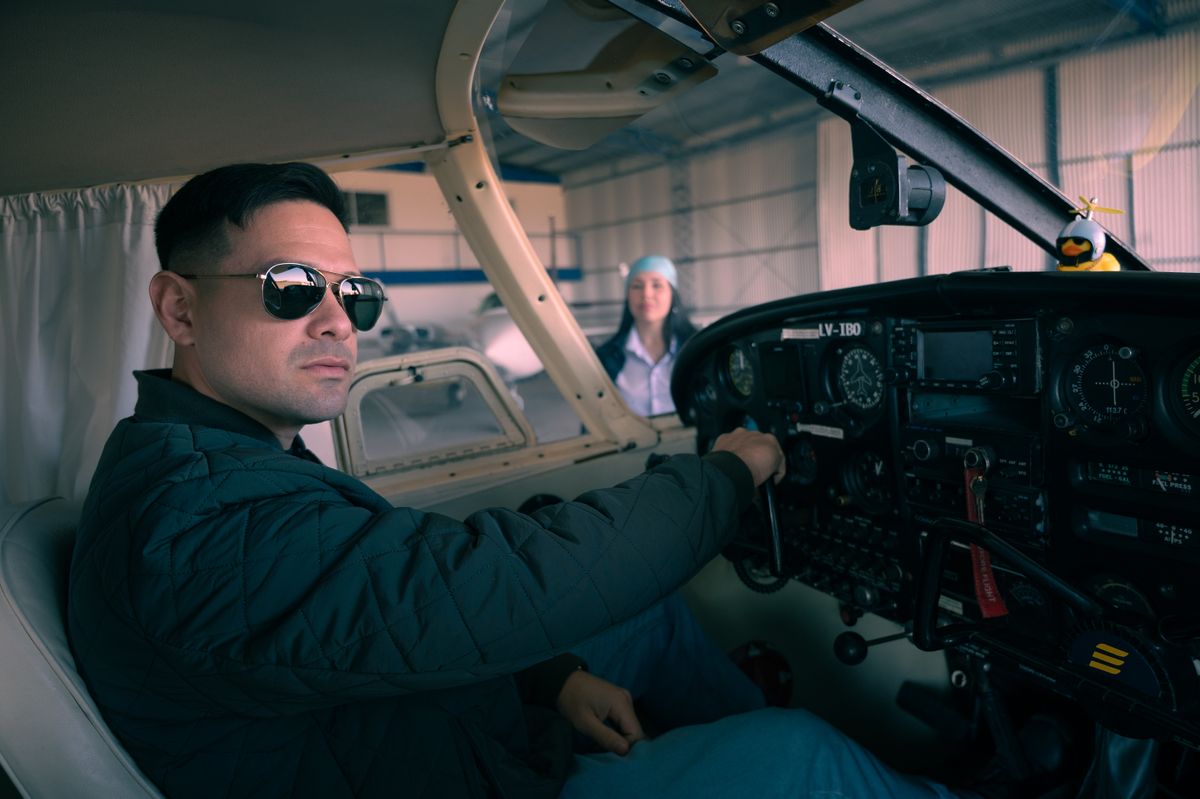
We’ll be straight with you: flight following is the single most underused safety tool in VFR flying. It costs nothing, gives you traffic alerts, and puts another set of eyes on your flight. The only pilots who consistently skip it are the ones who haven’t had a close call yet. Get in the habit early.
Flight Following: The Free ATC Service Too Many VFR Pilots Skip
For example, vFR flight following is arguably the easiest way to talk to ATC as a GA pilot â and it’s the most underused free service available. Any VFR pilot can request radar traffic advisories from ATC while flying cross-country, getting real-time traffic calls, weather alerts. In other words, and routing assistance â at no cost.
Requesting flight following is straightforward. On departure, after switching to departure control: “Departure, Cessna 12345, request flight following to Green Bay at 4,500.” ATC will assign you a discrete squawk code and begin providing advisories.
Important caveats every pilot should know:
- Flight following is a workload-permitting service. ATC can terminate it at any time without warning. Don’t become dependent on traffic calls for separation â that’s still your responsibility as VFR.
- Accepting flight following does not change your weather minimums or cloud clearance requirements.
- You can request or cancel flight following at any point during the flight.
Related: The Rise of Owner-Assisted Annual Inspections â more on how proactive GA pilots manage their flying.
How to Talk to ATC When You Didn’t Catch the Clearance
Every pilot â including airline captains with 20,000 hours â sometimes misses a clearance. The professional response is always the same: ask immediately.
Clearly, the mistake GA pilots make when they talk to ATC is trying to piece together what was said and complying with something they’re not sure about. That’s how altitude busts and runway incursions happen. Generally, the correct response when you didn’t catch it is immediate and simple:
“Say again, [your callsign].”
If you caught part of it: “Say again all after [last word you heard], [your callsign].”
Of course, controllers repeat clearances dozens of times a day without frustration. What genuinely creates problems for controllers is a pilot who complies with something incorrectly because they were embarrassed to ask. Accordingly, if you missed it, ask. Overall, every time. Without hesitation.
Additionally, if ATC gives you a complex clearance with multiple altitude, heading, and frequency changes, it’s completely appropriate to readback and ask for confirmation: “Confirm you want 7,000, heading 270, contact Center 124.5?” Readback is not just courteous â it’s required for altitude and runway assignments, and controllers depend on it to catch errors.
Squawk Codes: What That Four-Digit Number Tells ATC About You
Your transponder is how you talk to ATC radar without saying a word. These four squawk codes have specific meanings every pilot must know cold:
- 1200 â VFR flight, no ATC contact. The default code for all VFR flights not receiving radar service.
- 7700 â Emergency. Squawking 7700 immediately alerts every ATC facility tracking your aircraft. Use it without hesitation in any genuine emergency â declaring an emergency does not automatically result in paperwork or FAA action.
- 7600 â Radio failure (NORDO). Squawk this if you lose all radio communications. ATC will look for you on radar and provide light gun signals at towered airports.
- 7500 â Hijack. ATC will never confirm receipt verbally â they’ll handle it silently on their end. Set this only in an actual hijacking situation.
Additionally, a point worth emphasizing: declaring an emergency is free. There is no automatic penalty. The FAA wants you to declare early and often if something is wrong â the alternative (a pilot who delays declaring and crashes) is far worse than paperwork. Furthermore, if you’re in doubt, squawk 7700 and make the call.
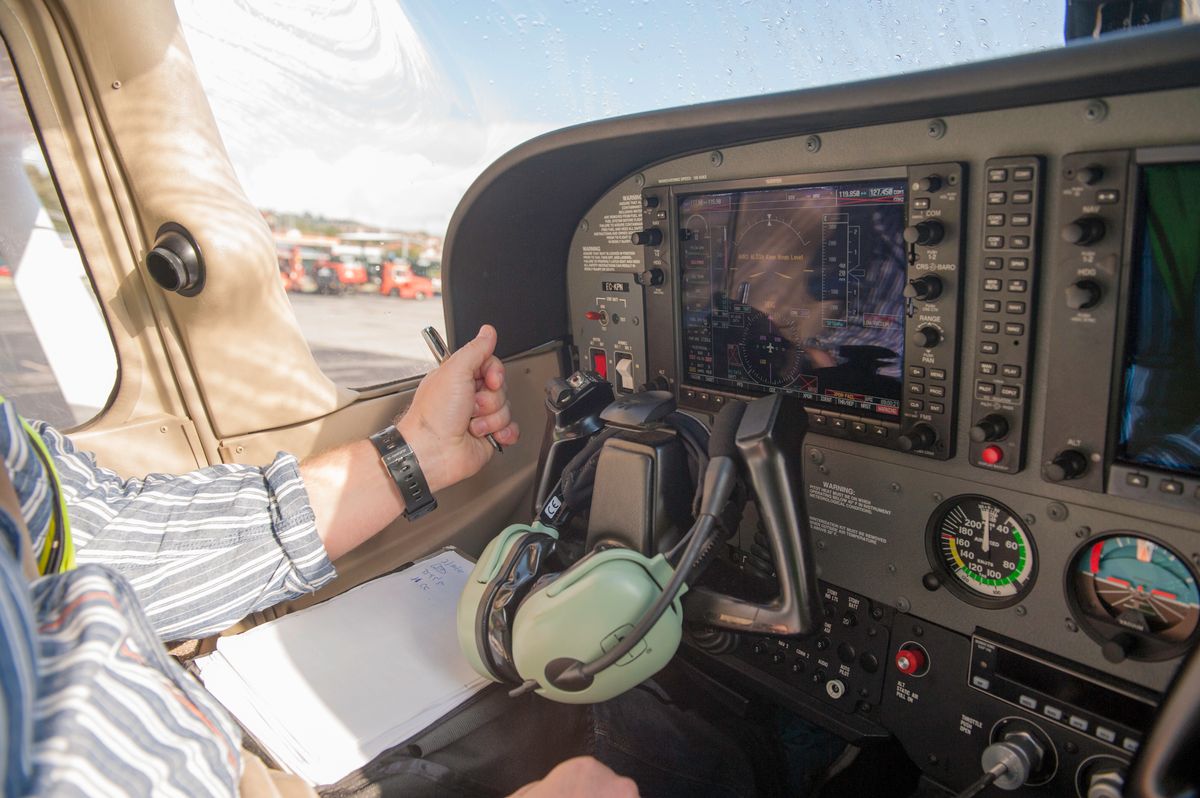
Our take: New pilots dread the radio more than almost anything else in training. But here’s the honest truth: ATC controllers want you to communicate, even imperfectly. A stumbling call is infinitely better than radio silence when you’re unsure. They hear student pilots all day, every day. Say something.
Frequently Asked Questions: Talking to ATC
Do VFR pilots have to talk to ATC?
Specifically, it depends on the airspace. Notably, class B requires an explicit clearance, Class C and D need two-way radio contact before entry. And Class E and G have no radio requirement for VFR. Outside of controlled airspace, VFR pilots are not required to communicate with ATC, though flight following is always available on request.
What does “radar contact” mean when ATC says it?
As a result, “Radar contact” means ATC has identified your aircraft on their radar display and is actively tracking you. Once you hear this, ATC can provide traffic advisories and, for IFR flights, radar separation. For VFR flight following, radar contact confirms the service has begun.
How do I get better at talking to ATC?
Indeed, the fastest way is to listen to live ATC on LiveATC.net before and after flights. Find a busy terminal approach frequency and listen for 20 minutes. You’ll start hearing the patterns immediately. Similarly, then practice your initial calls out loud before you key the mic â knowing exactly what you’re going to say before you transmit eliminates hesitation.
Sources
- FAA Aeronautical Information Manual â ATC Communication Procedures
- FAA Pilot’s Handbook of Aeronautical Knowledge
- LiveATC.net â Live Air Traffic Control Audio
Written by the E3 Aviation Association team. For more pilot resources, visit E3 Aviation Articles or our homepage.