In an awe-inspiring feat, pilot Luke Czepiela landed a Carbon Cub on the helipad atop Dubai’s iconic Burj Al Arab Hotel. This Carbon Cub Burj Al Arab landing stands as one of the most jaw-dropping moments in general aviation history. At E3 Aviation Association, we celebrate the pilots and aircraft that push the limits of what’s possible in flight.
Carbon Cub Lands on Burj Al Arab’s Sky-High Helipad
The Most Extreme Landing in Aviation History
For aviators who love short-field flying, this achievement set a new standard. In a remarkable collaboration with Red Bull and extreme sports powerhouse XDubai, pilot Luke Czepiela landed a Carbon Cub on the helipad of the 56-story Burj Al Arab Hotel. The helipad measures just 90 feet wide. It sits 695 feet above sea level, perched on one of the most recognizable buildings on earth.
The Carbon Cub Burj Al Arab project was two full years in the making. Every detail was planned to the inch. The aircraft required significant modifications to handle the extreme demands of the approach and touchdown. This was not a casual feat â it was a precise engineering and piloting achievement.
Patrick Horgan, CubCrafters’ president and CEO, captured the spirit perfectly: “At CubCrafters, we believe that all significant moments stem from small ideas fueled by imagination and a passion for creating something extraordinary.” His team rose to the challenge in every possible way.
The event brought together three powerhouse organizations. CubCrafters provided the aircraft and engineering expertise. Red Bull supplied the extreme sports platform and global media reach. XDubai managed the on-site logistics and safety planning throughout the entire two-year process.
Ultimately, this Carbon Cub Burj Al Arab landing represents more than a stunt. It is a demonstration of what modern STOL aircraft can achieve when matched with the right pilot and the right preparation. The aviation world took notice â and for good reason.
We’ll be straight with you: nobody should attempt to replicate this. The site survey, performance modeling, and safety preparation involved in the Burj helipad landing would be out of reach for virtually any GA operation. But understanding the aircraft capability it demonstrated is directly useful for any pilot evaluating what a high-performance STOL aircraft can actually do.
Who Is Luke Czepiela? The Pilot Behind the Feat
Luke Czepiela is no ordinary general aviation pilot. He is a distinguished Red Bull Air Race World Championship competitor with decades of high-performance flying experience. He is a proud Carbon Cub owner who knows the aircraft better than almost anyone outside of the factory.
Czepiela’s career spans some of the most demanding aerial competitions in the world. The Red Bull Air Race series requires competitors to fly at high speed through gates just a few meters wide at very low altitude. Czepiela developed an extraordinarily precise feel for aircraft control. That same precision was essential for the Carbon Cub Burj Al Arab approach.
His personal ownership of a Carbon Cub mattered significantly. He didn’t arrive at the project as an outsider learning a new aircraft. Instead, he brought deep familiarity with the Carbon Cub’s handling characteristics, power delivery, and braking behavior. That relationship gave the entire team a critical edge when planning the final approach.
For instance, small variations in airspeed on short final can mean the difference between a clean touchdown and a go-around â or worse â on a 90-foot platform. The margin for error on this landing was near zero. Czepiela had to fly it perfectly every time he practiced, and he had to fly it perfectly on the day.
His mental preparation was a key part of the two-year process. Flying onto a 90-foot pad atop a 56-story building with no go-around margin on the far end requires an unusual degree of psychological composure. Above all, Czepiela’s combination of skill, aircraft knowledge, and mental toughness made the Carbon Cub Burj Al Arab landing achievable.
The Carbon Cub: Why This Specific Aircraft Could Do What Others Can’t
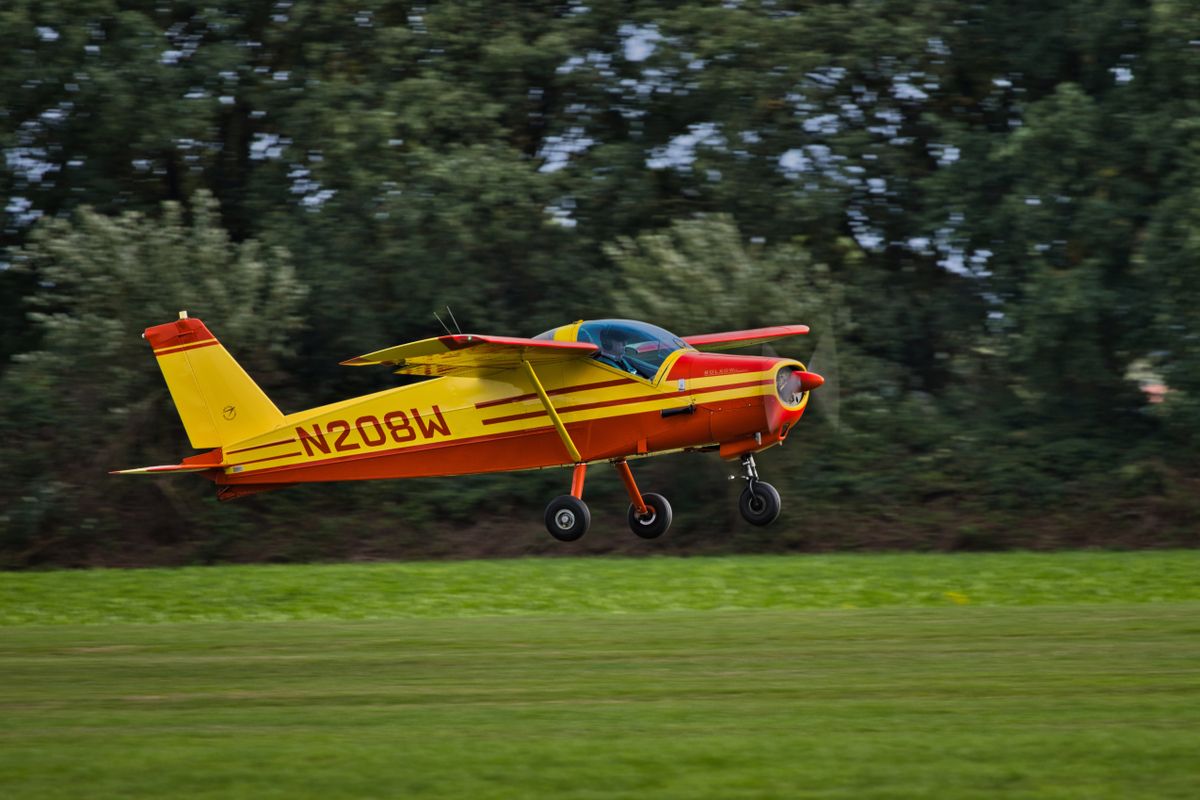
The Carbon Cub is CubCrafters’ flagship STOL aircraft. It is built around a carbon fiber airframe that delivers exceptional strength with minimal weight. The Carbon Cub is engineered specifically for extreme short-field performance. That means short ground rolls, steep approach angles, and precise control at very low airspeeds.
For a challenge like the Carbon Cub Burj Al Arab landing, those qualities were non-negotiable. Standard general aviation aircraft simply couldn’t handle the approach geometry or the braking requirements. However, the Carbon Cub was designed precisely for situations where every available foot of landing surface counts.
The factory Carbon Cub produces approximately 180 horsepower from its fuel-injected engine. It features large tundra tires, high-lift wings, and a robust undercarriage suited to rough terrain. In other words, it is a purpose-built STOL machine right off the production line.
That said, the Burj Al Arab landing demanded even more. Mike Patey, a seasoned bush pilot, aviation engineer, and YouTube personality who also owns a Carbon Cub, stepped in to assist with modifications. Patey has built some of the most extreme experimental aircraft in the world. His contribution to this project brought additional engineering firepower.
Patey revealed the modification strategy clearly: “We cut weight, adjusted the center of gravity to enhance brake effectiveness, and injected extra horsepower into the equation.” In other words, the team stripped every unnecessary pound from the airframe. They shifted the center of gravity forward to improve braking authority on the narrow helipad surface. The engine was upgraded to provide extra power for a cleaner go-around if the approach went wrong.
The combined result was a purpose-built aircraft for one of the most demanding landings in aviation history. CubCrafters has long been the gold standard for STOL performance among backcountry pilots. This Carbon Cub Burj Al Arab event proved that reputation is fully justified.
To learn how the Carbon Cub compares to other extreme STOL aircraft, read our detailed Carbon Cub vs XCub vs Husky backcountry aircraft comparison.

Two Years of Planning: The Engineering Behind an Impossible Landing
Brad Damm, CubCrafters’ vice president, was direct about the timeline. The two-year planning phase, he said, truly pushed the boundaries of what a best-of-class STOL aircraft and an exceptionally skilled pilot can accomplish together. Nothing about this Carbon Cub Burj Al Arab landing was improvised.
MichaÅ Graczyk, the event’s aviation project manager, led the planning effort with methodical precision. “To guarantee success, we sought the aircraft best suited to the challenge, and CubCrafters was the clear choice,” Graczyk stated. That decision set the entire project in motion.
First, the team conducted exhaustive research into the helipad dimensions and approach angles. The 90-foot platform required a very specific approach path. Next, they modeled wind conditions at 695 feet above Dubai across multiple seasons and times of day. Wind behavior at that height can differ dramatically from conditions at ground level.
The team designed the aircraft modifications around the specific demands identified in their research. Each change to weight, CG, and power was tested and verified. Then came dozens of practice sessions on simulated surfaces at ground level before anyone approached the actual helipad.
The collaboration between CubCrafters, Red Bull, and XDubai combined engineering expertise from three very different disciplines. XDubai, the UAE’s premier extreme sports organization, managed the event logistics and safety coordination on the building. Every contingency â including emergency protocols â was addressed before the aircraft ever left the ground on event day.
For GA pilots interested in the underlying techniques that make extreme short-field landings possible, our guide on backcountry flying techniques covers the fundamentals in depth.
The Burj Al Arab Helipad: A Stage for World-Class Feats
Since the Burj Al Arab’s completion in 1999, its iconic helipad has hosted some of the world’s most spectacular promotional events. In 2004, golf legend Tiger Woods hit golf balls from the pad ahead of the Dubai Desert Classic tournament. That image traveled around the world.
In 2005, tennis legends Roger Federer and Andre Agassi played a full match on the helipad surface. That photograph became one of the most recognized images in sports history. However, the helipad’s most technically demanding occupant before the Carbon Cub arrived in 2013. Formula 1 driver David Coulthard executed donuts in his Red Bull racing car on the narrow pad before the Abu Dhabi Grand Prix.
Various automotive and luxury brands have used the helipad for product launches and photo shoots over the years. The Burj Al Arab’s management has developed considerable expertise in facilitating these extraordinary requests.
That said, none of those events approached the level of precision required for an aircraft landing. A golf shot or a sports car maneuver leaves meaningful room for correction. A landing on a 90-foot platform at 695 feet above sea level does not. The Carbon Cub Burj Al Arab landing stands in a different category from all previous helipad events.
The helipad itself sits atop the hotel’s distinctive sail-shaped tower. Special structural reinforcement was engineered into the building during construction to handle the dynamic loads associated with aircraft and vehicle use. Ultimately, the platform was built to accommodate this kind of extreme use â but the aircraft and pilot still had to be extraordinary.
What the Burj Al Arab Landing Proves About STOL Aircraft
For GA pilots, this feat is a powerful reminder of what’s possible when engineering excellence meets elite piloting skill. Most pilots will never land on a helipad 695 feet in the air. Nevertheless, the technologies and techniques demonstrated here have real relevance to everyday backcountry and adventure flying.
The Carbon Cub’s STOL capabilities are available to any pilot ready to step into that world. The modification philosophy Mike Patey applied â systematic weight reduction, CG optimization, and power enhancement â reflects principles every serious pilot should understand. These are not exotic concepts. They are fundamentals of performance flying applied at an extreme level.
Events like the Carbon Cub Burj Al Arab landing generate enormous public interest in general aviation. When a video of a Carbon Cub touching down on top of one of the world’s most famous hotels goes viral, it introduces thousands of new people to what GA aircraft are capable of. It is one of the most effective advertisements for general aviation that money could not buy.
The partnership between CubCrafters and Red Bull demonstrates what’s possible when GA manufacturers embrace high-visibility marketing. The Carbon Cub gained global name recognition from a single event. That exposure benefits not just CubCrafters but the broader GA industry.
The event raises the profile of STOL flying as a discipline. Backcountry and adventure aviation have been growing rapidly. This kind of headline event accelerates that momentum. It shows a global audience that small aircraft are not just utilitarian transportation â they are vehicles for extraordinary achievement.
Above all, the Carbon Cub Burj Al Arab landing validates what the GA community has always known. Small aircraft, in the hands of skilled and prepared pilots, can accomplish things that appear impossible. That spirit of achievement is at the heart of everything E3 Aviation Association stands for.
For more on the growth of adventure flying and what’s driving it, read our article on the backcountry and adventure flying boom in general aviation.
The Physics of Landing on a 90-Foot Helipad at Altitude
To fully appreciate the Carbon Cub Burj Al Arab landing, it helps to understand what makes helipad landings so technically demanding for fixed-wing aircraft. Helicopters are designed for vertical approaches. Fixed-wing aircraft are not. Landing on a confined elevated surface requires a completely different technique from any standard runway approach.
First, the pilot must establish a steeper-than-normal approach angle. A standard ILS glide slope descends at about three degrees. A helipad approach may require ten degrees or more. The aircraft must cross the threshold at a very precise airspeed â fast enough to maintain control, slow enough to stop in the available distance.
Wind behavior at 695 feet above the ground can differ dramatically from surface conditions. Gusts and wind shear are unpredictable at that height. The pilot must be prepared to make instant corrections on approach without breaking the stable descent path.
The braking requirement on the Carbon Cub Burj Al Arab landing was extreme. A standard 90-foot landing roll requires maximum braking from the moment of touchdown. The CG modification Mike Patey applied shifted weight forward. That increased the load on the main wheels and improved braking traction significantly.
The go-around option at the far end of the helipad was essentially nonexistent. Standard short-field technique calls for maximum braking with no compromise. That psychological reality â knowing there is no second chance â places an enormous premium on every element of the approach and flare.
The Carbon Cub Burj Al Arab landing required the pilot to fly a perfect approach, touch down at precisely the right spot, and brake to a stop within a space that left almost no margin for error at any stage. That combination of factors elevates this achievement well above anything routine in general aviation.
Our take: This wasn’t a stunt. It was a demonstration of what modern STOL engineering can achieve at the absolute edge of performance. The helipad landing took the Carbon Cub platform — already beloved by backcountry pilots — and made it visible to an audience that had never heard of bush flying. That crossover matters for GA.
Frequently Asked Questions: Carbon Cub Burj Al Arab Landing
What aircraft landed on the Burj Al Arab helipad?
A specially modified CubCrafters Carbon Cub performed the landing. Aviation engineer and bush pilot Mike Patey contributed to the modifications. The team reduced weight, adjusted the center of gravity for better braking, and upgraded engine output to handle the extreme conditions of the 90-foot helipad.
How big is the Burj Al Arab helipad?
The helipad measures approximately 90 feet wide and sits 695 feet above sea level. That is an extremely small margin for any fixed-wing aircraft landing. Precise airspeed control, aircraft modification, and exceptional braking performance were all critical to the outcome.
Has the Burj Al Arab helipad hosted other extreme events?
Yes. Tiger Woods hit golf shots from the helipad in 2004. Roger Federer and Andre Agassi played a tennis match on it in 2005. Formula 1 driver David Coulthard drove a Red Bull racing car on the pad in 2013. The Carbon Cub landing remains the most technically demanding aviation achievement ever performed on the platform.
Sources
Written by the E3 Team | More Aviation Articles | E3 Aviation Association