Slow flight training is one of the most important maneuvers in a student pilot’s curriculum — and one of the most misunderstood. Many pilots rush through it, check the box, and move on. That’s a mistake. The ability to control your aircraft at reduced airspeeds isn’t just about passing your checkride. It’s a foundational skill that shows up every time you fly a precision approach, navigate a short-field landing, or find yourself in a slow-speed situation you didn’t plan for. At E3 Aviation Association, we think slow flight deserves more respect — and more practice time — than most pilots give it.
Last Updated: May 7, 2026 | By: The E3 Aviation Editorial Team
What Is Slow Flight Training and Why Does It Matter
Slow flight is exactly what it sounds like. You fly the aircraft near the bottom edge of its performance envelope — at or just above stall speed — while maintaining full control. The FAA defines it in the Airman Certification Standards as flight at a specified airspeed between 1.0 and 1.2 times VSO. VSO is the stalling speed in landing configuration. For a Cessna 172, that puts you around 45 to 54 knots.
But the real point isn’t to fly slow. It’s to understand how your aircraft responds when lift becomes scarce. At slow airspeeds, control surfaces lose authority. Small pitch changes produce big results. The aircraft feels sluggish and sensitive at the same time.
How Slow Flight Connects to Every Phase of Flight
Consider what happens during a normal landing approach. Your airspeed drops, your angle of attack increases, and you’re flying just a few knots above stall. That’s slow flight territory — whether you call it that or not. During a short-field approach, you fly at even lower airspeeds on purpose. Understanding slow flight training gives you the foundation to handle both with confidence. Essentially, you can’t master approaches until you master the airspeed range they live in.
The FAA Standard — What You Need to Demonstrate
The FAA’s ACS lays out specific performance standards. To meet them on your checkride, you need to establish and maintain slow flight within ±10 knots of the specified airspeed. You also need to keep coordinated flight — ball centered — throughout. You also need to perform turns, straight-and-level flight, and climbs and descents while in slow flight configuration. Finally, you need to execute a recovery without gaining more than 50 feet of altitude.
Why the Recovery Standard Is What Actually Matters
Most students focus on getting slow. The harder part — the part that counts most — is the recovery. A sloppy recovery from slow flight is basically a stall entry. If you don’t respond immediately with pitch reduction and full power, you’ll enter a stall or skid into a spin setup. That’s why instructors spend significant time on the recovery before any other part of the maneuver. Getting slow is easy. Getting back to normal flight safely is the actual skill.
Why Slow Flight Training Trips Up Even Good Students
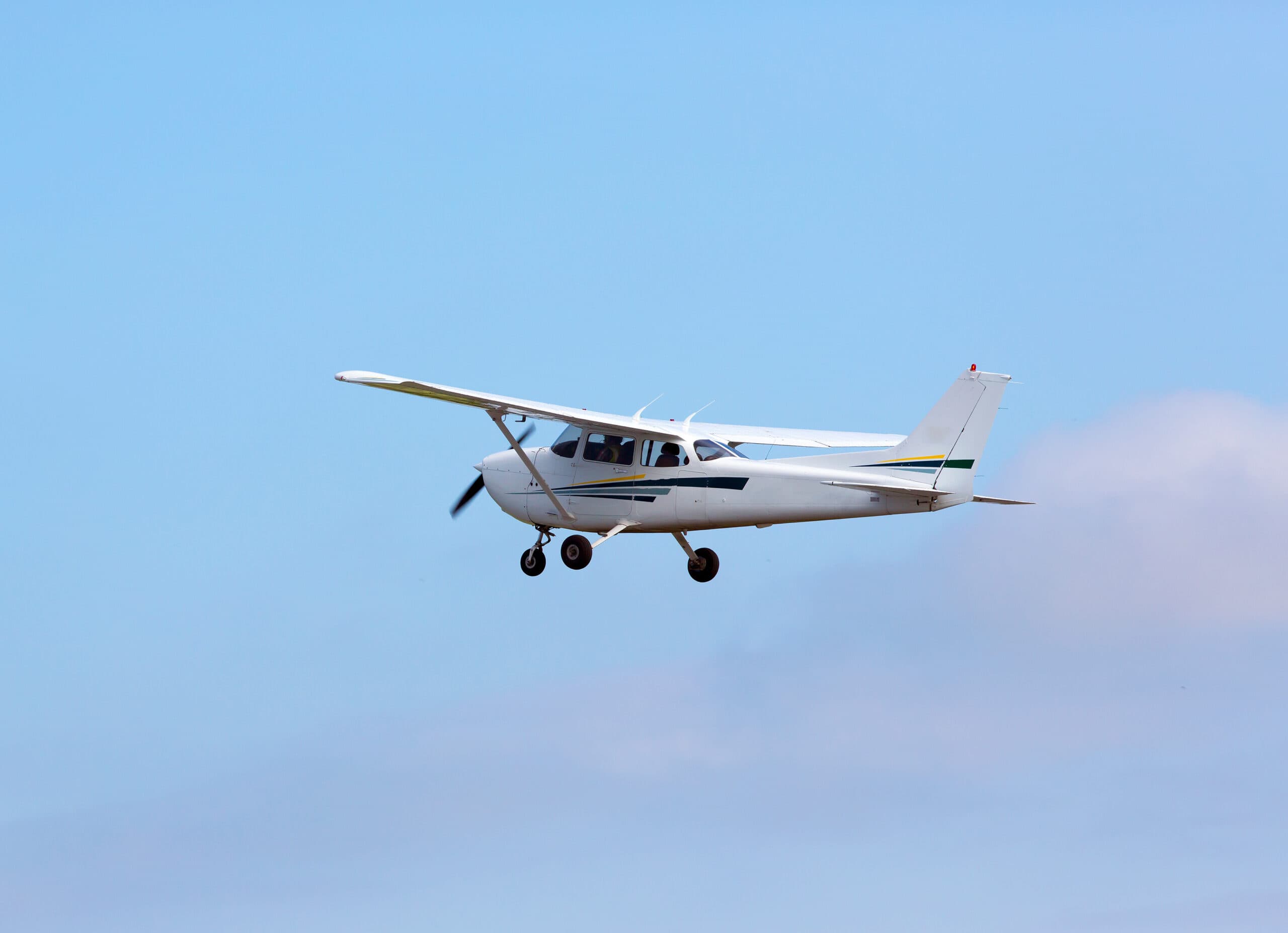
The problem isn’t the concept. It’s the coordination that slow flight demands. Students who fly well at cruise often struggle here.
Here’s what most pilots get wrong: they fixate on airspeed and forget about rudder. At slow airspeeds, engine torque and P-factor create strong left-turning tendencies. You need more right rudder input than feels natural — especially at full power. Most students push left aileron instead of coordinating right rudder. The result is a skidding turn that bleeds airspeed fast.
The Three Coordination Killers You’ll Face in Slow Flight
First, there’s the throttle problem. In slow flight, power changes affect pitch more dramatically than at cruise. Second, there’s elevator sensitivity — small inputs make large changes at low airspeeds. Third, the visual scan breaks down. Students look inside the cockpit and miss the outside cues that help them stay coordinated.
The stall warning horn activates intermittently during slow flight. Many students tense up the moment they hear it. That causes overcorrections. The horn tells you you’re near the edge. It doesn’t tell you to panic. Slow flight training teaches you to process that sound — and respond deliberately, not reactively.
How to Practice Slow Flight Training Effectively
Practice slow flight in conditions that let you focus on technique. That means calm air, not gusty crosswinds. Get to altitude — 3,000 feet AGL minimum — so you have recovery room. Then work through these exercises deliberately.
Configuration drill: Practice entering slow flight from a clean cruise configuration, then from a simulated approach configuration with flaps. The two setups handle differently. Your instructor should have you practice both.
Heading control drill: Maintain a specific heading while holding slow flight airspeed. Specifically, have your instructor call out heading deviations in real time. It’ll reveal coordination gaps immediately.
Bank-and-hold drill: Enter a 30-degree bank turn in slow flight and hold it. Then recover to straight-and-level without gaining speed. This combines power management, rudder coordination, and elevator control in one sequence.
Why Solo Practice Is Where the Skills Really Stick
Our honest take: solo slow flight practice is where the real learning happens. With an instructor beside you, it’s easy to lean on their coaching. Alone, you have to self-correct. If you have solo privileges and a calm day, take the aircraft to altitude and run through slow flight drills on your own. You’ll find weaknesses your instructor never spotted — because they’d been catching them before you noticed.
Slow Flight and Stall Awareness — Two Skills, One Foundation
You can’t separate slow flight from stall awareness. The two maneuvers share the same airspeed territory, the same control inputs, and the same consequences for sloppy technique.
The FAA’s Pilot’s Handbook of Aeronautical Knowledge makes this connection explicit. Loss-of-control accidents — particularly stall and spin events on final approach — remain among the leading causes of fatal GA accidents every year. Many of those pilots completed slow flight training during primary training. But they hadn’t internalized it. They treated it as a checkbox, not a skill.
Slow flight builds the muscle memory that catches you before a stall develops. When your aircraft gets sluggish on short final, your hands and feet should already know what to do. That kind of instinctive response comes only from deliberate, repeated practice — not from doing the maneuver twice and moving on.
Here’s what that looks like in practice. Pilots who practice slow flight regularly detect developing stalls earlier — often before the warning horn activates. They feel the buffet, notice the sluggish controls, and respond instinctively. Pilots who haven’t practiced recently miss those cues. They react to the horn instead of reading the aircraft. That gap in awareness is where accidents happen. Slow flight currency isn’t just about your checkride. It’s what keeps those instincts sharp for the rest of your flying career.
For a closer look at how slow-speed control connects to approach safety, our guide on mastering aircraft landings covers the final approach phase in detail.
Slow Flight on Your Checkride — What Examiners Actually Watch For
If you’re preparing for your private pilot checkride, slow flight is a required task on your practical test. Examiners don’t just check whether you can slow down. They watch how you manage the aircraft throughout the full sequence — entry, maintenance, turns, and recovery.
The most common checkride failures in slow flight come down to two things. First, students let airspeed creep above the specified range because they’re nervous about getting too slow. Second, students lose heading control during turns — usually from too little rudder input. Both are fixable. Neither should surprise you if you’ve actually trained for them.
We’ll be straight with you: if you’ve run through slow flight drills two or three times and called it done, you’re not ready to sit across from an examiner. Airspeed management in slow flight should feel automatic before your checkride. Get there first — then schedule the test.
Some examiners will also ask you to transition directly from slow flight into a stall. If you’ve built your slow flight skills correctly, that transition feels natural. You already know exactly what the aircraft does at the edge of its envelope.
There’s one more thing examiners watch for that catches students off guard. Your attitude after the maneuver matters. A confident, deliberate recovery tells the examiner you understand the aircraft — not just the procedure. Hesitating or over-controlling signals that you memorized the steps without internalizing the skill. Examiners grade more than the numbers. They assess whether you can handle the aircraft safely near the edge. Build that confidence before your checkride date. The best way isn’t more study time. It’s more time in the aircraft at slow speeds, feeling exactly how it responds. Schedule a 20-minute airwork session before you book the test.
Want to build strong situational awareness beyond the maneuvers? Our guide on runway incursion prevention covers ground safety practices every pilot should know.
The Maneuvering Mistakes That Make Slow Flight Training Hard
Generally, slow flight training trips up even strong students for predictable reasons. Specifically, the airplane behaves differently at low airspeed than at cruise — controls feel mushy, attitude changes lag, and small power adjustments produce dramatic results. Therefore, the pilots who master slow flight training are the ones who learn the new sensory feedback, not the ones who try to apply normal-airspeed habits.
The Sight Picture Trap
First, in slow flight the nose attitude is significantly higher than in cruise. Notably, students who fly the airplane by sight picture alone often pitch nose-down to “fix” the unfamiliar high attitude. As a result, airspeed builds and the airplane exits the slow flight regime entirely. Conversely, the right approach is referencing the attitude indicator and the airspeed indicator together, ignoring the sight picture until you’ve stabilized at slow flight speed.
The Power Coordination Lag
Subsequently, slow flight requires power adjustments to be coordinated with pitch in a way that doesn’t apply at cruise. Specifically, adding power without adjusting pitch causes climb. Furthermore, reducing power without adjusting pitch causes descent. Therefore, every power change in slow flight needs an immediate pitch adjustment to maintain altitude. This is the coordination skill examiners specifically look for during slow flight training evaluation.
Slow Flight Training Drills Every Pilot Should Practice
Notably, the difference between passing slow flight training and mastering it comes down to deliberate practice. Specifically, three drills build the skills that examiners watch for and that real-world flying actually requires.
Drill 1: Slow Flight to Slow Flight Turns
First, set up at slow flight at minimum controllable airspeed (MCA) with full flaps. Then perform 90-degree turns left and right while holding altitude within 100 feet and airspeed within 5 knots. Notably, the goal is smooth coordination, not aggressive bank angles — examiner-quality slow flight uses 15-20 degree banks maximum. Furthermore, this drill builds the muscle memory for controlled flight at low airspeed across multiple flight regimes.
Drill 2: Configuration Changes in Slow Flight
Subsequently, practice transitioning from clean slow flight to landing-configuration slow flight (full flaps, gear if applicable). Specifically, the trick is maintaining altitude as drag increases — power must come in early to prevent altitude loss. As a result, you build the coordination needed for short-final approaches where configuration changes happen at low airspeed and low altitude.
Drill 3: Slow Flight Recovery to Stall
Finally, the most valuable slow flight training drill is recognizing the boundary between slow flight and stall. Specifically, gradually reduce airspeed from MCA toward stall warning, recognize the cues (stall horn, buffet, mushy controls), then recover by simultaneously adding power and lowering the nose. Notably, this drill builds the stall recognition skill that prevents real loss-of-control accidents — the leading killer of GA pilots.
Slow Flight Training Beyond the Checkride: Real-World Application
Generally, slow flight training continues paying dividends long after the checkride. Specifically, every short-final approach, every soft-field landing, and every short-strip operation puts your slow flight training to use. Therefore, recurrent practice — even informal — keeps these skills sharp.
Notably, backcountry pilots, bush operators, and experimental aircraft owners often spend more time in the slow flight regime than at cruise. Furthermore, some of the most challenging GA flying happens at low airspeed in marginal terrain. As a result, recurrent slow flight practice — quarterly at minimum — separates pilots who genuinely command their aircraft from those who only operate it within familiar regimes.
Importantly, the FAA’s Pilot’s Handbook of Aeronautical Knowledge dedicates significant material to slow flight training because the underlying skills directly prevent the most common GA fatal accidents. Specifically, loss of control accidents almost always involve poor recognition of slow flight regime cues. Therefore, building genuine fluency in slow flight is one of the best safety investments any GA pilot can make in their training. Furthermore, instructors who emphasize slow flight training during recurrent reviews report significantly fewer student accidents in the years following.
Importantly, slow flight training is one of the foundational skills the FAA emphasizes in modern Airman Certification Standards. Specifically, examiners watch slow flight performance closely because it predicts how a pilot will handle real-world short-field, soft-field, and short-final scenarios. Furthermore, the discipline of regular slow flight practice keeps the muscle memory sharp for the day when you actually need it. As a result, the pilots who handle real emergencies well are usually the ones who practiced these foundational skills regularly long before the emergency happened.
Frequently Asked Questions About Slow Flight Training
What airspeed should I use during slow flight training?
The FAA’s ACS specifies slow flight at airspeeds between 1.0 and 1.2 times VSO — your aircraft’s stalling speed in landing configuration. For a Cessna 172, that puts you around 45 to 54 knots. Your exact target airspeed depends on aircraft type and the configuration your instructor specifies. Always confirm the specific number before your flight.
How is slow flight different from a stall?
Slow flight puts you near the bottom of your aircraft’s performance envelope — but you’re still flying. A stall happens when the wing exceeds its critical angle of attack and lift breaks down. Slow flight training keeps you in the airspeed range where a stall can develop if you’re sloppy. The goal is controlled, coordinated flight on the edge — not past it.
How often should I practice slow flight after I earn my certificate?
Most certificated pilots never practice slow flight again after their checkride. That’s a problem. Aircraft control skills degrade without practice. Plan to run through slow flight drills at least every six months — or build them into your regular flight review. A 20-minute airwork session once per quarter keeps the skills current and sharp.