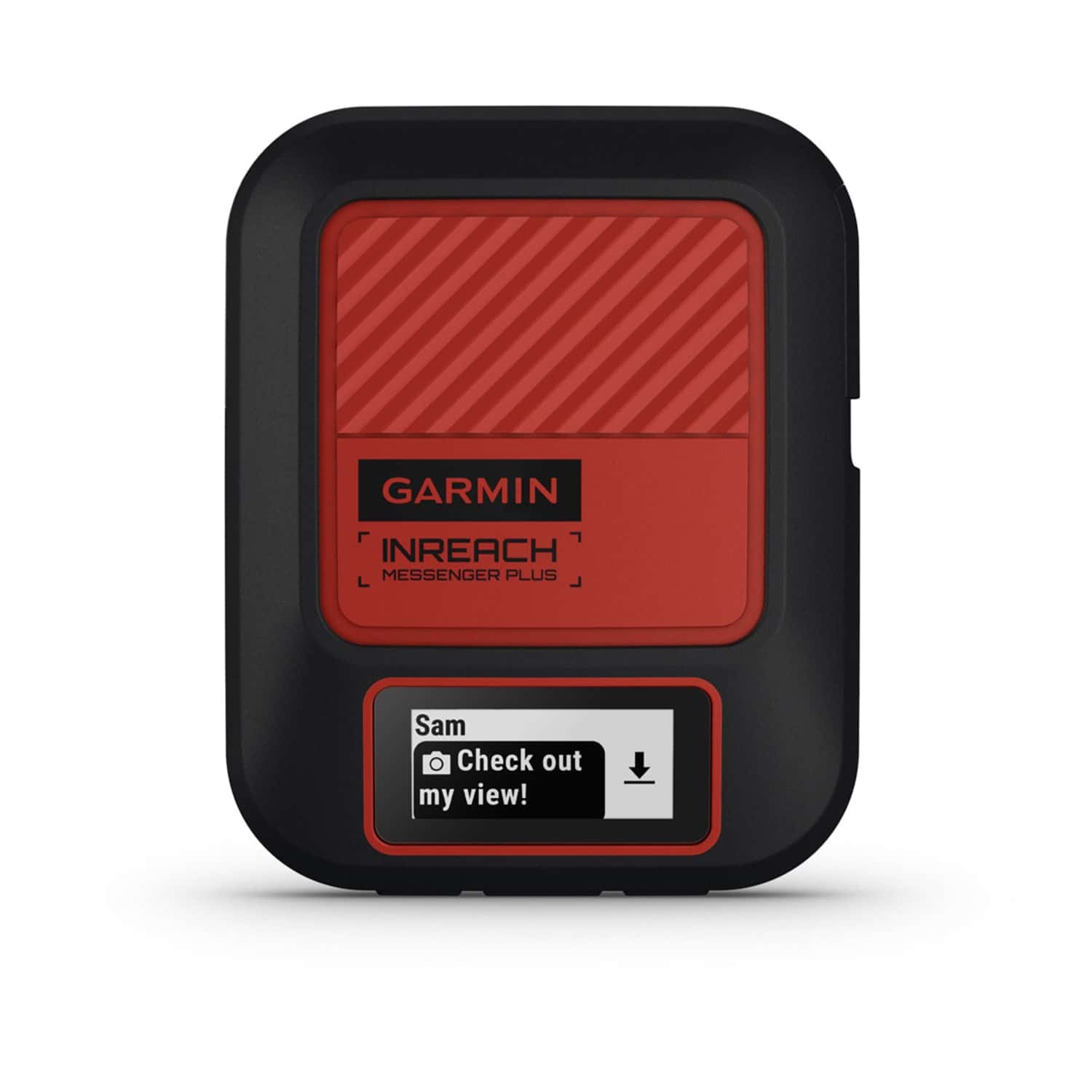
The Garmin inReach Messenger Plus is one of the most practical safety tools a GA pilot can carry. When you’re over the Rockies with zero cell coverage, this device is your lifeline. It’s also your passengers’ peace of mind. Notably, satellite communicators aren’t just for expeditioners anymore. Indeed, they’ve become standard kit for pilots who regularly fly outside the cell tower bubble.
Last Updated: May 7, 2026 | By: The E3 Aviation Editorial Team
Why GA Pilots Can’t Rely on Cell Coverage Alone
Most of the U.S. looks well-covered on a cell map â until you’re actually flying over it. Essentially, cell towers are built for people on the ground, not aircraft at altitude. Furthermore, coverage drops fast once you leave populated corridors. Remote areas like the Cascades, the Alaskan interior, or the high desert southwest can leave you completely dark on standard comms.
Here’s the reality: your VHF radio works well for ATC communication within line of sight. However, it doesn’t help your family track your flight. It doesn’t let you text your mechanic a preflight concern. And it certainly can’t ping a rescue center with your GPS position if you go down in the backcountry.
That gap is exactly what this device fills. The Garmin inReach Messenger Plus operates on the Iridium satellite network â 66 low-Earth orbit satellites covering every square mile of the planet. No cell towers required. No dead zones. No blackout areas anywhere mid-flight. Just reliable, consistent two-way communication from anywhere on the planet you can fly.
We’ll be straight with you: not every pilot needs satellite communication. If you fly IFR between Class Bravo airports on a regular schedule, you’re probably fine without it. However, if you fly backcountry routes, fly cross-country over remote terrain, or take passengers who’d worry about your location â this device earns its spot in the flight bag.
Garmin inReach Messenger Plus: Core Features Explained
This isn’t a radio replacement. Specifically, it’s a satellite-based messaging and tracking device with a dedicated SOS function. Here’s what it actually does for pilots in the field.
Two-Way Messaging That Works Where Your Phone Doesn’t
Standard texting fails the moment you leave cell range. The Messenger Plus bypasses the cell network entirely. Specifically, it routes messages through Iridium satellites to reach any SMS-capable phone or email address. Basically, you can exchange messages with family, dispatch, or a fellow pilot regardless of your position.
For GA pilots, this matters on several levels. First, it lets your crew or passengers’ families track a long cross-country in real time. Second, it gives you a channel to communicate mechanical concerns to your A&P before landing at a remote strip. Third, it’s a low-workload option for sending position updates without breaking focus from flying the aircraft.
Photo and Voice Messaging: Not Just a Gimmick
The Messenger Plus adds photo and voice capability over earlier inReach models. Naturally, some pilots wonder whether that’s worth the upgrade. Our take: it is, for a specific use case.
Imagine you spot an unusual weather system building ahead on your route. A voice message to your CFI or a weather-savvy contact on the ground is faster and more descriptive than a text. Similarly, a quick photo of a deteriorating ceiling could help someone give you useful advice from the ground up. Ultimately, this feature is most valuable when description matters and time is short.
Live Tracking Keeps Everyone Informed
The device broadcasts your GPS position at set intervals â every 2, 10, or 30 minutes depending on your subscription plan. Anyone you share a tracking link with can follow your flight on a map in real time through the Garmin Explore platform.
For family members watching at home, that’s genuinely reassuring. For multi-aircraft operations, it’s a practical coordination tool. Notably, a live track record dramatically narrows the search area if something goes wrong â that’s an advantage no standard 406 MHz PLB can offer.
The SOS Function: Your Last Line of Defense
Every inReach device includes a dedicated SOS button. When activated, it connects you directly to the GEOS International Emergency Response Coordination Center. GEOS operates 24/7 and coordinates with local search and rescue agencies worldwide.
Activating SOS immediately opens a two-way text conversation with coordinators. Also, they receive your GPS position in seconds. You can tell them you have an injured passenger, that you’re sheltering in the aircraft, or that you need a specific type of support. That two-way element is critical â a standard PLB only transmits. Crucially, it cannot receive a response.
The FAA recommends carrying personal locator beacons or satellite communicators for flights over remote terrain. The Garmin inReach Messenger Plus exceeds a standard PLB because of its two-way capability. For more on cockpit emergency preparedness, see our guide on emergency landing procedures every GA pilot should know.

Specs That Actually Matter for Aviation
Before committing to any satellite communicator, it helps to know what you’re actually buying. These specs are most relevant to cockpit use.
Satellite network: Iridium â global coverage including polar regions. No area of the earth is out of range.
Battery life: Up to 28 days at 10-minute tracking intervals. Three days at 2-minute intervals. For most cross-country trips, you won’t need a recharge mid-trip.
Weight: 3.5 oz (100g). Cockpit-friendly and easy to stow in a side pocket or mount on a kneeboard.
Pairing: Bluetooth to the Garmin Messenger app. Composing messages on your phone’s keyboard is far more practical than the device’s small screen during a flight.
Operating temperature: -4°F to 140°F. Handles high-altitude cold soaks and hot summer ramps without issue.
Water rating: IPX7 â submersible to one meter for 30 minutes. Durable enough for backcountry conditions or open-cockpit flying.
Battery life stands out as a particular advantage over competing devices. At 10-minute update intervals, this communicator outlasts virtually any cross-country trip without a recharge. That’s meaningful for ferry pilots or those flying extended expeditions across multiple legs and time zones.
Subscription Plans: What You’ll Actually Pay
The hardware cost is only part of the equation. Like all satellite communicators, the Garmin inReach Messenger Plus requires an active subscription to function. Garmin offers several tiers to fit different use patterns.
Which Plan Actually Fits GA Flying?
Garmin’s Safety plan starts around $14.99/month and covers SOS, basic tracking, and limited messages. The Recreation plan ($34.99/month) adds unlimited messaging and tracking updates. The Expedition plan goes higher and targets commercial or professional operators.
For most recreational GA pilots, the Recreation plan hits the sweet spot. You get full messaging functionality without paying for features you won’t use. Additionally, if you only fly seasonally, Garmin offers a Freedom plan that lets you pause service between active months â a smart move for fair-weather fliers who’d otherwise pay year-round.
One important note: Garmin updated its subscription structure in 2025, adding flexibility for shorter commitment windows. Check current pricing directly on Garmin’s inReach subscription page before purchasing, since plan details occasionally change.
How inReach Compares to Competing Satellite Communicators
Obviously, the Messenger Plus doesn’t operate in a vacuum. Several competing products target the same use case, and it’s worth knowing how this device stacks up.
The SPOT X is the closest direct competitor. It offers two-way messaging and SOS at a slightly lower hardware price. However, it runs on the Globalstar network â fewer satellites than Iridium and weaker polar coverage. For pilots flying Alaska or northern Canada, Iridium’s global reach is a clear advantage.
The Zoleo is another Iridium-based option popular with backcountry travelers. It costs less per month on equivalent messaging plans and lacks the Messenger Plus photo and voice features. For a pure messaging-plus-SOS use case, Zoleo is worth comparing. Nevertheless, the Garmin ecosystem integration â including compatibility with select Garmin avionics â gives the inReach a meaningful edge for pilots already running Garmin glass.
For more on how situational awareness tools fit a broader safety framework, read our piece on aviation risk management for GA pilots.
Setting Up Your Device Before the First Flight
Generally, setup is straightforward but requires a few steps. Don’t wait until the morning of a flight â give yourself an hour ahead of time to get it right.
First, create a Garmin Explore account and register your device. Then activate a subscription plan that matches your flying habits. Next, download the Garmin Messenger app on your phone and pair it via Bluetooth. Finally, send a test message to a contact to confirm the device is connected and transmitting correctly.
Additionally, register your device with NOAA’s beacon registration database. Even though your inReach coordinates through GEOS, NOAA registration creates an extra data trail that helps rescuers identify you faster. Notably, the FAA specifically recommends this step for any satellite communicator used in US airspace. Register at beaconregistration.noaa.gov.
For backcountry pilots, this device works best as part of a broader system. Pair it with a thorough preflight briefing that covers your route, estimated arrival time, and instructions for what a contact on the ground should do if they don’t hear from you. Satellite communicators are powerful tools, but they’re not a replacement for solid pre-departure planning. For more on building a complete backcountry setup, see our guide on backcountry flying best practices for GA pilots.
Garmin inReach Messenger Plus Battery Life and Field Reliability
Generally, satellite communicator reliability hinges on two factors: battery life and signal quality in real conditions. Specifically, the Garmin inReach Messenger Plus delivers about 28 hours of battery life in normal tracking mode and significantly longer with extended tracking intervals. Therefore, for most multi-day backcountry trips, you’ll need either a recharge plan or a backup power source.
Real-World Battery Drain Patterns
First, the most aggressive battery drain happens during active two-way messaging — particularly when sending and receiving longer messages. Notably, GPS tracking at 10-minute intervals consumes more battery than tracking at 30-minute or 60-minute intervals. As a result, smart inReach users adjust tracking intervals based on the day’s flight plan and overall trip length. Furthermore, USB-C charging means a small portable battery pack can keep the device alive for weeks of remote operations.
Signal Quality and Sky View Considerations
Subsequently, the Iridium satellite constellation works best with clear sky view. Specifically, dense forest canopy, mountain shadows, or being inside a metal hangar can delay or block messages temporarily. However, the Iridium network’s design means messages typically queue and send within minutes once sky view returns. Therefore, plan to leave the device in a position with sky view whenever possible — windowsill in a backcountry cabin, on the dashboard during ground operations, or clipped to the outside of a pack while hiking.
Real-World Garmin inReach Messenger Plus Use Cases for GA Pilots
Generally, the Garmin inReach Messenger Plus earns its keep on the flights where things go sideways. Specifically, GA pilots who fly backcountry, overwater, mountain, or remote routes report the device pays for itself the first time they need it. Therefore, knowing the actual use cases helps you decide whether the subscription cost makes sense for your flying.
Backcountry Flying and Off-Airport Operations
First, backcountry pilots flying into unimproved strips often operate beyond cell coverage entirely. Notably, a Garmin inReach Messenger Plus lets you message your spouse “landed safely at Johnson Creek” from inside a canyon where no cell tower exists. Furthermore, the same device can summon SAR if a landing goes wrong far from any populated area. As a result, many backcountry pilots consider the inReach as essential as their first-aid kit.
Overwater and Coastal Routes
Subsequently, overwater flights expose pilots to the same coverage gaps. Specifically, even short coastal hops between islands or across bays can put you out of cell range. Furthermore, Garmin inReach Messenger Plus uses the Iridium satellite network, which provides true global coverage including over open ocean. Therefore, the inReach delivers reliable messaging where cell-based PLB or messaging apps simply don’t work.
Comparing Garmin inReach Messenger Plus to Other Aviation Safety Devices
Specifically, the Garmin inReach Messenger Plus is one of several emergency communication options GA pilots consider. Therefore, understanding how it compares to ELTs and PLBs helps you make the right purchase decision.
inReach vs. 406 MHz ELT
First, your aircraft’s 406 MHz ELT is regulatory-required equipment that activates automatically on impact. Notably, an ELT alerts SAR but provides no two-way communication. Conversely, the Garmin inReach Messenger Plus is voluntary equipment that requires manual activation but enables real-time text communication with rescuers. As a result, the two are complementary, not redundant — most experienced GA pilots carry both.
inReach vs. Personal Locator Beacon (PLB)
Subsequently, traditional PLBs (like the ACR ResQLink) provide one-way distress signaling without messaging. Furthermore, PLBs require no subscription but offer no day-to-day utility. In contrast, the Garmin inReach Messenger Plus combines distress signaling with two-way messaging plus weather information and tracking — at the cost of a monthly subscription. Therefore, pilots who want functionality beyond emergencies typically prefer inReach over a basic PLB.
Specifically, the Garmin inReach Messenger Plus represents the current best-in-class option for GA pilots who fly outside reliable cell coverage. Furthermore, monthly subscription costs typically run $15–$50 depending on plan and usage volume. Importantly, all subscription tiers include unlimited SOS use, so you’ll never face an emergency situation where the device can’t help you because of subscription limits.
Frequently Asked Questions
Does the Garmin inReach Messenger Plus work from inside the cockpit?
Ye{, with some caveats. Like GPS, the inReach needs a clear view of the sky to maintain contact with Iridium satellites. Specifically, a metal cockpit can reduce performance. Most pilots place the device near a window or on the glareshield. A remote antenna is also an option if consistent, uninterrupted coverage is mission-critical.
Can I pause my subscription between flying seasons?
Garmin’s Freedom plan lets you suspend and resume service without canceling your account. You pay a small monthly suspension fee instead of the full plan cost during inactive months. Consequently, this makes the device far more economical for seasonal pilots who store the aircraft in winter.
Is two-way SOS actually better than a standard PLB?
For most GA pilots, yes. Essentially, a standard 406 MHz PLB transmits a one-way distress signal â rescuers receive your coordinates but you have no further communication. In contrast, two-way SOS lets you tell coordinators your injury status, aircraft condition, and the exact kind of help you need. That context changes the rescue response â and in a real emergency, it can be the difference between a targeted extraction and a wide-area search that costs hours.
E3 Aviation Editorial Team
The E3 Aviation Association editorial team is made up of licensed pilots, aviation educators, and industry professionals dedicated to advancing general aviation safety, community, and education. Learn more about E3 Aviation.
Sources:
- FAA â Personal Locator Beacons and Satellite Communicators
- AVweb â Aviation Safety and Product Coverage
- NOAA Beacon Registration Database