The FAA air traffic controller shortage has hit a level that every general aviation pilot needs to understand. As of early 2026, the FAA employs approximately 10,800 fully certified controllers on duty. Yet the agency’s own staffing targets call for roughly 13,400 certified professionals. That gap — more than 2,500 controllers — shapes every IFR clearance you receive, every radar advisory you request, and every VFR flight-following frequency you call up. On April 10, 2026, Transportation Secretary Sean P. Duffy announced a striking new solution: recruit America’s 200 million video gamers. Here is what every GA pilot needs to know.
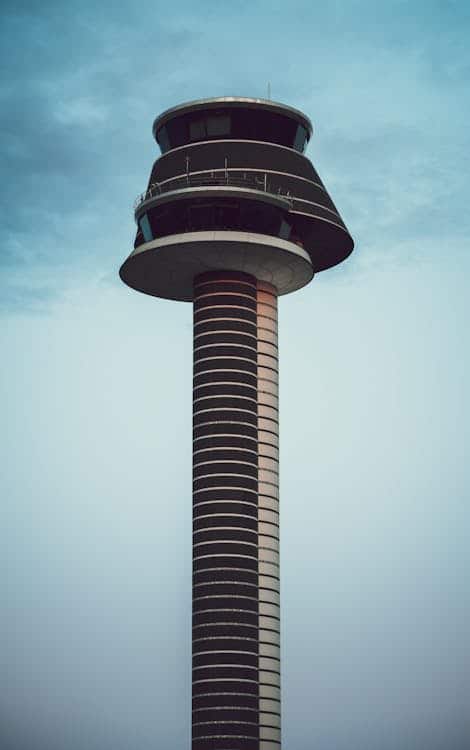
What Is the FAA Air Traffic Controller Shortage?
The shortage is real, structural, and deep-rooted. According to the Government Accountability Office’s December 2025 landmark report, the United States has roughly 25% fewer air traffic controllers today than it had in 1981. Meanwhile, flights using the ATC system have increased by about 10% since 2015 alone. More than 40% of the FAA’s 290 terminal facilities run below their own staffing targets. At the 30 largest facilities — the ones that handle most of the nation’s traffic — 19 out of 30 operate below 85% of their staffing targets. That includes most major metropolitan hubs.
The Real Numbers Behind the Shortage
The FAA employs approximately 13,164 total controllers as of fiscal year 2025. “Total” includes trainees and controllers still in on-the-job certification. The certified, fully independent controller count sits closer to 10,800 against a target of 13,400. The shortfall amounts to roughly 3,544 positions nationwide. To understand the scope: that is an entire mid-sized city’s workforce missing from the system that controls U.S. airspace every day. Aviation analysts at Cirium project that ATC-attributable delays will remain elevated through at least 2027, when the first significant cohort of post-2024 reauthorization hires reaches full certification.
The 1981 PATCO Strike: How the Shortage Started
The roots of this crisis stretch back more than four decades. On August 3, 1981, the Professional Air Traffic Controllers Organization (PATCO) launched a nationwide strike. President Reagan fired all 11,000 striking controllers within days and banned them from federal service permanently. That decision dismantled the most experienced ATC workforce in the world overnight. Rebuilding took nearly a decade. Mandatory retirement at age 56 — designed to protect cognitive standards — creates a constant structural drain. Every year, hundreds of experienced controllers age out. And the pipeline replacing them cannot keep pace.
What the FAA Air Traffic Controller Shortage Means for GA Pilots
Most coverage of this crisis focuses on commercial airline delays. That framing misses the GA community. So here is a direct breakdown of what this shortage means for you, whether you fly VFR or IFR.
How the FAA Air Traffic Controller Shortage Affects VFR Flight Following
Flight following is a workload-permitting service. That phrase matters enormously right now. At facilities running below 85% of their staffing targets, controllers carry more aircraft per sector than workload guidelines recommend. VFR flight following ranks among the first services to disappear when volume spikes. A controller juggling 18 to 22 aircraft on an approach frequency cannot add a Cessna 172 transiting at 5,500 feet.
Some TRACON facilities have reported periods where radar traffic advisories for VFR pilots were simply unavailable — not because technology failed, but because no controller had bandwidth to work that service. When you call an approach control and hear “unable flight following, frequency congested,” that is the FAA air traffic controller shortage talking directly to you. It is not an anomaly. It is the system running at its limits.
IFR Pilots: Clearances, Delays, and Re-Routing
The shortage hits IFR GA pilots hard in three specific ways. First, expect longer en-route delays. Controllers at many TRACONs and ARTCCs handle more simultaneous aircraft than workload models allow. This drives extended routing, more holding, and more re-clearances mid-flight. Second, pre-departure clearance systems face higher call volumes because controllers have fewer bandwidth slots for voice clearances. Third, ground delay programs and airspace flow programs now activate more quickly and with smaller traffic triggers than they did five years ago. Plan accordingly on any route touching New York, Chicago O’Hare, or Southern California airspace — the three most severely understaffed TRACON regions in the country.
Near Misses and the Safety Picture
The safety data deserves attention. Congressional briefing materials from early 2026 document a rise in reported near-miss events — formally logged as runway incursions and loss-of-separation incidents. Controller fatigue plays a measurable role. A December 2024 study by Southern Illinois University Carbondale found that about 20% of active controllers suffer from moderate to severe anxiety — four times the general public rate. The suicide rate among controllers runs at approximately 30 per 100,000, three times the national average. These are not just human-interest statistics. Fatigued, stressed controllers make more errors. And those errors can produce incident reports that affect every aircraft in the system, including yours.
We’ll be straight with you: the controller shortage isn’t just an airline inconvenience. GA pilots who depend on radar advisories, flight following, and IFR handling in high-density airspace are flying a system that’s running on reduced capacity. That demands smarter planning from every pilot in the system — not just commercial crews with dispatchers and schedulers behind them.
The “Level Up” Campaign: FAA Recruits Video Gamers as Controllers
On April 10, 2026, Transportation Secretary Sean P. Duffy unveiled the FAA’s newest ATC recruitment campaign. The target audience: America’s roughly 200 million regular video game players. The initiative carries the name “Level Up,” and the administration argues that gamers have already trained exactly the cognitive skills air traffic control demands: rapid multitasking, spatial reasoning, sustained focus, and complex environment management under time pressure.
What Skills Do Gamers Actually Bring to ATC?
The case holds more weight than it might first appear. Modern ATC work involves managing multiple simultaneous radar tracks, processing fast-moving data streams, communicating precisely under time pressure, and maintaining situational awareness of a constantly shifting 3D environment. These are precisely the skills that top-level real-time strategy, tactical shooter, and simulation game players develop over thousands of hours of practice. The FAA recognized this overlap as far back as 2021, when it launched an earlier “level up” campaign to diversify its applicant pool. This 2026 iteration has significantly more urgency and federal backing behind it.
Application Window Opens April 17: Qualifications and Process
The hiring window opens at midnight on April 17, 2026. The FAA will close the window once it receives 8,000 applications. Based on past cycles, that window could fill within days. Applicants must meet these requirements:
- U.S. citizenship
- Age under 31 at time of application
- English proficiency
- Passage of the Air Traffic Skills Assessment (ATSA) — a cognitive aptitude battery
- Successful medical examination and security clearance
Successful candidates complete four to six months of paid training at the FAA Academy in Oklahoma City. After graduation, they undergo two to four additional years of on-the-job training before the FAA certifies them as Certified Professional Controllers (CPCs). The full path to certification runs approximately five to seven years from application to independent duty.
What the Government Is Doing About the FAA Air Traffic Controller Shortage
The FAA and the Trump administration are pursuing several tracks simultaneously. None of these fixes delivers results overnight. The combination of hiring acceleration, technology investment, and policy reform represents the most aggressive response the FAA has mounted in decades.
200,000 Applicants, 2% Made It: The GAO Report
The Government Accountability Office published “Air Traffic Control Workforce: FAA Should Establish Goals and Better Assess Its Hiring Processes” in December 2025. The finding that drew the most attention: even with roughly 200,000 applicants in recent hiring cycles, only about 2% of all applicants ultimately earn full certification as CPCs. The GAO recommended that the FAA set specific hiring and training goals and use workforce data more systematically to identify where it loses candidates in the pipeline. The FAA reports meeting its FY2025 target of hiring more than 2,000 new controllers and says it sits halfway to its FY2026 goal as of early April. Hiring gains face an equally relentless attrition headwind from mandatory retirements and voluntary separations.
The Mental Health Barrier: A Hidden Retention Crisis
One underreported driver of the shortage involves mental health policy. Currently, controllers who seek mental health treatment face immediate grounding with no guaranteed return-to-duty timeline. The FAA’s own Mental Health Aviation Rulemaking Committee described this system in 2024 as one that “disincentivizes honesty.” The practical result: controllers hide anxiety, burnout, and depression rather than seek treatment. This delays both their recovery and their long-term availability to the system. The Mental Health in Aviation Act of 2025, introduced in the 119th Congress, targets this specific leak. If Congress passes it, the act could meaningfully improve both retention of current controllers and return-to-duty timelines for grounded personnel. The FAA reduced the required waiting period on mental health medications from six months to three months — a small but meaningful step.
The $4 Billion ATC Technology Upgrade
Beyond staffing, the FAA is pushing a $4 billion infrastructure overhaul. Aging hardware at many facilities — some running software from the 1980s — requires controllers to use workarounds that eat time and cognitive bandwidth. Modernizing these systems will not add a single certified controller to the count. It will make existing controllers more productive, expanding the effective throughput capacity of the system at its current staffing level. The FAA’s 2025–2028 Controller Workforce Plan identifies simultaneous infrastructure investment and hiring acceleration as the twin pillars of recovery.
What GA Pilots Should Do Right Now
This crisis does not mean you should stop flying. It does mean you should plan with more precision and build smarter habits. Here are five practical steps every GA pilot can take today.
Five Steps to Fly Smarter During the ATC Shortage
First, file IFR when practical. IFR pilots receive guaranteed separation services. VFR pilots relying on advisory services are operating in a “workload permitting” world right now. When conditions and your certificate allow, filing IFR puts you inside the system rather than on its margins.
Second, treat your own situational awareness tools as primary. Use your ADS-B traffic display, ForeFlight, SiriusXM weather, and onboard collision avoidance systems as primary tools — not backups. When flight following is unavailable, these are your eyes.
Third, add buffer when transiting understaffed TRACONs. New York, Chicago O’Hare, and Southern California TRACON are the three most frequently cited problem facilities. Build 20 to 30 minutes of margin into any route touching those areas, especially during morning and afternoon peak hours.
Fourth, monitor NOTAMs and ATIS for reduced-service advisories. Notices about reduced ATC services at specific facilities appear more often than they did two years ago. Check them before departure, not after you’re airborne.
Fifth, stay proficient in non-radar environments. Flying in Class E and Class G without radar advisories is the original VFR skill set. Practice pilotage, dead reckoning, and position reporting on your next flight. You may need these skills more than you expected.
Our take: the pilots who handle this shortage best won’t be the ones complaining about it on the ramp. They’ll be the ones who already fly with robust personal situational awareness tools, who brief non-radar contingencies before departure, and who treat “unable flight following” as a normal operational condition — not a system failure. Build those habits now.
Frequently Asked Questions About the FAA Air Traffic Controller Shortage
Will the FAA air traffic controller shortage affect my flight?
It depends on your route and aircraft type. IFR pilots in the system have guaranteed separation services. All pilots — IFR included — face a higher probability of delays, extended routing, and ground delay programs at high-density airports. VFR pilots seeking radar traffic advisories will encounter more “unable” responses at peak-traffic facilities.
Can I still get VFR flight following during the shortage?
Yes, but not reliably at every facility or time of day. Flight following is a workload-permitting service. At facilities running below their staffing targets, controllers will decline VFR traffic advisories during high-volume periods. Plan for the possibility of flying without radar service on any given leg. Keep your own situational awareness tools current and operational.
Is the FAA air traffic controller shortage creating safety risks?
The evidence points to elevated risk at the margins. Congressional briefing materials from early 2026 document increased loss-of-separation incidents and runway incursions at understaffed facilities. No direct causal proof yet exists for any specific accident. Aviation safety researchers and the FAA’s own internal documents acknowledge that fatigue and workload strain increase error rates. The system remains far safer than most transportation modes — but the margin has narrowed.