The Cessna G1000 NXi upgrade is the most significant factory avionics and engine modernization for Cessna piston aircraft in years. Textron Aviation announced the changes on April 14, 2026, at the SUN ‘n FUN Aerospace Expo in Lakeland, Florida. Four aircraft receive the update: the Cessna Skyhawk, Skylane, Turbo Skylane, and Turbo Stationair HD. Two core systems drive the upgrade — Garmin’s G1000 NXi System Release 7 and the Lycoming Dual Electronic Ignition System (dual EIS). Together, they add engine-out emergency automation, remote preflight capability, and a complete ignition overhaul. Upgraded aircraft begin entering service in late 2026 and continue into early 2027.
What’s Inside the Cessna G1000 NXi Upgrade?
The Cessna G1000 NXi upgrade centers on System Release 7. This software update adds two features GA pilots have requested for years: Garmin Smart Glide and Remote Wake. Both capabilities address real-world challenges that Cessna pilots encounter on every flight — engine failures and preflight avionics setup.
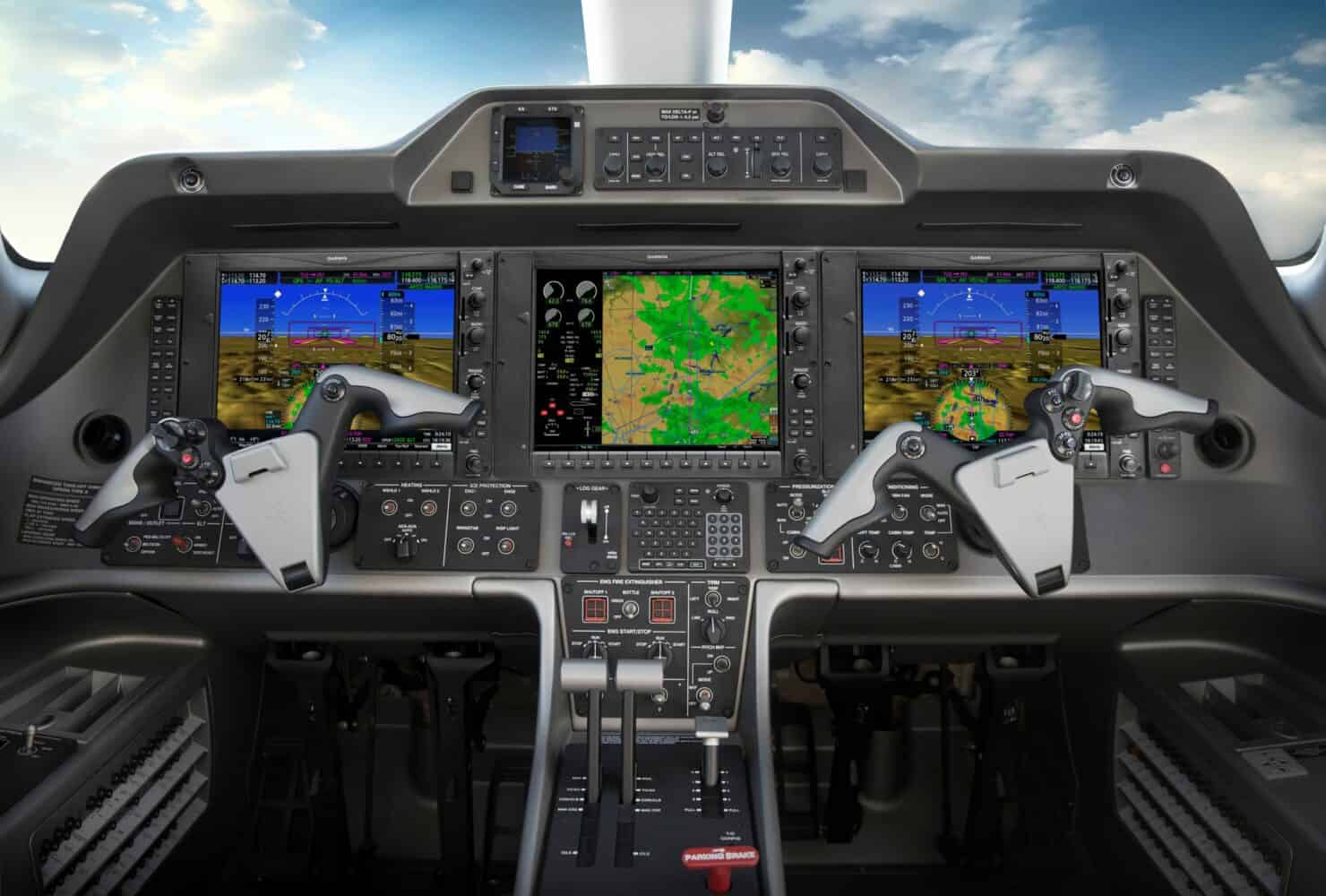
Garmin Smart Glide: Automated Engine-Out Emergency Assistance
Smart Glide is a safety system that runs in the background during every flight. It monitors engine conditions continuously. When engine power drops, the pilot activates Smart Glide using a dedicated panel-mounted button. The system immediately calculates the aircraft’s glide range and identifies suitable landing airports.
Specifically, Smart Glide ranks airport options by runway length, proximity, terrain clearance, and available weather. Once the pilot selects a destination, the system handles several critical tasks automatically. First, it switches the primary COM standby frequency to that airport’s CTAF or tower frequency. Second, it switches the CDI to GPS mode. Third, with a compatible autopilot installed, Smart Glide engages the autopilot. It holds best-glide speed while navigating toward the selected field.
Importantly, Smart Glide does not land the aircraft. That remains entirely the pilot’s responsibility. However, it handles the cognitive workload of frequency management, navigation setup, and glide-range calculation. These tasks consume critical seconds during a real engine failure. For student pilots training in the Skyhawk, this system provides a meaningful safety backstop. It activates during the most stressful in-flight emergency a GA pilot will ever face.
Remote Wake: Pre-Flight Avionics From Outside the Cockpit
Remote Wake allows pilots to power up the G1000 NXi avionics from outside the aircraft. Using the Garmin Pilot app or a compatible device, a pilot wakes the avionics system before climbing into the cockpit. This enables database updates, preflight weather checks, and maintenance reviews — all from the ramp.
For flight schools, Remote Wake carries immediate practical value. Instructors verify avionics status and confirm database currency while students complete the exterior walkaround. Additionally, maintenance technicians run avionics checks and subscription updates without needing power carts or cockpit access coordination. Overall, Remote Wake reduces the administrative friction of fleet operations at busy training facilities.
What Else G1000 NXi System Release 7 Adds
Beyond Smart Glide and Remote Wake, System Release 7 builds on the G1000 NXi platform’s existing strengths. The update improves graphical flight planning and enhances weather overlay integration. It also maintains tight compatibility with Garmin’s broader avionics ecosystem, including GTN Xi touchscreen navigators and GFC autopilots. Furthermore, the software improves split-screen display capability and Connext datalink performance. Pilots who use ADS-B weather in the cockpit benefit from these enhancements on every flight.
The Lycoming Dual EIS: A Replacement for 80 Years of Magneto Technology
The second major component of the Cessna G1000 NXi upgrade is the Lycoming Dual Electronic Ignition System. Previously standard only on the Cessna Skyhawk, dual EIS now ships as standard equipment on every Cessna piston aircraft. This replaces the magneto ignition system that has defined light aircraft engines since the 1940s.
How Traditional Magnetos Compare to the Lycoming Dual EIS
Traditional magnetos use spinning mechanical components to generate the spark that fires engine cylinders. They work reliably when properly maintained — but maintenance is the catch. Magnetos require inspection every 500 hours of operation. At that interval, technicians pull the magneto, check points, inspect the capacitor and coil, and verify timing. High-time magnetos often need full overhaul or replacement. This adds significant cost to any aircraft’s annual budget.
The Lycoming dual EIS eliminates this cycle entirely. Solid-state electronics replace the mechanical internals, leaving no moving parts inside the ignition system. Lycoming designed the dual EIS to operate from engine installation through TBO with no scheduled maintenance requirement. Consequently, the 500-hour ignition service event simply disappears from the maintenance log.
Performance Benefits of Electronic Ignition in Cessna Aircraft
Electronic ignition delivers measurable in-flight advantages over magnetos. First, it provides more precise spark timing across the power curve. The system fires at the optimal advance angle for each combination of RPM and manifold pressure — not a fixed advance angle locked in during the last magneto timing procedure. This improves combustion efficiency and can reduce fuel burn at cruise power settings.
Second, electronic ignition simplifies cold-weather starts. The system adapts timing for starting conditions without requiring the magneto-related carb heat or primer adjustments that pilots sometimes miscalibrate. For training operations in northern states, Alaska, and high-elevation airports, this means more consistent first-start performance across the fleet.
Third, dual EIS maintains the redundancy of the original system. Two independent ignition channels remain in place. If one channel develops a fault, the other continues to fire the engine without interruption. This mirrors the safety architecture of the dual-magneto system it replaces. However, it eliminates the mechanical wear that made magneto reliability a concern on high-time engines.
Maintenance Interval Impact and Cost Savings
Magneto-related writeups rank among the most common causes of AOG (aircraft on ground) status at flight schools and training operations. By eliminating scheduled magneto maintenance, the dual EIS directly reduces ignition-related squawks. For individual aircraft owners without a maintenance contract, fewer 500-hour service events translate into lower annual operating costs. Savings range from several hundred to several thousand dollars per year, depending on aircraft type and local labor rates.
Furthermore, the solid-state ignition system reduces the likelihood of idle cut-out issues and erratic EGT readings that magneto timing drift can produce. Pilots who upgrade from older Cessna aircraft notice the improvement immediately during ground operations.
Which Cessna Aircraft Receive the Cessna G1000 NXi Upgrade?
The Cessna G1000 NXi upgrade rolls out across four production models beginning with late-2026 manufacture. Each aircraft gains both the G1000 NXi System Release 7 avionics package and the Lycoming dual EIS as standard equipment. No optional configuration is required — both systems ship as standard on every qualifying production aircraft.
Cessna Skyhawk (172S)
The Skyhawk already had dual EIS as standard equipment — that launch happened earlier. The G1000 NXi System Release 7 is new here. For the world’s most popular training aircraft, adding Smart Glide to the standard cockpit builds something important: an entire generation of pilots trained on engine-out emergency automation from their first hour in the pattern.
Specifically, as flight schools receive upgraded Skyhawks through normal fleet replacement cycles and programs like Textron’s Top Hawk initiative, students interact with Smart Glide during training exercises. They learn its activation, understand its limitations, and arrive at their private checkride already familiar with the system. That familiarity pays real dividends when they move into more complex aircraft later in their careers.
Cessna Skylane and Turbo Skylane (182T)
The Skylane is the cross-country workhorse of the Cessna lineup. It offers heavier useful load, stronger climb performance, and wide appeal for personal transportation missions. This upgrade adds Smart Glide to a platform that often crosses terrain with few engine-out landing options. Turbo Skylane pilots flying mountain routes benefit most from Smart Glide’s terrain-aware glide-range calculation. The system accounts for obstacles between the aircraft and the selected landing airport.
Additionally, the dual EIS removes a recurring maintenance burden from an aircraft that owners typically fly hard on cross-country missions. Fewer maintenance interruptions means more availability and lower total operating cost per hour.
Cessna Turbo Stationair HD (206H)
The Turbo Stationair HD serves utility and backcountry missions — cargo, charter, and remote operations where reliability comes first. The dual EIS simplifies the ignition maintenance schedule for high-utilization operators. These operators track engine time closely for insurance and regulatory compliance. Charter and cargo operators dealing with tight flight schedules cannot afford AOG events caused by magneto squawks. The maintenance-free ignition system removes that risk from the equation.
Why the Cessna G1000 NXi Upgrade Matters for GA Pilots
The Cessna G1000 NXi upgrade lands at a pivotal moment for general aviation. Training demand remains strong across the country, and flight schools face constant pressure to reduce aircraft downtime and control operating costs. Simultaneously, private aircraft owners manage maintenance budgets that have climbed steadily over the past decade. This upgrade addresses both problems directly — improved safety systems for pilots and lower maintenance overhead for operators.
The SUN ‘n FUN 2026 Announcement and Its Significance
Textron chose SUN ‘n FUN 2026 — the industry’s premier spring fly-in — as the stage for this announcement deliberately. Over 550 exhibitors and tens of thousands of GA pilots attend the Lakeland event each year. Announcing there puts the upgrade in front of the buyers and operators who matter most: active pilots, flight school operators, and aircraft owners making purchasing decisions right now. The timing also aligns with the spring order cycle, when flight schools commit to fall fleet additions. Pilots considering a new Cessna purchase have an opportunity to place orders while the 2026 delivery slots remain open.
Impact on Training Fleets and Flight Schools
For the thousands of Part 61 and Part 141 schools that rely on the Skyhawk as their primary trainer, this upgrade changes the training environment significantly. Smart Glide embedded in the training aircraft lets students learn manual engine-out procedures and automated assistance at the same time. Instructors must understand Smart Glide well enough to teach it. Updated ground school materials and proficiency standards follow from that requirement.
Moreover, training operations that participate in fleet replacement programs receive upgraded aircraft on regular cycles. As new Skyhawks replace aging trainers, Smart Glide and dual EIS features standardize across the fleet. Schools investing in new aircraft now lock in lower ignition maintenance costs for the operating life of each airframe.
Operating Cost Savings for Cessna Owners
The dual EIS delivers the clearest financial benefit for individual Cessna owners. Specifically, eliminating the 500-hour magneto inspection and the potential for magneto overhaul at TBO removes a multi-thousand-dollar maintenance item from the cycle. Owners operating in regions with high labor rates see the greatest savings.
Remote Wake also reduces avionics service time. Technicians complete database subscription updates and system checks without positioning the aircraft, pulling power carts, or coordinating cockpit access. For owners who store their aircraft at busy FBOs with limited ramp access, this feature directly reduces the logistics burden of keeping avionics current.
Effect on the Used Aircraft Market
Generally, when Cessna introduces significant production upgrades, values for immediately preceding model years adjust. Pre-upgrade 2024 and 2025 Cessna piston aircraft may face modest valuation pressure. Buyers will weigh the preference differential for factory-equipped dual EIS and System Release 7 avionics against the price gap between new and used aircraft.
However, Cessna avionics upgrades historically hold their value on the resale market. The G1000 NXi platform exists in most recent-production Cessna aircraft and is well understood by buyers and appraisers. System Release 7 adds value. However, it does not create the same gap that a full hardware platform change would produce. Owners considering selling in the near term should factor this context into their timing decisions.
Entry Into Service: When Do Upgraded Cessna Aircraft Arrive?
Aircraft equipped with the Cessna G1000 NXi upgrade enter service beginning in late 2026 and continue into early 2027. Textron Aviation has not released precise delivery windows for each model at this stage. Buyers placing orders now through authorized Cessna dealers queue for delivery in that window. For those on the fence, placing a deposit early secures position in the production queue for late-2026 and early-2027 deliveries.
Retrofit Options for Existing Cessna Aircraft
Current Cessna owners naturally ask whether G1000 NXi System Release 7 and the Lycoming dual EIS are available as retrofits for in-service aircraft. On the avionics side, G1000 NXi System Release 7 is a software update. Garmin maintains a defined update process through authorized avionics dealers and shops. Owners with G1000 NXi-equipped Cessna aircraft should contact their avionics shop. They can confirm availability and compatibility with their specific installation version.
On the ignition side, the Lycoming dual EIS holds an STC (Supplemental Type Certificate) covering Lycoming-powered aircraft. Owners of 2024 and older Cessna models with conventional magnetos can explore the retrofit through Lycoming-authorized service centers. Pricing and regulatory specifics vary by aircraft model, current configuration, and shop labor rates. Textron Aviation has not announced a factory-sponsored retrofit program for in-service aircraft.
How to Track Delivery and Order Updates
Textron Aviation’s media center at media.txtav.com publishes model-specific delivery announcements and production updates. Fleet operators tracking availability should bookmark that page. Garmin’s website provides System Release notes and dealer installation guides for G1000 NXi-equipped aircraft. Following both sources gives the most accurate information on delivery timelines for specific models and geographic regions.
Additionally, authorized Cessna dealers receive advance notice of production milestones and can provide order queue status for customers who place deposits. Contacting a dealer directly remains the most reliable way to get model-specific delivery estimates.
Frequently Asked Questions: Cessna Avionics and Ignition System Upgrade
What is the Cessna G1000 NXi upgrade?
The Cessna G1000 NXi upgrade refers to the deployment of G1000 NXi System Release 7 across four aircraft. These include the Skyhawk, Skylane, Turbo Skylane, and Turbo Stationair HD. This release adds Garmin Smart Glide engine-out emergency guidance and Remote Wake remote avionics activation to the standard cockpit. It also standardizes the Lycoming Dual Electronic Ignition System across the entire Cessna piston lineup.
Does Garmin Smart Glide land the aircraft automatically?
No. Smart Glide assists with airport selection, glide-range analysis, frequency management, CDI mode switching, and autopilot engagement for best-glide navigation. However, the actual approach and landing remain entirely the pilot’s responsibility. Smart Glide is an emergency assistance system — not an autoland system. Pilots must still fly the approach and execute the landing. The system reduces cognitive workload during the most stressful phase of an engine-out event. The pilot stays free to focus on flying the aircraft.
Can existing Cessna aircraft get the dual EIS as a retrofit?
Yes, with conditions. The Lycoming dual EIS holds an STC for compatible Lycoming-powered aircraft. Owners of earlier Cessna models should contact a Lycoming-authorized service center to assess compatibility and get retrofit pricing. Textron Aviation has not announced a factory-sponsored in-service upgrade program at this time.
Does this upgrade change the published performance specifications?
No. The avionics and ignition upgrades do not alter the published performance specifications in the Pilot’s Operating Handbook. These upgrades improve safety systems, pilot workload management, and maintenance economics — not cruise speed, range, or fuel burn numbers in the POH. Pilots transitioning to upgraded aircraft will find the same performance envelope they expect from these models.
When do aircraft with the upgrade enter service?
Textron Aviation announced that aircraft equipped with the upgrade begin entering service in late 2026, continuing into early 2027. Model-specific delivery timelines are available through authorized Cessna dealers. Contact your local dealer for current order queue status and estimated delivery windows for your preferred model.
How does the Lycoming dual EIS compare to traditional magnetos for reliability?
The Lycoming dual EIS replaces mechanical magnetos with solid-state electronics. Magnetos require 500-hour inspections and eventual overhaul; the dual EIS runs maintenance-free to TBO. Both systems use two independent ignition channels for redundancy, so the fail-safe architecture remains intact. The key difference: the dual EIS eliminates the mechanical wear and service intervals that drive most magneto-related maintenance events on aging aircraft.
For more coverage of the latest GA news, avionics announcements, and pilot training developments, visit the E3 Aviation Association Aviation Articles page. You can also subscribe to the E3 Aviation Association YouTube channel for video coverage of aircraft, avionics, and general aviation news as it happens.