The Cessna 150 trained more pilots than almost any aircraft in history. Between 1958 and 1977, Cessna built 23,839 of them — making it one of the most produced general aviation aircraft ever. If you learned to fly in the United States during those two decades, chances are your first solo was in a 150. Today, these aircraft are still flying, still teaching, and still worth knowing inside and out.
Whether you’re evaluating the Cessna 150 for flight training, shopping for one to buy, or simply want to understand what made it the default trainer of an entire generation, this guide covers everything: full specs, all variants, how it compares to the 152, what ownership costs look like, and what to watch for when buying used.

What Is the Cessna 150?
The Cessna 150 is a two-seat, high-wing, single-engine monoplane built specifically for primary flight training. Cessna introduced it in 1958 as a successor to the Cessna 140, bringing a tricycle landing gear and a fully enclosed cabin to an affordable price point. At the time, it represented exactly what postwar general aviation needed: a simple, reliable aircraft that a student pilot could fly without drama and without breaking a budget.
Over its 19-year production run, the 150 went through 13 variants, gradually gaining better avionics, improved aerodynamics, and more livable interiors. The final model — the 150M — rolled off the production line in 1977 and was replaced by the Cessna 152, a closely related aircraft with a slightly more powerful engine and better fuel compatibility. Despite that transition, thousands of 150s remain airworthy and active today.
Specs and Performance
The 150’s performance numbers are modest by design. Cessna built this aircraft to be simple and predictable — not fast, not exciting. Powered by a Continental O-200-A engine producing 100 horsepower, it cruises at 92 knots (106 mph) and burns roughly 6 gallons per hour. For a student pilot learning traffic patterns and short cross-countries, those numbers are exactly right.
Key Specifications
| Specification | Data |
|---|---|
| Engine | Continental O-200-A (100 hp) |
| Cruise Speed | 92 kts (106 mph) |
| Max Speed | 106 kts (122 mph) |
| Range | ~350 nm (standard fuel) |
| Service Ceiling | 14,000 ft |
| Gross Weight | 1,600 lbs |
| Empty Weight | ~1,100 lbs |
| Useful Load | ~500 lbs |
| Fuel Capacity | 26 gallons (usable) |
| Fuel Burn | ~6 gph |
| Wingspan | 32.7 ft |
| Length | 23.9 ft |
| Years Produced | 1958–1977 |
| Total Built | 23,839 |

One spec that deserves attention: useful load. At approximately 500 lbs, the 150 can carry two average-sized adults with minimal baggage and a partial fuel load — but not two large adults with full tanks. Weight and balance planning is therefore a real operational constraint in this aircraft. That said, learning to calculate it in a 150 is a practical lesson that pays dividends throughout a pilot’s career.
Cessna 150 Variants: From the Original to the Aerobat
Cessna refined the 150 steadily across 13 production variants. Most changes were incremental — improved landing gear legs, updated interior trim, new avionics options — but a few stand out as genuinely significant.
The 150C (1962) introduced Omni-Vision, a wraparound rear window that dramatically improved rearward visibility. Previously, the original 150’s conventional rear fuselage blocked aft sightlines. Omni-Vision became standard from that point forward and remains one of the most recognizable features of later-model 150s.

The 150L (1971) added conical camber wingtips, which improved lateral stability and reduced the already-gentle stall speed slightly. This model also brought better soundproofing — a welcome upgrade after years of pilot feedback about cockpit noise on cross-country flights.
The most distinctive variant is the Cessna 150 Aerobat (designated A150K, A150L, and A150M by year). Stressed to +6g/-3g, equipped with inverted oil and fuel systems, and fitted with skylight windows for orientation during maneuvers, the Aerobat turned a calm trainer into a capable aerobatic platform. Many flight schools used the Aerobat for spin training endorsements, and it remains popular today with pilots who want affordable aerobatic experience without buying a purpose-built aerobatic aircraft.
Cessna 150 vs Cessna 152: Which One Is Right for You?
The Cessna 152 replaced the 150 in 1977 and is, in many ways, the same aircraft with meaningful updates. Understanding the differences helps when shopping for a trainer or comparing flight school options.
The primary difference is the engine. The 150 uses a Continental O-200-A (100 hp), while the 152 uses a Lycoming O-235 (110 hp). Those extra 10 horsepower give the 152 a marginal climb advantage — useful at high-density-altitude airports — but the difference is barely noticeable during typical sea-level training. More importantly, the 150 was designed for 80/87 octane avgas, which is no longer commercially available. As a result, most Cessna 150s today run on 100LL. This is widely accepted in the GA community and has been for decades, but it’s worth understanding when reviewing a specific aircraft’s maintenance records.
The 152 also offers a slightly wider cabin (51 inches vs. 46 inches), improved noise suppression, and more modern factory avionics options. Consequently, late-model 152s feel meaningfully more current in the cockpit than early 150s.
On the other hand, the 150 typically costs $5,000–$15,000 less to buy. For a private buyer who wants an affordable VFR trainer or personal cross-country aircraft, the 150 delivers strong value — particularly mid-production variants like the 150H through 150M, which combine Omni-Vision, conical wingtips, and reasonably modern interiors at lower prices.
Is the Cessna 150 Good for Flight Training?
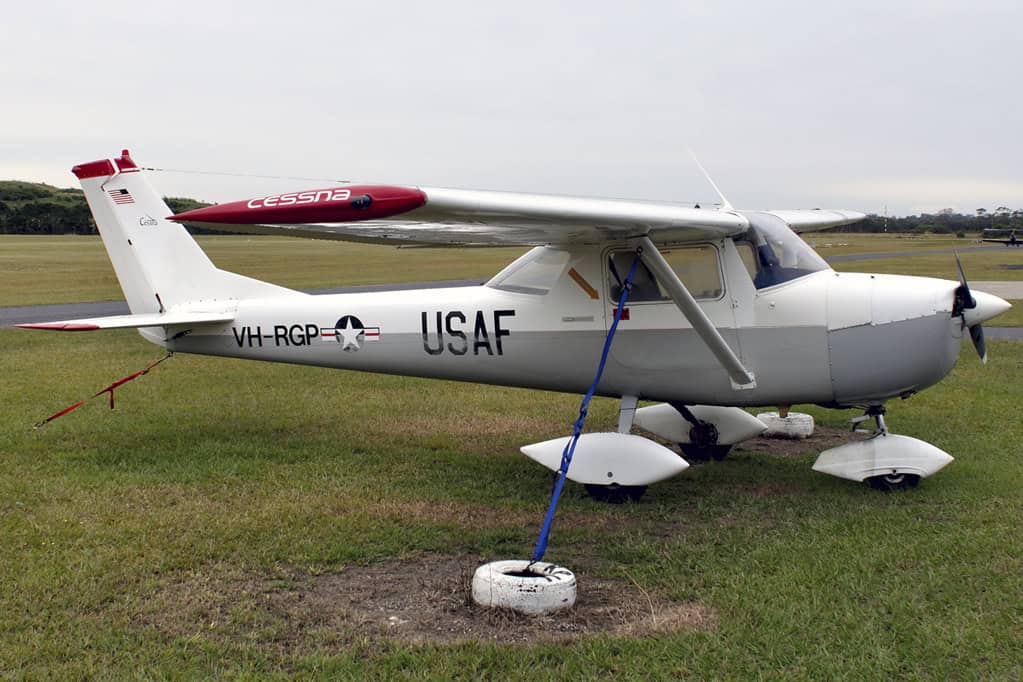
Unquestionably. The 150 is one of the most effective primary trainers ever built. Docile handling, predictable stall behavior, and forgiving approach speeds make it ideal for building fundamental stick-and-rudder skills. Specifically, it rewards proper technique and exposes sloppy flying without becoming dangerous — exactly what you want in a training aircraft.
Stalls in the 150 are clean and well-mannered. The aircraft provides clear buffet warning, breaks predictably, and recovers with minimal altitude loss when handled correctly. For a student working through stall training, this behavior builds genuine confidence rather than instilling fear of the maneuver.
The slow cruise speed, often viewed as a limitation, is actually an asset in training. At 90 knots, students have time to think, process ATC calls, and develop good cockpit habits without feeling rushed. Moreover, the forgiving traffic pattern speeds — typically 65–70 knots on final — provide real margin for mistakes while the visual picture gets wired into muscle memory.
The one legitimate training constraint is weight and balance. Two larger occupants with full fuel will exceed gross weight in some configurations. Flight schools manage this by setting fuel limits for specific student-instructor weight combinations. In practice, working through weight and balance calculations in a 150 is a real-world exercise that sharpens a skill every pilot needs.
Buying a Used Cessna 150: What to Expect
The used Cessna 150 market is healthy. With nearly 24,000 built and decades of established parts availability, finding a flyable example isn’t difficult — but finding a good one requires knowing what to look for.
Price Range
Expect to pay $15,000–$45,000 for a well-maintained Cessna 150, depending on year, total airframe hours, engine time since major overhaul (SMOH), and avionics. Mid-production models (150H–150L) with fresh annuals, mid-time engines, and basic equipment typically land in the $20,000–$30,000 range. Aerobat variants and fully-equipped IFR examples command premiums at the top of that range.
What to Check Before You Buy

Engine time is the first number to examine. The Continental O-200-A has a TBO (time between overhaul) of 1,800 hours. An engine beyond TBO isn’t automatically disqualifying — many run well past TBO with solid oil analysis history — but it is a price negotiation point and a real maintenance consideration. Request the complete engine logbook and look for consistent oil change intervals, no major cylinder work, and clean compression readings at the last annual.
Airframe condition matters more on high-time examples. Inspect the firewall carefully — hard landings can cause cracks that are expensive to repair properly. Check the spar carry-through under the cabin floor for corrosion, and examine the wing attachment points. Additionally, have a trusted A&P perform a thorough pre-buy inspection before committing to any purchase. See our complete Aircraft Pre-Buy Inspection Guide for a detailed checklist.
Avionics vary widely across the 150 fleet. Some examples still have original steam gauges and basic VORs; others have been updated with moving-map GPS and modern transponders. Decide what you actually need before shopping — retrofitting modern avionics can easily add $10,000–$20,000 to the cost of an otherwise affordable airframe.
Ownership Costs
The Cessna 150 is among the most affordable aircraft to own in general aviation. Annual inspection costs typically run $1,000–$2,500 at a GA-friendly shop. Fuel burn at roughly 6 gallons per hour means $33–$36 per hour in fuel at current 100LL prices — among the lowest operating costs of any certificated aircraft flying today.
Insurance for a private pilot covering a Cessna 150 typically runs $1,200–$2,500 per year for hull and liability, depending on pilot experience and hull value. New private pilots pay closer to the top of that range; experienced pilots with substantial logged hours generally see better rates. Hangar or tiedown costs vary by location, typically running $100–$400 per month for tiedown and $300–$800 for an enclosed hangar.
In total, a well-maintained Cessna 150 operated 100+ hours per year typically costs $50–$75 per hour all-in when fixed costs are spread across annual usage. For a pilot who wants to own their own aircraft, few options deliver this combination of practical capability and operating cost.
Is the Cessna 150 Right for You?
If you’re learning to fly, the 150 will teach you everything the private pilot certificate requires — and do it without straining your budget. If you’re a certificated pilot looking for an affordable personal aircraft for local flying and short cross-countries, it remains a practical and proven choice. Furthermore, if you want a platform for spin training or basic aerobatics, the Aerobat variant is hard to beat at its price point.
The 150 is not the right fit if you regularly need to carry two larger adults with full fuel, fly frequently at high-elevation airports, or need substantive IFR capability with modern factory avionics. In those situations, the Cessna 172 or Cessna 182 are the stronger options.
For most pilots at the start of their flying career — or those returning to aviation on a budget — the Cessna 150 remains one of the best values in general aviation. Nearly 24,000 built over 19 years tells you everything you need to know about how well it delivered on its promise.
Take Your Flying Further with E3 Aviation
E3 Aviation Association is built for pilots who take flying seriously. From aircraft ownership resources and pilot training guides to the SKYSHARE fractional ownership program, we’re here to help you get more out of every flight. Join E3 Aviation Association today.