The unleaded avgas transition is no longer a distant concept on the horizon. It is happening right now, and every pilot who burns 100LL needs to understand what comes next. On March 11, 2026, the FAA expanded the approved engine list for Swift Fuels 100R to include 840 engines. That single action moved the needle in a big way. The days of 100LL are numbered. The 2030 deadline is real. And your aircraft, your engine, and your wallet are all going to be affected.
This guide breaks down everything piston pilots and aircraft owners need to know. Specifically, you will learn what fuels are available, what the approval process looks like, and what steps to take right now. Whether you fly a Cessna 172 or a high-performance single, this is the information you need before the clock runs out.
Why the 100LL Countdown Has Started
Aviation gasoline, or avgas, is the last remaining leaded fuel sold to consumers in the United States. Every other vehicle stopped using leaded fuel decades ago. Remarkably, general aviation never got the memo — until now.
The EAGLE Initiative and the 2030 Goal
The Eliminate Aviation Gasoline Lead Emissions initiative, known as EAGLE, set a clear national goal. The U.S. piston aircraft fleet must transition to unleaded aviation fuels by the end of 2030. Pilots in Alaska get a slightly longer runway — their deadline extends to the end of 2032.
EAGLE is not a fringe movement. Indeed, it brings together aircraft manufacturers, engine makers, fuel producers, FBOs, airport operators, and the FAA. aviation industry organizations, homebuilt community, and NBAA all support the effort. Notably, the 2024 FAA Reauthorization Act formally protects the continued availability of 100LL until 2030 — or until a certified unleaded alternative is available at airports. After that, the leaded era ends.
Furthermore, the FAA reinforced this commitment by releasing a draft Transition Plan to Unleaded Aviation Gasoline in January 2026. The public comment period opened shortly after. If you have not yet engaged with that process, there is still time to submit feedback through the FAA’s public portal. Your input shapes how the transition unfolds for the entire GA community.
To learn more and stay current on how this transition may affect your membership and flying privileges, join the E3 Aviation Association — a community dedicated to helping pilots navigate exactly these kinds of changes.
Lead Emissions and the Environmental Pressure
The science behind the transition is stark. Lead-formulated aviation gasoline is the primary source of lead emissions in the United States today. Approximately 222,000 spark-ignition piston aircraft are registered with the FAA. About 175,000 of those are actively flying. Together, they consume roughly 180 million gallons of 100LL per year.
Studies published in peer-reviewed journals found disturbing results near general aviation airports. Children living within 500 meters of airports that use leaded avgas had measurably higher blood lead levels than children farther away. Specifically, one California study found that children within half a mile of a GA airport had blood lead levels twice as high as those in Flint, Michigan during the peak of that city’s water crisis.
Consequently, the EPA formally determined that lead emissions from aircraft engines cause or contribute to air pollution that endangers public health. That finding carries regulatory weight. As a result, it accelerated the push for the unleaded avgas transition — and it is not going away.
California has already passed legislation to phase out and ban leaded avgas by 2031. Other states are watching. Moreover, the pressure is not just federal. It is local, environmental, and growing.

Three Fuels Competing to Replace 100LL
Not all 100LL replacement fuel options are the same. Three major candidates are advancing toward widespread availability. Each takes a different path to market. Understanding the differences helps you plan for your specific aircraft and budget. Here is what you need to know about each one.
GAMI G100UL: The Pioneer
General Aviation Modifications, Inc., better known as GAMI, was first to the finish line. In September 2022, the FAA granted G100UL an Approved Model List Supplemental Type Certificate — an AML-STC — covering most piston aircraft in the GA fleet. That was a historic moment in the unleaded avgas transition.
G100UL is a true 100-octane, lead-free fuel. It is designed to be a drop-in replacement for 100LL with no engine or airframe modifications required once your STC is in place. Additionally, GAMI engineered the fuel to handle the valve seat recession concerns that plague lower-octane unleaded alternatives. Currently, it is available at a limited number of airports in California, Oklahoma, and Mississippi.
The cost premium runs between $0.70 and $1.05 more per gallon than 100LL. At current 100LL prices, that puts G100UL in the $7.00 to $8.00 range at most locations. However, as distribution expands, the premium is expected to narrow. Unfortunately, GAMI has been working to grow its fuel supply network, and the rollout has been slower than many pilots hoped.
One point bears repeating: you need an STC before you can legally use G100UL in your aircraft. The process involves purchasing the STC from GAMI, recording it in your aircraft logbook, and making note of it in your aircraft records. There is a cost involved. Plan for it accordingly.
Swift Fuels 100R: The Fast Mover
Swift Fuels has been making headlines in early 2026. Specifically, the 100R unleaded fuel received its ASTM International production specification in September 2025. That milestone established the safety and consistency framework needed for large-scale commercial production.
Then, on March 11, 2026, the FAA expanded the 100R engine STC in a major way. The Approved Model List now covers 840 engines. That list spans engines from 65-horsepower Continentals all the way up to Lycoming 540 series powerplants. Continental, Lycoming, Franklin, and other manufacturers are represented. If you fly a common piston single, there is a very good chance your engine is on the list now.
Moreover, Swift Fuels’ plan calls for 100R to be available at more than 300 airports by 2027. The fuel is targeting high-compression 550-series Continental engines for certification by the end of 2026. Large bore radials and turbocharged engines follow in 2027. Overall, the Swift 100R certification path is aggressive, and recent events show the company is delivering on its timeline.
Like G100UL, 100R requires an STC for each aircraft. However, Swift structured its approach to make that process as simple as possible. If you are considering the unleaded avgas transition now, the 100R expansion is worth watching closely. The airport coverage by 2027 would make it far more practical for day-to-day flying than currently available alternatives.
UL100E: The PAFI Candidate Targeting Fleet Authorization
The third contender takes a very different approach. UL100E is the final fuel candidate undergoing testing through the FAA’s Piston Aviation Fuels Initiative — known as PAFI. It is produced by LyondellBasell and VP Racing Fuels.
PAFI testing targets completion by September 2026. If those tests succeed, the FAA would pursue fleet-wide authorization. Fleet authorization is a fundamentally different model. Instead of requiring individual aircraft owners to purchase an STC, fleet authorization would allow all compatible aircraft to use the fuel without a separate approval for each airframe. For pilots and owners, that is a major simplification — and a major cost saver.
The testing results so far are encouraging. Specifically, Lycoming recently concluded a 300-hour endurance test on an IO-540-D4A5 engine. The fuel met valve seat recession performance requirements. Additionally, the FAA Technical Center completed detonation testing on a Continental IO-550-D engine and identified optimal timing advance settings for the IO-550 series. Meanwhile, ASTM International published specification D8631-25 — the first standard for unleaded avgas containing ethers — providing the framework for UL100E’s safety and compatibility evaluations.
Fleet authorization is anticipated for Spring 2027 if all testing milestones are met. That timing matters. If you are holding off on the unleaded avgas transition while waiting for a no-STC-required option, UL100E may be your answer — but only if you can wait until 2027.
Understanding the Engine Compatibility Question
Engine compatibility is the most technically nuanced part of the unleaded avgas transition. Not every engine behaves the same way on unleaded fuel. Specifically, the key variables are octane requirement, compression ratio, and valve seat design.
High-Compression vs. Low-Compression Engines
Here is a fact that surprises many pilots. Approximately 65 percent of the piston GA fleet can already use UL94, a lower-octane unleaded fuel, with no engine or airframe modifications. If your aircraft was designed around a low-compression engine, your path forward may be simpler than you think.
However, the situation is more complex for high-performance aircraft. More than 75 percent of 100LL consumption comes from aircraft that require 100-octane fuel. These are typically high-compression, turbocharged, or high-performance piston engines. If your aircraft falls into this category, only a true 100-octane replacement like G100UL, 100R, or UL100E will work as a direct 100LL replacement fuel.
The first step for any aircraft owner is to know your engine’s octane requirement. Check your Pilot Operating Handbook, your engine manufacturer’s documentation, and your type certificate data sheet. This information determines which fuels are options for you and which are not.
Valve Seat Recession: The Technical Concern
Valve seat recession is the most frequently cited concern when discussing leaded vs. unleaded fuel in aircraft engines. Lead acts as a lubricant for exhaust valve seats in certain older engine designs. Remove the lead, and some engines experience accelerated wear at the valve-to-seat interface.
Engine manufacturers took this concern seriously during unleaded avgas development. Consequently, Lycoming and Continental both conducted extensive testing with G100UL, 100R, and UL100E. The results show that modern 100-octane unleaded fuels, when properly formulated, meet or exceed the valve seat protection standards set by 100LL.
Notably, UL100E specifically passed Lycoming’s valve seat recession performance requirements during the 300-hour IO-540 endurance test. That is a significant data point. It means the fuel is protecting valve seats at least as well as 100LL in one of the most common aircraft engines in the GA fleet.
If you own an older aircraft with an engine designed before lead-free formulations became standard, consult your engine manufacturer directly. Some engine models may require valve seat inserts or other modifications before transitioning fully to unleaded fuel. Know your aircraft before you make the switch.
Material Compatibility: What Else Can Go Wrong
Beyond valve seats, material compatibility covers the entire fuel system. Specifically, gaskets, seals, hoses, tanks, and fuel strainers can all react differently to a new fuel formulation.
Fortunately, GAMI, Swift, and LyondellBasell all conducted extensive material compatibility testing with original equipment manufacturers. Van’s Aircraft, Piper Aircraft, Textron Aviation, and Cirrus all participated in OEM material testing for UL100E. Similarly, both G100UL and 100R underwent comparable evaluations before receiving FAA approval.
However, pilots operating older aircraft with non-original fuel system components should proceed carefully. Aftermarket gaskets and hoses may not have been tested with the new fuels. If your aircraft has had fuel system work using non-OEM parts, consult your A&P before transitioning. This is not a reason to panic — it is a reason to verify before you pump.
Also note that G100UL, 100R, and UL100E are not interchangeable at the pump. Each has distinct formulation characteristics. Consequently, mixing them is not recommended and may not be FAA-approved. As airports stock different fuels, pilots will need to know exactly what is in their tanks — and plan accordingly on cross-country flights.
The Swift 100R Expansion: Why March 2026 Matters
The FAA’s March 11, 2026 expansion of the Swift 100R engine STC deserves its own section. This was not a routine announcement. It changed the practical math of the unleaded avgas transition for a huge swath of the GA fleet.
What 840 Approved Engines Actually Means
Before the expansion, Swift 100R’s initial STC covered a single engine model — the Lycoming IO-360-L2A used in certain Cessna 172 variants. That was a starting point, not a solution for the broader fleet.
The March expansion added 88 engine makes across Continental and Lycoming product lines. Each make represents a series of engine models. As a result, hundreds of commonly flown aircraft types are now covered. If you fly a Cessna 172, 182, or 206 with a common Continental or Lycoming engine, there is a very good chance you are now eligible for the 100R STC. Additionally, the same applies to many Piper, Beechcraft, and Mooney owners.
Furthermore, Swift has committed to continue expanding the list. High-compression Continental 550-series engines are targeted for STC approval by the end of 2026. That covers the high-performance single market — Cirrus SR22, Bonanza G36, Cessna TTx, and others — with turbocharged variants to follow by 2027.
What This Means if You Fly a High-Compression Aircraft
High-performance single owners have been waiting the longest for a practical 100LL replacement fuel. G100UL provides an approved option today, but limited airport availability makes it impractical for most flying. The Swift 100R expansion begins to address that gap — but the Continental 550 approval is not here yet.
If you fly a Continental TSIO-550 or IO-550 powered aircraft, monitor Swift’s progress through 2026. By year end, the situation may change dramatically. Similarly, UL100E fleet authorization in Spring 2027 could open up even more options without the STC cost and paperwork burden.
The bottom line: if you are in the high-compression category, your options are expanding rapidly. Do not assume nothing has changed since you last checked. The regulatory landscape of the unleaded avgas transition is moving quickly in 2026.
The Cost Reality: What the Transition Will Run You
The unleaded avgas transition is not just a technical question. It is a financial one. Every aircraft owner should understand the cost components before making decisions about their fuel strategy.
STC Costs: What to Expect
Both G100UL and Swift 100R require pilots and owners to purchase a Supplemental Type Certificate before using the fuel legally. Specifically, the STC covers a particular aircraft registration and must be kept with the aircraft logbooks.
GAMI priced the G100UL STC at approximately $120 to $150 per aircraft when it launched. Similarly, Swift Fuels has positioned its STC pricing competitively to encourage broad adoption. Additionally, some states and airports have developed incentive programs to subsidize STC costs and offset the price difference between unleaded and leaded fuel.
However, if UL100E achieves fleet authorization in Spring 2027, this cost disappears entirely for aircraft compatible with that fuel. Fleet authorization means no individual STC purchase is needed. Consequently, that is a meaningful financial advantage — especially for owners of multiple aircraft or flight schools operating large fleets.
Per-Gallon Premium at the Pump
The fuel itself will cost more than 100LL — at least initially. Currently, estimates put G100UL at $0.70 to $1.05 per gallon above 100LL pricing. At a typical 100LL price of $6.50 to $7.00 per gallon, that puts G100UL in the $7.50 to $8.00 range.
Meanwhile, Swift 100R pricing has not been widely disclosed, but Swift has targeted competitive positioning relative to G100UL. As production scales and more airports carry the fuel, competitive pressure should narrow the premium over time.
The per-gallon premium matters most for high-hour pilots and flight schools. For example, a training organization burning 10,000 gallons per year faces a $7,000 to $10,500 annual premium with G100UL versus 100LL at current pricing. Budget for this reality. The transition is happening whether or not it fits your current cost model.
Long-Term Financial Planning for Aircraft Owners
Here is a perspective that often gets overlooked. The cost of the unleaded avgas transition is a known, plannable expense. The cost of not transitioning — operating an aircraft with a fuel that becomes unavailable or illegal to use — is not plannable at all.
Aircraft values in 2030 and beyond will increasingly reflect fuel compatibility. Buyers will ask which unleaded fuels an aircraft is approved for. Aircraft without an STC or fleet authorization in place may face a discount at sale. Plan the transition as part of your overall aircraft ownership cost structure — not as an unwelcome surprise.
Similarly, if you are buying an aircraft in 2026, ask your broker about the fuel transition status. Is the aircraft eligible for G100UL or 100R? Is the engine on the current approved list? Factor the STC cost and fuel premium into your total cost of ownership calculation. Understanding those numbers now avoids sticker shock later.
Where You Can Fuel Up Today
The practical availability question is the one most pilots ask first. Knowing a fuel has been approved is one thing. Finding it at your local FBO is another.
G100UL Airport Locations
GAMI’s G100UL is currently available at a small number of airports in California, Oklahoma, and Mississippi. Notably, California availability is particularly important given the state’s aggressive leaded fuel ban timeline. Reid-Hillview Airport in San Jose was among the first to carry the fuel.
GAMI continues to work with fuel distributors and FBOs to expand the network. However, distribution has been the major bottleneck slowing broader adoption. If you want G100UL at your home airport, the most effective thing you can do is contact your FBO directly and express demand. Simply put, FBOs stock what pilots ask for.
Swift 100R Airport Rollout
Swift Fuels has outlined an ambitious airport rollout plan. Specifically, the target is 100R availability at more than 300 airports by 2027. That is a significant distribution footprint. Additionally, the EAGLE Interactive Toolkit at flyEAGLE.org tracks fuel availability in real time — check it before your next cross-country to see what is available along your route.
100R’s airport expansion is closely tied to the broader engine STC rollout. As more engine models receive approval, the demand signal at FBOs strengthens. Meanwhile, Swift is coordinating with distributors to stage fuel deliveries ahead of airport announcements. Overall, expect availability to grow substantially through the second half of 2026.
Planning Your Cross-Countries Before 2030
For now, 100LL remains widely available. Most pilots will not face a practical fueling problem before 2028 or 2029. However, that window closes faster than it appears. The aviation fuel distribution network takes years to restructure. Furthermore, FBOs cannot stock two different 100-octane unleaded fuels and 100LL simultaneously at most locations.
Begin planning your transition now. Identify the fuel options compatible with your aircraft. Note which airports along your most common routes are likely to carry them. Engage with E3 Aviation Association and your state aviation association to stay current on airport-level availability as it develops. Pilots who plan ahead will adapt to the new fueling landscape smoothly. Pilots who wait until 2029 will scramble.
What Pilots and Owners Should Do Right Now
Knowledge without action is just noise. Here is a concrete action plan for piston pilots and owners in 2026.
Check Your Engine’s Octane Requirement
Pull out your POH and engine documentation today. Specifically, determine whether your engine requires 100-octane fuel or whether it can operate on lower-octane alternatives like UL94. This one step eliminates uncertainty and tells you which fuels you need to track.
If you need 100-octane fuel, your options are G100UL, Swift 100R, or UL100E (when available). Alternatively, if your engine can use lower-octane unleaded fuel, your transition path is simpler and cheaper. Know before you plan.
Check the Current Approved Engine Lists
Both GAMI and Swift maintain current Approved Model Lists on their websites. The Swift 100R AML now covers 840 engines as of March 11, 2026, and is growing. G100UL covers most common piston engines under a broad AML-STC. Check both lists against your specific engine model and serial number range.
If your engine is on the list, the STC purchase process is straightforward. If it is not yet approved, monitor the timeline for when your engine model is expected to be added. Swift’s Continental 550-series certification target is the end of 2026. Lycoming turbocharged variants follow in 2027. Just as understanding ADS-B compliance requirements helped pilots prepare for that transition — as covered in our Understanding ADS-B Compliance in General Aviation guide — understanding fuel approval status is your first step here.
Engage With the Public Comment Process
The FAA’s draft Transition Plan to Unleaded Aviation Gasoline is open for public comment. This is a rare opportunity to directly influence how the 2030 deadline is implemented. If you have concerns about airport availability, STC costs, engine compatibility for your specific aircraft type, or the pace of transition, submit those concerns in writing.
The FAA is required to consider public comments before finalizing transition rules. Your experience as a pilot operating in the real world — not just in a regulatory hearing room — is exactly the kind of feedback the transition plan needs. Engage now while the comment window is still open.
Talk to Your FBO and Your A&P
Your FBO needs to hear demand from pilots to justify stocking unleaded fuel. Specifically, ask your FBO what their plans are for carrying G100UL or Swift 100R. Ask when they expect to offer alternatives to 100LL. Your question plants a seed. Indeed, many questions from many pilots become a business case.
Likewise, schedule a conversation with your A&P about your specific aircraft and engine. Ask about valve seat condition, fuel system components, and any modifications that might be recommended before the transition. The time to prepare is now — not when your aircraft is due for its annual and 100LL is no longer on the shelf. Much like the smart pilots who adopted new avionics technology proactively — as discussed in our piece on Garmin Autoland Activation — early preparation always beats reactive scrambling.
To discover more about building an aviation career and staying ahead of changes like this, click: https://e3aviationassociation.com/e3-aviation-association-pilot-manifesto/
Little-Known Facts About the Unleaded Avgas Transition
Most pilots know the headline story. Few know these details — and they matter.
The ASTM Spec Is Not the Same as FAA Approval
Receiving an ASTM International production specification — which UL100E achieved and which Swift 100R received in September 2025 — is a significant milestone. However, it is not the same as FAA approval to use the fuel in aircraft.
The ASTM spec establishes the production standard. Additionally, the FAA approval — either through an STC or fleet authorization — is what makes it legal to burn in your specific aircraft. Understand the difference before you pump. Specifically, a fuel can have an ASTM spec and still require an aircraft-specific STC to use legally.
G100UL, 100R, and UL100E Are Not Interchangeable
This point cannot be overstated. The three leading 100LL replacement fuel candidates are not compatible with each other at the pump. They have different chemical formulations. Consequently, mixing them is not recommended and may not be sanctioned by either manufacturer.
As airport fueling infrastructure develops, pilots will encounter airports stocking only one of these fuels. Plan your routes accordingly. The EAGLE Interactive Toolkit and industry coverage 100 Unleaded Avgas page both track fuel availability. Use these tools on every cross-country trip that pushes your range.
Some States Are Moving Faster Than the FAA
California is the most aggressive example. The state passed legislation to phase out and ban leaded avgas by 2031 — one year before the national 2032 deadline for Alaska, and matching the continental U.S. 2030 deadline. California-based pilots may face practical limitations before the rest of the country catches up.
Watch your state legislature. Environmental groups are actively lobbying aviation committees in multiple states to accelerate local avgas phase-out timelines. If your state moves ahead of the federal schedule, you may face a tighter transition window than 2030 suggests. Stay informed through your state aviation association and industry advocacy network.
What the New Kit Plane Market Tells Us About Unleaded
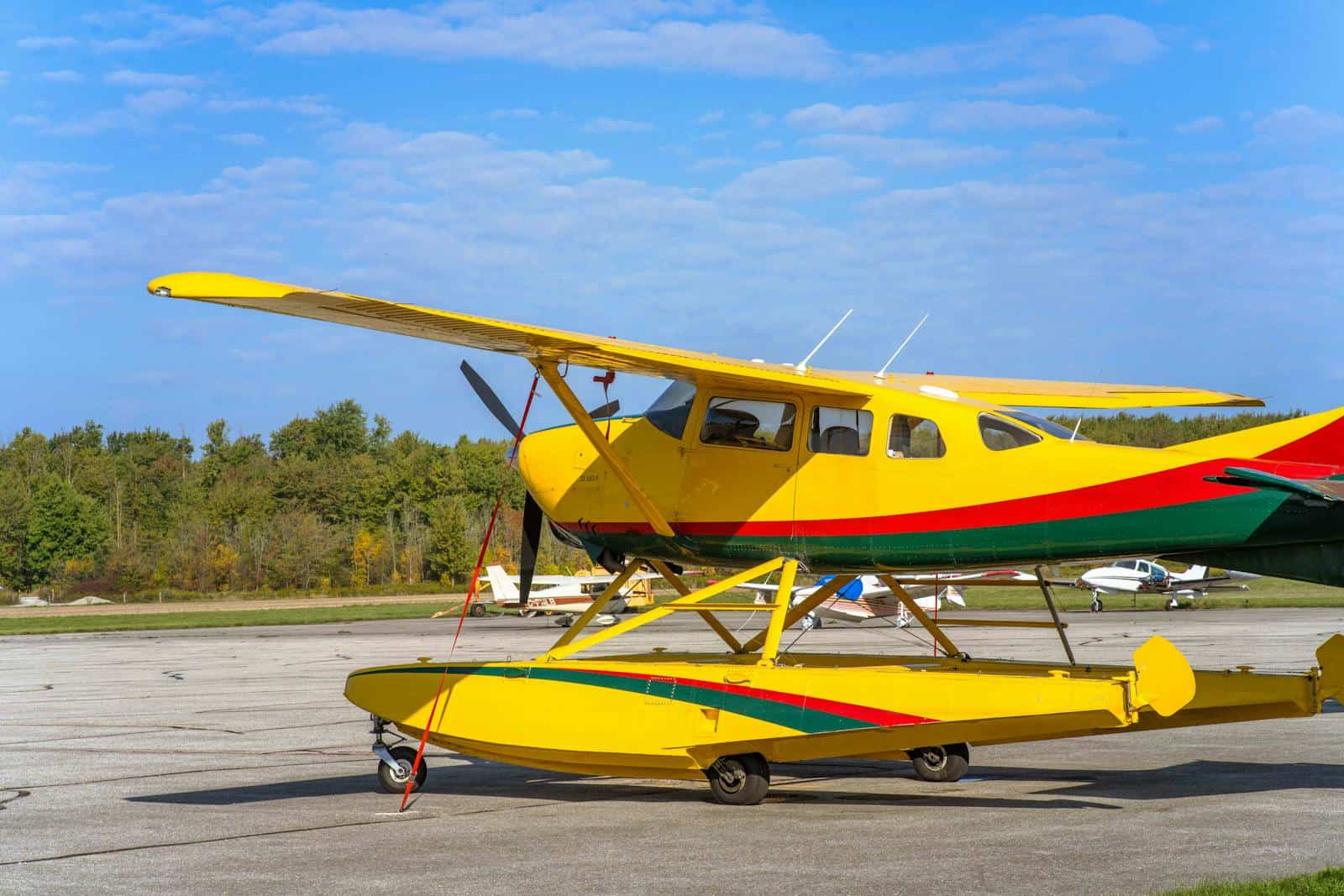
If you want a glimpse of the GA world after 100LL, look at the new kit plane market. Aircraft builders today are designing for a lead-free future. Many experimental aircraft builders have already transitioned to mogas or lower-octane unleaded alternatives where engine specifications allow.
The explosion of new kit planes into the market reflects a community that is not waiting for regulators to act. Experimental amateur-built aircraft have always had more flexibility on fuel choices. That flexibility is now a competitive advantage as the certified fleet navigates the STC and approval process. The kit plane and experimental community will likely lead the way on practical fuel transition lessons that certified aircraft owners can learn from.
FAQ: Unleaded Avgas Transition Questions Answered
Question: Do I need to do anything before 2030, or can I just keep using 100LL until then?
Answer: Technically, 100LL remains legal to use through the end of 2030 in most of the continental U.S. However, waiting until 2029 or 2030 creates real risk. Fuel distribution infrastructure takes years to shift. Airport availability of unleaded fuel options will be uneven through 2027 and 2028. Obtaining your STC now and familiarizing yourself with unleaded avgas options puts you in a far better position than scrambling at the last minute. The unleaded avgas transition rewards early movers.
Question: Is Swift 100R approved for my Cessna 172 with a Lycoming IO-360?
Answer: As of March 11, 2026, the FAA’s expanded Swift 100R STC covers many Lycoming IO-360 engine models. However, the exact model and serial number range matter. Check the current Approved Model List on Swift Fuels’ website or through the FAA’s STC database. The AML has grown to 840 engines and continues to expand. If your specific engine is not yet listed, Swift has committed to adding high-demand engine models through 2026 and 2027. The Swift 100R certification timeline is aggressive, and coverage is expanding rapidly.
Question: What is fleet authorization, and why does it matter for UL100E?
Answer: Fleet authorization is an FAA approval pathway that allows all compatible aircraft in a category to use a fuel without requiring individual aircraft STCs. Unlike G100UL or 100R — which require a per-aircraft STC purchase — fleet authorization for UL100E would let you pump the fuel legally with no additional paperwork or per-aircraft cost. PAFI testing targets completion by September 2026, with fleet authorization anticipated for Spring 2027. For flight schools and multi-aircraft owners, this represents a significantly more affordable path through the unleaded avgas transition.
Question: How much will the unleaded avgas transition cost me as an aircraft owner?
Answer: Current costs include the STC purchase (approximately $120-$150 per aircraft for available options) and a fuel premium of $0.70 to $1.05 per gallon above current 100LL pricing. State subsidy programs in some locations offset both costs. If UL100E achieves fleet authorization as expected, the STC cost disappears for compatible engines. The per-gallon premium is expected to narrow as production scales and competition between fuel producers increases. Budget for both costs in your current ownership planning — the 100LL replacement fuel landscape will be fully formed within two to three years.
Question: If I sell my aircraft before 2030, does the unleaded fuel status matter to buyers?
Answer: Yes, and increasingly so. Aircraft that already have an active STC for G100UL or 100R will be more attractive to buyers aware of the approaching 100LL phase-out. Buyers purchasing in 2027 or 2028 will be evaluating aircraft through the lens of the 2030 deadline. An aircraft with documentation showing fuel compatibility and a current STC reduces the buyer’s risk and simplifies the transition. Aircraft without any unleaded fuel documentation may face questions — and potentially lower offers — in a market that is increasingly focused on the post-100LL reality.
Question: What happens to my aircraft if 100LL becomes unavailable before I transition?
Answer: An aircraft with an engine that requires 100-octane fuel and no approved unleaded alternative becomes difficult to operate legally if 100LL disappears from your area. This is precisely why the transition timeline matters. The 2030 deadline is not just a regulatory target — it is a practical planning horizon for airport fuel infrastructure. If you fly in California, that window is even shorter. The unleaded avgas transition is best approached as a planned upgrade, not an emergency response to fuel unavailability.
Looking Ahead: The Fuel Landscape in 2027 and Beyond
By 2027, the unleaded avgas picture will look fundamentally different from today. Here is what the evidence suggests is coming.
The 2027 Milestone Snapshot
Spring 2027 brings the expected UL100E fleet authorization — assuming PAFI testing completes as planned in September 2026. Swift 100R is targeting availability at 300 or more airports. G100UL will continue its slower but steady expansion. For most piston engine models, at least one approved 100LL replacement fuel will be available at a meaningful number of airports across the U.S.
By 2027, an increasing number of flight schools and FBOs will have made the transition for practical and business reasons. Insurance carriers and aircraft lenders are also beginning to factor fuel transition status into their calculations. The market dynamics will reinforce the regulatory pressure from 2027 onward.
The Role of Infrastructure Investment
The EAGLE initiative has been working on the infrastructure side of the transition. FBO tank systems need to handle new fuel formulations. Fuel trucks, fuel farm equipment, and quality control procedures all require updating. The FAA and industry are developing guidance for FBOs making the transition.
Larger airports serving busy GA traffic are further along in this planning than smaller rural airports. The gap between well-served GA hubs and remote airstrips will likely persist through 2028 and 2029. Backcountry pilots and those operating in remote areas should plan their fuel transition with extra attention to route planning.
Mogas and the Lower-Octane Alternative
One option that sometimes gets overlooked in the 100LL replacement conversation is mogas — automobile gasoline approved for aircraft use. Many low-compression engines already have FAA-approved STCs for auto fuel use through the Petersen STC program and similar approvals. For eligible aircraft, mogas offers an immediate, widely available, lower-cost unleaded alternative today.
Mogas is not viable for engines requiring 100-octane fuel. However, if your aircraft qualifies and you have not already explored this option, it represents an immediate action you can take right now. Check the FAA’s Building an Unleaded Future page and the aviation industry organizations 100 Unleaded Avgas resource page for mogas STC information specific to your aircraft.
The Community Perspective: What Pilots Are Saying
The unleaded avgas transition generates strong opinions in the GA community. The perspectives are worth understanding — both for practical planning and for calibrating your expectations.
The Skeptics: Burned by Delays Before
Some pilots are frankly tired of hearing about the unleaded avgas transition without seeing it arrive at their local FBO. After years of announcements, test milestones, and shifting timelines, a segment of the pilot community has adopted a wait-and-see approach. Their skepticism is understandable. The transition has moved more slowly than early advocates promised.
However, 2026 is different from 2022. The ASTM specifications are published. The STCs are being issued. Swift 100R now covers 840 engines. The FAA has released a draft transition plan for public comment. The infrastructure investment is underway. The skeptics are not wrong about the past delays — but the evidence suggests the pace is genuinely accelerating.
The Early Adopters: Already Flying Unleaded
A smaller but growing segment of the pilot community has already made the switch. G100UL users in California and Oklahoma report smooth performance with no observable differences from 100LL in day-to-day operations. Early adopters describe the transition as anticlimactic — pump the new fuel, fly your aircraft, and see no meaningful change in engine behavior.
That anecdotal experience aligns with the engineering data. These fuels were designed to be drop-in replacements. The years of testing were specifically aimed at ensuring no surprises in actual operation. Early adopter experience reinforces the message that the transition, once you have the STC in hand and the fuel in your tank, is simply a non-event at the aircraft level.
Flight Schools: The Highest-Stakes Stakeholder
Flight training organizations face the most complex transition challenge. Large fleets, high fuel consumption, budget constraints, and regulatory compliance obligations all intersect. The mogas STC option helps some training aircraft. UL100E fleet authorization in 2027 would help many more.
Flight schools operating Part 141 curricula are already thinking about how fuel transition costs affect their business models. Some are working with state aviation associations to access subsidy programs. Others are watching the UL100E timeline closely before committing to STC purchases. To learn more, join the E3 Aviation community at: https://e3aviationassociation.com/
Your Action Plan: The 2030 Runway
Four years feels like a long time. In aviation, it is not. Here is a simple, actionable timeline to guide your transition planning.
Now through 2026: Identify your engine’s octane requirement. Check current AML status for G100UL and Swift 100R. Purchase an STC if your engine is approved and you want to transition early. Engage your FBO about fuel plans. Submit comments on the FAA draft transition plan if you have not already.
2027: UL100E fleet authorization expected (no STC required for compatible aircraft). Swift 100R targeting 300+ airport availability. Assess your home airport’s fuel offerings. Refine your cross-country fuel planning accordingly.
2028-2029: Transition fully to unleaded operations. Ensure your aircraft records reflect fuel authorization. Brief any co-owners, renters, or instructors on your fuel status and procedures. Confirm your aircraft’s value reflects its transition-ready status.
2030: 100LL phase-out deadline. Continental U.S. airports begin full transition to unleaded alternatives. Aircraft without STCs or fleet authorization face legal and practical fueling challenges.
For more aviation resources and insights, be sure to visit: https://e3aviationassociation.com/articles/
Additional resources to bookmark: the EAGLE Initiative at flyEAGLE.org, the FAA’s Building an Unleaded Future page, industry 100 Unleaded Avgas resource page, and the General Aviation News Big Picture on Unleaded Avgas overview.
Written by the E3 Aviation Team, a group of experienced pilots, aviation writers, and industry professionals dedicated to promoting safety, education, and passion in general aviation.
To discover more about E3 Aviation visit: https://e3aviationassociation.com/
The E3 Aviation Editorial Team writes for owner-pilots, student pilots, and the small aircraft community. We focus on practical, real-world content that respects your time and your training. Learn more about E3 Aviation.
Last Updated: 2026-05-10