Female Blue Angel pilots have rewritten what is possible in military aviation. The Blue Angels represent the pinnacle of precision flying in the United States Navy. For most of the team’s history, women were not part of that story. However, that changed in a big way — and the impact goes far beyond the airshow circuit. At E3 Aviation Association, we celebrate every pilot who breaks a barrier. In this guide, we cover the history of female Blue Angel pilots, their achievements, and what their success means for women in aviation everywhere.
A Brief History of the Blue Angels
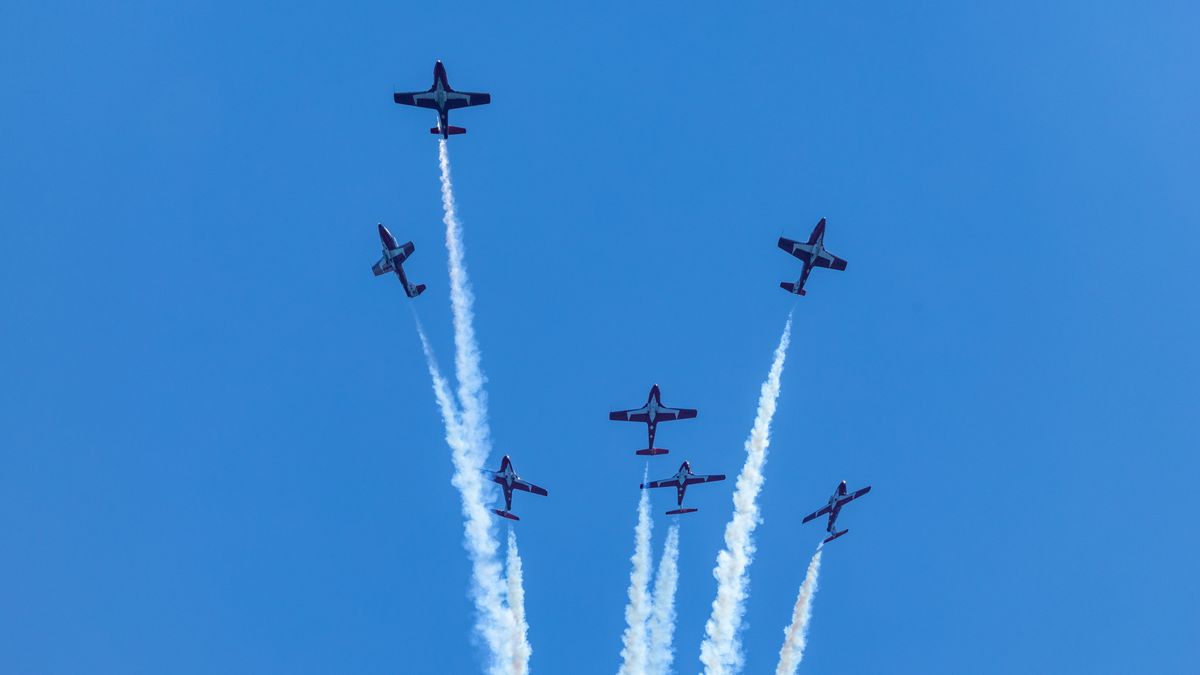
First, it helps to understand what the Blue Angels are. The Blue Angels are the United States Navy’s flight demonstration squadron. The team was founded on June 24, 1946 — making it one of the oldest military aerobatic teams in the world. The Blue Angels have performed for hundreds of millions of spectators over eight decades.
The team has flown a series of iconic aircraft over the years. For example, early teams flew the Grumman F6F Hellcat and the F9F Panther. The team flew the McDonnell Douglas F/A-18 Hornet from 1986 to 2020. As a result, the F/A-18 became synonymous with Blue Angel identity for an entire generation of fans. In 2021, the team transitioned to the Boeing F/A-18 Super Hornet — a larger, more powerful version of the aircraft.
The Blue Angels also operate a support aircraft nicknamed “Fat Albert.” Specifically, Fat Albert is a Boeing C-17A Globemaster III, which replaced the legendary C-130T Hercules in 2020. Fat Albert carries team equipment, support crew, and performs its own demonstrations at airshows. It was aboard the C-130T version of Fat Albert where history was made for female Blue Angel pilots.
Breaking Into the Blues: How the Selection Process Works
Katie Higgins Cook changed the Blue Angels forever. She became the first female pilot in Blue Angels history when she joined the team around 2015. She flew the C-130T Hercules as the Fat Albert pilot — a role that is fully part of the Blue Angels team. Her selection broke a barrier that had stood for nearly 70 years.
Higgins Cook was a decorated Navy aviator before she joined the Blue Angels. She had extensive experience flying the C-130 Hercules in a variety of operational roles. Her selection as a Blue Angel pilot was not a symbolic gesture — it was a merit-based selection from a competitive pool of applicants. As a result, she demonstrated that female aviators could compete at the very highest level of military flight demonstration.
Higgins Cook’s visibility had a measurable impact on the aviation community. For example, young women who watched Fat Albert perform at airshows saw a female pilot in the cockpit of a Blue Angel aircraft. Her role helped shift the cultural perception of who could fly at the elite level. Above all, she proved that the Blue Angels were evolving — and that excellence had no gender.
After her time with the Blue Angels, Higgins Cook continued to serve as an advocate for women in aviation and military service. She has spoken publicly about her experiences and the importance of representation. In fact, her story is referenced by women’s aviation organizations as an example of what is possible when barriers fall.
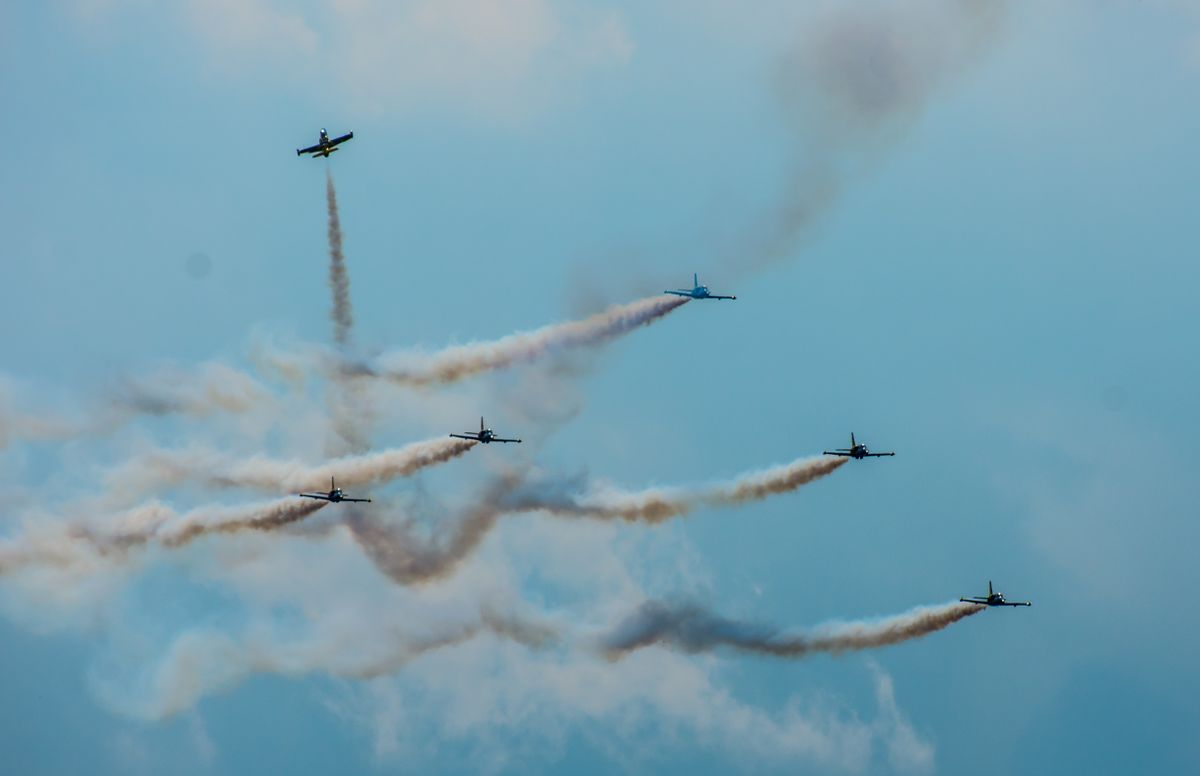
We’ll be straight with you: if you’re a GA pilot watching a Blue Angels airshow, you’re watching a discipline that requires tens of thousands of flight hours and military tactical training to even qualify for. The gap between a PPL and a Blue Angel is the entire professional aviation career. That’s what makes it inspiring, not discouraging.
Amanda Lee — The First Female F/A-18 Blue Angel Pilot
Second, Amanda Lee took the breakthrough even further. She became the first female pilot to fly an F/A-18 tactical jet as a Blue Angel when she joined the team in 2022. She flew as pilot #4 — one of the six primary solo and formation demonstration positions. She became the most visible female pilot in Blue Angels history.
Amanda Lee’s selection followed the same rigorous process as every Blue Angel pilot. She had over 1,500 flight hours and extensive fleet tactical experience flying the F/A-18. The Blue Angels selection board evaluates candidates on flying skill, interpersonal dynamics, and ability to represent the Navy professionally. As a result, Lee’s selection was an unambiguous statement: she earned it.
Lee’s role as a tactical jet pilot in the demonstration team is significant for several reasons. For example, the solo positions require the most demanding flying in the show — high-speed passes, opposing solo maneuvers, and split-second timing. Her performance in those roles demonstrated female aviator capability at the absolute frontier of military aviation.
Amanda Lee spoke openly about her experience as a Blue Angel and what it meant to her. She acknowledged the weight of being a first — and the responsibility that comes with it. She pointed out that the goal is not just representation but excellence. In other words, she wanted to perform at such a high level that future female Blue Angel pilots would be expected, not exceptional.
In fact, her 2022 season received broad coverage in aviation and mainstream media. Amanda Lee became one of the most recognizable figures in military aviation that year. As a result, her story reached audiences well beyond the GA community — inspiring young women who had never considered aviation as a career.
What It Takes to Become a Blue Angel Pilot
Becoming a Blue Angel is one of the most demanding selection processes in military aviation. Candidates must be active-duty Navy or Marine Corps tactical jet or C-130 pilots. The selection committee looks for pilots with at least 1,250 flight hours and a strong fleet deployment record. Most applicants are experienced tactical aviators with multiple deployments behind them.
The selection process is not just about raw flying ability. Blue Angel pilots must represent the Navy at public events — speaking with officials, media, and families. Interpersonal skills, communication, and professionalism carry significant weight in selection. The team operates in close quarters for an entire year of travel and performances. As a result, team chemistry is evaluated as seriously as stick-and-rudder skill.
The Flight Hours You Need Before They’ll Even Look at Your Application
First, the minimum threshold for tactical jet candidates is roughly 1,250 flight hours. However, most selected pilots have far more. For example, Amanda Lee had over 1,500 hours before her selection. The quality of those hours matters as much as the quantity. Fleet tactical experience — carrier operations, combat deployments, complex airspace management — is what the selection board is looking for. Candidates must be current and qualified in their primary aircraft at the time of application.
What the Blue Angel Selection Process Actually Looks Like
Second, Blue Angel selection happens on a specific annual cycle. Outgoing team members typically serve two-year tours. Replacement slots are announced in advance and the application process is open to qualified aviators. Candidates often spend years building toward the qualifications needed to apply. Finalists are invited to fly with the team — a series of demonstration rides and evaluations that assess how candidates handle the Blue Angels’ specific flying environment. As a result, the final selection reflects both objective qualifications and subjective team fit.
What Female Blue Angel Pilots Mean for Aviation
The significance of female Blue Angel pilots extends well beyond the Navy. The Blue Angels are one of the most watched aviation programs in the United States. Airshows routinely draw hundreds of thousands of spectators. Every performance is an opportunity to shape public perception of who pilots are.
Representation matters in every field — and aviation is no exception. For example, research consistently shows that young people are more likely to pursue careers where they see people who look like them succeeding. Every female Blue Angel pilot who performs at an airshow is planting a seed in the minds of girls in the crowd. That seed can grow into a PPL, a military career, or a commercial airline cockpit years later.
Female Blue Angel pilots strengthen the military aviation pipeline more broadly. The Navy and Marine Corps benefit when the widest possible pool of qualified candidates competes for every position. As a result, the integration of women into Blue Angel demonstration roles reflects and reinforces the broader integration of women throughout naval aviation. Women have served as Navy tactical pilots since 1993 — and the Blue Angels’ integration is a natural extension of that progress.
Civilian aviation is also affected. Young women who see female Blue Angel pilots at airshows are more likely to explore general aviation, flight training, and aviation careers. The cultural impact of representation at the elite level ripples down through every segment of the aviation community. For a look at the broader history of pioneering women in aviation, read our guide on the pioneering achievements of Bessie Coleman and female aviation trailblazers.
How Female Pilots Can Follow This Path
First, start with a private pilot certificate. The path to military aviation begins with falling in love with flight. The earlier you start, the more time you have to build the experience that elite programs require. Exploring general aviation as a teenager or young adult gives you a significant head start. For a complete guide to starting your aviation journey, read our article on how to become a pilot.
Second, consider the military path. The Navy, Marine Corps, Air Force, and Army all offer pilot training programs. A military aviation career provides flight hours, tactical experience, and the specific qualifications that programs like the Blue Angels require. Organizations like Women in Aviation International (WAI) offer scholarships and mentorship for women pursuing aviation careers at every level.
Third, build hours deliberately. The quality of your hours matters as much as the quantity. Seek out complex aircraft, multi-engine ratings, and instrument time early. You build the kind of flight profile that opens doors at every stage of an aviation career. Above all, stay current, stay proficient, and never stop learning. For help finding the right instructor to guide your training, read our guide on how to choose a flight instructor.
Our take: The Blue Angels don’t just select skilled pilots — they select tested tactical aviators with exceptional records and the ability to perform precision formation flying inches from other aircraft. When a woman makes that team, it’s not a diversity milestone. It’s a statement that she outcompeted some of the best fighter pilots in the Navy.
Frequently Asked Questions About Female Blue Angel Pilots
Who was the first female Blue Angel pilot?
Katie Higgins Cook was the first female pilot in Blue Angels history. She flew the C-130T Hercules as the Fat Albert pilot around 2015. Her selection was merit-based and came through the same competitive process as every Blue Angel. She broke a barrier that had stood for nearly 70 years.
What aircraft do the Blue Angels fly today?
The Blue Angels currently fly the Boeing F/A-18 Super Hornet. The team transitioned to the Super Hornet in 2021, replacing the legacy F/A-18 Hornet they had flown since 1986. The team’s support aircraft is the Boeing C-17A Globemaster III, nicknamed Fat Albert, which replaced the C-130T Hercules in 2020.
How many flight hours do you need to become a Blue Angel?
Blue Angel candidates typically need at least 1,250 tactical jet flight hours. However, most selected pilots have considerably more experience. The Blue Angels select for fleet tactical experience — carrier operations, combat deployments, and complex airspace management — not just raw flight hours. Strong interpersonal skills and the ability to represent the Navy professionally are critical selection criteria.
Sources:
U.S. Navy Blue Angels Official Website | Women in Aviation International | United States Navy
Written by the E3 Aviation Editorial Team | E3 Aviation Association — Empowering pilots with knowledge, community, and resources.