Owner-assisted annual inspections give GA pilots two things most of us never get enough of: real cost control and firsthand knowledge of the aircraft we fly. Under FAR Part 43.3(g), certificated pilots and aircraft owners can perform specific preparatory tasks during an annual — working directly alongside an IA to cut labor hours and build hands-on systems knowledge. For owner-pilots flying piston singles, light twins, and small turboprops, that combination is hard to beat. This guide covers exactly what you can do during an owner-assisted annual inspection, how to prepare effectively, and how to build a productive working relationship with your IA.
Last Updated: May 5, 2026 | By: The E3 Aviation Editorial Team

What the FAA Actually Allows During Your Annual
The regulatory foundation for owner-assisted annuals is 14 CFR Part 43.3(g). It permits pilot-certificated aircraft owners to perform preventive maintenance on any aircraft they own or operate — provided the aircraft isn’t operated under an air carrier certificate. That’s the legal basis. What it doesn’t provide is unrestricted access to inspection tasks or airworthiness determinations.
Two Categories: Know Which One You’re In
First, there’s owner-assisted annual work — tasks performed under direct IA supervision during the annual itself. This covers panel removal, access area prep, cleaning, disassembly, and reassembly under direct instruction. Second, there’s preventive maintenance — a specific list of 31 tasks in FAR Part 43 Appendix A that certificated pilots can perform independently between annuals without IA oversight.
Specifically, Appendix A tasks include replacing oil and oil filters, swapping out landing gear tires, replacing defective safety wire, cleaning fuel and oil strainers, and cleaning spark plugs. These don’t require IA sign-off — only a proper logbook entry signed by the pilot. However, owner-assisted annual work is different. The IA must be present and directing the activity. The IA’s logbook signature covers the full inspection.
What Only Your IA Can Do — No Exceptions
The inspection itself, every airworthiness determination, and the maintenance record sign-off belong exclusively to your IA. Specifically, this covers: compression tests and result interpretation, magneto timing checks, corrosion assessment in primary structure, control surface rigging conformity checks, and returning the aircraft to airworthy status. Your role is labor support — not airworthiness judgment calls.
Additionally, any major repair or major alteration requires an FAA Form 337 that only an A&P or IA can initiate and sign. The practical line: if the task produces an airworthiness judgment, it’s the IA’s call. If it’s physical labor — removing panels, cleaning, reinstalling inspected components — it’s typically within owner-assisted scope. When uncertain, stop and ask.
How to Prepare Your Aircraft (and Save Real Shop Time)
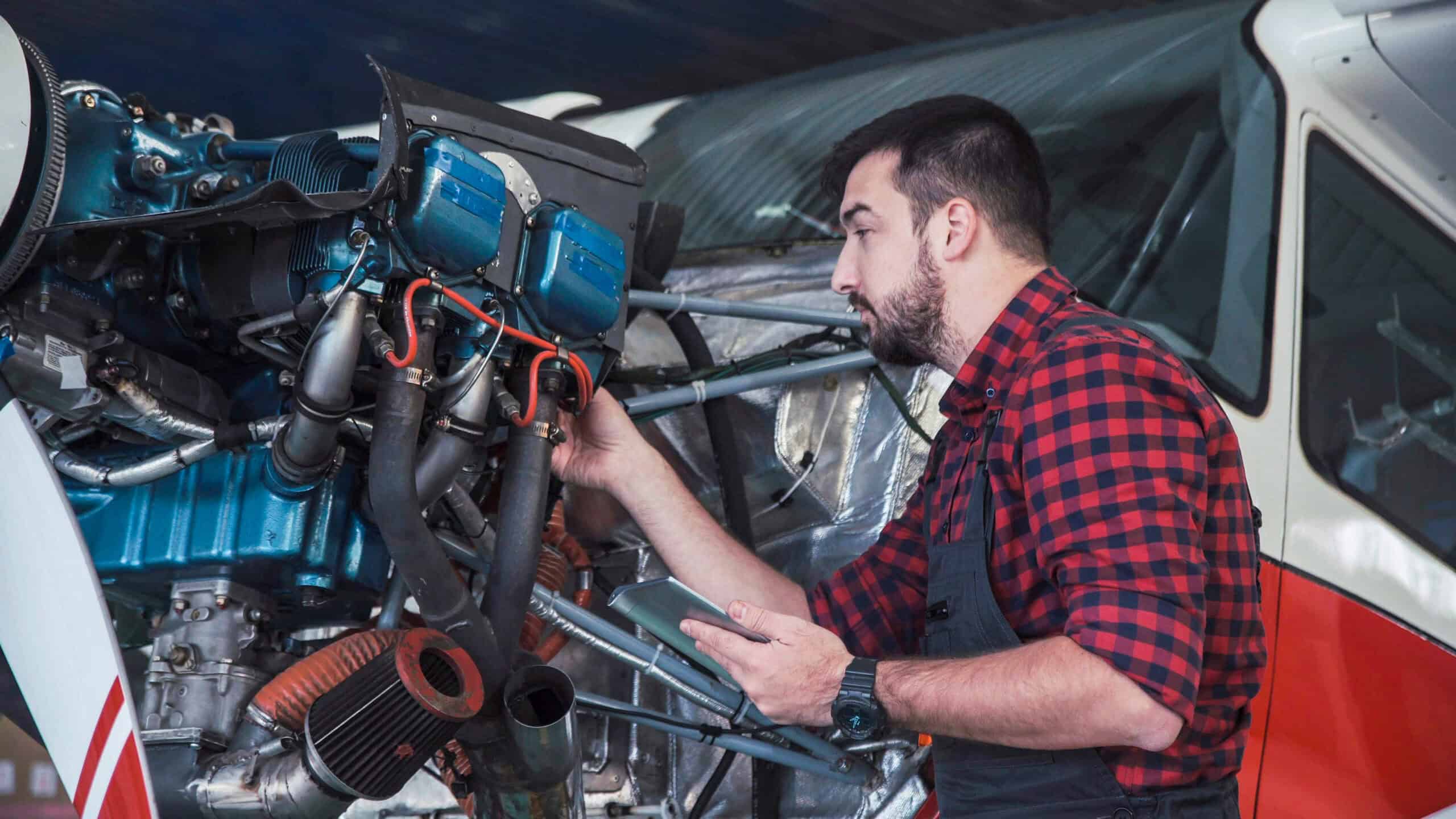
Preparation is where owner-assisted annual inspection delivers the biggest bang for your dollar. Shop time runs $80–$150 per hour at most GA shops. Every hour you put into prep at the hangar is an hour your IA isn’t billing. Arrive organized, clean, and with your paperwork in order — you’ll realistically save 2–4 hours on a typical piston single annual.
The Pre-Annual Prep List That Actually Moves the Needle
Start with logbooks. Pull your aircraft, engine, and propeller logbooks and verify they’re current, complete, and legible. Your IA will review them regardless. If they have to hunt for entries or resolve discrepancies, that’s billable time. Confirm the last annual’s date and tach time are recorded correctly. Verify AD compliance entries are present. Check that previous squawks are properly closed out.
Next, clean the aircraft. Remove inspection plates and cowling panels your IA needs access to. Wash the belly — dirty airframes hide corrosion, cracks, and fluid leaks. Degrease the engine compartment before your IA arrives so they’re looking at metal, not grime. Consider draining the oil if your IA has requested it beforehand.
Document every squawk in writing before you arrive. “Intermittent comm 1 static on 122.8 below 3,500 feet” beats “radio acts up” every time. Your flight-condition knowledge is intelligence your IA can’t generate from a static ramp inspection. Notably, owners who arrive with a written squawk list consistently report more efficient annuals and fewer return shop visits for issues caught too late.
Working With Your IA: What Makes the Partnership Actually Work
The owner-assisted annual only functions when the working relationship is right. Some IAs prefer owners to handle prep only and step back during the physical inspection. Others actively coach owners through every system. Neither is wrong — but mismatched expectations waste time and create friction that benefits no one.
Communicate expectations upfront. Discuss which systems concern you, what your budget looks like, and whether you want to be present throughout or just handle prep and reassembly. Agree on how findings get communicated. How quickly can you address squawks that show up mid-inspection? These conversations are worth having before the first cowling bolt comes loose.
How to Ask Better Questions Without Slowing Your IA Down
Good owner-participants ask questions at natural pause points — not mid-torque on a fastener. Wait until your IA finishes a section, then ask what they found and what it means. Ask what the spec is, what they actually measured, and what triggers a repair versus a monitor-and-watch call. These questions don’t slow the process down. They build technical fluency that makes you a sharper owner every year.
Your physical presence also produces one outcome no documentation can replace: early squawk detection. Owners flying their aircraft regularly notice subtle changes — a new vibration, a slightly different mag drop, hydraulic fluid that wasn’t there six months ago. IAs working a checklist on an unfamiliar airframe can miss slow-developing issues that an owner with 200 hours per year on that specific aircraft catches immediately. Be present. Stay engaged.
What to Expect During a Typical Annual Inspection
A typical fixed-gear single annual at a busy shop runs two to four days. Your IA works through a defined inspection scope that follows FAR Part 43 Appendix D — the FAA’s required inspection checklist for annual and 100-hour inspections. For most piston singles, that covers powerplant, airframe, landing gear, flight controls, fuel system, electrical, and avionics.
Specifically, your IA will run compression checks on every cylinder. A reading of 60/80 or higher is generally acceptable, but trend matters more than any single data point. They’ll verify magneto timing against type certificate data. Control surface travel gets measured and compared to the aircraft maintenance manual. Corrosion gets logged and evaluated for structural significance. Every open AD gets cross-referenced against your aircraft’s make, model, and serial number.
Why Compression Numbers Don’t Tell the Whole Story
Most owner-pilots fixate on compression ratios. Experienced IAs think in trends. A 60/80 on cylinder 3 that was 72/80 last year is more urgent than a stable 62/80 unchanged across three annuals. Ask your IA to log compression readings in your aircraft logbook every annual. That record becomes predictive maintenance data over time — not just a pass/fail gate for this inspection cycle.
Furthermore, borescope inspection is increasingly standard on engines approaching TBO or showing any internal wear indicators. If your IA doesn’t routinely scope cylinders, ask about it. The cost is minor. The information is significant. Catching a cracked ring or valve issue before it becomes an in-flight problem is worth far more than the additional shop time.
How to Read and Understand the Squawk Sheet
At the end of the inspection, your IA presents findings sorted by urgency. Reading that list correctly is one of the most practical skills an owner-pilot can develop. Findings fall into three categories: airworthiness items (must be corrected before return to service), AD compliance items (legally mandated), and recommended maintenance items (addressed at owner discretion).
Airworthiness items are not negotiable. The aircraft cannot fly until they’re corrected and the IA signs the maintenance record. Common examples include: inoperable required equipment, structural cracks in primary structure, control system binding or improper travel, and active fuel or oil leaks from primary lines.
AD compliance items are tracked by AD number, issue date, and required compliance method. Your IA verifies each against your aircraft’s serial number. If an open AD hasn’t been addressed, it appears on the squawk sheet — and your aircraft cannot legally return to service until it’s resolved. These are never optional.
For recommended items, ask your IA to rank them by risk and cost. Specifically: which items degrade fastest if left unaddressed? A $200 fuel line replacement now prevents a $5,000 fuel system overhaul next year. Maintenance is always cheaper before failure than after it.
What Owners Catch vs. What Your IA Catches
Owner-assisted annuals reveal a consistent pattern across the GA fleet: owners and IAs tend to catch different categories of problems. Understanding that split makes you a more effective participant in the process.
Owners typically detect: early noise and vibration changes, intermittent avionics faults that only appear in flight, brake pedal feel that has softened gradually, door seals leaking at cruise altitude, and autopilot behavior that has degraded slowly enough to go unnoticed until the owner flies another aircraft of the same model. These are flight-condition findings. They don’t show up on a static ramp inspection.
IAs typically catch: corrosion under paint and behind inspection plates, fastener fatigue and missing safety wire, cracked baffles and worn engine mounts, control cable tension and pulley condition discrepancies, and AD compliance gaps in the logbook. These require physical access, calibrated tools, and regulatory expertise to evaluate correctly.
We’ll Be Straight With You on This
We see owner-pilots skip annual participation because they assume the IA doesn’t want them around. That assumption is usually backwards. Most experienced IAs prefer an engaged owner — someone who can answer squawk questions, help with panel work, and push for thoroughness instead of just speed. Shops that discourage owner involvement are typically running high-volume commodity work. That’s not the kind of operation that catches a developing structural issue three months before it grounds you.
How Much Does an Owner-Assisted Annual Inspection Actually Save?
Owner-assisted annual inspection saves GA pilots $200–$600 in direct labor on a typical piston single. A standard fixed-gear single annual runs $800–$1,400 for the inspection itself — before squawks. Owner participation typically cuts 2–4 labor hours at $80–$150 per shop hour, producing real savings on any maintenance budget.
In 2026, a Cessna 172 in good condition typically runs $1,500 to $2,200 all-in on a clean annual year. Complex aircraft, retractable gear, and anything turbine are substantially higher. For a full breakdown by aircraft type, see the companion guide to aircraft annual inspection costs in 2026.
Where Owner-Assisted Participation Moves the Numbers
The direct labor savings are real — typically $160 to $600 per annual on a piston single. For owner-pilots on tight maintenance budgets, that number is meaningful. It can be the difference between staying current and deferring maintenance another month.
The indirect savings are harder to quantify but arguably larger. Owners who participate in their own annuals catch squawks earlier, understand their aircraft’s actual condition more accurately, and are less likely to defer maintenance past the point where a small problem becomes expensive. Our take: the $400 in saved labor is real money. But the hands-on knowledge you build over five or ten years of owner-assisted participation is what actually protects your certificate — and keeps you out of the NTSB accident database.
Additionally, owners who assist with annuals tend to be sharper preflight inspectors year-round. They know what the engine compartment looks like when everything is correct. They recognize immediately when something has changed. That recognition has stopped more than a few in-flight problems before departure.

FAQs: Owner-Assisted Annual Inspection
Can I legally perform an entire annual inspection myself as a certificated pilot?
No. FAR Part 43.3(g) allows pilot-owners to perform specific preparatory tasks under IA supervision, plus the 31 preventive maintenance items in Appendix A independently. Only an A&P holding an Inspection Authorization can conduct the inspection itself, make airworthiness determinations, and sign the maintenance record returning your aircraft to service.
How much will I actually save with an owner-assisted annual in 2026?
Most GA owners report saving $200–$600 in direct labor on a typical piston single annual. The actual figure depends on your shop’s hourly rate, how much prep you handle, and how efficiently you work alongside your IA. Beyond direct labor savings, owner participation builds aircraft knowledge that tends to reduce long-term maintenance costs by catching developing issues earlier.
What happens if I do work during an owner-assisted annual that goes beyond my legal authority?
Work performed outside FAR Part 43.3(g) scope without proper authorization can void your aircraft’s airworthiness certificate and expose you to certificate action. If your IA’s logbook signature covers improperly performed work, they carry liability as well. Stay within agreed scope. When uncertain, stop and ask — no squawk is worth an inadvertent FAR violation on your maintenance record.
Related Articles

E3 Aviation Editorial Team
The E3 Aviation Association editorial team is made up of licensed pilots, aviation educators, and industry professionals dedicated to advancing general aviation safety, community, and education. Learn more about E3 Aviation.
Sources:
14 CFR Part 43 — Maintenance, Preventive Maintenance, Rebuilding, and Alteration (eCFR)
FAR Part 43 Appendix D — Annual and 100-Hour Inspection Scope (eCFR)
14 CFR § 91.409 — Inspection Requirements (Cornell LII)