Gulfstream Aerospace doesn’t build airplanes in small numbers, and it doesn’t rush certification. When the company rolled out its second G800 test aircraft and sent it skyward from its Savannah, Georgia headquarters, it was a deliberate signal: the program is on track, the technology works, and ultra-long-range business aviation is about to get a meaningful upgrade. That second test aircraft completed its first flight covering 3 hours and 26 minutes, reaching a top speed of Mach 0.935 and burning a sustainable aviation fuel blend throughout the flight. It wasn’t just a test hop. It was a statement about where business aviation is headed — faster, farther, cleaner. In this guide, we break down what the Gulfstream G800 actually is, what makes it different from what came before, and why the April 2025 type certification marks a turning point for ultra-long-range business aviation.
Last Updated: May 3, 2026 | By: The E3 Aviation Editorial Team
What Is the Gulfstream G800?
The G800 is Gulfstream’s newest ultra-long-range large-cabin business jet. It sits above the G700 in the product line and is designed to fly nonstop on routes that previously required a fuel stop. Think New York to Singapore. Los Angeles to Dubai. Routes that cover more than 8,000 nautical miles in a single nonstop leg.
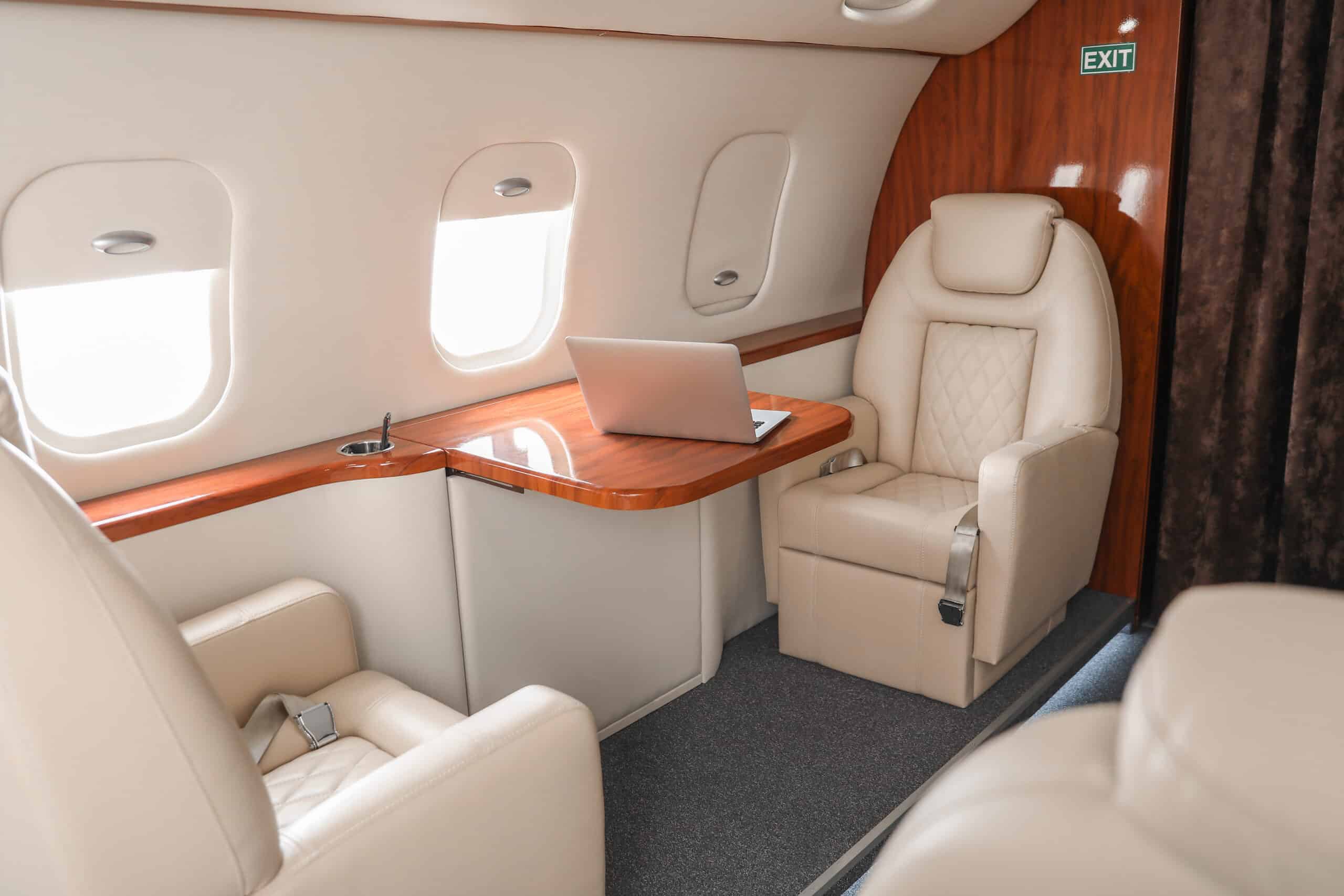
The G800 shares its fuselage cross-section with the G700, which means the same 8-foot-9-inch cabin height and 8-foot-2-inch width that made the G700 one of the most comfortable large-cabin jets ever built. The key difference is range. The G700 tops out around 7,500 nautical miles. The G800 pushes that to 8,200 nautical miles, unlocking city pairs the G700 simply can’t fly without a fuel stop.
Passengers get 19 seats across four cabin zones, a full stand-up galley, and Gulfstream’s signature oval windows. The cabin runs on 100% fresh air throughout the flight — zero recirculated air. Those aren’t marketing details. They matter on a 17-hour flight when your principals need to arrive sharp and ready to work.
Our take: The G800 isn’t a G700 with a bigger fuel tank. The aerodynamic refinements, engine optimization, and systems architecture are meaningfully different. Buyers stepping up from a G700 will notice it on routes they could never fly nonstop before — and that’s the whole point of this airplane.
Key Performance Numbers
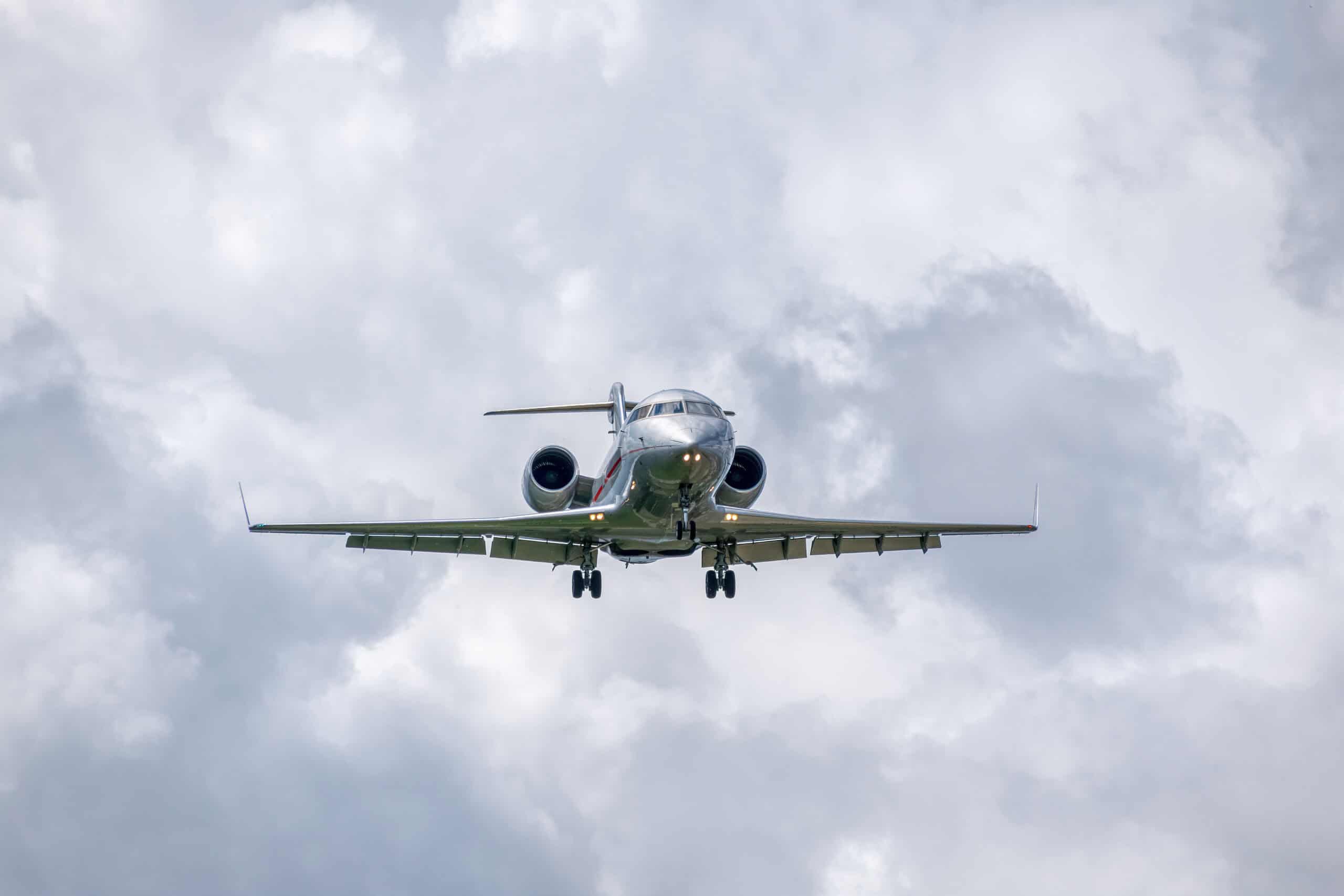
The G800 is rated for a maximum range of 8,200 nautical miles at Mach 0.85. At higher cruise speeds — Mach 0.90 — range comes down, but it’s still over 6,600 nautical miles. That puts it in a very exclusive class of aircraft capable of truly nonstop ultra-long-range operations.
Top speed is Mach 0.935, which ties it for the fastest large-cabin business jet in service today. The second test aircraft clocked that speed during its maiden flight, confirming the aerodynamic performance matches what Gulfstream’s engineers projected. The aircraft also carries a maximum payload of 6,600 pounds and a maximum takeoff weight of 107,600 pounds.
For context, that range-speed combination means a G800 can fly New York to Tokyo nonstop, or London to Perth, Australia without diverting. Routes that have historically required a fuel stop in the Middle East or India now become single-leg operations. For high-net-worth owners and corporate flight departments with Pacific or Middle East routes, that changes the math on trip planning entirely.
The Rolls-Royce Pearl 700 Engines
Power comes from two Rolls-Royce Pearl 700 turbofan engines, each producing 18,250 pounds of thrust. The Pearl 700 is the most powerful engine in the Pearl family and was co-developed specifically for Gulfstream’s large-cabin jets. Notably, the Pearl 700 is certified to run on 100% sustainable aviation fuel, a capability that proved relevant even during the test program.
Rolls-Royce designed the Pearl 700 with a focus on fuel efficiency at high-altitude cruise — exactly where the G800 spends most of its time. The engine features a high-efficiency three-shaft architecture and advanced cooling systems that support the sustained high-altitude, high-speed cruise profiles the G800 is built around. Reliability matters at 8,200 nautical miles. An engine issue mid-Pacific is not a theoretical concern — it’s the kind of scenario that shapes how operators think about long-range fleet decisions.
The Symmetry Flight Deck — What It Means for the Flight Crew
The G800 flies with Gulfstream’s Symmetry Flight Deck, which first appeared on the G500 and G600. The system centers on ten touch-screen displays, full fly-by-wire flight controls, and an active control sidestick rather than a traditional yoke. For crews transitioning from older Gulfstream models, the cockpit workflow is significantly different. For crews already current on G500/G600/G700 series, the transition is straightforward.
Why Active Sidesticks Change Everything in the Cockpit
Active sidesticks give both pilots haptic feedback — meaning if one pilot inputs a correction, the other pilot’s sidestick moves accordingly. On a passive sidestick system (like early-generation fly-by-wire aircraft), the non-flying pilot gets no feel for what control inputs are being made. On the G800, both crewmembers always know what the other is doing through the controls themselves. That changes situational awareness in a meaningful way, particularly during high-workload approach and landing phases.
The Symmetry Flight Deck also supports Gulfstream’s Predictive Landing Performance System, which gives crews a real-time read on landing distance requirements based on current weight, wind, and runway conditions. On a long-range airplane where crews may be flying into unfamiliar airports after 15+ hours in the air, that kind of decision support matters.
The Test Program: Why Two Aircraft?
Gulfstream used two dedicated flight test aircraft for the G800 certification program. The first aircraft focused on flight envelope expansion — confirming the aircraft handles correctly across its full speed and altitude range. The second aircraft was built with a fully outfitted interior and all production systems installed, so testing could run in parallel across both the systems side and the performance side.

What the Second Aircraft Was Actually Built to Prove
Running two test aircraft simultaneously lets Gulfstream compress the calendar without compressing the required flight hours. FAA certification for a new type certificate requires thousands of hours across the flight envelope. Two aircraft means those hours accumulate faster. The second G800’s 3-hour-26-minute first flight specifically tested sustainable aviation fuel performance at high altitude — confirming the Pearl 700’s SAF capability in real operating conditions, not just on a test stand.
The G800 vs. the Competition
The ultra-long-range large-cabin segment is small. There are really only three serious competitors in this market: the Gulfstream G800, the Bombardier Global 8000, and the Dassault Falcon 10X. Each takes a different approach to the same problem — flying the longest routes on earth without stopping.
The Bombardier Global 8000 is the G800’s most direct competitor. It has a similar range target of 8,000 nautical miles and competes on the same route pairs. The Global 8000 has a narrower cabin cross-section than the G800 — 7 feet 11 inches of cabin height versus the G800’s 8 feet 9 inches — and the G800’s cabin floor is notably wider. For operators who prioritize cabin volume on long-haul flights, that difference matters. The Global 8000 competes on avionics, operating costs, and Bombardier’s service network, which has strong coverage in North America and Europe.
The Dassault Falcon 10X targets an even more ambitious cabin volume — the widest fuselage in the segment. However, Dassault pushed its certification timeline further out, meaning the G800 and Global 8000 both beat it to market. Operators who need an aircraft delivering in 2025 and 2026 are effectively choosing between Gulfstream and Bombardier. The Falcon 10X becomes a serious consideration for buyers with a longer planning horizon and a specific preference for Dassault’s maintenance ecosystem.
Where the G800 wins the head-to-head is on cabin height, the active sidestick Symmetry Flight Deck, and Gulfstream’s completion center depth. Gulfstream’s Appleton, Wisconsin facility handles G800 completions and has a strong reputation for interior quality and on-time delivery.
Sustainable Aviation Fuel and Business Aviation’s Trajectory

The G800 is SAF-ready from the factory. The Pearl 700 engines are certified to operate on a 100% sustainable aviation fuel blend, and the second test aircraft flew its maiden flight burning SAF throughout. That’s not a small thing. Most current business jets are approved for up to 50% SAF blends. The G800 eliminates that limitation entirely when 100% SAF supply becomes available.
Business aviation has faced growing scrutiny over its carbon footprint. SAF capability has moved from a marketing feature to a procurement requirement for some corporate flight departments operating under ESG mandates. The G800’s 100% SAF certification gives flight departments the flexibility to use higher-blend SAF as availability improves without requiring any modification to the aircraft or engines.
We’ll be straight with you: 100% SAF isn’t widely available yet. The infrastructure isn’t there at most FBOs. But the direction is clear, and having a factory-certified aircraft rather than a retrofit solution puts G800 operators ahead of that curve. It’s one of those specs that looks forward-thinking today and looks prescient in five years.
When Will the G800 Enter Service?
The Gulfstream G800 received its FAA type certificate and concurrent EASA validation in April 2025 — clearing the aircraft for customer deliveries. That milestone capped a multi-year test program that accumulated thousands of flight hours across two dedicated test aircraft and covered the full required envelope from minimum controllable airspeed to maximum operating altitude.
First customer delivery took place in late August 2025, with the aircraft departing Gulfstream’s Appleton, Wisconsin completions facility. Appleton handles G800 interior completions and pre-delivery inspection, and the facility’s capacity has been scaled to support the expected delivery ramp. Gulfstream planned between 5 and 13 G800 deliveries in calendar year 2025, with production rate increasing through 2026 as the supply chain and completions pipeline fully matures.
The timeline from program launch to first delivery took longer than Gulfstream’s original projections — supply chain disruptions and the complexity of certifying a new fly-by-wire type certificate contributed to the schedule extension. But the program didn’t cut corners. The test aircraft accumulated the required hours, and the FAA type certificate was earned on merit. That matters for operators who will put this aircraft into heavy-rotation transoceanic flying.
For buyers currently evaluating orders, the key question is position in the production queue. G800 orders placed in 2025 are generally looking at 2027 or 2028 delivery slots depending on configuration complexity and customer-requested customization scope. The market for pre-owned or early-build G800s will develop as the first wave of deliveries settles, but that market won’t have meaningful liquidity until late 2026 at the earliest.
What This Means for Business Aviation Buyers
The G800’s certification and entry into service changes the conversation for buyers in a specific tier of the market: operators with frequent ultra-long-range routes who are currently flying a G650, G650ER, or Global 7500 and evaluating what comes next. The G800 isn’t an upgrade for a midsize jet operator. It’s a purpose-built solution for the world’s longest nonstop routes, and the economics only work if you’re flying those routes regularly.
For buyers who qualify, the G800 offers something the G650ER couldn’t: certification on 100% SAF, the active sidestick Symmetry Flight Deck with its improved crew awareness, and the updated Pearl 700 engines with better fuel burn at high-altitude cruise than the BR725s that powered the G650 line. The cabin gains in height and usable volume are meaningful for high-frequency long-haul operation where passenger and crew fatigue is a real operational consideration.
From a residual value perspective, early-build G800s will carry a premium for the first several years of the market’s development. The G650 maintained exceptional value retention through most of its production run. Gulfstream’s large-cabin jets have historically been among the best performers for used value stability in the business jet segment. There’s no reason to expect the G800 to break that pattern, particularly given the limited production rate in the first two years.
For buyers at E3 Aviation, we recommend working with a qualified aviation attorney and independent aircraft appraiser before entering any purchase agreement. New-type-certificate aircraft carry different financing and insurance profiles than established models, and having independent technical representation during the pre-purchase inspection is particularly important on a new type.
E3 Aviation Editorial Team
The E3 Aviation Association editorial team is made up of licensed pilots, aviation educators, and industry professionals dedicated to advancing general aviation safety, community, and education. Learn more about E3 Aviation.
For more coverage of the latest business jets and general aviation aircraft, visit E3 Aviation Association and subscribe to our YouTube channel at @E3AviationAssociation.