

Ground operations at busy airports are the leading source of pilot deviations and the highest-risk phase for runway incursions in general aviation. The FAA’s data has been consistent for years — most runway incursions involve a GA aircraft, often during taxi at a Class B or Class C airport. The fix is not luck. It’s preparation, technique, and a deliberate approach to ground operations before the wheels start moving.
This guide is for GA pilots who fly into airports busier than their home base. We cover the preparation that matters, the communications that prevent confusion, and the in-cockpit techniques that keep you on the right taxiway and off the wrong runway. Most pilots improve dramatically in two or three flights if they apply this material consistently.
Why Ground Operations at Busy Airports Get GA Pilots in Trouble
Before we walk through the techniques, hear it straight from the tower side. The video below is a controller’s perspective on the exact ground-operations mistakes GA pilots make most often.
The patterns repeat themselves in NASA ASRS reports. A pilot arrives at a Class B field for the first time, gets a complex taxi clearance, fails to read it back fully, and ends up holding short of the wrong runway. Or a pilot taxis past a hold-short line because the painted markings looked similar to the ramp markings at home. Or a pilot crosses an active runway without specific clearance because the controller’s instructions were buried in a long sequence.
None of these involve incompetent pilots. They involve normal pilots in unfamiliar environments under high workload. The defense is to reduce the workload before you arrive and to use specific techniques on the ground that catch errors before they become incidents.
The Big Three Risk Factors
From a review of the NTSB and ASRS data, three factors show up in most GA ground deviation events. First, lack of familiarity with the airport layout. Pilots who fly into the same Class B field weekly almost never have runway incursions there. Pilots who fly in for the first time face the largest risk.
Second, complex clearance handling. A taxi clearance with three or four turns, two hold-short instructions, and a runway crossing exceeds what most pilots can hold in short-term memory without writing it down. The longer the clearance, the more likely an error.
Third, distraction. Anything that takes the pilot’s attention away from the taxiway during ground operations — running checklists, programming the GPS, talking to passengers, looking at the GPS — increases the chance of missing a sign or marking.
Preparation Before You Land at a Busy Airport
The single highest-leverage prep step is to study the airport diagram before you arrive. This isn’t optional for unfamiliar airports. Five minutes with the diagram during the cruise portion of the flight prevents most ground deviations.
What to Look For on the Airport Diagram
Start with the runways. Identify the runways in use (you’ll get this from ATIS or AWOS). Note which runways cross each other, which intersect with taxiways, and where the hot spots are marked on the FAA airport diagram. Hot spots are FAA-designated areas where pilots historically have made errors.
Next, identify the typical taxi routes. From a runway exit to a typical ramp, what’s the standard path? Most GA airports have predictable patterns — Runway 24 lands and taxiwayway Charlie leads to the FBO. Runway 06 lands and taxiway Delta leads to the FBO. Knowing these patterns lets you anticipate the controller’s likely instructions.
Finally, look at the FBO and ramp areas. Where is the GA parking? Where is transient parking? If you need fuel, where are the self-serve and full-serve pumps? Having a mental picture of the ramp prevents the post-landing wandering that controllers find frustrating.
ATIS and Comm Setup
Listen to ATIS or AWOS before you contact the tower or approach. Write down the active runway, weather, NOTAMs, and any unusual instructions like construction or closed taxiways. This information rarely changes during your flight, and knowing it before you talk to the controller speeds up the conversation.
Set up your radio for the expected sequence — approach, tower, ground. Use the standby frequency on your second radio to monitor the next agency. When you hear other aircraft being handed off, you have a moment to prepare your readback.
Effective Ground Communications at Busy Airports

Ground operations communications are different from in-flight communications. The exchanges are quick, the information is dense, and the controllers expect pilots to keep up. The technique is to slow yourself down, write things down, and read everything back.
The Taxi Clearance Format
A standard taxi clearance has three parts. The destination (“Cessna 12345, taxi to runway 24L”). The route (“via taxiway Charlie, hold short of taxiway Echo”). The conditions (“after the Boeing crosses, cross runway 28”).
Write all three parts down. Use a kneeboard with the airport diagram in plain view. Mark up the diagram with the route as you receive the clearance. Read back every element including hold-short instructions and runway crossings.
If you don’t catch the clearance completely, say so. “Tower, Cessna 12345, say again the route after taxiway Charlie.” Controllers expect this and prefer it to a wrong readback. Don’t guess.
Hot Spots and Runway Crossings
When your clearance crosses a runway, the controller will say “cross runway 28.” That is your specific authorization. Without that specific clearance, you may not cross any runway, even if your taxi route logically goes through it. Repeat the runway crossing in your readback so the controller can correct you if you misheard.
If the controller’s instructions don’t include a crossing you think you’ll need, ask. “Tower, Cessna 12345, confirm runway 28 crossing is included or hold short on the east side?” Asking adds a second to the exchange. Crossing without clearance adds a violation to your record.
In-Cockpit Technique for Ground Operations
The actual ground taxi is where preparation meets execution. The technique is to slow down, look at signs, and use the airport diagram constantly.
Taxi Speed
Taxi at a speed that gives you time to read signs and verify the route. For most light singles, that’s about as fast as a brisk walk. Faster is harder to manage and reduces your reading time. Slower is fine if controllers don’t complain.
When you reach an intersection with multiple taxiway options, stop briefly. Read the signs. Confirm the next taxiway matches your clearance. The 5-second pause does not slow operations meaningfully and prevents wrong-turn errors.
Sign Recognition
Airport signs follow a standard format. Yellow signs with black letters indicate where you are or what direction options are. Black signs with yellow letters indicate the taxiway you are currently on. Red signs with white letters indicate hold positions for runways.
The most important sign to recognize on sight is the runway hold position sign — red background, white letters with the runway number. When you see this sign approaching from a taxiway, you stop unless you have specific clearance to cross.
Two-Pilot Verification
If you fly with another pilot or instructor, verbalize the route as you go. “We’re on Charlie, heading to Echo.” The verbalization catches errors before they become incidents. Even solo, a self-narration during ground operations sharpens attention.
Common Errors and How to Avoid Them
From talking to controllers and reading ASRS reports, the most common GA ground errors are these:
Incomplete readback. Pilots read back the destination but skip the route or hold-short instructions. Controllers may not catch the partial readback in busy moments. Read back every element of the clearance every time.
Crossing a hold line without authorization. Almost always caused by treating a runway like a taxiway. The fix is to stop at every red-and-white sign and confirm authorization.
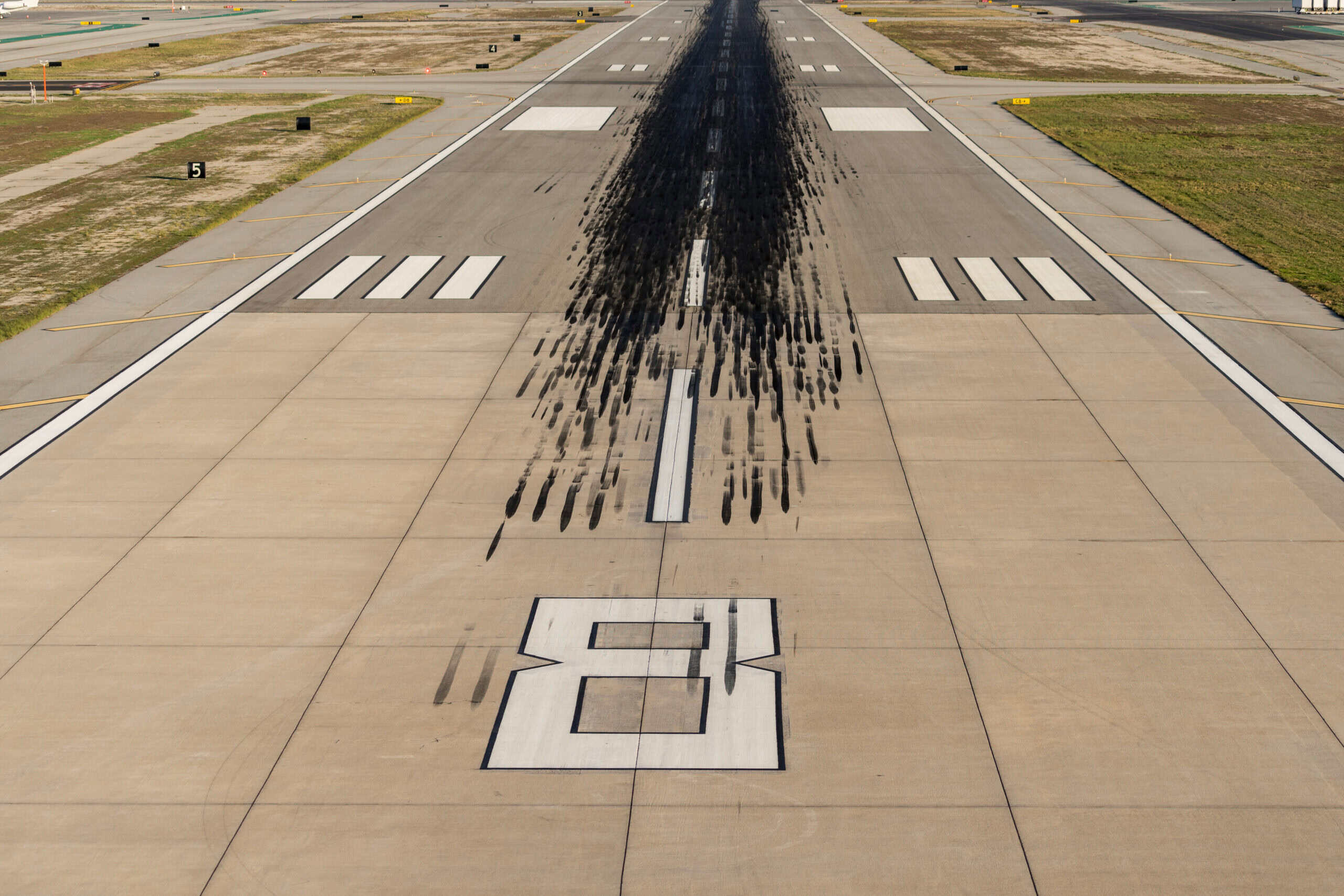
Wrong-runway lineup. Pilots taxi onto the wrong runway because the threshold markings look similar. The fix is to check the heading indicator against the runway number before takeoff. If you’re on runway 24 the heading indicator should read approximately 240.
Failure to monitor. Pilots switch frequency to ground but then turn the volume down to do checklists. Stay on frequency and listening. Other pilots’ transmissions provide situational awareness about where traffic is moving.
Taxiing during runway changes. When the active runway changes mid-flight, controllers issue new instructions. Pilots who weren’t monitoring miss the change and continue toward the previous active. Stay on frequency and acknowledge changes.
Building Ground Operations Skills Through Practice
The fastest way to build ground operations skill is to fly into busy airports deliberately. Don’t avoid them — schedule training flights specifically to practice. Many CFIIs offer “Class B familiarization” flights at $200-$300 for two hours. The value is enormous compared to the cost.
Pick a Class B or busy Class C airport within a reasonable flight from your home base. Fly there during off-peak hours initially — early morning or mid-afternoon weekdays. Land, taxi to the FBO, get fuel or just refresh, and taxi back. Repeat until the operation feels routine.
Once you’re comfortable at off-peak hours, fly the same route during busier times. Saturday morning is the highest-pressure ground environment at most GA-friendly Class B fields. Successful operations there mean you can handle most ground environments anywhere.
Use flight simulator software like X-Plane or Microsoft Flight Simulator to practice taxi routes before you fly them in real life. Modern simulators have accurate airport layouts. Twenty minutes of “taxi practice” in the simulator before a first visit pays back many times over.
Tower-Controlled vs. Non-Towered Ground Operations: Key Differences
Ground operations at non-towered airports follow different rules and require different habits than tower-controlled fields. The differences matter, especially for pilots transitioning between the two environments.
At a non-towered airport, you self-announce your taxi intentions on the common traffic advisory frequency. You make decisions based on what you see and hear from other pilots. There is no controller to provide a clearance, no ground frequency, and no formal hold-short instructions.
This freedom comes with responsibility. You must be more situationally aware. You must communicate clearly with other pilots. You must make decisions about runway crossings, taxi routes, and timing based on your own observation rather than controller direction.
Standard Non-Towered Ground Procedures
Best practice is to monitor CTAF for several minutes before taxi to understand the traffic flow. Announce your intentions: “Smithville traffic, Cessna 12345, taxiing from the south ramp to runway 27, Smithville.” This tells other pilots where you are, where you’re going, and which airport.
Cross runways carefully. At non-towered fields, there’s no controller to authorize a crossing. You must look both ways visually, check the pattern for landing traffic, and announce your crossing. “Smithville traffic, Cessna 12345 crossing runway 09 to taxi to 27, Smithville.”
Use the same hold-short awareness you’d use at a tower-controlled field. Just because there’s no controller doesn’t mean the runway is free for crossing. Other pilots may be on short final or about to depart. Look, announce, look again.
The Transition Between Environments
Many GA pilots fly to both tower-controlled and non-towered airports in the same flight. The transition can trip up pilots. Common mistakes include:
Forgetting to announce at a non-towered field after arriving from a tower-controlled environment. The pilot’s brain expects controller direction and goes quiet.
Stepping on other pilots’ transmissions at a busy non-towered field. Without a controller managing transmissions, pilots must self-coordinate.
Treating a non-towered runway crossing casually because there’s no controller. The risk is the same — maybe higher because there’s no second set of eyes.
The fix is conscious mental adjustment when changing environments. Brief yourself before each leg: “I’m landing at a Class D next, so I’ll get a taxi clearance. After that, I’m taxiing back to a non-towered field where I’ll self-announce.”
Building Confidence at Class B Airports Specifically
Class B operations are where most GA pilots feel the least confident. The traffic mix is heavy, the procedures are complex, and the consequences of errors feel high. The path to confidence is exposure and practice.
Start with familiarization flights at off-peak hours. Many Class B airports welcome GA traffic during light periods — early Saturday mornings, mid-afternoon weekdays, or Sunday evenings. The controllers are usually less rushed, the ground traffic is lighter, and the learning environment is friendlier.
Take advantage of TRACON ride-alongs if your local facility offers them. Many TRACONs accept GA pilots for a 2-hour observation visit. You watch controllers handle traffic. You see how the system works from the other side. The perspective changes your radio technique immediately.
Talk to controllers when the opportunity arises. A friendly chat with a tower controller during a slow period builds rapport and gives you a sense of what controllers prefer from GA pilots. Most controllers love this — they don’t get many opportunities to explain their job to pilots in person.
Frequently Asked Questions
What’s the most common ground operations mistake at busy airports for GA pilots?
Incomplete clearance readback is the most common error. A pilot reads back the destination runway but misses the route or hold-short instructions. The controller may not catch the missing pieces in busy traffic. The fix is to read back every element every time — destination, route, hold-short, runway crossings. If you missed something, ask the controller to repeat it. Asking is faster than fixing a deviation.
How do I prepare for a first visit to a Class B airport?
Spend 15 minutes with the airport diagram during cruise. Identify the runways, the taxiways you’re likely to use, the hot spots, and the FBO location. Listen to ATIS before you contact approach. Set up your radios for the expected handoff sequence. Have your kneeboard ready with the diagram visible. Plan your visit during off-peak hours for the first time — early morning or mid-afternoon weekdays are typically calmer.
Are GA pilots required to read back hold-short instructions?
Yes. Federal regulations require a pilot to read back any hold-short instruction in full, including the runway number. This is one of the most strictly enforced communications requirements in FAA airspace. A partial readback or ‘roger’ response is not acceptable for hold-short instructions. The requirement exists because hold-short errors are the leading cause of runway incursions.
Related Articles
Last Updated: May 19, 2026



