The Garmin Autoland King Air retrofit kit brings the autonomous emergency landing system that debuted on the Piper M600 and Cirrus SR22 to one of the most enduring turboprop airframes in business aviation. For King Air owners and operators, the system is a meaningful safety upgrade — and a meaningful signal of where general aviation safety technology is heading.
This is a complete look at what Autoland and Autothrottle on the King Air actually do, who’s eligible, what it costs, and how the system performs when triggered. The technology has moved fast in the last five years, and the King Air installation is a milestone for high-performance turboprop safety.
What Autoland Actually Does
Garmin Autoland is an autonomous emergency landing system. When activated — either by the pilot pressing a dedicated button or automatically when the system detects pilot incapacitation — the aircraft takes control. It selects a suitable airport based on fuel, weather, and runway considerations, navigates to the airport, configures for approach, lands the aircraft, applies brakes, and shuts down the engines on the runway.
The system does this end-to-end without further pilot input. Passengers can communicate with ATC through an integrated speaker. The system maintains awareness of traffic, terrain, and weather. The destination airport may or may not be the originally planned destination — the system optimizes for safe outcome, not original itinerary.
The performance envelope is broad. Autoland works at any altitude in the aircraft’s normal envelope, in IFR or VFR conditions, day or night. The system needs a usable airport within range — typically with an instrument approach, suitable runway length, and acceptable weather. In most U.S. airspace, multiple qualifying airports are within reach at any given moment.
Autothrottle: The Companion Technology
Autothrottle is the complementary automation that manages engine power during normal operations. Where Autoland handles emergency landings, Autothrottle automates the routine workload of power management — climb, cruise, descent, and approach power settings — that pilots manually adjust on aircraft without it.
The benefits during normal operations are workload reduction and consistency. Autothrottle holds precise airspeeds during approach, maintains efficient climb power, and prevents the small power-management errors that can accumulate over a long flight. For single-pilot King Air operations, where the workload during high-traffic terminal areas is substantial, Autothrottle removes a significant cognitive load.
Autothrottle also feeds Autoland. When Autoland is activated, Autothrottle controls power throughout the descent, approach, and landing rollout. The two systems are designed to work together, and most installations include both.
King Air Eligibility and Installation
The Garmin Autoland and Autothrottle retrofit is available for specific Beechcraft King Air variants. The initial certified installations targeted the King Air 200 series (B200, B200GT, B200CGT, 250), with subsequent expansion to other King Air models. Each variant has specific eligibility requirements based on the existing avionics suite.
The aircraft must already have the Garmin G1000 NXi flight deck, which is the foundation for Autoland integration. Aircraft with the original Collins Pro Line 21 panels typically need a complete avionics retrofit to G1000 NXi before Autoland can be installed. That avionics retrofit itself is a significant upgrade — typically $400,000–$600,000 depending on options.
The Autoland and Autothrottle installation, after the G1000 NXi baseline, adds approximately $250,000–$400,000 to the total project cost. Installation time is typically 8–12 weeks of shop time, during which the aircraft is out of service.
Why King Air Owners Are Investing
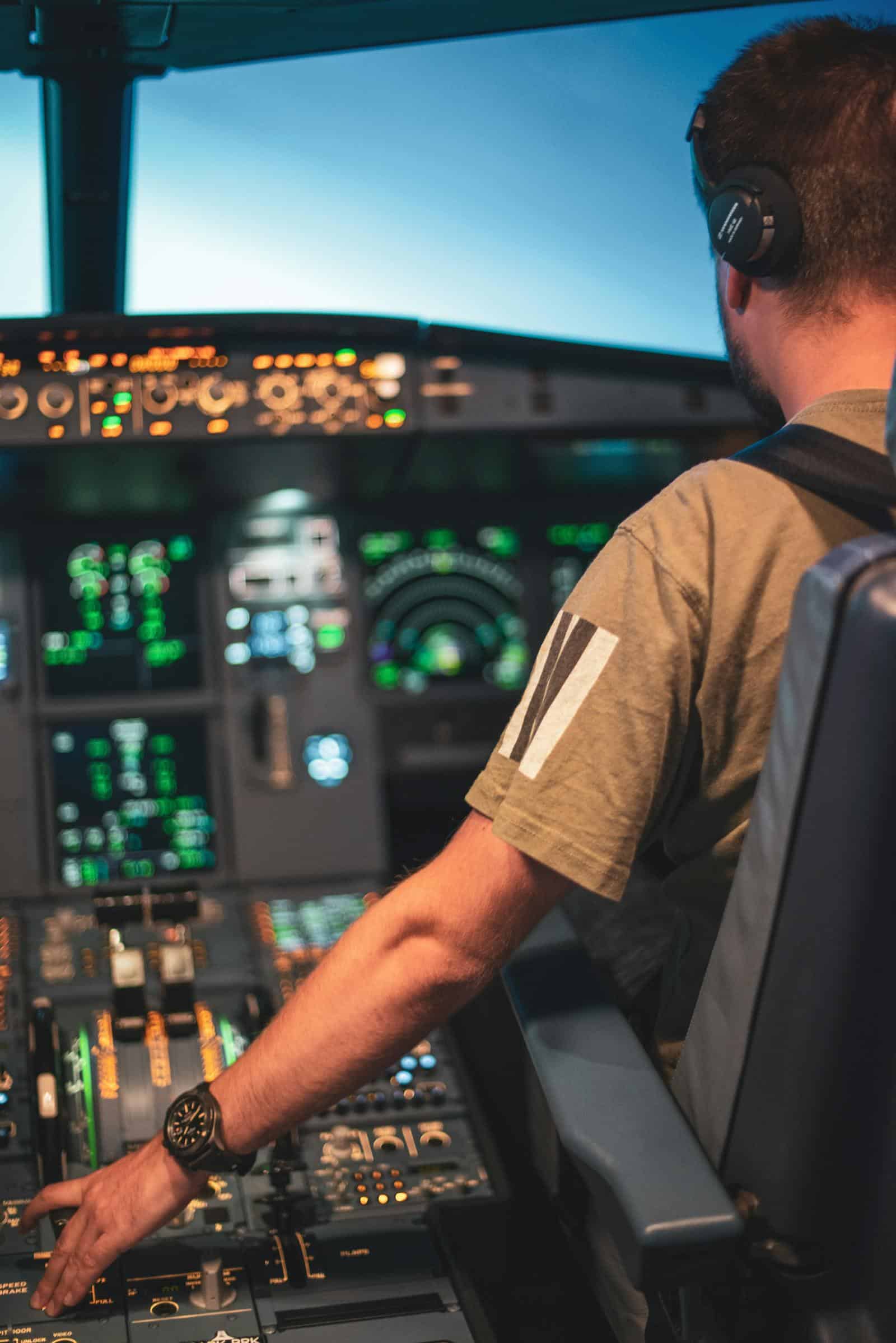
The case for Autoland on a King Air centers on two factors: passenger safety and aircraft resale value. For owner-flown King Airs, particularly aircraft used for family transportation or single-pilot business operations, the Autoland system addresses a specific risk — pilot incapacitation with passengers aboard. The system’s existence on the aircraft is a meaningful safety upgrade and a meaningful selling point.
For King Air operations carrying executives or family members, the system provides a backstop that previous generations of safety technology couldn’t offer. Most pilot incapacitation events are medical — heart attacks, strokes, or sudden severe medical conditions. The conventional response (passengers attempting to fly the aircraft after radio coaching from ATC) has a poor outcome record. Autoland removes that requirement entirely.
Resale value is the secondary consideration. King Airs with Autoland and Autothrottle command pricing premiums in the resale market — typically $200,000–$400,000 above comparable aircraft without the system. As more aircraft are equipped, the system is becoming a near-expectation in higher-end King Air listings.
How Autoland Performs in Real Activations
The system has been activated several times in real emergencies since its introduction on smaller aircraft. The performance record has been excellent — successful autonomous landings in IFR conditions, with passengers as the only occupants, in cases where the pilot was incapacitated.
The system handles edge cases conservatively. If it detects degraded GPS reception, communication failures, or weather conditions outside its operational envelope, it adjusts its destination selection. The decision logic is documented and pilots transitioning to Autoland-equipped aircraft receive training on the system’s behavior and its limitations.
The most important pilot consideration: Autoland is an emergency system, not a routine convenience. The training emphasizes when not to activate Autoland (when a runway is in sight and a normal landing is possible), how the system handles unusual situations, and how the pilot maintains command authority throughout the activation.
Training and Transition
King Air pilots transitioning to an Autoland-equipped aircraft receive specific training on the system. The initial type training includes Autoland activation procedures, abnormal scenarios, manual override procedures, and the operational decisions around using the system.
Recurrent training continues to address Autoland — the system is novel enough that the simulator scenarios specifically practice activation, abort, and edge-case handling. Most insurance carriers require type-specific recurrent training for Autoland-equipped aircraft, with simulator-based Autoland practice as a specific syllabus item.
The overall pilot workload during Autoland is minimal — the system takes control completely. But the pilot retains authority and judgment about when and whether to activate. That judgment requires training to develop, and the training infrastructure has been built out specifically for this transition.
The Insurance and Operational Implications

Autoland and Autothrottle installation changes the insurance picture in several ways. Underwriters generally view the equipment positively — the system meaningfully reduces pilot-incapacitation risk, which is one of the harder risks to underwrite in single-pilot operations. Several major aviation insurers now offer premium credits for Autoland-equipped aircraft.
The flip side is hull value. Autoland-equipped King Airs command higher resale prices, and underwriters need to insure the higher hull value accordingly. The net premium effect is typically neutral or slightly favorable for the owner.
Operationally, Autoland changes the cockpit workflow during normal operations less than pilots expect. Autothrottle does the routine power management; Autoland sits dormant unless activated. The pilot retains command authority and judgment throughout. The system supplements rather than replaces the pilot’s role.
Maintenance and Long-Term Support
The Garmin support infrastructure for Autoland and Autothrottle is mature. Software updates roll out on a regular cadence, with capabilities expanding as additional aircraft types are certified. Hardware support is integrated with the broader G1000 NXi service network, which means service centers familiar with the avionics suite can support the Autoland components.
Annual inspections include specific Autoland system checks — sensor functionality, software currency, communication system integration. The maintenance burden is modest compared to the safety benefit. For King Air operations carrying executives or family members, the cost-benefit math heavily favors installation.
What Comes Next for Autoland on Other Aircraft
The Garmin Autoland platform continues to expand. Initial certifications on the Piper M600 and Cirrus SR22 (under the Vision Jet and SR G7+ programs) established the technology. The King Air installation moved Autoland into the high-performance turboprop category. The next phase is expected to bring the system to additional King Air variants, more business turboprops, and potentially to light jets and select piston aircraft.
The expansion is driven by demonstrated safety outcomes. Each real-world activation builds the case for wider deployment. Insurance carriers are increasingly favorable toward equipped aircraft, and manufacturers see Autoland as a differentiator in increasingly competitive segments.
For King Air operators specifically, the question is no longer whether the technology works — it’s when to invest. Aircraft that go through their next major avionics refresh cycle without adding Autoland may face resale pressure as the equipped fleet grows. The economic case for proactive installation continues to strengthen.
Comparing Autoland to Conventional Safety Systems
Conventional safety systems on King Airs already deliver significant benefit — terrain awareness (TAWS), traffic alerts (TCAS), weather radar, and modern autopilots with envelope protection. Autoland sits on top of those systems and addresses a different risk category: pilot incapacitation, where the conventional systems all assume a pilot to interpret and respond.
The conventional systems handle most operational threats. They alert the pilot to terrain conflicts, traffic conflicts, weather hazards, and configuration errors. The pilot integrates the information and acts. Autoland is the layer that handles the scenario where the pilot can’t act — for whatever reason — and the aircraft needs to land safely without intervention.
For owner-pilots flying single-pilot with passengers aboard, that scenario is statistically rare but historically catastrophic. The conventional systems do nothing useful if the pilot is incapacitated. Autoland is specifically engineered for that scenario, which is why the safety case is so compelling.
The Insurance Premium Math in Detail
Underwriter views on Autoland have evolved rapidly. Initial reactions were neutral to slightly positive — the equipment was new and underwriters wanted to see operational data before pricing credits. Three years of activation data have shifted the underwriting position to clearly favorable.
For King Air operators considering installation, the insurance premium reduction typically offsets 10–15% of the installation cost over a five-year ownership cycle. Combined with the resale value premium ($200,000–$400,000 on aircraft sale), the total economic return on Autoland installation often exceeds the installed cost within the planning horizon.
The non-economic returns — passenger confidence, family security, operational peace of mind — are what most owners cite first when describing why they installed the system. The economic case is supportive; the real driver is the safety upgrade.
Garmin’s Broader Safety Stack on the King Air
Autoland is the headline feature, but it sits within a broader Garmin safety stack that includes Surface Watch (preventing runway-incursion errors), the G1000 NXi traffic and weather integration, terrain-awareness with synthetic vision, and the flight director and autopilot envelope protection. Each layer contributes to the overall safety case.
Surface Watch deserves specific mention. Runway incursions remain a persistent threat in commercial and business aviation, particularly at unfamiliar airports. The Garmin Surface Watch system alerts pilots before they enter a wrong runway or taxi onto an active runway. For King Air operations into busy airports, this single feature catches errors that conventional avionics don’t.
Synthetic vision, which displays a 3D rendered view of terrain and runways on the primary flight display, addresses spatial disorientation risk. Pilots flying instrument approaches in low visibility or at unfamiliar airports benefit dramatically from the visual reference synthetic vision provides. The system has been proven to reduce CFIT (Controlled Flight Into Terrain) accident risk in equipped fleets.
Together, these systems represent a different operational philosophy than older King Air panels — proactive risk reduction across multiple categories rather than passive instrumentation. Owners who upgrade to the G1000 NXi platform with Autoland get a substantially different cockpit than the steam-gauge or early-glass King Airs that dominated the fleet for decades.
The Pilot’s Decision: When to Activate Autoland
Autoland was designed for catastrophic scenarios — medical incapacitation, loss of consciousness, or severe pilot impairment. The training emphasizes that for any situation where the pilot can land the aircraft normally, the pilot should land it. Autoland adds time to the descent, may not select the closest airport, and produces specific public communications that draw responder attention. The right use is the worst-case scenario, not routine.
That said, the training also emphasizes that hesitation in true emergencies has its own cost. A pilot who feels themselves losing consciousness, who’s experiencing severe medical symptoms, or who’s incapacitated by something acute — that’s when activating Autoland is the right call. The system exists for exactly these scenarios, and pilots should not over-think the activation decision when symptoms are clearly developing.
For passengers, the training is simpler still. If the pilot is unresponsive and there’s any doubt about consciousness, press the Autoland button. The system handles everything from that point. Passengers who hesitate or attempt to wake the pilot waste critical time. The system is designed to make the activation as foolproof as possible — one button, clear labeling, unambiguous outcome.
The Future of Cockpit Automation in GA
Autoland and Autothrottle represent the leading edge of automation in business aviation. The technology will continue to expand to additional airframes, with broader applicability to mid-size and light jets in the coming years. The case for autonomous emergency landing is fundamentally a safety case, and the data is supporting wider adoption.
For King Air owners, the system is now available on the airframe that’s been the backbone of business aviation since 1964. The combination of an exceptionally proven airframe with state-of-the-art emergency automation is a meaningful step forward for GA safety — and a meaningful upgrade for the pilots and passengers who fly behind it.
Frequently Asked Questions
How does Garmin Autoland work on a King Air?
When activated, the system autonomously selects a suitable airport, navigates to it, configures the aircraft for approach, lands, brakes, and shuts down the engines. Activation can be triggered by the pilot pressing a dedicated button or automatically when the system detects pilot incapacitation.
How much does Autoland cost for a King Air?
The Autoland and Autothrottle installation costs approximately $250,000–$400,000 on top of the G1000 NXi flight deck baseline. If the aircraft doesn’t already have G1000 NXi, the avionics upgrade itself adds $400,000–$600,000.
Can passengers communicate during Autoland?
Yes. The system integrates with the aircraft’s communication suite and provides automated communications with ATC. Passengers can speak through an integrated speaker, and the system relays standardized status updates to controllers.
Is Autoland a replacement for pilot training?
No. Autoland is an emergency system designed for pilot incapacitation or other extreme scenarios. Normal flight operations remain pilot-controlled. The system supplements rather than replaces pilot training and judgment.
Related Reading
Cirrus SR G7+ Brings Autoland to Piston Aircraft
How autonomous emergency landing came to piston singles.
Aircraft Upgrades and Accessories Guide
Modern avionics upgrades and what they deliver.
Pilatus PC-12 Deep Dive
Inside the airframe Swiss craftsmanship made famous.
Last Updated: May 14, 2026