Bose A30: The Premium Standard in Aviation Headsets
Why the Bose A30 Leads This Aviation Headset Comparison
The Bose A30 sets the benchmark for noise reduction in general aviation. Its three-mode digital ANR system lets you dial in noise cancellation for different aircraft types. Low mode works for quiet cockpits. Medium handles most single-engine piston aircraft. High mode tackles the loudest turboprops and older airframes. No other headset offers this level of customization.
At just 12 ounces on your head, the A30 feels remarkably light for an ANR headset. Bose reduced clamping force by 20 percent compared to the older A20. As a result, pilots report significantly less fatigue on flights exceeding three hours. The dual Bluetooth connectivity lets you pair your phone and tablet simultaneously. Furthermore, the toolless side-swappable boom microphone accommodates both left and right preferences in seconds.
Bose A30 Performance Details
Battery life reaches 45 hours on two AA alkaline batteries. That translates to weeks of flying between battery changes for most GA pilots. The A30 carries full FAA TSO and EASA certification, which matters for commercial operations. Additionally, Bose offers a five-year warranty and responsive customer support.
The microphone delivers excellent clarity even in noisy environments. ATC will hear you clearly on your first transmission. The tap control feature lets you switch communication modes without fumbling for buttons. For pilots who prioritize the absolute best aviation headset experience, the Bose A30 justifies its price.
Where the Bose A30 Falls Short
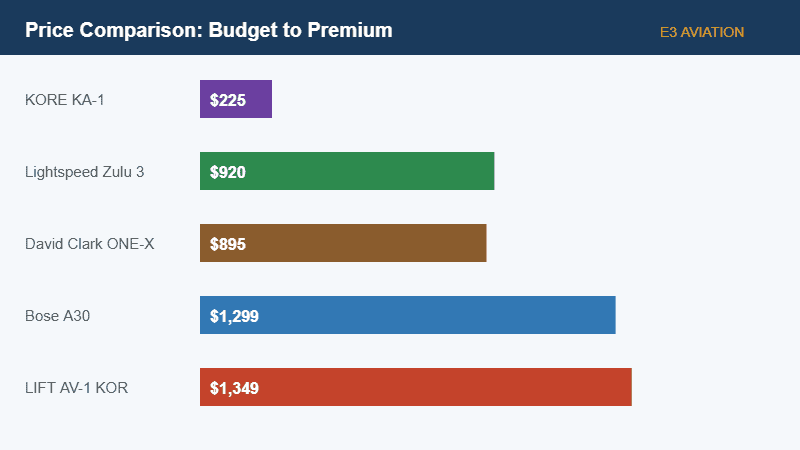
Price represents the biggest hurdle. At $1,299, the A30 costs 30 to 45 percent more than comparable options. The construction uses more plastic than metal, which concerns pilots who prioritize rugged durability. Some eyeglass wearers report that frames can break the ear seal slightly, reducing noise reduction effectiveness. Despite these drawbacks, the Bose A30 remains the headset to beat in 2026.
Lightspeed Zulu 3: Best Value in Premium ANR Headsets
Why Budget-Conscious Pilots Choose the Zulu 3
The Lightspeed Zulu 3 delivers approximately 90 percent of the Bose A30 performance at 30 percent less cost. That value proposition makes it the most popular premium headset among private pilots and flight instructors. Priced between $895 and $949, it occupies the sweet spot between premium performance and reasonable investment.
Lightspeed built the Zulu 3 with magnesium ear cups that block high-frequency noise more effectively than plastic alternatives. The stainless steel headband and Kevlar-core reinforced cables survive years of flight bag abuse. Meanwhile, the ear seals measure 20 percent larger than competitors. That extra surface area means 30 to 50 percent more ear space inside the cups. Consequently, pilots with larger ears find the Zulu 3 more comfortable than the competition.
Standout Features of the Zulu 3
The FlightLink app sets the Zulu 3 apart from every other headset in this aviation headset comparison. It records your radio and intercom transmissions during flight. You can play back ATC instructions you missed or review your own radio technique. No other headset offers this capability. For student pilots navigating their first flights, this feature accelerates learning dramatically.
Battery life hits 40 hours on AA batteries. The Auto Shutoff feature preserves battery when you forget to power down. Lightspeed backs the Zulu 3 with a seven-year warranty, which leads the entire industry. That warranty speaks volumes about build quality and manufacturer confidence.
Zulu 3 Limitations to Consider
The Zulu 3 weighs 14.6 ounces, making it the heaviest option in this comparison. Most pilots adapt quickly, but weight-sensitive users notice the difference during longer flights. Additionally, the Zulu 3 lacks TSO certification. This rarely matters for GA pilots but could disqualify it for certain commercial operations. Overall, the Zulu 3 represents the best aviation headset for pilots who want premium ANR without the premium price tag.
David Clark ONE-X: Lightweight Champion with Legendary Durability
The David Clark Legacy Meets Modern Technology
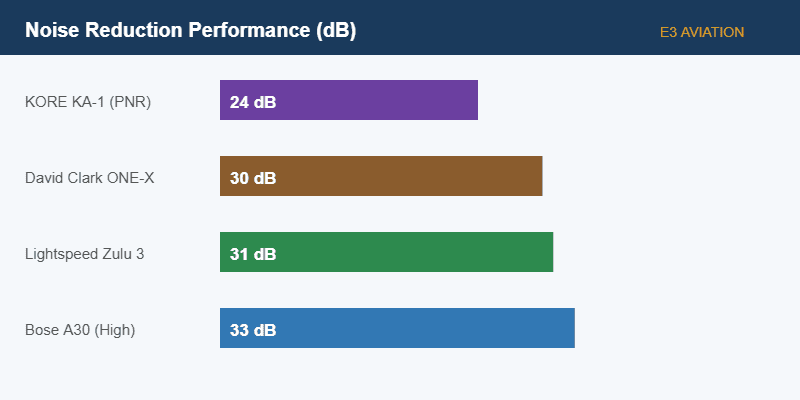
David Clark has built aviation headsets since 1941. That heritage shows in the ONE-X, which combines old-school durability with modern electronic noise cancellation. At 12.3 ounces without the cable, it nearly matches the Bose A30 for on-head weight. The hybrid ENC system uses both feed-forward and feed-back technology to achieve 30 dB of noise reduction across the critical 20 Hz to 1 kHz range.
The ONE-X folds into a package roughly one-third smaller than the Bose or Lightspeed. This makes it the best choice for pilots with limited flight bag space. The Outlast fabric head pad actively absorbs heat buildup during long flights. Furthermore, the plush over-the-ear design uses slow-recovery foam that molds to your ear shape over time.
Reliability You Can Count On
The ONE-X features true fail-safe operation. If the ENC battery dies mid-flight, passive noise reduction and communications continue working without interruption. You never lose contact with ATC. Battery life reaches an impressive 50 hours on two AA batteries, which leads this entire aviation headset comparison.
The M-55 electret microphone delivers clear transmissions with built-in noise reduction. Bluetooth connectivity handles music and EFB alerts. David Clark offers a 30-day money-back guarantee alongside the standard five-year warranty. For pilots who value the essential gear every pilot should carry, the ONE-X earns its place in the flight bag.
ONE-X Trade-Offs
The clamping force runs higher than the Bose A30 or Lightspeed Zulu 3. This improves passive noise isolation but can cause discomfort during flights exceeding four hours. The ANR performance falls slightly behind both competitors in absolute noise reduction. Pilots upgrading from a David Clark passive headset will notice a massive improvement. However, those comparing directly against the Bose A30 may notice the gap.
KORE Aviation KA-1: The Best Budget Aviation Headset for Students
Premium Features at a Student-Friendly Price
The KORE Aviation KA-1 costs just $225. That price point puts quality aviation audio within reach for every student pilot. Despite the budget positioning, the KA-1 delivers features typically found on headsets costing twice as much. The silicone gel ear seals conform to your ear shape for a personalized fit. They stay comfortable for flights up to two hours without the hot spots that plague cheap foam alternatives.
The KA-1 achieves 24 dB of passive noise reduction without any batteries or active electronics. This simplicity means zero maintenance and zero battery anxiety. The steel-reinforced headband handles the abuse of daily flight training. Additionally, the 360-degree flexible boom microphone positions perfectly every time. For pilots starting their journey, the KA-1 lets you invest more in flight hours instead of gear.
What the KA-1 Does Well
KORE includes a carrying case with every purchase, adding $30 to $40 in value. The 3.5mm AUX input connects to ForeFlight or Garmin Pilot for audio alerts. Stereo and mono compatibility ensures the headset works in any aircraft. The five-year warranty matches premium headsets at one-fifth the price.
Flight schools across the country standardize on the KA-1 for rental fleets. The build quality survives student handling while the gel seals maintain comfort through multiple daily training sessions. Microphone clarity impresses despite the passive-only design. ATC communications come through clean and intelligible.
Where Budget Meets Reality
The 24 dB passive noise reduction cannot compete with 30+ dB ANR headsets in loud cockpits. After two hours in a Cessna 172, you will feel the difference. The lack of Bluetooth means no music, no phone calls, and no wireless EFB alerts. Longer flights amplify the comfort gap between passive and active headsets. Think of the KA-1 as an excellent starting point, not a lifetime headset. Most pilots upgrade to ANR within their first 200 hours.
Bonus: LIFT Aviation AV-1 KOR Flight Helmet
Why Backcountry Pilots Are Switching to Helmets
The LIFT Aviation AV-1 KOR represents a fundamentally different approach to cockpit audio. Instead of a traditional headset, you get a full flight helmet with integrated communication systems. Starting at $1,349, it combines head protection with premium audio in a package weighing just 1.7 pounds.
The Koroyd impact liner uses a 95 percent air cellular structure to absorb energy on impact. These welded tubes crumple instantly and consistently, reducing strike forces by 32 percent compared to standard foam. For backcountry flying operations where rough landings and turbulence create real head injury risks, this protection changes the safety equation entirely.
Audio Performance and Headset Compatibility
The LIFT helmet works with multiple headset systems including Bose, Lightspeed Zulu H-Mod, and Active Headsets ANR options. Standard, LEMO, and HELO plug compatibility ensures it works in any aircraft. Pilots consistently report excellent noise reduction and audio clarity. Additionally, the Flow-Vent system pulls cool air in and pushes hot air out, solving the overheating problem that plagues other flight helmets.
The E3 Aviation team has extensively reviewed the LIFT helmet. Watch our detailed review here: The Ultimate Flight Helmet for Aviation Pilots. We also covered the unboxing experience in this hands-on video. For a deep dive into why the AV-2.1 model is redefining pilot safety, read our full article on the evolution of pilot helmets.
Who Should Consider a Flight Helmet Over a Headset?
Bush pilots, aerobatic pilots, and anyone flying into rough backcountry strips should seriously evaluate the LIFT helmet. The FIDLOCK one-hand quick-release buckle makes it practical for pilots who remove their helmet frequently between flights. If you fly demanding backcountry techniques regularly, the head protection alone justifies the investment. The premium audio quality makes it a genuine alternative to traditional headsets, not a compromise.
How to Choose the Best Aviation Headset for Your Mission
Choose the Bose A30 If…
You fly long missions exceeding four hours regularly. Noise reduction matters above everything else. You want TSO certification for commercial operations. Budget is secondary to performance. The Bose A30 delivers the quietest cockpit experience in this entire aviation headset comparison.
Choose the Lightspeed Zulu 3 If…
You want premium ANR without the premium price. Durability and warranty protection rank high on your list. You value the FlightLink recording feature for training or proficiency. The seven-year warranty gives you confidence for years of flying ahead.
Choose the David Clark ONE-X If…
Lightweight design matters most to you. You want fail-safe communication that works even with dead batteries. You need a compact headset for limited bag space. The David Clark heritage and customer service reputation appeal to you.
Choose the KORE KA-1 If…
You are a student pilot watching your training budget carefully. You fly primarily in training aircraft for sessions under two hours. You want reliable audio without the complexity of ANR systems. You plan to upgrade later as your flying career progresses.
Choose the LIFT AV-1 KOR Helmet If…
You fly backcountry, bush, or aerobatic operations regularly. Head protection ranks as a priority alongside audio quality. You already own a compatible headset system from Bose or Lightspeed. The combination of safety and communication makes sense for your flying style.
What Pilots Actually Say About These Headsets
Bose A30 Owner Feedback
Bose A30 owners consistently praise the three-mode ANR system. Many report that the High mode makes even the loudest cockpits feel surprisingly quiet. Comfort receives universal approval, especially from pilots who previously owned the A20. The reduced clamping force makes multi-hour flights painless. Some owners mention the plastic construction feels less robust than expected at the price point. Nevertheless, satisfaction levels run extremely high across aviation communities.
Lightspeed Zulu 3 Owner Feedback
Zulu 3 owners frequently describe it as the best value in aviation. Several note they switched from the Bose A20 and prefer the Lightspeed. The larger ear cups receive consistent praise for comfort. Flight instructors especially appreciate the recording feature for post-flight debriefs. The most common criticism involves the weight, though most pilots adapt within a few flights.
David Clark ONE-X Owner Feedback
David Clark loyalists praise the ONE-X as a worthy successor to the legendary H10-13.4. The compact folding design surprises pilots who expected a larger package. Battery life impresses owners who fly multiple times per week without changing batteries. Some users note the clamping force feels tighter than the Bose or Lightspeed, particularly during extended wear. Despite this, the brand loyalty in the David Clark community remains remarkably strong.
KORE KA-1 Owner Feedback
Student pilots overwhelmingly recommend the KA-1 to fellow students. The gel ear seals receive the most praise, with many noting they outperform foam alternatives costing twice as much. Instructors appreciate the microphone clarity during radio communications. The most common suggestion involves upgrading to ANR after earning the private certificate. Nearly every reviewer emphasizes the exceptional value at the $225 price point.
Aviation Headset Buying Tips for 2026
Try before you buy whenever possible. Many aviation retailers offer demo units. Attend fly-ins and airshows where manufacturers display their latest models. The feel on your head matters more than any specification sheet.
Consider your typical mission length. Flights under two hours tolerate passive headsets well. Flights exceeding three hours benefit enormously from ANR technology. If you fly professionally or build hours toward a career, invest in ANR from the start. The hearing protection alone justifies the investment over thousands of flight hours.
Check connector compatibility before purchasing. Most GA aircraft use dual GA plugs. Some newer aircraft use LEMO or U-174 helicopter connectors. Verify your aircraft panel before ordering. Most premium headsets offer connector adapters for additional cost.
Budget for the headset that matches your next 500 hours, not just your next 50. A student pilot who plans to continue flying after their private certificate should consider the Lightspeed Zulu 3 or David Clark ONE-X rather than buying a budget headset now and replacing it in six months. For more gear recommendations, check our ultimate pilot EDC gear guide.
Discover More with E3 Aviation
Finding the right headset solves the audio equation. Finding the right flying community solves everything else. E3 SkyShare helps pilots discover hidden backcountry strips, fly-in camping spots, grass runways, and unique landing destinations across the country. Thousands of verified locations, shared by real pilots, await your next adventure.
Whether you strap on a Bose A30 for a cross-country flight or clip into a LIFT helmet for a backcountry strip, SkyShare puts new destinations on your map. To discover more about building your aviation journey, visit our pilot manifesto.