A Turboprop Trailblazer
Introduced in 1977, the Cessna 441 Conquest II was the first turboprop aircraft designed by Cessna, intended to bridge the gap between their piston-engine aircraft and jets. Developed from the piston-powered Cessna 404 Titan, the Conquest II evolved into a pressurized, high-performance turboprop capable of seating 8–9 passengers. Powered by twin Honeywell (formerly Garrett) TPE331 engines, it was certified by the FAA on August 19, 1977, and renamed the Conquest II in 1983 after the smaller Cessna 425 Conquest I entered the market. Production ran until 1986, with 362 units built, many of which remain in service today due to their durability and adaptability.
For E3 Aviation, the Conquest II isn’t just a piece of aviation history—it’s a workhorse tailored to our mission of transporting production crews and equipment efficiently across long distances. Its combination of range, payload capacity, and cabin size sets it apart in the turboprop world.
Performance That Delivers
The Conquest II’s performance is a pilot’s dream, especially for those who value speed, range, and efficiency. Equipped with Honeywell Garrett TPE331-10 engines (typically rated at 635 shaft horsepower, with many upgraded from the original -8 models), the aircraft boasts a maximum cruise speed of over 310 knots (357 mph) at altitudes like Flight Level 290 (29,000 feet). With a fuel capacity of 475 usable gallons, it achieves a maximum range of approximately 2,000 nautical miles at 260 knots, burning just 310 pounds per hour at FL350 (35,000 feet).
Our experience mirrors these figures. On a recent flight from Napa, California, to Fort Lauderdale, Florida, we completed the non-stop journey—over 2,200 nautical miles—with the help of a strong tailwind, landing with fuel reserves intact. Another trip from Boston to Fort Lauderdale, despite an ATC reroute, saw us touch down with over an hour of fuel remaining. For a turboprop carrying a substantial load, this range is outstanding. Typically, with a few crew members and full fuel, we cruise at 35,000 feet. With a heavier load, we might start at 32,000–33,000 feet for the first 45 minutes before stepping up to 35,000 feet as fuel burns off.
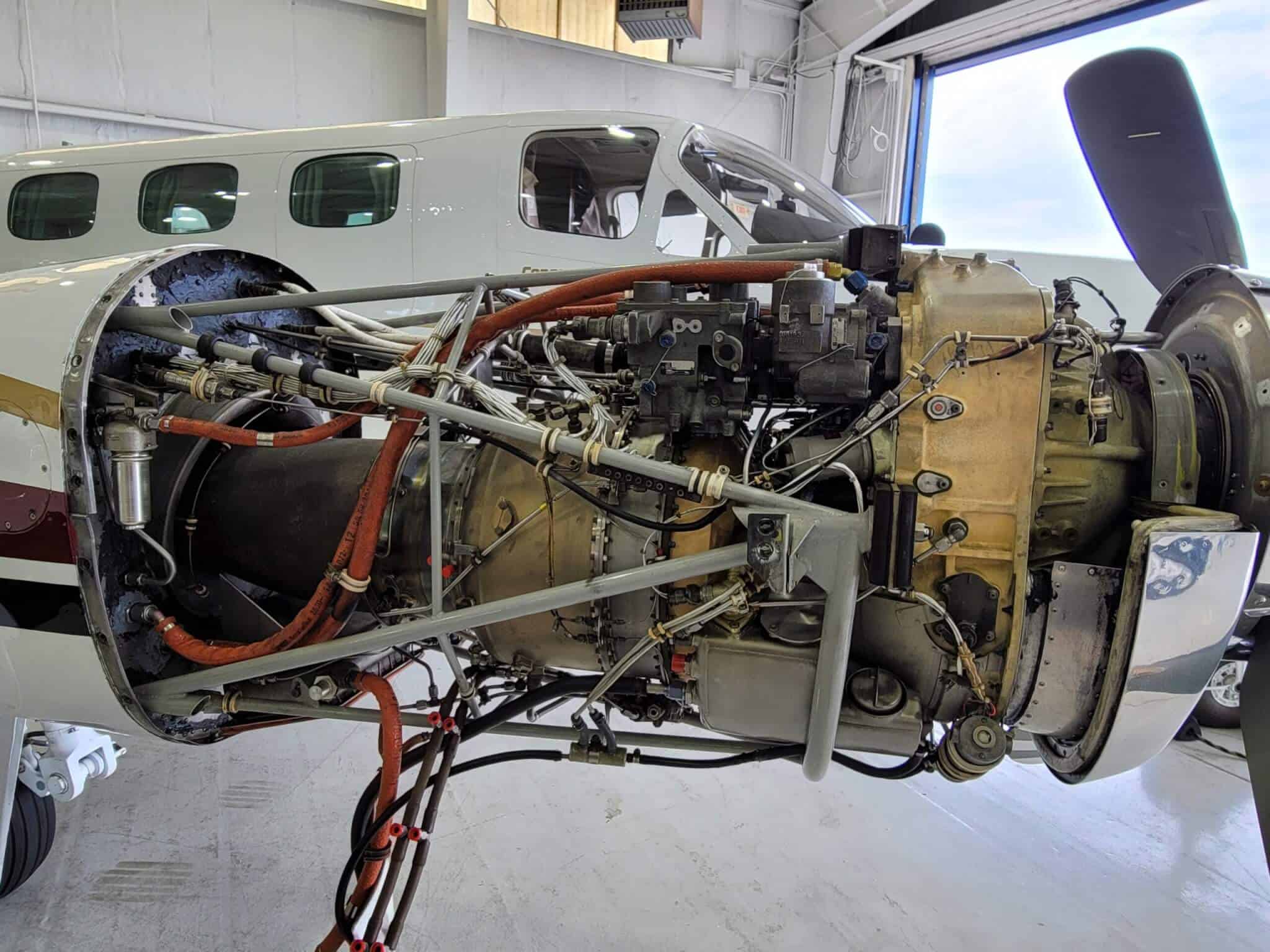
The Garrett engines are a key factor in this performance. Unlike some turboprops or jets that run at 80–90% power on the ground, our Conquest II operates at around 60% during ground ops, hitting 100% only upon takeoff clearance. The engines feature a pseudo-FADEC (Full Authority Digital Engine Control) system, where computer-based controls simplify operation at altitude, enhancing efficiency and reducing pilot workload. Our aircraft, fitted with new propellers boasting less than 50 hours, climbs rapidly—often exceeding 2,000 feet per minute initially—making it a joy to fly.
A Cabin Built for Production
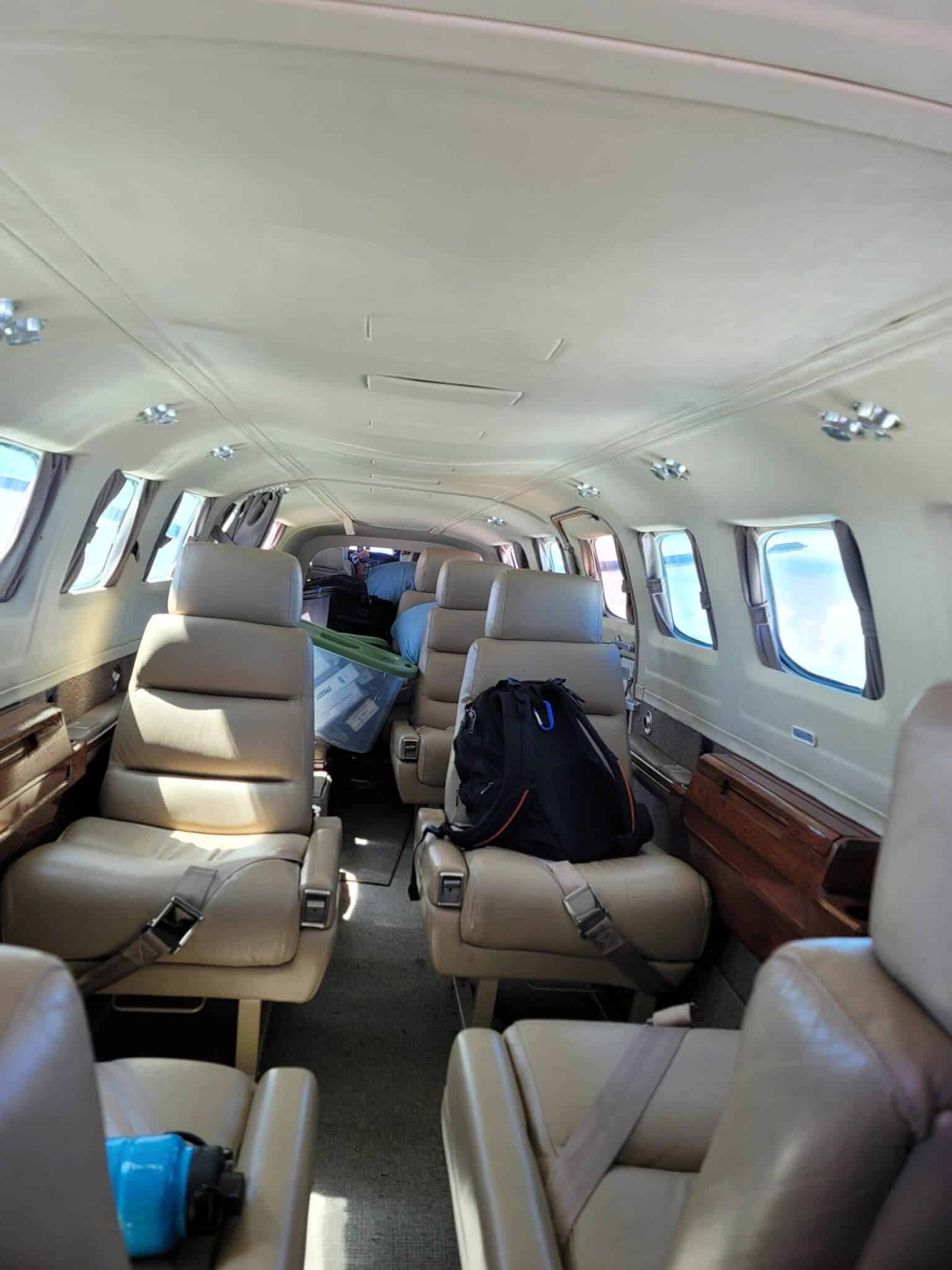
For E3 Aviation, the Conquest II’s cabin and storage capacity were decisive factors in its selection. The aircraft features a spacious cabin measuring 12.8 feet long, 4.6 feet wide, and 4.3 feet high—larger than that of the Cessna 421 or even some jets like our Citation. This size accommodates our production crew comfortably while leaving room for critical equipment.
The nose baggage area is a standout feature, capable of holding up to 600 pounds and easily swallowing a 6-foot camera crane (broken down) or jibs—gear that’s essential for our shoots. This surpasses the storage capacity of many aircraft in its class, including our Citation. Inside, the cabin offers flexibility for 6–9 seats, though we typically configure it for fewer passengers to maximize space for equipment. A belted lavatory seat at the rear adds convenience for long flights, and the pressurized cabin ensures comfort at high altitudes, despite a cabin altitude of around 10,900 feet at FL350.
 Tailored Modifications and Features
 Tailored Modifications and Features
Our Conquest II has been customized to meet our operational needs. The nose gear features a small tab—painted red and protected by a modified pitot cover—that’s critical for closing the gear doors upon retraction. We’ve learned the hard way that electric tug straps can damage it, so this modification enhances reliability. Upgraded low-draw taxi lights and executive wingtip landing lights integrated into the wings improve visibility while conserving power.
For weather operations, the aircraft is well-equipped with de-icing boots on the wings, stabilizer, and tabs, inflating in a timed sequence (wings first, then tail). The propellers feature an alternating heating system, and engine inlets are warmed by bleed air. Ground air conditioning—a rarity in turboprops—is a blessing in South Florida’s heat, and the Garrett engines’ low power draw even allows us to run it during takeoff, though we typically shut it down as a conservative measure.
The landing gear, a hydraulically actuated trailing-link system similar to that of Citation jets, ensures smooth touchdowns, with nitrogen bottles for emergency blowdown adding an extra layer of safety. The tail remains largely standard, though adorned with the E3 Aviation logo—we’ve considered strakes but haven’t found the need for our current missions.
Cutting-Edge Avionics
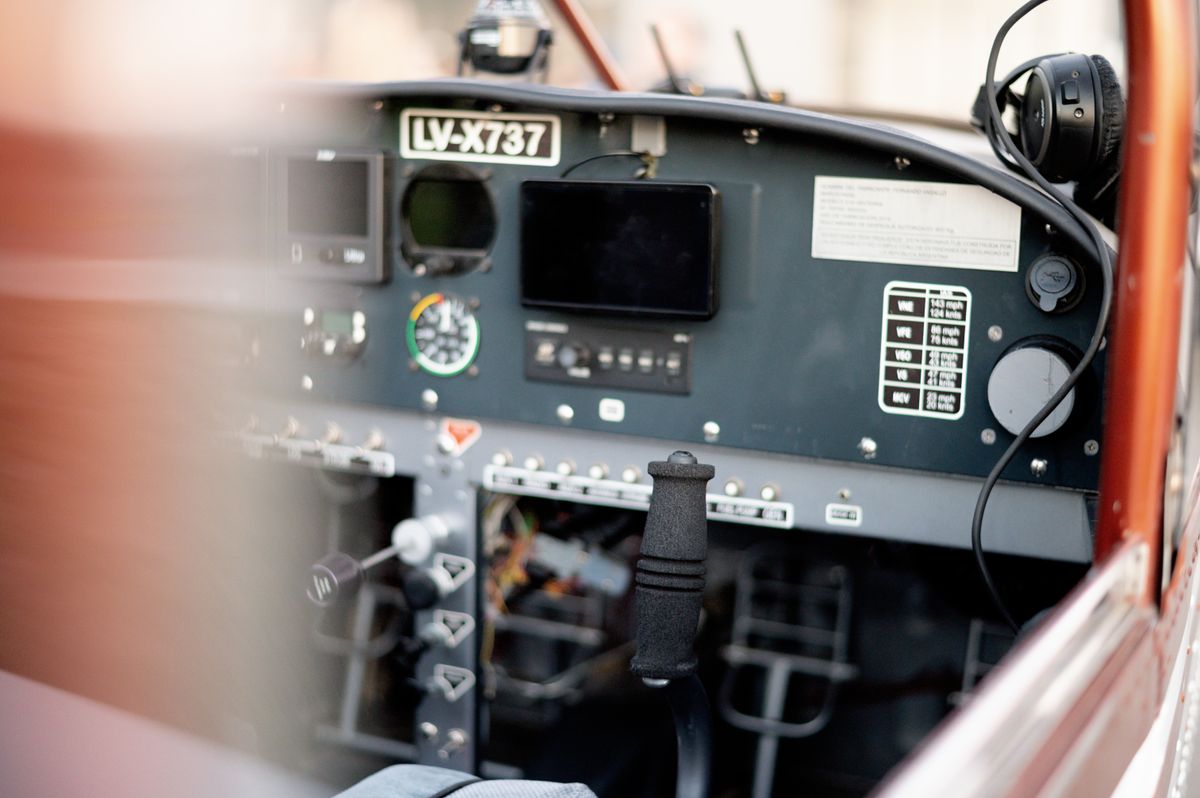
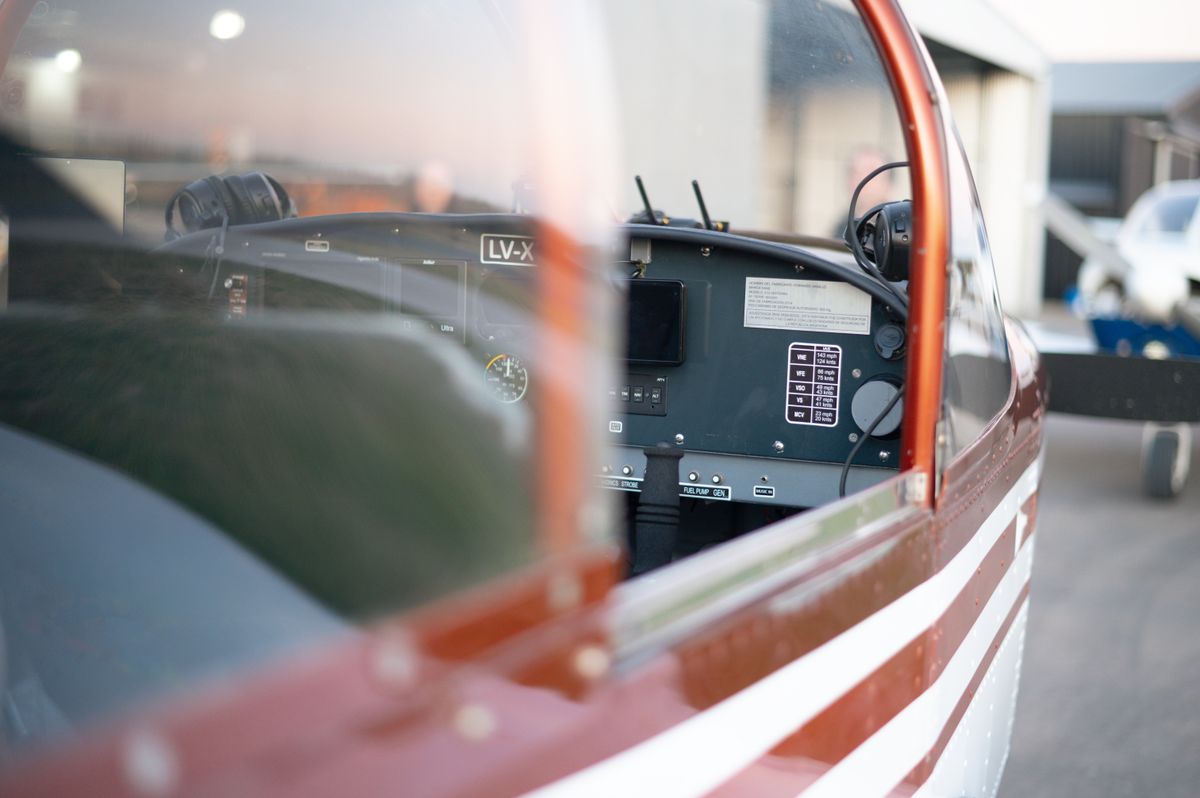
The cockpit of our Conquest II has been modernized with a Garmin-centric panel. Dual Garmin G600s serve as primary flight displays for both pilot and co-pilot, backed by a Garmin 750Xi and 650Xi for navigation and communication. An S2200 autopilot, part of the RVSM (Reduced Vertical Separation Minimum) STC, keeps us compliant for high-altitude ops above FL280. The avionics suite includes a traffic system, three weather options (SiriusXM, FSB, and Garmin), and a satellite phone system via Iridium, integrated into the headsets for passenger calls and texts. XM satellite radio and robust audio controls enhance the experience, while charts and maps are displayed seamlessly. Future upgrades include dual 750s and a Garmin 85 radar. A 3D-printed cup holder with our tail number adds a practical, personalized touch to an otherwise cupholder-less design.
Starting the Honeywell engines is straightforward, with stop locks and start buttons managed by a computer-controlled sequence—another nod to the aircraft’s efficiency and ease of operation.
Pre-Flight Precision
A thorough pre-flight walkaround is essential for any aircraft, and our process for the Conquest II reflects its unique features. Starting at the door, we check the hydraulically driven flaps (requiring running engines), inspect turbine blades with a flashlight, and verify tire pressure and brake caliper dryness. The executive wingtip lights are checked for security, as are the stall vane and de-icing boots—crucial in icing conditions. Fuel sumps (two per side) are inspected, the propeller is confirmed free and tight, and oil levels are verified via dipstick. The landing gear, hydraulic lines, and emergency blowdown tank pressure are scrutinized, with safety wires confirmed in place. The nose baggage door is locked securely, and the custom cover is removed from the nose gear tab. Pitot tubes, static ports, and the air conditioning vent are cleared, ensuring no obstructions. This meticulous routine keeps our Conquest II mission-ready.
 Why the Conquest II Shines
 Why the Conquest II Shines
The Cessna 441 Conquest II excels where others falter: it combines jet-like performance with turboprop efficiency, a spacious cabin with exceptional storage, and rugged reliability with modern upgrades. For E3 Aviation, it’s the perfect platform for transporting production crews and equipment over long distances—whether from Napa to Fort Lauderdale or Boston to Florida—without compromising on fuel reserves or comfort. Its Honeywell Garrett TPE331 engines, massive 475-gallon fuel capacity, and thoughtful design make it a standout choice.
For those intrigued by this aircraft’s capabilities, we invite you to explore more through E3 Aviation’s premium membership at E3AviationAssociation.com. Members gain access to detailed content, magazines, podcasts, and exclusive insights into aircraft like the Conquest II—plus the benefits of a community dedicated to aviation excellence.
The Cessna 441 Conquest II may not grab headlines, but for those who fly it, it’s a hidden jewel that delivers every time. At E3 Aviation, it’s more than an aircraft—it’s a mission enabler.